Here are our top picks for the best adtech companies on the market, rated based on their portfolios, team expertise, industry reputation, client reviews, rates and more. Hire an experienced agency to get access to premium tools and software and fine-tune your advertising campaigns for optimal performance. Use the custom filters to narrow down the right partner in a matter of clicks.
- Home
- Advertising Agencies
- Adtech Companies
- United States
We Researched the Best US Adtech Companies for You
DesignRush assesses agencies using expertise standards and verified client experiences to help you make better decisions. Certain agencies have paid placements.
SEO Focused on ROI.
PressRoom is a US-based, boutique digital marketing agency. We use AI & ML to identify high-value SEO opportunities to improve your Google search rankings, driving lasting increases in your organic traffic and revenue. [... view PressRoom profile ]- Location
- San Francisco, California
- Number of Employees
- Under 49
- Average Hourly Rate
- $150/hr
- Minimal Budget
- $1,000 - $10,000
Generating leads and driving sales for B2B companies with long sales cycle
Ironpaper® is a premier B2B digital marketing agency committed to helping our clients succeed. Our mission is to drive business growth by unifying your marketing and sales journeys, resulting in an exceptional buyer experience. Trust Ironpaper® to drive outstanding growth for your business. [... view Ironpaper® profile ]- Location
- New York City, New York
- Number of Employees
- 50 - 99
Digital Analytics & Optimization at Any Scale
SMQ Consulting offers data-driven services to help businesses expand and optimize their online presence. We're experts at digital analytics, SEO, digital advertising, and conversion optimization, and we bring creativity, passion, and excellence to every project we take on. We're especially passionate about [... view SMQ Consulting profile ]- Location
- Leland, Michigan
- Number of Employees
- Under 49
- Minimal Budget
- $1,000 - $10,000
Full-Service Digital Marketing Agency
Nephila helps tech B2B companies define, develop, and scale their digital marketing initiatives. Offering digital strategy, paid search, paid social, graphic & web design and more, we collaborate with in-house teams to build lead generation programs that deliver measurable and reliable results. [... view Nephila Marketing profile ]- Location
- San Diego, California
- Number of Employees
- Under 49
- Average Hourly Rate
- $199/hr
- Minimal Budget
- $1,000 - $10,000
Your Programmatic Media Partner
Team Media specializes in aiding various media companies in executing programmatic media campaigns through a contractor or freelance model. Our approach offers unparalleled flexibility with no campaign minimums or contracts, providing access to over 5 demand-side platforms without any licensing fees. By [... view Team Media profile ]- Location
- Plymouth, Minnesota
- Number of Employees
- Under 49
- Average Hourly Rate
- $150/hr
- Minimal Budget
- Under $1,000
Your Message Everywhere
Media Mea is your full-spectrum advertising partner delivering powerful, data-driven campaigns across TV, digital billboards, mobile, and more. We turn every screen into your opportunity. [... view Media Mea profile ]- Location
- Miami, Florida
- Number of Employees
- 50 - 99
- Average Hourly Rate
- $149/hr
- Minimal Budget
- $1,000 - $10,000
Expert Digital Marketing | Amplified Growth Strategies.
We provide result-driven digital marketing and brand launch solutions to scale businesses with profits. Most marketing leaders struggle to find a proactive, strategic agency partner with the expertise, services, & vision to drive long-term results online. [... view AnjasDev profile ]- Location
- Modesto, California
- Number of Employees
- 50 - 99
- Average Hourly Rate
- $50/hr
- Minimal Budget
- $1,000 - $10,000
Integrated Marketing and Agency Solutions.
We specialize in growth, branding, e-commerce, and demand generation. [... view ClearStage LLC profile ]- Location
- Houston, Texas
- Number of Employees
- Under 49
- Average Hourly Rate
- $115/hr
- Minimal Budget
- $1,000 - $10,000
Clear Strategy, Measurable Results.
DeltaV Digital combines SEO, PPC, and web development into unified marketing strategies that deliver measurable results and maximum ROI. Every channel informs the others so nothing operates in a silo. Senior-led, US-based team with no handoffs and no black-box reporting. Real depth, real results. [... view DeltaV Digital profile ]- Location
- Fort Collins, Colorado
- Number of Employees
- Under 49
- Average Hourly Rate
- $250/hr
- Minimal Budget
- $1,000 - $10,000
Amazing brands start here.
AMZG stands as a distinguished digital agency, garnering recognition for its excellence in the realms of social media management, public relations, and advertising solutions. [... view AMZG AGENCY profile ]- Location
- Darien, Connecticut
- Number of Employees
- Under 49
- Average Hourly Rate
- $150/hr
- Minimal Budget
- $1,000 - $10,000
- Asteriosoft builds and scales AdTech, analytics, and AI solutions through custom software
Asteriosoft builds and scales AdTech, analytics, and AI solutions through custom software
Asteriosoft build and scale AdTech, analytics, and AI solutions through custom software development. Since 2006, we have delivered high-performance AdTech platforms processing 1.5M+ QPS for leading industry players, including six custom-built DSPs for clients worldwide. With offices in the USA, Slovenia, and [... view Asteriosoft profile ]- Location
- Alexandria, Virginia
- Number of Employees
- Under 49
- Average Hourly Rate
- $50/hr
- Minimal Budget
- $1,000 - $10,000
Your Transformative Demand Generation Partner.
Grow your marketing funnel via data-driven media intervention with YOptima. We combine machine learning with human intelligence to discover unique audience insights and optimize results across the marketing funnel. We leverage the power of programmatic media to help brands expand their targeted reach and [... view YOptima profile ]- Location
- Owatonna, Minnesota
- Number of Employees
- Under 49
- Minimal Budget
- $1,000 - $10,000
In-Depth AdTech Industry Hiring Guide
AdTech Insights: Key Points
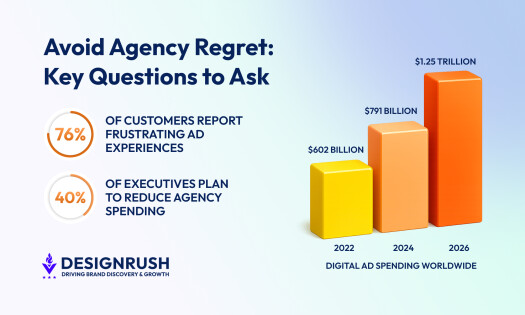
- Over 91% of U.S. digital display ad spend in 2024 went to programmatic advertising, with global spend projected to hit $800B by 2028.
- With 117M+ U.S. households owning CTVs — and 20% of viewers making purchases via these devices — 80% of marketers now use CTV to reach audiences.
- 96% of agencies now integrate AI in advertising, driving a 27% boost in creative production efficiency.
- 71% of brands expanded their first-party data sets in 2024 (up from 41% in 2022), aiming for a 35% increase within 12 months.
What AdTech Services Are Businesses Investing In?
With over 61% of customer interactions now online, there’s an increasing demand for AdTech services to better target audiences, produce and implement campaigns, and measure performance.
The demand is so great that the AdTech market is expected to grow to $1.154 trillion by 2029. Here are the AdTech services that businesses are investing in, and why you should, too.
Programmatic Advertising Platforms
- Global programmatic spend projected to reach $800 billion by 2028 (Statista).
- Over 91% of US digital display advertising spend was dedicated to programmatic advertising in 2024 (EMarketer).
- Programmatic channels delivered over 2.3 trillion ad impressions globally and 530 ad impressions in the US (Market Growth Reports).
Connected TV Advertising
- CTV ad spend is estimated to account for 1 in 10 US digital ad spend in 2024 (EMarketer).
- 117 million US households own at least one CTV device, with 20% completing a purchase on it (Statista).
- 80% of marketers are using CTV as a key platform to reach audiences (ANA).
Demand-Side Platforms
- DSP dominated the AdTech market in 2024 at 33% (Grand View Research).
- Global DSP market size is expected to grow from $38.92 billion in 2025 to $148.92 billion by 2032, with a CAGR of 21.1% (Fortune Business Insights).
- 64% of marketers use Google DV360 for their DSP campaigns, 56% use The Trade Desk, and 33% use Amazon DSP (Statista).
Real-Time Bidding (RTB)
- By 2034, the real-time bidding market is expected to reach a market size of $87 million, with a CAGR from 2024-2034 of 18.5% (Future Market Insights).
- Open auction comprises the majority of the market at 58.8% (iMarc Group).
First-Party Data & Data Management Platforms (DMPs)
- In 2024, 71% of brands, agencies, and publishers are increasing their first-party data sets (up from 41% in 2022) (IAB’s State of Data Report 2024).
- Organizations expanding first-party data in 2024 anticipate an average 35% increase in these data sets over the next 12 months (IAB’s State of Data Report 2024).
- The global data management platform (DMP) market is projected to reach $2.50 billion by 2025 and $4.35 billion by 2030, reflecting an 11.7% annual growth rate (Mordor Intelligence).
AI-Driven Contextual & Creative Tools
- 96% of agencies have fully or partially integrated AI into their ad and marketing strategies (Epsilon).
- Agencies using AI in their creative production improved efficiency by 27% (MediaLink).
- Companies using AI in their marketing and advertising strategies see 6x higher revenue growth and 4x higher ROI compared to competitors (Bain & Company).
Retail Media
- US retail media is expected to surpass $67 billion and represent 20% of digital ad spending by the end of 2025 (EMarketer).
- Amazon constitutes 77% of the retail media ad spend in 2025, followed by Walmart at 6.9% (Statista).
Case Study: Scaling Paid Media for Revenue Growth
We have selected the following success story from one of our top-ranking agencies to concretely illustrate how these AdTech companies deliver meaningful business results.
Disruptive Advertising, a performance AdTech agency, worked with fitness brand Crossover Symmetry to help grow its paid media revenue. Specifically, the client's goal was to scale up Facebook advertising while staying profitable, so it can eventually expand to new markets.
While Crossover Symmetry had an internal team, it didn’t have the specialized expertise, tools, and resources of Disruptive Advertising. The AdTech company has on-hand experts in Facebook’s algorithm changes, designers for high-converting ad creatives, and conversion rate specialists for landing pages).
Thus, to meet the client’s objectives, Disruptive Advertising implemented dynamic retargeting (showing tailored ads to previous site visitors), expanded the brand’s buyer personas to reach new segments (e.g., targeting both rehab patients and athletes), and crafted highly engaging ad creatives.
It continually conducted A/B tests, adding social proof in ads (like customer testimonials) and highlighting top product benefits.
Moreover, the AdTech company audited the client’s existing campaigns and suggested improvements in real-time, leveraging its team of channel-specific experts to refine targeting and bidding.
Through its comprehensive efforts, Disruptive Advertising increased Crossover Symmetry’s monthly revenue from Facebook ads by 158% within 3 months, surpassing client expectations.
At the same time, the client maintained profitability while scaling spend — a testament to improved conversion rates and ad efficiency.
The partnership was so successful that the client continued working with the agency to support expansion into Europe and Canada.
Pricing Overview on DesignRush
Top AdTech companies on DesignRush offer $50-$150 per hour on average. However, small and offshore agencies provide more competitive rates at $10-$25 per hour. On the flipside, specialized firms in high-cost markets charge an average of $200-$250 per hour.
Beyond hourly rates, AdTech agencies commonly use these pricing models:
- Monthly retainer
- Project-based fee
- Performance-based or commission models
- Percentage of ad spend model
By Country/Region
Below is a breakdown of AdTech hourly rates by region, with factors to consider for each area:
| Region | Average Hourly Rate | Typical Project Budget | Key Insights |
| United States | $100-$175 | ~60% accept <$10K ~2% require at least $50,00 | Clients can expect premium expertise and convenient collaboration (time zone and language), but at a premium price. Even so, there is range: for example, a boutique agency in Los Angeles lists $250/hr, whereas a smaller firm in Wyomingcharges only $15/hr. |
| Western Europe | $80-$150 | ~57% accept <$10K Less than 1% require at least $50,00 | These markets have skilled talent and strong quality, though costs are high due to living standards. Clients pay for cultural alignment with European markets and often multilingual capabilities. Many Western European agencies are competitive with U.S. pricing. |
| Eastern Europe | $30-$80 | The majority accept <$10K No agency requires at least $50,000 | These lower rates reflect lower labor costs, yet many Eastern European teams are highly skilled (especially in analytics and software aspects of AdTech). Clients often find good value here, although there may be additional effort for language/market localization and managing time zone differences. |
| South Asia | $10-$50 | ~79% accept <$10K (many under $1K) No agency requires at least $50,000 | Clients can stretch their budget, but should ensure the agency understands the target market’s language and compliance needs. Communication and scheduling across time zones can be a consideration. |
| Latin America | $25-$75 | The majority accept <$10K No agency requires at least $50,000 | While not as inexpensive as India, LATAM firms benefit from closer time zones to U.S. clients and cultural familiarity with North and South American markets. Clients can expect competitive pricing and often a good balance of cost vs. convenience. |
Key Observations on Regional AdTech Pricing:
- U.S. and Europe have the highest rates in the AdTech regional market.
- South Asia, Eastern Europe, and LATAM offer more cost-effective rates, but with potential trade-offs in convenience and specific market expertise.
By Industry
The table below outlines average hourly rates and typical project costs by industry:
| Industry | Avg. Hourly Rate | Typical Project Rates/Budgets |
| Finance & FinTech | $125-$200 | Banks and FinTech companies commonly invest $20K up to $100K+ in multi-channel campaigns. Enterprise financial services projects often start at $50K+. For example, a leading financial marketing agency lists $25K–$50K minimum. |
| Healthcare & Pharma | ~$108 | A local healthcare provider might spend $5K–$15K on a digital campaign, whereas a pharma product launch or hospital system campaign can run $50K–$100K+. Many providers sign monthly retainers in the $5K–$20K range for ongoing patient acquisition campaigns. |
| eCommerce & Retail | Global average: $90–$115. Offshore eCom specialists: ~$50/hr or less | Small online stores might spend just $2K–$5K on a short PPC/social campaign. Established retail brands often commit $10–$50K per month across channels. On DesignRush, many eCommerce marketing agencies accept <$10K projects, but larger ones work on six-figure annual contracts, especially during peak seasons (e.g. holiday campaigns). |
| Tech | $100–$200 | Because B2B customer acquisition can yield high ROI per client, companies invest accordingly. A niche B2B SaaS might spend $5K–$15K per month on digital campaigns. Enterprise tech firms often do $50K+ projects (integrated ABM campaigns, etc.). Many B2B agencies will require at least a few months’ retainer commitment to allow campaigns to gain traction. |
| Travel & Hospitality | ~$89 | Many hospitality campaigns are project-based around seasons or events (e.g. a $20K summer promo campaign for a resort). 26% of hospitality agencies accept <$1K projects. |
Key Observations on Digital Marketing Pricing by Industry:
- Industries with heavy regulation (like finance and healthcare) or complex B2B sales tend to command higher agency fees.
- Consumer-facing industries have multiple agency options at various price points.
- If a campaign requires highly localized content (multiple languages, cultural tailoring) or creative production (e.g. lifestyle photo shoots for travel ads), those add costs.
By Agency Experience (Years in Business)
Here’s a comparison table of pricing trends by agency experience level:
| Agency Experience | Pricing Trends and Typical Budgets |
| New Agencies (<2 years) | Lower rates than the market average at an average of $50. However, low-cost regions charge $10-$20/hr. |
| Emerging Agencies (3–5 years) | Moderate rates: $75–$125/hr. However, many agencies offer flexible pricing models to match client needs. |
| Established Agencies (6–10 years) | Above-average rates: Often $100–$150/hr+ depending on reputation. |
| Veteran Agencies (10+ years) | Top-tier rates: $150–$250/hr (or higher), especially for award-winning or internationally recognized firms. Some don’t publicize hourly rates, as they tailor their prices to accommodate client-specific needs and goals. |
Key Observations on AdTech Pricing by Agency Experience:
Seniority brings both expertise and higher costs: the most experienced agencies are ideal for complex, high-stakes campaigns and demanding compliance needs, whereas less experienced firms are more accessible to smaller budgets and projects.
3 Most Affordable AdTech Companies
| Agency | Hourly Rate | Location | Pricing Notes |
| Digital Thrive Solutions | $10/hr | Bulandshahr, India | Minimum project: Under $1,000 (ultra-affordable data-driven service provider) |
| Digital Marketing Alive | $15/hr | Sheridan, WY, USA | Minimum project: Under $1,000-$10.000 (cost-effective, white-label, and wholesale pricing approach) |
| Indian Online Marketing | $24/hr | Meerut, India | Minimum project:Inquire (full-service flexible pricing model that accommodates small budgets) |
How to Hire the Right Full-Service AdTech Company: Executive Guide
1. Define Clear Objectives
- Specify the outcomes you want to achieve from the partnership (e.g., lower cart abandonment or increase demo signups).
- Include key performance indicators (KPIs), timeframe, budget, marketing platforms, and industry-specific guidelines (e.g., HIPAA, PCI, or SOC 2).
Clear objectives outlined with business priorities help filter agencies and lead to more accurate proposals and effective strategies.
2. Shortlist Candidates Based on Expertise
- Look for specialization within your vertical, business size (e.g., startup or enterprise), and platform (e.g., HubSpot, Google)
- Search for evidence of relevant experience: case studies, verifiable client testimonials and reviews, certifications, and industry recognitions.
An AdTech company that has navigated your industry’s legal and technical challenges will reduce the learning curve and risk of mistakes.
3. Evaluate Tool and Methodology Fit
- Examine tech stack (e.g., Shopify, Trade Desk, Mixpanel) and agency’s ability to seamlessly integrate these technologies into your current IT environment.
- Determine A/B testing protocols, tag governance, reporting and iteration cycles, and development methodology (e.g., agile, scrum, waterfall).
- Ask about project management and communication style to see if it aligns with your own team’s requirements.
This step is about verifying that on a practical level — from software compatibility to collaboration style – the partner can deliver effectively in your environment.
4. Request for Detailed, Custom Proposals
- Clearly outline your objectives, requirements, and potential constraints, including budget range, timeline targets, and specific integrations.
- Instruct each vendor to provide case studies or examples directly relevant to your use case.
By communicating your goals and asking pointed questions, you’ll get proposals that let you compare apples to apples.
5. Interview Top Contenders
- Identify 2-3 top contenders and set up an in-depth interview or pitch meeting with the actual team that will handle your account.
- Look for agencies that seamlessly communicate between teams (e.g., strategic planners, creatives, and data analysts).
- Explore team structure and workflow: Will you have a dedicated strategist, or will they float between accounts?
- Discuss expectations on meetings, reporting cadence, and who has decision authority upfront.
Use these interviews to address any questions from their proposal and evaluate their enthusiasm and understanding of your business. By the end, you should have a strong sense of which team you trust most.
6. Check References and Past Performance
- Ask the vendor for a list of current or past clients that you can speak with.
- Seek references in a similar industry or project scope as yours.
- Listen for patterns across multiple references: Consistent praise in certain areas will give you a clear picture of what it’s like to work with them.
In doing so, you validate the claims the vendor made and mitigate potential risks before signing up with the agency.
7. Finalize the Contract
- Include clauses on AdTech risks and compliance, including data ownership, ad platform access, security compliance, and data handling and transparency (especially for AI tools).
- Clearly define deliverables, timeframe and milestones, KPIs, what constitutes completion or success, and cost structure.
- Ensure that there are clauses for confidentiality, non-compete or solicitation, and termination.
- Have your attorney or legal team review the contract.
Don’t rush your contract. Getting the contract right is your safety net for the partnership.
Key Questions To Ask a Full-Service AdTech Company
When evaluating a full-service AdTech company, ask about compliance, expertise, strategy, success indicators, and communication methods to ensure it aligns with your needs and values. It also helps you avoid those that pose potential risks to your ad campaign and business.
Here are key questions to ask potential partners together with explanations on the importance of each one and what to look for in their answers:
1. How do you ensure compliance with industry regulatory standards?
Why this matters: If your project involves legal or industry regulations (e.g. FINRA, PCI-DSS, and KYC for financial institutions), non-compliance can lead to serious consequences. Even a small breach may result in hefty fines and loss of customer trust.
Ideal answer:
Specific measures the agency takes to stay compliant – for example, knowledge of relevant laws, regular staff training, clear processes or checklists for compliance, and examples of past projects where they adhered to regulations. This shows the agency proactively mitigates legal risks and prioritizes ethical standards.
Red flags:
If the agency cannot explain how it handles compliance or seems unfamiliar with key regulations in your industry, it may expose your project to legal risks and reputational damage.
2. What platforms, tools, or frameworks do you specialize in?
Why this matters: An agency experienced in your required tools will ramp up faster and deliver better results.
Ideal answer:
A clear list of the specific platforms, software, or frameworks they excel at, ideally those relevant to your project. They might mention certifications or partnerships (e.g. “Google Premier Partner” for an ads agency) or successful projects using those tools. They should also express willingness to work with your existing tech stack or suggest the best tools for the job.
Red flags:
If they give very generic answers or claim to “do it all” without concrete examples, they may lack depth in any one area. Also, if they aren’t familiar with a critical platform you require (for example, your CRM or a specific programming framework) and have no plan to bridge that gap, they might struggle to meet your needs.
3. Do you have experience working in my industry or on projects similar to mine?
Why this matters: Familiarity with your industry can make an agency more effective, since they’ll understand your audience, competition, and any domain-specific challenges.
Ideal answer:
Specific examples or case studies of similar clients/projects and the results achieved. If they haven’t worked in your exact industry, they should acknowledge it but then outline how they would get up to speed — for instance, by leveraging experience in related sectors or doing upfront research.
Red flags:
Beware of agencies that have zero familiarity and offer no strategy to handle the learning curve. If they dodge the question or give only superficial assurances (e.g. “We can work with any industry” without evidence), you risk being a guinea pig for them.
4. Can you provide examples of past work or case studies, and may I speak with references?
Why this matters: Case studies and client references validate an agency’s capabilities and credibility. They show what the agency is capable of and whether they have delivered real value for similar clients.
Ideal answer:
A strong agency will point you to case studies or portfolios relevant to your needs, complete with objectives, the approach they took, and quantifiable results. They should also be willing to provide references or have testimonials readily available.
Red flags:
If an agency hesitates to share any detailed examples or can’t provide references, consider it a red flag. It might indicate a lack of experience, or worse, unhappy past clients. Also be cautious if the “case studies” they give are very vague, overly polished without substance, or not relevant to your project type. You want real proof, not just promises.
5. What is your approach to developing a strategy that aligns with our goals?
Why this matters: You need to know they will take the time to grasp your business objectives and define clear KPIs, rather than just doing generic work. Additionally, it will ensure that the agency’s definition of success aligns with yours.
Ideal answer:
The agency should describe a structured discovery and planning process, set measurable KPIs, and a roadmap for achieving your goals. Its plan should also align with your goals and be based on research and past experiences.
Red flags:
Be wary of answers that are all buzzwords with no substance, like simply touting a proprietary “secret sauce” or diving straight into tactics without first mentioning understanding your needs. Also, if they promise unrealistic outcomes or not basing strategy on a realistic analysis.
6. When can we expect to see results, and how will you measure success throughout the project?
Why this matters: This question helps set realistic expectations and gauge how performance-driven the agency is.
Ideal answer:
A good agency will be honest about these timelines. Equally important, they should have a clear plan for tracking progress, measuring metrics, and reporting results. The mention of using analytics tools or dashboards to continuously monitor performance is a good sign, as it shows a data-driven approach.
Red flags:
Be cautious if an agency guarantees very fast or spectacular results without caveats, vague answers about metrics, and doesn’t proactively mention reporting frequency or transparency.
7. What will our communication and collaboration process look like?
Why this matters: This question reveals how the agency will handle project management and client service. It can also provide insight into their ability to adapt to evolving project needs and ability to stay on deadline and within budget.
Ideal answer:
A clear communication cadence and tools. For example, they might say they provide a status update every week or biweekly, hold monthly strategy meetings, and are available for ad-hoc calls or chats during business hours. They should mention willingness to match your preferred level of involvement.
Red flags:
Vague commitments like “We’ll update you when there’s news” or agencies that only propose infrequent, generic reports (like one update at end of project). Additionally, if they seem annoyed or unenthusiastic about regular meetings, then it can indicate a lack of commitment and transparency.
8. Who will be working on our account, and what are their roles or qualifications?
Why this matters: Agencies often send their senior team to win your business, then hand off the work to junior staff. You deserve to know who is actually executing your project. This impacts quality and also your working relationship. Knowing your day-to-day contact and team members helps ensure accountability.
Ideal answer:
Transparency about team composition. The agency should introduce the key people assigned to your account. For example: “You will be working directly with our senior strategist who has 10+ years in the field, and a dedicated account manager who will be your point of contact.” This shows they’ve thought about resourcing your project properly.
Red flags:
If an agency cannot clearly name who will lead your project or dodges this question. Vague responses like “We have a whole team that will chip in” without specifics might mean they haven’t assigned resources yet or you might be lower priority. Also be wary if the people you interact with during the sales process disappear post-signing and a high employee turnover rate.
9. Can you tell me about a time when a project didn’t go as planned and how you handled it?
Why this matters: This question tests the agency’s honesty, transparency, problem-solving skills, learning mindset, and values.
Ideal answer:
A strong answer might describe a real scenario (without naming clients if confidential) where something went wrong and, importantly, what the agency did to correct the course. Listen to them explaining why the project struggled, how they pivoted strategies, and what lessons they learned.
Red flags:
Red flags include blaming others entirely and claiming they’ve never had a failure (which is not realistic). Also, if their story of failure lacks any takeaway or fix (just excuses), it suggests they might repeat mistakes rather than learn from them.
10. Do you outsource any of your work or is everything done in-house?
Why this matters: While outsourcing isn’t inherently bad, it can introduce risks to schedules, communication flows, and output quality if not managed well. Knowing this can also help set expectations and provide insight into how the agency allocates your budget.
Ideal answer:
If they do outsource, they should reassure you about how they maintain quality control and timelines, such as their vetting and oversight process. They might also highlight positives when a specific skill is needed. Overall, you’re looking for evidence that, whether or not they outsource, your project will be in capable hands and delivered on time.
Red flags:
If an agency is evasive about who actually does the work, that’s a concern. Also, if they rely heavily on freelancers for key deliverables but lack clarity on oversight, you might face coordination issues.
Find the Right AdTech Partner — Fast, Free & Tailored to Your Needs
DesignRush connects your business with top-tier AdTech companies — completely free of charge. Our expert team simplifies your search by handpicking the most suitable agencies based on your project requirements, goals, and budget.
- 40,000+ Verified Agencies: Access a vast network of thoroughly vetted AdTech companies.
- Human-Assisted Matching: Real experts evaluate your needs and match you with the best-fit agencies.
- Trusted by Fortune 500 & Startups: Leading brands and ambitious startups rely on DesignRush to find reliable partners.
- 4.8/5 on Google | 4.9/5 on Trustpilot: Rated highly by thousands of satisfied business leaders.
Match with leading AdTech companies based on your goals, timeline, and budget.
Find Specialized Service Providers
- Top AI Media Buying Agencies
- Top Media Planning Agencies
- Top Out of Home Media Buying Agencies
- Top Print Media Buying Agencies
- Top Radio Media Buying Agencies
- Top TV Ads Media Buying Agencies
Frequently Asked Questions
1. What does an AdTech company actually do?
An AdTech company specializes in using advertising technology to improve your marketing campaigns. They handle tasks like programmatic media buying, data-driven ad targeting, and campaign optimization. In short, they navigate the complex ad-tech ecosystem to ensure your ads reach the right audience efficiently and effectively.
2. What’s the difference between an AdTech freelancer, an in-house team, and an outsourced agency?
Hiring a freelancer means you get a single specialist, often at a lower cost and with more direct, personalized communication. On the other hand, an in-house team gives you full control and alignment but requires significant long-term investment in hiring, training, and tech.
Lastly, an outsourced agency provides a whole team of experts (strategists, designers, analysts, etc.) and broader capabilities — which can handle larger projects and offer diverse skills. While more expensive than a freelancer, it’s more cost-effective than an in-house team.
Ultimately, the best choice depends on budget, internal bandwidth, and campaign goals. Many growing businesses combine in-house leadership with external agency support for execution.
3. What tools should a good AdTech agency use?
A quality AdTech agency should leverage the leading advertising technology platforms. This includes demand-side platforms (DSPs) for programmatic ad buying, data management or analytics tools (like DMPs or customer data platforms) for audience targeting, and ad servers to deliver and track ads. Many agencies also use agency trading desks and integrate with ad exchanges and networks to maximize reach. They also leverage analytics dashboards and attribution tools to measure performance and optimize campaigns in real-time.
4. Are AdTech services relevant for small businesses?
Yes, small businesses can benefit from AdTech services to accurately target audiences and minimize waste. In fact, AdTech provides small businesses access to advanced targeting and advertising tools that were once available only to large companies, helping them compete effectively in digital marketing. The key is to start with clear goals and scale your ad spend appropriately.
5. How does DesignRush vet agencies?
DesignRush vets the agencies by analyzing each agency’s portfolio, client reviews, top services, case studies, awards and press, and team bios before adding them into the directory. This process gives businesses confidence that any agency they find on DesignRush is reputable and qualified. Learn more by reading our agency ranking methodology.
6. How do I find an AdTech company on DesignRush that meets my needs?
You can use DesignRush’ directory filters to narrow your search by service category, industry expertise, location, and agency size. You can also filter by budget (hourly rates or project cost range), so you only see agencies within your price range. Alternatively, you can also send us your project brief via our Marketplace, and we’ll connect you with top agencies that match your criteria.
7. Is DesignRush free to use?
Yes. DesignRush is free for businesses looking for agencies. You can search the directory, use all the filters, and even access their agency matching service at no charge. In fact, the free matching service helps connect you with suitable agencies based on your project and budget. However, agencies need to pay to be listed or to avail certain premium features.
8. What happens after I submit a project brief?
When you submit a project brief on DesignRush (via our Marketplace), our team first reviews the project details to make sure everything is clear. We then shortlist a few verified agencies from our network that best meets your requirements. Next, those agencies are invited to send proposals for your project. Typically, the top 2–5 agencies are then introduced to you via email.
You’ll receive their proposals and can review each recommended agency, often proceeding to introductory calls or meetings. Ultimately, you choose the agency that best meets your needs, and you’ll work directly with that agency from there. This process saves you time by having DesignRush pre-vet and curate the agency options for your project.
Why Trust DesignRush
A trusted B2B marketplace connecting businesses with top-tier adtech companies, DesignRush maintains an impressive 4.7 rating on Trustpilot and Google.
Our dedicated team of agency experts built a network of over 30,000 agencies. We simplify the agency selection process, providing value to clients and agencies alike, via the DesignRush Marketplace.

Media Features
As a media platform, our press releases are picked up by 141 media outlets and reach a potential audience of 70 million. Our expertise extends to reputable platforms, such as Forbes, MSN, Yahoo! Finance, CNBC, MarketWatch, and Benzinga, solidifying our presence in the industry.
These achievements underscore our commitment to providing valuable insights and solutions within the digital landscape.
As seen on

Adtech Expertise
Adtech companies on DesignRush are highly proficient in diverse disciplines. They specialize in programmatic advertising, ad placement and targeting, data analytics, real-time bidding, audience segmentation, and campaign performance tracking for clients' ads.
Agency Credibility Indicators
The top adtech companies demonstrate their outstanding work through notable recognitions, which include:
- Global Tech Awards Adtech Award
- AdExchanger Awards
- IAB MIXX Awards
- Digiday Technology Awards
- The Drum Digital Advertising Awards
- MarTech Breakthrough Awards
- Campaign Tech Awards
- MediaPost's OMMA Awards
These indicate their ability to consistently deliver top-notch results and reliability for companies seeking exceptional adtech solutions.

Their proficiency is affirmed by the following certifications:
- Google Ads Certification
- IAB Digital Media Sales Certification
- Facebook Blueprint Certification
- X Ads Academy Certifications
- Adobe Advertising Cloud Certification
- HubSpot Digital Advertising Certification
- DoubleClick Campaign Manager Certification
- LinkedIn Marketing Solutions Certification
These certifications showcase their comprehensive skill set and capacity to deliver end-to-end solutions.

Agencies’ Supported Technologies
These service providers are proficient in various industry-standard technologies, tools, and software, including but not limited to Google Ad Manager, The Trade Desk, Adobe Advertising Cloud, MediaMath, DoubleClick Campaign Manager, Facebook Ads Manager, Amazon DSP, Sizmek, Salesforce DMP, BlueKai, HubSpot, and Marketo.

Agency Reviews
For deeper insight into these agencies, DesignRush features client testimonials that share project challenges, results, and overall feedback. Each review undergoes verification, ensuring that the insights we present are both current and accurate.
Using the Bayesian Statistical Method, our algorithm calculates the most probable success rate for each agency. This reduces bias and promotes equity in the rating system, aligning our agency rankings more closely with the genuine quality of the services they offer.
Content Relevance & Accuracy
We make sure our content stays up to date, incorporating the latest listing data, industry trends, emerging technologies, and real-time insights supplied by agencies. It is reviewed by seasoned industry professionals who also provide their invaluable expertise – ensuring accurate and in-depth information.
The DesignRush Agency Ranking Methodology
Agency rankings are founded on a Base Score, consisting of several important factors:
- Reviews: Quality of work, client satisfaction, and level of trustworthiness
- Portfolio: Tangible examples of an agency's track record
- Awards and press: Industry reputation and innovation
- Team bios: The agency’s qualifications and team dynamics
- Top services: Core competencies and areas of expertise
Visit the DesignRush Agency Ranking Methodology for more information on how we research agencies.
Frequently Asked Questions
How do I choose the right AdTech company in the United States?
To choose the right AdTech company in the United States for your business, consider the following steps:
- Identify goals, KPIs, budget, target audience, and campaign type.
- Scan the market for potential service providers with experience in your industry and ad requirements.
- Evaluate the providder's tech stack and look for advanced features like AI integration, multiple ad format management, scalability, and compatibility with your existing tools and technologies.
- Read the provider's portfolio, case studies, client reviews, and testimonies to determine its credibility and reliability.
- Narrow your choices to 5-8 AdTech companies and send them a request for proposal (RFP).
- Interview with the AdTech team handling your account and ask about processes, account ownership, and compliance.
- Request for client references who have projects similar to yours and belong to the same industry.
- Select a US AdTech company that aligns with your requirements, technology stack, values, and objectives.
If you need help finding a US AdTech company for your business, visit our Marketplace with your project requirements. We’ll connect you with agencies that best match your criteria at no cost.
What red flags should I avoid when selecting a US AdTech company?
Avoid the following red flags when selecting a US AdTech company:
- Unrealistic guarantees or making promises without context
- Cookie-cutter playbook and channel bias
- Outdated AdTech tech stack
- Ignoring data from previous campaigns
- Inability to connect ad campaigns to the rest of your marketing and sales strategy
- No account visibility and ownership
- Inexistent case studies, portfolios, or client references in your specific ad campaign type, tech stack, and industry
- Failure to connect performance metrics to real business outcomes
- Ambiguous AdTech processes and pricing structures
- Concerning client reviews, citing a lack of transparency, communication, and accountability
- Weak data compliance and brand safety protocols
What is the process of working with an AdTech company in the United States?
When working with an AdTech company in the United States, you can expect a methodical process to ensure efficient ad management. It typically includes the following steps:
- Discover and strategy: Defining campaign goals, advertising channels, target audiences, budget, and guardrails
- Data, measurement, and compliance setup: Configuring the tracking tools (e.g., UTMs, map conversions), attribution and testing plans, and data privacy requirements
- Tech configuration: Selecting and implementing the DSPs, connecting data sources, and setting up controls to maintain campaign health (e.g., fraud, pacing, and frequency limits)
- Asset creation: Producing ad copy, graphics, and videos according to platform requirements, and uploading these to the ad server and DSP
- Launch and bidding: Activating the campaign, which signals to the DSP to conduct real-time bidding across SSPs and ad exchange platforms to secure the desired ad placement
- Optimization and reporting: Continuously adjusting bids, supply paths, pacing, and ad creatives, and submitting a regular performance report to the client
What tools and technologies do AdTech companies in the United States use?
AdTech companies in the United States use an entire ecosystem of tools and technologies to manage, monitor, and optimize online advertising campaigns, including:
- Supply-Side Platforms (SSP): Google Ads Manager, OpenX, Vistar Media
- Demand-Side Platforms (DSP): Amazon DSP, MediaMath, Trade Desk
- Agency Trading Desk: Emarsys, Bloomreach, Klaviyo
- Ad Exchanges: Magnite, Smaato, Google AdX
- Ad Networks: Amazon, Google AdSense, Adsterra, Dianomi
- Ad Servers: Google Ads Manager, Kevel, SpotX
- Data Management Platform (DMP): Trade Desk, Nexd, Adobe Audience Manager
- Programmatic Advertising: Google Ad Manager, Adobe Advertising Cloud, AppNexus (Xandr)
What factors affect US AdTech company pricing?
Factors that affect US AdTech company pricing include:
- Project scope and complexity: Industry competition level, project objectives, number of channels, and campaign scale
- Service model: Performance-based pricing, flat fee, or hourly rate
- AdTech ecosystem and complexity: Software licensing fees, data cleanup and management, required customizations (e.g., tailor-built APIs), advanced technologies (e.g., AI and predictive analytics)
- Asset production and volume: Ad copy, graphic design, video production, and landing page creation, and the variants required for testing and personalization
- Compliance requirements: Fraud controls, brand-safety guidelines, data privacy requirements, and industry-specific regulations
About The Author and Expert Reviewer
Vanessa Maandal is a digital writer with expertise in content marketing and creative direction. She has developed successful campaigns for global brands, such as Boehringer Ingelheim, Kellogs Singapore, and Friesland Campina. At DesignRush, she writes content focused on marketing strategies led by award-winning agencies to connect them with like-minded organizations and individuals.
Mariana Delgado is the Head of Marketing at DesignRush, with more than ten years of experience across digital marketing, sales management, search, and video advertising. Since joining DesignRush, she has delivered 3× site-traffic growth and 2× growth in monthly revenue by building scalable, performance-led programs that connect acquisition, content, and brand across channels. Her campaigns have achieved a 5:1 ROAS.