Everything You Need to Know Before Hiring an AI Automation Agency Table of Contents
What can AI automation companies do for businesses? They help organizations automate repetitive work, improve decision-making, and integrate artificial intelligence into everyday operations.
By combining AI workflow automation, machine learning, generative AI, and automation tools, these firms help businesses operate faster, reduce costs, and scale operations more efficiently.
Increase productivity When AI handles repetitive tasks, employees can focus on strategy, creativity, and higher-value work.
A 2024 McKinsey report found that companies adopting AI have seen an average productivity increase of 30-40% within the first two years of implementation.
Support marketing, sales, and revenue growth Many AI automation agencies help businesses deploy AI tools for digital marketing and sales operations.
These systems can automate tasks such as:
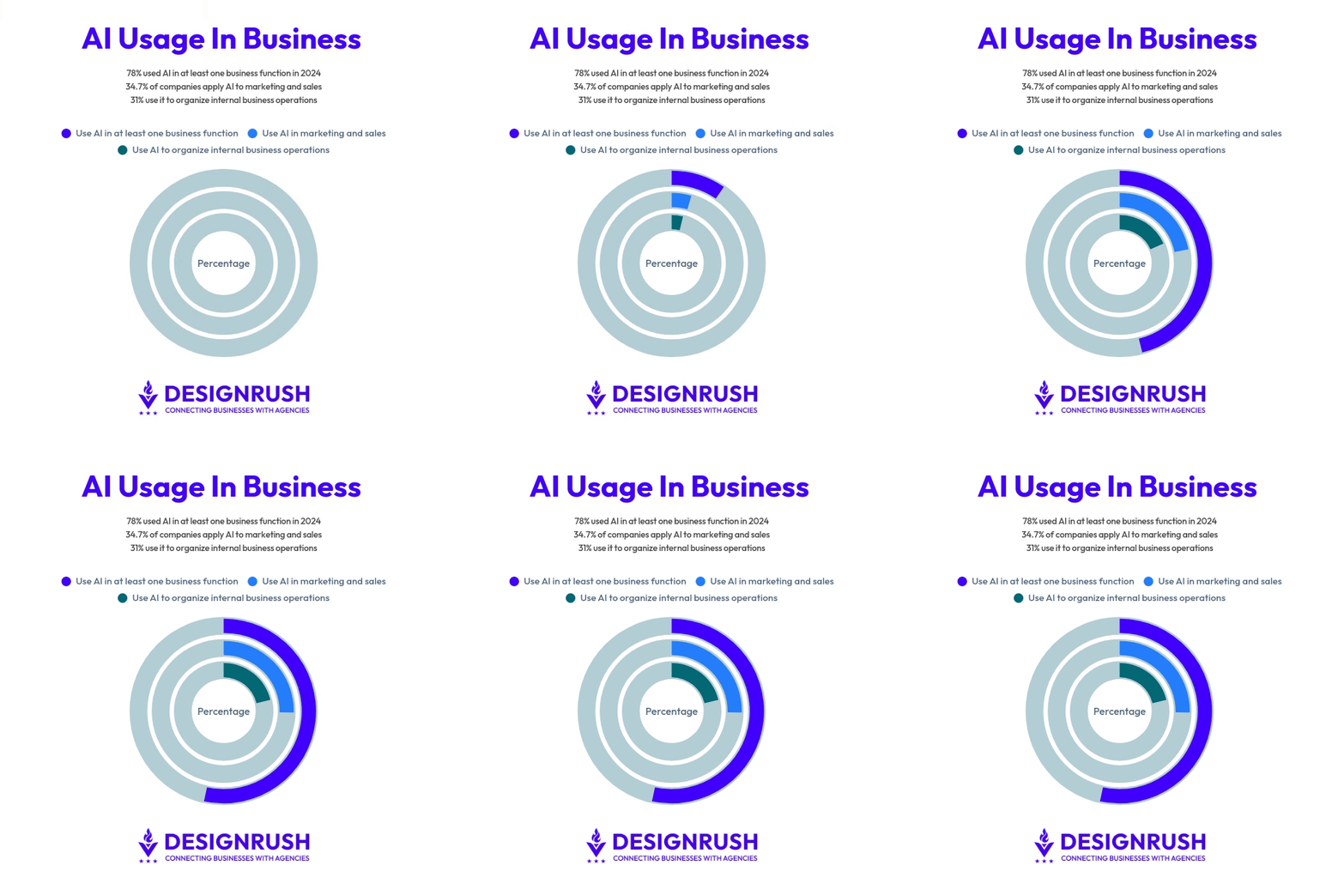
Lead scoring and segmentation Campaign personalization Predictive sales forecasting Content generation with generative AI According to enterprise data, 34.7% of companies using AI apply it to marketing and sales , while 31% use it to organize internal business operations .
78% of organizations reported using AI in at least one business function in 2024, up from 55% the year before , and McKinsey found the most common enterprise uses include IT, marketing and sales, and service operations.
Improve operational efficiency across departments AI automation systems can streamline processes across operations, finance, HR, supply chain, and IT. Instead of relying on manual coordination, businesses can deploy intelligent automation systems that manage workflows automatically.
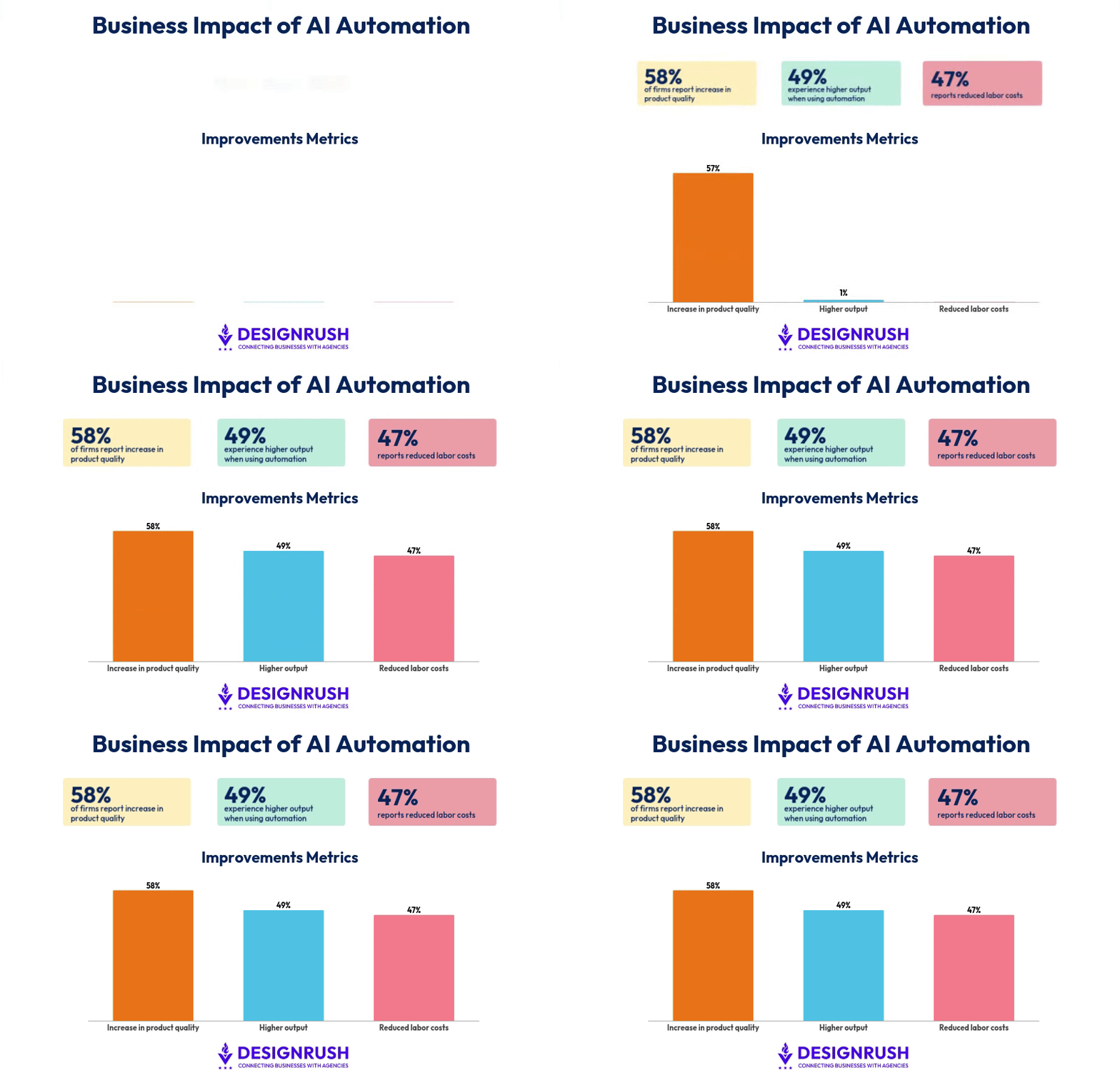
Companies implementing automation report several measurable improvements:
58% see increased product quality49% experience higher output47% report reduced labor costsSalesforce reports that 30% of service cases were resolved by AI in 2025 and expects that share to reach 50% by 2027 .
The global robotic process automation (RPA) market was valued at about $22.6 billion in 2025 $110 billion by 2034 , highlighting how quickly businesses are investing in process automation technologies.
How long does it take to implement AI workflow automation? The timeline for implementing AI workflow automation varies depending on the workflow's complexity, data quality, and the number of systems that require AI integration.
Top AI automation agencies can launch small automation projects within a few weeks , most mid-scale implementations take 3-6 months , and large enterprise automation initiatives may require 6-12 months or longer to fully scale.
Simple automation projects can launch in a few weeks Automating a single workflow, building a simple AI chatbot, or deploying basic automation tools can happen relatively quickly.
If the organization already has clean data and clear requirements, typical timelines include:
2-4 week s for basic conversational AI or chatbot systems6-2 weeks for standard workflow automation projectsMost business AI automation projects take 3-6 months Industry guides estimate that AI automation initiatives take about three to six months on average, covering phases such as discovery, data preparation, model development, and deployment.
During this period, AI automation agencies typically perform several steps:
Identifying automation opportunities and defining business goals Preparing and structuring data for AI systems Developing and testing models or automation workflows Integrating the solution with existing software platforms Deploying the system and training internal teams Enterprise AI automation can take 6-12 months or longer Large organizations implementing AI-powered automation across multiple departments often require longer timelines.
AI-enhanced automation projects typically take 6-12 months to fully deploy. Enterprise-wide intelligent automation programs may take 9-18 months to scale across the organization. Integrating AI systems with existing infrastructure can require 4-8 weeks for integration , 4-6 weeks for testing , and another 2-4 weeks for deployment and stabilization.
Many AI automation companies start with pilot projects before scaling automation.
Rather than automating everything at once, most organizations start with a proof-of-concept or pilot automation project.
A proof-of-concept for AI agents or agentic AI workflows can be completed in about 4-6 weeks, before expanding to full production systems.
What are the warning signs that I'm choosing the wrong AI automation agency? When evaluating top AI automation providers, certain warning signs can indicate that a partner may not deliver real business value.
Below are several red flags decision-makers should watch for:
The agency cannot define clear business outcomes or ROI 95% of corporate generative AI pilots fail to deliver measurable financial impact, often because projects were launched without clear business objectives or success metrics.Ignores data quality and data readiness Promises a fully autonomous AI without discussing integration 40% of agentic AI projects may be canceled by 2027 , largely because integrating agent systems into legacy workflows can be complex and expensive.Lacks a structured implementation process a structured strategy often struggle to scale AI initiatives. Studies show that 47% of AI initiatives never move beyond the pilot stage , often because organizations lack a clear implementation roadmap.Recommends automation without understanding your workflows Overlooks change management and employee adoption Treats AI projects as isolated experiments What questions should I ask these agencies before signing the contract? Before hiring a company, businesses should evaluate its experience, technical services, and project execution approach.
Ask AI automation companies the following questions before you sign the contract:
Relevant background What industries and business problems have you successfully automated? Can you provide measurable results from previous AI automation projects? What experience do you have with AI technologies like machine learning, generative AI, or AI agents? Do you provide AI consulting and strategic guidance, or only development services? Services and Processes What AI automation services do you provide end-to-end? How do you identify the best workflows for automation? What AI tools and platforms do you use? How do you handle AI integration with existing systems? Related to Your Project What timeline should we expect for implementing AI workflow automation? What ROI should we expect from this automation project? How will you ensure data security, governance, and compliance? What support and optimization do you provide after deployment? How do I choose the right AI automation company for my business? Businesses should assess strategic fit, implementation expertise, and the agency's ability to deliver measurable outcomes from AI automation solutions. With AI adoption growing rapidly, selecting the right partner can determine whether automation initiatives succeed or fail.
Look for proven experience in real business workflows Evaluate their ability to deliver measurable business value Assess their expertise in AI integration and systems architecture Choose companies that focus on high-impact use cases Look for strong consulting and strategic guidance Evaluate governance, security, and long-term support Prioritize partners that understand your industry
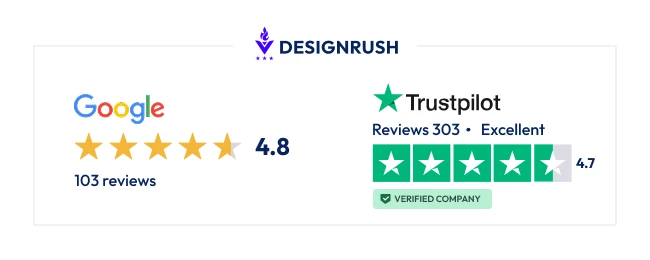
Why Companies Trust DesignRush Rated 4.8 on Google and 4.7 on Trustpilot , DesignRush Agency Directory is a reliable resource for finding top AI automation companies. We owe this to our executive selection team, which follows a strict screening process when featuring agencies on the platform, assessing key performance indicators, like portfolio, client reviews, and industry reputation.
Learn more about DesignRush Agency Ranking Methodology .
Sources DesignRush sustains a directory of over 40,000 agencies categorized by service category, location, expertise, and reviews. We build our database in two ways:
Our dedicated team of agency experts actively searches the web for top-performing companies. We then pull information from their websites, online presence, and client testimonials to verify their status and qualifications prior to listing. The agencies listed get notified of their profiles on the website and they can choose to claim it or not, which suggests their availability for more collaborations. Agencies can also reach out to DesignRush and must go through the verification process prior to being listed.

 Proposals