

A brand strategy maps out your long-term plan to build recognition and win consumer preference. This vital part of your business success can't be ignored. Brands that lack proper planning risk becoming watered down and losing loyal customers. You can dramatically boost awareness with the right approach, as well as bring customers back, and get people talking about your brand naturally.
Would you like your brand to stand out from the forgettable? Let's look at the essential elements you need to craft a brand strategy that strikes a chord with your audience and brings lasting impact.
Steps to Get Started with Your Brand Strategy
A brand strategy serves as your business's roadmap, guiding decisions about what actions to take and which ones to avoid. This comprehensive plan outlines the fundamental principles that shape public perception of your company. To devise and execute one, here’s what you’ll need to get right.
- Understand what a brand strategy is and isn't
- Align your brand strategy across all channels
- Ensure consistency across marketing and communication channels
- Integrate brand strategy with business operations
- Build your brand through digital and social media
1. Understand What a Brand Strategy Is and Isn't
A brand strategy is not just a logo, tagline, or marketing campaign — it’s the foundation of how your brand is perceived, remembered, and trusted by your audience. It’s a long-term plan that defines your business’s core identity, values, target audience, and unique positioning in the market. Without one, businesses risk sending mixed messages, diluting their brand identity, and losing customer trust.
At its core, a brand strategy:
- Provides a clear direction for your business’s growth and market positioning.
- Aligns internal teams with a cohesive brand message and vision.
- Shapes how customers feel about and interact with your brand.
- Ensures brand consistency across all touchpoints, from marketing to customer service.
When launching a new brand, it’s especially important to create a strong and consistent strategy from the start. Establishing your brand’s identity early on ensures that you make a lasting first impression on your target audience.
For brand strategies in 2025, “customer service and personalization will have the greatest return on investment,” says Curt Schreiber, Chief Creative Officer and Founder of VSA Partners. He continues: “There are simply too many choices, channels and relatable experiences — people are overwhelmed, and they want someone to solve their most pressing problems and to do it fast.”
Schreiber explains that because people now expect the same seamless experience they found on platforms like Amazon or the Apple Store, regardless of industry, a strong brand strategy must prioritize easy transactions, hassle-free returns, and knowledgeable, empathetic representatives to meet these evolving expectations.
2. Align Your Brand Strategy Across All Channels
Your brand alignment bridges internal values with external messaging, ensuring a cohesive and recognizable presence. When your brand is well-aligned, your core messages become clearer and more impactful across all platforms. To achieve this, focus on:
- Understanding your target audience’s needs
- Maintaining a consistent brand voice
- Creating a cohesive visual identity
- Delivering unified messaging
- Providing a seamless and consistent customer experience
3. Ensure Consistency Across Marketing and Communication Channels
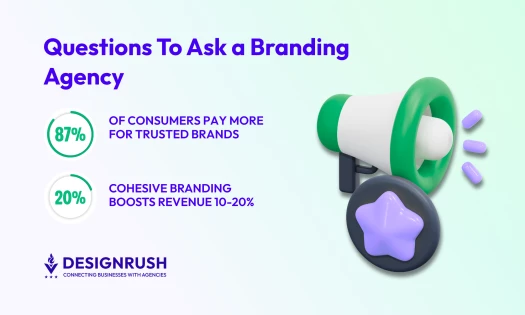
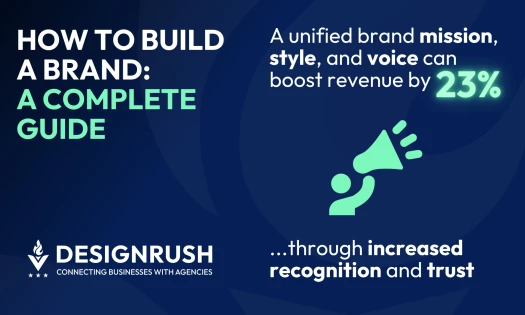
Brand messaging consistency can boost revenue by 10-20% as customers expect to have similar experiences with your brand across all marketing platforms. Therefore, maintaining brand consistency involves using the same colors, fonts, and logos while keeping your messaging aligned with your values and tone of voice.
When consumers experience inconsistent branding, they tend to lose trust. This often results in them abandoning their searches, “feeling like they are in the wrong place”, Stephanie Shreve, chief marketing officer of Powerchord, explains.
4. Integrate Brand Strategy with Business Operations
Your brand strategy, business strategy, and competitive strategy should function as a cohesive framework, each reinforcing the other. Beyond external messaging, it’s also about ensuring that your internal operations and organizational structure align with the promises you make to your customers.
To build a brand that delivers on its commitments, start by evaluating your current operations against your brand standards. Identify any gaps where processes, resources, or team alignment may be falling short. These areas may require investment, restructuring, or refinement to ensure that your brand’s values and messaging are consistently upheld across every customer touchpoint.
5. Build Your Brand Through Digital and Social Media
Social media branding has become crucial. Recent data shows 78% of consumers agree that a brand's social media presence now plays a greater role in earning their trust than it did a year ago.
Platforms like LinkedIn, Facebook and Instagram are a great way to get direct customer connections. Your digital presence should keep unified brand messaging while you adapt content for each channel's specific strengths and requirements.
Real-Life Examples of Successful Brand Strategies
Looking at successful brands reveals powerful lessons in strategic brand building. Let's explore how some of the world's most recognized companies crafted their winning strategies.
- Amazon started as an online bookstore named Cadabra in 1994. Through strategic evolution and continuous innovation, the company expanded into electronics, clothing, and household items, eventually developing services like Amazon Web Services and Amazon Prime. Their success stems primarily from their unwavering focus on customer-first principles, embedding convenience, speed, and personalization into their brand DNA.
- Starbucks transformed from a small store selling ground coffee beans in Seattle's Pike Place Market to a global coffeehouse chain. The pivotal moment came in 1982 when Howard Schultz joined as director of retail operations. Schultz's vision reshaped Starbucks into a destination for social connection over coffee, a “third place” between home and work — a lifestyle brand that fosters community.
- Nike stands out through extensive advertisements and marketing messages that align perfectly with their brand values of passion, innovation, and desire. Nike’s brand strategy thrives on emotional storytelling and athlete-driven narratives, ensuring every campaign reinforces the empowering “Just Do It” ethos, making their brand an aspirational force rather than just a product label.
- Apple exemplifies differentiation in brand strategy by emphasizing esthetics and user experience. Their "Think Different" campaign wasn't merely marketing — it positioned Apple as a symbol of creativity and individuality. Through focusing on innovation and design, they carved out a distinct niche in an already competitive industry.
- Taco Bell transformed its brand strategy by focusing on customer behavior, recognizing that its primary audience — young consumers — engaged more with digital content than traditional TV. This insight led to a bold shift toward social media-driven marketing and innovative, customer-centric campaigns that kept the brand top of mind.
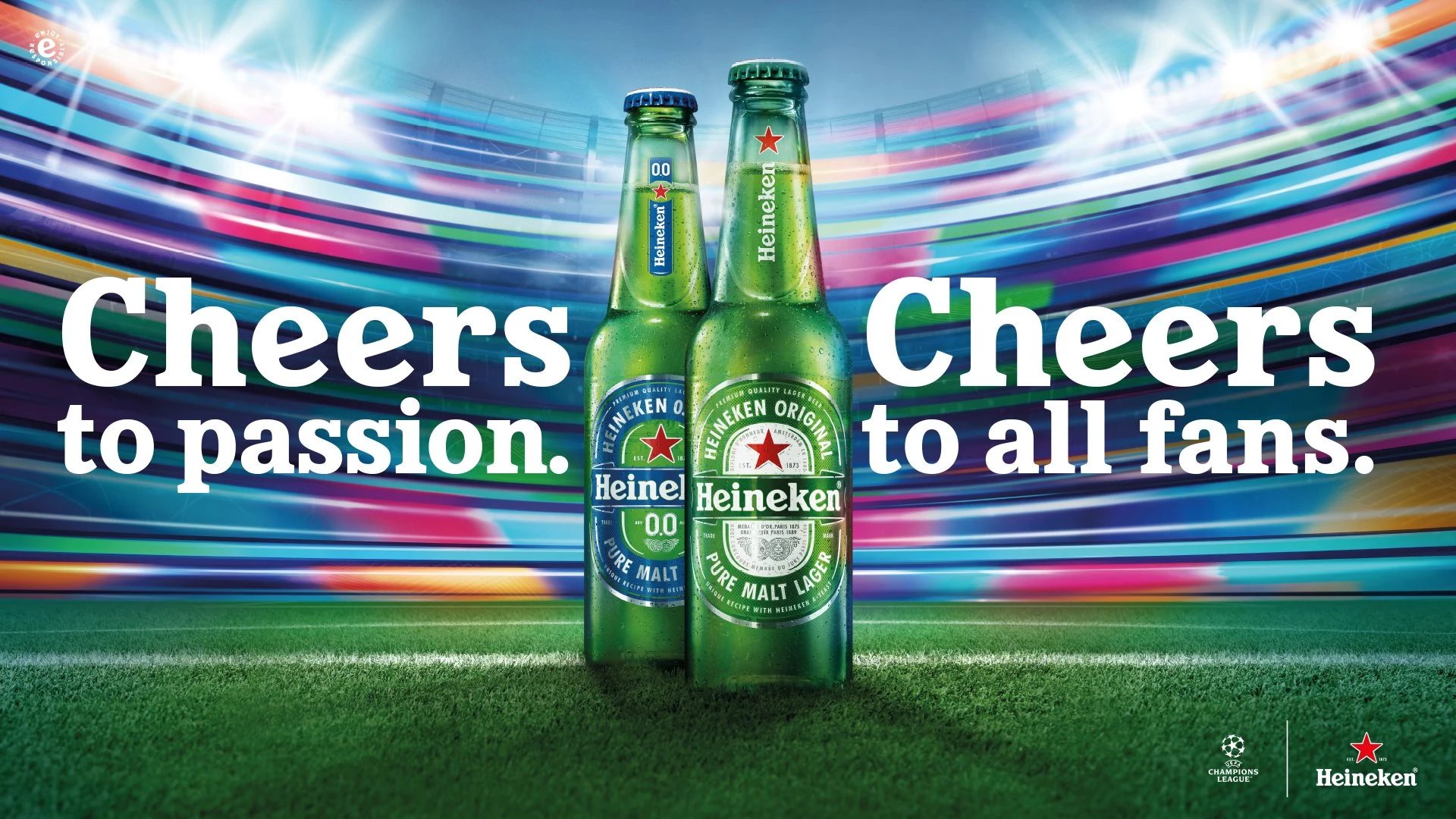
- Heineken has strategically partnered with the UEFA Champions League since 1994, allowing it to effectively reach a vast audience of football fans worldwide, reinforcing its brand image and expanding its market reach. This shows the important role that strategic partnerships play in brand strategy.
- GoPro has effectively harnessed user-generated content (UGC) to enhance its brand presence. Through initiatives like the GoPro Awards, the company encourages users to share their best footage, offering rewards such as gear, exposure, and cash prizes. This strategy not only provides GoPro with authentic content but also fosters a community of brand ambassadors.
The success of these brands underscores a crucial point: effective brand strategies require deep understanding of target audiences, consistent messaging, and the ability to evolve while maintaining core values.
Each company's journey demonstrates that successful branding isn't about following a single formula, but rather about finding unique ways to connect with and serve their specific market segments.
Measuring and Evolving Your Brand Strategy
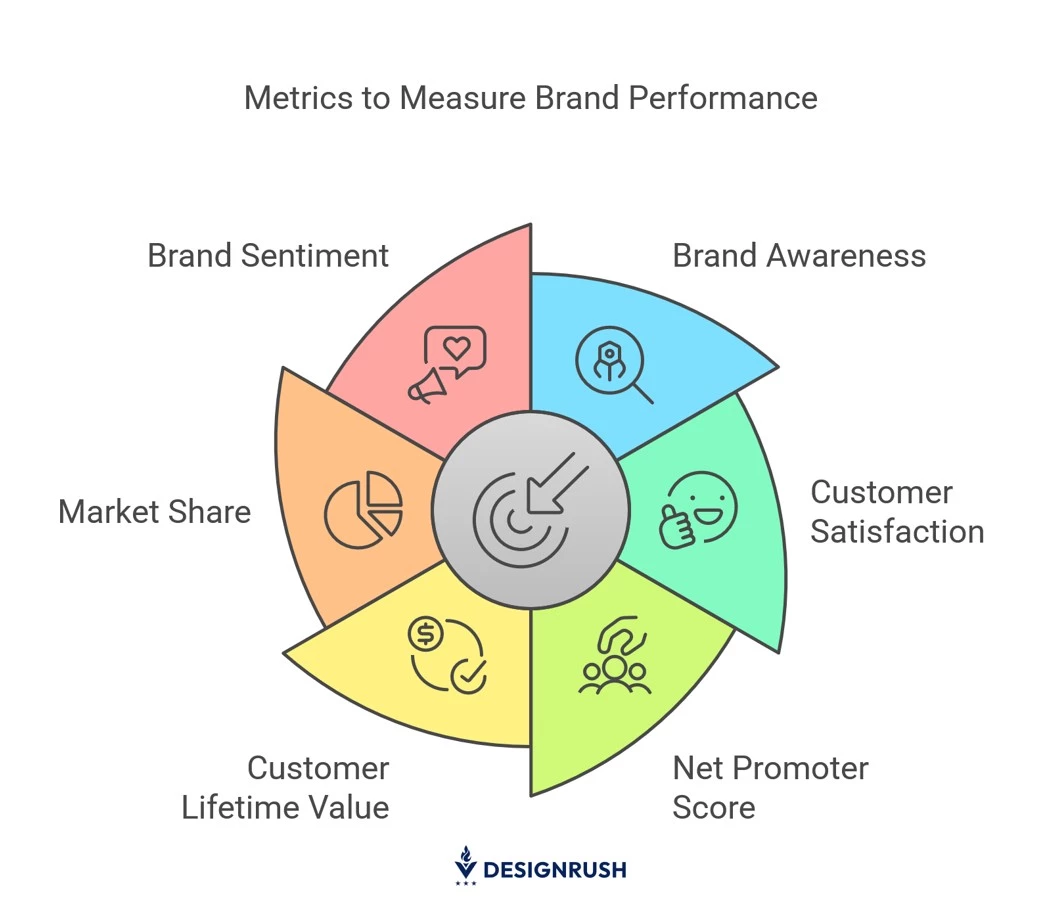
To effectively measure the success of your brand strategy, it's important to track key performance indicators (KPIs) that reflect your brand’s impact and growth. Essential brand performance indicators include:
- Brand awareness and recognition: Measures how well consumers can identify your brand and its elements across various channels.
- Customer satisfaction scores: Reflects how satisfied customers are with your products, services, and overall brand experience.
- Net promoter score (NPS): Indicates customer loyalty by measuring how likely customers are to recommend your brand to others.
- Customer lifetime value (CLV): Estimates the total revenue a customer will generate for your brand over their entire relationship with you.
- Market share metrics: Tracks your brand’s share of the total market, helping assess your competitive position.
- Brand sentiment ratio: Analyzes customer emotions and opinions toward your brand, providing insight into how it’s perceived.
Feedback and Continuous Improvement
Customer feedback serves as an invaluable tool for measuring the success of your brand’s adaptation. Brands obtain feedback through multiple channels:
- Social media listening
- Online reviews
- Customer support interactions
- Satisfaction surveys
Analyzing this feedback provides insights into consumer satisfaction and perception of brand changes. Organizations that actively seek and implement customer feedback demonstrate their commitment to continuous improvement, ultimately leading to increased customer retention and advocacy.
Sarkis Hakopdjanian, president of Optiimus Dental, Medical and Healthcare Marketing, advises businesses to measure the impact of branding decisions through customer data. He points to satisfaction surveys, social mentions, and online reviews as essential tools. According to him, the next step is sentiment analysis to interpret customer opinions.
“Capturing this data can be time-consuming or easy to overlook,” he acknowledges, “but it provides a competitive advantage by helping businesses understand customer challenges and how to best solve them.”
Brian Sooy, president of Aespire, explains that the KPIs a brand should track depend on various factors, including the company’s specific brand strategy and long-term goals. “It really depends on the company, its specific brand strategy, and its long-term plan to outmaneuver competitors, engage customers, and design a sustainable competitive advantage,” he says.
He adds that for service-based companies, revenue analytics should be a primary KPI. “They need to know which marketing channels actually generate revenue, rather than relying on vanity metrics — like impressions, clicks, and conversions — that their agency or marketing team provides.”
Adapting to Changes in the Market
Market adaptation requires developing a deep understanding of shifts to identify new opportunities and mitigate risks. Simultaneously, analyzing consumer preferences, industry reports, and market research data helps entrepreneurs make informed decisions about their products or services.
To build resilience, brands must focus on:
- Evaluating current business models
- Developing flexible business plans
- Strengthening customer relationships
- Diversifying product offerings
Kristin Marquet, founder of Marquet Media, explains that her team leverages behavioral data to anticipate and adapt to shifting consumer sentiment by integrating real-time analytics with PR-driven brand storytelling.
She emphasizes the need for agencies and brands to move beyond traditional demographics and instead focus on consumer behavior patterns, engagement signals, and sentiment shifts across various channels.
“Agencies and brands must go beyond traditional demographics and focus on consumer behavior patterns, engagement signals, and sentiment shifts across social media, press coverage, and digital interactions,” she says. “By analyzing which stories, brand messages, and content formats drive the most engagement, we can refine positioning strategies and proactively shape narratives that resonate with evolving audience expectations.”
Common Myths & Mistakes to Avoid in Brand Strategy
Understanding common myths and mistakes in brand strategy helps prevent costly missteps in your branding journey. Let’s explore the most common ones:
- Thinking brand strategy Is only skin deep
- Overcomplicating your brand identity
- Ignoring the customer perspective
1. Thinking Brand Strategy Is Only Skin Deep
“Many people believe that branding is primarily about your visual identity — a nice logo, a catchy tagline, consistent colors, etc.,” says Sarah Russell, Founder of Aloide. “Those elements are certainly important, but a brand is so much more than that. Branding is about perception, not just aesthetics. A brand isn't what you say it is — it's what your customers believe it is based on their experience.”
Russel adds that since brand aesthetics are becoming easier to generate with AI-tools, “arguably emotional connection, positioning, and a solid brand strategy matter more now than ever.” It means that brands need to “stop focusing on ‘looking different’ and start focusing on 'acting different’.”
2. Overcomplicating Your Brand Identity
Even though flashier isn't always better, many brands fall into the trap of over-complication. Some of the most iconic brand logos, like McDonald's or Fed-Ex, are memorable because they use simple – clean looks that are easily identifiable.
Overcomplicated visual elements can also distract from the core message. Generally, successful brands maintain simplicity by:
- Using simple colors and symbols
- Avoiding cluttered designs
- Focusing on clear communication
- Maintaining consistent visual elements
3. Making Poor Brand Investments
Making the right investments for brand longevity involves prioritizing strategies that foster long-term growth instead of focusing on immediate, short-term rewards.
“The most impactful brand investments today are those that build lasting customer relationships, enhance adaptability, and create a distinct market presence,” says Matvei Lisitsa, art director for QLO Agency.
He emphasizes that customer experience should be a top priority. “Brands that invest in seamless interactions, personalization, and community building see higher retention and lifetime value,” he adds. “AI-driven insights allow businesses to anticipate customer needs, refine messaging, and optimize touchpoints, ensuring a competitive edge.”
Donnica Hawes-Saunders, founder and CEO of The Averity Group, advises businesses to invest in brand storytelling, emphasizing that it has never been more important.
“Consumers crave genuine connections with brands that reflect their values, experiences, and aspirations,” she says. “Companies that invest in human-centered marketing—rooted in real stories, purpose-driven messaging, and relatable voices—will build long-lasting trust and loyalty.”
Brand Strategy: Key Takeaways
You can create a cohesive presence that resonates with your audience by aligning your brand’s messaging, visual identity, and customer experience. Embracing strategic partnerships, leveraging digital platforms, and focusing on consistency across all channels can further strengthen your brand’s position in the market.
Remember, successful brands are built on more than just great products — they are defined by the emotional connections they establish with their customers. Stay adaptable, monitor your performance, and avoid common pitfalls to ensure your brand thrives for years to come. To ensure your brand strategy is as effective as possible, leverage leading expertise to guide your efforts and drive sustained success.

Our team ranks agencies worldwide to help you find a qualified partner. Our Agency Directory lists the top branding agencies, as well as:
- Top Corporate Branding Agencies
- Top Startup Branding Agencies
- Top Digital Marketing Agencies
- Top Creative Agencies
- Top Branding Agencies In Washington DC
Our design experts spotlight the most innovative projects from around the world. With recent branding shifts making waves, now’s the perfect time to explore our Awards section for the latest and best in logo rebranding design.
Brand Strategy FAQs
1. What is the difference between brand strategy and marketing strategy?
A brand strategy in marketing focuses on building and defining the long-term direction of your brand. It encompasses your brand’s mission, values, personality, target audience, and overall positioning in the market.
A marketing strategy, on the other hand, is more tactical and short-term in nature. It involves specific campaigns and activities (such as social media ads, content marketing, SEO, etc.) designed to promote your brand and reach customers.
While marketing is a tool to execute the brand strategy, brand strategy itself guides the overarching vision and goals of your brand.
2. How often should I revisit my brand strategy?
It's essential to revisit your brand strategy periodically to ensure it stays relevant and aligned with your business goals and the market landscape. In general, you should review your brand strategy every 1-2 years.
However, if your business experiences significant changes such as new product launches, a shift in target audience, or major industry shifts, it’s a good idea to revisit your strategy sooner.
Regularly assessing your brand’s performance through KPIs (Key Performance Indicators) will also help you determine if adjustments are needed.

-preview-webp.webp)