
Our expert analysts ranked the top Alexandria integrated marketing agencies that create and implement cohesive marketing strategies using advertising, digital marketing social media and more. Filter by price, location, experience and more to discover the best-performing companies and choose one that best fits your business needs.
Best Integrated Marketing Company In Alexandria Below
3 Companies - Rankings updated: April 01, 2026
We evaluate every agency on DesignRush according to expertise credentials and client satisfaction ratings. Some placements are sponsored.
The Digital Agency in Southern California and D.C. driven by purpose.
New Target is a leading, award-winning digital agency providing marketing, websites, design, and branding. We've delivered for global brands you know and nonprofits you love for over 25 years from creative offices in Southern California and Washington D.C. [... see all New Target, Inc. reviews ]- Location
- Alexandria, Virginia
- Number of Employees
- 50 - 99
- Portfolios Count
- 8 Projects Listed
Data sourced from the agency's DesignRush profile, its website, and other relevant accountsNew Target, Inc. Services
Comprehensive analysis done by DesignRush Agency Experts.Clients and Projects
View Full Portfolio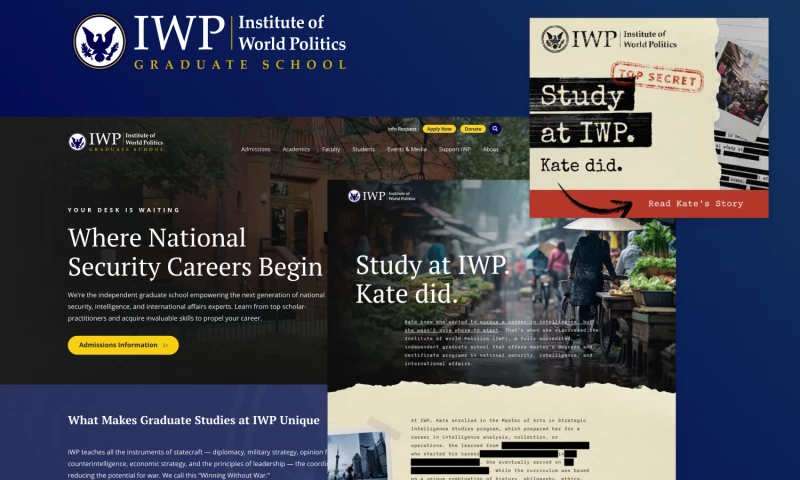
Digital Marketing Project for Higher Education Company Institute of World Politics Marketing, Creative & Website Design 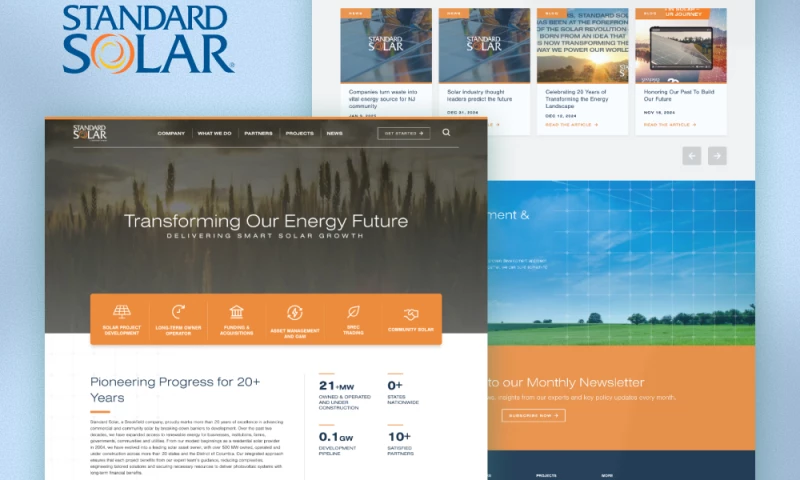
Digital Marketing Project for Energy & Mining Company Standard Solar Website & Marketing
Reviews verified by DesignRush and sourced from the agency's profileNew Target, Inc. Reviews & Testimonials

Digital Strategy Review from Meara Cummings
We've had a fantastic experience working with the New Target team so far in our rebranding project. This is the first formal rebrand in the organizations history, so it was critical to get it right. From day one, Hannah (account manager) and Rachel (lead designer) brought a thoughtful, collaborative, and incredibly well-structured approach to the process.They have worked seamlessly with our rebrand committee, balancing creative exploration with clear communication and deadlines that kept us moving forward. After this strategic and thoughtful approach has resulted in a modern new logo and comprehensive brand guidelines that truly capture the spirit of the association.We are so grateful for their partnership and would highly recommend New Target to any organization looking for a creative / digital partner!
Show more
Digital Strategy Review from Anisha Carter
Rachel and Hannah were incredible! They were attentive, inclusive, and willing to adjust based on my team's feedback. Hannah was very proactive, and we didn't have to "ask" for this anything. It was just already available. She helped us craft a plan/roadmap and delivered against it as expected and often times above and beyond. As far as design, Rachel helped bring our ideas to life. She also leaned into the areas that we demonstrated more energy around. She pulled inspiration from a variety of areas to help us decide on a name and develop our 'branding starter-kit' including logo, style guide, and initial image assets. Both of them contributed in the design process and helped us focus which made our iterations more efficient.
Show more
Digital Marketing Review from Mike Suser
I have worked with New Target (and its predecessor) for twenty years. My business would not have been successful without their excellent assistance. They have redeveloped my website and kept it running smoothly. They have done a wonderful job with their digital marketing and work closely with me to create new directions for advertising.
Show more
Data sourced from the agency's DesignRush profileHealthy Schools Healthy People UNESCO Identity Theft Resource Center Partners of the Americas Hire Autism
Website Design & Maintenance | Application Development | AI Consulting | SEO Marketing
JanBask Digital Design is a name to reckon upon! We are a 360° Digital Solution Provider. With upbeat approaches, seasoned professionals & time-proven solutions, we know how to take businesses from now to wow. [... see all JanBask Digital Design reviews ]- Location
- Alexandria, Virginia
- Number of Employees
- 100 - 249
- Average Hourly Rate
- $100/hr
- Portfolios Count
- 9 Projects Listed
Data sourced from the agency's DesignRush profile, its website, and other relevant accountsJanBask Digital Design Services
Comprehensive analysis done by DesignRush Agency Experts.Clients and Projects
View Full Portfolio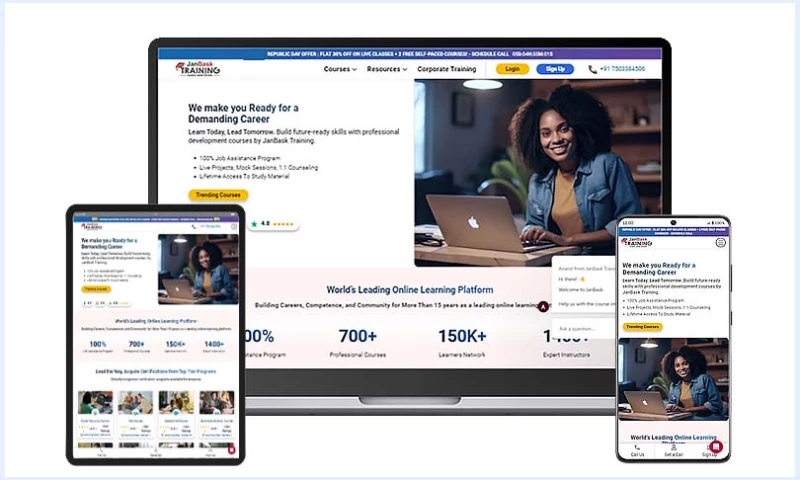
Digital Marketing Project Learning Management System
Reviews verified by DesignRush and sourced from the agency's profileJanBask Digital Design Reviews & Testimonials

Web Development Review from Terry Heller
As a growing roofing company, we knew our old website wasn't doing justice to the kind of work we do at Preferred Roofing. It looked outdated, was hard to navigate, and didn't reflect the level of professionalism we bring to our projects. We wanted to change that. Our main goals were to create a new website that would clearly show our services, build trust with new visitors, and make it easier for people to contact us or request quotes online. We also wanted the site to work well on mobile phones because a lot of our customers use their phones to search for roofing services.So, we hired JanBask Digital Design to completely redesign and develop our website. We were looking for a partner who would not only build us a great-looking site but also guide us through the process and make sure the site helped us grow our business.They asked detailed questions about our services, customer base, and how we wanted people to feel when they visited the site.Scope of the work included:Designing a responsive website from scratchCreating unique pages for all our services (roof repairs, installations, gutter services, etc.)Adding a clean, easy-to-use contact form and quote request systemThe new website has made a real difference for us. We've received more calls and quote requests since the launch, and customers often mention how easy it was to find what they were looking for on our site. The new layout makes our services very clear, and the site feels clean, modern, and professional which is exactly what we wanted. It has definitely helped us build more trust with new visitors.Project management was excellent. JanBask kept everything organized and walked us through each step. They gave us regular updatesWhat stood out the most was their care and attention to detail. They didnt just build a pretty website they made sure it worked for our business. They didnt rush the process either they truly wanted us to be happy with the final product.
Show more
Web Development Review from Jason Anish
When we approached JanBask Digital Design, our companyAustin Financial Services, Inc.was going through a critical branding transition. While weve been around for over 40 years and have built a solid reputation in asset-based lending, our online presence didnt reflect the trust, speed, and flexibility we offer to our clients. We needed more than just a website redesignwe needed a digital experience that could communicate our value, streamline how potential clients learn about our services, and ultimately drive real business conversations.We specifically hired JanBask to help us accomplish a few main goals:Modernize our websites look and feel without losing the credibility and seriousness expected of a financial company.Improve the user journey for business owners and financial decision-makers who are looking for fast, flexible credit solutions.Create a strong foundation for future digital marketing efforts like SEO, paid ads, and client onboarding automation.Make the site mobile-friendly and easy to navigate, especially for busy executives browsing on the go.We had tried updating our site with internal resources and freelancers before, but it never really hit the mark. So we were cautious going inbut hopeful.JanBask started the project with a series of discovery calls where they really took the time to understand not just what we do, but why we do it and who we do it for. They dug into our client personas, our lending process, and even how our sales team follows up on leads. It felt like they werent just designing a websitethey were building a tool tailored to how we actually work.What stood out most to us was their ability to translate financial language into something both clear and client-friendly. Were used to dealing in technical lending terms, but JanBask found a way to keep things professional and easy to understand. Thats not easy to pull off.
Show more
Web Design Review from Dharmanshu Das
Janbask attention to detail and commitment to excellence is truly remarkable. They took the time to understand our goals and preferences, and then created a website that perfectly represents our brand and message. I'm so grateful for their hard work and dedication.
Show more
Data sourced from the agency's DesignRush profileSalesforce GW Facebook Embassy of Libya DC PA Secondary Transition Defence Management Institute AeroGreen BlueRidge Lifebulb Hayats Pro
Award-Winning Full-Service Marketing and Communications Firm
While Ironistic has offices around the United States, our flagship station is in Alexandria, VA just outside the federal heartbeat of our nation. Needless to say, we work with many government-related entities. [... view Ironistic profile ]- Location
- Alexandria, Virginia
- Number of Employees
- Under 49
- Average Hourly Rate
- $125/hr
- Minimal Budget
- $1,000 - $10,000
Data sourced from the agency's DesignRush profile, its website, and other relevant accountsIronistic Services
Reviews verified by DesignRush and sourced from the agency's profileIronistic Reviews & Testimonials
Collaborative For Student Success's Review Sourced from Google
Ironistic has been a long-time and trusted partner of the Collaborative for Student Success for almost 10 years. We've designed, developed, and launched nearly as many websites with Ironistic's development team and are happy to be able to work closely across a suite of sites and efforts. Would highly recommend for small-to-large firms, organizations, or even individuals who are looking for high-quality websites and digital solutions.
Show moreMeredith Fortney's Review Sourced from Google
The Ironistic team just helped us refresh our recruiting site and it is STUNNING! It was a very smooth process and the team provided us freedom of creativity while offering best practices for user experience, which all came together perfectly. We stayed exactly on schedule due to the fantastic communication from the team and on budget (hooray!). I highly recommend Ironistic for any of your website creation, management, or hosting needs!
Show moreDavid Conmy's Review Sourced from Google
From the very beginning, I was really impressed with Ironistic. They excel in keeping web development projects structured and organized. Having no website development experience, myself, this made the process more constructive and collaborative, especially when conveying my requests. Additionally, they have a great knack for attention to detail, which was essential for the marketing goals of our website. I’m very pleased with the final product and impressed with how quickly they were able to develop our site!
Show more
Data sourced from the agency's DesignRush profileWashington Redskins PenFed Foundation Toyota REI Systems Zeiders Republic Airlines United Arab Emirates Nestle OAAA ASCE


Frequently Asked Questions
What is an integrated marketing agency?
An integrated marketing agency is an agency that offers a full spectrum of marketing solutions, including branding, creative strategy, design, digital marketing, web development, and communication. Its team of experts specializes in various marketing areas, serving its clients with a uniform brand identity combined with different strategies that make up a holistic digital marketing campaign.
Integrated marketing companies also deliver multi-channel campaigns by weaving consistent brand messaging to audiences across platforms. The channels can be categorized as digital and traditional, namely:
Digital integrated marketing channels:
- Social media: Platforms like Facebook, Instagram, and TikTok, among others, allow businesses to connect with their target audience directly or through influencers.
- Email: Sending targeted emails is a powerful tool for nurturing leads, promoting products or services, and building customer loyalty.
- Blogs: A platform to share valuable content with a targeted audience. Businesses can establish themselves as industry thought leaders, improving their websites’ search engine optimization (SEO) precisely through blogs.
- Videos: A powerful, engaging format that captures attention, explains complex topics, and showcases brand personality. Agencies use videos for product demonstrations, explainer videos, customer testimonials, or behind-the-scenes glimpses into a company’s culture.
- Podcasts: A trendy platform to reach niche audiences and build deeper connections through audio storytelling.
Traditional integrated marketing channels:
- Print media: Newspapers, magazines, and brochures can still be effective for reaching specific demographics or complementing digital campaigns. They offer a tangible touchpoint and can be strategically placed in relevant publications.
- Direct mail: Sending physical promotional materials like flyers or catalogs to potential customers can be an excellent way to personalize outreach.
- TV and radio: These traditional broadcast mediums offer broad reach, but audience targeting is less precise than digital channels. However, they can be impactful in building brand awareness or promoting specific events.
- Out-of-home (OOH) advertising: Billboards, signage, and other placements in high-traffic areas can create lasting brand impressions and product visibility. OOH advertising can be particularly effective for local businesses or geographically targeted campaigns.
Integrated marketing agencies needed to be consistent and updated to keep up with the shifting customer purchasing behaviors. Consumers use more than one channel to get to know a brand.
Data from Proxima Group shows that companies waste almost 60% of their digital budgets on non-human traffic and poor viewability and placement. The challenges mentioned highlight the need to establish a more targeted and consistent brand across channels, especially if it takes 5 to 7 brand impressions before a customer remembers a brand.
An integrated marketing company helps brands align their identities to their strategies, overcome disjointed marketing, and connect better to their audience. One example is the case study of CNC Masters, a leading manufacturer of desktop and tabletop machines. The client contacted Sitemap.io to grow their online presence and lower the cost per lead.
Sitemap.io deployed an integrated marketing approach by combining content marketing, SEO, and lead generation services centered on the client’s ideal customer profile (ICP). This involved creating targeted content such as articles and white papers, designed for mid-size machining and industrial companies.
The team optimized product landing pages and strategic guest posting on relevant websites. Then, the team created a targeted email marketing funnel to keep potential customers engaged with relevant content and promotions.
As a result, CNC Masters gained the following wins, establishing itself as a leader in its niche industry:
- Link-building initiatives increased online sales by 40% in 18 months
- 80% increase in product quote request
- 137% rise in organic visitors
- 30% hike in conversions from email marketing.
What do integrated marketing agencies do?
Integrated marketing agencies offer a comprehensive suite of solutions, helping businesses implement a cohesive and effective marketing strategy. They take a comprehensive approach to marketing by combining different strategies and channels to provide a unified experience for consumers. Their main objective is to ensure that all aspects of marketing communication work together seamlessly to deliver a uniform message, boost brand awareness, and accomplish marketing goals. They have the expertise, resources, and tools to provide quality services to companies, such as:
- Market research and analysis: Conduct thorough market research to understand your industry, competitor landscape, and target audience demographics and behavior.
- Omnichannel strategy development: Build a unified marketing strategy that leverages multiple channels to deliver a consistent brand message and customer experience.
- Branding and identity development: Create your brand logo, brand voice, and messaging that resonates with your target audience.
- Content creation: Produce high-quality content like website copy, social media posts, blog articles, email marketing campaigns, and video content.
- Graphic design: Design visual elements like brochures, presentations, infographics, and social media graphics that align with your brand identity.
- Search engine optimization (SEO): Improve your website’s ranking in search engine results pages (SERPs) for relevant keywords to drive organic traffic.
- Pay-per-click (PPC) advertising: Manage PPC campaigns across platforms like Google Ads and social media advertising to generate targeted leads.
- Social media marketing: Develop and execute strategies to build brand awareness, engage with your audience, and drive conversions. Companies can utilize this by creating communities, running targeted ads, and interacting with potential and existing customers in a real-time conversation.
- Email marketing: Nurture leads and convert them into paying customers. Effective email marketing involves segmenting your audience and sending personalized messages that resonate with their needs and interests.
- Public relations (PR): Build positive relationships with the media and key influencers to generate brand awareness and credibility.
- Print and broadcast advertising: While digital marketing dominates, some agencies still offer traditional advertising services like print ads, TV commercials, and radio ads.
An example of a successful integrated marketing strategy is the case study of Playback Now, a corporate event production company. The client contacted Digital Ink to improve its brand visibility online, tell their brand story, and generate leads through improved SEO.
Digital Ink started by giving the client’s visual branding a refreshed identity and crafted its personality as “little shoulder angels.” This embodied their commitment to collaboration and innovation and the integrated marketing firm uniformly presented it across all channels. The team compiled these in a brand book to serve as Playback Now’s guide for future marketing campaigns.
Moreover, Digital Ink revamped the client’s website and improved user experience and interface (UX/UI). It also launched content initiatives and populated its blog page to drive engagement and SEO.
As a result, Playback Now achieved the following wins:
- Elevated and uniform look across all platforms
- 49% increase in organic traffic
What is the difference between omnichannel marketing and integrated marketing agency?
While both use multiple platforms, omnichannel marketing differs from an integrated marketing agency by its focus. The table below gives a better overview of their differences.
| Omnichannel marketing agency | Integrated marketing agency | |
| Focus | Delivers seamless consumer experience across all platforms | Consistency of a unified brand voice across all channels |
| Approach | Customer-centric | Brand-centric |
| Channel | Blending of online and on-ground platforms | Coordination of multiple channels to deliver a key message |
Integrated marketing agencies prioritize consistency. They ensure your brand message and voice resonate across all platforms, creating a unified image. Their goal is to achieve specific business objectives, like boosting brand awareness, generating leads, or driving sales to foster customer loyalty and build a strong brand identity.
On the other hand, omnichannel marketing agencies prioritize the customer experience. They craft a seamless and personalized journey across online and offline touchpoints. An omnichannel marketing agency aims to provide a frictionless experience that guides customers toward conversion, enhancing engagement, loyalty, and overall satisfaction.
How much do integrated marketing companies charge for their services?
Integrated marketing companies have varying pricing structures, but the final cost of an integrated campaign depends on the overall business needs. It’s important to understand how much a project will cost you at the minimum, then determine any potential add-on costs that could drive the final price up.
On DesignRush, the top 50 integrated marketing agencies charge an average of $127 per hour. Roughly 16.7% of the integrated marketing companies on DesignRush accept projects with a minimum budget of less than $1,000, while 5.5% require a $50,000+ minimum budget.
Why should I hire an integrated marketing agency for my business?
You should hire an integrated marketing agency to ensure your brand message reaches the right audience on the right channel. The agency offers the whole solution package to help you attract more customers, build brand recognition, and increase revenue.
- Extensive skillset: Integrated marketing agencies house a team of specialists in various marketing disciplines, including SEO, content marketing, social media marketing, email marketing, public relations (PR), and graphic design. This eliminates the need to hire and manage separate marketing teams for each channel, saving you time and resources.
- Increasing brand visibility: By leveraging a multi-channel approach, integrated marketing companies can significantly improve your brand visibility and reach a wider audience. An Ipsos report also shows that 73% of consumers will likely trust a brand they know.
- Ensuring brand uniformity: Agencies develop a comprehensive marketing strategy that provides a consistent brand message and voice across all marketing channels. This creates a stronger brand identity and builds trust with your target audience. According to a Marq report, 68% of respondents agree that consistent brand messaging increases revenue for their business.
- Staying ahead of the curve: The marketing landscape is constantly evolving. Agencies stay updated on the latest trends, technologies, and best practices, ensuring your campaigns leverage the most effective strategies to reach your target audience.
- Cost-effectiveness: Hiring an in-house team of experienced marketing professionals can be expensive. Integrated marketing agencies offer a cost-effective solution as you only pay for the services you need.
- Accessing advanced marketing tools: Marketing agencies often have access to a wide range of marketing tools and technologies that can help you optimize your campaigns, track performance, and gain valuable customer insights. This can be a significant advantage, especially for smaller businesses that may not have the budget to invest in such tools.
One example of a successful integrated marketing initiative is the case study of Zenni, a prescription glasses business. Since the business didn’t have a marketing team, the client contacted WPromote to set up an integrated marketing plan to build the brand through paid and earned media.
Wpromote focused on improving Zenni’s cross-channel tracking and attribution to understand what marketing efforts produce results. Based on the gathered data, the team strategically combined the client’s online marketing efforts with TV advertising. The team cut costs by buying ad space directly from channels and collaborating with other companies through partnerships. It also implemented a test-and-learn approach to optimize campaigns and ensure Zenni is ahead of the competition.
The collaboration resulted in 51 million eyewear sales, translating to a 1,000% increase in revenue. Zenni achieved 20% of its holistic performance goals, surpassing bigger competitors and establishing its mark in the industry.
How do I choose the best integrated marketing agency for my business?
Choosing the best integrated marketing agency for your business includes several steps to guarantee you find a partner that aligns with your business’ goals, values, and needs. From defining campaign goals to considering the market scope, evaluating expertise, and checking client testimonials, to name a few, choosing an ideal integrated marketing firm will require time and meticulousness. To choose the best integrated marketing agency for your business, follow these steps:
- Identify campaign goals: Clearly define your business objectives when implementing an integrated marketing campaign. Are you aiming to increase brand awareness, generate leads, boost sales, or improve customer engagement?
- Determine the target audience: List the demographics that you want to target. Having a clear idea of who your integrated marketing plan is for will make it easier for you and the company to find the service you need.
- Consider the market scope: Determine the specific market channels you want to focus on. This step also involves setting a budget to guide your search for agencies that offer services within your price range.
- Research potential partners: Browse online directories like DesignRush to find prospective integrated marketing agencies. Filter options based on your specific requirements, team size, and budget.
- Evaluate industry expertise: Explore the integrated marketing agencies’ websites to learn about their areas of expertise, case studies with similar businesses, pricing models, and customer support. Look for agencies with experience working in your industry. This ensures they understand your niche market and its competitive landscape.
- Request for a client portfolio and reference: Review the agency's portfolio to see if their past work aligns with your brand aesthetic and desired campaign outcomes. Focus on projects like yours in terms of size, budget, and industry.
- Research client testimonials: Check authentic reviews on platforms like DesignRush or Google My Business to see what previous clients say about their experience working with the integrated marketing company. Inquire about their creative development process and ability to deliver high-quality content.
- Shortlist the candidates: Narrow your options and communicate your intentions to work with them.
- Send a request for proposal: Send them a request for proposal (RFP) and ask for a project breakdown, including milestones, scope, schedule, costs, and other desired deliverables.
- Check the team members’ experience: Assess the qualifications of team members assigned to your project. Ask about their approach to market research, competitive analysis, and developing data-driven strategies.
- Discuss ownership: Clarify who owns the rights to the creative materials developed by the agency for your project.
- Make a choice: Review contracts and select the integrated marketing agency that best suits your goals, budget, and requirements.
If you need assistance connecting with companies that can draft appropriate proposals for your integrated marketing needs, explore DesignRush Marketplace. Our platform can help you narrow down possible partners — for free.
How do I find the best integrated marketing company on DesignRush that fits my budget?
DesignRush can connect you with the ideal integrated marketing agency for your business regardless of your budget. We have a wide budget scope — whether you’re a small business seeking affordable options of under $1,000 or an established enterprise with a larger integrated marketing budget of over $50,000, there are agencies to fit your needs. We also have mid-range options starting at $25,000.
DesignRush goes beyond just budget. Our listings often include the agency’s hourly rates, giving you a clear picture of their pricing structure. While some agencies might require contacting the company directly, our platform provides an initial list to help you make an informed decision.
Each agency listing on DesignRush includes a portfolio showcasing past projects and client reviews. This allows you to assess their experience, expertise, and approach. By exploring these portfolios, you can gain valuable insights and confidently choose the integrated marketing agency that best aligns with your specific goals and budget.
What are the key success metrics in an integrated marketing campaign?
The key success metrics in an integrated marketing campaign depend on the specific goals and objectives you set for the campaign. However, some general categories encompass a wide range of success factors. Here’s a breakdown of the key success metrics to consider across different campaign objectives:
Brand awareness and visibility:
- Impressions: The total number of times your marketing message is displayed across various channels.
- Reach: The number of unique individuals who saw your message.
- Social media engagement: Likes, comments, shares, and mentions on social media platforms.
- Website traffic: The total number of visitors to your website.
- Brand search volume: Increase searches for your brand name or related keywords.
Lead generation and acquisition:
- Cost per lead (CPL): The average cost to acquire a new lead.
- Lead conversion rate: The percentage of website visitors who convert into qualified leads.
- Marketing qualified leads (MQLs): Leads demonstrating a strong interest in your product or service.
Sales and conversions:
- Conversion rate: The percentage of visitors who take a desired action, such as making a purchase or signing up for a free trial.
- Customer acquisition cost (CAC): The average cost to acquire a new customer.
- Return on investment (ROI): The net profit generated from the marketing campaign compared to the investment.
Customer engagement and loyalty:
- Customer lifetime value (CLV): The total revenue a customer is expected to generate over their relationship with your brand.
- Net promoter score (NPS): Measures customer satisfaction and loyalty by asking how likely they are to recommend your brand to others.
- Website session duration: The average time users spend on your website.
- Repeat website visits: The number of times users return to your website after their initial visit.
As far as channel-specific metrics go, we have the following categorization:
- Email marketing: Open rates, click-through rates (CTRs), unsubscribe rates.
- Content marketing: Website traffic generated from organic search, shares, and social mentions of content pieces, downloads of white papers, or eBooks.
- Public relations (PR): Media mentions and brand sentiment analysis in online news articles and social media.
What questions should I ask before hiring an integrated marketing agency?
Before hiring an integrated marketing agency, ask these questions to see if their services and expertise are the right fit for your business needs:
Its Relevant Background
- What is your experience in handling clients in the same industry as ours?
- Do you have a niche service?
- What client success stories can you share with us?
- What marketing channels do you cover?
- How do you stay informed about industry trends and consumer behavior?
Company Services and Processes
- How do you develop an integrated marketing plan?
- What is your pricing structure? Are there any additional services that might cost extra?
- What tools and technologies does your team use when devising a marketing plan?
- How would you describe your collaboration process with a client?
- How long does an integrated campaign usually last?
- How do you differentiate our integrated marketing plan from other projects?
- How do you ensure the effectiveness of an integrated marketing plan?
- Do you outsource any of the tasks?
Relevant to Your Project
- How will you study our target market?
- What channels do you think are most beneficial to our brand?
- How do you accommodate revisions from different key decision makers with varied feedback?
- What is the process of approving assets and strategies?
- What is your process for communication and reporting throughout the project lifecycle?
- How do you deal with strategy changes in the middle of a project?
- Do we get to claim the creative rights of the materials?
What are the best integrated marketing agencies in the US?
Here are the best integrated marketing agencies in the US:
| Agency | DesignRush rating | Google rating | Top clients |
| Intero Digital | 4.9 (25 reviews) | 4.9 (18 reviews) |
|
| Wpromote | 4.8 (5 reviews) | 4.6 (81 reviews) |
|
| Scopic | 4.9 (45 reviews) | 4.5 (29 reviews) |
|
| ReVerb | 4.8 (14 reviews) | 4.4 (14 reviews) |
|
| Net-Craft.com | 4.9 (22 reviews) | 5.0 (43 reviews) |
|
About The Author and Expert Reviewer

Natasa Glikman is an experienced editor and content writer with over 10 years of experience in writing, editing, and translating articles across various topics, with a strong focus on marketing and advertising. At DesignRush, Natasa currently works as an editor, where she refines and enhances B2B content to ensure accuracy, clarity, and consistency across agency profiles and industry reports.

Mariana Delgado is the Head of Marketing at DesignRush, with more than ten years of experience across digital marketing, sales management, search, and video advertising. Since joining DesignRush, she has delivered 3× site-traffic growth and 2× growth in monthly revenue by building scalable, performance-led programs that connect acquisition, content, and brand across channels. Her campaigns have achieved a 5:1 ROAS.
Latest Trends Related to Integrated Marketing
Digital Marketing
Full-Service Marketing vs. Niche Marketing Agency: Which One Is Best for Your Business?
2,943
Digital Marketing
Questions To Ask a Digital Marketing Agency That Companies Wish They Had Asked Sooner
2,408