
Design plays a pivotal role in how consumers perceive and interact with products. Research consistently shows that aesthetically pleasing products attract more attention and are often considered more valuable. That’s why product design can make the difference between success and failure.
With the help of our experts, we'll explore how product design influences user experience, enhances functionality, and drives customer engagement — helping your business create products that look great and stand out in the market.
Why Is Product Design Important? 5 Key Benefits
- Enhances the user experience
- Improves product efficiency
- Drives innovation and creativity
- Establishes strong brand recognition
- Reduces costs
1. Enhances the User Experience
The best-designed products are often the easiest to use. Great product design isn’t about cost or complexity — it’s about making interactions intuitive, seamless, and enjoyable.
At its core, product design ensures products are user-friendly, accessible, and functional, improving the overall experience. Here’s how thoughtful design makes a difference:
- Ensures effortless usability: A well-designed product is intuitive and easy to use at first glance, even without instructions. For example, in web design, clear navigation and layout are essential.
- Enhance visual appeal and engagement: A visually appealing product creates a more enjoyable user experience, especially for those using it frequently. How a product looks and feels is as important as its functionality. In fact, its appearance can make the difference between a user staying loyal or switching to a competitor.
- Enhances customer satisfaction and loyalty: A great user experience makes user happy and confident in their choice. To keep users satisfied and loyal, years to come, create a product that consistently delights them every time they use it.
UX Principles That Ensure Seamless Interaction
Effective product design follows key UX principles to enhance usability and accessibility:
- Usability heuristics like consistency, feedback, and error prevention, guide users intuitively through a product. A well-designed interface ensures users always know their next step, reducing frustration and cognitive load.
- Accessibility guidelines make products inclusive for users with diverse abilities. High-contrast color schemes, keyboard navigation, and alternative text for images enhance accessibility, ensuring a seamless experience for all.
- Hick’s Law states that the more choices a user has, the longer it takes to decide. Simplifying navigation, reducing excessive options, and prioritizing essential features streamline decision-making.
- Fitts’s Law emphasizes that interactive elements should be easy to reach and tap. Well-sized and well-positioned buttons, links, and controls improve usability, especially for mobile users.
- Gestalt Principles shape how users perceive and organize visual information. Effective grouping, alignment, and hierarchy create intuitive, user-friendly interfaces.
2. Establishes Strong Brand Recognition
An effective product design helps establish a distinct brand identity, creating a recognizable visual style that customers associate with your company. This can be achieved by using colors, typography, and other design elements to create a unique look and feel.
Here are several ways product design helps businesses establish brand recognition:
- Consistency: Maintaining a consistent design language across all products is key to creating a cohesive and unified brand image. This approach helps create a recognizable brand identity, reinforcing brand values and creating familiarity, which in turn builds customer loyalty.
- Brand elements: Incorporating brand elements such as logos, colors, and typography into the product design can help customers identify and associate a product with a specific brand.
- Innovation: A unique and innovative product design can help a brand stand out and be more memorable to customers.
- Quality: A high-quality product design that is durable and well-made can enhance the overall perception of a brand and lead to customer loyalty.
3. Improves Product Efficiency
A well-designed product can be more efficient and require fewer resources to produce and use, leading to cost savings for the business.
Here are several ways product design can improve product efficiency:
- Streamlining processes: A thoughtfully designed product reduces unnecessary steps, simplifying how users interact with it. By minimizing the actions needed to achieve a task, design helps users work faster and more intuitively, which leads to smoother workflows and improved productivity.
- Reducing materials: Sustainable design minimizes waste and lowers production costs by carefully considering the use of materials, making products more cost-effective and environmentally friendly.
- Improving durability: Well-designed products last longer, ensuring they can withstand regular wear and tear. This reduces the need for repairs or replacements, which enhances productivity and reliability.
- Increasing automation: Automation can reduce human error, allowing users to focus on more complex, high-value activities. As a result, the product operates more efficiently and empowers users to boost productivity.
4. Drives Innovation and Creativity
Product design drives innovation and creativity by encouraging businesses to explore new ideas, experiment with materials, and embrace emerging technologies. This leads to the development of innovative and creative products.
Here’s how product design drives innovation:
4.1. Integration of New Technologies
By integrating emerging technologies like AI and automation, businesses can create innovative products that adapt to customers' changing needs and preferences. With a design-thinking mindset, designers can push boundaries, experiment with possibilities, and create forward-thinking solutions that set brands apart.
4.2. Exploring New Materials and Production Methods
Experimenting with different materials and manufacturing techniques leads to more sustainable, efficient, and cost-effective products. This approach encourages designers to continuously test and refine ideas, ensuring that each iteration improves functionality while balancing practicality and sustainability.
4.3. Prioritizing User-Centric Design
Focusing on user needs, preferences, and pain points ensures products are intuitive, functional, and enjoyable. This iterative approach, driven by user feedback, enables designers to develop innovative solutions that solve real problems effectively.
5. Reduce Costs
A well-designed product can help reduce production, delivery, and support costs. Here are several ways that good design minimizes costs and improves operational efficiency:
5.1 Reducing Production Costs
A well-thought-out design can minimize the complexity of manufacturing, reducing the number of components or steps needed in the production process.
For example, Apple’s approach to product design where sleek, functional designs minimize the number of parts has helped reduce production costs significantly while maintaining high quality.
5.2 Minimizing Delivery Costs
Designing products that are compact, lightweight, and easy to pack can lower transportation costs and reduce the risk of damage during delivery.
A good example of this is IKEA, whose flat-pack furniture design minimizes packaging size and ensures products are more easily stored and transported. This approach also makes it easier for customers to carry the products home, improving convenience and satisfaction.
5.3 Reducing Support Requests
When products have clear product instructions, intuitive interfaces, and user-friendly features that means customers can self-solve problems without needing to contact support teams.
Software companies like Google and Microsoft design their interfaces to be simple and user-friendly, minimizing the need for extensive customer support. This reduces the strain on customer service resources and leads to lower operational costs in support.
5.4 Increasing Customer Retention:
Products that function effectively and provide a seamless and enjoyable user experience help in retaining customers over time. For example, the design of Amazon’s user interface is optimized for ease of navigation and quick purchasing, which reduces customer frustration but encourages repeat purchases.
A positive user experience leads to greater customer satisfaction, fostering brand loyalty and reducing the need for costly customer acquisition efforts.
Physical vs. Digital Product Design
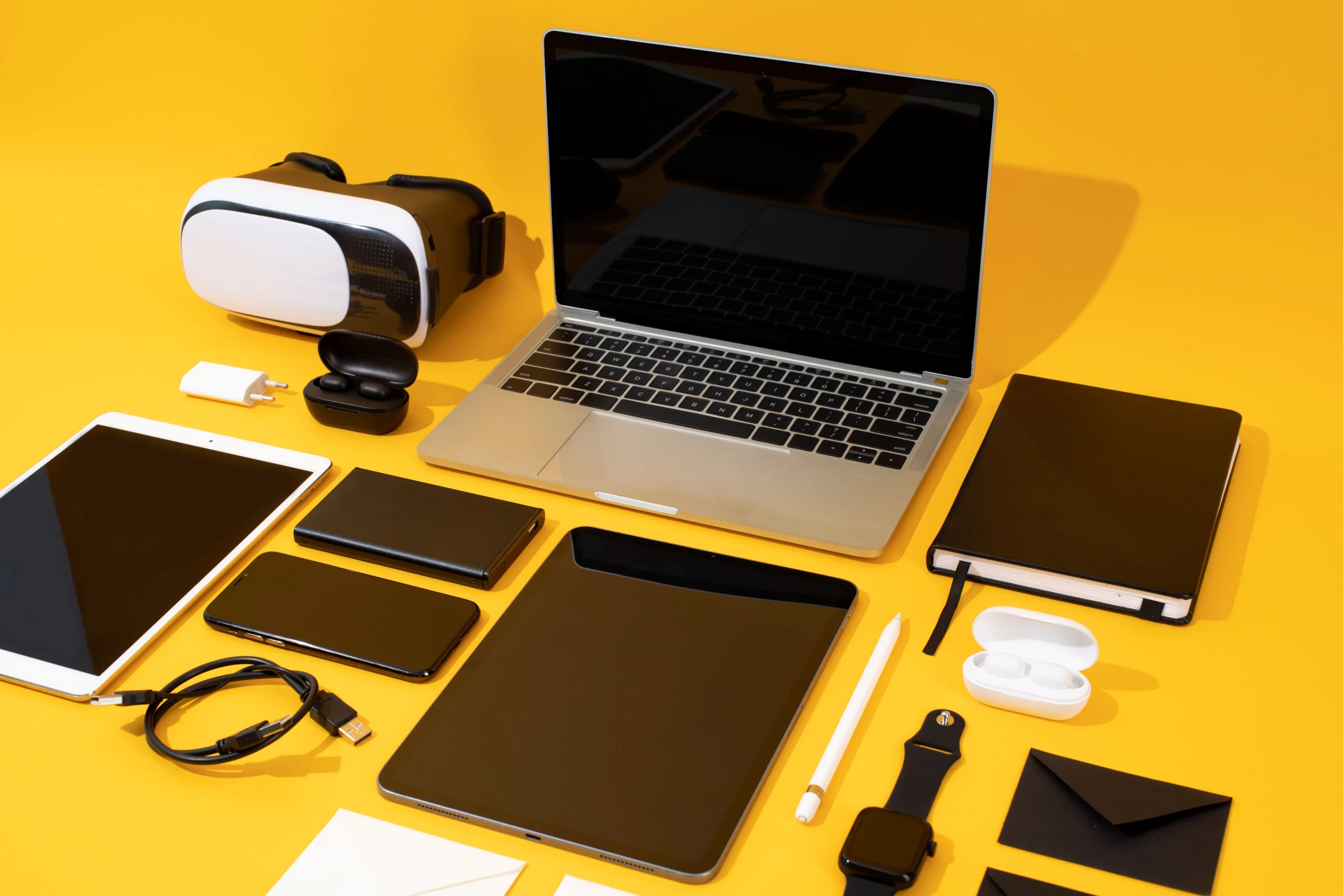
When it comes to product design, the approach designers can vary significantly between physical goods and digital experiences. Each comes with unique challenges and opportunities, from material selection and production techniques to user interaction and scalability.
The table below provides a clear comparison of these differences, helping you understand the distinct considerations for designing physical versus digital products.
| Factor | Physical Products | Digital Products |
| Medium & Materials | Utilize tangible materials (metals, plastics, textiles) with a focus on manufacturing processes, cost, and sustainability. | Rely on digital elements such as data architecture and visual interfaces, developed entirely through software tools. |
| Tools & Techniques | Employ physical prototyping tools like 3D printers, and CNC machines, alongside CAD software for design. | Use product design tools for wireframing and prototyping (e.g., Sketch, Adobe XD, Figma, InVision) to create and test interactive user interfaces. |
| User Considerations | Prioritize ergonomics, physical comfort, safety, and usability in real-world interactions. | Emphasize user experience (UX), interface design (UI), intuitive navigation, and accessibility, often validated through interactive prototypes and usability testing. |
| Development & Iteration | Involve complex, resource-intensive production processes with longer time cycles and limited iterations due to physical constraints. | Focus on coding and framework development with rapid iterations, enabling frequent updates and refinements in response to user feedback. |
| Distribution & Scalability | Distribution is limited by manufacturing capacity, logistics, and storage challenges, making scaling more complex and costly. | Easily scalable via digital channels with low marginal costs per additional user, allowing for quick global distribution and expansion. |
Product Design Process: Roles & Steps
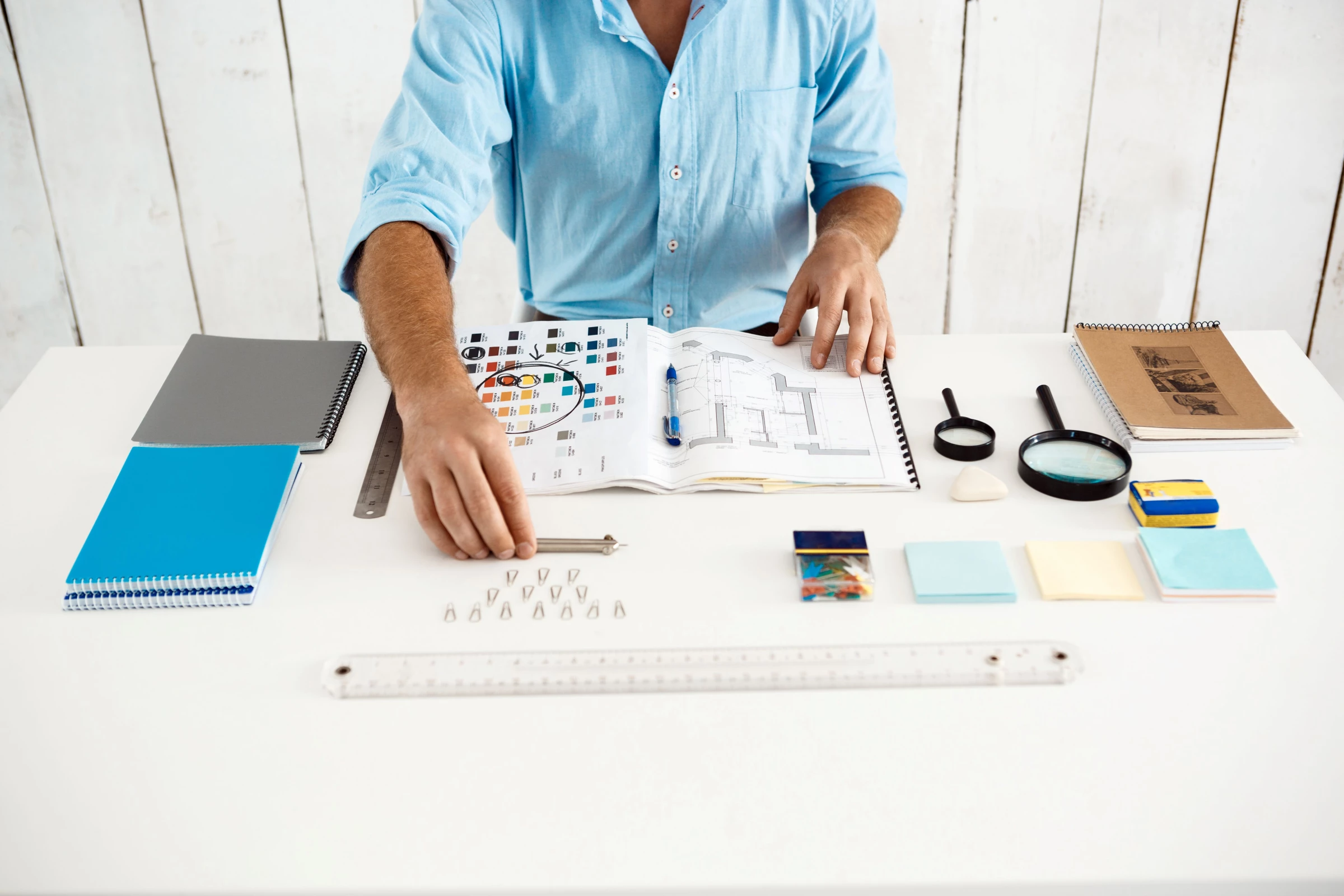
Before diving into the product design stages, it’s essential to understand the key roles within a product design team and their responsibilities:
- UX designer: Focuses on accessibility, usability, and user interaction, ensuring that the product is intuitive and meets real user needs.
- UI designer: Concentrates on the look and feel of the product, crafting a visually appealing and cohesive aesthetic that reflects the brand.
- Prototype designer: Creates prototypes and iterations, turning concepts into tangible or digital models for early testing and refinement.
- Design strategist: Develops design strategies that align creative ideas with business objectives, ensuring the product resonates in the market.
- Design manager: Leads the design team, coordinating efforts across all roles to deliver a product that meets both user expectations and strategic targets.
With these roles in place, the product design process unfolds in five key stages that ensure a product effectively meets user needs. This structured approach guides designers from an initial concept to a polished final product.
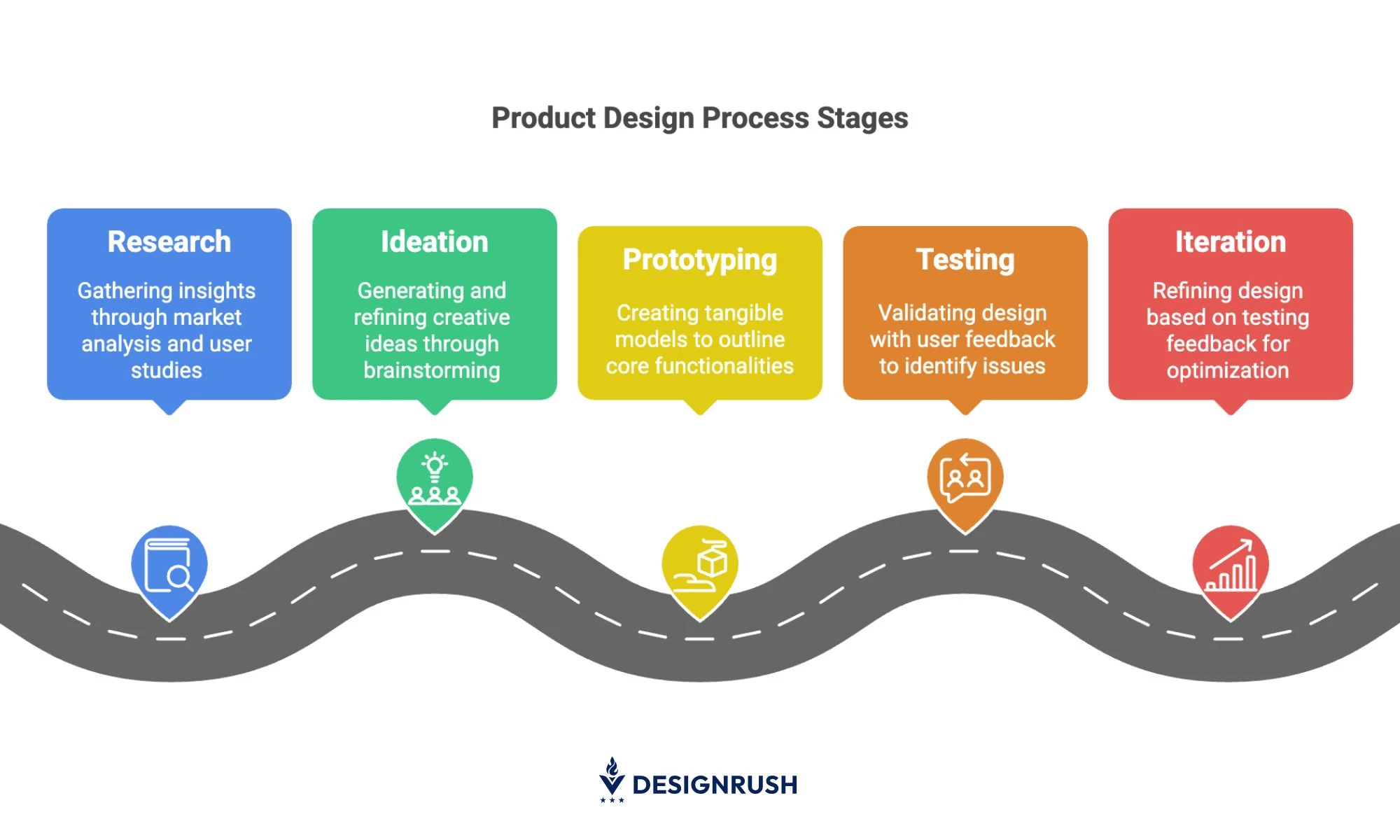
Here are the stages of the product design process:
- Research: The design team gathers insights by studying the market, competitors, and target users through interviews, surveys, and usability studies. The resulting research shapes detailed customer profiles and guides the product's design, ensuring every stage is backed by real-world data.
- Ideation: Building on the research, the ideation phase is all about generating a wide range of creative ideas. Teams engage in brainstorming sessions where quantity is prioritized over immediate quality. Through collaborative evaluation, the best concepts are refined, and initial sketches or layouts help visualize potential solutions, setting a clear direction for development.
- Prototyping: Once promising ideas are selected, the prototyping stage brings them to life. Using physical models or digital wireframes, designers create an early, tangible version of the product to outline core functionalities, user interactions, and aesthetics. This stage is critical for uncovering potential issues before full-scale production begins.
- Testing: With prototypes in hand, testing validates the design. Real users provide feedback on usability, functionality, and overall satisfaction. Through methods like user observation to controlled pilot programs, designers can identify flaws and areas for improvement, minimizing risks.
- Iteration: The final stage is a continuous cycle of refinement based on testing feedback. Designers revisit and tweak design elements to address issues and enhance the UX. This process optimizes performance and prepares the product for a successful launch.
How To Capitalize on a Product’s Aesthetic Appeal
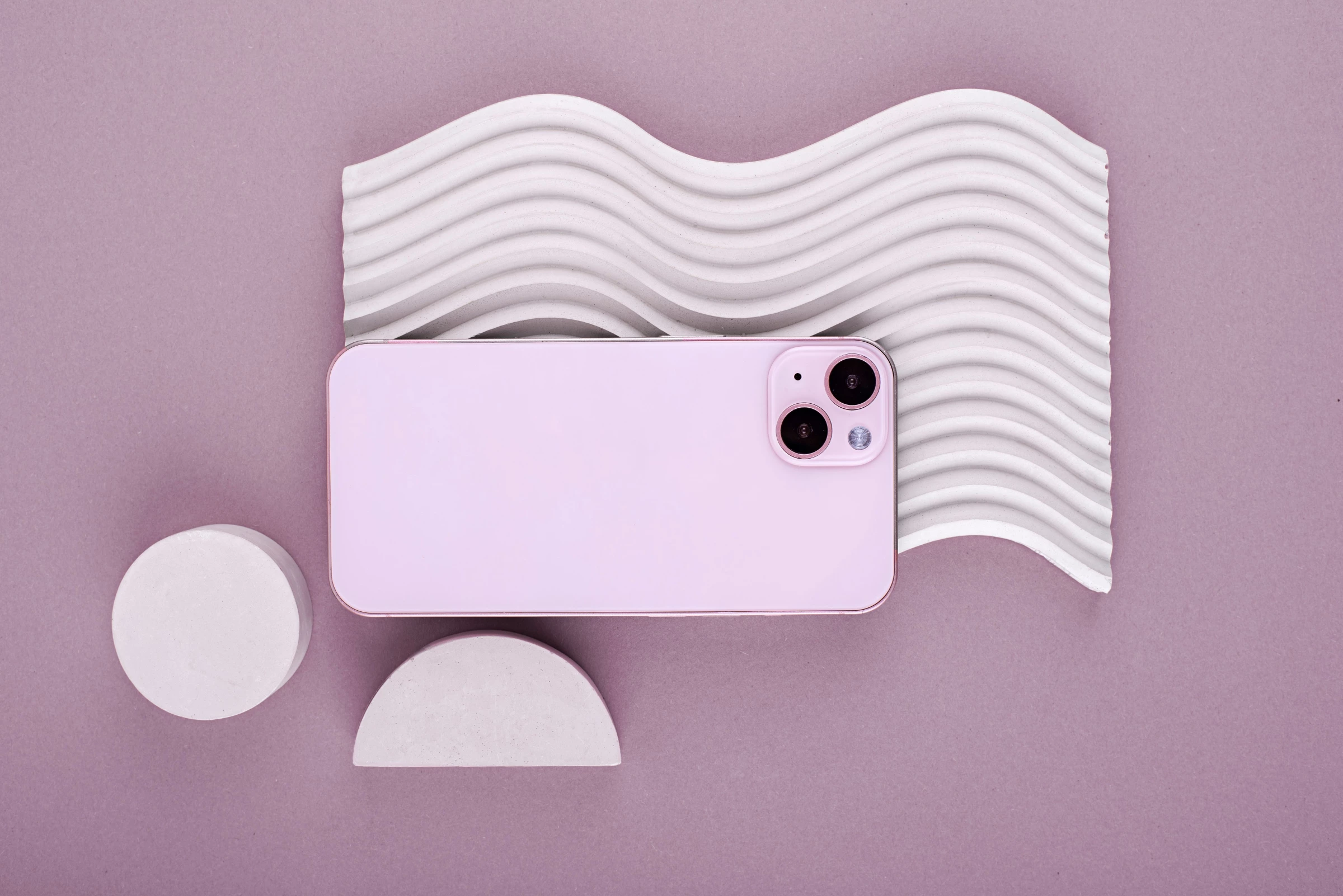
Product design and aesthetics are powerful tools for driving business success. A strong aesthetic appeal attracts customers, boosts engagement, and creates a competitive advantage in the marketplace.
Here’s how to leverage product design to maximize its impact:
- Learn about the target market: Research consumer trends and preferences in product elements like colors, materials, and features to make them more likely to purchase your product.
- Create a unique selling proposition: Product design can be the defining factor that convinces customers to choose your brand over others. Integrate distinctive design elements that reflect your brand’s story to help differentiate your product.
- Optimize packaging: Packaging shapes first impressions and influences purchasing decisions. Using quality materials and visually appealing designs enhances brand perception and reinforces product value.
- Focus on the details: High-quality materials and thoughtful design elements, such as embossed logos or subtle branding, can elevate a product’s perceived value and visual appeal.
How To Measure Product Design Success
Measuring the effectiveness of your product design requires tracking metrics that reflect how well your design meets user needs and business goals. Here’s how to accurately assess your design outcomes:
Usability metrics:
- Task success & time on task: Track how easily users can complete specific tasks and how long it takes them, which reflects the intuitiveness of your design.
- Error rates: Measure the frequency and types of user errors to pinpoint design issues that may hinder usability.
- Standardized scores: Use tools like the System Usability Scale (SUS) to gain quantifiable insights into user satisfaction.
A/B testing for design elements:
- Controlled comparisons: Test two versions of a design feature — such as layout, color schemes, or navigation — to see which one leads to higher engagement or conversion rates.
- Behavioral analytics: Analyze user interactions, such as click-through rates and feature usage, to determine which design variant performs better.
User feedback focused on design:
- Surveys and interviews: Collect targeted feedback specifically about the design’s clarity, visual appeal, and ease of use.
- Direct observations: Conduct usability sessions where you observe users interacting with your design and note any points of confusion or friction.
Design consistency & brand impact:
- Brand recall: Evaluate whether users can recognize and recall key design elements that align with your brand identity.
- Support & error reduction: Monitor design-related support tickets or error reports post-launch to assess if design improvements have led to fewer user issues.
By combining these quantitative and qualitative methods, you create a comprehensive feedback loop that allows you to continuously refine your product design. This targeted approach ensures that design improvements are measurable, actionable, and aligned with both user expectations and business objectives.
Product Design Trends for 2026
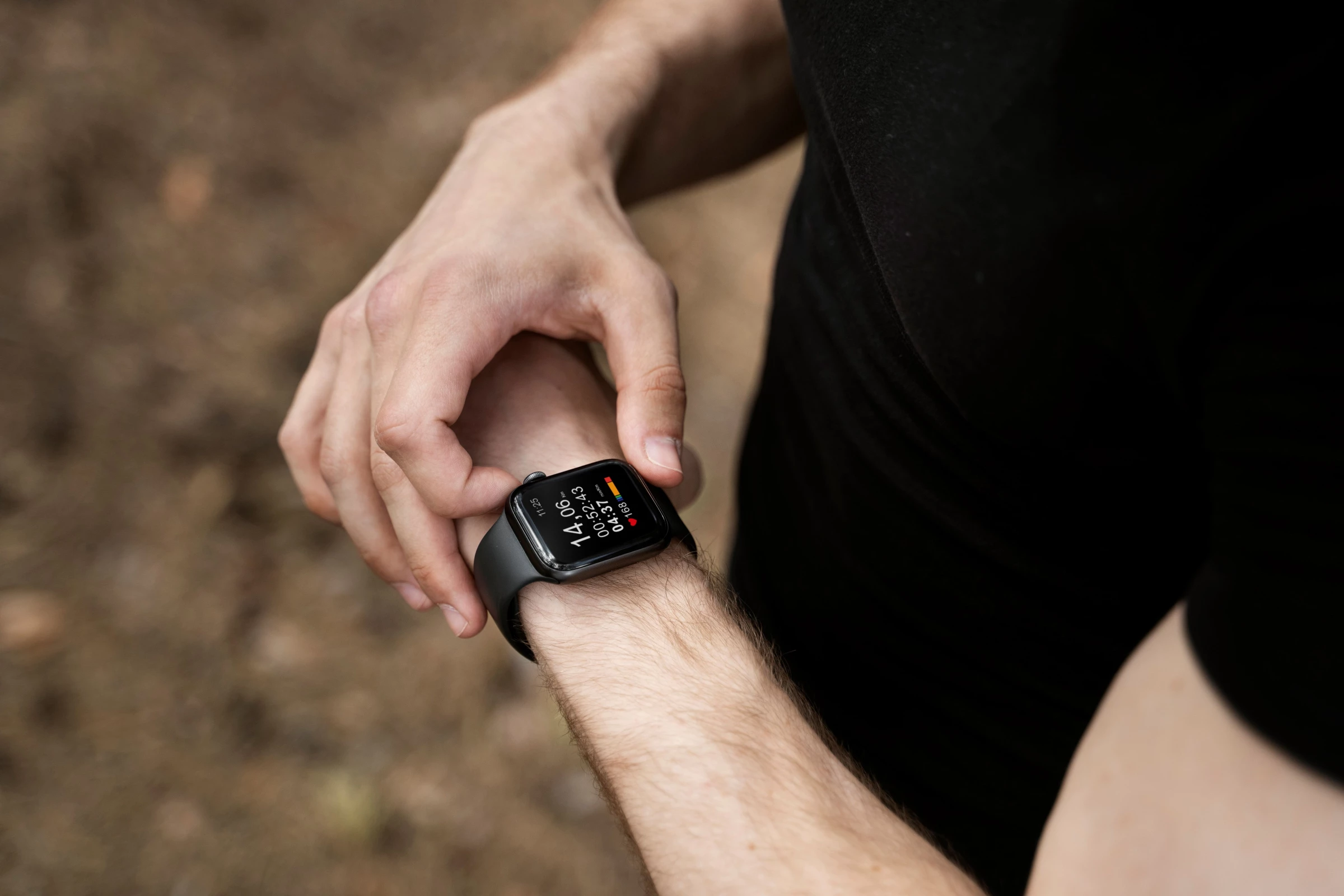
As technology, sustainability, and user expectations evolve, product design is embracing innovation like never before. This year’s trends focus on creating smarter, more adaptable, and more responsible products that enhance user experiences while considering long-term impact.
Let’s explore six key product design trends in 2026 and what they bring to the table:
- AI integration
- Sustainable and eco-friendly materials
- Modular and customizable designs
- Augmented reality
- Human-centered and inclusive design
- Smart wearables
1. AI Integration Is Making Products Smarter and More Intuitive
AI-powered products can now learn from user behavior, adjusting their functions to provide a seamless experience without the need for manual input. This trend is not just about convenience — it’s about hyper-personalization, security, and efficiency.
Whether through smart assistants that refine their recommendations or automated home devices that optimize energy use, AI integration ensures that products fit more naturally into daily life while reducing friction in user interactions.
2. Sustainable and Eco-Friendly Materials Are Driving Innovation
With environmental concerns at the forefront, sustainable product design ideas are shifting beyond recyclability to incorporate cutting-edge materials that reduce waste and carbon footprints. From biodegradable plastics to carbon-negative construction materials, designers are rethinking traditional manufacturing processes. These advancements help brands meet growing consumer demand for eco-conscious products while also fostering long-term sustainability.
3. Modular and Customizable Designs Enhance Longevity
Modular product design is revolutionizing the way users interact with their devices. Instead of replacing an entire product when a part breaks or becomes outdated, users can swap out specific components, reducing waste and increasing longevity. Customizable designs also cater to individual preferences, allowing people to tailor products to their needs.
4. Augmented Reality Is Reshaping User Interactions
Augmented reality is breaking down barriers between physical and digital experiences, providing immersive interactions that redefine how people engage with products. AR-driven interfaces are making shopping, education, and workplace collaboration more intuitive while enhancing real-world applications like navigation and troubleshooting. As AR becomes more accessible, product designers are integrating it into everyday tools, making complex tasks simpler and more engaging.
5. Human-Centered and Inclusive Design Prioritizes Accessibility
Modern product design is shifting toward inclusivity, ensuring that products work for a diverse range of users with different abilities and needs. Accessibility is no longer an afterthought — it’s becoming a core design principle. Features like customizable controls, voice navigation, and adaptive interfaces create more equitable experiences, making technology easier to use for everyone.
6. Smart Wearables Are Becoming Lifestyle Companions
Wearable technology is evolving beyond fitness tracking to provide real-time health monitoring, personalized insights, and lifestyle enhancements. These devices are integrating deeper into daily routines, offering users continuous support for well-being, productivity, and even safety. By combining comfort, efficiency, and advanced analytics, wearables are transitioning from accessories to essential tools that improve quality of life.
5 Examples of Good Digital Product Design
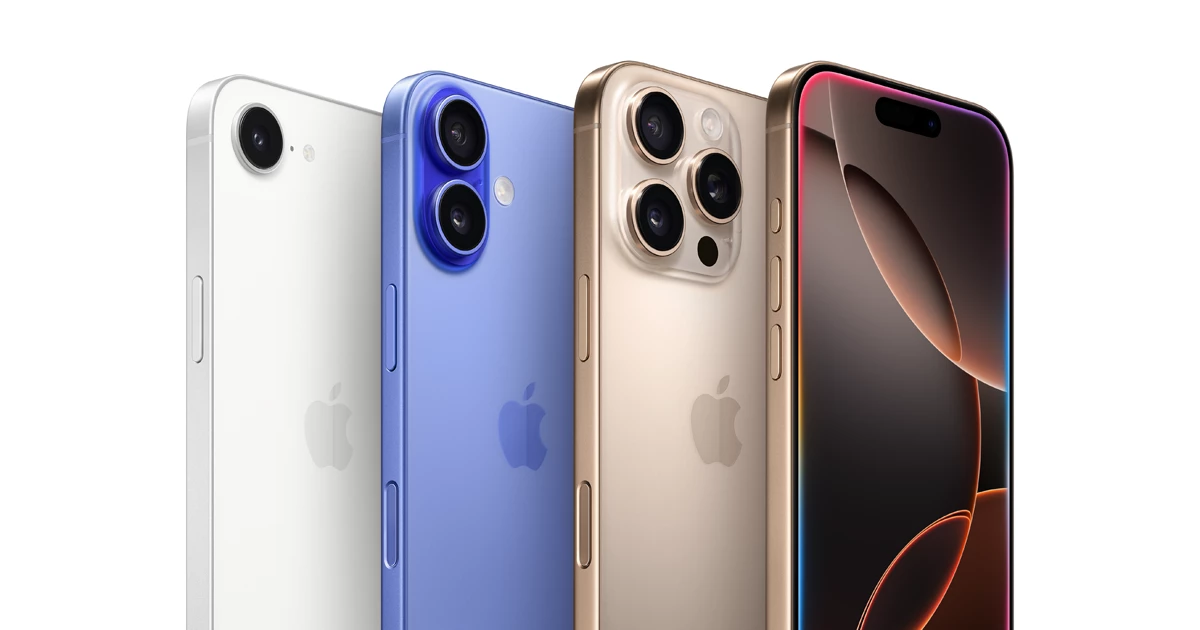
There are many examples of good digital product design that have had a significant impact on the market and user experience:
- Apple iPhone: The iPhone has a sleek and intuitive design that sets the smartphone standard. Its user-friendly interface and wide range of features make it a popular choice for users worldwide.
- Google Maps: Google Maps has a simple and easy-to-use design, making it a popular navigation choice. Its real-time traffic updates and customizable features make it an essential tool for travelers and commuters.
- Airbnb: Airbnb has a user-friendly design that makes it easy for users to find and book accommodations around the world. Its convenient payment system and review system enhance the overall user experience.
- Spotify: Spotify has a sleek and intuitive design that makes it easy for users to discover and listen to music. Its personalized recommendations and wide range of features make it a popular choice for music lovers.
- Duolingo: Duolingo has a fun and engaging design that makes learning a new language enjoyable. Its interactive lessons and gamification features make it a popular choice for language learners.
Why Is Product Design Important: Takeaways
Product design is not just about making products look good — it’s also about creating products that are functional, reliable, and enjoyable.
The design process is complex and requires a deep understanding of customer needs, market trends, and emerging technologies. Businesses that prioritize product design can differentiate themselves in competitive markets and deliver solutions that truly resonate with users.

Our team ranks agencies worldwide to help you find a qualified provider. Check out our Agency Directory for the Top Product Design Companies, as well as:
- Top Product Design Firms In Chicago
- Top AI Product Development Companies
- Top Print Design Agencies
- Top Digital Design Agencies
- Top Industrial Design Companies
Our design experts also recognize the most innovative design projects across the globe. Visit our Awards section for the best & latest.