
If a false claim about your business appears online and you do not catch it fast, customers may assume silence means guilt, indecision, or disorganization.
We’ve prepared a 10-step, repeatable workflow to actively combat online misinformation, detect false narratives early, correct them with evidence, and make the accurate version easier to find than the false one.
Ways To Combat Misinformation Online: Key Findings
- Up to 15% of younger users rely on AI weekly, so wrong answers can shape decisions early, and Brandi AI helps you track and fix them.
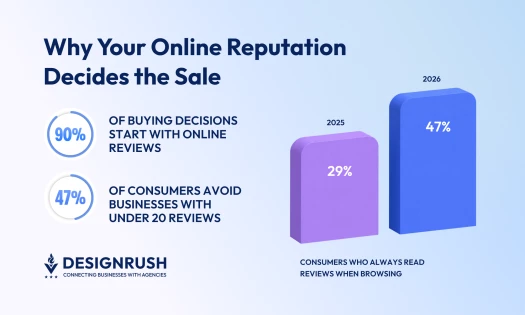
- 47% of consumers won’t use a business with fewer than 20 reviews, and inconsistent or misleading information increases drop-off rather than investigation.
- Deepfake scams caused $1.1 billion in losses in 2025, showing synthetic media is now a real financial and reputational threat to brands.
The Business Cost of Brand Misinformation
Misinformation is a direct business risk that shows up in revenue, customer acquisition, and even market value.
- Misinformation costs the global economy up to $417 billion annually, with fake reviews alone accounting for $227 billion of that impact.
- False information spreads 6x faster than accurate information, making it more likely to shape perception before corrections appear.
Let us show you how to keep your online reputation intact by identifying these risks early and controlling how your brand is represented across every channel that shapes perception.


1. Start With a Misinformation Audit Before You Try To Fix Anything
The first mistake you can make is responding to whatever is loudest instead of mapping the full problem. A proper misinformation audit should answer five questions:
- Where is the false claim appearing?
- How many formats has it spread into?
- Is the claim wrong, misleading, outdated, or maliciously fabricated?
- Is it affecting trust, search visibility, conversions, or support volume?
- Who owns the correction path: PR, support, legal, SEO, or security?
This is really important because misinformation rarely stays in one place. In fact, it often spreads even faster than the truth.
A fake complaint may begin as a review, get screenshotted into a Facebook group, then appear in an AI summary because the model found repeated mentions.
If you only remove or answer the first instance, the narrative can keep resurfacing elsewhere.
Prioritize High-Impact Misinformation and Act Where It Hurts Most
A practical audit should cover branded search results, Google Business Profile reviews, Reddit, YouTube comments, TikTok mentions, X, review sites, AI platforms such as ChatGPT, Gemini, and Perplexity, and any high-authority directories or marketplaces where your business is listed.
The goal is to separate high-visibility misinformation from minor noise. Once you’re done with prioritization, you can start with the one hurting your business most.
Tools like Talkwalker help you spot where misinformation is actually gaining traction, so you prioritize based on impact and not just volume.
How Starbucks Audited Misinformation Before Taking Action
When Starbucks faced viral claims about its political stance, the narrative spread across TikTok, X, and reposted content, often mixing false and misleading information.
Instead of reacting post by post, the company first mapped the issue, then issued a clear, centralized response across channels.
2. Monitor How AI Platforms Describe Your Brand
Reuters found that AI assistants are becoming a new discovery layer for brands, with 7% of users using them for news each week and that figure rising to 15% among under-25s.
That means misinformation can now spread through answer engines even when your owned channels are accurate.
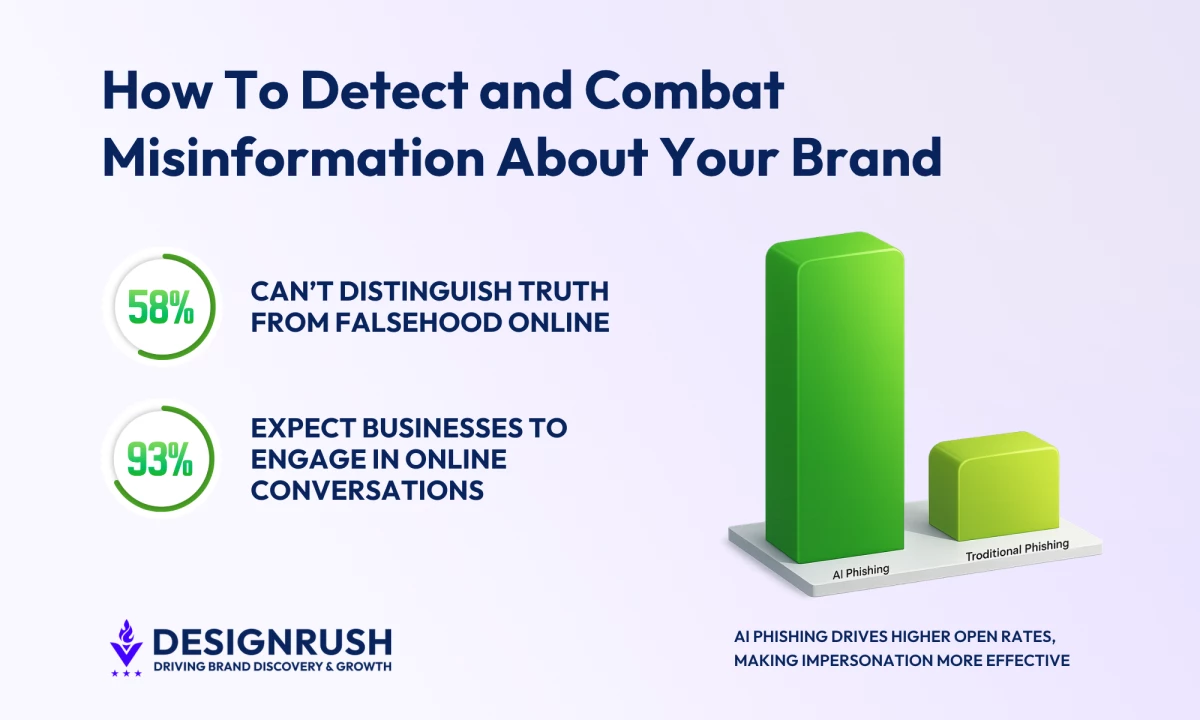
Reuters data also shows that 58% of people already struggle to separate truth from falsehood online. If the easy answer about your brand is wrong, many users will not dig deeper.
Actively Correct and Control How AI Describes Your Brand
These systems rely on patterns across sources, so if the inputs stay weak, the output will too. Here’s how to prevent that:
Start by grounding the issue in something trackable.
- Log the exact prompt, output, date, and platform so you can monitor whether the issue persists or evolves.
Then investigate what’s feeding the response.
- Check which sources the AI appears to be drawing from, including outdated articles, comparison pages, forums, or competitor mentions that may be shaping the narrative.
Once you know the source of the problem, replace it with stronger signals.
- Update or publish pages that clearly state the correct information in plain, unambiguous language.
- Create a dedicated, crawlable page that directly answers the exact question the model got wrong.
Reinforce credibility with fresh, verifiable proof.
- Add recent signals like release notes, pricing pages, product documentation, executive bios, customer case studies, and press coverage to strengthen authority.
Finally, treat this as an ongoing visibility loop.
- Use a tool like Brandi AI to track whether the incorrect framing continues to appear across prompts and platforms, and whether competitors are being cited instead.
Brandi supports AI sentiment monitoring and AI hallucination detection, which is directly relevant when AI tools misstate your pricing, category, differentiators, or reputation.
How the BBC Caught AI Platforms Misrepresenting Its Content
When BBC looked into how AI assistants were summarizing its articles, it realized that some answers added details that weren’t there or slightly twisted the meaning.
Instead of chasing every wrong answer, the BBC started tracking those patterns and raised them directly with the AI companies, while continuing to reinforce its original reporting as the source of truth.
3. Build a Source-of-Truth Layer That Gives False Claims Nowhere To Hide
BrightLocal’s 2026 survey found that 47% of consumers will not use a business with fewer than 20 reviews, and consumers increasingly expect current, trustworthy local information before deciding to engage.
If your users find conflicting details alongside weak review signals, they are more likely to drop out rather than take the time to investigate which version is right.
This is exactly where misinformation takes hold. It doesn’t need to be completely false, it just needs to create doubt. And once doubt exists, drop-off follows.
Make Sure Your Business Details Match Across All Platforms
You need a clear, centralized source of truth that both users and AI systems can rely on, supported by consistent signals everywhere your brand appears:
- Update Google Business Profile, Apple Business Connect, Bing Places, LinkedIn, major review platforms, directories, marketplaces, and partner profiles so they all reflect the same, current information.
- Publish a timestamped page on your site that clearly outlines key details like services, pricing, availability, locations, policies, in plain language.
- Link this page in customer support responses, social bios, email signatures, and any high-touch communication channels.
- Use a tool like Yext to manage this at scale. Its Knowledge Graph is built as an AI-ready source of truth for brand data, so your core facts can stay consistent across search, maps, apps, and AI-driven discovery surfaces.
- If inconsistencies keep appearing, make one person responsible for quarterly citation cleanup and verification.
How KFC Centralized the Truth During a Crisis
When KFC’s UK restaurants were hit by the 2018 chicken shortage, confusion spread fast because store status was changing constantly.
Instead of leaving customers to sort through rumors, closures, and outdated local information, KFC published a central page showing which restaurants were open, while news coverage pointed customers back to that official source.
4. Stop Fake Reviews Before They Damage Buying Decisions
Reviews are one of the most damaging misinformation channels because they influence decision-making at the moment of purchase.
They also get quoted, screenshotted, and fed into local search and AI summaries.
The FTC’s final rule prohibits the sale or purchase of fake reviews and allows civil penalties against knowing violators, and the agency warned in late 2025 that penalties can reach up to $53,088 per violation.
But enforcement does not prevent the damage in real time, which means you still need to act quickly when review manipulation happens.
And the cost of doing nothing is measurable. BrightLocal’s 2026 data shows:
- 89% of consumers expect businesses to respond to reviews.
- 80% are more likely to choose a business that responds to all reviews.
- 42% actively avoid businesses that ignore reviews.
In other words, silence looks like guilt. Here’s what you should do.
Flag Fake Reviews and Respond Publicly With Facts
To contain the impact and regain control, you need to respond in a structured, visible way:
- Take screenshots, capture timestamps, and export review data before anything gets deleted or edited. Tools like ReviewTrackers can help centralize and archive reviews across platforms so you don’t lose evidence.
- Separate clearly fake reviews from real but negative feedback that still needs a proper response.
- Submit flagged reviews to the platform with clear evidence so they have a higher chance of removal.
- Address visible reviews in a calm, factual tone that shows you are present and accountable without escalating the situation.
- Avoid generic replies as copy-paste responses signal low effort and reduce trust further as opposed to tailored responses which show legitimacy.
- Encourage recent, legitimate customers to leave honest reviews to dilute the impact of false ones.
How Amazon Took Legal Action Against Fake Reviews
When Amazon uncovered coordinated fake review schemes, including brokers selling positive reviews, it went beyond removing individual posts.
The company filed lawsuits against operators of fake review networks and removed large volumes of fraudulent reviews to protect the integrity of its marketplace.
5. Respond to Viral Falsehoods With Evidence
When a misleading post starts spreading about your brand, the first instinct is to overreact publicly or go silent internally. Both of those actions can turn out to be costly for your reputation.
Sprout Social’s 2025 Index found that 93% of consumers expect brands to keep up with online culture, and the same research was based on surveys of more than 4,000 consumers.
When you ignore a viral falsehood on the platforms where the conversation is happening, it creates a vacuum that critics, influencers, and aggregators fill for you.
As Paul Gordon, Founder of Shortcuts Software, explains:
“First, always reply. A bad review with no reply is not a good look. Be professional in your reply and show that you have listened to the feedback.
If the review is inaccurate, respectfully add your context. If your business is in the wrong, acknowledge it and indicate how you will address the issue.”
That same principle applies at scale when misinformation goes viral.
Get the Facts Right and Respond Clearly
A viral claim does not have to be fully false to cause damage. Often, it is a distorted version of a real issue, which makes it more believable and harder to contain.
Here is how to approach it without making the situation worse:
- Confirm what actually happened internally, so you are not correcting misinformation with more inaccuracies.
- Decide whether this needs a public statement, direct customer support replies, or a combination of both depending on how widely it is spreading.
- Start with what is true right now instead of reacting defensively or attacking the claim.
- Include one or two key facts, a concrete proof point, and a clear next step so the response is easy to understand and share.
- Publish a fuller explanation on a page you control, then link to it so there is a consistent reference point.
- Share the same approved facts with support, sales, community managers, and leadership to avoid conflicting responses.
- Monitor conversations closely for at least 72 hours after the spike to catch shifts, reshares, or new variations of the claim.
Tools like Meltwater help track how narratives evolve across news, social, and online channels so you can see whether your response is actually changing the conversation.
How ASML Shut Down a Viral False Claim With Verified Facts
When false claims spread online that ASML had been hacked, the company did not speculate or go quiet.
It investigated the allegation, confirmed that no company data had been exposed, and responded with a direct statement grounded in what it had verified internally.
That is the model to follow when a viral falsehood hits your brand: confirm the facts first, then answer with evidence people can repeat.
6. Prepare for Brand Impersonation and Fake Support Scams
Brand impersonation is one of the fastest ways to lose trust because customers do not experience it as an external attack but as your brand failing them.
A fake support agent asking for details, a cloned website taking payments, or an email that looks legitimate but is not, all of it lands as your responsibility in the customer’s mind.
What makes this harder now is how convincing these attacks have become.
In 2025, AI-generated phishing became the baseline for attackers, with one report cited by ITPro noting 83% of phishing emails use AI content in some way and 40% of BEC attacks use generative AI.
Even more concerning, AI-written phishing messages see click rates as high as 54%, compared to just 12% for traditional ones, meaning more people are falling for more convincing scams that look like they came from you.
Help Customers Spot Fake Messages and Accounts
Customers need to instantly recognize what legitimate communication from your brand looks like, and just as importantly, what it does not look like.
- Publish a clear how we contact customers page that outlines exactly which channels you use, what you will and will not ask for, and how users can verify authenticity.
- Add short, visible warnings in your support center, website footer, and social bios so users see them before interacting with a potential scam.
- Verify official social handles, standardize naming conventions, and eliminate inconsistencies that attackers can exploit.
- Monitor lookalike domains, fake accounts, and cloned content early with tools like Doppel that continuously scan for impersonation across channels.
- Create a single, easy-to-find reporting channel where users can forward suspicious emails, messages, or links for verification.
- Support and community teams should escalate impersonation reports immediately, not days later, because delays increase exposure.
- If executives or public-facing team members are likely targets, document a simple verification process for media, partners, and customers to confirm legitimate outreach.
How DesignRush Helps Users Spot Impersonation
When users interact with agencies or get outreach through DesignRush, there’s always a risk that someone could be pretending to be a legitimate provider.
Instead of waiting for issues to happen, DesignRush lays it out clearly with a fraud prevention guide that shows users what real communication looks like and what red flags to watch for, like fake offers or suspicious payment requests.
7. Have a Deepfake Response Plan Before You Need One
Deepfakes are no longer a fringe risk reserved for celebrities and politicians.
Brands are now dealing with fake founder videos, fabricated endorsements, false apology clips, and manipulated customer testimonials that can spread fast and look convincing enough to trigger real damage before anyone stops to verify them.
Euronews reported that deepfake-related scam and fraud schemes caused about $1.1 billion worldwide in 2025, roughly three times 2024 levels.
A fake video can unsettle customers, mislead partners, spark media attention, and create doubt that lingers even after the content is proven false.
That is why the response cannot start when the clip is already circulating. You need a plan that helps your team verify, respond, and contain the damage quickly, before the fake content gains credibility through repetition.
Deepfakes are already being treated as more than a technical issue.
Dr. Jeff Lu, AI expert and founder of Akool, highlights that they turn into a business risk when companies lack structured safeguards and response systems, which is why preparation matters more than detection.
See the whole interview below:
Verify and Publicly Address the Deepfake
A strong response usually includes a few immediate steps:
- Verify authenticity internally, fast, so you know exactly what is fake, who is affected, and whether any real assets or identities were misused.
- Issue a short statement from verified channels that clearly says the video, audio, or image is fabricated, without sounding panicked or overly defensive.
- Put that statement on your website too, so the correction lives in a stable, searchable place and does not disappear into a fast-moving social feed.
- Alert the people who need the truth first, including press contacts, major customers, partners, and frontline teams who may start getting questions before your public response fully spreads.
- Report the content to the platform with evidence so there is a documented takedown request tied to the fabricated media.
- Preserve evidence for disputes and investigations, and use tools like Reality Defender to quickly verify suspicious media before fakes spread further.
- Update your scam warning page and FAQ so anyone who searches for the incident later finds the correction before they find reposts of the fake content.
The point of a deepfake response plan is to give people a faster, more credible version of the truth before the fake one hardens into memory.
How Berkshire Hathaway Moved Fast on a Buffett Deepfake
When AI-generated videos of Warren Buffett started circulating on YouTube, Berkshire Hathaway did not wait for the clips to keep spreading unchecked.
The company issued a public warning, made clear that the videos featured comments Buffett never made, and highlighted one fake video directly so viewers had a verified correction to point to.
8. Do Not Let One False Claim Become the Summary of Your Brand
Even after the original false post dies down, the narrative can stay alive in autocomplete suggestions, people also ask pages, forum threads, review snippets, and AI answers.
And right now, people are already on edge about what to trust. Reuters Institute data shows growing public concern around what is real versus fake online.
So, if the most visible, easy-to-digest summary of your brand is negative, outdated, or misleading, many potential customers will not dig deeper but simply move on.
That is why your goal should be to replace the indexable summary of your brand with accurate, evidence-based content.
Build Content That Becomes the New Brand Narrative
To shift that narrative in your favor:
- Create pages that clearly address the issue in factual, up-to-date language instead of hoping users piece it together from scattered content.
- Publish expert insights, customer case studies, FAQs, and updated policy pages that support your version with real evidence.
- Earn coverage, mentions, or citations from reputable sources, so the corrected narrative is not coming from you alone.
- Ongoing, authentic customer feedback helps outweigh outdated or misleading snippets that still surface.
- Monitor search and AI outputs to ensure they reflect your updates with tools like Scrunch helping your content get picked up and show whether it is shaping the answer layer.
How McDonald’s Replaced Myths With Searchable Facts
When claims went viral that McDonald’s burgers don’t decompose, the narrative stuck because people were sharing visual examples without context.
McDonald’s addressed the exact claim head-on by explaining that decomposition depends on moisture, and that burgers left to dry out may not grow mold or bacteria, which is why they can appear unchanged.
9. Align PR, SEO, Support, Legal, and Security Into One Response System
Misinformation gets worse when teams treat it as someone else’s problem. PR writes a statement, support improvises replies, SEO updates nothing, legal responds too late, and security only acts if there is fraud.
- A fake review can become a PR issue.
- A fake founder video can become a security and legal issue.
- An AI hallucination can become a pipeline issue.
If you treat these as separate problems, it may slow down the correction and multiply inconsistency.
Make Sure All Teams Act From One Source of Truth
Instead of treating each incident as a separate issue, you need a shared response system where everyone moves from the same set of facts and responsibilities.
- PR and communications set the public narrative and ensure messaging is clear, factual, and consistent across channels.
- Customer support translates that narrative into direct, human responses for customers who are already affected or confused.
- SEO and content teams turn the correction into something persistent by updating or creating pages that search engines and AI systems can reference.
- Legal evaluates defamation, handles takedown requests, and ensures any response is defensible if the situation escalates.
- Security and IT investigate and act on impersonation, phishing, domain abuse, or account compromise.
Tools like Jira Service Management help centralize the facts, assign owners, and keep stakeholders updated from the same incident record, which makes it much easier for PR, support, legal, SEO, and security to stay aligned while the situation is still moving.
10. Measure Whether the False Narrative Is Shrinking
A response is only effective if it changes the outcome. The focus should be on whether misinformation is losing visibility or continuing to influence perception.
This requires tracking KPIs that measure where it appears, how it shapes trust, and whether it affects decisions:
- Volume of misinformationmentions by channel shows whether the narrative is spreading or shrinking. If mentions across reviews, social, or forums keep increasing, your response is being outpaced.
- Review sentiment and response rate indicate whether trust is recovering in high-intent environments. Reviews directly influence buying decisions, so improving sentiment and maintaining consistent responses signals that the narrative is stabilizing rather than compounding.
- Branded search results for negative modifiers, like scam, reviews, or complaints, reveal what new users see first. If negative or misleading content dominates these queries, misinformation is still shaping first impressions.
- AI answer accuracy for key prompts matters because AI tools are now a discovery layer. If your brand is still misrepresented in answers, you are losing consideration before users even reach your site.
- Click-through to trust and correction pages shows whether users are actively seeking clarification and whether your source of truth content is doing its job. Low engagement here can mean your corrections aren’t visible or compelling enough.
- Scam reports or impersonation complaints track whether misinformation has escalated into fraud. An increase here signals not just reputational risk, but direct customer harm.
- Conversion rate before and after correction connects everything back to revenue. If the misinformation impacted perception, you will often see a drop, and recovery here is one of the clearest indicators your response is working.
- Share of voice versus competitors in AI answers shows whether your brand is being accurately represented in comparison to others. If competitors dominate or are positioned more favorably due to misinformation, you are losing strategic visibility.
Our team ranks agencies worldwide to help you find a qualified partner. Visit our Agency Directory for the top online reputation management companies, as well as:
- Top Public Relations Firms
- Top Crisis Management Firms
- Top Branding Agencies
- Top Reputation Management Companies in Boston
How To Combat Online Misinformation FAQs
1. What is online misinformation about a business?
Online misinformation about a business refers to false, misleading, or outdated information that shapes how people perceive your brand. This can include fake reviews, inaccurate claims, viral posts taken out of context, AI-generated errors, or impersonation scams using your brand identity.
2. How can misinformation impact a business?
Misinformation can reduce trust, lower conversion rates, and damage brand reputation. It often affects customers early in the decision-making process, meaning businesses can lose opportunities before users even visit their website or contact their team.
3. What are the most common types of brand misinformation?
The most common types include fake or manipulated reviews, false customer complaints, outdated business information, misleading viral content, AI-generated inaccuracies, and impersonation attacks such as fake support accounts or phishing emails.
4. How should a business respond to misinformation online?
Businesses should respond quickly with clear, factual information, avoid emotional reactions, and provide proof or context when needed. It’s important to maintain consistency across all teams and channels while creating a reliable source of truth that users and platforms can reference.
5. How can businesses prevent misinformation from spreading?
Prevention involves monitoring where your brand appears, keeping information consistent across platforms, responding to issues early, educating customers about scams, and creating authoritative content that makes accurate information easier to find than misleading claims.