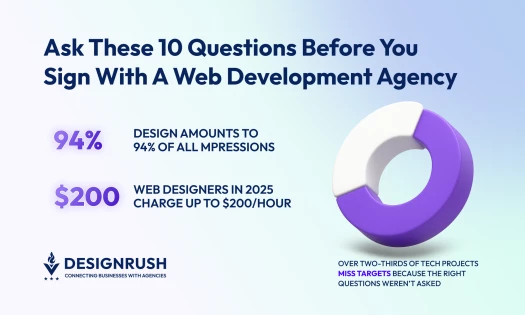
Hiring the wrong website development services in Virginia can leave you with a site that looks finished but fails to support leads, sales, or growth. Our directory helps you compare vetted agencies by expertise, reviews, pricing, and services.
- Home
- Web Development Companies
- US
- Virginia
Best Web Development Companies in Virginia
Expertise
- CMS Platforms
- Custom Frameworks
- Custom Languages
Electronics
- Agriculture
- AI
- Arts
- Automotive
- Beauty
- Beer
- Boutique
- Construction
- Consumer Goods
- Corporate Services
- Crypto
- Delivery & Takeaway
- Dental
- Design
- eCommerce
- Education
- Electronics
- Energy & Mining
- Entertainment
- Fashion
- Finance
- Fintech
- Food and Beverage
- Gaming
- Government
- Hardware & Networking
- Health Care
- Higher Education
- Hobbies & Gifts
- Home & Garden
- Home Services
- Hospitality
- HR
- Insurance
- Legal
- Luxury
- Manufacturing
- Media & Communications
- Music
- NFT
- Nonprofit
- Other
- Pets
- Professional Services
- Public Administration
- Public Safety
- Publishing
- Real Estate
- Recreation & Travel
- Restaurants
- Retail
- Social Networks
- Software & IT Services
- Sports
- Transportation & Logistics
- Travel
- Wellness & Fitness
$25,000 - $50,000
Organic rankings are determined by five factors: top services, reviews, portfolio, awards/press, and team expertise. Sponsored listings pay for a placement that appears above organic positions. Sponsorship does not affect star ratings or review content - read more on our methodology page.
AGENCY LISTING COMING SOON.
Web Development Companies in Virginia by City
Related Services in Virginia
Web Development Specializations in Virginia
Popular Services
How To Hire Web Development Companies in Virginia
How do you evaluate the portfolio of a web development company in Virginia?
Evaluate a portfolio by looking at more than how the websites look. A polished design is not enough. You need to check whether the web development company has built real websites that work well, load fast, and match the type of project you need.
Use these checks:
- Visit the live websites to make sure the projects are real, active, and working on mobile and desktop.
- Look for similar features, such as eCommerce, booking systems, custom forms, or third-party integrations.
- Check whether the agency has experience in your industry or a similar market.
- Test site speed to see whether their work performs well, not just looks good.
- Ask what they actually built, since some agencies only design sites and outsource development.
Skipping this step can lead you to hire based on a polished sales presentation instead of real proof. A strong portfolio should show websites that are live, functional, relevant, and easy to verify. A web development company in Virginia should be able to explain what they built, why they built it that way, and how the final site performed.
What should you ask the best web development companies in Virginia during a discovery call?
Ask questions that reveal how the firm works, who will handle the project, and what happens if problems come up. A discovery call should show whether the agency has a clear process, not just a polished sales pitch.
The best web development companies in Virginia should be able to answer these questions directly:
- Who will actually build the website?
- Will the work stay in-house or be passed to subcontractors?
- What is your process from discovery to launch?
- What happens if the timeline slips?
- How are change requests handled and priced?
- What is included in the final handoff?
- Will we own the website, code, content, and accounts after launch?
- What kind of support do you provide after launch?
- How quickly do you respond when something breaks?
- Can you show similar projects with comparable features or business goals?
Clear answers show that the firm knows how to manage a project, communicate, and handle problems. Vague or defensive answers during the sales call are a warning sign. Once the contract is signed, communication usually does not get better.
What red flags should you watch for when hiring web development companies in Virginia?
The clearest red flags are vague pricing, no written contract, unclear ownership terms, poor communication, and pressure to sign quickly. Each one points to a possible project risk, from hidden costs to missed deadlines or losing control of your own website.
Watch for these warning signs:
- No itemized quote: A single lump sum price makes it hard to see what is included and what may cost extra later.
- No written contract: Without a clear agreement, there is no shared record of scope, deadlines, revisions, ownership, or payment terms.
- Ownership left unclear: A firm that avoids questions about code, content, hosting, or account ownership may keep you dependent after launch.
- No references or live examples: If they cannot show real work or connect you with past clients, their results may not hold up.
- Weak discovery process: A company that does not ask about your goals, users, content, and required features may build the wrong solution.
- Communication lag during sales: Slow or unclear replies before you sign usually become worse once the project starts.
- No post-launch support terms: If bug fixes, maintenance, and response times are not defined, you may be left alone after launch.
- Pressure to sign quickly: Artificial urgency suggests the firm is more focused on closing the deal than confirming the right fit.
If bug fixes, maintenance, and response times are not defined, you may be left alone after launch. Over 40% of compromised business websites are attacked purely due to outdated plugins and unmaintained CMS environments.
A trustworthy web development company should welcome questions, explain its process clearly, and put key terms in writing before work begins. Any major red flag should slow the decision down until the risk is explained or resolved.
What should be in the scope of work to avoid mid-project surprises?
The scope of work should clearly list every deliverable, feature, responsibility, deadline, and approval step before the project starts. A vague scope is one of the biggest causes of extra costs and missed deadlines because both sides may assume different things are included.
A complete scope of work should cover:
- Exact deliverables: Page count, templates, layouts, and features listed clearly.
- Technical requirements: Platform, CMS, hosting setup, integrations, security, and performance expectations.
- Content responsibilities: Who provides copy, images, videos, product data, and other assets. Scope creep and delayed asset delivery remain the top factors behind over 35% of IT and web projects missing their original deadlines.
- Timeline and milestones: When each stage is due, including design, development, testing, revisions, and launch.
- Revision rounds: How many rounds are included and what counts as an extra revision.
- Change-request process: How out-of-scope requests are quoted, approved, and billed.
- Acceptance criteria: What “done” means for each milestone, so approvals are based on agreed requirements.
Without this detail, small informal requests can pile up and stretch the timeline. A clear scope protects both sides by making expectations specific before work begins. It is the strongest way to prevent a fixed-budget project from turning into an open-ended one.
How do you evaluate post-launch support offered by a Virginia web development agency?
Evaluate post-launch support by checking exactly what the agency covers, how quickly it responds, and how much support costs after the website goes live. A website still needs care after launch because plugins, browsers, hosting environments, and security risks change over time. These details should be clear before you sign, not discussed only when something breaks.
A strong support arrangement should explain:
- What is included: Security updates, backups, uptime monitoring, bug fixes, CMS updates, and plugin updates should be listed clearly.
- Response time: The agency should say how fast it responds to urgent issues, especially if the site goes down or a key feature stop working.
- Cost structure: Support may be billed as a monthly retainer, hourly support, or a limited post-launch support window. This affects the real cost of owning the website.
- Who provides support: Confirm whether the same team that built the site will handle support or whether your request goes to a separate support team.
- Escalation process: Serious problems should have a clear process, especially when the issue affects leads, sales, bookings, or customer access.
- Maintenance limits: Ask what counts as a bug fix and what counts as a new request, so small fixes do not turn into unexpected charges.
- Reporting and updates: A good agency should tell you what was updated, what was fixed, and whether any risks need attention.
If you skip this step, you may find out too late that “launch” was the end of the relationship. A reliable Virginia web development agency should define support terms clearly and stay available after handoff. This is what separates a short-term vendor from a reliable website development company in Virginia.
Sources
DesignRush sustains a directory of over 40,000 agencies categorized by service category, location, expertise, and reviews. We build our database in two ways:
- Our dedicated team of agency experts actively searches the web for top-performing companies. We then pull information from their websites, online presence, and client testimonials to verify their status and qualifications prior to listing.
- The agencies listed get notified of their profiles on the website and they can choose to claim it or not, which suggests their availability for more collaborations.
Agencies can also reach out to DesignRush and must go through the verification process prior to being listed.
Latest Trends Related to Website Development
-preview-webp.webp)