Everything You Need to Know Before Hiring a Washington, DC Web Design Agency Table of Contents
Why should I hire a Washington, DC web design company instead of a national one? Local agencies understand DC’s regulatory environment and specialize in design in DC for organizations requiring accessibility, security, and governance. They also excel at local optimization through Google My Business, local search engine optimization (SEO) services , and targeted digital marketing strategies.
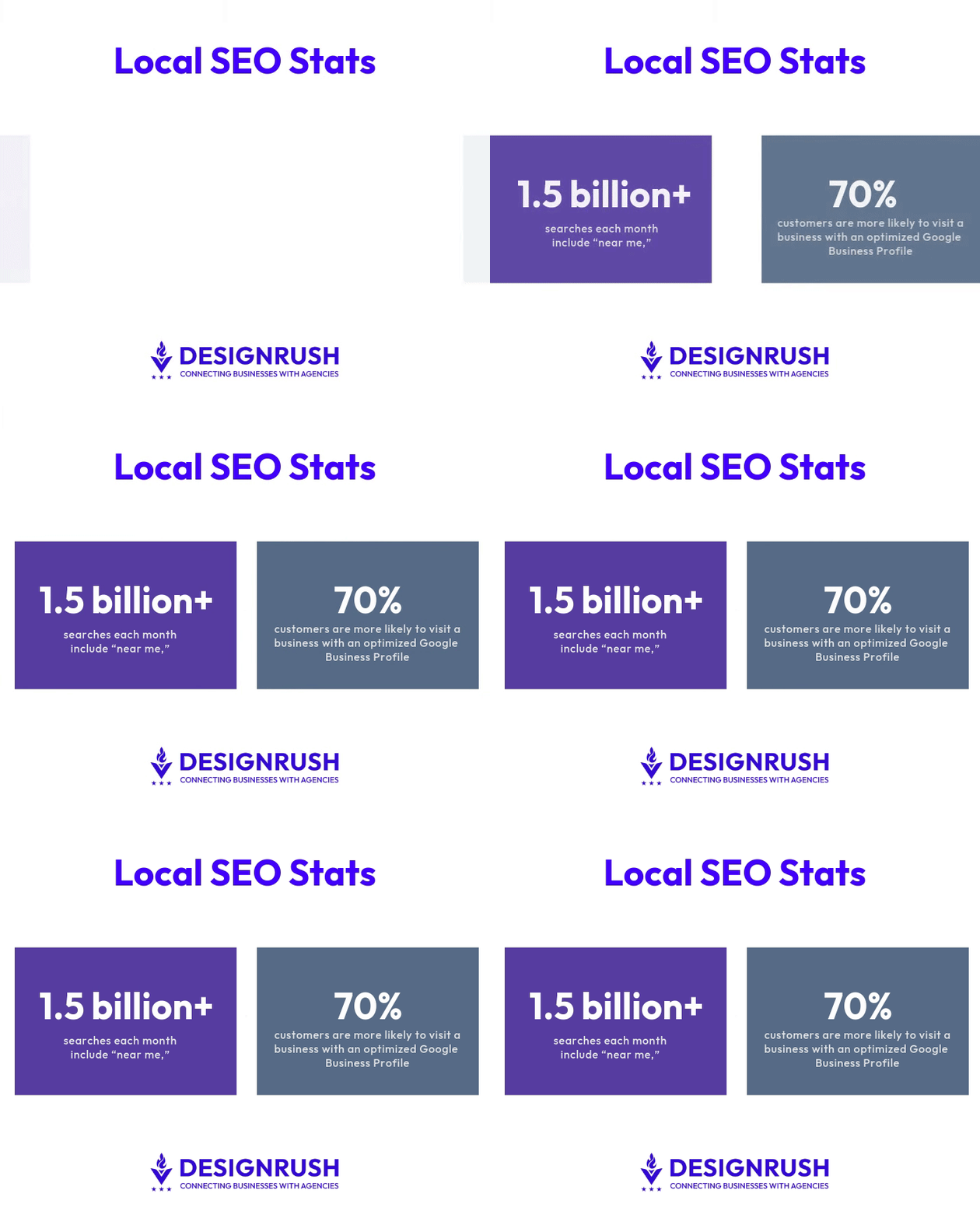
According to research, 1.5 billion+ searches each month include “near me,” highlighting the rapid growth of local search and underscoring why businesses must optimize for local SEO to capture nearby customers and increase visibility.
Local teams are also better positioned to optimize for regional SEO, including keywords, local listings, maps, and search behavior specific to DC customers, which can improve visibility in local search results compared with generic national campaigns.
Statistics also point out that customers are 70% more likely to visit a business with an optimized Google Business Profile.
Accessibility is no longer optional for many DC organizations. The DOJ’s 2024 rule requires state and local government websites and mobile apps to meet WCAG 2.1 AA within 2 or 3 years of April 24, 2024 (based on population).
By 2026-2027, they must ensure usability for people with disabilities through features like alt text, captions, and keyboard navigation, which requires a focus on universal design principles, contrast, structure, and remedying existing content, with exceptions for archived or third-party data.
That deadline-driven environment is exactly what many DC agencies are used to supporting, including audits, remediation, documentation, and governance.
Strategic Depth Website development and design agencies don't just "design"; they build information architectures that organize complex white papers, legislative trackers, and donor portals.
A DIY site often fails when traffic spikes or when you add portals or app development features. A digital agency builds scalable foundations using modern website development, robust content management systems, and thoughtful user experience design .
Scalability A DIY site often breaks when you add a member portal or a high-traffic advocacy campaign. An agency builds a foundation that grows with your mission.
Local firms understand the balance between "modern digital" and "institutional trust." They know how to design for an audience that includes both Gen Z activists and veteran Hill staffers.
DC is a high-cost talent market. In the Washington–Arlington–Alexandria metro area, average wages are $43.47/hour vs. $32.66/hour nationwide, so preventable rework is expensive. You’re paying for expert labor, so it pays to choose a team that understands DC requirements early.
Better communication, responsiveness, and collaboration
A local web design agency shares your time zone and business rhythms, enabling faster feedback, quicker problem-solving, and frequent in-person or real-time meetings.
This often leads to shorter turnaround times, clearer project alignment, and fewer misunderstandings in complex builds.
Personalized service also means a more tailored strategy and flexibility versus the one-size-fits-all approach many large national agencies use.
What hidden costs should I budget for? Hidden costs are the often-overlooked expenses that can add 20–50% or more to your total budget if not planned for up front.
Ongoing Website Maintenance and Support
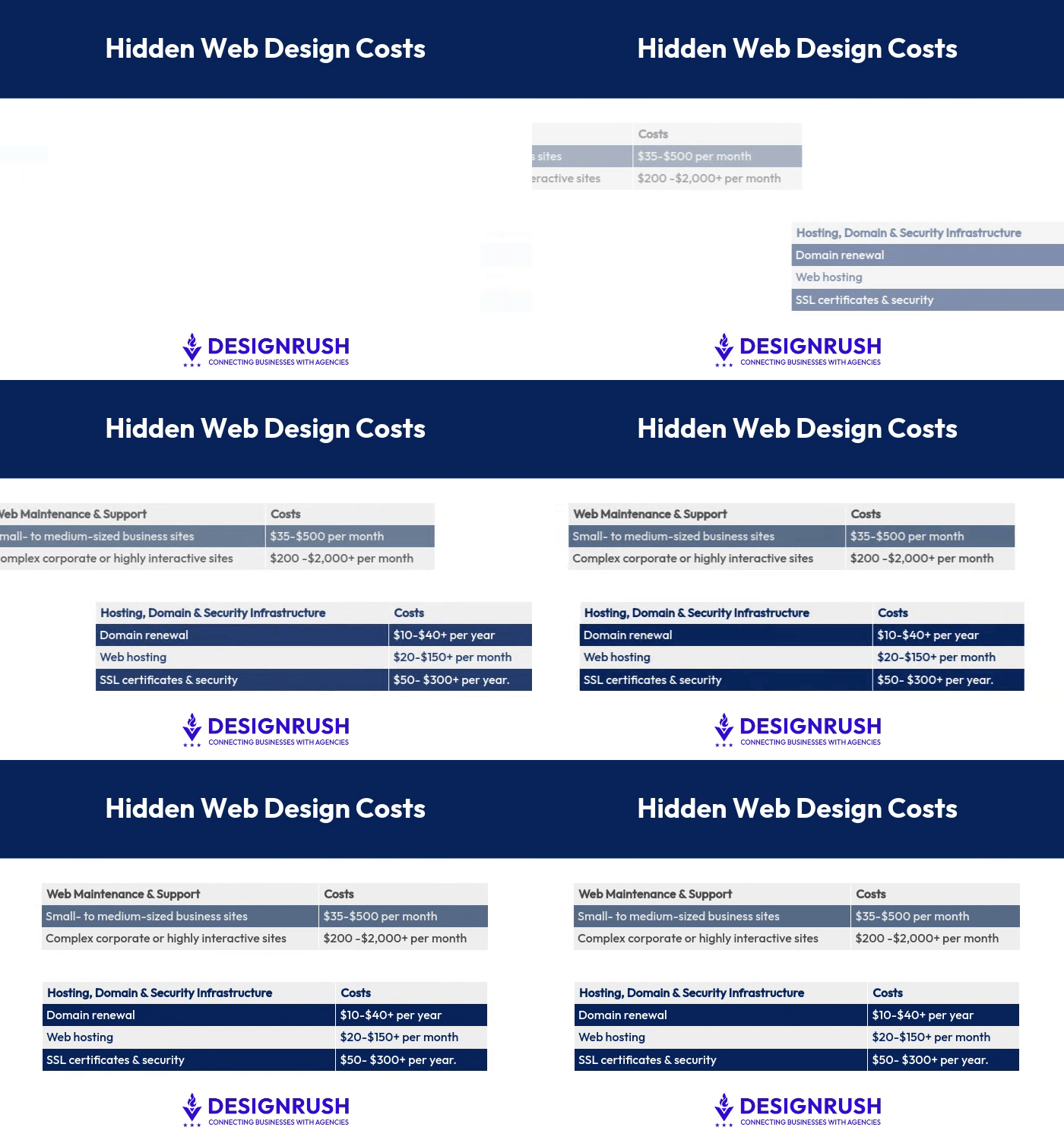
Small- to medium-sized business sites typically cost $35-$500 per month (~$420-$6,000 per year ) for CMS updates, security patches, backups, and tech support.
More complex corporate or highly interactive sites can run $200 -$2,000+ per month (~$2,400-$24,000+ per year ).
When you hire a Washington DC web design agency for deep support , expect $100-$2,500+ per month, depending on service level, update frequency, and responsiveness.
Hosting, Domain & Security Infrastructure
These are essential but often forgotten line items:
Domain renewal : Typically, domain renewal costs $10-$40+ per year, depending on the registrar and domain type.Web hosting : $20-$150+ per month (~$240-$1,800+ per year) depending on traffic and security needs.SSL certificates & security : Basic SSL can be free (Let’s Encrypt), but advanced certificates and security monitoring can run $50-$300+ per year.Content, SEO & Marketing Tools
Your site’s ability to attract traffic and convert visitors depends heavily on quality content and search optimization:
Content creation: Professional copywriting or custom graphics can range from hundreds to thousands per page/asset, depending on quality and complexity. Search Engine Optimization (SEO) and analytics tools: Hundreds to thousands per month, and analytics or marketing tools often carry monthly or annual fees as well. Feature Upgrades & Scope Creep
Adding CRM/AMS integration , member portals, ecommerce functions, or advanced accessibility can increase costs by 20-50% beyond original estimates , especially when not scoped upfront.
In Washington, DC, where accessibility, compliance, performance, and security are critical, a realistic total budget should add 20-30 % annually to your initial site build cost for maintenance, hosting, content, and upgrades.
Roughly that’s $2,500–$20,000+ per year for most custom business sites.
How do I know if an agency understands my industry? A DC web design agency understands your industry if it can prove prior experience, anticipate regulatory and operational constraints, ask smarter questions, and tie design decisions to industry-specific outcomes.
1. Proven experience in DC’s dominant industries
Washington, DC is not a general market city. According to the DC Office of the Chief Financial Officer, the District is home to 12,000+ nonprofit organizations, thousands of trade associations, and a dense concentration of federal agencies, contractors, legal firms, and policy organizations.
An agency that understands your industry should be able to show:
Case studies in your sector (e.g., association, nonprofit, government-adjacent, healthcare, legal, B2B services) Familiarity with industry-specific features (donations, membership portals, gated content, policy libraries, compliance-driven UX) 2. Speak fluently about regulations and constraints
Industry understanding in DC often means regulatory awareness, not just design taste:
Government and quasi-government organizations must meet WCAG 2.1 AA standards under the DOJ’s 2024 ADA rule, with compliance deadlines tied to population size.
Associations and nonprofits often operate under grant restrictions, procurement rules, and reporting requirements that affect timelines, content governance, and hosting choices.
3. Ask industry-specific discovery questions
A web design company that understands your industry asks better questions upfront, such as:
Do you need AMS, CRM, or federal system integrations? How many internal stakeholders approve content? Are there compliance, audit, or accessibility documentation requirements? 4. Results align with industry benchmarks
Nonprofit and association sites often focus on donation conversion rates, event registrations, or member retention, not just traffic. According to nonprofit digital benchmarking studies, minor improvements in UX and accessibility can lift online donations by 10–20% when friction is reduced. Washington DC web designers who understand your industry will talk in terms of outcomes that matter to your mission or revenue model, not generic metrics. 5. Familiar with your ecosystem
Strong DC agencies are familiar with:
Common AMS platforms, CRMs, and marketing tools used by associations and nonprofits Federal and enterprise hosting expectations (uptime, security, documentation) The reality that DC projects often involve boards, legal review, and public scrutiny This reduces onboarding time, limits rework, and lowers the risk of budget overruns, which is fundamental in a metro area where professional labor costs are well above the national average.
In DC, projects often stall because stakeholder and compliance complexity weren’t planned for. Agencies with relevant experience build timelines and budgets around this reality.
What red flags should I watch for before hiring an agency? Watch for these red flags before you sign a contract with Washington DC web designers:
No technical experience with DC’s dominant industries Little or no understanding of accessibility and compliance Unrealistically low pricing Vague process, timelines, or deliverables Poor communication or unclear website design services Overpromising results No clarity on ownership and access What questions should I ask a web design agency in Washington, DC before hiring one? Before hiring a designer, ask potential partners the following question:
Relevant Background What experience do you have with DC-based organizations like nonprofits, associations, government contractors, or regulated industries? Can you share case studies from projects with similar compliance, governance, or stakeholder complexity to ours? How familiar are you with accessibility standards such as WCAG 2.1 AA and Section 508, and how have you applied them in past projects? Who will actually work on our project, and what is their experience with DC clients and requirements? Services and Processes What is your full project process—from discovery and approvals to QA, accessibility testing, and launch? How do you manage timelines and feedback when multiple stakeholders, boards, or legal teams are involved? What accessibility, security, and performance testing is included versus billed separately? What post-launch support, maintenance, and documentation do you provide, and how is it priced? Related to Your Project What risks or challenges do you anticipate for a project like ours in the DC market, and how would you mitigate them? How do you handle integrations we may need (e.g., AMS, CRM, donations, event systems, or internal tools)? How will success be measured for our site, beyond design, based on our goals (e.g., registrations, donations, leads)? What costs are commonly overlooked in projects like ours, and what should we budget for beyond the initial build? Sources DesignRush sustains a directory of over 40,000 agencies categorized by service category, location, expertise, and reviews. We build our database in two ways:
Our dedicated team of agency experts actively searches the web for top-performing companies. We then pull information from their websites, online presence, and client testimonials to verify their status and qualifications prior to listing. The agencies listed get notified of their profiles on the website and they can choose to claim it or not, which suggests their availability for more collaborations. Agencies can also reach out to DesignRush and must go through the verification process prior to being listed.

 Proposals