
Team Behind the Design
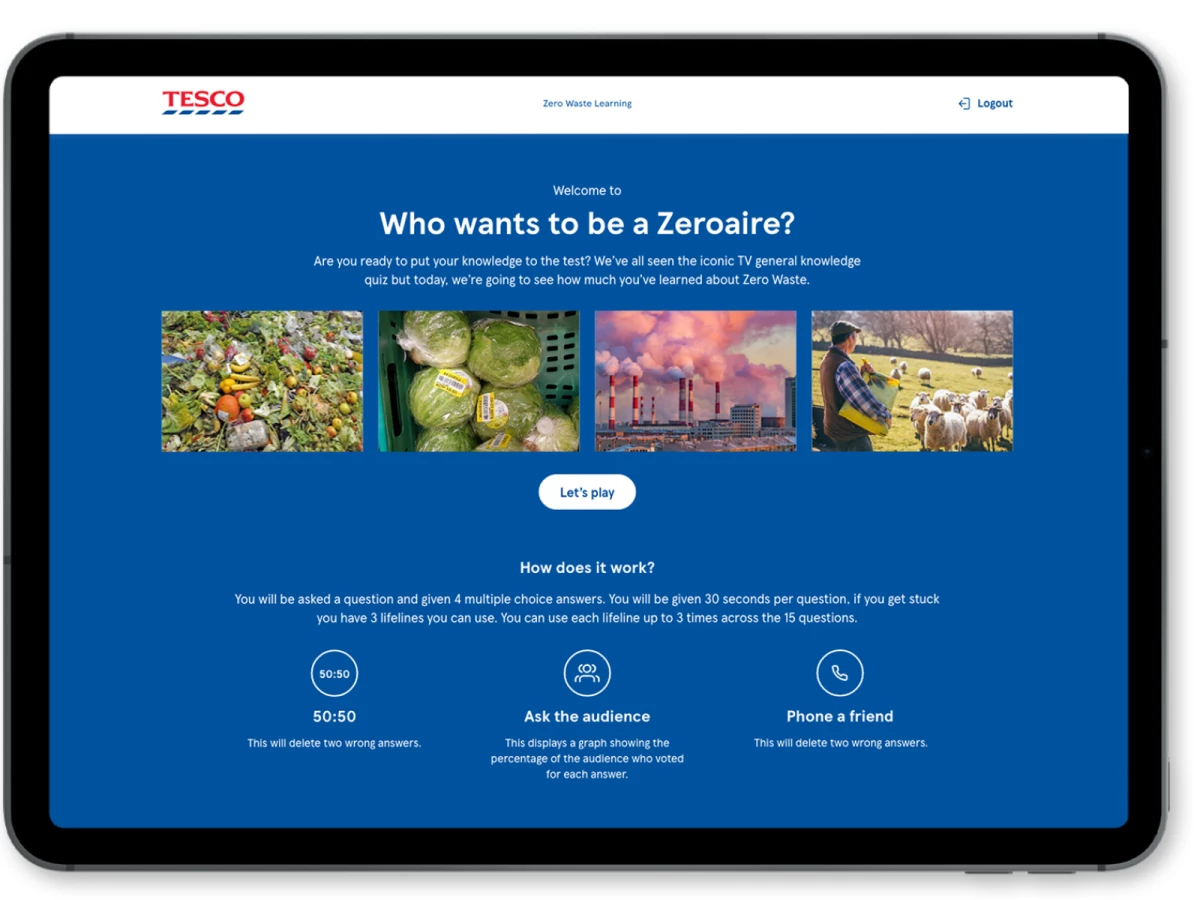
Tesco Zero Waste Learning is an interactive digital learning experience designed to engage Tesco store colleagues in sustainability education, specifically around reducing food waste.
Positioned as non-compulsory training, the project’s core challenge was to compete for attention in a high-pressure retail environment while remaining memorable, accessible, and motivating.
Website Design Analysis
What distinguishes strong learning design is not complexity, but how efficiently it lowers the barrier between interest and engagement. That's what I look for when reviewing said type of website designs.
Tesco Zero Waste Learning succeeds by framing training around play and purpose rather than obligation.
- Gamified Web Experience: I like how the site centers on a quiz inspired by a familiar TV game show format. The “Who wants to be a Zeroaire?” structure makes the experience intuitive, lowers entry friction, and encourages voluntary participation.
- Visual Hierarchy & Accessibility: The high-contrast blue-and-white interface keeps questions, answers, and actions immediately legible. Color is used functionally, helping users focus on key decisions even during short, interrupted sessions.
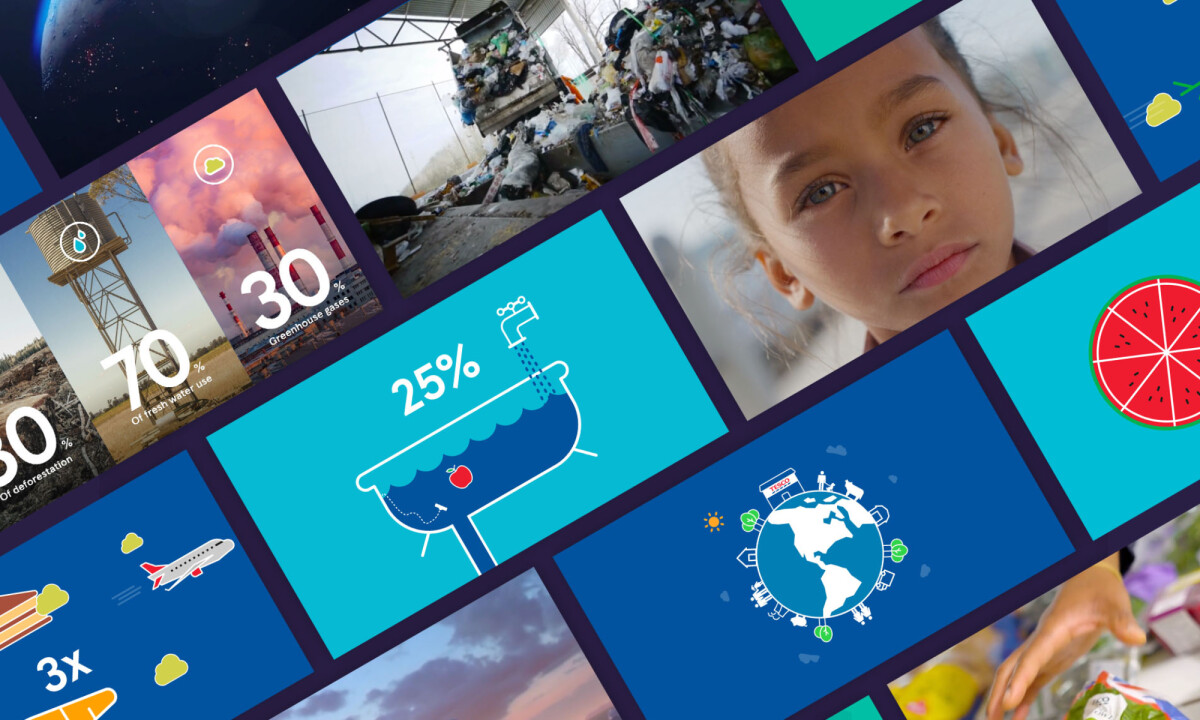
- Data-Led Storytelling: Complex sustainability metrics are translated into clear, icon-driven illustrations. This approach helps users quickly understand the real-world impact of their actions without relying on dense text or raw numbers.
- Responsive, In-Store Friendly Design: I appreciate how the website adapts across desktop, tablet, and mobile. The layouts respect the realities of busy store environments, making it easy to engage in short bursts on any device.
Impact & Results
Since launch, Tesco colleagues’ actions influenced by the learning website have helped:
-
Donate 34 million meals to charities and local communities
-
Redistribute 26,000 tonnes of food to people or animals
-
Save the equivalent of 650 articulated lorries of food from going to waste
What Brands and Agencies Can Learn from Tesco Zero Waste Learning
1. Make Optional Training Feel Desirable
Gamification and familiar interaction models can transform non-compulsory learning into something people actively choose to engage with.
2. Use Visual Metaphors to Explain Impact
Simplified illustrations can communicate scale and consequence faster than statistics alone, improving recall and understanding.
3. Design for Time-Poor Audiences
Clear hierarchy, fast interactions, and responsive layouts respect limited attention and increase participation.
About DesignRush Featured Designs
At DesignRush, we review hundreds of digital projects each month, spotlighting work that merges creativity with technical precision. The featured designs stand out for concept strength, usability, and execution quality.
Only the most compelling projects advance to become Monthly Design Awards winners, recognized across global creative industries.
See more creative projects across categories:
- Best Website Designs
- Best App Designs
- Best Logo Designs
- Best Print Designs
- Best Packaging Designs
- Best Video Designs
For a full list of design agencies and related services, see our Agency Directory.