Our directory highlights top event marketing agency options in the US, evaluated across five core ranking criteria and reviewed by a team of 12 experts, with support from over 100 verified client reviews - helping you identify the right partner with confidence.
Organic rankings are determined by five factors: top services, reviews, portfolio, awards/press, and team expertise. Sponsored listings pay for a placement that appears above organic positions. Sponsorship does not affect star ratings or review content - read more on our methodology page.
United States ×
Mainstay Digital is a 3D product visualization studio in Plano, Texas, built for industrial manufacturers whose products are hard to show. We turn engineering CAD into photoreal renders, browser-based AR, hotspot walkthroughs, product videos, and interactive 3D that sales and marketing teams use on the web...
Top Services:
- Creative Services
- Video Production
- Product Design
- Video Marketing
- Event Marketing
- Show more
- Location
- Plano, Texas
- Number of Employees
- Under 49
- Minimal Budget
- Under $1,000
Conquest Media Group is a digital marketing agency focused on results and transparency. They partner with businesses to deliver performance-driven campaigns in website design, search, social, and display, backed by real-time data dashboards and guaranteed performance...
Top Services:
- Email Marketing
- Advertising
- Digital Marketing
- Social Media Marketing
- Event Marketing
- Show more
- Location
- Reedley, California
- Number of Employees
- Under 49
- Minimal Budget
- $1,000 - $10,000
By offering a high value vs. high volume service, Marketing Outpost's clients receive individualized attention and the utmost commitment to their business growth strategy. Through rigorous investigation into obstacles that may be impeding progress, we are able to expertly identify key issues and formulate...
Top Services:
- Direct Marketing
- Advertising
- Social Media Marketing
- Content Marketing
- Event Marketing
- Show more
- Location
- Asheville, North Carolina
- Number of Employees
- Under 49
- Average Hourly Rate
- $149/hr
- Minimal Budget
- $10,000 - $25,000
Schipani PR is a boutique public relations and social media marketing firm that specializes in social media marketing, small- to medium-sized businesses, lifestyle, and professional services. We are ideally suited to immediately grasp your big-picture and are capable of coming up with innovative solutions...
Top Services:
- Social Media Marketing
- Web Design
- Logo Design
- Public Relations
- Event Marketing
- Show more
- Location
- Stamford, Connecticut
- Number of Employees
- Under 49
We highlight diversity of thought and fresh perspectives to deliver marketing strategy and content. Our mission is to efficiently lead clients to acquire more profitable customers using creative methods...
Top Services:
- Public Relations
- Logo Design
- Branding
- Digital Marketing
- Digital Strategy
- Show more
- Location
- Seattle, Washington
- Number of Employees
- Under 49
We're obsessed with helping tech startups and underdogs create the photo and video content they need to dominate their market...
Top Services:
- Video Marketing
- Advertising
- Creative Services
- Video Production
- Branding
- Show more
- Location
- Fort Lauderdale, Florida
- Number of Employees
- Under 49
- Minimal Budget
- $1,000 - $10,000
It's no secret this company is ran by tech-loving millennials. We want to make the world a better place from behind our smartphones. Social media marketing is not an option, if you're not using digital marketing in your business, you are leaving money on the table. Our clients are looking for brand clarity...
Top Services:
- Video Marketing
- Social Media Marketing
- Digital Marketing
- Branding
- Video Production
- Show more
- Location
- Miami, Florida
- Number of Employees
- Under 49
- Minimal Budget
- $1,000 - $10,000
GEM is a full-service, international, award-winning communications and marketing agency. They produce and polish multi-faceted branding campaigns that spark love affairs between brands and their customer advocates. They see the highest potential in our clients and work with a feverish degree of passion and...
Top Services:
- Web Design
- Web Development
- Creative Services
- Digital Strategy
- Event Marketing
- Show more
- Location
- New Haven, Connecticut
- Number of Employees
- Under 49
We at the Estipona Group are pros at explaining what makes you, well, you. And we use tools like strategic advertising, design, branding, social media, and public relations to spread the word about your great you-ness (we're in advertising, so we can make up words).market...
Top Services:
- Advertising
- Digital Marketing
- Public Relations
- Branding
- Media Buying
- Show more
- Location
- Reno, Nevada
- Number of Employees
- Under 49
Kiterocket, the dynamic merger of Impress Labs and Duo Public Relations, is a PR and marketing agency that enhances brand value by embracing uniqueness and amplifying their voice. Our diverse team of experts, from communication strategists to designers and social media consultants, are dedicated to delivering...
Top Services:
- Public Relations
- Video Production
- Creative Services
- Content Marketing
- Media Buying
- Show more
- Location
- Phoenix, Arizona
- Number of Employees
- Under 49
- Average Hourly Rate
- $149/hr
- Minimal Budget
- $10,000 - $25,000
Apex House helps B2B companies improve visibility, strengthen credibility, and support growth through strategic marketing and creative execution. We work with brands in technology, SaaS, insurance, and professional services that need high-quality support without the overhead of a traditional agency. Services...
Top Services:
- Digital Marketing
- Content Marketing
- Email Marketing
- Social Media Marketing
- Event Marketing
- Show more
- Location
- Orlando, Florida
- Number of Employees
- Under 49
- Average Hourly Rate
- $25/hr
- Minimal Budget
- Under $1,000
nez&pez is a founder-led creative branding agency helping B2B, technology, and cybersecurity brands differentiate in crowded markets. We connect brand strategy, positioning, messaging, identity, creative campaigns, websites, event marketing, demand generation, and sales enablement to build ideas people notice...
Top Services:
- Branding
- Creative Services
- Advertising
- Web Design
- Event Marketing
- Show more
- Location
- Charlotte, North Carolina
- Number of Employees
- Under 49
- Minimal Budget
- $10,000 - $25,000
Shamrock Signs is a trusted Pittsburgh sign company providing commercial signage solutions throughout Western Pennsylvania and the Tri-State region since 2001. Our team specializes in custom sign fabrication, illuminated signs, channel letters, monument signs, high-wall signage, installation, permitting...
Top Services:
- Branding
- Print Design
- Creative Services
- Reputation Management
- Design Services
- Show more
- Location
- Carnegie, Pennsylvania
- Number of Employees
- Under 49
- Minimal Budget
- $50,000 & Up
Fresh Tonic Marketing is a creative marketing communications studio with a focus on education & issues that matter.Fresh Tonic Marketing craft pure & potent brand communications for mission-driven organizations...
Top Services:
- SEO
- Web Design
- Content Marketing
- Digital Strategy
- Email Marketing
- Show more
- Location
- Annapolis, Maryland
- Number of Employees
- Under 49
We are a woman and Latina-owned full service digital agency. We formed this agency with the belief that when we roll up our sleeves and authentically listen to our clients, inspiring things can happen. We partner with our clients on solutions that aren't just creative, they're transformative...
Top Services:
- Video Production
- Web Development
- Web Design
- Social Media Marketing
- Email Marketing
- Show more
- Location
- Irvine, California
- Number of Employees
- Under 49
- Average Hourly Rate
- $125/hr
- Minimal Budget
- $1,000 - $10,000
From bold beginnings, we make PR and marketing look easy but with immense impact. We understand that strong brands create powerful experiences - not just images or ideas. At our core is a close-knit team of dynamic creatives working with you to define tomorrow through your inspiring vision made extraordinary...
Top Services:
- Social Media Marketing
- Affiliate Marketing
- Digital Marketing
- Content Marketing
- Direct Marketing
- Show more
- Location
- New York City, New York
- Number of Employees
- Under 49
- Average Hourly Rate
- $300/hr
- Minimal Budget
- $1,000 - $10,000
ImageThink is a visual strategy firm that specializes in graphic recording, graphic facilitation, and strategic visualization. We turn ideas, presentations, and discussions into imagery and text. In turn, those visual assets empower your team to drive organizational transformations...
Top Services:
- Graphic Design
- Video Production
- Creative Services
- Branding
- Design Services
- Show more
- Location
- New York City, New York
- Number of Employees
- Under 49
- Average Hourly Rate
- $600/hr
- Minimal Budget
- $1,000 - $10,000
Video Production | Photography | Event Production | Ads | Promotional Videos | Content Strategy. We make video production and content creation fun, simple, and effective - and our underlying purpose is to empower everyone to push the boundaries of creativity...
Top Services:
- Video Production
- Content Marketing
- Video Marketing
- Creative Services
- Social Media Marketing
- Show more
- Location
- Bellevue, Washington
- Number of Employees
- Under 49
- Minimal Budget
- $1,000 - $10,000
Marketing overall is a creative endeavor. The digital marketing journey can be treacherous when one doesn't know the way. Do you lack In-House creative support? No worries, WAJ has got you covered with the finest professionals in the field, who will make your digital journey effortless...
Top Services:
- Public Relations
- Branding
- Creative Services
- Digital Strategy
- Video Production
- Show more
- Location
- Clifton, New Jersey
- Number of Employees
- Under 49
- Average Hourly Rate
- $150/hr
- Minimal Budget
- $1,000 - $10,000
A local media agency offering marketing consulting, retainer packages, content creation sessions, event media, photography, videography and social media management. We also offer ad management, event set up and custom packages...
Top Services:
- Digital Marketing
- SEO
- Email Marketing
- Video Marketing
- Advertising
- Show more
- Location
- San Diego, California
- Number of Employees
- Under 49
- Average Hourly Rate
- $25/hr
- Minimal Budget
- $1,000 - $10,000
Michigan Creative, our people come first. We base everything we do around that...
Top Services:
- Public Relations
- Video Production
- Graphic Design
- Social Media Marketing
- Digital Marketing
- Show more
- Location
- Lansing, Michigan
- Number of Employees
- Under 49
- Average Hourly Rate
- $10/hr
BRAINSTORM Solutions is a web development and digital marketing agency with offices in New York and overseas. Through collaborative innovation, we spark user-friendly solutions for products and services using the latest technology.Let’s create a storm together!...
Top Services:
- Digital Marketing
- PPC
- Content Marketing
- Email Marketing
- SEO
- Show more
- Location
- Miami, Florida
- Number of Employees
- Under 49
- Average Hourly Rate
- $30/hr
- Minimal Budget
- $1,000 - $10,000
Good Advertising is a small, but mighty agency located in Memphis, TN. Our clients come to us for our excellent service, high-quality design, fast turnarounds and hands-on quality control, from start to finish...
Top Services:
- Digital Marketing
- Advertising
- Video Production
- Graphic Design
- Branding
- Show more
- Location
- Memphis, Tennessee
- Number of Employees
- Under 49
- Average Hourly Rate
- $150/hr
- Minimal Budget
- $1,000 - $10,000
Founded in 1985, The Walton Group Inc. is a full-service public relations and advertising agency designed to help businesses and non-profit organizations establish and reach their communication goals. We provide strategic communication planning and advertising expertise to businesses throughout Utah County...
Top Services:
- Web Design
- SEO
- Social Media Marketing
- Digital Marketing
- Public Relations
- Show more
- Location
- Provo, Utah
- Number of Employees
- Under 49
We're website heroes dedicated to helping businesses with digital marketing. 4.9-star average, 50+ reviews. Woman-owned...
Top Services:
- Web Development
- Branding
- Web Design
- Digital Marketing
- SEO
- Show more
- Location
- St. Cloud, Minnesota
- Number of Employees
- Under 49
An award-winning boutique visual communications business that delivers solutions for nonprofits, community orgs and public-serving entities. The goal? To amplify good works for the greater good. Through graphic design and artistic partnerships, creativity and equity intersect...
Top Services:
- Creative Services
- Graphic Design
- Print Design
- Branding
- Design Services
- Show more
- Location
- Chicago, Illinois
- Number of Employees
- Under 49
- Average Hourly Rate
- $200/hr
- Minimal Budget
- $10,000 - $25,000
Welcome to Such Chaos! My name is Andre Ivanchuk, I'm the founder of Such Chaos. We do awesome branding and designs...
Top Services:
- Branding
- Public Relations
- Digital Marketing
- Social Media Marketing
- Web Design
- Show more
- Location
- Skaneateles, New York
- Number of Employees
- Under 49
We are a health-native communication agency with a singular mission: Be Great To Do Good. Experts in behavioural science communications, we create great work that cements real-life behavior change for lasting impact. That's good for our clients, good for health, good for us all...
Top Services:
- Creative Services
- Branding
- Web Development
- Video Production
- Digital Services
- Show more
- Location
- New York City, New York
- Number of Employees
- Under 49
- Average Hourly Rate
- $170/hr
- Minimal Budget
- $1,000 - $10,000
Sun Kissed Media is a full-service marketing agency making powerful marketing simple and accessible. For one flat monthly rate, we deliver everything from social media and SEO to print design and paid ads...
Top Services:
- Social Media Marketing
- Content Marketing
- Email Marketing
- SEO
- PPC
- Show more
- Location
- Wantagh, New York
- Number of Employees
- Under 49
- Average Hourly Rate
- $50/hr
- Minimal Budget
- $1,000 - $10,000
Market Intelligence...
Top Services:
- Digital Strategy
- Digital Marketing
- Social Media Marketing
- Content Marketing
- Email Marketing
- Show more
- Location
- Chicago, Illinois
- Number of Employees
- Under 49
- Average Hourly Rate
- $100/hr
- Minimal Budget
- Under $1,000
We build brands that own culture, not chase it. Founder-led brand studio for sports and entertainment, with lifestyle clients including Nike, Disney, Roku, Live Nation, Red Bull, and Netflix...
Top Services:
- Branding
- Advertising
- Design Services
- Graphic Design
- Video Marketing
- Show more
- Location
- Los Angeles, California
- Number of Employees
- Under 49
- Average Hourly Rate
- $275/hr
- Minimal Budget
- $50,000 & Up
Marie Street Marketing is a full-service integrated marketing agency working with the world's best entertainment, consumer and lifestyle brands...
Top Services:
- Content Marketing
- Digital Marketing
- Social Media Marketing
- Web Design
- Media Buying
- Show more
- Location
- San Antonio, Texas
- Number of Employees
- Under 49
- Average Hourly Rate
- $150/hr
- Minimal Budget
- $10,000 - $25,000
Link Creative is your digital growth partner. We are bridging the gap between complex strategies and personable brands. We aim to give our clients the resources and feeling of an in-house marketing department with the structure and approach of an agency...
Top Services:
- Digital Services
- Web Development
- SEO
- PPC
- Digital Marketing
- Show more
- Location
- Chicago, Illinois
- Number of Employees
- Under 49
- Average Hourly Rate
- $100/hr
- Minimal Budget
- $1,000 - $10,000
We deliver innovative strategies and comprehensive solutions to elevate your brand. Our XPRT team is dedicated to driving your success through tailored marketing campaigns that achieve real results...
Top Services:
- Web Design
- Web Development
- SEO
- Branding
- Digital Marketing
- Show more
- Location
- Dallas, Texas
- Number of Employees
- Under 49
Imagine a marketing partner that can handle everything, from crafting your brand's story to boosting your online presence, all while understanding the unique nuances of the Southern California market. That's what we offer. We're not just a vendor; we're an extension of your team, dedicated to your growth...
Top Services:
- Web Design
- Branding
- Digital Marketing
- PPC
- Email Marketing
- Show more
- Location
- Temecula, California
- Number of Employees
- Under 49
- Minimal Budget
- Under $1,000
Ozone Media Group is a Nashville-based creative agency that excels in storytelling, video production, and creative strategy. Some of our notable clients include Hasbro, Walmart, CMAs, and Dan Post Boots. We primarily engage with people who are having a problem marketing themselves online through authentic...
Top Services:
- Video Production
- Creative Services
- Digital Strategy
- Content Marketing
- Video Marketing
- Show more
- Location
- Nashville, Tennessee
- Number of Employees
- Under 49
- Average Hourly Rate
- $250/hr
- Minimal Budget
- $1,000 - $10,000
With over two decades of industry experience, Reverb Communications stands out as a proven veteran among video game PR and marketing agencies. Were attuned to your requirements, whether youre a game developer, game publisher, entertainment company, tech startup or hardware maker...
Top Services:
- Digital Services
- Creative Services
- Public Relations
- Digital Strategy
- Reputation Management
- Show more
- Location
- Naples, Florida
- Number of Employees
- Under 49
- Minimal Budget
- $1,000 - $10,000
A SoHo music marketing team running Spotify, SoundCloud, UGC, clipping and paid social campaigns on its own software, with live client portals and real-time attribution...
Top Services:
- Digital Marketing
- Social Media Marketing
- Advertising
- Media Buying
- Video Marketing
- Show more
- Location
- New York City, New York
- Number of Employees
- Under 49
- Minimal Budget
- Under $1,000
Thumbvista, since 2012, uses programmatic advertising tools such as geofencing and audience data to allow advertisers to reach the right audience based on location, time and interest...
Top Services:
- Design Services
- Digital Strategy
- Digital Services
- Digital Marketing
- Video Marketing
- Show more
- Location
- Charlotte, North Carolina
- Number of Employees
- Under 49
- Average Hourly Rate
- $150/hr
- Minimal Budget
- $1,000 - $10,000
Baycoast Media builds customer acquisition systems for local businesses. We do not sell marketing services. We deliver new customers. Every client gets a custom growth system built around one outcome. New customers through the door. Based in Tampa. Never outsourced. 100% done-for-you. Call today...
Top Services:
- SEO
- Web Development
- Web Design
- Social Media Marketing
- Logo Design
- Show more
- Location
- Tampa, Florida
- Number of Employees
- Under 49
- Average Hourly Rate
- $50/hr
- Minimal Budget
- $1,000 - $10,000
Woman-owned and led marketing and communications team specializing in multi-channel marketing, communications, media relations, advertising and business growth...
Top Services:
- Advertising
- Digital Marketing
- Digital Strategy
- Public Relations
- Digital Services
- Show more
- Location
- Memphis, Tennessee
- Number of Employees
- 50 - 99
CureMD's physician billing services are easy and stress free Our team of experts will handle all the complex details, so you can focus on providing excellent patient care...
Top Services:
- Software Testing
- AI Development
- Software Development
- CRM Consulting
- Call Centers
- Show more
- Location
- New York City, New York
- Number of Employees
- 1000 & Up
- Average Hourly Rate
- $35/hr
- Minimal Budget
- Under $1,000
Magic Promotions Inc. helps businesses create memorable brand experiences through promotional products, branded merchandise, corporate gifting, and creative marketing solutions designed to strengthen client and employee connections...
Top Services:
- Digital Services
- Branding
- Logo Design
- Design Services
- Package Design
- Show more
- Location
- Boston, Massachusetts
- Number of Employees
- Under 49
- Average Hourly Rate
- $5/hr
- Minimal Budget
- $1,000 - $10,000
Glo Creative is an advanced team of experienced advertising agency talent, who deliver top caliber work without the New York agency price tag. We work across 360° platforms, including Digital, Social Media, Print, Broadcast, and PR...
Top Services:
- Graphic Design
- Branding
- Public Relations
- Video Production
- Logo Design
- Show more
- Location
- Miami, Florida
- Number of Employees
- Under 49
- Average Hourly Rate
- $75/hr
- Minimal Budget
- $1,000 - $10,000
Transforming busy professionals' marketing with automated systems that save 15+ hours weekly while driving measurable growth...
Top Services:
- Social Media Marketing
- Design Services
- Email Marketing
- Web Design
- Branding
- Show more
- Location
- Southfield, Michigan
- Number of Employees
- Under 49
- Average Hourly Rate
- $180/hr
- Minimal Budget
- $1,000 - $10,000
In a sea of digital noise, being extraordinary is the key to success. Why blend in when you were born to stand out? At Deviant Digital Services, we don't just offer digital marketing solutions we craft unique narratives that captivate and convert. Say goodbye to cookie-cutter strategies and hello to a world...
Top Services:
- Digital Marketing
- SEO
- PPC
- Social Media Marketing
- Content Marketing
- Show more
- Location
- Tempe, Arizona
- Number of Employees
- Under 49
- Average Hourly Rate
- $75/hr
- Minimal Budget
- Under $1,000
Unreel Films is a full service production company based in NYC. We create from the ground up unique and specific tailored projects with an intent for close collaboration. We like to call in craft film! Our deepest intent is to leave the viewer coming out for the better through the experience we co-create...
Top Services:
- Video Production
- Video Marketing
- Creative Services
- Social Media Marketing
- Advertising
- Show more
- Location
- New York City, New York
- Number of Employees
- Under 49
Panamedia is a creative digital marketing agency in Dubai. Our focus is on innovative and creative approaches to support businesses in their online endeavors. Our group specializes in creating memorable brand experiences, offering comprehensive marketing assistance, and planning outstanding events. We want to...
Top Services:
- Branding
- Web Development
- Digital Marketing
- SEO
- Content Marketing
- Show more
- Location
- Orange County, California
- Number of Employees
- 50 - 99
- Average Hourly Rate
- $1/hr
- Minimal Budget
- Under $1,000
The Brand Development Group (BDG) possesses over 50+ combined years of experience and prides itself in offering holistic solutions to brands around the world. Our integrated approach saves clients time and money, while BDG executes each campaign with personalized care, as if it was our own...
Top Services:
- Digital Marketing
- Public Relations
- Web Design
- Social Media Marketing
- Graphic Design
- Show more
- Location
- Covington, Georgia
- Number of Employees
- Under 49
- Average Hourly Rate
- $150/hr
- Minimal Budget
- $1,000 - $10,000
SnapMe Creative is your partner for marketing solutions that captivate and engage your audience, elevate your brand and drive results. As a Google Partner, we offer digital audits of your business as well as data dashboard to track the ROI of your campaigns...
Top Services:
- Digital Services
- Digital Marketing
- Web Design
- Web Development
- Advertising
- Show more
- Location
- West Monroe, Louisiana
- Number of Employees
- Under 49
- Minimal Budget
- $1,000 - $10,000

































Event Marketing Agencies by City
Event Marketing Agencies by State
Popular Services
Hiring Guide: How to Choose a Leading Event Marketing Agency in the US
Why should I hire an event marketing expert?
Event marketing helps businesses grow by increasing brand awareness, strengthening customer loyalty, and building meaningful relationships.
Its key advantages include:
- Brand building
Events let customers experience a brand firsthand through visuals, messaging, and product demonstrations, which creates stronger emotional connections and more positive brand perceptions. - Increased sales
Businesses can drive revenue through on-site purchases, exclusive event offers, and follow-up promotions that create urgency and encourage buying.
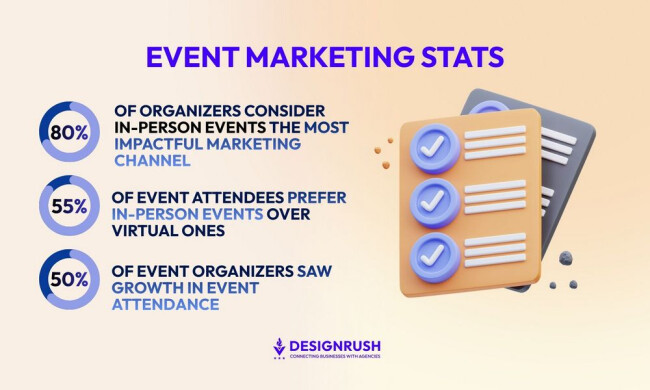
Over 80% of organizers consider in-person events the most impactful marketing channel, according to Swoogo. - Customer engagement
Interactive and personalized experiences help businesses connect more deeply with customers, gather feedback, and improve products or services.
Swoogo’s report also highlights that 55% of event attendees prefer in-person events over virtual ones. - Networking
Events make it easier to meet new customers, strengthen existing relationships, and form partnerships with industry peers, suppliers, and stakeholders.
Event organizers report increased attendance at their in-person B2B conferences, with over 50% seeing growth in attendance. - Data collection
Events provide valuable customer insights, including contact details and behavior patterns, which can be used to improve marketing strategies and decision-making.
How do I choose the right B2B event marketing agency for my brand?
Start by defining your event goal with absolute clarity. Are you trying to generate leads, build brand awareness, launch a product, or strengthen customer relationships?
Different agencies excel at different objectives.
- Look for agencies with proven experience in your specific event type, whether that's trade shows, conferences, experiential activations, or product launches.
- Evaluate their understanding of your target audience size and demographics. Industry experience matters because healthcare events differ dramatically from technology conferences or consumer brand activations.
- Compare creative vision by reviewing case studies and past work that demonstrates innovative thinking.
- Assess logistics capability by asking about their vendor relationships, venue networks, and execution track record.
- Budget control is essential, so ask how event marketing agencies manage costs and what reporting you'll receive throughout the planning process.
According to Splash's research, 77% of marketers say events are the most effective marketing channel for their company.
What kind of ROI can I expect from event marketing?
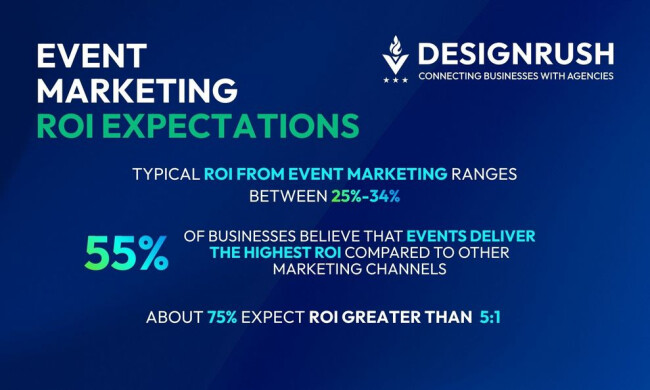
According to Swoogo, 52% of businesses believe that events deliver the highest ROI compared to other marketing channels, by fostering brand loyalty, building relationships, and creating memorable experiences.
Companies that invest $50–$100 million in event marketing report strong returns.
About 75% expect an ROI greater than 5:1, while 48% of brands anticipate returns between 3:1 and 5:1.
In addition, 44% of marketers say their event marketing efforts deliver an average ROI of 3:1, according to Equation Events.
You can easily calculate simple ROI with the following formula ROI = (Net Profit / Total Investment) x 100, and get a clear percentage that shows how much return you get for every dollar you invest.
If you’d like to estimate how much money you’ll generate as a direct result of the event, you’ll want to calculate the Advanced or Incremental ROI, and the formula is Incremental ROI = (Incremental Revenue - Event Cost) / Event Cost x 100.
According to Think Orion, typical ROI from event marketing ranges between 25%-34%, depending on the industry, making it an effective and profitable marketing strategy for businesses across various sectors.
Pre-event marketing, including email campaigns, social media posts, and targeted ads, helps maximize ROI.
The Agility PR Solutions research revealed that more than 75% of participants reported heightened trust in brands following personal interactions at events.
Many businesses experience an immediate increase in sales during or shortly after events, driven by live demonstrations and direct interactions, and gain valuable opportunities for personalized follow-up to turn interested attendees into customers.
What is the difference between an event marketing agency and an event production company?
Event marketing agencies focus on the strategic elements that drive business results.
They develop messaging, define audience engagement strategies, create content, manage promotion, and measure outcomes against business objectives.
Event production companies focus primarily on logistics and execution.
They handle staging, audiovisual equipment, lighting, venue management, and technical direction.
Think of it this way: a marketing agency determines what story you want to tell and how to tell it, while a production company ensures the stage, lights, and sound work flawlessly when you tell it.
Many full-service event marketing agencies handle both strategy and production, providing end-to-end support.
However, some brands prefer to separate these functions, hiring a marketing agency for strategy and a production company for execution.
How do I choose the best agency on DesignRush that fits my budget?
We’ve created a list of top event marketing agencies on DesignRush across multiple price points, so you can identify a service provider that’s within your price range.
| High budget: $50,000+ |
|
| Medium budget: $25,000-$50,000 |
|
Beyond budget, our agency directory allows you to filter agency profiles by location, area of expertise, agency reviews, client types, team size, and hourly rates.
Sources
DesignRush sustains a directory of over 40,000 agencies categorized by service category, location, expertise, and reviews. We build our database in two ways:
- Our dedicated team of agency experts actively searches the web for top-performing companies. We then pull information from their websites, online presence, and client testimonials to verify their status and qualifications prior to listing.
- The agencies listed get notified of their profiles on the website and they can choose to claim it or not, which suggests their availability for more collaborations.
Agencies can also reach out to DesignRush and must go through the verification process prior to being listed.

Why companies trust DesignRush
Every agency is independently vetted before it can be listed or ranked
 4.8
4.8 4.8
4.8Some agencies pay for sponsored placement, clearly labeled and held to the same vetting standards.
Event Marketing Agency FAQs
What types of businesses usually work with these types of companies?
They serve a wide range of industries, including:
- B2B technology and SaaS companies represent a significant portion of the market, using events to demonstrate products and generate qualified leads. According to statistics, corporate events, including trade shows, seminars, and product launches, account for 27.8% of the global events industry market.
- Enterprise services firms rely on conferences and executive briefings to build relationships with decision-makers.
- Consumer brands invest heavily in experiential activations to create memorable interactions with their target audiences.
- Fintech companies use events to build trust in an industry where credibility matters enormously.
- Healthcare and pharmaceutical organizations host educational conferences and product launches with strict compliance requirements.
- Educational institutions and associations depend on annual conferences as major engagement and revenue drivers.
- Media companies produce events ranging from intimate networking sessions to massive festivals.
- Trade associations bring entire industries together through exhibitions and annual meetings.
According to Cvent, the global corporate events market was valued at $325 billion in 2023 and is expected to grow to nearly $600 billion by 2029.
What services do most agencies offer?
Event marketing companies typically provide the following services:
- Event strategy development: Aligning event goals with business objectives and audience needs
- Experiential marketing: Creating immersive brand experiences that drive emotional connection
- Trade show management: Covering design, staffing, logistics, and lead capture
- Product launches: Orchestrating memorable reveals that generate buzz and coverage
- Conference production: Speaker management, session programming, and attendee experience
- Brand activations: Pop-up experiences, sponsorship activations, and guerrilla marketing
- Logistics coordination: Venue selection, vendor management, and timeline execution
- Production services: Staging, audiovisual, lighting, and technical direction
- Post-event reporting: Analytics, ROI measurement, and recommendations
According to Bizzabo's 2024 data, 78% of organizers identify in-person events as their organization's most impactful marketing channel, driving demand for these specialized services.
How much does event marketing cost?
The costs vary significantly based on scale, complexity, and objectives. According to Amex report, on average, 14% of a marketing budget goes toward event marketing. Furthermore, according to statistics, U.S. companies spend approximately $122 billion every year on event marketing.
| Event size | Cost |
| Small events (intimate product launches, executive dinners, or localized brand activations) | $15,000-$40,000 |
| Mid-sized events (regional conferences, multi-day trade show presences, or larger product launches) | $75,000-$250,000 |
| Large-scale or multi-city events, including national conferences, major experiential campaigns, or flagship annual events | $500,000+ |
According to GoGather's benchmarking data, the typical conference budget in the United States is approximately $1.89 million, accommodating an average of 601 attendees, with a per-person expenditure of about $3,144.
What additional costs should I expect when working with these types of agencies?
Beyond base agency fees, several additional expenses commonly arise during event execution.
Typical additional costs include:
- Venue rental: One of the largest line items, varying dramatically by location and prestige
- Travel and accommodation: For staff, speakers, and sometimes attendees
- Event staffing: Registration personnel, brand ambassadors, and technical crew
- Permits and insurance: Required for many public or large-scale events
- AV equipment: Sound systems, screens, lighting, and technical infrastructure
- Catering: Food and beverage accounting for roughly 30% of the total budget
- Insurance coverage: Liability and cancellation protection
- Post-event content: Photography, videography, and content repurposing
According to GoGather's data, food and beverage alone accounts for 29.9% of the total conference budget, with an average spend of $565,000, translating to approximately $940 per attendee.
The additional costs typically add 25% to 50% to base budgets, depending on event scope and production requirements.
How long does it take to plan and execute an event marketing campaign?
Event planning timelines depend heavily on scale and complexity.
| Type of event | Timeline |
| Simple activations or smaller gatherings | 6 -8 weeks |
| Corporate events | 3-6 months |
| Larger conferences, major trade show presences, or experiential campaigns | 9-12 months (planning should begin 12-18 months before the event) |
| Virtual events | 8-12 weeks |
Latest Trends Related to Event Marketing