Our directory features reliable IT services companies in Chicago, supporting businesses in the Loop, River North, Lincoln Park, and West Loop. These experts provide managed IT, cybersecurity, cloud solutions, and network support across many sectors. Compare firms by expertise, pricing, and client reviews.
Organic rankings are determined by five factors: top services, reviews, portfolio, awards/press, and team expertise. Sponsored listings pay for a placement that appears above organic positions. Sponsorship does not affect star ratings or review content - read more on our methodology page.
AGENCY LISTING COMING SOON.
Related Services in Chicago
IT Services Companies Near Chicago
Popular Services
Everything You Need To Know Before Hiring the Best IT Company in Chicago
What are the primary tech threats for Chicago businesses in 2026?
The primary threats currently impacting the Chicago business hub include:
1. AI-powered social engineering and phishing
Phishing emails are harder to spot in 2026. They no longer look fake.
Hackers use AI to collect information from LinkedIn and other public profiles. They write emails that sound exactly like a real executive or trusted vendor.
They also use deep-fake technology to copy a person’s voice or video. This lets them pretend to be a CEO on a call and trick employees into sending money.
2. Sophisticated ransomware and double extortion
Ransomware is more advanced now. Hackers first steal your sensitive data. Then, they lock your systems.
Even if you restore your systems from backups, they still have your data. They threaten to publish it unless you pay.
This can expose client files, legal documents, or patient records. For professional IT firms in Chicago, this damages trust and reputation.
3. Supply chain and vendor vulnerabilities
Chicago businesses rely on many outside vendors, such as accountants, law firms, and logistics companies. Hackers target these smaller partners because they usually have weaker security.
Once hackers break into the vendor, they use that trusted connection to access the larger company’s systems. Your security depends on how secure your vendors are.
4. Shadow AI and data leakage
Employees are using AI tools to work faster. Some of them copy and paste company data into public AI systems. This can expose confidential business information, customer data, and internal documents
This risk is called shadow AI. It happens without company control.
Regular security tools often do not detect it because the employee is sending the data via standard internet access.
5. The cost of non-compliance
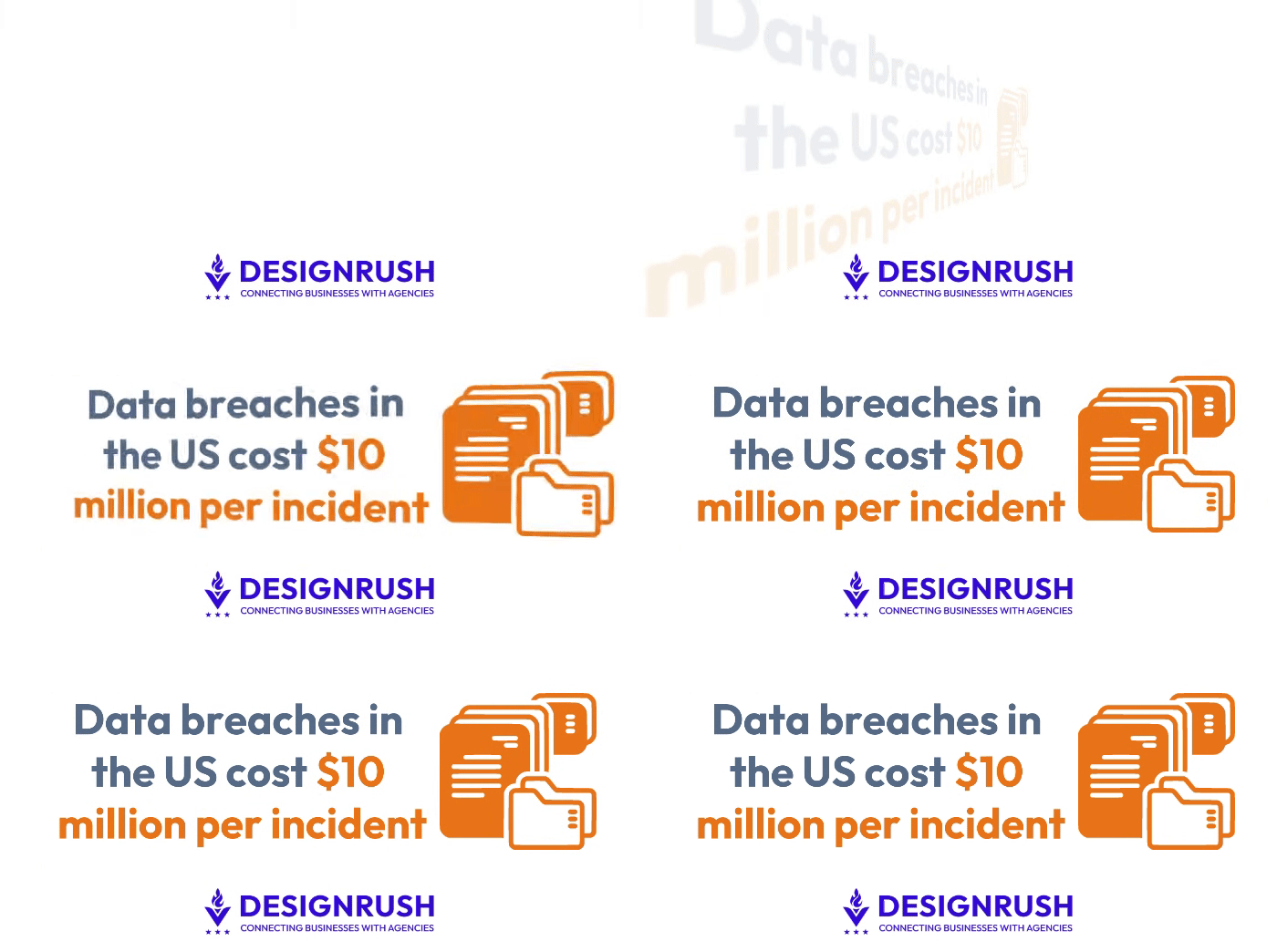
Data breaches are now extremely expensive in the U.S., averaging over $10 million per incident in 2026. The damage comes from two places:
- The direct cost to fix the systems
- Government fines for weak security
Businesses must follow strict security laws. If they cannot prove they had proper protection, they can face large fines. These fines are often higher than the cost of fixing the technical problem itself.
What benefits can IT companies in Chicago provide for your business?
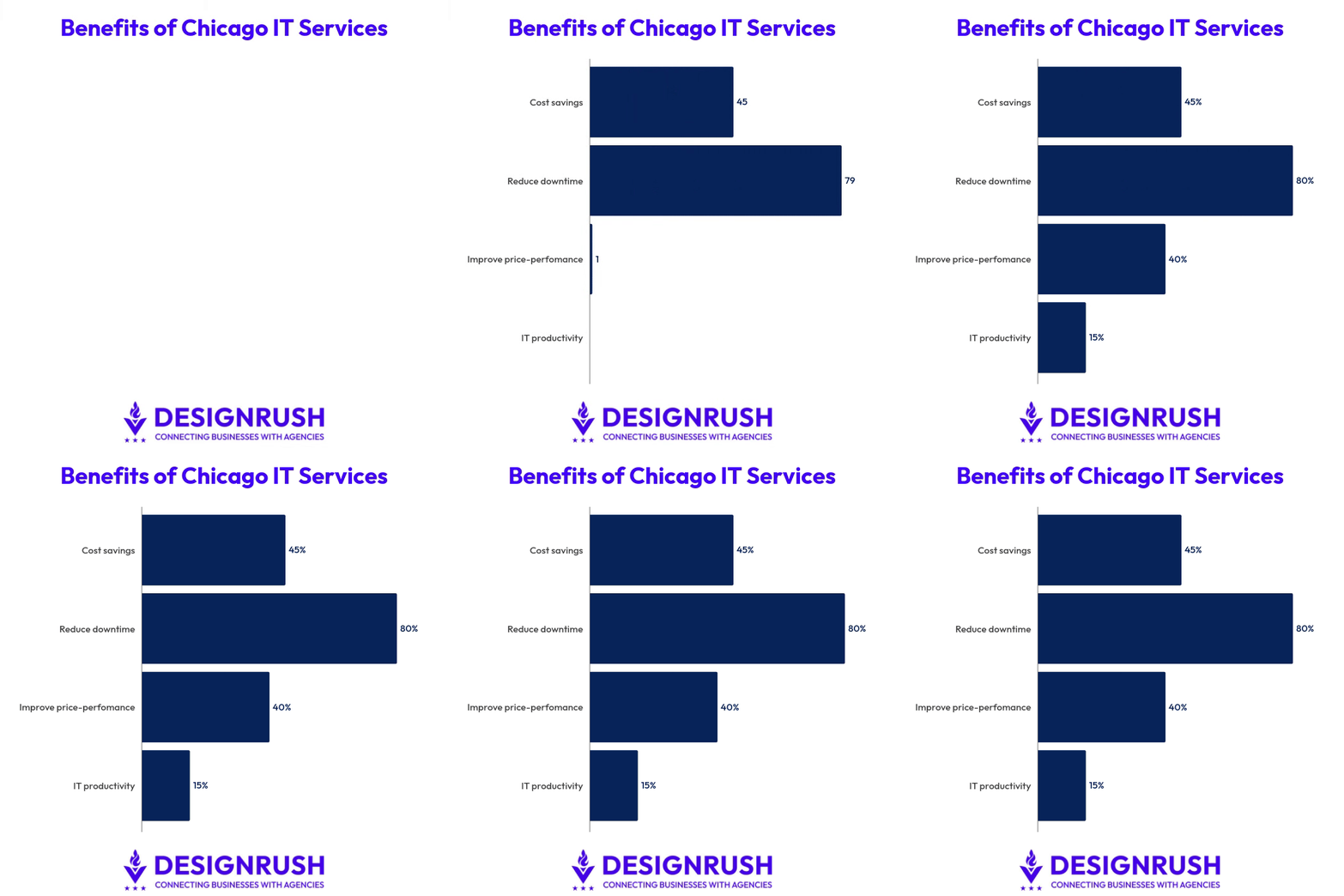
In 2026, businesses based in Chicago are moving away from break-fix IT, where you only call for help after something breaks. They are switching to Managed IT because the risks are much higher now.
Higher costs, like the Chicago Cloud Tax increase, and new threats, like AI-driven cybercrime, require constant monitoring and protection, not just occasional repairs.
The top five key benefits IT companies in Chicago provide include:
1. Cost reduction and predictable pricing
Outsourcing IT turns unpredictable capital expenses into stable monthly operating costs. In 2026, managed IT services reduce total IT operating costs by 25% to 45% compared to ad-hoc spending. For Chicago mid-sized businesses, this usually means a fixed cost of $100 to $200 per user per month, avoiding expensive surprise repair bills.
2. Lower downtime costs
For small and mid-sized businesses, just one hour of downtime in 2026 can cost mid-sized businesses up to $300,000 in lost revenue and payroll. Managed IT providers in Chicago use proactive monitoring and automatic updates that reduce downtime by up to 80% within the first six months.
3. Stronger cybersecurity against AI threats
Cybercrime is expected to cost over $20 trillion globally in 2026, and the average data breach costs $4.88 million.
Managed IT providers deliver enterprise-level security, including AI-based threat detection and Zero Trust protection, which would be too expensive for most local businesses to build themselves. This greatly reduces the risk of a costly breach.
4. Lower cloud costs and better tax control
Chicago’s Cloud Tax is 15% in 2026, so unused cloud services waste even more money. Managed providers use FinOps methods to monitor and optimize cloud usage.
Proper system sizing and modern cloud setups improve price-performance by 20% to 40%, so businesses pay only for what they need.
5. Higher employee productivity
When managed IT providers handle maintenance and Shadow AI risks, internal teams can focus on important work. In 2026, companies with reliable IT systems see an average 15% increase in staff and developer productivity, thanks to faster problem resolution and fewer repetitive manual tasks.
How to choose the best IT company in Chicago?
Choosing the best IT firm in Chicago requires more than general technical skills. You need a provider that understands local operations and Chicago-specific regulations.
Here is a step-by-step guide:
- Prioritize physical proximity for emergency support
Make sure the provider has a main office and dedicated technicians in the Chicago metro area, ideally within 30 to 45 minutes of your business. This ensures fast on-site help when hardware fails or the network goes down, and remote support is not enough. - Verify expertise in Chicago-specific tax and compliance
Confirm the provider knows how to manage the 15% Chicago Cloud Tax (PPLTT). They should also have experience helping businesses comply with the Illinois Biometric Information Privacy Act (BIPA) if you use fingerprint or facial recognition systems. - Evaluate experience in Chicago’s key industries
Choose a firm that works in your industry, such as FinTech in the Loop, legal services, or manufacturing. They will already know the common software, like Clio, Bloomberg, or Epic, and understand required security standards like SOC 2 or HIPAA. - Audit their 2026 AI and security systems
Ask how their Security Operations Center (SOC) works and how they use AI-based tools to protect against deepfakes and AI phishing. Make sure they are not relying only on outdated antivirus tools that are no longer sufficient in 2026. - Review local case studies with real numbers
Ask for at least three Chicago client case studies with clear results, such as “reduced downtime by 40%” or “saved $5,000 per month on cloud tax.” Ask to speak directly with those clients to verify the results. - Confirm transparent, custom Service Level Agreements (SLAs)
Choose a provider that offers custom SLAs based on your business hours and critical systems, not a generic national template. The agreement should include clear financial penalties if they fail to meet response time or uptime guarantees.
What is the difference between managed IT and IT consulting?
The difference is based on purpose and duration. Managed IT runs your technology every day. IT consulting helps change or improve a specific aspect.
| Feature | Managed IT | IT Consulting |
| Primary goal | Stability and maintenance | Change and improvement |
| Timeframe | Ongoing, long-term | Short-term, project-based |
| Pricing | Monthly subscription | Fixed project fee or hourly rate |
| Approach | Prevent problems daily | Solve a specific problem |
| Scope | Entire IT environment | One system or project |
| Role | Your ongoing IT team | External advisor |
| Example | Managing help desk and security monitoring | Auditing systems for BIPA compliance |
Managed IT (Operations)
Managed IT is an ongoing monthly service. The provider takes full responsibility for your daily technology. Their goal is stability and prevention.
They handle:
- Help desk support
- Security updates and patching
- Server and network monitoring
- Cloud tax compliance management
- AI-driven threat monitoring
In Chicago in 2026, they act like your permanent IT department.
IT consulting (Strategy and projects)
IT consulting is temporary and project-based. You hire a consultant to solve a specific problem or plan a major change.
They analyze the situation, design a solution or strategy, complete the project, and leave when finished.
Common Chicago 2026 examples include:
- Moving systems to the cloud to optimize the 15% PPLTT cloud tax
- Running security audits
- Planning AI implementation.
What questions should you ask an IT service provider in Chicago before signing a contract?
Before signing a contract, ask the IT service provider in Chicago the following questions:
Relevant Background
- How many Chicago-based clients do you currently support in my industry?
- What is the average tenure of your technical engineering staff?
- Can you provide three references from local businesses of a similar size to mine?
- How does your team stay updated on the 2026 Chicago Cloud Tax regulations and compliance changes?
Services and Processes
- What are your guaranteed response and resolution times across different priority levels?
- How do you handle 24/7 monitoring and after-hours emergency support?
- What cybersecurity framework do you use to audit and secure client environments?
- Can you walk through your step-by-step process for a full system disaster recovery?
Related to Your Project
- Who will be the dedicated primary point of contact for my day-to-day needs?
- What is the anticipated timeline and disruption level for the initial onboarding phase?
- How do you identify and manage shadow AI or unauthorized software within a workforce?
- What are the specific financial penalties if your team fails to meet the agreed-upon uptime SLAs?
Sources
DesignRush sustains a directory of over 40,000 agencies categorized by service category, location, expertise, and reviews. We build our database in two ways:
- Our dedicated team of agency experts actively searches the web for top-performing companies. We then pull information from their websites, online presence, and client testimonials to verify their status and qualifications prior to listing.
- The agencies listed get notified of their profiles on the website and they can choose to claim it or not, which suggests their availability for more collaborations.
Agencies can also reach out to DesignRush and must go through the verification process prior to being listed.
Latest Trends Related to IT Services