
The first thing many shoppers see on an eCommerce site isn’t the product. It’s the cookie banner. And that tiny interaction can shape whether they keep shopping or walk away.
Privacy isn’t just something your legal team needs to get right. It can influence trust, conversions, and whether customers come back.
Data Transparency and eCommerce Conversion: Key Findings
- Treat the consent banner as part of your conversion funnel. Write it for shoppers, make the choices obvious, and measure what happens after the interaction.
- Explain the value exchange before asking for consent. This matters because 44% of consumers rank clear explanations of data use among the factors that make them trust a brand.
- Optimize for consent that shoppers understand. Privacy-aware consumers are almost 3x as comfortable with personalization when they understand how their data is being used.
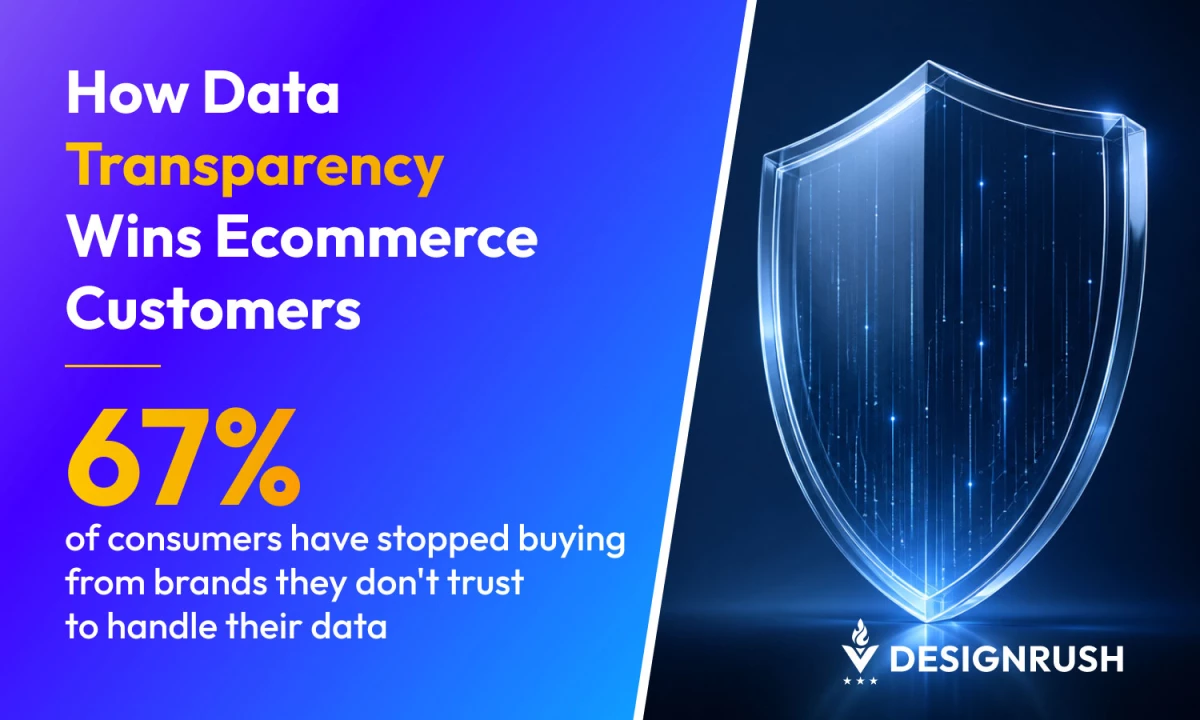
67% of Shoppers Have Walked Away Over Data Trust
Usercentrics' State of Digital Trust 2026 report, which surveyed 11,000 consumers across seven markets, found that two-thirds of consumers have already stopped buying from brands they don't trust to handle their data responsibly in the age of AI.
For eCommerce stores, that trust shows up in the numbers: conversions, revenue, and retention. Yet many stores are losing sales here without realizing it.
Passing a compliance check doesn’t mean shoppers trust the way you collect and use their data. A store can meet every regulatory requirement and still have a consent experience that sends customers away.
The gap matters because the consent banner is often a shopper’s first interaction with your approach to privacy. Before they browse a product page or reach checkout, they’re deciding whether your store deserves their trust.
- Get it right, and privacy becomes part of the buying experience, giving shoppers another reason to complete a purchase and return.
- Get it wrong, and it can undermine the trust your storefront has worked to build.
The Consent Banner Is Your Store's First Conversion Event
On most eCommerce sites, the consent banner appears before a shopper sees a product, promotion, or checkout page. It’s often their first signal of how the business treats them and their data.
It forces a choice, and its wording and design say something about the business behind it.
- A banner that corners the visitor into "accept all," hides the decline option, or looks like an afterthought tells shoppers the store cuts corners.
- A clean, balanced banner that gives shoppers a genuine choice tells them the store takes their privacy seriously.
Shoppers may not consciously register these details, but they can influence how much they trust what comes next. And that trust follows them through the funnel.
Among shoppers who abandon checkout for a fixable reason, 19% say they don’t trust the site with their card information, according to the Baymard Institute. Privacy concerns can start much earlier than checkout.
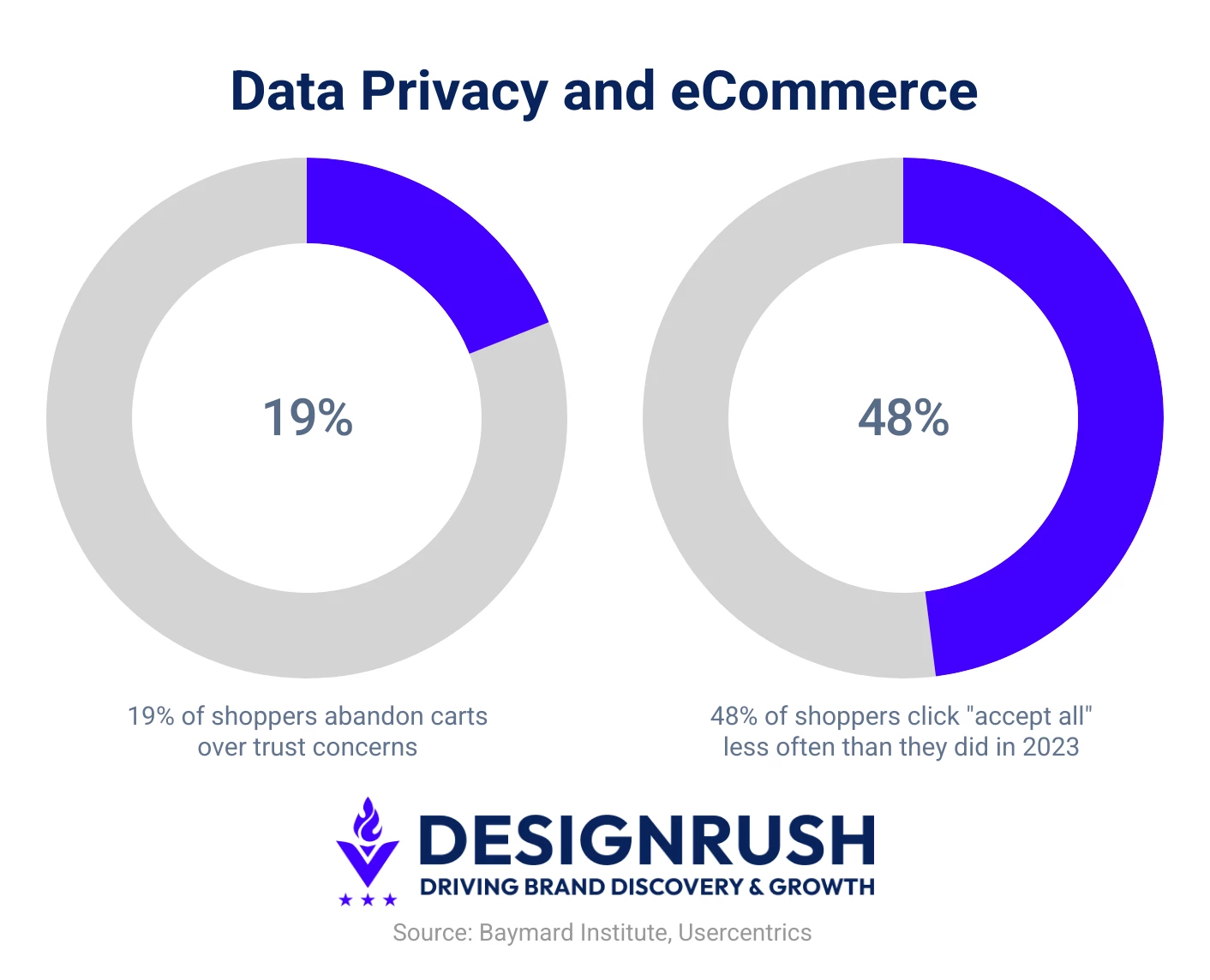
Shopper behavior around consent is changing, too. In 2026, 48% of consumers say they click “accept all” less often than they did three years ago, compared with just 23% who say they click it more (Usercentrics).
That split reflects two different responses to years of cookie banners. Some shoppers have developed consent fatigue and click through simply to get to the content. Others have become more privacy-conscious, opening “more information,” checking how their data will be used, and making a deliberate choice.
Either way, the consent banner is doing conversion work before the shopper ever sees a product. It can earn a little more trust or spend some of it.
What the Trust Economy Means for eCommerce Revenue
Trust has a price. Shoppers will pay more for brands they believe will handle their data responsibly, while distrust can push them toward competitors or reduce what they spend.
The consent experience is where a store captures that willingness or loses it.
52% of Consumers Will Pay More for Data Transparency
The clearest finding for eCommerce brands is that data transparency can affect what shoppers are willing to pay. More than half of consumers (52%) say they would pay more for a brand that is transparent about how it uses their data in AI, with an average premium of 7% (Usercentrics).
The potential upside goes higher. Among those willing to pay more:
- 28% would pay up to 10% above the regular price
- 16% would pay 11% to 20% more.
Younger shoppers are especially willing to pay for this. Among consumers aged 18 to 29, 67% say they would pay more, compared with 23% of consumers aged 60 and older.
For brands competing for younger customers with long customer lifecycles, privacy can influence both conversion and willingness to pay.
The same three factors have topped Usercentrics' research for the past two years:
- Clear explanations of how their data is used (44%)
- Strong security guarantees (42%)
- Control over what they share (41%)
These are practical signals a store can build into its consent experience. Shoppers want to understand what happens to their data, know that it is protected, and retain a meaningful say in what they share.
Nearly Half of Shoppers Act Against Brands They Distrust
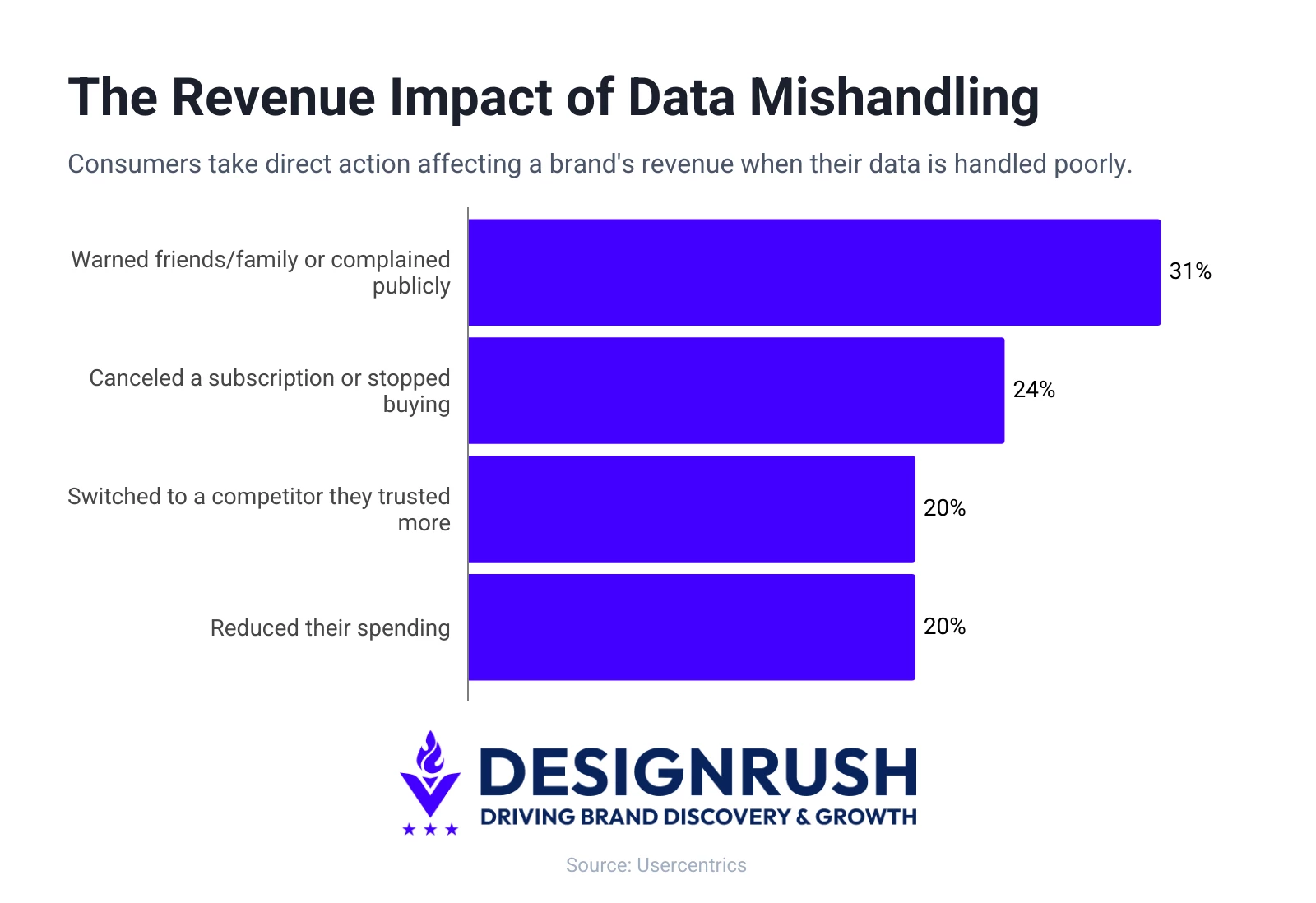
The downside is just as measurable. In the past six months, 47% of consumers took at least one action that could directly affect a brand's revenue because of how it handled their data in AI (Usercentrics).
Among them:
- 24% canceled a subscription or stopped buying from the brand.
- 20% switched to a competitor they trusted more.
- 20% reduced their spending.
- 31% warned friends and family or complained publicly.
The behavior can compound. Thirty-five percent of consumers took two or more of these actions against the same brand, suggesting that data concerns can affect an ongoing customer relationship rather than a single purchase.
For a brand with one million customers, this represents as many as 240,000 customers making a purchase-related decision after losing trust in its data practices.
Those decisions rarely appear in analytics as "privacy-driven churn." They show up as fewer repeat purchases, lower spending, or customers who never return.
That makes the consent experience a revenue touchpoint, not just a legal formality. A shopper who distrusts your data practices may never tell you why they left. They simply spend less, choose another store, or decide not to come back.
Transparent Consent Is How You Earn First-Party Data
Third-party cookies are drying up, putting more weight on the data shoppers willingly share. That makes consent more than a trust signal. It is where stores begin building the first-party data they rely on for personalization, retargeting, and measurement.
A store that explains what it collects and why has a better chance of earning useful consent. A store that makes the choice confusing or coercive risks more refusals and a thinner view of its customers.
Privacy-Aware Shoppers Are Nearly 3x More Comfortable With Personalization
At first glance, the research looks like a warning against personalization: 71% of consumers find AI-driven personalization intrusive (Usercentrics).
The breakdown tells a more useful story. Among privacy-aware shoppers, 53% are comfortable with companies using their data to personalize their experience. Among privacy-unaware shoppers, just 19% feel the same (Usercentrics).
That is nearly a threefold difference. The personalization itself hasn't changed. What changes is whether the shopper understands what is happening with their data.
Donna-Marie Bohan, Brand and Communications Team Lead at Usercentrics, puts it directly:
"Personalization isn't the problem. Unexplained personalization is.
The consent experience is where that data is either earned or lost."
For eCommerce stores, that distinction matters across product recommendations and retargeting. A shopper who understands why they are seeing a recommendation is more likely to accept it than one who feels tracked without explanation.
Privacy-Aware Shoppers Are Harder To Win, but More Deliberate
Privacy-aware shoppers are more selective about what they consent to, but that doesn't make them a lost audience for data collection.
The opposite is closer to the truth. Because their consent is a deliberate decision rather than an automatic click, the data behind it is worth more to a store.
The upside shows up in three ways:
- Their consent reflects an informed decision, giving the resulting first-party data a clearer basis.
- They are also the group most comfortable with personalization once its use is explained, giving stores more opportunities to put that data to work.
- They are more willing to pay a premium for brands they trust, connecting consent directly to customer value.
A consent experience designed to be understood can therefore attract the shoppers whose data is most deliberately shared. As privacy awareness grows, that distinction will matter more than simply maximizing the number of people who click "accept all."
Why "Accept All" Is Declining and What It Costs Your Store
The shift away from "accept all" affects measurement as much as trust. As more consumers opt out, the signals brands use for campaign measurement become less complete at the source (Usercentrics).
For an eCommerce store, that creates a direct link between consent and performance. Every visitor who does not consent can leave a gap in retargeting audiences, conversion tracking, and attribution. The consent experience is where that data is either captured or lost.
Research points to consent design as the point where compliance can affect performance: when shoppers understand what they are agreeing to, they are more likely to opt in, giving campaigns better-quality data to work with.
39% Now Accept Only Necessary Cookies
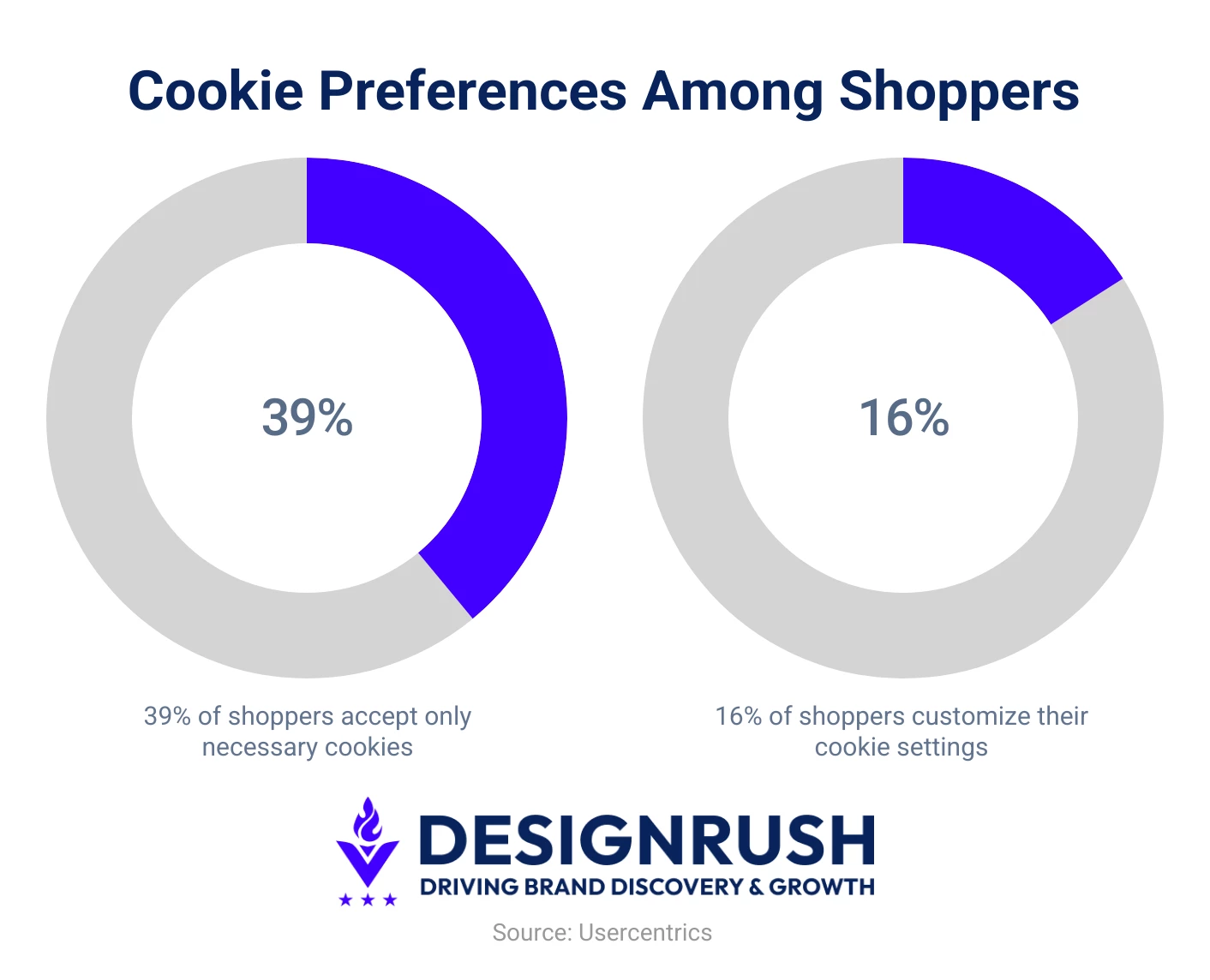
More consumers are choosing their cookie preferences selectively. In 2026, 39% accept only necessary cookies, while 16% customize their settings (Usercentrics).
That makes blanket acceptance less dependable as a source of consented data. Among privacy-unaware shoppers, 57% still accept all cookies by default. Among privacy-aware shoppers, only 26% do (Usercentrics).
As privacy awareness grows across every market covered by the report, stores that rely heavily on automatic opt-ins may see their consent rates fall further.
A Weak Consent Experience Erodes the Data Your Campaigns Run On
A lower opt-in rate means less data flowing into the systems that measure and optimize campaigns. Retargeting audiences can shrink, conversion tracking becomes less complete, and attribution has fewer signals to work with.
Nearly half of shoppers do not understand what they are agreeing to, making a clear, informed choice harder. As privacy awareness grows, confusing or coercive banners can push more shoppers toward rejection.
That puts the fix at the consent experience itself. A banner that clearly explains what data is collected and why gives shoppers a better basis for making a choice. When comprehension improves, opt-in can improve with it, giving campaigns a more complete stream of consented data.
For eCommerce brands, that makes consent design a performance consideration alongside compliance. The quality of the interaction at the banner can affect the quality of the data used to measure and grow the business.
What a Conversion-Positive Consent Experience Looks Like
A consent banner has to work for the shopper standing in front of it, not just satisfy the team that approved it.
Bohan lays out the practical version:
"The difference is whether the moment was written for the person reading it or for the legal team that approved it.
Practically: 1) Give equal weight to accept, decline, and customize. 2) Keep controls reachable in two clicks. 3) Make the banner, preference center, and data request flow feel like the same brand making the same promise — inconsistency there signals privacy was an afterthought."
Those principles set the foundation. The next step is making the experience useful, clear, and easy to act on:
- Explain what data you collect and why. "We use cookies to improve your experience" tells shoppers very little. Explain whether data supports recommendations, analytics, advertising, or saved preferences, so shoppers can judge the trade-off before choosing.
- Make the experience work on mobile. Consent controls that are cramped, hard to tap, or buried below the fold add friction before shopping even starts. Use readable copy, clear buttons, and enough space for shoppers to make their choice comfortably.
- Keep the copy short, but make it specific. Shoppers should understand the main purpose of data collection without opening a privacy policy. Put the essential information in the banner and reserve deeper technical or legal detail for the preference center.
- Let shoppers change their minds easily. Consent should remain manageable after the initial choice. Give customers a visible way to revisit their preferences, withdraw consent, or adjust individual categories without searching through account settings.
- Test the consent experience like any other conversion element. Track opt-in rates alongside engagement, bounce, and downstream conversion metrics. A banner that generates more clicks but fewer qualified sessions or returning customers may be creating a poor trade-off.
3 Consent Management Platforms That Turn Privacy Into Conversions
A consent management platform (CMP) is what puts the principles above into practice: it scans a site for trackers, presents the consent choice, blocks non-essential scripts until a shopper opts in, logs each decision, and passes clean consent signals to a store's analytics and ad tools.
The three below were selected for how well they fit eCommerce, from a solo Shopify store to an enterprise operation:
- Cookiebot: Best for eCommerce and multi-market stores
- OneTrust: Best for enterprise and complex compliance
- Termly: Best for small stores and free-tier starters
1. Cookiebot: Best for eCommerce and Multi-Market Stores
Cookiebot is a Google-certified CMP trusted by over 2.4 million websites to handle consent.
It's built for the exact problem a growing store runs into: different consent rules, languages, and trust expectations in every market it sells to, often on the same site.
Its defining strength for eCommerce is geo-targeted consent. The banner adapts automatically to each visitor's location, applying the relevant regulation (GDPR, CCPA, 20+ US state laws, LGPD, and others) in over 47 languages from a single deployment.
Underneath the banner, automatic cookie scanning keeps the site's tracker inventory current, and a full consent audit trail records every decision for proof of compliance.
Key Features
- Geo-targeted, brand-consistent consent banners
- Automatic cookie and tracker scanning
- Consent audit trail and logging
- Google Consent Mode v2 support for ad and analytics signal recovery
Pricing
- Free (1 domain)
- Paid plans start at $8/month
What Sets It Apart
Cookiebot pairs a consent experience that reads as professional, brand-consistent, and shopper-facing with the scanning and audit infrastructure underneath.
That combination is what positions it as trust infrastructure that protects revenue: the geo-targeting makes it a fit for stores selling across multiple regulatory regions without maintaining a separate setup for each.
2. OneTrust: Best for Enterprise and Complex Compliance
OneTrust is widely regarded as the enterprise standard for consent and privacy management, offering a full suite that extends well beyond cookie consent into vendor risk, data governance, and compliance automation.
It's built for organizations with complex, multi-jurisdictional obligations rather than a single storefront.
For a large eCommerce operation — particularly one that's part of a bigger corporate entity with regulated data flows — OneTrust's depth is the draw. It handles consent as one piece of a broader privacy program, which is exactly what an enterprise compliance team wants.
Key Features
- Full consent and preference management
- Vendor risk and third-party data governance
- Compliance automation across multiple jurisdictions
- Enterprise integrations and reporting
Pricing
- Pricing available by request.
What Sets It Apart
OneTrust is the most comprehensive option here, and the least lightweight. Its governance ecosystem is the reason large organizations choose it, and its premium pricing and implementation complexity are the reason smaller stores generally shouldn't.
For an enterprise that needs consent to sit inside a full privacy and data-governance program, it's the category benchmark.
3. Termly: Best for Small Stores and Free-Tier Starters
Termly is a Google-certified CMP Partner that pairs cookie consent with a library of legal-policy generators, which makes it a practical starting point for small stores and solo operators who want compliance handled without hiring a specialist.
Its cookie tools cover the essentials: a site scan, script-blocking before consent, a consent banner, and decision logging. The free plan makes it genuinely accessible for a single low-traffic store getting its first compliant banner live.
Key Features
- Cookie scanning, script-blocking, and consent banner
- Ten attorney-drafted policy generators (privacy policy, terms, and more)
- Consent logging and DSAR tools
- Google Consent Mode v2 support
Pricing
- Free
- Starter: Starts at $15/month
- Pro+: Starts at $20/month
What Sets It Apart
Termly is the easiest on-ramp, especially for a US-focused store that also wants attorney-drafted policy documents in the same place.
The tradeoff is that the features doing the real conversion work (clean signal via Consent Mode v2, multi-language banners, regional rules) aren't on the free tier, so a store growing past a single market will need to upgrade.
Data Transparency and eCommerce Conversion: Final Thoughts
Privacy can be a conversion advantage when shoppers understand what they're agreeing to and feel in control of the decision.
For eCommerce brands, the opportunity is to stop treating consent as a legal checkpoint and start treating it as part of the customer journey.
Clearer explanations, balanced choices, accessible controls, and consistent preference management can help protect trust while giving brands better-quality consent and first-party data.
Our team ranks agencies worldwide to help you find the best fit. Visit our Agency Directory for the top eCommerce development agencies, as well as:
- Top eCommerce Consultants
- Top UI/UX Design Companies
- Top Website Design Companies
- Top Content Marketing Agencies
- Top eCommerce Companies in Orlando
For creative inspiration, explore our Design Awards, featuring the latest winners in website design.