





SEO for Financial Services: Benefits, Strategies, and Tips

SEO
5,502
SEO for Financial Services: Benefits, Strategies, and Tips
|

SEO for financial services means using different search engine optimization strategies to improve the online ranking for your financial services business. As with most businesses today, a huge chunk of traffic comes through online searches. Thus, mastering SEO is the golden ticket to improving your financial services company’s online visibility.

In this article, we’ll delve into the intricacies of SEO for financial services, exploring its benefits and challenges, and offering some expert tips on how to find the right agency to propel your company forward in the digital landscape.

What Is SEO for Financial Services?

Considering that 41% of web traffic in the finance industry originates from organic search, SEO for finance companies becomes that much more important. Let's say you're a local credit union aiming to attract new members. If your website ranks at the top when someone in your area searches for "best credit union near me," you'll likely see a surge in website visits and potential new account openings.

Similarly, if you offer online banking services and rank well for terms like "secure online banking solutions," you'll draw in individuals seeking trusted digital banking options. SEO helps financial institutions connect with the right audience at the right time, driving traffic, and ultimately, customer acquisition.

Explore The Top SEO Agencies
Agency description goes here
Sponsored i Agencies shown here include sponsored placements.

What Are the Benefits of Financial Services SEO?

What Are the Benefits of Financial Services SEO?
[Source: Freepik]

Let’s start by acknowledging a crucial fact: over two-thirds (68.7%) of all clicks go to the top three search results. This statistic emphasizes the vital role of SEO for financial institutions and sets the stage for a range of benefits:

  • Enhanced brand visibility: First and foremost, achieving top rankings in search results increases visibility, ensuring that your financial institution's brand is prominently displayed to potential customers.
  • Improved credibility: Higher search rankings signal to users that your institution is a trusted authority within the industry, enhancing credibility and instilling confidence.
  • Increased website traffic: Higher visibility in search results leads to more clicks and visits to your website, driving organic traffic and expanding your online reach.
  • Greater lead generation: With more visitors coming to your website, there are increased opportunities to convert them into leads through sign-ups, inquiries, or other engagement actions.
  • Enhanced customer acquisition: Higher search rankings not only attract more visitors but also increase the likelihood of converting them into customers, boosting customer acquisition rates.
  • Competitive advantage: Outranking competitors in search results positions your institution as a leader in the industry, giving you a competitive edge and attracting more customers.

Challenges With SEO in the Finance Industry

There are various challenges connected to SEO. However, in the financial industry, there are three problems that almost every business focusing on financial services SEO will encounter.

Those include:

1. Topic Difficulty

A key aspect of SEO is creating quality content that ranks well, placing your financial services business among the top search results on SERPs. However, finance is not like other topics. Here, most subjects are complex and require heightened attention.

Usually, when discussing financial topics we link a certain level of importance to the subject. This importance often brings complexity, as not many people can easily understand it.

It, in turn, becomes difficult for businesses to find an abundance of topics for their finance SEO, as their target audience doesn’t understand the matter or even know what to look for. This leaves the SEO team with the task of gauging questions and providing solutions, aiming to guide the audience to the right answers.

2. YMYL Content Quality

Your Money Your Life or YMYL is the pillar on which financial content is built. SEO for financial services demands precise information, as the tips and topics discussed have real-life implications.

This can further limit the scope of content that can be created. However, the silver lining here is seen in the broader interlinking opportunity, as every statement needs to be backed by a relevant and authoritative source.

3. No Room for Error

As we have implied a few times by now, SEO for finance companies doesn’t leave room for any error. YMYL content is set in a very limited space where one mistake can cost the whole business its credibility. This space is defined by different laws and rules that constrain the financial sector.

7 SEO Strategies for Financial Services

Unlocking the potential of SEO for financial services requires a strategic approach tailored to the unique needs and challenges of the industry.

Here are 7 strategies to enhance your digital presence and attract qualified leads:

  1. Create comprehensive finance content
  2. Optimize for long-tail keywords
  3. Leverage local SEO
  4. Offer financial calculators and tools
  5. Acquire high-quality backlinks
  6. Optimize your site for mobile devices
  7. Analyze and monitor your SEO plan to improve

1. Create Comprehensive Finance Content

Creating comprehensive SEO content in the finance sector is not just about educating your audience but also optimizing your content for search engines. By addressing common questions, your content strategy boosts the likelihood of ranking well in search results, aligning with SEO principles and enhancing your institution's online presence.

By incorporating relevant keywords naturally into your content, you enhance its visibility to search engines and attract organic traffic to your website. This boosts your website's authority and credibility, leading to higher search rankings and increased visibility.

For example, when searching for the keyword “secure online banking”, a Forbes article is the first one that comes out. The same keyword is inserted throughout the text as well as in the headings, letting search engines know they rank for this word.

Forbes Advisor
[Source: Forbes Advisor]

Ultimately, by aligning comprehensive content creation with SEO best practices, you can effectively establish your institution as a trusted authority in the finance sector while driving organic traffic and engagement.

2. Optimize for Long-Tail Keywords

Optimizing for long-tail keywords in the finance sector is essential for enhancing your website's visibility and attracting qualified leads. Instead of targeting broad terms, focusing on specific financial queries allows you to align your content with the unique needs and preferences of your audience.

By incorporating long-tail keywords naturally into your content, you increase the chances of your website appearing in search results when users are looking for solutions to their financial challenges. This targeted approach not only improves your search engine rankings but also drives highly relevant traffic to your website.

Financial businesses can use Ahrefs or similar sites to find long-tail keywords for their finance SEO. Our team tried this approach and for the keyword “secure online banking” received several long-tail keywords. Incorporating them into your SEO for financial services can improve your ranking.

Ahrefs
[Source: Ahrefs]

Ultimately, by optimizing for long-tail keywords, you can effectively reach and engage your target audience while maximizing the impact of your SEO efforts in the competitive finance landscape.

Tip: Use variations of the long-tail keyword in your title tag and description so search engines catch your content first when people use the keyword in SERPs.

3. Leverage Local SEO

By optimizing your website with location-specific keywords, setting up Google My Business listings for each branch, and ensuring consistency across online directories, you boost visibility in local search results. Research shows that customers are 2.7 times more likely to see a business as reputable if they find a complete Business Profile on Google Search and Maps.

By typing in “financial services near me” Google instantly locates the closest businesses that have used this keyword in their SEO plan and ranks them for you. Sometimes, they may be sponsored to rank higher, just like in the example below.

Google
[Source: Google]

Local SEO’s importance can be seen in the fact that it enables you to attract clients who are actively seeking financial services in their neighborhood, positioning your institution as the go-to choice for solutions within the community.

Taking the first step towards strengthening your local presence today can yield significant benefits, fostering trust and loyalty among local clientele while expanding your reach in the competitive world of finance.

4. Offer Financial Calculators and Tools

Incorporating interactive financial tools into your website not only enhances user experience but also aligns with SEO strategies. By offering valuable resources such as mortgage calculators, retirement planners, and budgeting tools, you increase the likelihood of visitors spending more time on your site, which can positively impact your site's metrics such as bounce rate and session duration.

NerdWallet is a great example of this. It provides people with different types of financial calculators, from auto loans to insurance and mortgage.

NerdWallet
[Source: NerdWallet]

These factors are considered by search engines when determining a website's relevance and authority, potentially leading to improved search rankings.

Furthermore, providing valuable tools that address specific financial needs encourages users to engage with your content and share it with others, leading to increased organic traffic and backlinks.

5. Acquire High-Quality Backlinks

Collaborating with other financial institutions, industry organizations, and reputable finance-related websites presents a multifaceted opportunity to augment your SEO strategy. Through these partnerships, you can cultivate a network of quality backlinks, a cornerstone of successful SEO endeavors.

Freepik
[Source: Freepik]

Such backlinks serve as valuable signals to search engines, indicating the trustworthiness and relevance of your website. As search algorithms prioritize websites with high-quality backlinks, your site's search engine rankings stand to benefit, resulting in increased organic traffic and heightened visibility in search results.

Furthermore, forging strong relationships with respected partners fosters a sense of community and mutual support within the finance industry.

6. Optimize Your Site for Mobile Devices

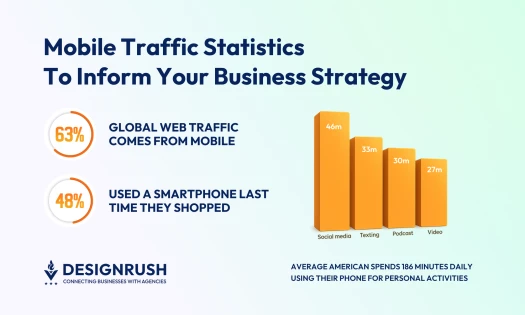
Optimizing your website for mobile devices is not just a matter of convenience; it's a fundamental aspect of a modern SEO strategy in the finance sector. With users submitting 57% of local search queries with a mobile device or tablet, ensuring that your website is mobile-friendly is imperative for reaching and engaging your audience effectively.

Here’s how our website looks when using a mobile device:

DesignRush Screenshot

Mobile optimization goes beyond responsive design; it encompasses factors such as page load speed, navigation ease, and content readability on smaller screens. Search engines prioritize mobile-friendly websites in their rankings, reflecting the growing importance of mobile usability in determining search results.

By embracing mobile optimization, you position your institution to effectively reach and engage your audience across all devices, driving organic traffic and fostering growth.

7. Analyze and Monitor Your SEO Plan To Improve

Analyzing and monitoring your SEO strategy is essential for refining and optimizing your approach in the finance sector. By regularly assessing key metrics such as keyword rankings, organic traffic, and backlink profiles, you can gain valuable insights into the effectiveness of the SEO efforts.

This analysis enables you to identify successful tactics, areas for improvement, and emerging trends in the industry. Additionally, monitoring algorithm updates and competitor strategies allows you to stay agile and adapt your SEO tactics accordingly.

Tools such as Ahrefs can help streamline the process. By entering your website in the tool, you get a complete SEO performance check so you can improve your finance SEO plan.

Ahrefs
[Source: Ahrefs]

By continuously analyzing and monitoring your SEO strategy, you can ensure your company remains competitive in search engine rankings, attracts targeted traffic, and achieves your online visibility goals.

Improving EEAT for Financial Services SEO

Enhancing your digital reputation through EEAT (Expertise, Experience, Authoritativeness, and Trustworthiness) is crucial in finance, especially due to Google's "Your Money or Your Life" criteria. It requires higher trustworthiness for pages potentially impacting users' health, finances, safety, or happiness.

Establishing expertise involves showcasing qualifications, credentials, and experience of financial experts. Highlighting team members' expertise and experience instills confidence in the information provided.

Authoritativeness entails positioning your institution as a finance thought leader, achieved through contributions to reputable publications and authoritative content.

Trustworthiness is vital, requiring transparency, accuracy, and reliability in financial topics. Providing clear, comprehensive information reinforces your reputation as a trustworthy financial resource.

By focusing on EEAT, you demonstrate to users and search engines the reliability of your financial information, enhancing your digital reputation in the finance sector.

Finding the Right Finance SEO Agency

When searching for the right SEO agency to partner with, it's crucial to consider several factors to ensure you're making the best choice for your financial services firm. Start by conducting thorough research and gathering recommendations from trusted sources within your industry. Look for agencies with a proven track record of success in optimizing websites for financial services.

Additionally, don't hesitate to request case studies or client testimonials to gauge their performance and expertise. Consider sending out SEO RFPs to multiple agencies to compare their proposals and determine which one offers the most comprehensive strategy tailored to your firm's specific needs.

By taking these steps, you can find a great SEO agency that not only understands the intricacies of the financial industry but also has the capabilities to help your firm achieve its online visibility and growth goals.

Key Takeaways: SEO for Financial Services

Mastering SEO is crucial for staying ahead and reaching the right people online. By using the right keywords, fixing technical issues on their websites, and creating great content, financial institutions can show up higher in online searches and attract more potential customers.

It's also important to keep up with changes in how search engines work. By doing all this and integrating SEO into their overall marketing, financial services can become trusted experts online, grow naturally, and build strong customer connections in today's digital age.

Our team ranks agencies worldwide to help you find a qualified partner. Visit our Agency Directory for the top SEO agencies, as well as:

  1. Top SEO Agencies in Los Angeles
  2. Top Advertising Agencies
  3. Top Digital Strategy Agencies
  4. Top Direct Marketing Agencies
  5. Top Digital Marketing Agencies

SEO for Financial Services FAQs

1. How important is SEO for financial services?

SEO is crucial for financial services because it helps institutions improve their visibility in online searches. By optimizing their websites and content, financial firms can attract more qualified leads, increase brand awareness, and establish trust with potential customers.

2. How long does it take to see results from SEO in the financial sector?

The timeline for seeing results from SEO efforts in the financial sector can vary depending on factors such as website authority, competition, and the complexity of the SEO strategy implemented. Generally, it may take several months to start seeing noticeable improvements in search engine rankings and organic traffic, with continued optimization leading to more significant results over time.

👍👎💗🤯
Latest SEO Trends
Receive our NewsletterJoin over 70,000 B2B decision-makers growing their brands