
AI has evolved from a back-end support tool to a core engine of innovation in software development. At the frontier is agentic AI: intelligent systems that autonomously execute tasks across the development lifecycle.
Software development businesses that realign their tech stack and service model around AI will lead the next wave of digital transformation.
AI-Powered Software Development Trends: Key Points
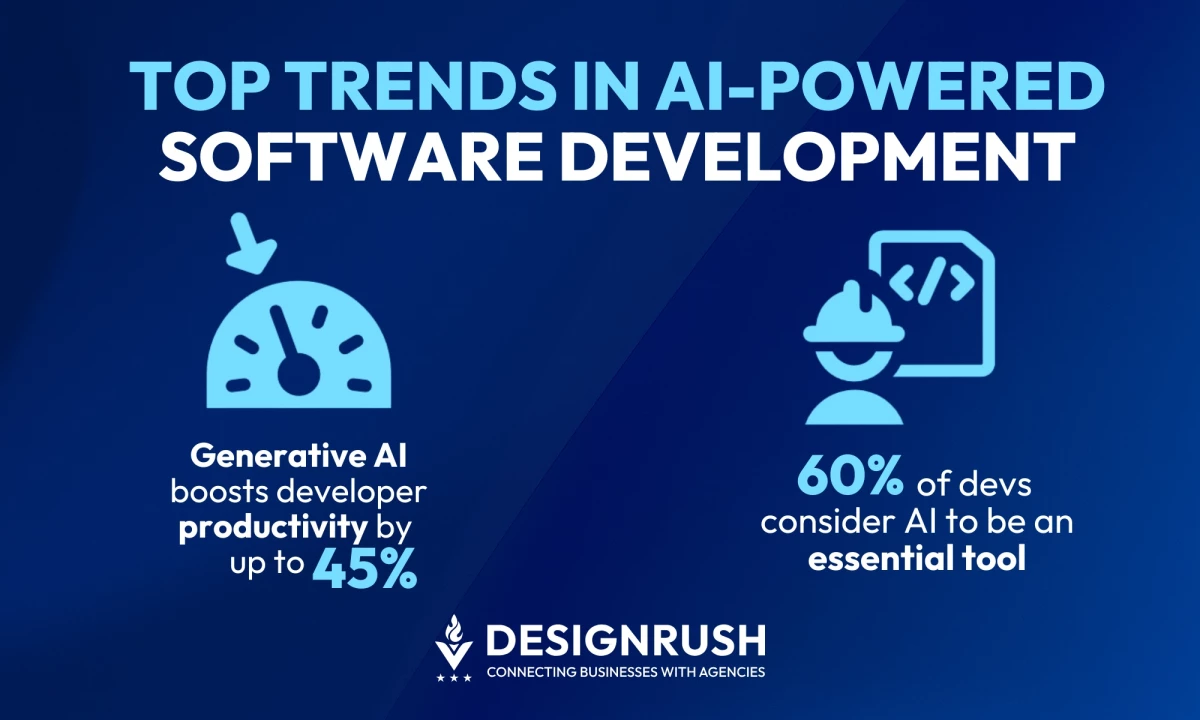
- Generative AI boosts developer productivity by up to 45%, speeding up documentation by 50% and code refactoring by 30%.
- With 60% of devs calling AI essential, top teams are upskilling in prompt use and oversight while preserving problem-solving through reverse engineering.
- To capture the value of AI-accelerated delivery, agencies are shifting from hourly billing to usage-based pricing, KPI-tied contracts, and AI-powered retainer tiers.
- Hybrid workflows combine agentic AI for backend automation and human-led “vibe coding” for creative tasks to optimize both speed and innovation.
1. Agentic AI: From Autocomplete to Autonomous Delivery
Agentic AI refers to autonomous AI agents that can plan, code, test, and deploy software with little to no human input. Unlike assistive tools like GitHub Copilot (which suggest code that a human reviews), agentic AI executes entire development loops independently. In other words, these systems function as developers.
Generative AI has already demonstrated its worth in software development, boosting developer productivity by up to 45% and accelerating key tasks like documentation and code refactoring by as much as 50% and 30%, respectively.
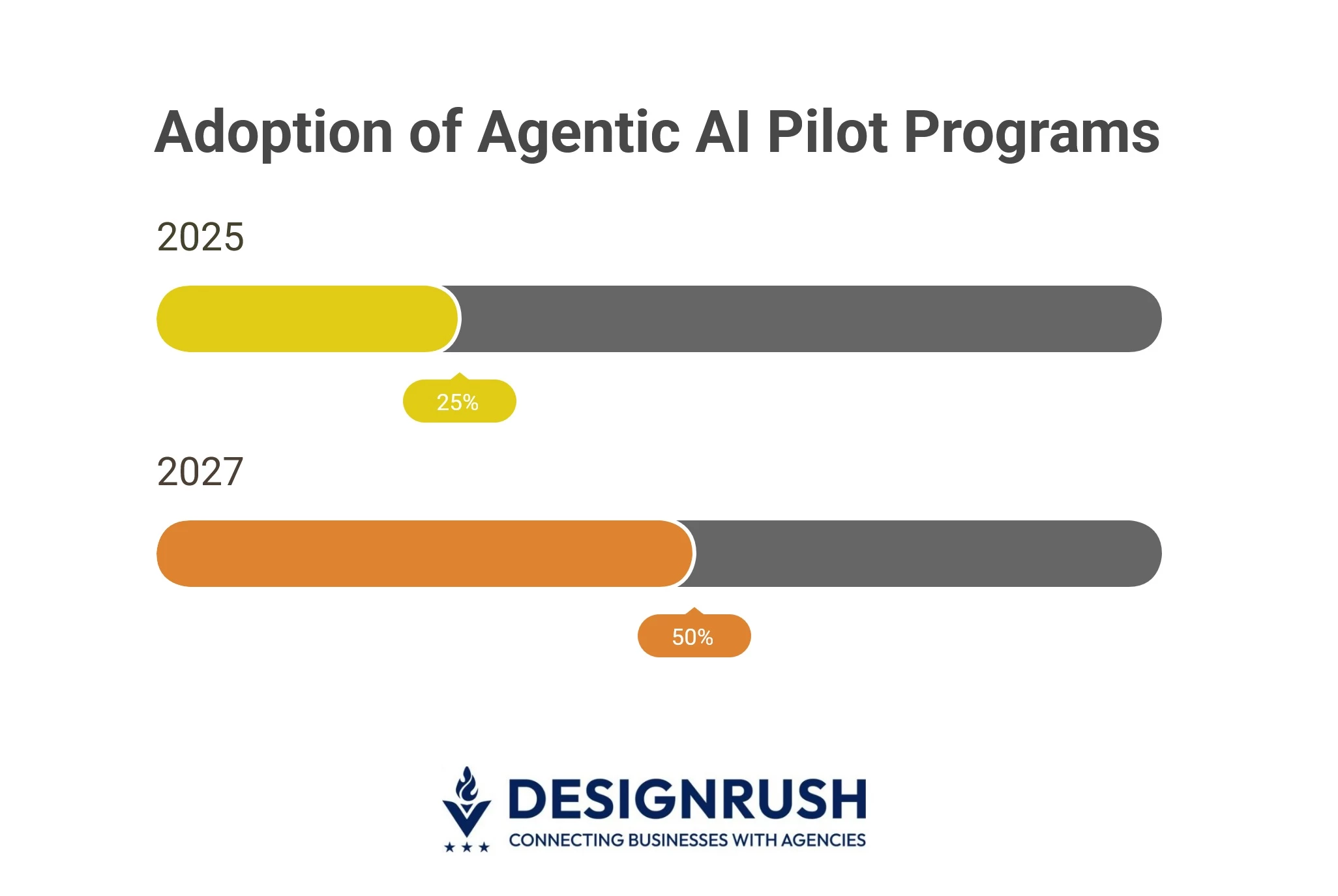
Deloitte predicts that this year, 25% of companies using generative AI will launch agentic AI pilots or proof-of-concept initiatives, with that number expected to grow to 50% by 2027.
"These are not autocomplete machines anymore”, says Igor Golovko, head of development and founder of Twincore, “they’re helping out with design decisions, debugging, and doc generation.”
AI-based code review and pair programming tools are making junior engineers far more efficient and allowing senior engineers to accomplish more architecture and edge case consideration, he says.
AI is now even translating stakeholder input directly into technical implementation, he adds.
Agentic AI is especially effective for back-end and data-heavy tasks where speed and consistency matter. It excels at refactoring legacy code, generating boilerplate, and tackling technical debt at scale.
How to Leverage Agentic AI
Start by identifying routine, automatable tasks (such as setting up environments, writing boilerplate, or running tests) that can be handed off to AI agents. Use oversight mechanisms like mandatory code reviews or automated test validation until confidence in output quality is established.
The goal is to evolve developer roles from manual execution to orchestration. Think of engineers as supervisors of AI coding agents, guiding architecture, ensuring quality, and accelerating delivery without expanding headcount.

2. Workflow Evolution: Agentic vs. Vibe Coding
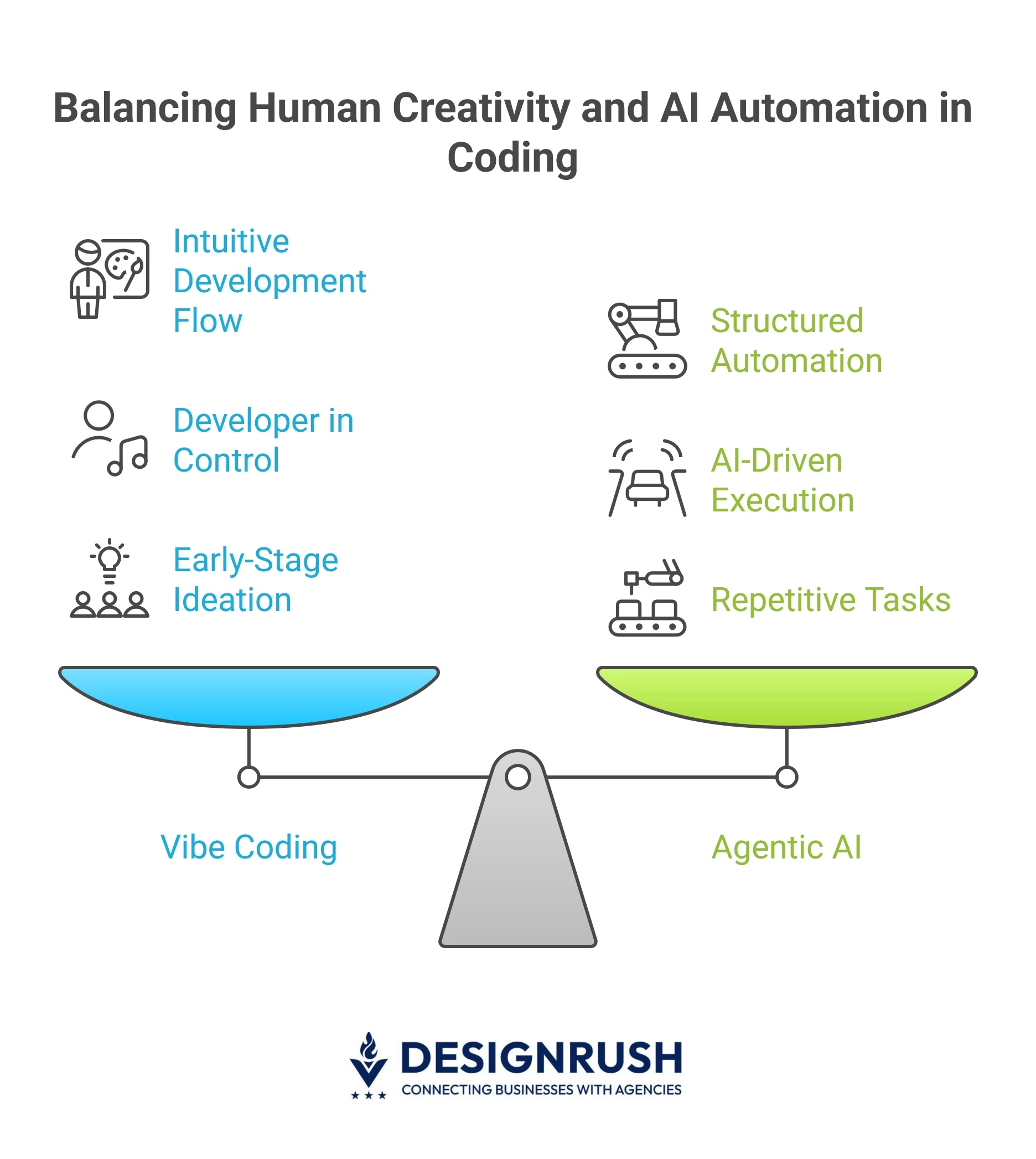
Not all software tasks require full autonomy. In many projects, especially those involving creative UX work or experimental prototypes, a human-in-the-loop approach is better. We call this “vibe coding.”
Think of it this way: agentic AI is like an autopilot that can fly the plane on its own, whereas vibe coding is like a co-pilot assisting a human pilot. Each has its place.
| Feature | Agentic AI | Vibe Coding |
| Autonomy | High: end-to-end execution | Partial – AI assists, human leads |
| Speed | Fastest for well-defined tasks (no human bottleneck) | Moderate – paced by human decisions |
Best use cases | CI/CD, infrastructure automation, code maintenance. Examples: running test suites, migrating backend code, optimizing CI pipelines. | UX design, creative prototyping, ambiguous problems. Examples: building a quick app mockup, experimenting with user flows or brand-specific content. |
Human’s role | Oversight and final QA (approve merges, handle exceptions) | Active collaboration (guide AI with prompts, make creative decisions) |
Vibe coding is better for front-end, user-facing, and innovative tasks where nuance and creativity are needed. When designing a new feature or trying out a bold idea, the developer’s intuition and aesthetic sense are crucial.
The AI can help by producing options and handling grunt work while the human provides direction.
“What’s working best is hybrid workflows,” says Eugene Leow Zhao Wei, director at Marketing Agency Singapore. He adds: “We’ve seen strong results when dev leads use AI for boilerplate, while reserving logic-heavy modules for human review.”
Rather than writing from scratch, code review and pair programming now often involve reviewing AI’s suggestions, he says.
3. Monetizing AI Workflows: Beyond Hourly Billing
Integrating AI into development demands a rethink of business models too. If AI tools allow projects to be delivered in half the time, billing purely by the hour will either cut into margins or discourage the use of productivity-enhancing tech.
A pivot to value-based monetization is therefore necessary to capture the benefits of AI-accelerated work.
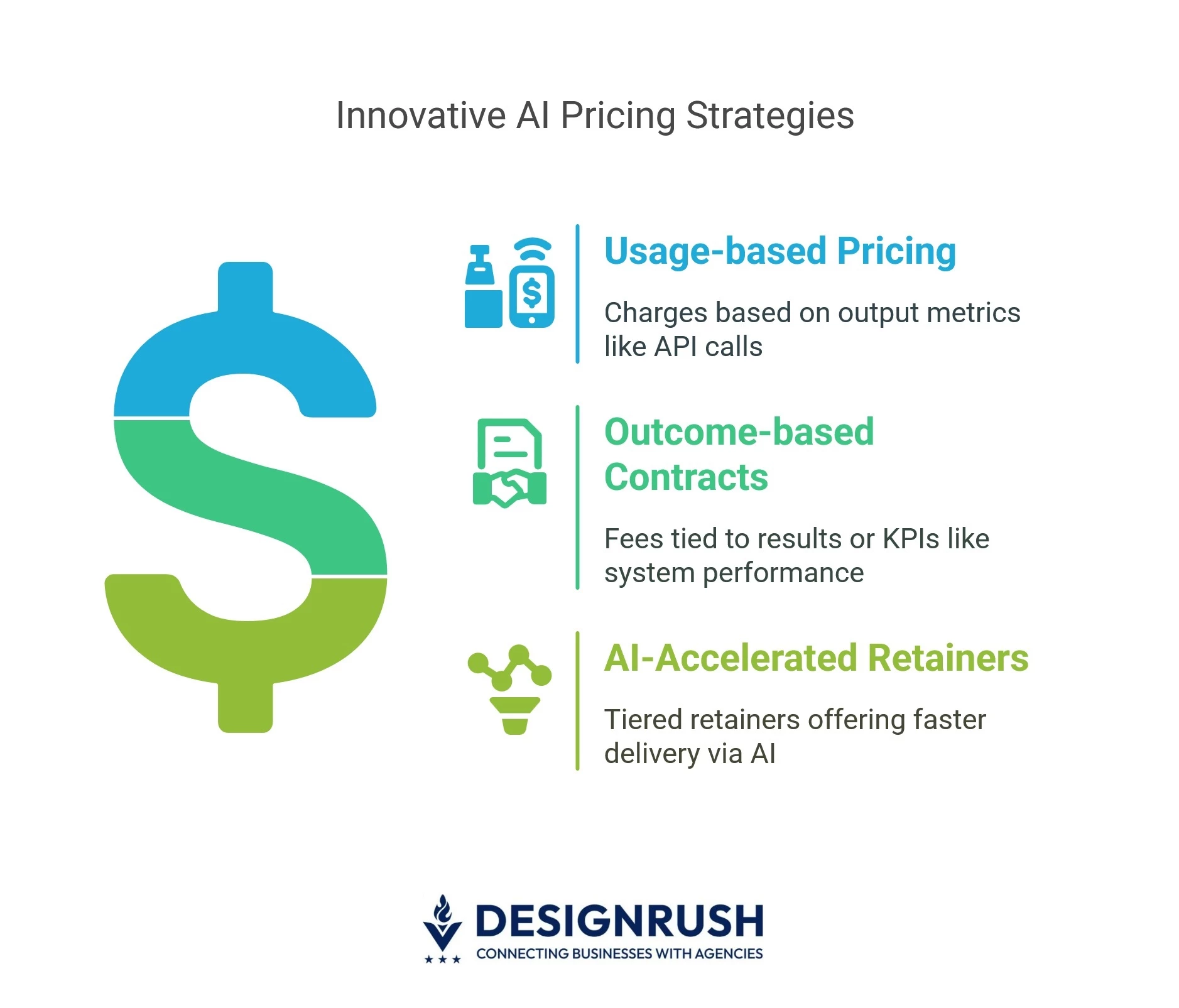
- Usage-based pricing: Charge based on output (e.g. API calls, lines of code, compute time), not hours. OpenAI’s API works this way, and enterprise clients increasingly prefer it.
- Outcome-based contracts: Tie fees to results or KPIs (like system performance or early delivery) rather than effort. This aligns incentives and monetizes AI-driven efficiency. Many AI startups already price this way (e.g., per successful output).
- AI-Accelerated retainers: Offer tiered retainers based on AI use. Premium tiers promise faster delivery via AI, with clients paying for service levels, not time. This captures the productivity value AI creates.
4. Tools Shaping Agency Dev Stacks in 2025
Choosing the right AI tools is critical for ROI. Below is a breakdown of leading AI developer tools, from autonomous “agentic” systems to foundational model platforms, and where they best fit in the stack:
| Tool | Function | Best Use | Automative Level |
| Devin.ai | Full-stack AI engineer (agent) | End-to-end task completion (planning, coding, testing) | High (fully agentic) |
| GitHub Copilot | Code generation and refactoring | Day-to-day coding in IDEs | Moderate (assistive) |
| Claude 2 (Anthropic) | Natural language code analysis and guidance | Language-first dev flows (chat-based coding, documentation analysis) | Medium (hybrid) |
| Langchain | Agent orchestration and memory | Building complex AI pipelines (tool chaining, memory) | Moderate–high |
| Huggingface and PyTorch | Model customization and training | AI infrastructure (custom models, ML workflows) | Foundational (enabler) |
Practical Tooling Tips
Here’s how to match the right AI tools to the right tasks across your stack.
- Back-end automation: Combine Devin AI with LangChain for server-side tasks. Devin handles logic and test generation, while LangChain manages workflows, APIs, and database interaction. Ideal for data pipelines or automated testing.
- Front-end and UX: Pair Claude with Copilot. Claude interprets specs and drafts logic or content; Copilot completes the code in your IDE. Their synergy speeds up UI development, with human oversight for refinement.
- ML and data science: Use Hugging Face or TensorFlow for model work. Agentic AI is great for glue code, but model training still needs specialized tools. Hugging Face offers libraries and training; PyTorch Lightning helps structure experiments and avoid infrastructure bloat.
5. The Shift Toward AI-Native Teams and Mindsets
AI brings with it a strategic shift that reshapes how software teams operate, collaborate, and create impact. It redefines the developer’s role from execution to orchestration, demanding new mindsets, workflows, and organizational alignment to fully realize its potential.
- AI adoption is accelerating: A 2024 survey by GitHub found that 39% of respondents are already using AI in software development (up 16 percentage points from 2023), and 60% say it's essential to adopt AI to remain competitive.
- Upskilling is critical: Developers now need to move beyond syntax toward orchestrating AI workflows, validating outputs, and managing AI-driven delivery loops.
- Risk perception is still high: 55% of Github’s survey respondents see AI as risky to introduce into the SDLC, with concerns about trust, quality control, and architectural fit.
To stay ahead, engineering teams need to embrace a new hybrid skill set: understanding prompt engineering, supervising autonomous agents, and integrating AI outputs into legacy systems.
Sammi Li, co-founder and CEO of JuCoin expresses her caution: “The main thing I'm keeping an eye on is how AI is forcing engineers to reconsider how they solve problems, not just how quickly.”
She adds that AI tools expedite repetitive work, but if you stop challenging the recommendations, they run the risk of dumbing down the reasoning. “The true risk is in placing naive faith in quick fixes,” she says.
Leadership, meanwhile, must align incentives and business models to support AI-enhanced delivery without introducing unmanaged risks.
Echoing this point, Arvind Rongala, CEO of Edstellar says: “The risk isn’t just bad code. It’s fading skills. When junior devs let the tool lead, they stop learning how to debug or design.”
It’s for that reason that Edstellar’s programs now include reverse engineering, he says, having devs break down what AI wrote and explain it. “The best teams use AI like a second set of hands, not a second brain,” he concludes.
Trends in AI-Powered Software Development: Final Word
Every facet of software development, from code generation and workflow models to pricing strategies and team dynamics, is being reinvented in the age of AI.
The era ahead belongs to organizations that embrace autonomous development, pair AI with human creativity, monetize innovation strategically, and cultivate hybrid skillsets.
By aligning tools, talent, and outcomes around AI, forward-thinking teams can accelerate delivery, unlock greater value, and maintain a competitive edge.

Our team ranks agencies worldwide to help you find a qualified partner. Visit our Agency Directory for the software development companies, as well as:
- Top AI Companies
- Top Offshore Software Development Companies
- Top Mobile App Development Companies
- Top AI App Development Companies
- Top UI/UX Design Agencies
Our development experts also spotlight the most groundbreaking app projects from around the world. Visit our Awards section to explore the best in app development.
Trends in AI-Powered Software Development FAQs
1. How do organizations evaluate and measure the effectiveness of agentic AI in real-world development?
Organizations use a blend of quantitative and qualitative metrics to assess agentic AI performance, including task success rate, system efficiency, accuracy/quality of outputs, tool interaction effectiveness, and business outcomes like cycle-time reduction, cost savings, or customer satisfaction.
2. What governance practices can help mitigate bias, hallucination, or data privacy issues when using AI in the SDLC?
Effective AI governance includes transparent logging (audit trails of AI decisions), mandatory human oversight for critical code, and continuous monitoring for hallucinations or bias using guardrails and fairness checks.
Enforcing data privacy via access controls and restricted API usage, plus implementing explainable AI (XAI), also ensures outputs are secure, interpretable, and compliant.
3. How can smaller teams or startups get started with agentic AI effectively, without expert-level AI engineering resources?
Small teams can begin by piloting targeted, high-impact use cases (e.g. test automation or legacy refactoring) using low-code frameworks like LangChain or AutoGPT. They should combine assistive tools with lightweight agents, measure impact using simple metrics like cycle time or task success, and iterate from there. Open-source libraries and community templates help minimize cost and complexity.