
What To Know
- Minimalism aids recall: Simple, color-led marks are easy to recognize because fewer elements compete for the eye.
- Consistency builds value: Steady, incremental changes have helped make the Browns one of the NFL's most valuable franchises, worth about $5.15 billion as of 2024, up 11% year over year.
- Small tweaks signal renewal: Updates like the 2015 matte shell and the 2024 white facemask freshened the helmet without touching its orange core.
Every other team in the NFL wears a logo on its helmet. The Cleveland Browns wear a blank orange shell, and it stands as one of the boldest branding calls in the league.
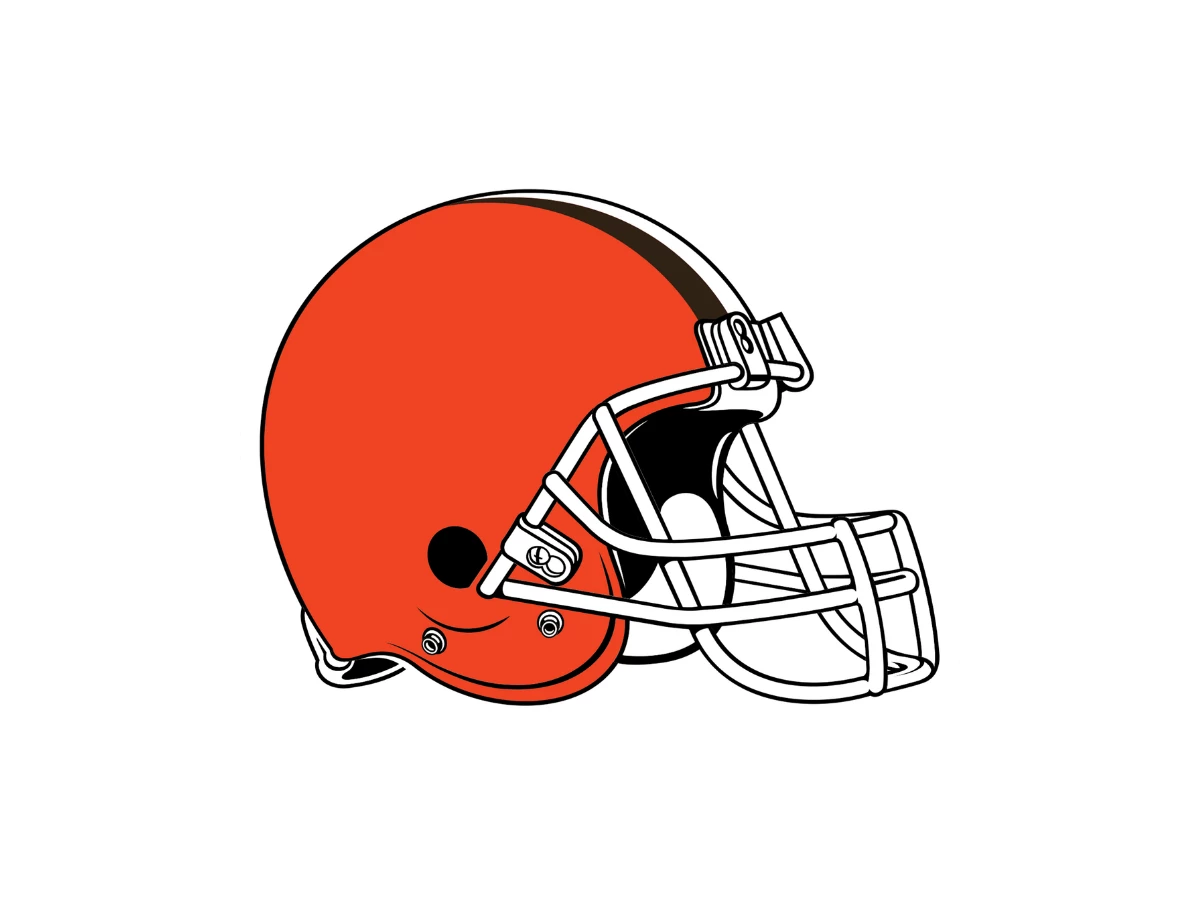
The Cleveland Browns logo is that helmet: no mascot, no wordmark, just color and shape doing the whole job. Since 1946, the franchise has treated restraint as its visual identity, and the plain orange dome has survived new owners, splashy rebrands, and every fan push to modernize it.
So how does a team with the most famous empty helmet in football end up with one of the sport's most recognizable brands? The Cleveland Browns logo history runs from a mischievous elf to a fan-voted mastiff to the one design nobody dared to touch.
The Modern Browns Logo: Grit, Heritage, and Minimalist Power
The current Cleveland Browns logo arrived in 2015 as part of a full Nike uniform redesign. It is the burnt-orange football helmet with a brown facemask and twin white stripes flanked by brown, a direct step forward from the team's long-running look.
- Burnt-orange shell: A richer, matte orange picked to reflect the passion of the Dawg Pound and the city's grit.
- Twin stripes (brown-white-brown): A nod to heritage that keeps the horizontal read clean and quick to place.
- Brown facemask: A 2015 upgrade from gray that adds depth without any new symbol.
The helmet stands apart in pro sports because it leans on color and shape alone, with no mascot or wordmark doing the work. That approach keeps the design readable even without typography, a quality design researchers call silhouette recognition.
Picture a Browns helmet caught by a broadcast camera 30 rows up in poor light. The orange still reads at once, because nothing else on the shell is asking for your attention.
Cleveland Browns Logo Design Evolution
1946 – 1958: The Brownie Elf Debuts
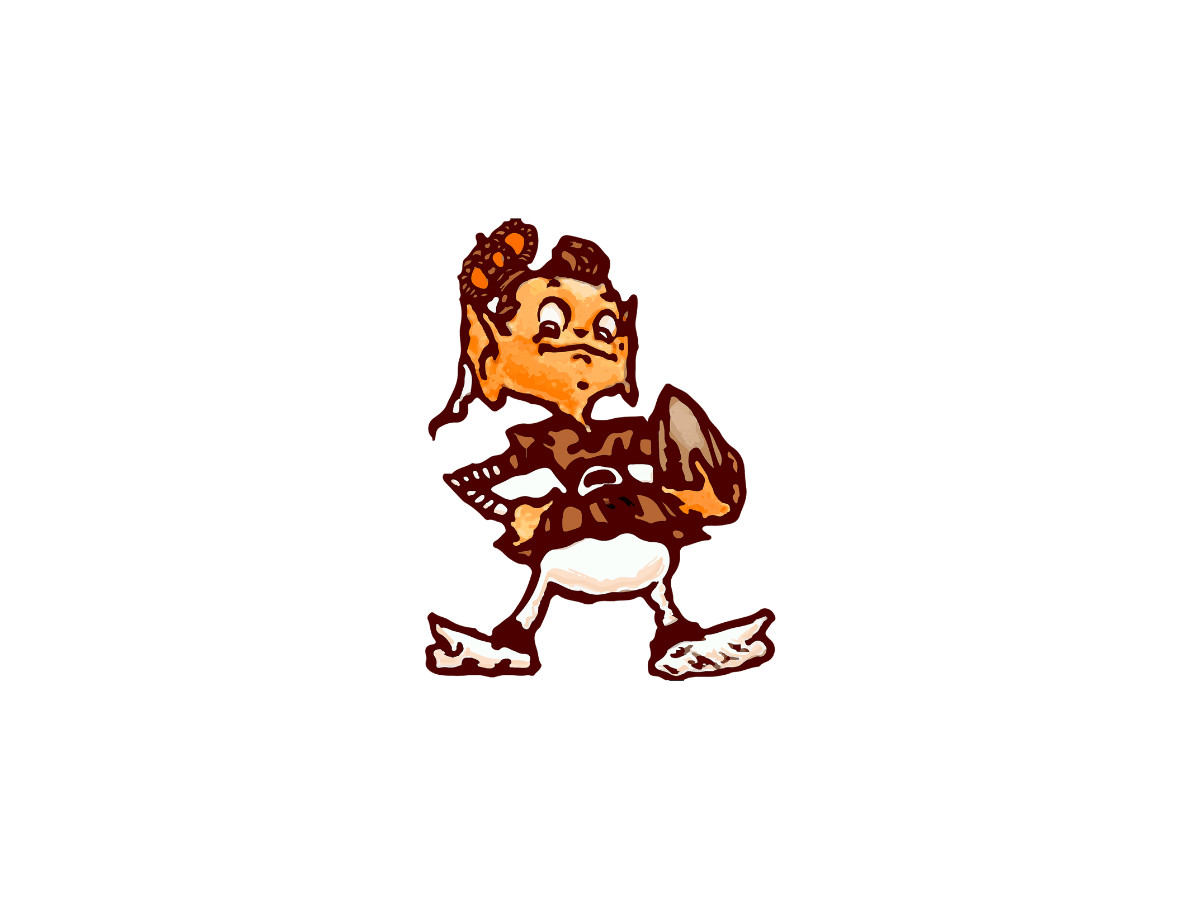
The Browns launched in the All-America Football Conference wearing plain white leather helmets and a lighthearted mascot, the Brownie Elf. He was a brown-and-white cartoon figure clutching a football, and he matched the personality of founder and coach Paul Brown, after whom fans named the team.
Brownie showed up widely on ads, programs, and fan giveaways throughout this stretch. He never went on the helmet, though founder-era staff did float the idea more than once.
The helmet's own story was still forming. When the Browns joined the NFL in 1950, a league rule called for helmets that contrasted with the white ball used in night games, so the team wore orange for evening contests and white for most day games. By 1952, orange became the full-time color with a white center stripe, and the mascot and the helmet settled into separate lanes, one on paper, the other on the field.
One experiment briefly broke that clean canvas. From 1957 through 1960, the Browns painted each player's number on the side of the helmet, a touch the team has revived only occasionally for throwback games since.
1959 – 1969: The Elf in Orange
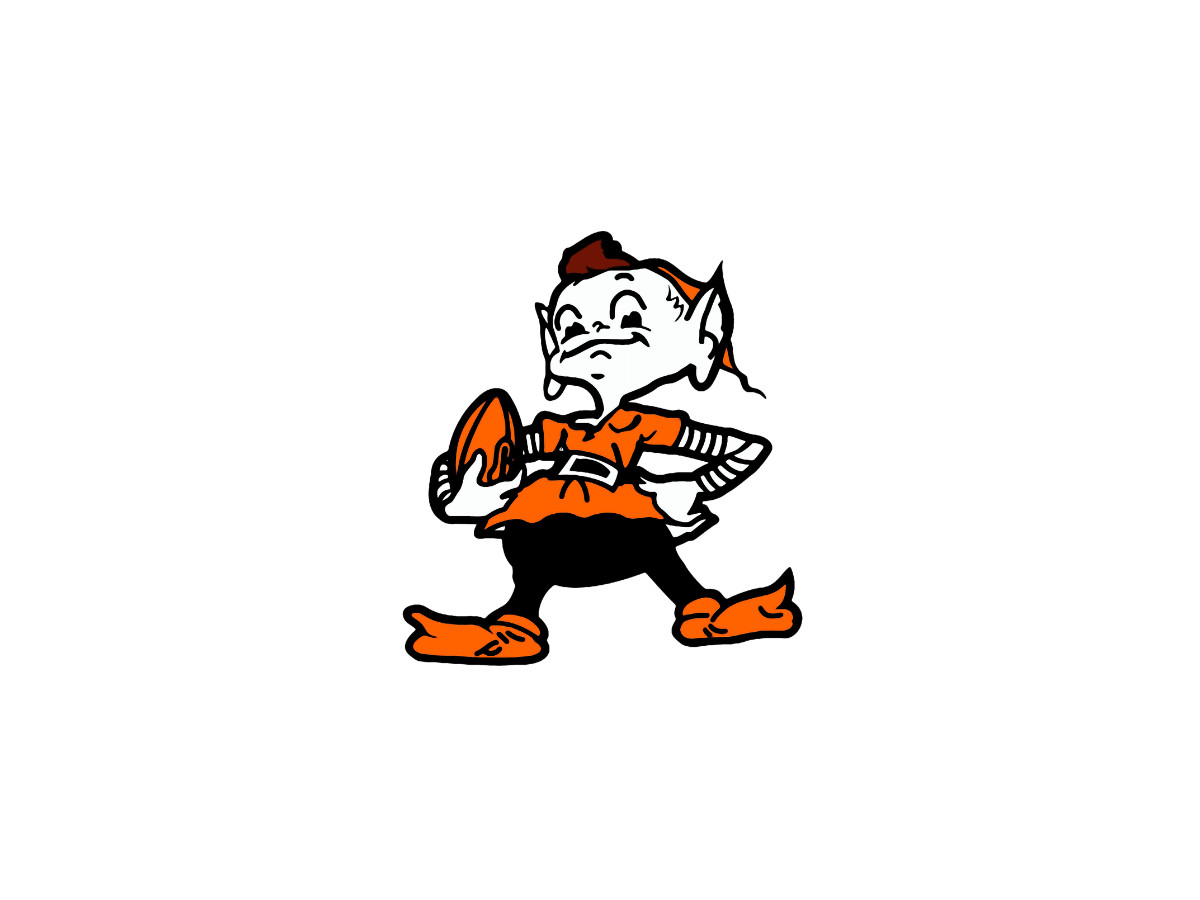
By 1959, the Browns reworked the Brownie Elf with bolder orange and white coloring and cleaner lines for print. The update repositioned the character as a team mascot rather than a corporate emblem, and it fit the franchise's growing color identity.
It also proved to be the mascot's last real refresh for a long time, though not by anyone's design. A change in ownership was about to decide which mark would lead.
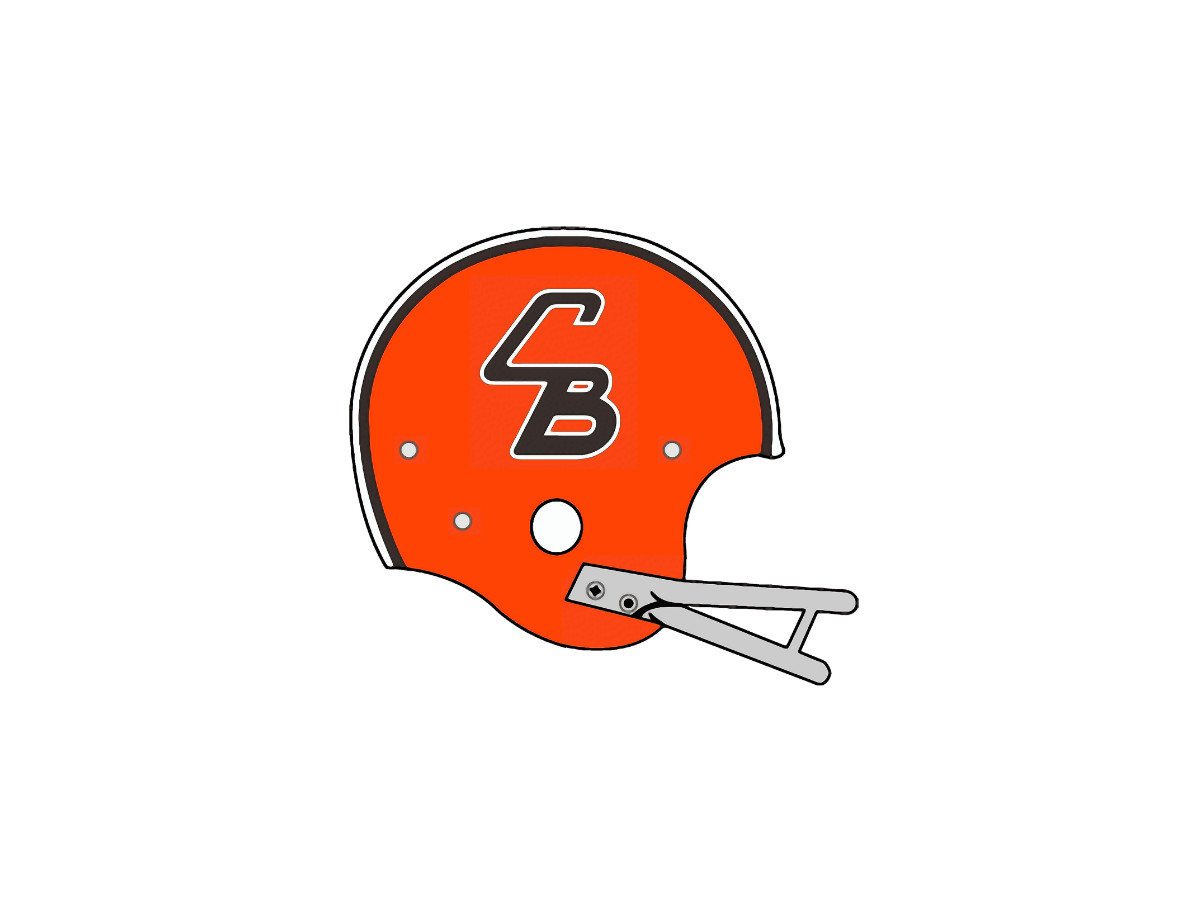
1961 – 1970: Modell Takes Over, and the "CB" Experiment
When Art Modell bought the team in 1961, he began pushing the Brownie Elf toward the exit. He was open about it, and by decade's end the mascot era was closing. What Modell left alone was the plain orange helmet.
The one time an actual logo nearly reached the shell came in 1965, not 1964. A slanted, interlocking "CB" monogram in brown with a white outline traces to that year, drawn by David Boss, a photographer and artist who later founded the NFL's creative services group. It surfaced amid a league-wide push to give every team a marketable identity in the wake of Cleveland's 1964 championship, and it appeared on program covers, plaques, and promotional art. No photograph has ever shown it worn in a game, and a trip through the franchise's archives turned up none. The players wanted no part of dressing up the helmet, and the orange shell stayed blank.
1970 – 1985: The Plain Helmet Becomes the Official Logo
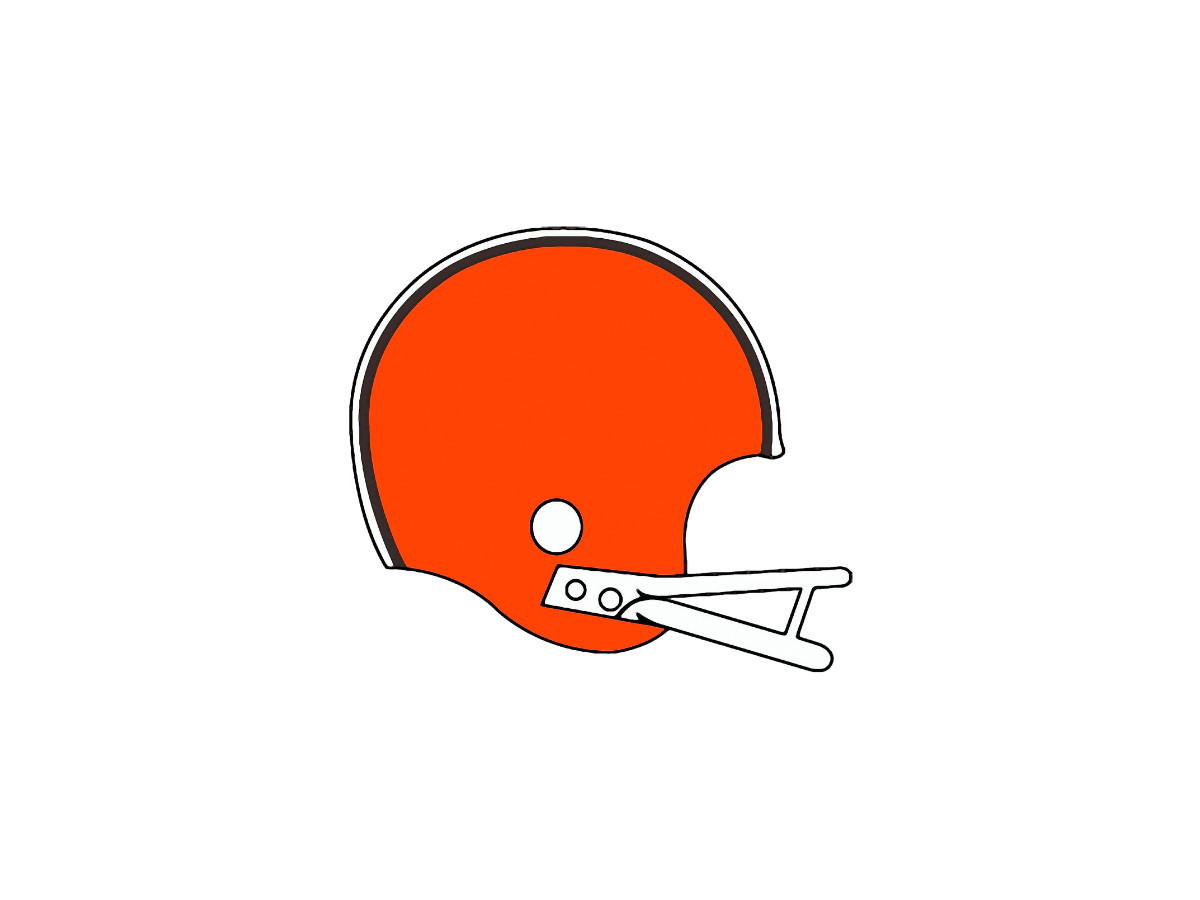
Here is the distinction many timelines skip. The plain orange helmet existed as equipment from the early 1950s, but the Brownie Elf remained the team's primary logo well into the Modell era. In 1970, Modell eliminated the elf and made a side profile of the orange helmet the franchise's official primary mark. That is why sports-logo archives mark 1970, not 1961, as the real inflection point for the helmet-as-logo.
For roughly 15 years after that, the mark held steady: orange shell, brown-white-brown stripe, white two-bar facemask. Jerseys came and went around it, including a widely disliked 1984 overhaul that fans rejected and the team reversed the next season. The helmet, by contrast, stayed put.
1986 – 1991: Volume and Perspective
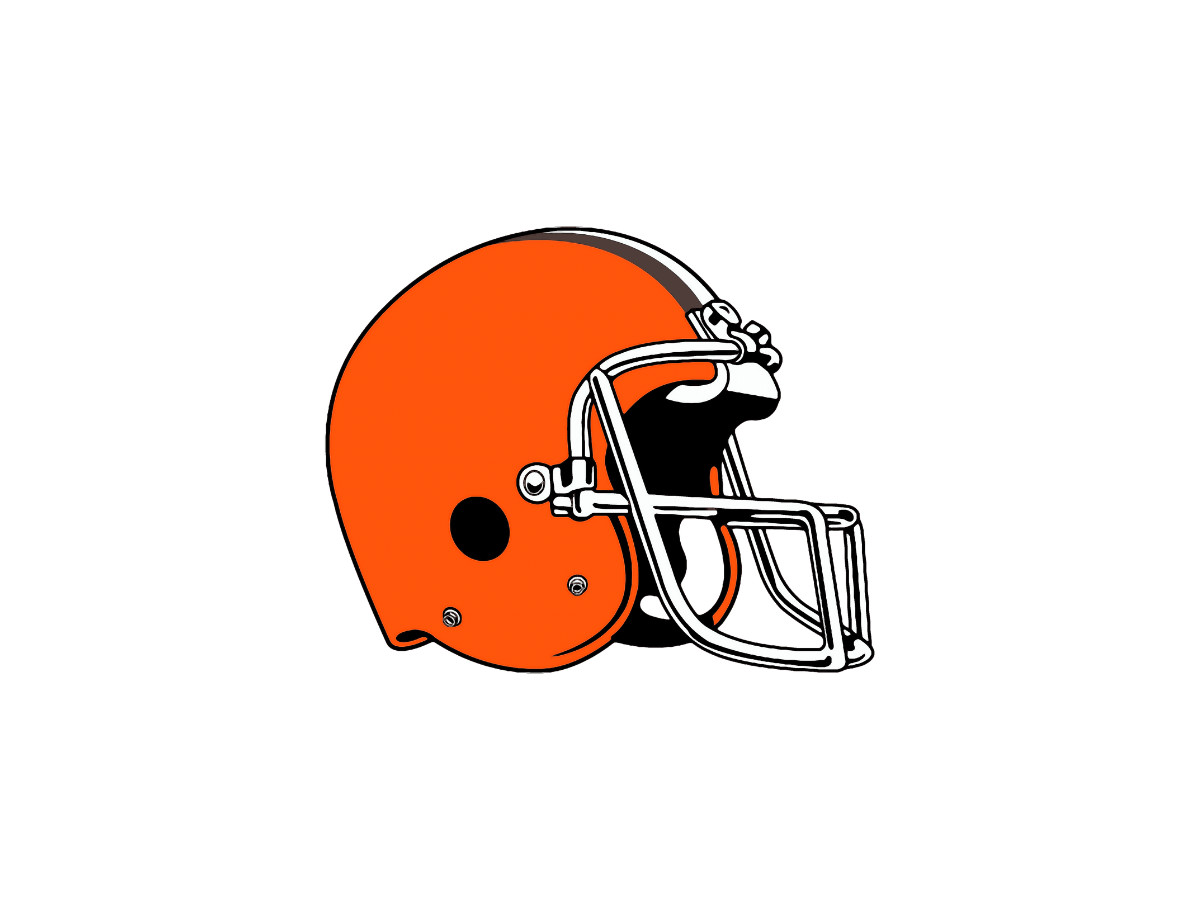
As the Browns entered one of their strongest eras, led by quarterback Bernie Kosar and three straight AFC Championship trips, the logo's rendering caught up with the visual habits of the period. Illustrated versions of the helmet took on three-dimensional shading, a three-quarter angle, a darker orange, and sharper facemask detail.
The update balanced nostalgia with more depth, and it met the print and broadcast standards of the day without touching the physical helmet.
1992 – 2005: Facemask Refinement and the 1999 Return
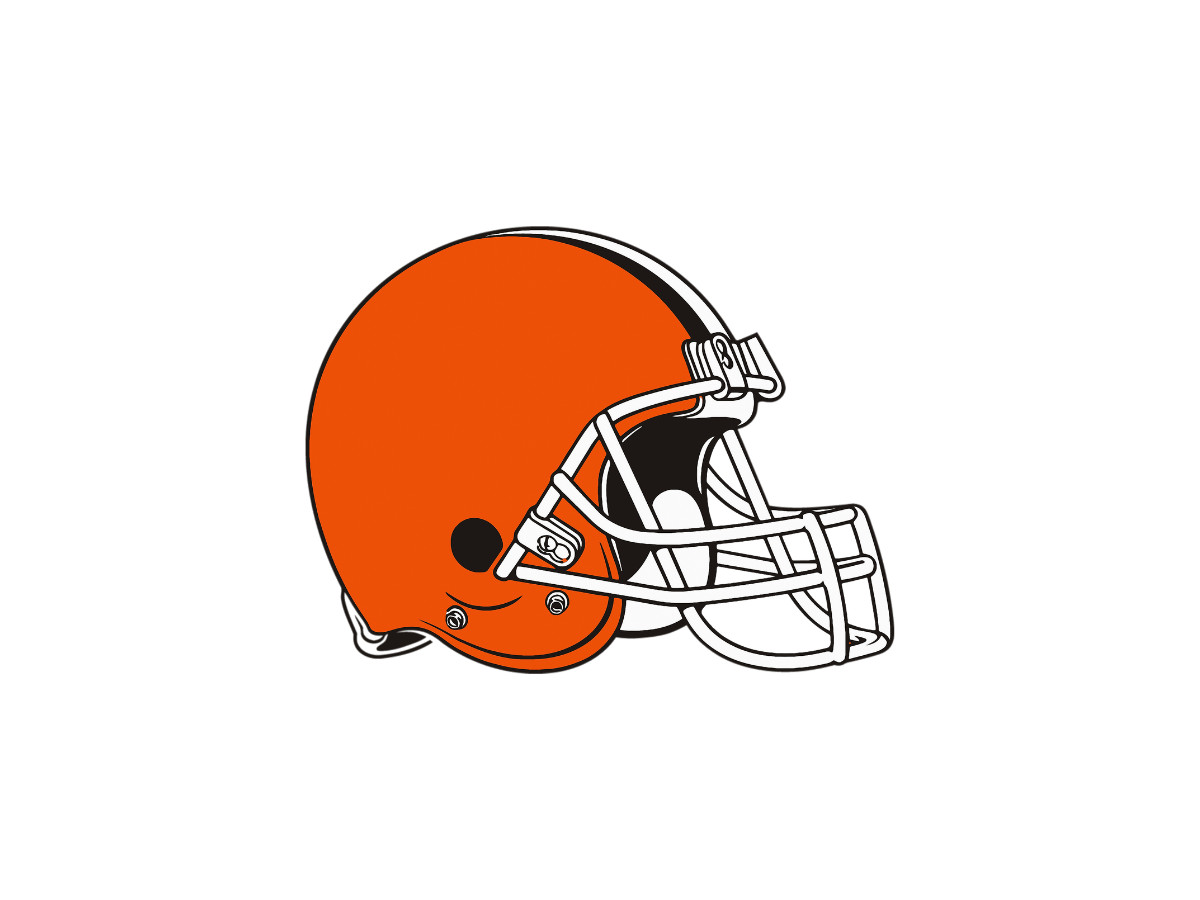
The 1992 version simplified the facemask geometry, muted the tones, and added a lower bolt for a touch more realism, all without disturbing recognition.
When the franchise returned to Cleveland in 1999 after Modell's move to Baltimore, it came back wearing essentially the helmet it left with. To mark the comeback, the team wore a one-off commemorative patch featuring a side view of the orange helmet, its first dedicated milestone logo. Small tweaks can freshen a brand while protecting what makes it recognizable, and the Browns had grasped that idea longer than most.
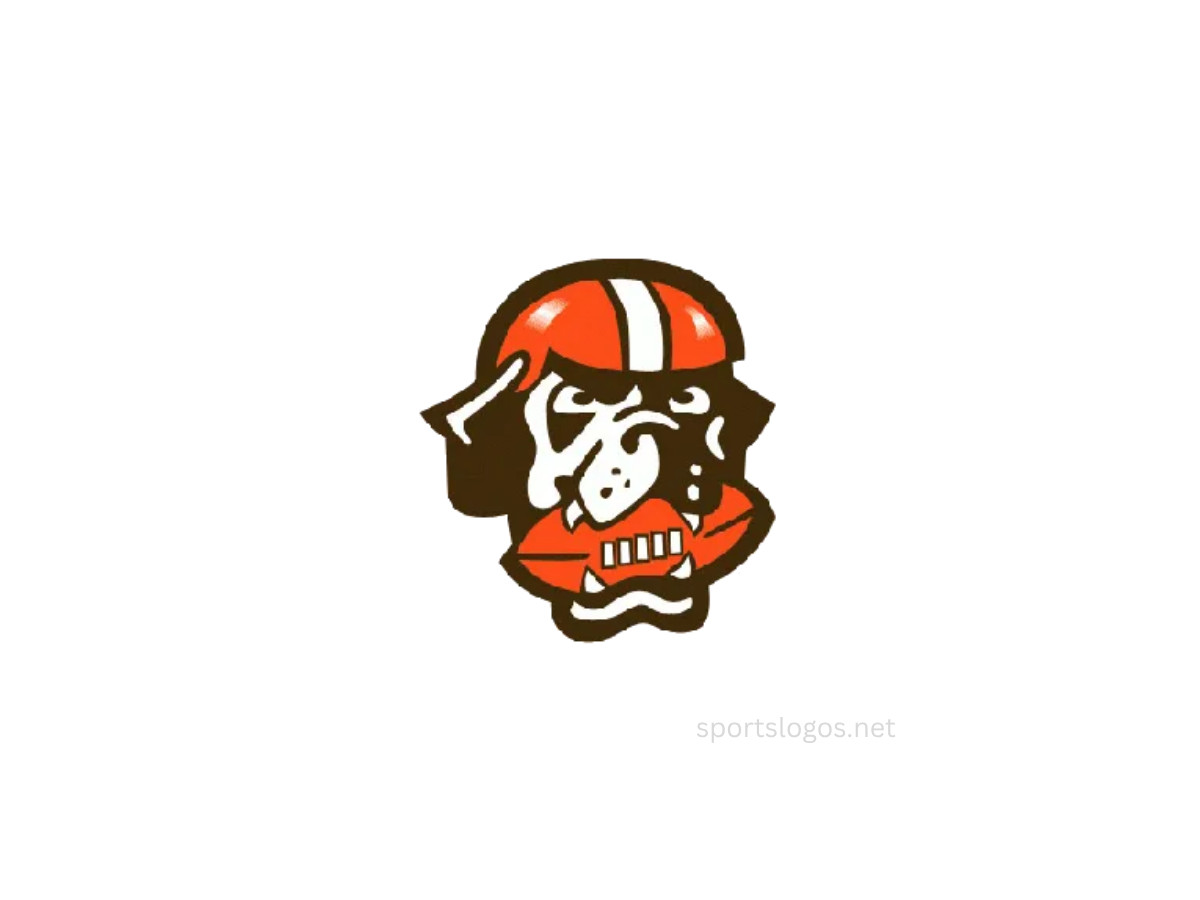
The comeback also gave the Dawg Pound its first real logo. From 1999 to 2001, the fan section rallied behind a snarling bulldog in a Browns helmet, its teeth clamped on a football.
2006 – 2014: A Return to Boldness
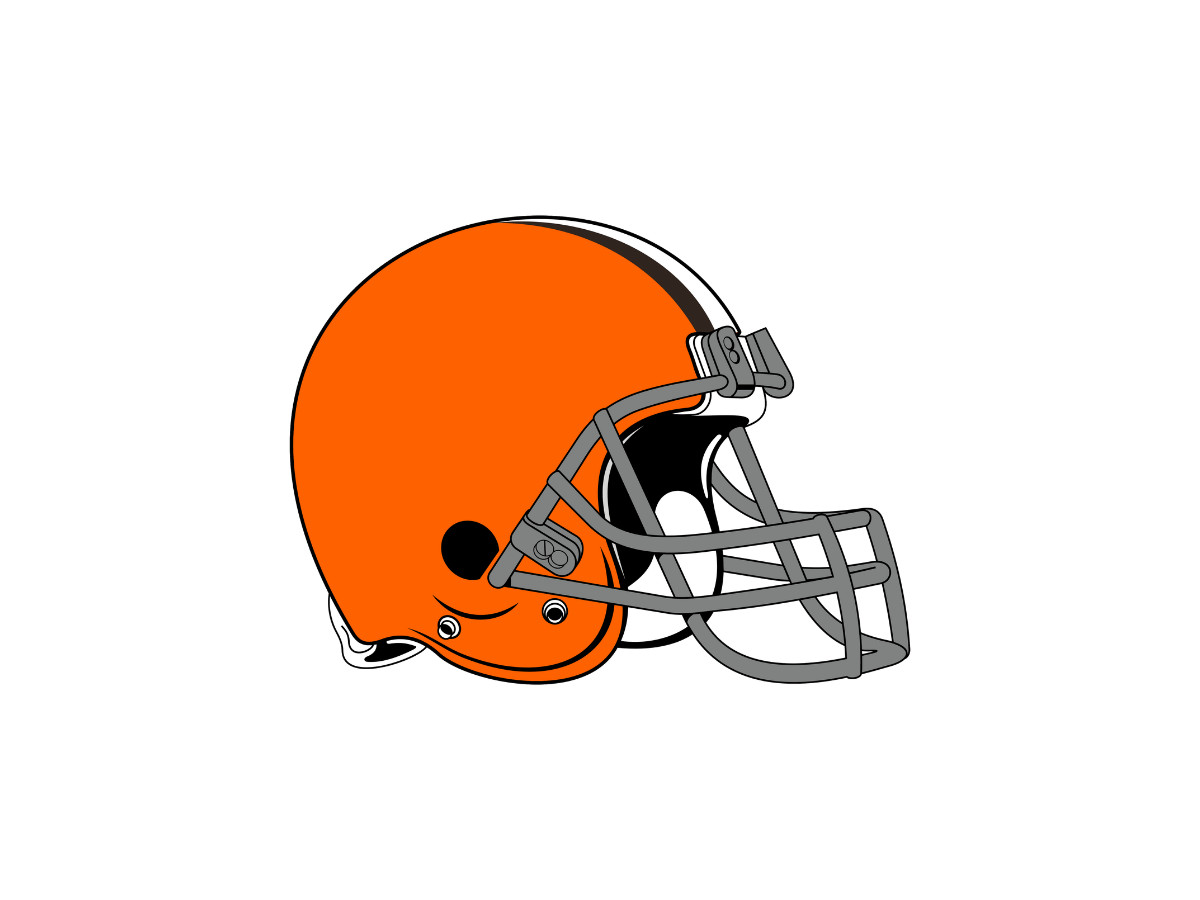
The 2006 update reintroduced a gray facemask for the franchise's 60th-anniversary season, a callback to the look worn from 1961 through 1974. The team also issued a 60th-anniversary training camp patch built around the classic Brownie Elf, another milestone mark in its own right.
The orange shell picked up a richer, more saturated tone. That refresh met a wave of fan nostalgia and the momentum of the Dawg Pound, the raucous bleacher culture that had formed in the 1980s and never quieted. The fan section had its own mark by now too, a front-facing brown-and-orange dog's head that ran from 2002 to 2014.
Here is where that fan culture actually starts. Cornerback Hanford Dixon coined the "Dawgs" nickname for the Browns' defense at 1985 training camp, and he and fellow corner Frank Minnifield began barking to fire up the pass rush. In their routine, the quarterback played the cat and the linemen played the dogs. Fans in the cheap east end-zone seats started barking back, the first "Dawg Pound" banner went up before a preseason game, and a dog-themed identity took root. That origin is the reason a bulldog, and later a mastiff, would come to stand in for the team.
2015 – 2023: Matte Rebrand, Brown Facemask, and a New Secondary Mark
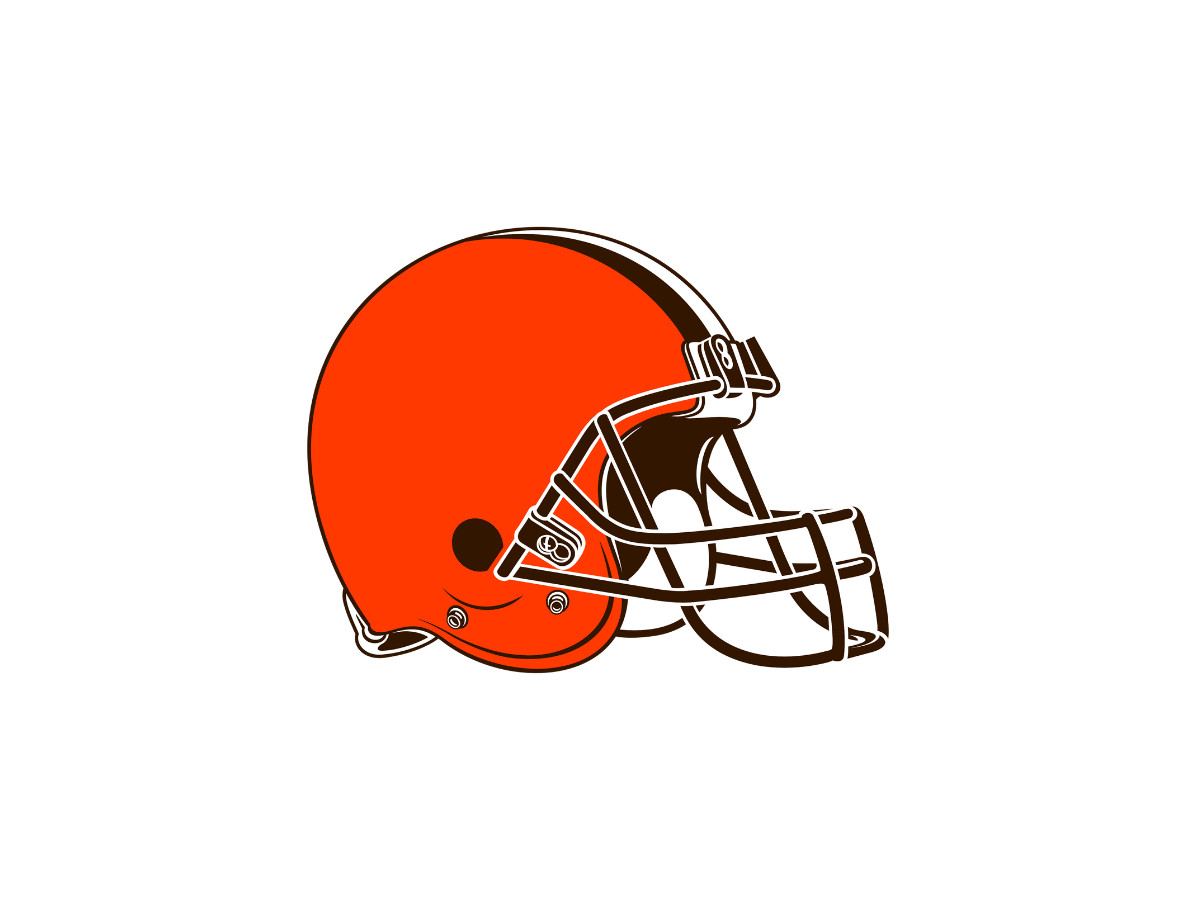
In 2015, the Browns and Nike rolled out a full uniform overhaul. They darkened the orange to a matte finish and swapped the gray facemask for brown, the first time brown had appeared on the helmet's facemask in team history.
The rebrand also refreshed the Dawg Pound logo. That 2002 dog's head gave way to a cleaner, line-art bulldog head for merchandise, which carried the secondary role from 2015 to 2023 before a fan vote handed the job to a new design. The helmet itself stayed plain, and the update sharpened the color system without adding a single new symbol to the shell.
Simpler logos tend to stick in memory because they carry fewer elements, and the 2015 work leaned into that by clarifying the color system rather than crowding it.
2023: The Fan-Voted "Dawg" Logo
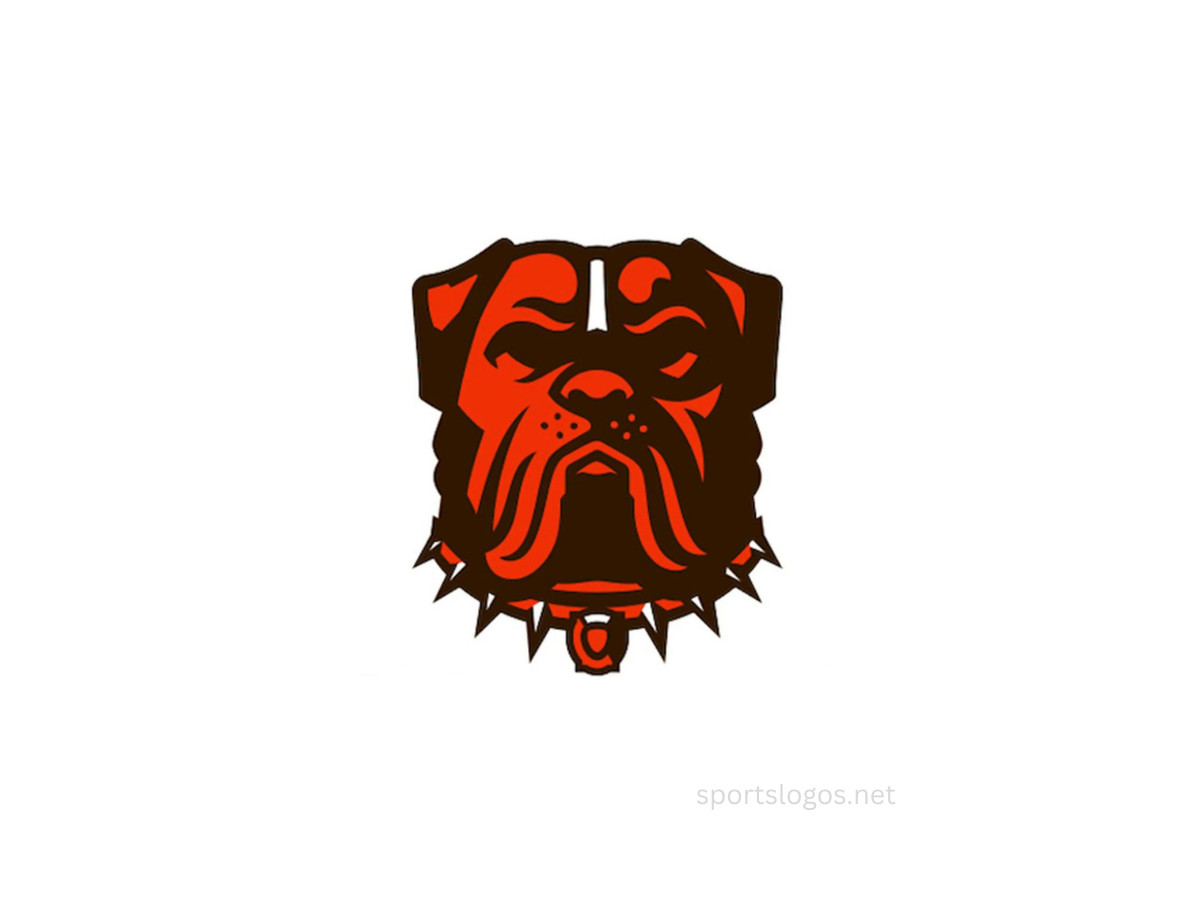
In June 2023, the Browns unveiled a new secondary "dawg" logo built around a bull mastiff, chosen by fans and players through a multi-round vote. Graphic designer Houston Mark created the winning design from nearly 400 entries, after fans first picked the mastiff as the breed that best fit the franchise.
Mark packed the mark with hidden nods to Cleveland, Ohio, and team history: a guitar pick and spikes for the franchise's league titles, the Hope Memorial Bridge in the jowls, a helmet stripe on the forehead, a maskless helmet above one eye, and the state outline on an ear. The logo now sits alongside the helmet mark and Brownie the Elf as an official team logo, used across merchandise and social channels. It replaced the 2015 Dawg Pound mark and carries the secondary role from 2023 to the present.
2024: The Facemask Goes White
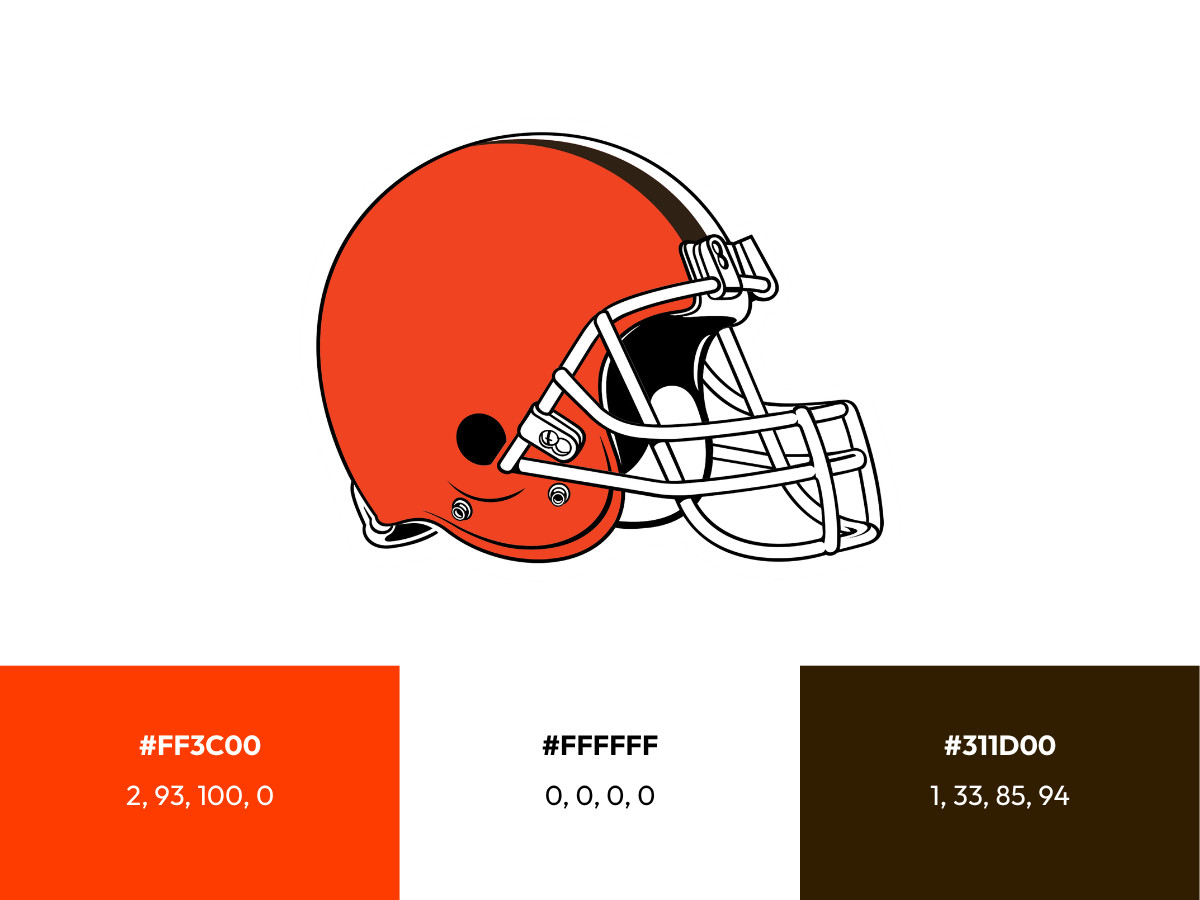
For the 2024 season, the Browns switched the facemask to white as part of a broader uniform refresh. The change gave cleaner contrast against the orange shell and echoed the look that defined the team from 1975 through 1995.
Here is the palette doing the work. The white facemask sits at hex #FFFFFF, the shell reads as burnt orange (Pantone 2028 C, hex #FF3C00, CMYK 2, 93, 100, 0), and the stripe and trim carry the team's custom seal brown (hex #311D00, CMYK 1, 33, 85, 94).
It is about the smallest edit that still registers on screen, and it reflects a brand that knows which elements to protect and which it can adjust without cost.
Brownie at Midfield: The 2022 – 2024 Revival
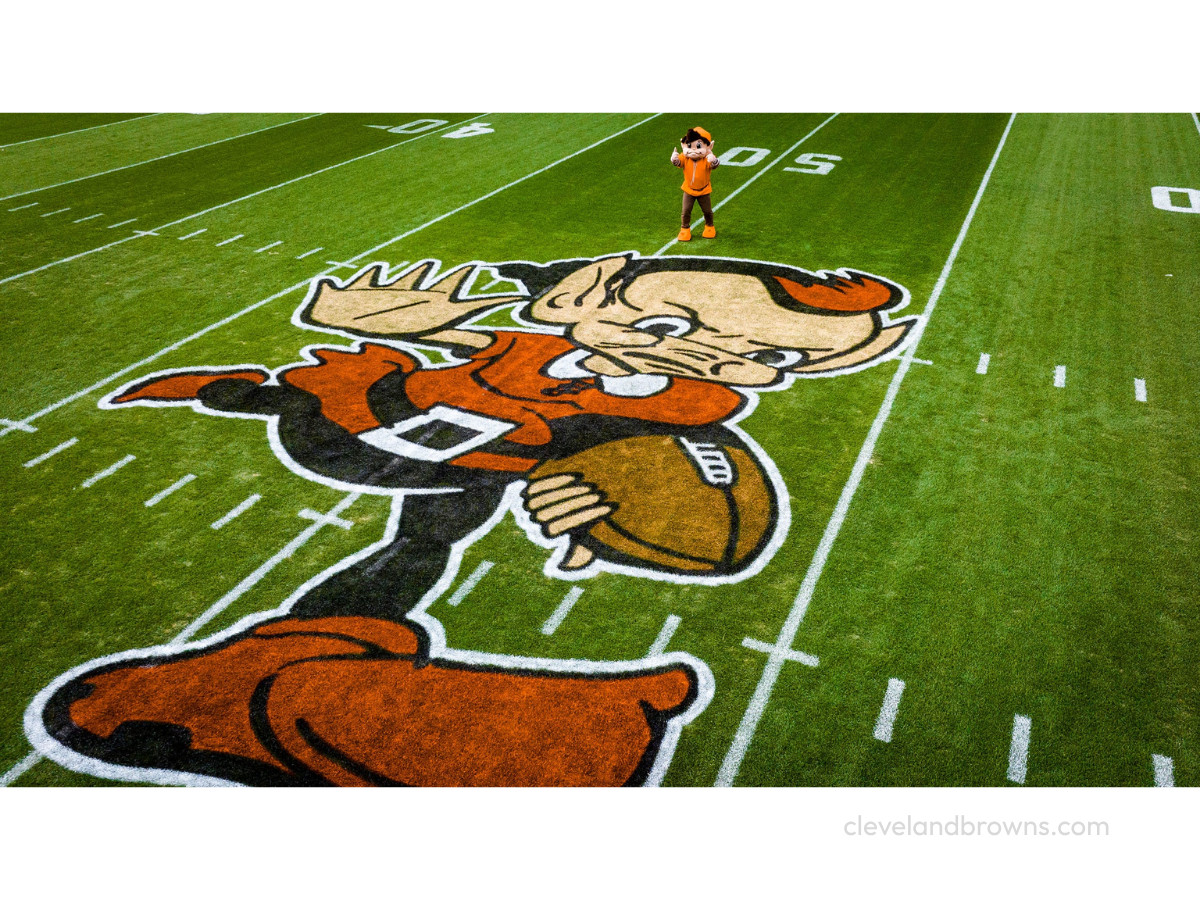
The elf never fully left. Through a 2022 fan poll, the Browns painted a "running Brownie" logo at midfield, their first 50-yard-line mark since 2016. Fan votes kept Brownie at center field for 2023 and 2024 as well.
For 2025, the team returned the plain helmet to midfield while keeping Brownie on perimeter banners around the stadium. That back-and-forth adds useful texture to the tidy "mascot retired in the 1960s" story, since the elf keeps finding his way back into the brand.
Commemorative Marks: 1999, 2006, and 2021
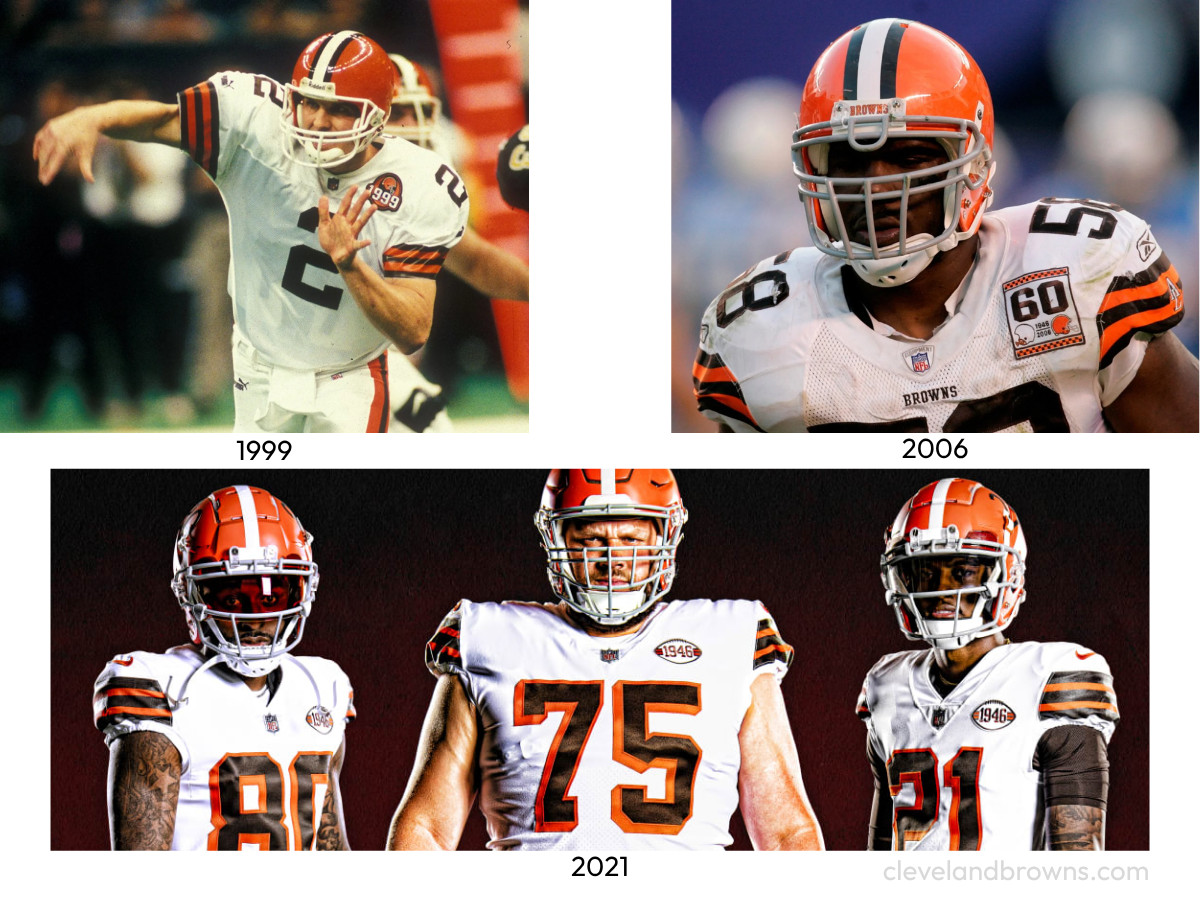
Beyond the core timeline, the Browns have rolled out one-off logos for specific milestones. The 1999 return produced a dedicated comeback patch, 2006 brought a 60th-anniversary mark tied to the Brownie Elf, and 2021 added a 75th-anniversary treatment with a "1946" patch and throwback details. Each of those milestones got its own dedicated graphic.
Two Mascots Today: Brownie and Chomps
The present-day brand actually lists two mascots. Brownie the Elf carries the heritage side, and a costumed mastiff named Chomps handles game-day duties on the sideline. That pairing keeps both halves of the identity alive, the century-old elf and the dog-pound persona that fans built themselves.
The Wrap-Up: Bold Minimalism Builds Billion-Dollar Equity
The Cleveland Browns identity shows how a simple visual system can hold up for decades. By leaning on recognizable color and a steady helmet, the franchise has built one of the NFL's most distinctive sports brands.
The team is worth more than $5 billion today, a number built on history, performance, and a mark that never needed to say much to land. Around that constant, the secondary logos and midfield choices have kept evolving, which is how a heritage brand stays current.
Evolution over revolution is the working principle here. The Browns' path from the Brownie Elf to the plain matte orange helmet shows that knowing what to keep matters as much as knowing what to change. The best logos survive change. The great ones help steer it.
Final Notes:
- Design for longevity: Each update respected history and fan feeling while working in modern craft.
- Listen to your audience: Fan votes drove the secondary logo, the midfield mark, and more, which tells you the team reads its base well.
- Make small changes count: Minor tweaks tied to uniform or apparel refreshes can move brand perception more than their size suggests.

Our team ranks agencies worldwide to help you find a qualified partner. Visit our Agency Directory for the Top Logo Design Companies as well as: