Our curated list of AI Companies in San Francisco highlights teams with deep technical expertise, strong local roots, and a clear understanding of how to build, deploy, and scale AI products in one of the world’s most competitive tech markets.
Organic rankings are determined by five factors: top services, reviews, portfolio, awards/press, and team expertise. Sponsored listings pay for a placement that appears above organic positions. Sponsorship does not affect star ratings or review content - read more on our methodology page.
AGENCY LISTING COMING SOON.
Related Services in San Francisco
AI Companies Near San Francisco
Popular Services
Everything You Need to Know Before Hiring the Best San Francisco Artificial Intelligence Company
What can a San Francisco AI company do for your business?
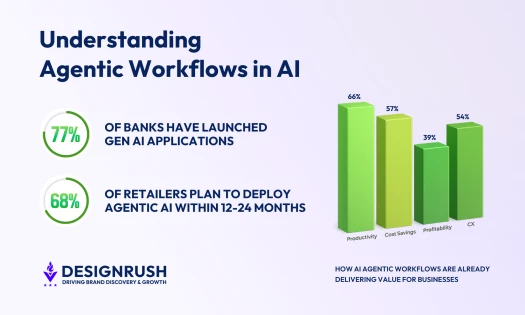
Beyond reducing costs or improving efficiency, a San Francisco AI company designs how the entire business runs. Early AI adoption focused on basic automation. Today, the focus of AI innovation is on building agentic systems, AI that can think, plan, and execute multi-step work on its own.
Because of this shift, AI companies architect systems that connect products, teams, data, and operations, as in the following examples:
- AI agent orchestration
AI developers build multi-agent systems with specialized roles such as research, drafting, and compliance. These agents work together to run end-to-end business processes. By 2026, 92% of large-scale AI projects use this approach. - Hyper-personalized customer experience (CX)
Using NLP, AI engineers create “segment-of-one” experiences where AI applications respond to individual customer needs in real time. This shift increases customer loyalty and conversion rates by up to 40%. - Product engineering for AI-first startups
AI experts help founders validate ideas and reach product-market fit. Fast iteration cycles allow teams to build an MVP in weeks, test with real clients, and support Series B funding readiness. - Predictive maintenance and digital twins
In manufacturing and logistics, an AI engineer can model operations as a digital twin and use machine learning on sensor data to predict failures early. These systems reduce unplanned downtime by up to 50%.
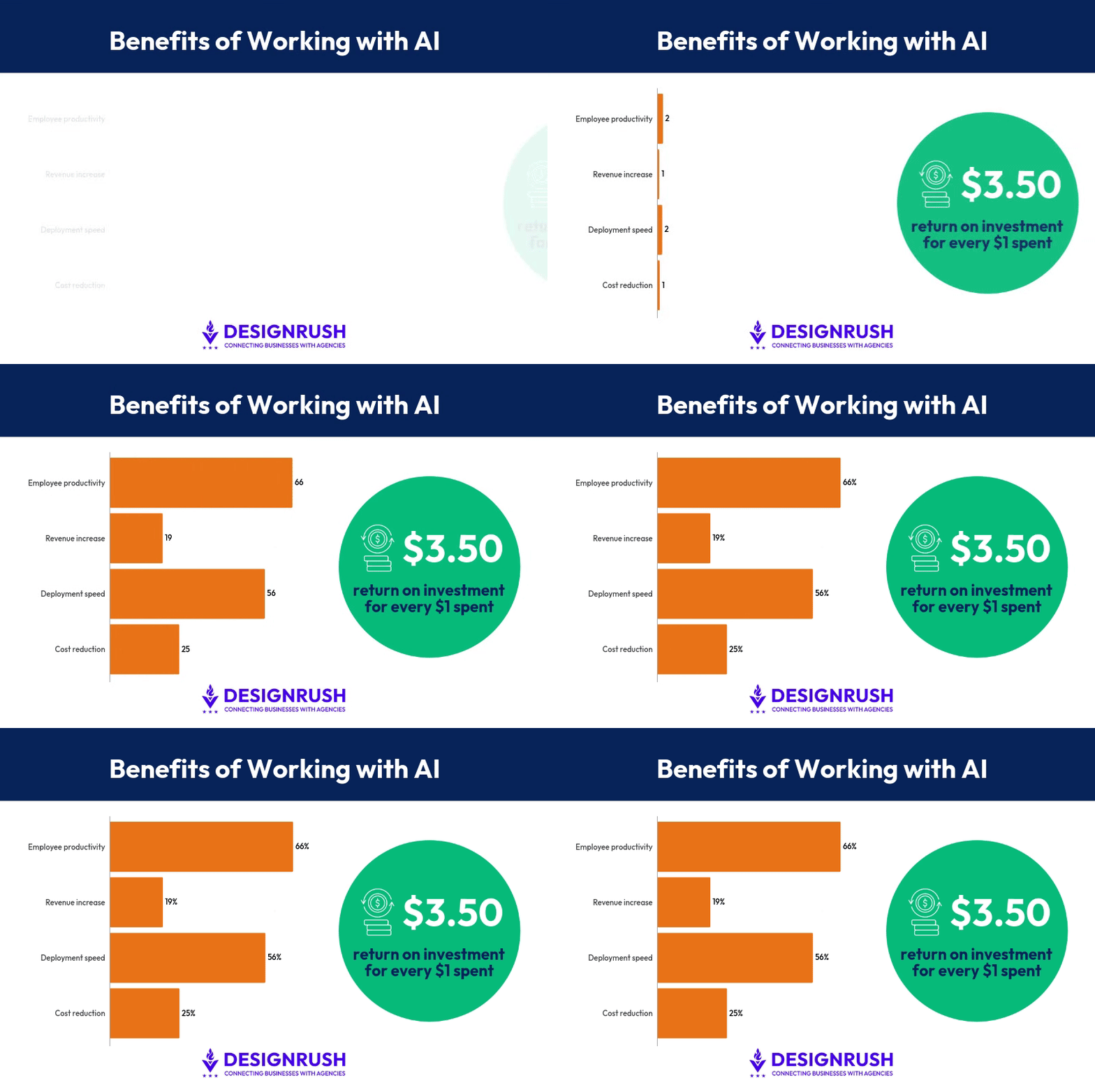
The same logic applies to internal work. When developers deploy AI agents to handle repetitive tasks, employee productivity increases by up to 66%. In software development specifically, tools like GitHub Copilot help teams complete work 26% to 56% faster.
All of this has a direct financial impact. Companies that adopt artificial intelligence typically see revenue increases of 6% to 19%.
At the same time, automation reduces costs. Streamlined workflows cut labor and operating expenses by 20% to 25%. In the United States, AI-driven predictive maintenance often pays for itself within a year by reducing equipment failure (and therefore downtime) by up to 73%.
Finally, this architectural approach is especially strong in San Francisco’s core industries, where local expertise matters:
- Biotech: AI-driven drug discovery reduces R&D timelines by 71%
- Finance: Trading AI applications report return increases of up to 156%
- Manufacturing: Robotic AI systems reduce assembly-line labor hours by 30-40% on average
How can you choose the best AI company in San Francisco?
To choose the best AI firm that can actually deliver results, don’t skip the following steps:
- Define your core objective
Before meeting any startups, define a specific problem, like "reduce customer churn by 20%" rather than "we need AI," to see if the AI development company can align its technology with your business insights. - Verify MLOps maturity
Ask how they handle "model drift" and long-term maintenance; a top AI company will have a clear process for retraining your AI model as your data changes over time. - Demand a data quality audit
A reputable firm will start with a discovery phase to check your data's "health" before they ever start machine learning training, ensuring your custom AI isn't built on messy or biased information. - Confirm security and compliance standards
Since many clients operate globally, ensure the firm follows AI safety protocols and complies with regulations like the EU AI Act, if they work for Europea market, or HIPAA. - Prioritize IP and model ownership
Confirm that your business will own the final AI applications and the trained weights of the model, preventing you from being locked into one development company forever. - Start with a Proof of Concept (PoC)
Test the relationship with a 4–8 week pilot project to see how the team handles real-world data and if their AI innovation delivers a measurable ROI.
Which businesses benefit most from AI services?
Businesses in the San Francisco area that benefit the most from AI services are:
- Healthcare and Life Sciences
This sector uses artificial intelligence to analyze medical images and assist in surgery, which is projected to make up nearly 23% of the healthcare AI market by the end of 2026. Hospitals use AI agents to automate documentation, saving doctors up to 2 hours of paperwork daily, while biotech startups use AI research to slash years off the drug discovery timeline. - Financial Services and Fintech
Banks and insurance companies have achieved high transformation rates, with AI now reviewing thousands of credit applications that once required hundreds of thousands of lawyer hours. They use predictive analytics tools to detect fraud in real-time; firms like Mastercard saved billions in potential losses while offering customers a more secure solution. - Logistics and Supply Chain
Global shipping and warehouse operations are being reconfigured around AI innovation to handle "last-mile" delivery and route optimization. Many clients in this space use computer vision to automate warehouse picking and packing, while predictive models help reduce stockouts by 30% and lower fuel consumption through smarter fleet management. - Retail and E-commerce
Large retailers use generative AI to create hyper-personalized shopping experiences, with AI-driven recommendation engines now responsible for a significant portion of digital sales. - Manufacturing
Factories are adopting "Physical AI," where an AI engineer embeds intelligence directly into robotics for quality assurance and predictive maintenance. By using a digital twin to simulate the entire production line, manufacturers can predict equipment failure before it happens, saving millions in unplanned downtime and repair costs.
What red flags to avoid when choosing an AI firm for your project?
When choosing an AI company in 2026, you must look past the "hype" of the AI boom to find a partner that can deliver a stable solution.
The red flags to avoid include:
- Vague success metrics
Avoid any development company that promises "better efficiency" without defining specific KPIs, such as a 30% reduction in manual tasks or a clear $3.50 return for every $1 spent. - The "PoC-only" portfolio
Be wary of startups that only show a "proof of concept" or a basic AI model demo, as 88% of AI pilots fail to reach full production due to a lack of engineering depth. - No critical opinion
It is a red flag if an AI development company agrees to every request without pushback; a reliable machine learning engineer should challenge your assumptions about data readiness and AI safety. - Black box systems
Stay away from firms that won't let you own the intellectual property (IP) or the trained weights of your custom AI, as this creates a "vendor lock-in" that makes switching or auditing the AI systems impossible. - Junior bait-and-switch
Watch out for firms that use a senior founder or lead software engineer to win the contract, only to hand the actual software development over to junior talent once the project starts. - Ignoring data maintenance
A major red flag is a firm that doesn't mention "model drift" or post-launch monitoring, as 95% of organizations see no returns if they don't plan for the 15–20% annual cost of keeping the model updated. - Lack of ethical oversight
If a firm cannot explain how they detect bias or comply with global rules, it is a major legal liability for any AI applications used in the United States or abroad.
What questions should you ask before hiring an AI company in San Francisco?
Before signing a contract with AI developers, ask the following:
Relevant Background
- How many years of experience does your company have in artificial intelligence and software development?
- Can you share case studies of AI applications you have built for clients in the San Francisco Bay Area or similar markets?
- Have any of your startups or projects been part of Y Combinator or received funding from other prominent AI firms?
- How has your AI development company contributed to the latest innovation or research during the current AI boom?
Services and Processes
- Do you specialize in generative AI, natural language processing (NLP), or computer vision?
- How do you handle AI safety, data privacy, and bias mitigation?
- What is your typical AI development timeline for moving from a pilot to a full solution?
- How do you provide insights and monitor performance for an AI model after it goes live?
Related to Your Project
- Will you build a custom AI solution specifically for my business or use an off-the-shelf AI model?
- What is your cost estimation for a project on this scale?
- How will this AI agent or tool integrate with my existing software development stack?
- Can you provide a breakdown of the ML frameworks and AI systems you plan to use?
Sources
DesignRush sustains a directory of over 40,000 agencies categorized by service category, location, expertise, and reviews. We build our database in two ways:
- Our dedicated team of agency experts actively searches the web for top-performing companies. We then pull information from their websites, online presence, and client testimonials to verify their status and qualifications prior to listing.
- The agencies listed get notified of their profiles on the website and they can choose to claim it or not, which suggests their availability for more collaborations.
Agencies can also reach out to DesignRush and must go through the verification process prior to being listed.
Latest Trends Related to Artificial Intelligence
Artificial Intelligence
Top 20 AI Companies in 2026: Leaders, Innovators and the Battle for Market Dominance
48,679