
Our Verified Agencies
are Trusted by Top Brands:
are Trusted by Top Brands:





Organic rankings are determined by five factors: top services, reviews, portfolio, awards/press, and team expertise. Sponsored listings pay for a placement that appears above organic positions. Sponsorship does not affect star ratings or review content - read more on our methodology page.

We help our partners turn complex challenges into intuitive digital products through strategy, UX/UI design, and product development. We've successfully launched 500+ products and helped raise over $1B in funding and counting...
Top Services:

Web Design Review from Michael Krone
We partnered with Goji Labs for a complete app build, and they delivered exactly what we needed. Their team handled the entire project professionally and with great care from start to finish. I would highly recommend Goji Labs to anyone seeking a skilled and dependable development partner.

Software Development Review from Wilson Rapp
We brought Goji Labs on board for a major migration project, and the entire experience was smooth and well-managed from start to finish. We could not be happier with the results. Their expertise gave us confidence throughout the process, and we would not hesitate to work with them again.

Mobile App Development Review from Sheila Reddy
As a founder with just an idea and a business model, I needed a partner who could turn that vision into a real product. Goji Labs guided me through every step of the process and built exactly the app we needed. Their expertise and patience made the entire journey manageable and rewarding.
Finding the right AR/VR agency in San Francisco needs careful evaluation. That's why we've put together this guide.
Drawing on exclusive first-party data from our extensive database, we provide key insights into agency expertise, pricing, current trends, and successful projects.
Or directory lists approximately 40 San Francisco AR/VR companies, serving clients across diverse industries. Notably, 39% specialize in Startup app development, another 39% in iPhone app development, and 37% in Android app development.
In the fast-paced world of tech and gaming, AR/VR is no longer a novelty. Companies need a reliable agency who can bring their vision to life and deliver innovative digital products that appeal to target audiences and drive business growth.
Our comprehensive guide will cover:
AR/VR services in San Francisco are highly sought after due to the city's concentration of tech companies and gaming studios. Agencies primarily specialize in these five key areas:
San Francisco is a leader in AR/VR innovation, and here are three key trends that shape the industry based on services that SF agencies on DesignRush offer:
Here are the leading technologies our agencies use to deliver the best AR/VR services in San Francisco:
These technologies help AR/VR agencies create products that bring innovation and success to San Francisco’s tech enterprises and gaming community.
San Francisco and Miami are both leading hubs for AR/VR development, each catering to competitive markets with unique needs. Here’s what makes San Francisco stand out:
| Service Name | San Francisco | Miami | Comparison |
| Startup App Development | 39% | 42% | Miami holds a slight lead with a 3% margin, driven by its growing startup scene’s demand for AR/VR and app solutions. While San Francisco remains a dominant hub for tech-focused startups, Miami is attracting entrepreneurs with its lower taxes and access to international markets. |
| iPhone App Development | 39% | 63% | San Francisco continues to offer deep expertise in the iOS platform, supported by its strong tech ecosystem and innovative talent pool. However, Miami is emerging as a strong competitor, with a growing number of app development companies specializing in iOS platforms. |
| Android App Development | 37% | 58% | Miami also shows a significant edge in the Android platform, offering more specialized expertise in Android app development. |
| Wearable App Development | 34% | 21% | San Francisco leads in wearable tech with a 13% margin over Miami, driven by its close ties to major tech giants. Agencies cater to businesses focused on developing advanced, connected devices, such as smartwatches, fitness trackers, and AR/VR headsets. |
| Small Businesses App Development | 34% | 42% | Miami slightly outperforms San Francisco in providing app and AR/VR solutions for small businesses in finance, healthcare, and service industries San Francisco, on the other hand, has a stronger presence in fashion, retail, information technology, and biotech. |
When it comes to virtual reality agencies San Francisco excels in wearable app development and has a strong foundation in AR/VR, making its agencies ideal for businesses focused on innovation and emerging technologies. Miami, on the other hand, leads in mobile app development — particularly for iOS and Android — positioning itself as the choice for businesses prioritizing mobile-first solutions and broader market reach.
San Francisco's AR/VR success comes from its deep connection to Silicon Valley's innovative spirit, a talented workforce, and plenty of venture capital.
The special mix helps create groundbreaking advancements in wearable technology and AR/VR that make San Francisco a prime spot for companies that want to stay ahead of the tech curve.
San Francisco’s reputation as a global tech hub has made it a leader in AR/VR innovation. Agencies offer specialized services that cater to the unique needs of various industries. Here are the key industry trends shaping the market:
Industry-specific trends we mentioned show that San Francisco leads the way in AR/VR, helping businesses in different industries grow and take full advantage of immersive technology.
The table below uses first-party data from the DesignRush directory to show the top AR/VR services. It highlights how San Francisco agencies excel in many services, outperforming agencies in Miami.
The "specialization" percentages in the table show how much more one location specializes in a service compared to the other, reflecting a relative comparison rather than a total percentage.
| AR/VR Services | San Francisco Specialization | Miami Specialization |
| Product Prototype | 300% | 33% |
| Real Estate Web Design | 240% | 42% |
| Educational App Development | 155% | 65% |
| Product Marketing | 140% | 71% |
| Consumer App Development | 136% | 73% |
| Interactive Design | 131% | 76% |
| UX Strategy | 131% | 76% |
| Dashboard Design | 123% | 81% |
| Educational Software Development | 105% | 95% |
| Social Network App Development | 105% | 95% |
| Healthcare Software Development | 104% | 96% |
The data doesn’t imply that Miami agencies are less capable of providing certain services, nor is it a direct comparison of which city is better. Instead, it highlights San Francisco’s strengths and specialization in these top AR/VR services.
Discover more about Miami’s AR/VR strengths by visiting this page.
The cost of augmented reality (AR) applications typically ranges from $5,000 to $250,000, while virtual reality (VR) projects can range from $3,000 to $150,000. Several factors influence AR/VR pricing, including the developer’s reputation, location, and complexity of the project.
Below is a breakdown of typical VR project costs:
The top 40 AR/VR agencies in San Francisco on DesignRush charge approximately $81 per hour. 2.5% of companies accept budgets under $1,000, for basic projects like AR filters or small-scale prototype development. Meanwhile, 15% require a minimum budget of $50,000 or more for advanced AR/VR solutions, such as immersive training simulations or complex product visualizations.
In comparison, the top Miami AR/VR agencies on DesignRush charge an average of $67 per hour. 4.2% accept projects for less than $1,000, focusing on basic VR experiences and simple AR effects. On the other hand, 12.5% require a minimum budget of $50,000 for comprehensive VR applications or multi-user VR platforms for larger businesses.
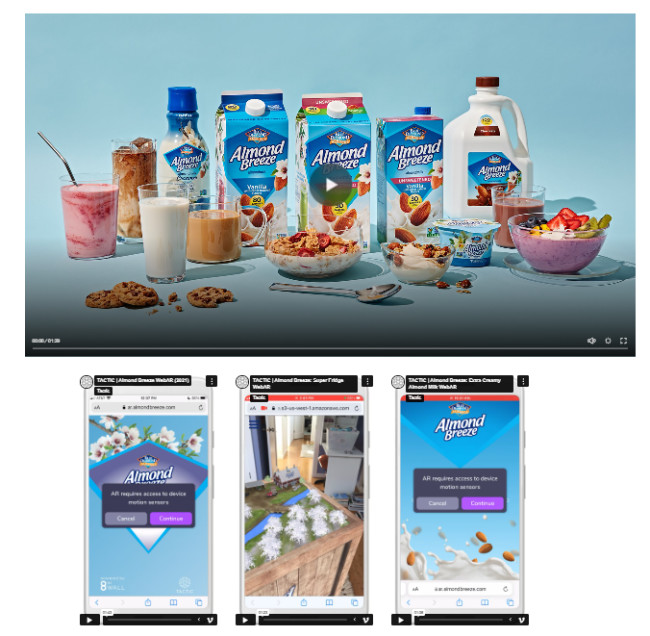
Our researchers identified an outstanding case study using our Agency Ranking Methodology. It highlights a leading San Francisco AR/VR agency’s successful project and the results it delivered for its clients.
Every agency is independently vetted before it can be listed or ranked
Some agencies pay for sponsored placement, clearly labeled and held to the same vetting standards.
 Proposals
For your project
Specify your budget, timeline and project requirements
Our experts curate a list of up to 5 most qualified candidate agencies
We connect you with them so you can choose the most suitable partner

 4.7
4.7 4.7
4.7