
Brand awareness is a leading indicator of business health, and according to Brock Smith, Co-Founder and Partner at Oculus Studios, it’s about far more than being seen.
In this guide, we’ll pair proven methods, tools, and frameworks with Smith’s insights to help you measure awareness beyond likes and impressions, and build a brand presence that lasts.
How To Measure Brand Awareness: Key Points
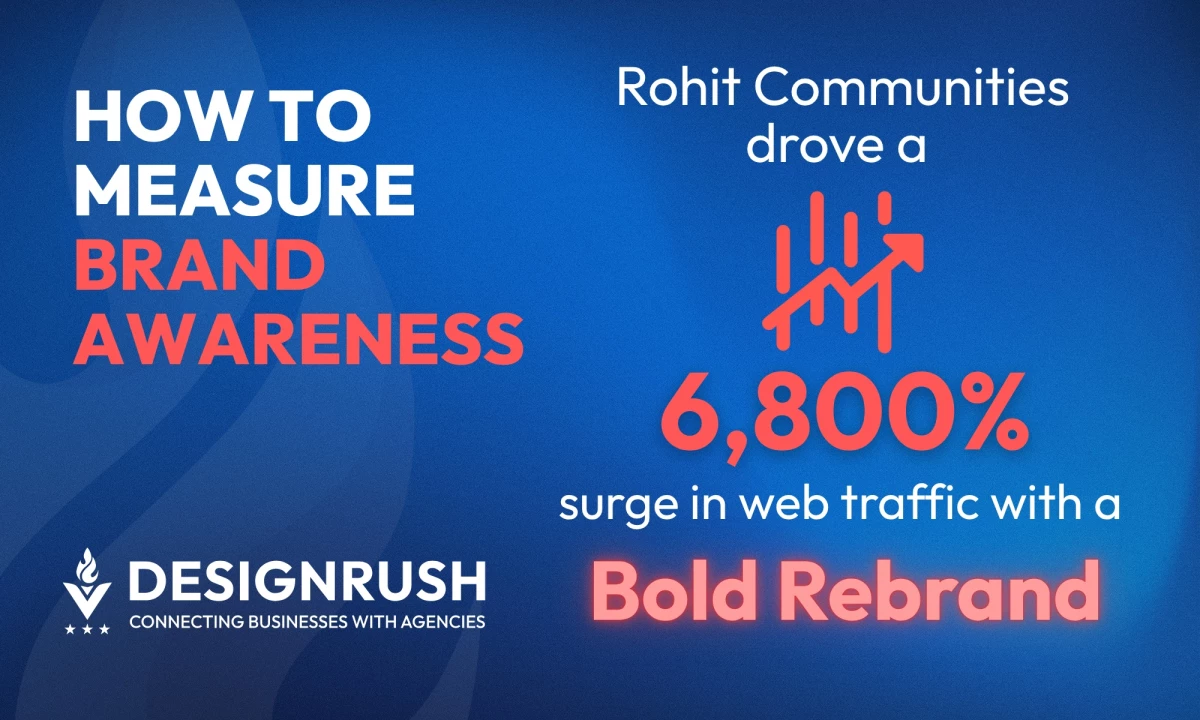
- Rohit Communities grew web traffic by 6,800% after a rebrand, with major gains in direct and branded search.
- NPS and customer interviews uncover brand sentiment, helping businesses strengthen loyalty and trust.
- Chick‑fil‑A flipped sentiment from 73% negative to 92% positive by responding quickly to social feedback.
- Combining multiple tools provides a 360° brand view, blending search, sentiment, and reach for smarter strategy.
Why Measuring Brand Awareness Matters?
Brand awareness directly impacts revenue. Nielsen research shows that a one-point increase in brand metrics, such as awareness, can lead to a 1% boost in sales.
By tracking awareness, you can understand how your brand is seen, recalled, and discussed, enabling smarter strategies to grow market share and ROI.
Who is Brock Smith?
Brock Smith is the Co-Founder and Partner at award-winning Oculus Studios, a marketing agency specializing in video, animation, and design. With a background in media communications and a track record of Emmy-winning storytelling, he champions authentic, consistent branding that blends human creativity with strategic use of AI.


Quantitative Metrics That Matter for Brand Awareness
Smith emphasizes that while AI and analytics can streamline measurement, “human creativity should lead the way — data should support the story, not dictate it.” Quantitative metrics provide the hard numbers to benchmark progress.
These methods offer concrete, data-driven insights into how your brand is performing across various channels.
Key Quantitative Methods
- Aided and unaided brand recall: Survey respondents with or without prompts to assess top-of-mind presence.
- Search volume trends: Track how often your brand is searched using tools like Google Trends or Ahrefs. Compare against competitors to calculate your Share of Search, a strong proxy for market share and brand mindshare.
- Direct and organic website traffic: High direct traffic (typing your URL or visiting via bookmarks) signals strong recall. Organic traffic from branded searches also reflects awareness.
- Social media mentions and reach: Measure how often your brand is mentioned and how many people see those mentions. A rise in mentions and reach (especially with neutral-to-positive sentiment) suggests growing visibility.
- Branded Click-Through Rates (CTR): Track CTR on branded PPC ads and search listings. Higher CTRs indicate recognition and trust and changes can signal shifts in awareness or brand perception.
How a Bold Rebrand Drove 6,800% Traffic Growth for Rohit Communities

Boosting “top-of-funnel” brand visibility can translate into tangible growth in sales leads down the line.
This was neatly demonstrated when, after undergoing a major rebranding campaign focused on a bold new market position, Rohit Communities saw its web traffic skyrocket by over 6,800%.
This included a 42% surge in direct website visitors and a 120% jump in branded Google search queries.
Qualitative Techniques To Understand Brand Perception
Qualitative methods reveal not just how many people know your brand, but how they perceive it.
Key qualitative approaches include:
- Brand Perception Surveys
- Net Promoter Score (NPS)
- Customer Interviews and Focus Groups
- Social Listening and Sentiment Analysis
1. Brand Perception Surveys
Smith emphasizes that authenticity must come first:
“Authenticity is impossible to fake in the long-term. It shines through most when a brand stays true to its core values and tells its story honestly.”
Open-ended brand perception surveys can capture how audiences describe your brand in their own words. For example:
- “What three words come to mind when you think of our brand?”
- “How would you describe [Brand] to a friend?”
These responses illuminate the traits and values people associate with you.
Tools like Typeform, SurveyMonkey, and Qualtrics make collection and analysis easier, but Smith would suggest paying close attention to whether the responses reflect your core values, and making sure your communications reinforce them.
2. Net Promoter Score (NPS)
NPS is a popular metric for loyalty and satisfaction, but it’s also useful as a proxy for brand sentiment. It asks customers “How likely are you to recommend our company to others?” on a 0-10 scale.
Customers who score 9–10 are “Promoters,” 0–6 are “Detractors.”
But, Smith’s insights show he looks beyond just the metric: he combines hard data with sentiment to judge success.
“We measure success by analyzing hard data, especially increased sales… We also look at metrics like website traffic, social media engagement, and customer sentiment to gauge how well the new branding resonates with the audience.”
In practice, this means using NPS alongside other performance indicators, rather than in isolation, to understand whether your brand is truly resonating.
3. Customer Interviews and Focus Groups
There’s no substitute for talking directly to your audience. One-on-one interviews or small focus groups allow deeper exploration of perceptions, asking:
- What do customers value most about us?
- Where have we disappointed?
- Which competing brands do they also consider, and why?
These discussions uncover emotional drivers, trust factors, and nuanced opinions that survey checkboxes are likely to miss.
Smith encourages brands to weave genuine narratives that reflect both who they are and who they aspire to be:
“We encourage clients to blend who they genuinely are with who they aspire to be. This… resonates deeply with their audience.”
Qualitative research is especially valuable for B2B brands or high-consideration industries (like tech or healthcare) where purchase decisions involve longer relationships and understanding trust and credibility factors can be game-changing.
4. Social Listening and Sentiment Analysis
Smith sees customer feedback, especially on social channels, as an early indicator of brand performance:
“Customers aren’t shy about sharing their thoughts on social media, so we often get immediate feedback. We also look at customer sentiment to gauge how well the new branding resonates with the audience.”
Social listening tools like Talkwalker, Sprout Social, and Brand24 use AI-powered sentiment analysis to evaluate the emotion behind posts at scale.
Advanced platforms can even detect specific emotions (joy, anger, frustration) and perform topic clustering, grouping mentions by subject to see what themes people discuss.
These tools might reveal that your brand is praised for innovation but often criticized for response times, for instance — an invaluable insight for aligning your brand strategy with customer expectations.
How Chick-fil-A Turned a Social Media Backlash Into 92% Positive Sentiment
Chick‑fil‑A’s use of social listening in 2016 provides a cautionary tale with a happy ending.
The fast-food chain had replaced its popular Original BBQ sauce with a new flavor, sparking an outcry on social media.
Mentions of “BBQ sauce” spiked roughly nine times higher than usual, and sentiment swung to 73% negative.
Realizing this gap between customer passion and satisfaction, Chick‑fil‑A pivoted quickly, bringing back the original sauce and launched a #BroughtBackTheBBQ campaign to acknowledge fans’ feedback.
It worked.
On the day of the announcement, related mentions surged about 18× above the norm, and BBQ-sauce mentions flipped to 92% positive sentiment. The brand successfully transformed a wave of frustration into goodwill by actively listening and responding.
Best Tools and Platforms for Tracking Brand Awareness
For Smith, the best tools combine the numbers with human insight:
“Trends come and go, but what makes your brand unique should always guide how you interpret the data.”
| Tool | Primary Use Case | Notable Feature |
| Google Trends | Track search volume for your brand over time; gauge interest spikes | Real-time comparison with competitor search terms for Share of Search analysis. |
| BuzzSumo | Identify which content featuring your brand (or industry topics) is resonating with audiences | Shows most-shared content and backlinks to see what drives engagement. |
| Mention | Monitor real-time brand mentions across the web (social media, blogs, forums, news sites). | Covers a wide range of sources to catch brand mentions in niche communities or news articles. |
| Hootsuite | Social media management with listening capabilities to track brand mentions and engagement on major platforms. | Built-in sentiment tracking and trend analysis via integrations to gauge tone of conversations. |
| Qualtrics | Enterprise surveys for brand awareness and perception studies. | Custom dashboards for brand health, including NPS tracking and segmentation. |
Consider combining multiple tools to triangulate awareness from different angles.
Integrating data points can paint a rich, real-time picture of brand awareness.
Each tool alone offers valuable insight, but together they provide a 360° view of brand presence and perception.
Using Social Media to Measure and Boost Brand Awareness
Social platforms provide both a megaphone for your brand and a mirror reflecting your brand’s impact.
Here’s how to leverage social media metrics for awareness:
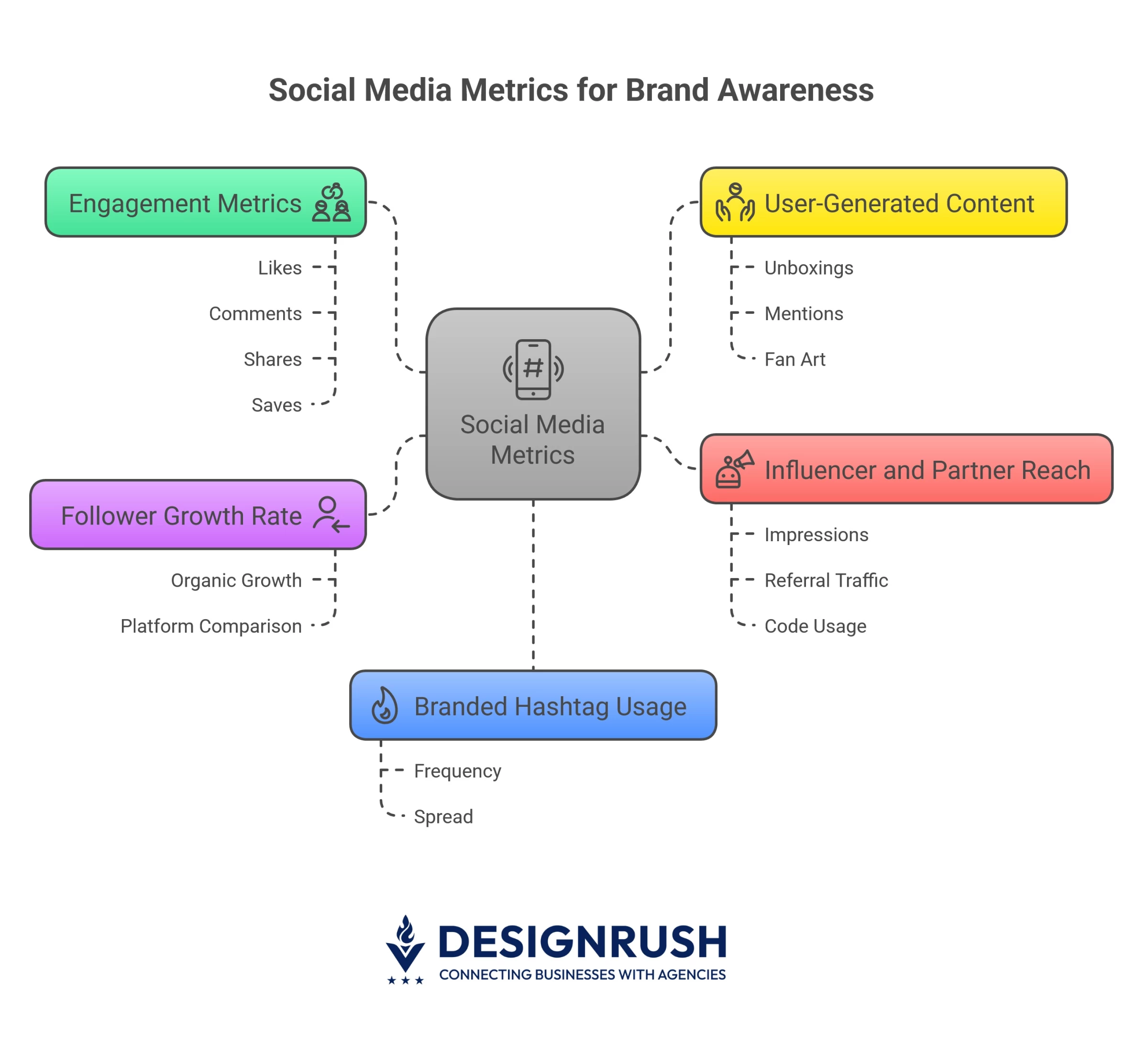
- Engagement metrics: Track likes, comments, shares, and saves. High engagement suggests content is resonating and expanding your reach. Use engagement rate (engagements ÷ impressions) to compare post performance. Spikes often correlate with stronger brand recall.
- Follower growth rate: Steady, organic follower growth (especially without paid support) signals rising interest. Compare growth across platforms to identify where your brand is gaining traction and focus efforts there.
- User-generated content (UGC): Unprompted content from customers (e.g. unboxings, mentions, fan art) shows strong affinity. More UGC means more peer-to-peer brand exposure. Encourage it through contests or features, and track volume and reach.
- Branded hashtag usage: Monitor how often your branded hashtags are used and how far they spread. Consistent, organic use shows growing brand recognition and community engagement, especially during events or campaigns.
- Influencer and partner reach: Collaborations can expose your brand to new audiences and boost awareness. Measure impressions, referral traffic, and code usage to gauge impact. Just ensure messaging aligns with your brand.
"Regular analysis of social media metrics allows us to optimize based on performance,” says Leslie Licano, CEO of Beyond Fifteen Communications. She goes on to say: “We encourage experimentation, ensuring a dynamic and enjoyable social media presence that doesn’t grow stale."
How To Measure Brand Awareness: Final Words
“Brand awareness is about keeping your brand ‘top of heart’ as well as top of mind,” says Smith. “Consistency, authenticity, and a deep connection to your core identity are what make awareness stick — and ultimately, drive loyalty.”
That means pairing quantitative data with sentiment analysis, integrating awareness insights into your sales funnel, and recognizing new forms of passive exposure like zero-click search and voice discovery.
As privacy shifts continue, building a foundation of first-party data and integrated brand health scores will separate brands that simply get seen from those that truly get remembered.
Our team ranks agencies worldwide to help you find a qualified partner. Our Agency Directory lists the top branding agencies, as well as:
- Top Corporate Branding Agencies
- Top Startup Branding Agencies
- Top Digital Marketing Agencies
- Top Creative Agencies
- Top Advertising Agencies
Our design experts spotlight the most innovative projects from around the world. With recent branding shifts making waves, now’s the perfect time to explore our Awards section for the latest and best in logo rebranding design.
How To Measure Brand Awareness FAQs
1. How long to see campaign impact?
Brand awareness builds over time. Digital metrics may spike early, but shifts in recall, sentiment, or perception often take weeks or months—especially in B2B or high-consideration industries. Track both short- and long-term trends.
2. Brand recognition vs. recall?
Recognition is knowing your brand name or logo when prompted. Recall is remembering it unprompted in context. Recall signals stronger top-of-mind awareness.
3. Should startups measure differently?
Yes. Startups often track aided recall, UGC volume, and organic search growth. Established brands focus more on sentiment, loyalty, and brand associations.
4. Future of measurement?
AI tools now analyze not just mention volume but emotions, themes, and contexts. Expect more real-time sentiment tracking, voice/visual search analytics, and predictive insights to flag perception shifts early.

-preview-webp.webp)