Everything You Need to Know Before Hiring a Consulting Company in Columbus, Ohio Table of Contents
What can top consulting firms in Columbus do for your business?
Central Ohio’s market is rapidly expanding, and top consulting firms help businesses keep pace.
In Columbus specifically, a city currently witnessing a "manufacturing renaissance" and a massive influx of tech investment (like Intel's $28B+ facility), consultants do more than give advice; they provide the specialized "boots on the ground" needed to scale safely.
The primary reason businesses in Columbus hire consultants is to move the bottom line. Recent studies show that consulting is rarely a "cost" but rather an investment with a high yield.
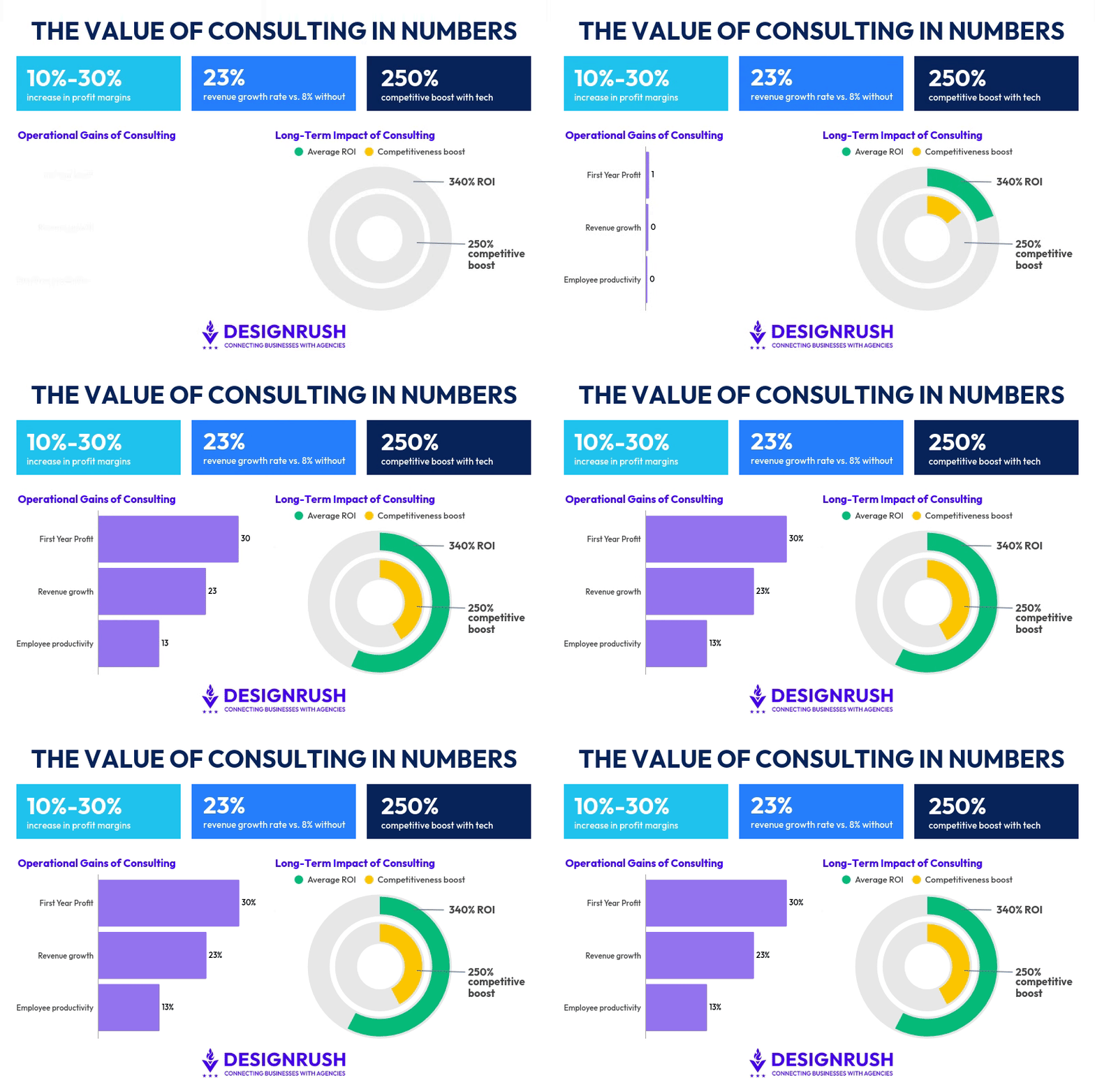
On average, companies working with business consultants see a 15% to 30% increase in profit margins within the first year of implementation.
Small and mid-sized businesses report an average Return on Investment (ROI) of 340% on consulting engagements. Companies that adopt consultant-led strategies grow their revenue 2.5x faster than those that don't (average 23% growth vs. 8% for control groups).
Columbus is a hub for logistics and retail (home to giants like L Brands and Cardinal Health). Local consultants specialize in "Operational Excellence," which means removing the friction that slows your team down. Numbers confirm that:
70% of companies report significant improvements in operational efficiency after a consulting engagement.
Organizations that prioritize the structural changes recommended by consultants see 13% higher employee productivity.
For retail and marketing sectors, specialized consultants have been shown to increase forecasting accuracy by up to 30%.
With the Intel project and the growth of the "Silicon Heartland," Columbus businesses are facing a sudden need for digital transformation. Local firms help you bridge the gap between traditional operations and tech-forward competition.
Companies that implement consultant-recommended technologies are 2.5 times more competitive in their respective markets.
Columbus is currently the #1 rising city for startups and a top emerging city for venture capital. As the region's GDP reaches approximately $212.2 billion, the "cost of inaction" is higher than ever. Local consultants ensure you aren't just reacting to this growth but are positioned to lead it.
How can you choose the best business consulting provider in Columbus? Columbus is a diverse business hub where manufacturing, technology, retail, and professional services intersect. With this growth comes a crowded consulting market, making it harder to identify which firms can deliver real, local value.
Choosing the right business consulting partner in Columbus requires more than reputation alone. It depends on local market knowledge, industry expertise, and the ability to turn strategy into execution.
To find the best partner for your needs, follow these steps:
Match the firm to your business stage Check local Columbus consulting experience Evaluate industry expertise, not just strategy talk Confirm execution capability Assess technical and operational strengths Understand how they drive client success Review leadership and accountability Verify talent and delivery model Confirm long-term fit What are common KPIs for business consulting projects? Key Performance Indicators (KPIs) for business consulting measure whether consulting services are delivering real value to the client. Because consulting outcomes can feel abstract, these metrics help business owners and leaders assess impact, strategy execution, and overall client success.
KPIs usually fall into two categories: project success and operational health.
1. Project success and client impact These KPIs show whether the consultant or consulting firm solved the problem and supported the business goals.
Return on Investment (ROI) Time to Solution Goal alignment score Implementation or adoption rate 2. Operational and financial health These KPIs focus on how efficiently the consulting firm manages delivery and resources.
Budget variance Billable utilization rate Project margin On-time delivery rate What red flags should you avoid when hiring a consulting firm in Columbus? In the fast-moving 2026 market, the biggest risk is not just bad advice. It is hiring a consulting firm that lacks technical agility or real local focus. When evaluating consulting firms, these red flags signal a poor fit with the current Columbus business environment.
Generic, cookie-cutter proposals Opaque or evasive pricing Bait-and-switch delivery models Vendor-driven recommendations No measurable performance framework Pushy sales tactics Outdated or irrelevant references Vague deliverables Dismissal of modern technology What questions should I ask before hiring a business consulting company? Before hiring a business consulting company in Columbus, ask the following questions:
Relevant Background What experience does your consulting firm have with companies like mine or in my industry? Who will lead the work, and what is their level of expertise? Can you share examples of past client results or outcomes? Services and Processes Which consulting services are included, and what is out of scope? How do you manage communication, timelines, and project management? Do you provide hands-on support or only recommendations? Relevant to Your Project How will this business consulting engagement support my specific business goals? What success metrics or KPIs will you use to measure progress? What level of time and involvement will you need from my team? Sources DesignRush sustains a directory of over 40,000 agencies categorized by service category, location, expertise, and reviews. We build our database in two ways:
Our dedicated team of agency experts actively searches the web for top-performing companies. We then pull information from their websites, online presence, and client testimonials to verify their status and qualifications prior to listing. The agencies listed get notified of their profiles on the website and they can choose to claim it or not, which suggests their availability for more collaborations. Agencies can also reach out to DesignRush and must go through the verification process prior to being listed.

 Proposals