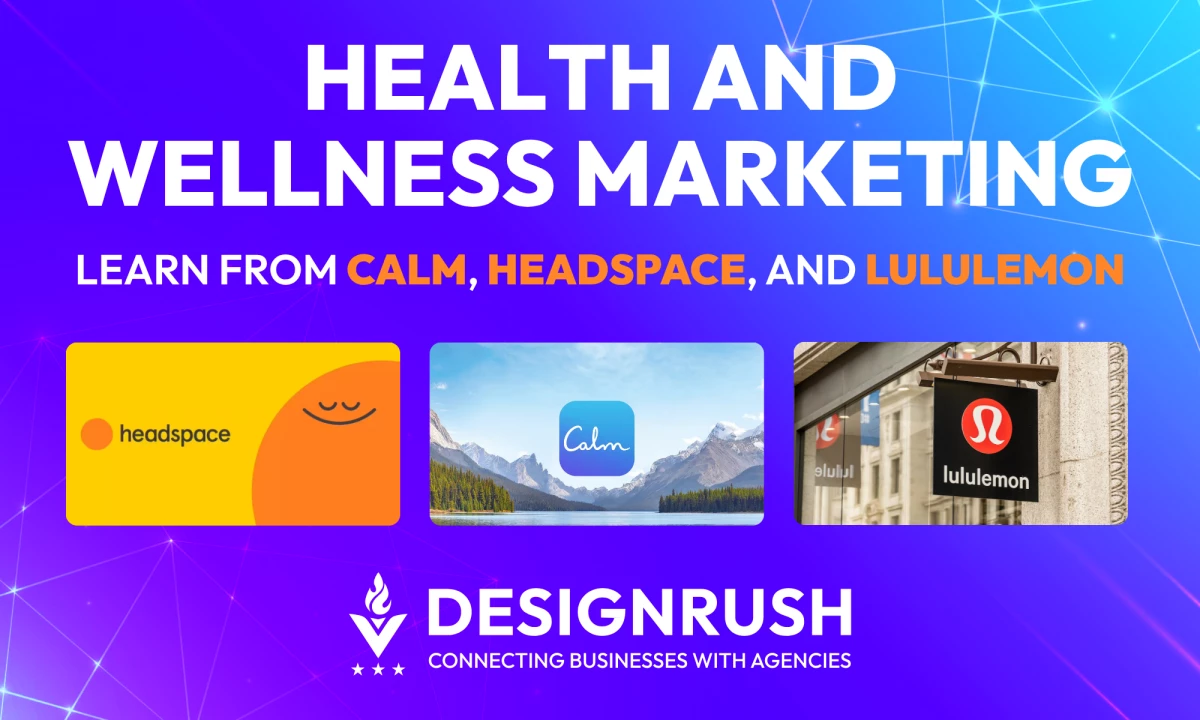

You succeed in wellness marketing when your audience feels supported, informed, and understood. Every touchpoint should lower pressure and increase confidence. Here’s how to achieve that.
Health and Wellness Marketing: Key Findings
- Lead with relief, not pressure. Calm proved emotional permission beats hype when it hijacked election night with silence and owned the national stress moment.
- Back claims with science and receipts. AG1 turned evidence-led creators into a growth engine and skyrocketed from $0.4M to $78.9M in earned media.
- Build a real community, not campaigns. Lululemon hit $10B+ and grew membership 65% by turning wellness into a shared movement, not marketing.
Why Support-First Marketing Now Beats Aspirational Hype
Wellness used to sell aspirations: perfect routines, superhuman discipline, and “upgrade yourself” energy.
That era is over.
Today’s consumers don’t want to be pushed; they want to be understood, supported, and grounded in practices that feel realistic for busy, stressed, imperfect lives.
They’re rejecting polished perfection and gravitating toward brands that normalize rest, make change feel manageable, and offer tools that reduce mental load instead of adding to it.


8 Wellness Marketing Strategies
Wellness brands succeed when they help people make real progress, not just push promises with flashy CTAs.
The most effective strategies today focus on helping people change habits, overcome difficulty, and reset people’s mindset.
- Lead with emotional permission, not motivation
- Anchor your brand to a cultural stress moment
- Run expert myth-breaking week
- Create “Real People Practice” storytelling
- Make education feel like empowerment
- Launch a personal reset planner
- Partner with workplace burnout initiatives
- Run a “No Filter Wellness” series
1. Lead With Emotional Permission, Not Motivation
Modern wellness consumers respond better to messages that give “permission” to rest and be human rather than guilt-laden pushes to “be better.”
This shift is showing up everywhere, including viral self-care trends.
For example, “bed rotting”, which is intentionally staying in bed to recover from stress and burnout, became a Gen Z anti-hustle staple, with 24% reporting they use it as a coping and wellness practice.
How to Implement | Content Pillars | Channels | Success Metrics |
|
|
|
|
As Emma Galli, Senior Director of Global Brand at Playlist told DesignRush,
“Most business owners in the wellness industry are focused on delivering great experiences, not evaluating which tools to adopt or how to integrate them.”
When brands remove stress and offer clarity, they earn trust and loyalty.
2. Anchor Your Brand to a Cultural Stress Moment
Tying wellness campaigns to seasonal or situational stress peaks can make them especially pertinent.
By “owning” a moment of widespread anxiety, be it New Year’s resolution panic, holiday burnout, or even election stress, brands can offer timely relief.
The holiday season alone is a proven stress spike: a late-2024 survey found 81% of people say holiday events and expectations significantly increase their stress levels.
How to Implement | Content Pillars | Channels | Success Metrics |
|
|
|
|
3. Run Expert Myth-Breaking Week
Misinformation runs rampant in wellness (from dubious diet hacks to supplement hype), so brands that visibly debunk myths can build trust and authority.
Given that 73% of US adults say they distrust the healthcare system and instead turn to online influencers for health advice, signaling they would reward transparency and expertise, especially if delivered in a punchy, public way.
How to Implement | Content Pillars | Channels | Success Metrics |
|
|
|
|
4. Create “Real People Practice” Storytelling
Highlight real routines from normal people.
Not influencers.
Not elite athletes.
Aspirational realism beats perfection.
How to Implement | Content Pillars | Channels | Success Metrics |
|
|
|
|
5. Make Education Feel Like Empowerment
Consumers don’t want to be lectured, but they do want to understand the products and practices they’re investing in.
The brands winning today explain wellness in a friendly, demystifying way, almost “explain it like I’m five,” empowering people rather than overwhelming them.
In fact, a recent Talker Research survey for Revance found that 91% of consumers say they’re more ingredient-aware than ever, signaling a clear hunger for simple, credible guidance.
How to Implement | Content Pillars | Channels | Success Metrics |
|
|
|
|
6. Launch a Personal Reset Planner
Providing tangible tools and templates, like habit trackers, journaling prompts, mini meditation guides, can both add value to users’ lives and serve as effective lead magnets for your brand.
People are actively looking for structured help to reset their routines, and they’re willing to exchange contact info for it.
An April 2025 personalization study backs this up: 99.6% of consumers say they’ll share personal data, like an email address, in exchange for valuable and relevant content.
How to Implement | Content Pillars | Channels | Success Metrics |
|
|
|
|
7. Partner With Workplace Burnout Initiatives
Employee burnout and mental health are front-and-center for companies right now, and it’s an opportunity for wellness brands to plug into corporate wellness programs or co-create initiatives.
The demand is real and urgent: 51% of professionals experienced burnout in the past year alone.
How to Implement | Content Pillars | Channels | Success Metrics |
|
|
|
|
8. Run a “No Filter Wellness” Series
In contrast to the polished highlight reels, there’s a surging audience appetite for raw, unfiltered, “messy” wellness content.
Showing the real ups and downs: the sweat, setbacks, skipped days, and all, can deeply engage viewers who are tired of perfection.
How to Implement | Content Pillars | Channels | Success Metrics |
|
|
|
|
7 Examples of Exceptional Health and Wellness Marketing Campaigns
The most effective campaigns show up at the right moment with the right message, backed by clarity, care, and credibility.
Below are seven standout campaigns offering a blueprint: a clear strategy, measurable impact, and a reason it earned lasting attention.
- Calm: Election night pause campaign
- AG1: Evidence-led creator partnerships
- Headspace: Integrated mental health ecosystem
- Ritual: Traceability and clinical communication
- Lululemon: Local movement community
- Peloton: Challenges and instructor-led community
- Noom: Segmented performance with demand gen expansion
1. Calm: Election Night Pause Campaign
Calm bought 30-second national TV spots on election night and aired literal silence to give viewers a moment of relief during rolling results coverage.
Spots ran on CNN and ABC throughout the evening and into the night.
Results and Impact
- The ad became a talking point across social and trade media on the night, with Campaign and Adweek both highlighting the creative as a standout.
- Calm had previously documented election-night social spikes, which the brand and press referenced again in 2024 coverage.
Why It Worked
It met a real, time-bound stress spike with a product-native intervention.
The creative made the product benefit tangible on the medium itself (silence on TV), which invited sharing and earned media without explanation.
2. AG1: Evidence-Led Creator Partnerships
View this post on Instagram
AG1 built sustained reach and trust through long-running partnerships with science and performance voices such as Andrew Huberman, plus broad podcast and sponsorship buys that put the product in credible, instruction-first contexts.
Results and Impact
- CreatorIQ tracked AG1’s earned media value growth from $0.4M in 2018 to $78.9M in 2023.
- 44% lower incremental CPA on Meta in 2022 through incremental testing and marketing mix modeling (MMM).
Why It Worked
The brand stayed in contexts where deeper explanation and repeated exposure build credibility.
It kept a focused creator roster over many months, which compounds trust and performance in a sensitive category.
3. Headspace: Integrated Mental Health Ecosystem
Headspace unified mindfulness, coaching, therapy, and psychiatry into a single experience for enterprise clients.
It then expanded direct-to-consumer access to coaching and online therapy in 2024, supported by ongoing workplace mental health research for adoption and comms.
Results and Impact
- Distribution footprint: access through 3,700+ enterprises and major health plans cited in the unified-experience announcement.
- Headspace’s 2024 and 2025 Workforce State of Mind research shows decision-makers prioritize solutions that include coaching, therapy, psychiatry, and guided content, aligning with the unified model.
Why It Worked
It removed fragmentation for HR buyers and members by placing the full care spectrum under one roof and kept feeding adoption with credible research content that matches employer priorities.
4. Ritual: Traceability and Clinical Communication
Ritual built a marketing and content system around traceability and publishable evidence.
It publicly lists suppliers and manufacturing locations for ingredients, and it publishes clinical findings in plain language with citations.
Results and Impact
- Clinical study: +43% serum vitamin D and +41% omega-3 DHA in 12 weeks vs placebo for Essential for Women 18+, published in Frontiers in Nutrition.
- 100% of ingredients “Made Traceable” by end of 2022; ongoing updates for new products and product-level carbon footprints.
Why It Worked
It turned compliance and proof into consumer-friendly marketing assets that satisfy search intent, medical safety questions, and E-E-A-T expectations in one place.
5. Lululemon: Local Movement Community
View this post on Instagram
A calendarized push of local classes, studio partnerships, and ambassador-led activations that convert foot traffic and content into a sense of belonging.
In September 2024, Lululemon hosted a global week of movement with ambassadors and partners.
In March 2025 it reported reaching its goal of bringing well-being tools to 10 million people through community programs.
Results and Impact
- Surpassed $10B revenue in 2024.
- Essential Membership program grew nearly 65% year over year, signaling stronger community ties and repeat engagement.
- 10 million people reached through community well-being programs.
Why It Worked
It treated the community as a scalable channel with measurable reach and membership growth, then tied the activity to both impact reporting and commercial metrics.
6. Peloton: Challenges and Instructor-Led Community
View this post on Instagram
Peloton runs time-boxed challenges with tiered badges and instructor hashtags that make progress visible and shareable.
These programs are promoted on owned channels and convert content engagement into recurring use.
Results and Impact
- Company filings emphasize a recurring-revenue profile with strong retention and consistent engagement, supported by challenge and milestone systems.
- Official help and blog content document ongoing challenge frameworks and milestones used to stimulate repeat participation.
Why It Worked
It pairs instructor personality and social proof with a simple progress mechanic.
That creates a repeating call to action that boosts session counts and supports subscription retention.
7. Noom: Segmented Performance with Demand Gen Expansion
Noom expanded top-of-funnel acquisition using Google Demand Gen across YouTube, Discover, and Gmail, with Smartly.io as the activation partner.
Creative mirrored Noom’s segmented onboarding paths so the ad context matched the program a user would see after clicking.
Results and Impact
- 19% better performance than BAU and more efficient reach into older demographics during peak season.
- A Google Play case study shows Noom’s ability to scale internationally with 80% Android revenue growth over three years and 480% growth in Japan.
Why It Worked
It aligned creative and destination experience and used a visual-first network that suits behavioral health stories, while keeping measurement tight enough to prove channel lift.
Health and Wellness Marketing Strategies by Funnel Stage
By aligning the strategies above to each stage, you can create a pipeline that begins with trust and ends with habitual loyalty.
Funnel Stage | Strategy | What You Do |
Awareness | Purpose, stories, influencer reach | Pause-ads, relatable videos, myth busting |
Consideration | Education, expert explainers, testimonials | Ingredient transparency, guided comparisons |
Conversion | Trials, risk-free guarantees, community invites | “14-day reset” or “starter challenge” funnels |
Adoption | Habit nudges, check-ins, wins | Weekly prompts, streak challenges |
Retention & Advocacy | Peer forums, UGC, loyalty rewards | Monthly challenges, spotlight members |
Move people from “interested” → “supported” → “committed.”
Challenges in Health and Wellness Marketing and How to De-risk
Marketing in wellness isn’t without obstacles.
Here are common pitfalls and strategies to mitigate them:
Challenge | De-Risking Approach |
High skepticism | Use licensed experts, transparent sourcing, and published references |
Strict claim rules | Use support language, cite research, review all creative with regulatory counsel |
Slow adoption cycles | Track progress signals such as streaks, saves, community joins, and session completions |
Crowded category | Anchor messaging in emotional relief, clear instructions, and community purpose |
Creator compliance | Formalize creator guidelines, monitor messaging, and use trained professionals |
Trust and privacy | Explain data practices clearly and minimize collection to essential inputs |
Our team ranks agencies worldwide to help you find a qualified partner. Visit our Agency Directory to find top-rated digital marketing companies, as well as:
- Top Content Marketing Agencies
- Top SEO Agencies
- Top PPC Agencies
- Top Email Marketing Agencies
- Top Social Media Marketing Agencies
Our design experts also recognize the most innovative design projects across the globe. Visit our Awards section for the best & latest in Health & Wellness Website Designs.
Health and Wellness Marketing FAQs
1. How quickly can a wellness brand see results from marketing?
Results vary. Awareness can move relatively quickly via social or influencer campaigns. Habit formation and retention take longer, typically 3-6 months or more in wellness contexts.
2. What’s the best metric for wellness brand success?
It depends on stage, but key metrics include content engagement (for education), trial-to-conversion (for acquisition), retention/churn (for loyalty) and lifetime value.
3. How much should wellness brands invest in content?
Significantly. Because wellness is information-heavy, brands should invest in content (blogs, videos, guides) alongside ads. Without good content, ads can fall flat.