
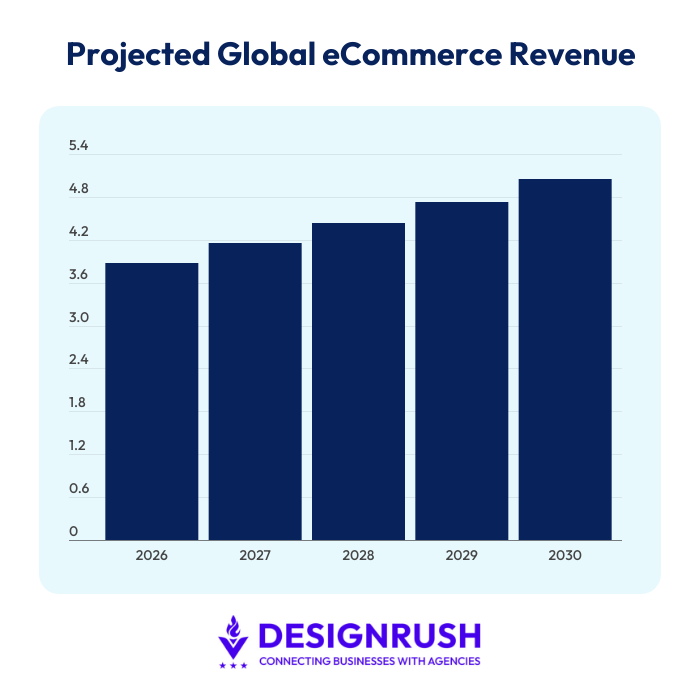
Choosing an agency is about capturing a slice of a massive, rapidly shifting digital economy. According to market data compiled by DesignRush, global eCommerce revenue is projected to reach $3.88 trillion, growing at a compound annual growth rate of 6.84%
Most agencies look the same at the proposal stage. They all claim to be conversion-focused, they all have great case studies, and they all say they're "partners, not vendors."
When all pitches are heard, the one lingering question is which one has the technical and creative competence to execute your vision.
This guide is for that moment. Not how to find eCommerce developers, but how to evaluate them once you have a shortlist.
How to Compare Two Similar Portfolios
The first thing to consider is relevance, i.e., whether they've solved your specific commercial problem before. An eCommerce developer who's worked within your niche has already made and learned from the common mistakes.
Once you've confirmed their relevance, visit some of the actual live sites they’ve built. Open it on your phone and do what a real customer would do:
- Search for a product with a misspelling and see what comes back.
- Apply two or three filters at once and check if the page narrows products accurately.
- Add a product to the cart, then navigate away and come back. Is the product still there?
- Start a checkout and see how many steps it takes to get to the payment screen.
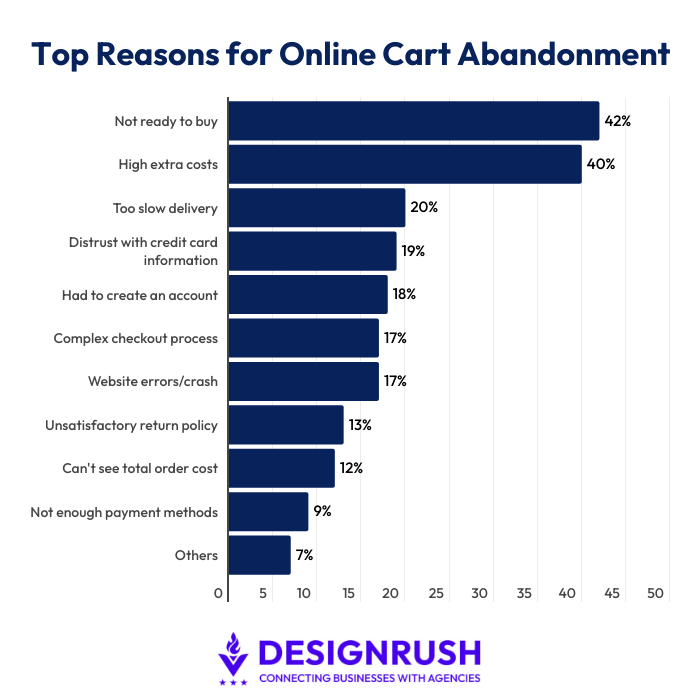
Research by the Baymard Institute reveals that 18% of online shoppers have abandoned a cart because the checkout process was too long or complicated. If an agency's portfolio sites feature clunky, multi-step checkouts, they are likely building systems that leak revenue.
What you're looking for is whether the store was built to convert or built to look good in a presentation. Those are different briefs, and the gap will show up in the details: a filter that resets on every page load, a mobile checkout that requires horizontal scrolling, a cart that empties on session timeout. None of this appears in a screenshot.
Furthermore, you cannot ignore mobile-first execution. Statista reports that mobile devices account for nearly 60% of all global web traffic and drive over $2.2 trillion in global eCommerce sales annually. If a portfolio site is difficult to navigate or purchase from on a mobile screen, the agency is failing on the most critical channel.
Lastly, check the dates of the featured work. As eCommerce standards change fast, a beautifully executed project from 2021 may have been built to a spec that's now outdated. So ideally, prioritize work from the last 12 to 18 months.
Red Flags in Proposals
A proposal is the first glimpse of a work product an agency will produce for you. To make sure you receive a proposal worth considering, here are some patterns to be wary of:
- Scope that reads like intentions, not deliverables. Phrases like "full eCommerce solution," "performance-optimized build," and "ongoing strategic support" sound comprehensive but commit to nothing specific. They can't be measured, they can't be disputed, and when the project ends short of what you expected, the agency will point back to that language, and they won't be wrong.
- A fixed price with no discovery behind it. Any agency quoting a number for custom eCommerce development without first understanding your niche, competitors, catalogue, integrations, and customer journey is guessing.
- A portfolio that doesn't match the pitch. If they're positioning themselves as eCommerce specialists but their portfolio is mostly brochure sites and brand pages, it means eCommerce is either new to them or a small part of what they actually do.
- The proposal ends at launch. Post-launch support, bug handling, team training, and handoff documentation should be explicitly described. If the proposal doesn't mention post-launch activities, it's likely the relationship will end there, too.
Red Flags in How They Communicate
The issues that end eCommerce collaborations rarely start with bad code. They start with an agency that can't give a straight answer about the timeline, goes quiet when a milestone slips, or treats your product knowledge as an obstacle rather than an input.
The good news is that you can recognize these warning signs if you know where to look. Here are a few:
- They can't tell you how they handle scope changes without hedging. On an eCommerce build, scope changes are inevitable; a payment gateway integration turns out to be more complex than quoted, a product configurator needs custom logic, the client adds a wholesale tier mid-project, or something else. So, ask directly: how do you handle it when an activity takes longer than estimated? A good agency will have a clear answer for you.
- Their responses change depending on who's in the room. If the account lead gives you one answer and the developer gives you another about timeline, technical approach, or what's included, you will likely end up working with a team that hasn't agreed internally on what they're selling you.
- Dismissiveness when you push back. Raise a concern and observe what happens. An agency that pivots immediately to reassurance without addressing what you raised is showing you how they handle conflict. You will disagree at some point during the project.
How to Make the Final Call When You're Genuinely Stuck
Price and portfolio are easy to compare. What doesn't show up in a proposal is whether the agency actually understands your commercial model.
Here's what might settle your dilemma:
- Ask a question they won't be expecting. How would you structure this project if we needed to start selling in 60 days and build out the full feature set after launch? The answer tells you whether they think in phases and priorities, or whether they only know how to run a full build from brief to launch.
A competent agency will immediately pivot to discussing conversion priorities, such as streamlining the purchase funnel first. To pressure-test their strategic approach, compare their answers against established industry patterns, such as the eCommerce checkout best practices. They should be prioritizing guest checkouts, removing forced account creation, and optimizing form fields rather than just trying to launch a visually complex home page. - Meet the team that will build the eCommerce site. Before signing, request a call with the developer or technical lead who's responsible for the build. Ask them what they'd do differently if budget weren't a constraint. This will help you uncover if they can give genuine input grounded in experience.
- Ask for a reference from a project that went wrong. Specifically, a project that encountered several problems. When everything goes to plan, every agency seems like a good partner. How they behaved when something broke, a deadline slipped, or the scope expanded is a reference that can tell you something useful.