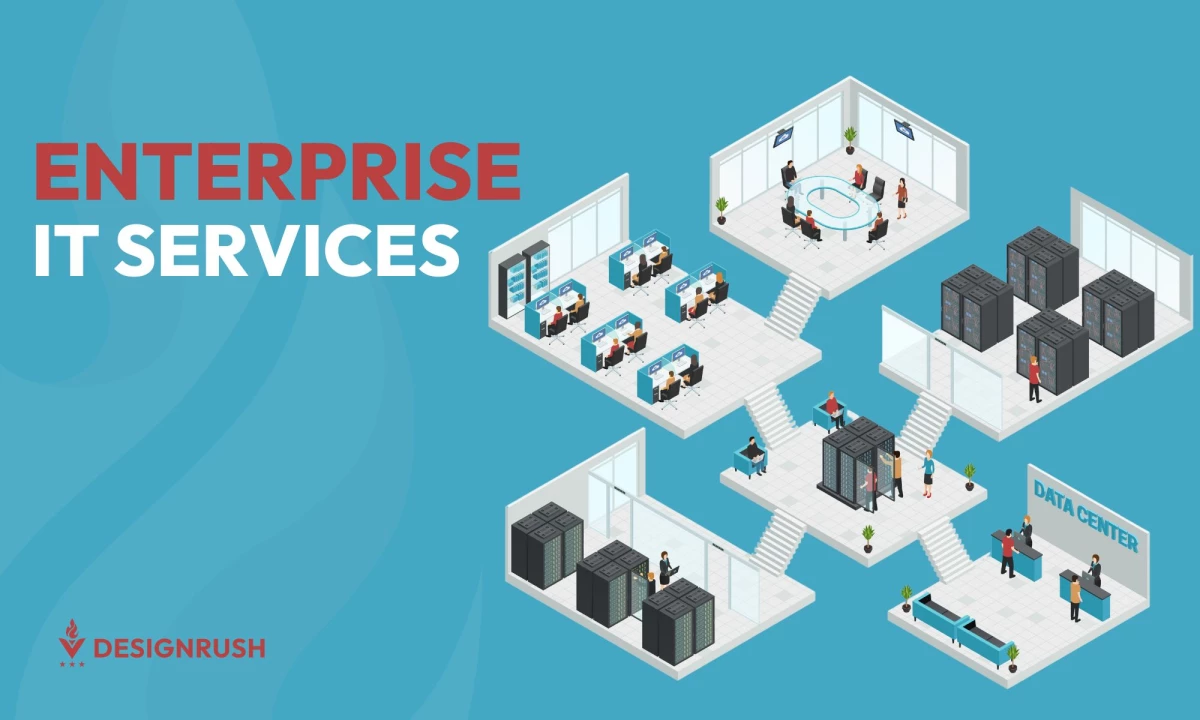

Enterprise IT services form the backbone of how businesses manage and optimize their technology systems. It encompasses a wide array of tools and strategies designed to meet the complex demands of large organizations across various industries.
We’ll go through everything you need to know about enterprise IT services, from their benefits and strategies to why they’re worth investing in and how they’re shaping the future of business technology.
How Do Enterprise IT Services Work?
Enterprise IT services offer custom solutions that address the specific needs of various industries. For instance, healthcare providers rely on these services to manage patient data securely, comply with regulations, and ensure seamless communication between departments.
Similarly, retail companies use enterprise IT solutions to track inventory in real time, optimize supply chain operations, and enhance the customer experience through personalized service.
Unlike standard IT services, which might focus on smaller-scale solutions, enterprise IT services are designed to address the intricate systems of large-scale organizations. For example, financial institutions depend on robust IT frameworks to prevent cyber threats, handle enormous transaction volumes, and comply with industry standards.
In manufacturing, enterprise IT facilitates automation, predictive maintenance, and efficient resource management, which ensures minimal downtime and maximum output.
Why Invest in Enterprise IT Services?
Enterprise IT solutions cover everything needed to keep organizations running smoothly and adapting to a changing market. Whether it’s managing expansive networks in global corporations or enabling data-driven decisions in tech industries, these services ensure businesses remain competitive. Companies with higher digital maturity, for example, reported a 45% annual net revenue growth.
Beyond that, enterprise IT services offer several other benefits, including:
1. Enhanced Efficiency and Productivity
Automation and optimized IT operations can turn a sluggish process into a streamlined workflow. For example, a manufacturing firm might automate its supply chain management, reducing errors and speeding up production.
According to McKinsey, the deployment of generative AI and other technologies could help accelerate productivity growth via the automation of individual work activities enabled by these technologies. It could also provide the global economy with an annual productivity boost of 0.5% to 3.45% from 2023 to 2040.
2. Improved Data Management
Better IT support means better decision-making. Picture a healthcare provider using sophisticated IT systems to manage patient data, improving both service quality and operational efficiency.
The Healthcare Information and Management Systems Society (HIMSS) highlights that the integration of IT systems in healthcare not only reduces administrative burdens but also enhances patient care by improving data sharing, streamlining operations, and enabling better decision-making.
3. Scalability
As your business grows, so do your IT needs. Enterprise IT services provide the flexibility to scale up without skipping a beat. An eCommerce giant can effortlessly handle surges in online traffic during holiday sales, thanks to scalable IT infrastructure services.
4. Competitive Advantage
Leveraging the latest technology can give you a significant edge over competitors. A bank using advanced data analytics to offer personalized customer experience can foster greater loyalty and trust.
According to research from Accenture, companies with advanced AI maturity, or the degree to which they have mastered AI capabilities, outperform their peers in almost all functions.
In-House vs. Outsourced Enterprise IT Services
Choosing between in-house and outsourced IT services is a pivotal decision.
- In-house IT services offer greater control and customization. For instance, a tech company with unique proprietary systems might prefer in-house IT teams to ensure these systems are perfectly tailored to their needs. Plus, an in-house team can be more responsive to immediate issues.
- Outsourcing IT services can be a game changer for cost efficiency and gaining access to specialized expertise. For example, imagine a mid-sized enterprise looking to implement cutting-edge AI solutions.
By partnering with an external provider, they can tap into expert knowledge and technology without investing heavily in building in-house teams from scratch.
How To Create a Successful Digital Transformation Strategy

Embarking on a digital transformation journey? Here’s your roadmap:
- Set clear objectives: Set goals that align with your business vision. Do not incorporate IT services just for the sake of doing it, plan on what processes could be automated and streamlined, and how you can use these services for maximum advantage.
- Have strong leadership: Change starts at the top. Effective leadership can drive the transformation process, ensuring everyone is on board. Think of a dynamic chief information officer (CIO) championing new initiatives that align IT services and business goals.
- Invest in the right technology and infrastructure: Invest in technology that supports your objectives. Migrating to a robust cloud platform can offer the scalability and flexibility needed for growth.
- Have continuous training: Keep your team updated with ongoing training. Regular workshops can help employees adapt to new tools and processes, ensuring smooth transitions and efficient use of new technology.
- Measure progress: Regularly assess your progress and make necessary adjustments. Using analytics to track performance can highlight areas for improvement and success.
Security Concerns in Enterprise IT Services
When it comes to enterprise IT services, security is paramount. As businesses face multifaceted threats, you need to ensure that robust security measures to prevent them altogether or at least minimize the impact of them happening are in place.
- Implement firewalls and encryption: These basics protect sensitive data. A financial firm might use advanced encryption to secure transaction data, ensuring customer trust and regulatory compliance.
- Have access control: Limiting access to critical systems can prevent unauthorized usage. For example, a government agency might use stringent access controls to safeguard classified information.
- Be and stay compliant: Adhering to standards like GDPR or HIPAA is essential. For example, a healthcare provider must comply with HIPAA to protect patient data, avoid legal issues, and maintain trust.
- Monitor continuously: Proactively detecting and responding to threats is necessary. Advanced monitoring tools can help an enterprise quickly identify potential security incidents, allowing for swift action.
The Future of Enterprise IT Services
AI is revolutionizing enterprise IT by enabling faster data analysis and decision-making. Automation tools powered by AI help organizations streamline workflows and reduce operational costs. Businesses also use AI to enhance cybersecurity, identifying and responding to threats with greater precision.
As AI continues to evolve, its applications in enterprise IT will expand, reshaping how companies manage resources and interact with technology. Below are some areas to look out for:
1. Rise of Edge Computing
Edge computing brings data processing closer to where it’s needed, reducing latency and improving efficiency. Enterprises are adopting this approach to handle increasing volumes of real-time information.
Edge computing supports faster and more reliable operations by minimizing reliance on centralized servers. This technology is particularly important for industries like manufacturing, healthcare, and transportation, where quick responses are vital.
A smart factory might use edge computing to monitor machinery, instantly addressing performance issues to prevent downtime.
2. Hybrid IT Environments
Hybrid IT combines on-premise systems with cloud services. Organizations benefit from the flexibility of combining both environments and customizing solutions to meet unique needs.
Businesses leveraging hybrid IT can improve scalability while retaining control over critical processes. This approach ensures smoother transitions between platforms, supporting a more dynamic and adaptable IT strategy. For instance, retail companies could implement a hybrid IT setup to maintain local inventory systems while integrating global sales data through the cloud.
3. Internet of Things Integration
Internet of Things (IoT) connects devices, which enable smarter data collection and automation across various systems. Enterprises use IoT to gain deeper insights, optimize supply chains, and improve customer experiences. With devices communicating seamlessly, businesses can achieve greater efficiency in monitoring and maintenance.
One example is where a logistics firm could use IoT sensors in vehicles to track deliveries and ensure temperature-sensitive goods remain stable during transport.
4. Cloud Transformations
Cloud services continue to redefine enterprise IT by offering scalable and cost-effective solutions. Organizations move to the cloud so they can improve accessibility and support remote workforces.
Advanced security measures within cloud platforms also provide confidence in protecting sensitive data. As innovations in cloud technology progress, organizations find new opportunities to optimize their IT infrastructure.
Key Takeaways of Enterprise IT Services
As we conclude our journey of exploration, one thing is clear: the importance of a good enterprise IT strategy cannot be overstated. It is not just about adapting to change; it’s about positioning your organization for long-term growth and success.
From enhancing efficiency to fostering innovation, enterprise IT services are the backbone of organizational success. By strategically implementing and continuously evolving these services, you can enhance your operations, secure data, and stay ahead of the competition.
As technology evolves, staying informed and adaptable will be key to leveraging the full potential of enterprise IT services.
So, as you reflect on the insights gained in this article, remember that understanding enterprise IT services is just the beginning. The real journey lies in applying this knowledge to empower your enterprise for the challenges and opportunities ahead.

Our team ranks agencies worldwide to help you find a qualified partner to implement the latest AI solutions. Visit our Agency Directory for the Top IT Services Companies, as well as:
- Top IT Services Companies in Dallas
- Top IT Consulting Companies
- Top IT Outsourcing Companies
- Top IT Services for Startups
- Top Managed IT Service Providers
Enterprise IT Services FAQs
1. Why are enterprise IT services important for businesses?
Enterprise IT services are crucial because they help businesses operate efficiently and securely. They provide the infrastructure and support necessary to manage large amounts of data, ensure cybersecurity, facilitate communication, and enable scalable growth.
2. How can enterprise IT services support digital transformation?
Enterprise IT services are integral to digital transformation by providing the technological foundation needed to implement new digital tools and processes. Key components include monetizing IT infrastructure, adopting cloud solutions, utilizing data analytics, and integrating advanced technologies like AI and IoT.