The best market research firms don't always surface on a Google search. DesignRush curates and vets top agencies so you can shortlist with confidence. Browse our directory to find your match.
List of the Best Market Research Firms
1,339 Companies-Rankings updated: September 09, 2026
Each agency listed on DesignRush is assessed for industry expertise and customer testimonials are evaluated in order to provide you with a vetted selection. Certain listings represent paid partnerships.
Stonehill is a market research firm specializing in strategy, design thinking, and forecasting to help clients understand market environments and analyze customer needs. Its comprehensive approach integrates strategic planning, operational optimization, and technology-driven insights to create long-term...
Teak Research Co. is a market research firm specializing in design research, offering a decade of expertise in Thailand across various industries. The firm provides comprehensive research services, from user experience studies to prototype testing, ensuring businesses and designers receive valuable insights...
Xcellent Insights is a market research firm committed to providing businesses with accurate, timely, and actionable market intelligence. Using advanced tools and methodologies, Xcellent Insights helps clients understand consumer preferences and market trends, enabling them to make informed decisions and...
Researchscape International is a market research agency dedicated to helping content marketers, publicists, and business leaders gain credible data to inform their decisions. The agency's consultants craft targeted questionnaires, gather data, and provide detailed reports. Researchscape International helps...
VOR Market Research is a leading consultancy specializing in comprehensive market research services. For over a decade, the firm has empowered global brands to understand consumer behavior, optimize marketing strategies, develop products, and improve brand positioning through qualitative and quantitative...
Certus Insights blends traditional rigor with cutting-edge approaches to deliver actionable market research solutions. Leveraging quantitative and qualitative methods, the agency provides comprehensive insights through surveys, focus groups, and media analytics. Its mission is to empower organizations with...
Hub of China offers unparalleled market research services across mainland China. Specializing in quantitative and qualitative research, the agency utilizes tools such as surveys, focus groups, and interviews to provide comprehensive insights. Its expertise extends to Chinese web design and strategic marketing...
Research 8020 provides accurate, reliable, and cost-effective market and social research services across Africa and the Middle East. With nearly a decade of experience and over 500 satisfied clients, the agency delivers creative and innovative business intelligence solutions. Research 8020 excels in...
Adept Research, a premier market research agency, provides insights-driven analysis for business-to-business (B2B) and business-to-consumer (B2C) markets. The agency tailors solutions to clients' unique needs, leveraging extensive experience to deliver actionable insights and strategic recommendations. Adept...
Insightful Strategies & Research for Business Success
Insightful Strategies & Research for Business Success
Tersus Strategy is a global leader in management consulting and market research, dedicated to providing comprehensive market intelligence and consulting services across various industries. Its tailored solutions empower businesses, governmental organizations, and non-profits to navigate complex business...
Sapience is a Dubai-based market research firm specializing in comprehensive data-driven insights and strategic marketing solutions. With a strong focus on quantitative and qualitative methodologies, Sapience delivers high-quality research, analysis, and actionable recommendations to empower businesses across...
Q-Insights pioneers in market research, tackling projects others deem impossible. With over 40 years of experience and a focus on low-incidence recruiting, the firm excels in qualitative and multicultural research, delivering innovative solutions tailored to client needs. Q-Insights' state-of-the-art...
Thinkpiece is a pioneering qualitative market research firm that transcends traditional methodologies. Comprising professionals from diverse backgrounds such as software engineering, healthcare, finance, and advertising, Thinkpiece delivers profound insights that shape robust business strategies. Its unique...
Connect33 is a market research and consulting firm facilitating international expansion and outsourcing software services to Latin America. With over 25 years of combined experience in the region, including collaborations with leading firms like Tekton Labs and Terminal.io, Connect33 offers expert guidance...
Feedback is a leading market research firm specializing in contextual voice-of-the-consumer research through digital channels. With a focus on revealing how audiences communicate, make decisions, and compare services, Feedback employs robust technologies and customized data visualization. Its efficient...
Jump Data is a London-based analytics and data consultancy agency delivering actionable solutions rooted in data-driven insights. With over 50 years of combined experience bridging academia and business, Jump Data specializes in statistical consultancy, algorithm design, bespoke application development, and...
Spectup offers tailored startup consultancy services designed to propel businesses forward. From robust pitch decks to detailed business plans and insightful market research, its expert team ensures startups are well-equipped for success. Spectup combines consulting experience, entrepreneurial insight, and...
Frontline Guru's approach goes beyond traditional consultancy; we partner with our clients to drive growth by offering customized strategies and MarTech implementation services...
Catalyzing Growth Through Proven Marketing Strategy
Catalyzing Growth Through Proven Marketing Strategy
The Maykin is a strategic marketing consultancy and planning studio dedicated to empowering ambitious companies to achieve sustained growth. By distilling decades of marketing research into actionable strategies, it provides the roadmap for businesses to expand their market share...
With over 15 years of experience working with some of the world's leading brands, C.R.Optimum understands the importance of sustained revenue growth for any successful company. This insight has led to the development of our Sales and Marketing Success Path, a proven framework designed to guide companies...
At GLOBAL ANGLE Pte. Ltd, we pride ourselves on our extensive expertise and global reach. With a network of over 200 local market researchers and experience conducting research in more than 70 countries, we have successfully served over 50 satisfied clients...
The DRG is a full-service marketing research consulting firm dedicated to transforming customer stories into actionable insights. These insights enable clients to develop superior products, services, and more meaningful brand relationships...
As a global leader in market intelligence and data analytics, Reports and Insights BR delivers actionable insights that drive business growth. With a deep-rooted focus on primary research and a strong presence in critical sectors such as healthcare, healthcare IT, ICT, chemicals, industrial automation, food...
For aspiring entrepreneurs and established business leaders alike, navigating the complexities of market research can be daunting. At RAG Global Business Hub, we bridge that gap, offering a comprehensive suite of solutions and advisory services designed to empower you at every stage of your journey...
As a leading global market intelligence firm, BIS Research specializes in uncovering the disruptive potential of emerging technologies. We empower businesses to thrive in the digital age by providing in-depth analysis and actionable insights...
Goldmedia delivers research and consulting services across various sectors, including media, entertainment, digital economy, and public administration. Since 1998, the firm has provided valuable insights through in-depth data analysis and strategic consulting, supporting national and international clients...
2Europe is an award-winning market research firm specializing in international business-to-business (B2B) research. It offers high-quality, robust insights to guide business decisions, mitigate risks, and enhance competitive positioning. The agency's comprehensive research solutions cover brand tracking, new...
Jamontu-Dipintime is a market research firm specializing in demand generation, brand acceleration, and technology performance. The firm utilizes innovative strategies and strategic insights to help clients grow and enhance market positioning. With a client roster including prominent brands, the firm delivers...
Primary Access & Research specializes in providing actionable insights for decision-making through expert venture fundraising and market research. The firm offers bespoke advisory services to start-ups and scale-ups, connecting clients with private investment opportunities and industry specialists. Its...
Actionable Insights. Innovative Business Strategies.
Actionable Insights. Innovative Business Strategies.
Market Edge delivers tailored business improvement projects and capability development to drive client success. They specialize in understanding performance challenges and creating actionable solutions. With expertise in strategy, marketing, sales, and innovation, Market Edge helps businesses achieve their...
Thomas/Ferrous Marketing & Design delivers comprehensive marketing and design solutions for consumer packaged goods (CPG) businesses. Based in Sacramento, the agency excels in branding, digital marketing, graphic design, and trade show solutions. With a proven track record working with global brands...
5by5 is a Nashville-based digital marketing agency empowering organizations that drive significant change. The agency crafts tailored strategies to clarify brand messaging, enhance audience reach, and achieve impactful results. By partnering closely with clients, 5by5 ensures every campaign supports...
CTRS Market Intelligence is a leading market research firm that delivers actionable insights to help businesses and organizations make informed decisions. With over 20 years of experience, the firm provides customized market intelligence, research support, and policy research, enabling clients to capitalize...
Innerplum Consulting connects businesses with customers through expert product marketing, market research, and adaptable business strategies. The firm enhances operational efficiency and drives growth by offering tailored solutions and continuous process improvement. Its focus on actionable insights ensures...
Research Konnection delivers comprehensive market research and consulting services. Catering to the education, eCommerce, and healthcare sectors, the firm supports clients with consumer behavior research, feasibility studies, and business setups in the United Arab Emirates. Its commitment to high-quality data...
Zintro connects clients with a vast network of experts, facilitating qualitative and quantitative market research. With over 1,000,000 professionals across various industries, Zintro ensures that clients find the specific insights they need. Zintro's flexible, end-to-end support adapts to each project...
Headquartered in Ecuador and Colombia, LeQuiz is a premier market research firm transforming data into strategic knowledge that drives business growth. Focused on understanding real consumer needs and preferences, the firm empowers entrepreneurs and established brands to make informed decisions. Its tailored...
Boost ON specializes in elevating brands within the competitive UAE market through innovative market research and tailored solutions. The firm combines cutting-edge technology with strategic insights to create memorable experiences that resonate with audiences. Committed to empowering businesses, Boost ON...
Boathouse is a performance marketing agency dedicated to improving marketing impact through data, creativity, and cutting-edge technology. Guided by a team-focused ethos, Boathouse combines strategic rigor with innovative solutions to deliver results that drive client success. Committed to diversity and...
Adactive is a dynamic advertising and marketing agency dedicated to driving results for businesses of all sizes. By combining a skilled team with advanced digital tools, Adactive enhances website visibility and optimizes advertising budgets to convert potential customers effectively. The agency's commitment...
Free Range Web builds streamlined, dynamic websites that adapt to each client's unique audience. Based in Bristol, its team ensures that every website aligns with customers' needs, offering seamless navigation and robust functionality. In addition to development services, Free Range Web provides dedicated...
Orchid is an award-winning marketing, design, and PR agency with studios in Jersey and Bristol. With over 20 years of experience, the agency specializes in delivering innovative campaigns that drive meaningful change for both public and private sector clients. The agency's creative specialists craft cohesive...
The Loyalty Consultants empower brands to excel by fostering a proactive, opportunity-driven approach to market success. Through comprehensive market research and brand strategy solutions, the agency equips businesses with insights and tools to outperform competitors. Its expertise spans custom research...
Expo International transforms ideas into impactful experiences through tailored event solutions. With over 30 years of expertise in exhibition design, construction, and event management, the firm supports government agencies, corporations, and private organizations worldwide. Expo International delivers...
ModriWeb specializes in designing high-performing websites that drive sales and transform online presence. With a focus on measurable growth, they empower small businesses to turn visitors into loyal customers...
Bucket Agency is a full-service, woman-owned marketing and advertising agency that combines strategy, media, creative, and analytics to deliver bold campaigns that drive measurable results...
SALUS Capital specializes in delivering exceptional growth strategies, financial planning, and M&A expertise to empower businesses and investors in Mexico and beyond...
Mr Haq has experience in the digital marketing landscape. Beginning his journey in 2010, he has successfully navigated the ever-evolving algorithms of search engines, especially the transformative Google Penguin update. Committed to continuous learning and adaptation, Mr Haq combines deep industry knowledge...
Informed, compelling creative that drives people to action.
Informed, compelling creative that drives people to action.
Steel Advertising is a purpose-driven, full-service agency that uncovers a deep understanding of audiences and moves them to action within these building blocks of daily life...
An Orange County marketing, advertising and business development agency.
An Orange County marketing, advertising and business development agency.
The R.O.I. Group is a specialized marketing, advertising, and business development agency based in Orange County, focused on considered purchase products and services...
What are the red flags when evaluating market research companies?
The most disqualifying red flag is a market research firm that proposes a methodology before diagnosing your problem. This is a common indication that the firm is reverse-engineering your question to fit their existing fieldwork infrastructure, rather than designing a study to answer what you actually need to know.
You should also consider the panel opacity; namely, any market research company that can't specify whether they're using a river sample, a proprietary panel, or a blended approach, and what their median panel tenure and re-contact intervals look like, might be concealing a data quality problem.
Other red flags to watch out for are:
Case studies with no stated confidence intervals or margin of error.
A research director who goes silent after kickoff and hands you to a junior analyst.
Proposals that treat sample size as a fixed number rather than a function of your required subgroup precision.
If the agency doesn't ask how granular your cross-tabulations need to be before they quote an n-size.
How much does it cost to hire a market research company?
A custom market research project from a professional firm can cost from $25,000 to $65,000, with specialist market research commanding the higher end of that range.
In terms of variables, there are five factors that affect final pricing:
Methodology: Qualitative research (focus groups, in-depth interviews) costs more than quantitative (surveys) because it involves harder-to-reach participants and higher incentives per respondent.
Sample size: More respondents means higher fieldwork and incentive costs, wherein the minimum viable sample varies significantly by methodology.
Incidence rate: This is the percentage of the general population who qualify for your study. Low incidence multiplies sample costs because the firm has to screen far more people to fill each completed interview slot.
Survey length: More questions mean longer field periods, more respondent drop-off, and more data to clean, code, and tabulate.
Quality and credibility of analysis: Basic cross-tabulation is fairly cheap, whereas advanced analytics entail higher fees.
What do market research agencies charge that most clients don't expect?
The costs most clients don't see coming are fieldwork overruns, unbundled data processing fees, and multi-market add-ons. Here are a few more details about each cost:
Fieldwork overruns: When your target audience is harder to find than the agency assumed, you pay more per respondent to hit your sample size. For example, a study targeting general consumers might screen 1 in 3 people. A study targeting, say, finance decision-makers at mid-market companies who've evaluated a new vendor recently might screen 1 in 12 people; that gap multiplies your fieldwork cost fast.
Data processing fees: Cleaning and organizing your data after fieldwork closes isn't included by default, and each step gets billed separately. The service entails making the sample representative of your target population, categorizing written responses by hand, and merging qualitative and quantitative findings into one coherent output.
Multi-market add-ons: If your study runs across multiple countries, everything it takes to make the research work locally (translating the survey, verifying the translation is culturally accurate, and confirming findings hold up in each market) is almost never included in the base quote.
The safest way to obtain an accurate proposal is to ask the agency for a full cost-at-risk breakdown, i.e., a list of every line item that could increase based on fieldwork conditions or scope changes.
How do I know if I'm hiring the right market research firm for my budget?
The right market research agency is the one that's honest about what your budget can and can't buy.
The real risk is underspending just enough to get a study that looks credible but can't answer your actual question:
Pricing research with a sample too small to break down results by customer segment
Segmentation work that identifies clusters in the data, but can't tell you how to reach or sell to any of them
Concept testing run on a general audience that doesn't resemble your actual buyer
A credible market research company will tell you upfront if your budget constrains the methodology.
What does a bad engagement with a market research agency look like, and how do I avoid it?
Bad engagements follow the same pattern almost every time: a vague brief, a proposal that doesn't challenge it, and a final deliverable that presents data without telling you what to do with it. Underdelivered outcome looks different depending on what you hired them for:
Segmentation studies. The research identifies customer groups statistically, but those groups don't map to any audience you can actually reach or any go-to-market move you can actually make.
Concept testing. The study tells you which concept scored highest, but doesn't inform why the others scored lower, or what's driving the preference, rendering you unable to improve anything or make a confident call.
Pricing research. The agency asks respondents directly what they'd pay. Respondents don't answer that question honestly. The result looks like data but reflects no real purchase behavior.
In practice, these aren't unusual outcomes. More so, they tend to happen when a market research company takes a brief at face value instead of pressure-testing whether the methodology actually answers the main question.
Before you proceed with collaboration, ask the agency three things:
When does it make sense NOT to hire a market research company?
Hiring a market research firm only makes sense when you have a genuine information gap: a decision that's significant, hard to reverse, and cannot be answered with data you already have. Outside of that, you're paying for research you don't need.
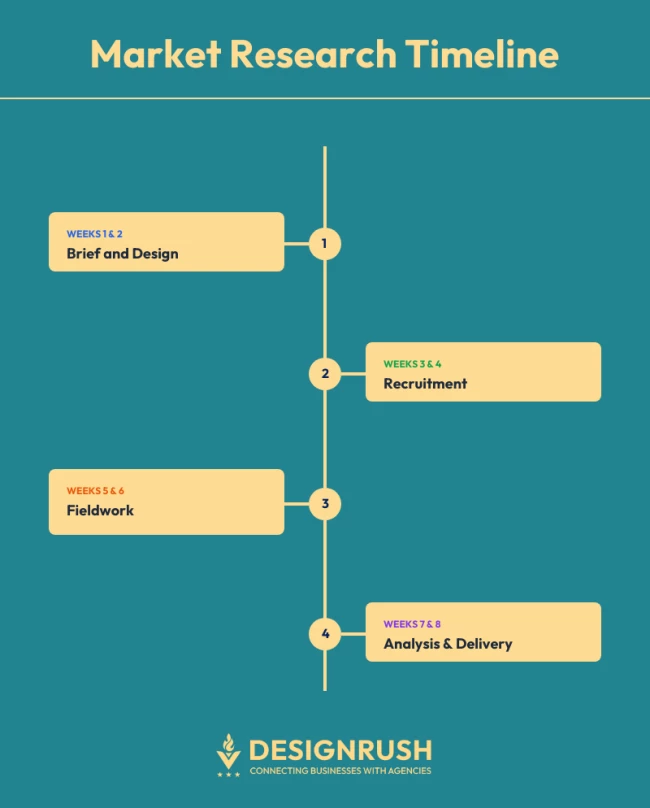
Skip the service if your timeline is too short. A properly designed study with a screener, fieldwork, data cleaning, and analysis takes weeks. Rushing that process cuts quality controls, and data with hidden flaws will ultimately give you false confidence. That's worse than no data at all. If you need an answer within two weeks, you're better off with:
8-12 in-depth interviews with target customers
Your own CRM or behavioral analytics
Existing syndicated reports from sources like Forrester, IDC, or Euromonitor
Skip the service if the answer already exists. If your transaction data already shows how different customer segments respond to price changes, commissioning a new pricing study is a redundant spend.
ReceiveProposals
For your project
1
Specify your budget, timeline and project requirements
2
Our experts curate a list of up to 5 most qualified candidate agencies
3
We connect you with them so you can choose the most suitable partner



































 Proposals