
Social SEO is becoming harder to ignore as more people use social platforms to search for brands, products, services, and answers.
DesignRush surveyed leading marketing experts to see which Social SEO tactics are being used most, which ones are driving results, and where brands may still be leaving visibility on the table.
Social Media and SEO: Key Findings
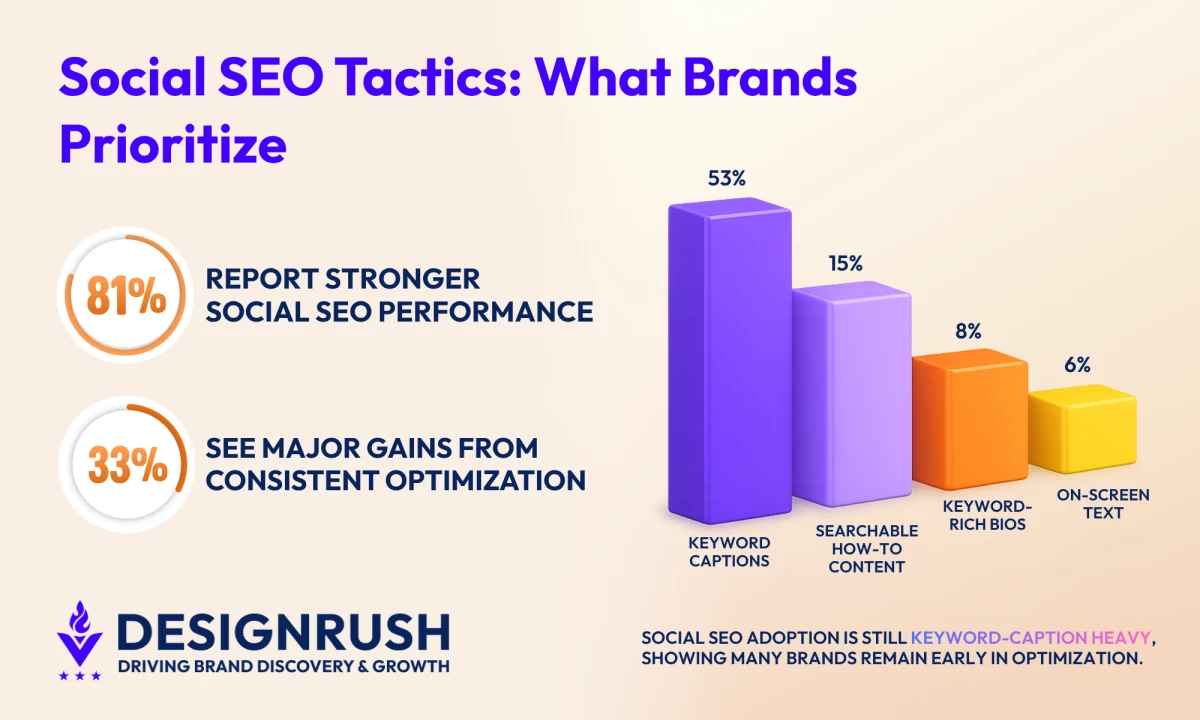
- 81% of marketing experts said SEO for socials improved performance over the past six months.
- Social media marketing teams who optimized consistently were four times more likely to report significant results (33% vs. 8%).
- More than half of respondents rely on keyword-based captions, while every other tactic saw adoption rates below 16%.
What Is Social Media SEO?
Social SEO is about optimizing social media content to improve its visibility in search results.
Instead of focusing only on traditional search engines, Social SEO helps users discover your content through searches on platforms like Instagram, TikTok, YouTube, LinkedIn, and Pinterest.
Common tactics include using descriptive keywords in captions, optimizing profile information, creating searchable educational content, and adding relevant on-screen text to videos.
As social platforms continue to expand their search capabilities, understanding which tactics companies prioritize and whether they're seeing results is more and more important.
Does Social Media SEO Actually Work?
Most marketing experts in our 2026 Social Media Marketing Survey believe it does. While every brand, platform, and audience is different, the findings suggest that Social SEO is delivering measurable benefits for many teams already investing in it.
81% of marketing experts report improved performance
When asked whether Social SEO had improved performance over the past six months, 81% of respondents reported positive results.
More than half saw moderate improvement, while 26% said the impact had been significant. Only 15% noticed no significant change, and 3% said they hadn't tested Social Media SEO or weren't sure of its effects.
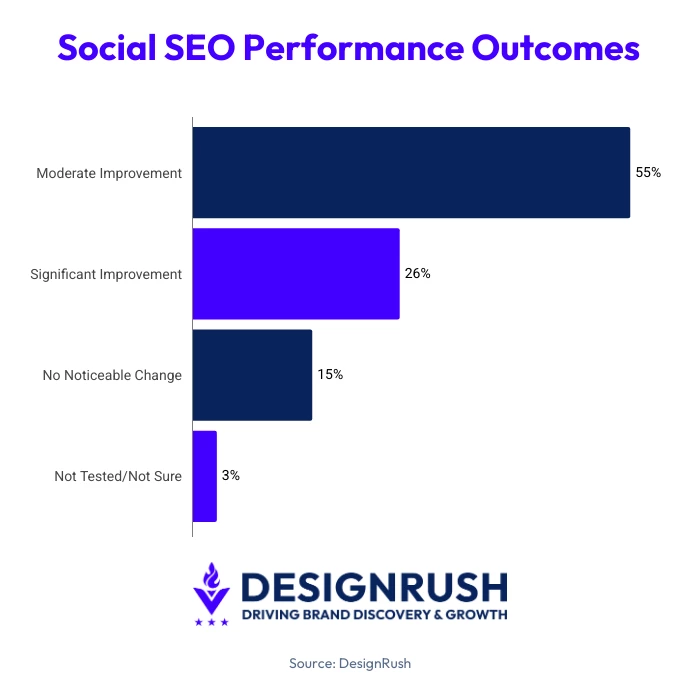 These results don't guarantee the same outcomes for every organization, but they do suggest that Social SEO is moving beyond experimentation and into the mainstream marketing toolkit.
Consistency appears to amplify results
The best results came from companies who said they consistently optimize for Social Media SEO. Among this group, 33% reported significant improvement, compared with just 8% of respondents who optimize occasionally, rarely, or not at all.
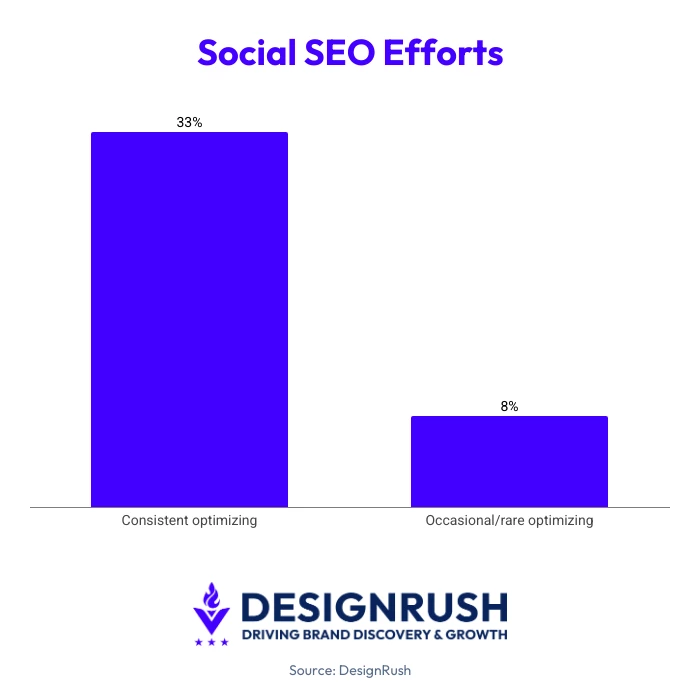 Marketing experts who treated social media search engine optimization as an ongoing practice rather than a one-off tactic were more likely to report better outcomes.
What our Social SEO findings can and can't tell us
The relationship between consistent Social SEO efforts and improved performance may be correlational rather than causal.
Teams investing more heavily in it may also have larger budgets, more mature content operations, or dedicated resources that influence results.
View this post on Instagram
Even so, the pattern is difficult to ignore. Companies who prioritize Social SEO appear more likely to see meaningful gains than those who approach it sporadically.
How To Do Keyword Research for Socials
Effective Social SEO starts with understanding how people search within each platform. One of the simplest ways to uncover these queries is to use platform-native search bars.
Typing a broad topic into TikTok, Instagram, YouTube, or Pinterest can reveal autocomplete suggestions based on real user behavior.
You can then cross-reference promising topics using traditional keyword tools like Ahrefs or Semrush to understand broader search demand. While social searches and Google searches aren't identical, overlapping themes can help validate content ideas before you invest in them.
For emerging trends, social listening tools can help identify terms and conversations gaining momentum before they peak. However, keyword research shouldn't focus exclusively on high-volume phrases.
Our survey findings suggest that Social SEO often aligns with intent-driven content, including tutorials, how-to guides, product comparisons, and local discovery queries.
The 8 Social SEO Tactics Marketing Teams Actually Use
Our survey revealed a clear pattern. Most teams concentrate on a handful of established practices, while some potentially valuable optimization opportunities remain underutilized.
- Keyword-based captions: 53%
- How-to / searchable educational content: 15%
- Keyword-rich profile / bio: 8%
- On-screen text optimized for search: 6%
- Hashtag strategy: 6%
- None of the above: 6%
Keyword-based captions dominate Social SEO strategies
More than half of surveyed social media marketing experts use keyword-based captions, making them the most common tactic by a wide margin. The popularity of this approach aligns with industry guidance that emphasizes descriptive, keyword-rich language to improve discoverability across social platforms.
Educational content and optimized profiles occupy the middle ground
Searchable how-to content (15%) and keyword-rich bios (8%) ranked well behind captions but ahead of most other tactics. These approaches focus on helping users find content through intent-driven searches rather than relying solely on algorithmic distribution.
The biggest opportunities may lie in the tactics social media marketing teams rarely use
On-screen text, video titles, alt text, and location tags all saw relatively low adoption rates in our survey. While low usage doesn't automatically make these tactics more effective, it does suggest there may be less competition for companies willing to experiment beyond the standard playbook.
Social SEO by Platform
While social media search engine optimization principles remain broadly similar across platforms, the signals influencing discoverability vary. Understanding how users search and what each platform prioritizes can help you optimize more effectively.
TikTok SEO
TikTok users typically search with intent-driven phrases such as "best running shoes for beginners" or "things to do in Barcelona."
Videos that answer these queries directly and keep viewers engaged tend to gain more visibility.
| What users search for | Ranking signals | What to optimize |
| Tutorials, product recommendations, reviews, trends, local businesses | Keywords, engagement, watch time, relevance | On-screen text, spoken keywords, captions, searchable topics |
Search recommendations increasingly draw on the content itself and, in some cases, on the conversations in the comments.
Instagram SEO
Instagram has expanded the signals it uses to understand content. According to Instagram head Adam Mosseri, the platform continues investing in search improvements both within the app and externally through search engines.
| What users search for | Ranking signals | What to optimize |
| Creators, brands, tutorials, niche interests | Keywords, relevance, engagement, contextual signals | Captions, profile names, bios, alt text, on-screen text |
YouTube SEO
According to YouTube, its search and discovery systems aim to match viewers with videos they are most likely to watch and enjoy.
Metadata helps YouTube understand what a video covers, while viewer behavior influences how broadly it is recommended.
| What users search for | Ranking signals | What to optimize |
| How-to videos, reviews, entertainment, product comparisons | Viewer satisfaction, watch history, metadata relevance | Titles, descriptions, thumbnails, chapters, keywords |
LinkedIn SEO
LinkedIn search results are personalized based on each searcher's relevance.
The platform notes that profile attributes and search intent influence what users see, making clear positioning and relevant keywords especially important.
| What users search for | Ranking signals | What to optimize |
| Industry expertise, thought leadership, professionals, companies | Relevance, expertise, profile completeness | Headlines, About sections, profile keywords, niche content |
Pinterest SEO
Pinterest is a place where people discover new ideas, products, and brands.
The platform also provides keyword and trend tools designed specifically to help marketing teams align content with user searches.
| What users search for | Ranking signals | What to optimize |
| Inspiration, products, DIY projects, seasonal ideas | Keyword relevance, engagement, search trends | Pin titles, descriptions, board names, keyword research |
Is Social Media Really Replacing Google?
Social media's growing role in discovery has fueled headlines about the decline of traditional search. Much of that conversation traces back to a widely cited statistic suggesting that almost 40% of Gen Z prefer TikTok or Instagram over Google.
The problem is that the original research has often been taken out of context. Understanding what it actually showed paints a more nuanced picture of how people search today.
What Google's research actually said
In 2022, Google's Senior Vice President, Prabhakar Raghavan, shared that internal research found that almost 40% of U.S. users aged 18 to 24 turned to TikTok or Instagram instead of Google Search or Maps for certain discovery tasks, such as finding a place for lunch.
The comment referred to specific local discovery use cases rather than all search behavior.
Over time, the original finding evolved into more generalized claims that Gen Z had abandoned Google altogether. The statistic was frequently cited without its original context, adding to a misleading narrative around social search.
The real trend: social search is growing
While the "Google is dead" headlines overstate the case, there is evidence that social platforms are becoming more important discovery tools.
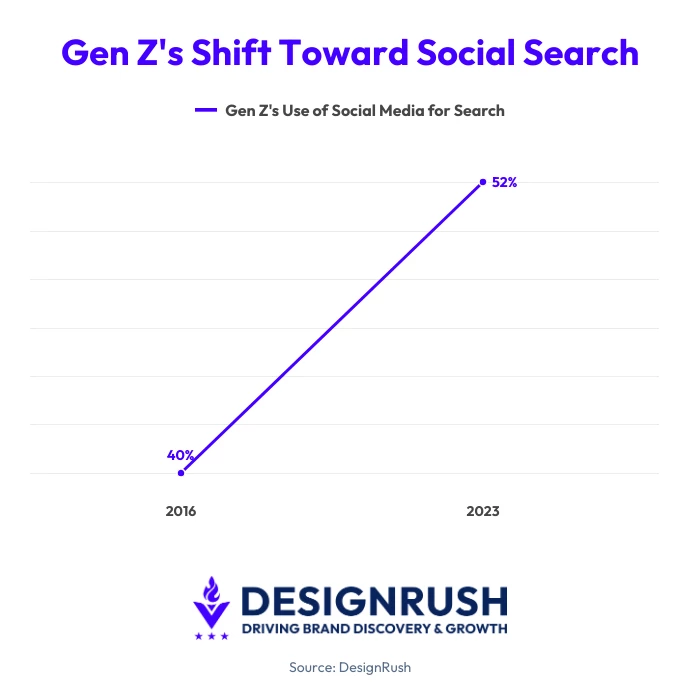
According to GWI data reported by Fortune, the share of Gen Z who use social media as their primary search engine for brands, products, and services grew from around 40% in 2016 to nearly 52% in 2023.
 Multi-platform search, not substitution
People use different platforms depending on what they're trying to accomplish, and they rarely search in just one place.
Research cited by ALM Corp found that 67% of Gen Z respondents used Instagram for local business search, compared with 62% for TikTok and 61% for Google. Rather than replacing traditional search, social platforms appear to complement it.
For social media marketing teams, the takeaway is that social media search engine optimization shouldn't come at the expense of traditional SEO. Brands need visibility across multiple discovery channels because audiences move fluidly between them.
Social SEO Can Strengthen Traditional SEO
Social SEO and traditional SEO aren't as separate as they might seem. Google indexes public social profiles and content, meaning optimized social assets can appear directly in search results.
This is particularly noticeable in Google's Short Videos results, which can bring up public videos from platforms like TikTok, Instagram, and Facebook. Keyword-rich social profiles may also improve visibility for branded searches by helping users find official accounts more easily.
Content optimized for social discovery can also contribute to search visibility outside the platforms themselves. That means the value of SEO for socials may be greater than in-platform metrics alone suggest.
The Future of Social Discovery: Beyond Feeds and Search
Social discovery is becoming more fragmented. Content can surface through traditional search engines, in-platform searches, algorithmic recommendations, and increasingly, AI-powered experiences.
As these discovery pathways multiply, understanding where your visibility comes from and where it may come from next is becoming just as important as optimizing for it.
Many social media marketing teams still don't know where their discovery comes from
Despite actively investing in Social SEO, not every marketer tracks how users find their content. In our survey, 11% of respondents said they weren't sure which platform generated the most search-like discovery for their brand.
@neilpatel SEO Isn’t Dead. It Just Got Bigger! The more you optimize for Search Everywhere Optimization (SEO + social + AI + marketplaces), the more you’ll dominate, even if competitors still obsess over Google alone. The sooner you realize platform-specific strategies (not just posting) drive decisions, the faster you’ll turn visibility into validation, and validation into sales. The bottom line? Traditional SEO (Google rankings) is now just 1 piece of a much larger puzzle, because 73% of buying decisions start on TikTok, Amazon, ChatGPT, and Reddit.
♬ original sound - Neil Patel
This uncertainty highlights one of the biggest challenges: attribution. Unlike traditional SEO, where traffic sources are often easier to identify, social discovery can result from a mix of searches, recommendations, shares, and algorithmic distribution.
Reviewing platform-specific insights, monitoring traffic sources where available, and regularly assessing content performance can help you better understand which efforts are driving visibility.
AI may become another discovery layer
Search journeys are also becoming less linear. Users increasingly encounter information through AI-generated answers and recommendations before visiting a website, search engine, or social platform directly.
While the relationship between Social SEO and AI discovery is still evolving, the same principles that improve social discoverability today may support visibility in future discovery environments.
Clear language, descriptive captions, context-rich content, and consistent terminology can make it easier for both people and systems to understand what a piece of content is about.
The fundamentals of Social SEO remain the same: create content that people can find and understand. The difference is that discoverability no longer depends on a single platform or pathway.
Final Thoughts on SEO for Social Media
Social media search engine optimization is still evolving, which means there isn't a single playbook you can follow. The brands willing to test new approaches, measure what works, and adapt as discovery habits shift may be best positioned to stay visible.

Our team ranks agencies worldwide to help you find a qualified partner. Visit our Agency Directory for the top social media marketing agencies, as well as:
- Top SEO Agencies
- Top Content Marketing Agencies
- Top Video Marketing Agencies
- Top Ad Agencies
- Top Social Media Marketing Agencies in Houston
SEO and Social Media: Frequently Asked Questions
1. What is Social SEO?
Social SEO focuses on improving the visibility of social media content in platform search results.
It involves optimizing elements such as captions, profile information, on-screen text, and other discoverability signals to help users find relevant content on platforms like Instagram, TikTok, YouTube, and LinkedIn.
2. Does Social SEO actually work?
According to our survey, 81% of respondents reported improved performance from Social SEO efforts over the previous six months.
More than half saw moderate improvement, while 26% experienced significant gains. While these findings don't establish a direct cause-and-effect relationship, they suggest that many view Social SEO as a worthwhile investment.
3. What is the most effective SEO tactic for socials?
Our survey found that keyword-based captions were the most widely used Social SEO tactic, with 53% of social media marketing experts reporting that they rely on them.
However, the most effective approach will depend on the platform, audience, and content format. Many also combine captions with educational content, profile optimization, and other discoverability tactics.
4. Do hashtags still work for Social SEO?
Hashtags can still help categorize content and provide additional context, but they are no longer the primary driver of discoverability they once were.
Social platforms increasingly rely on a wider range of signals, including captions, keywords, engagement patterns, and user behavior. In our survey, just 5.5% of respondents identified hashtag strategy as one of their Social SEO tactics.
5. Which platform drives the most search-like discovery?
LinkedIn emerged as the top source of search-like discovery in our survey, cited by 27% of respondents. YouTube (18%), Instagram (17%), and TikTok (15%) followed closely behind.
The best platform for your brand will ultimately depend on where your audience searches for information related to your products, services, or expertise.
6. Is TikTok really a search engine?
TikTok wasn't designed as a traditional search engine, but many users now turn to the platform to discover products, recommendations, tutorials, and local businesses.
Rather than replacing Google entirely, TikTok has become part of a broader, multi-platform search journey in which users choose different channels depending on what they're trying to find.
7. How is Social SEO different from traditional SEO?
Traditional SEO focuses on helping websites rank in search engines like Google, while Social SEO improves the discoverability of content within platforms such as TikTok, Instagram, YouTube, and LinkedIn.
Both rely on relevant content and strategic keyword use, but social platforms place greater emphasis on engagement and user behavior. Rather than competing, the two approaches work best together as part of a broader search strategy.