
The right social media marketing agency builds your brand; the wrong one just adds to the noise. Here’s what to look for.
Social Media Agency Qualities: Key Findings
- Agencies that anchor campaigns to revenue, efficiency, and pipeline contribution outperform those focused on vanity metrics like follower growth.
- With social algorithms updating every 3–6 months, agencies that fail to test and adapt quickly risk rapid performance decline.
- Sustainable social growth depends on structured roadmaps and cross-channel integration, not isolated campaigns or short-term spikes.
What Makes a Good Social Media Marketing Agency?
Settling for an average agency simply isn’t an option if you want to make the most of your social media efforts.
Take note of the qualities outlined here (some you might not have thought of) to know if a social media agency is worth its salt.
Social media marketing is a world rich with potential. Consider that around the world, marketers report some of the biggest benefits of social media marketing include increased exposure (81%), more traffic (71%), and lead generation (62%), which shows how strategic use of social platforms can drive serious business value.
Growth doesn’t happen by accident, however. It’s driven by agencies that get the fundamentals right.
1. Delivers Transparent, Honest Communication
Monthly reports aren’t enough. Transparency means providing clear communication and visibility at every stage of the relationship.
A good agency will be straight-forward about:
- What the strategy is and why it was chosen
- What success looks like and how it will be measured
- How budget is being allocated
- What adjustments are being made and for what reason
If performance slows or campaigns underperform, you should hear about it promptly, along with a clear plan to improve results. Honest communication builds trust and allows decisions to be made quickly and confidently.


2. Focuses on Measurable, Business-Relevant Results
Social media can generate attention, but attention alone doesn’t sustain a business. Instead of celebrating “engagement,” a strong agency ties campaigns to outcomes like purchase intent lift (brand lift) and conversion efficiency (CPA), using platform lift studies and conversion tracking to show incrementality.
Connecting platform performance to meaningful business outcomes, depending on your goals, may involve tracking:
- Qualified leads: Confirms social is attracting the right prospects, not just generating volume.
- Sales conversions: Ties activity directly to revenue and closed deals.
- Cost per acquisition (CPA): Measures whether customer growth is efficient and scalable.
- Customer retention: Shows if social strengthens loyalty and lifetime value.
- Pipeline contribution: Demonstrates how social supports revenue across the full buyer journey.
Engagement rates and follower growth provide useful signals, but they aren't endpoints. A good agency consistently links activity back to broader commercial objectives and explains how social performance contributes to them.
3. Has Real Accountability and Clear Roles
One of the most common frustrations businesses report is uncertainty around who is responsible for what.
An effective agency establishes clear ownership from the start, appointing a primary account lead, defining responsibilities across strategy, creative, paid media, and analytics, and setting agreed response times and communication channels to ensure alignment and accountability.
This structure prevents delays, misalignment, and internal confusion. When something needs attention (whether it’s a campaign pivot or a community issue) you know exactly who is accountable.
Suggestion: Add a “who owns what” table to your kickoff doc. Here’s a clean, simple table you can use as a starting point.
| Role | Owns |
| Account lead | Decisions, client communication, escalation management |
| Strategist | Overall direction, campaign planning, roadmap development |
| Creative | Concept development, content production, messaging execution |
| Paid Media Specialist | Budget allocation, campaign setup, optimization |
| Analyst | Measurement framework, reporting, performance insights |
4. Understands Platform Realities and Audience Behavior
Each social platform operates according to its own ecosystem logic. Content formats, ranking algorithms, audience intent, and engagement behaviors differ a great deal, so performance drivers on one platform generally don’t translate directly to another.
A knowledgeable agency understands:
- Why short-form video dominates certain platforms
- How professional audiences behave differently from consumer audiences
- When organic reach requires paid amplification
- How timing, frequency, and creative structure affect visibility
Sara Lara, Lexus Advertising Manager, tells us that for their agencies, they conduct research and look at the landscapes for each audience. This they do to ensure they “understand the multicultural nuances that connect with the overall platform.
Adding: “We want to make sure that (different audience) know we as a brand understand them.”
Repurposing identical content everywhere isn’t a winning strategy. A good agency will know how to adapt the messaging and format to match the platform and the audience it serves.
5. Actively Resolves Issues and Manages Reputation (Especially Negative Feedback)
Social media exposes brands to real-time public feedback. That visibility can build trust quickly, but it can also amplify criticism just as fast.
| Focus Area | What the Agency Does | Operational Standard to Expect |
| Response Time | Monitors comments, tags, and DMs continuously and responds promptly | Defined SLA (e.g., <1 hour triage, <24-hour resolution), tracked response time metrics |
| Complaint Handling | Resolves issues publicly when appropriate and moves sensitive cases to private channels | Documented playbooks, templated responses, and resolution tracking |
| Escalation Process | Flags legal, PR, or high-visibility issues to internal stakeholders immediately | Clear escalation matrix (community → account lead → client/PR/legal) with defined timelines |
| Tone & Consistency | Applies approved brand voice guidelines across all interactions | Brand voice documentation and approval guardrails for high-risk replies |
| Sentiment Monitoring | Tracks sentiment trends and engagement patterns in real time | Weekly sentiment reporting, spike alerts, and trend analysis dashboards |
Reputation management requires processes, judgment, and experience. Agencies protect long-term brand equity when they treat community management as a strategic function rather than a reactive task.
6. Stays Ahead of Platform Changes and Evolving Trends
Social media platforms evolve constantly. Algorithm updates, new ad formats, shifting content preferences, and emerging features can materially affect performance.
Social algorithms are updated on average every 3–6 months, with minor tweaks occurring weekly, meaning what worked a few months ago may need revisiting today.
You can expect a good social media agency to stay informed and test proactively. That might include:
- Experimenting with new content formats
- Refining audience targeting as privacy rules change
- Adjusting creative approaches based on data trends
Agencies that rely on outdated tactics or static strategies often see declining performance over time, but be careful about trying too hard to be trendy.
A survey by Sproutsocial found that while 93% of consumers think brands should try to keep up with online culture, 33% think simply jumping on the bandwagon is embarrassing.
7. Avoids Overpromising by Setting Realistic Goals
Social media can deliver strong results, but it isn't magic. Be careful of agencies that promise explosive growth in a short timeframe or guarantee dramatic results without context.
Sustainable performance depends on factors such as budget, competitive landscape, brand positioning, and audience maturity.
Responsible agencies ground expectations in:
- Historical data
- Market benchmarks
- Clear assumptions
- Measurable milestones
Setting realistic targets protects your investment and builds credibility over time.
Example: By setting realistic performance benchmarks and optimizing TikTok campaigns against revenue and efficiency targets, Disruptive Advertising helped eCommerce brand IcyBreeze more than quadruple its year-over-year sales, prioritizing sustainable growth over vanity metrics.
8. Champions Collaboration, Not Just Service Delivery
The best results come from true partnership, where both sides work toward clearly defined outcomes together.
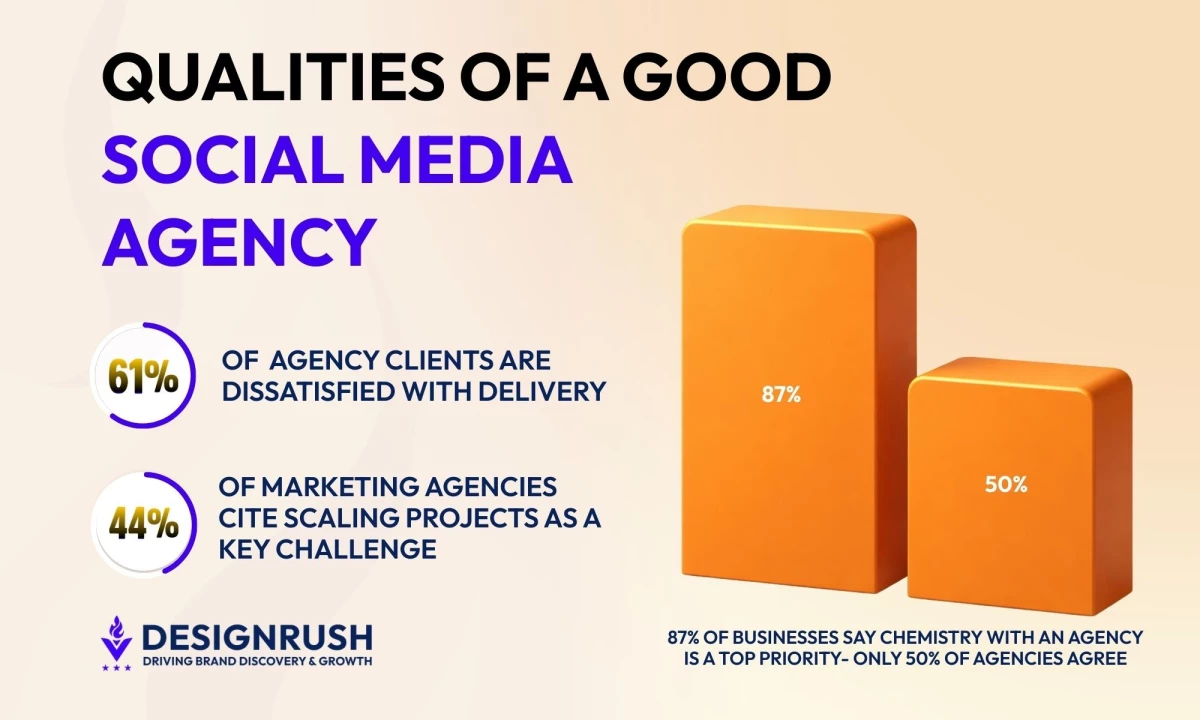
Setup’s 2025 Marketing Relationship Survey found that 87% of businesses say “chemistry” is important in the agency selection process, yet nearly 50% of agencies don’t consider it a major priority. That makes it less surprising that 61% of clients were dissatisfied with delivery (up from 36% in 2024).
- Seeks input from your internal teams
- Aligns messaging with broader brand strategy
- Shares performance insights transparently
- Encourages ongoing feedback and iteration
Collaboration ensures your social presence reflects your organization’s expertise, culture, and goals. Agencies that operate in isolation often miss critical context.
9. Integrates Social Media Into the Broader Marketing Strategy
Social media should amplify your other marketing efforts, not work as a standalone channel operating in isolation.
A capable team that deploys a nuanced blend of data-driven insights, creative storytelling, and engagement strategies, says Leslie Licano, CEO of Beyond Fifteen Communications, "can ensure clients seize their 'fifteen minutes of fame' and build them into enduring relationships that improve business outcomes."
In practice, that level of impact requires deliberate integration across the broader marketing ecosystem, including:
- Paid advertising campaigns: Syncing targeting, creative, and retargeting to unify paid and organic performance.
- Content marketing initiatives: Repurposing core assets into platform-native formats while maintaining consistent messaging.
- Email marketing: Coordinating timing, segmentation, and offers across multi-touch nurture flows.
- Influencer partnerships: Aligning creator strategy and KPIs with broader campaign objectives.
- Website conversion strategy: Directing traffic to optimized, trackable landing paths that drive measurable actions.
When campaigns are integrated, messaging becomes more consistent and performance compounds across channels. Without integration, social media risks becoming a disconnected stream of activity.
10. Builds Scalable Roadmaps for Sustainable Growth
Short-term campaigns can create spikes in engagement, but sustainable growth requires structure.
In the Setup survey, 44% of agencies cited scaling for projects as a key challenge. That’s why a good social media agency develops forward-looking plans that include:
- Quarterly and annual strategy roadmaps
- Budget allocation planning
- Testing and optimization frameworks
- Defined performance benchmarks
Without structured planning, gains tend to plateau as costs rise disproportionately, and instead of compounding, growth becomes reactive.
Qualities of a Good Social Media Marketing Agency: Wrapping Up
When evaluating potential partners, look beyond creative samples and surface metrics. Prioritize transparency, accountability, strategic integration, and a clear focus on measurable outcomes.
Social media offers substantial opportunity, but only when guided by an agency equipped to turn potential into sustained performance.
Our team ranks agencies worldwide to help you find a qualified partner. Visit our Agency Directory to find top-rated social media marketing companies, as well as:
- Top Influencer Marketing Agencies
- Best Instagram Marketing Companies
- Best TikTok Marketing Agencies
- Top Facebook Marketing Companies
- Top Brand Strategy Agencies
Qualities of a Good Social Media Marketing Agency FAQs
1. How do I evaluate a social media agency before signing a contract?
Review case studies for measurable outcomes, ask how they define success, and request clarity on reporting processes and team structure. A strong agency should be able to explain its strategy clearly, not just showcase creative work.
2. What red flags should I watch for when choosing a social media marketing agency?
Be cautious of vague reporting, unclear ownership, unrealistic growth promises, or a one-size-fits-all strategy. If an agency avoids discussing metrics tied to business outcomes, that’s a concern.
3. How long does it normally take to see measurable results from social media marketing?
Timelines vary by objective, but most brands begin seeing meaningful performance trends within three to six months, especially when paid and organic efforts are aligned. Sustainable growth, however, requires ongoing optimization.
4. Should I hire a specialized social media agency or a full-service digital agency?
If social media is a primary growth channel, a specialized agency may offer deeper platform expertise. If you need broader integration across channels, a full-service partner may provide better alignment.
5. How much should I budget for social media marketing services?
Budgets depend on scope, content volume, ad spend, and complexity, but investment should reflect your growth ambitions and competitive landscape. Underfunded strategies rarely deliver meaningful impact.
6. What information should I prepare before onboarding a social media marketing agency?
Provide clear business objectives, audience insights, brand guidelines, historical performance data, and budget parameters. The more context you share upfront, the stronger the strategy will be.