Our directory highlights top custom software development companies in Miami, serving Brickell, Downtown, Wynwood, Coral Gables, and Miami Beach. Compare local development agencies by expertise, industry focus, team size, and reviews to find the right tech partner.
Organic rankings are determined by five factors: top services, reviews, portfolio, awards/press, and team expertise. Sponsored listings pay for a placement that appears above organic positions. Sponsorship does not affect star ratings or review content - read more on our methodology page.
AGENCY LISTING COMING SOON.
Related Services in Miami
Software Development Companies Near Miami
Popular Services
Everything You Need to Know Before Hiring a Custom Software Development Company in Miami
Why should I hire Miami software companies instead of a national one?
Hiring a software company in Miami is no longer just about finding a team that can code, but it’s about finding a partner that understands Miami's unique position as a gateway to the Americas and a rapidly maturing tech hub.
Miami’s tech ecosystem has 2,000+ tech companies and thousands of skilled developers, which means you’re more likely to find a firm with the exact specialization you need for your app development (e.g., artificial intelligence, mobile, integrations).
Many software companies in Miami use a hybrid model where they blend local project management and architecture together with engineering teams in Latin America.
Thanks to this practice, clients have EST time zone alignment at more competitive rates than, for example, Silicon Valley.
Miami firms have dual-market expertise, which is a significant benefit if your product targets both the United States and Latin American markets, as software developers in Miami are uniquely equipped to handle localization, cross-border payments, and cultural nuances.

According to market estimates, Miami developers often charge 30-60% lessthan Silicon Valley or NYC firms for comparable quality, while delivering higher alignment than offshore teams.
What should I prepare before I hire an agency?
Before hiring a custom software development company in Miami, business owners should prepare a clear, decision-ready foundation that helps agencies price accurately, reduce risk, and deliver measurable results.
Strong preparation consistently leads to better timelines, fewer cost overruns, and higher ROI, especially for initiatives tied to digital transformation, mobile development, or advanced technologies such as agentic AI.
- Define clear business goals and success metrics
Be explicit about why the software is being built and how success will be measured. Identify the primary objective, be it revenue growth, operational efficiency, or customer retention. Tie it to quantifiable KPIs such as reducing manual work by 25–40%, shortening sales cycles, or increasing conversion rates for a mobile application, Android app development, or a custom platform supporting digital transformation. - Prepare a well-structured project scope
Outline core features and workflows, must-have vs. nice-to-have functionality, and performance, security, and compliance requirements. Even a high-level scope improves estimate accuracy and reduces scope creep, one of the leading causes of software project overruns. - Set a realistic budget range and pricing expectations
Clarify whether you prefer fixed-price, time-and-materials, or retainer models, and account for ongoing costs such as maintenance, hosting, and support. Share your desired start date, target launch or MVP date, and hard deadlines tied to business events or regulations. - Identify internal stakeholders and decision authority
Software development projects move faster when a Miami software development agency knows who owns requirements, who provides feedback, and who makes final decisions. Lack of clarity here is a common cause of delays. - Prepare details on existing systems and integrations
Document current platforms (CRMs, ERPs, databases), required third-party integrations, and any preferred or restricted technologies. This directly impacts architecture, cost, and delivery speed. - Security and compliance requirements
Define any regulatory obligations (such as HIPAA or PCI), data protection standards, and access controls upfront. Security decisions made late in a project are significantly more expensive to correct. - Provide market and competitive context
Sharing competitors, comparable products, and target user personas helps agencies design software that is aligned with real business needs rather than generic functionality. - Outline post-launch expectations
Decide how success will be measured after launch, what level of ongoing support is required, and whether maintenance will be handled monthly or on demand. Many companies budget 15–25% of the initial build cost annually for maintenance and enhancements.
What industries do Miami developers mostly serve?
Aviation, arts and culture, finance, real estate, technology, and life science and healthcare are the major sectors driving Miami’s growth.
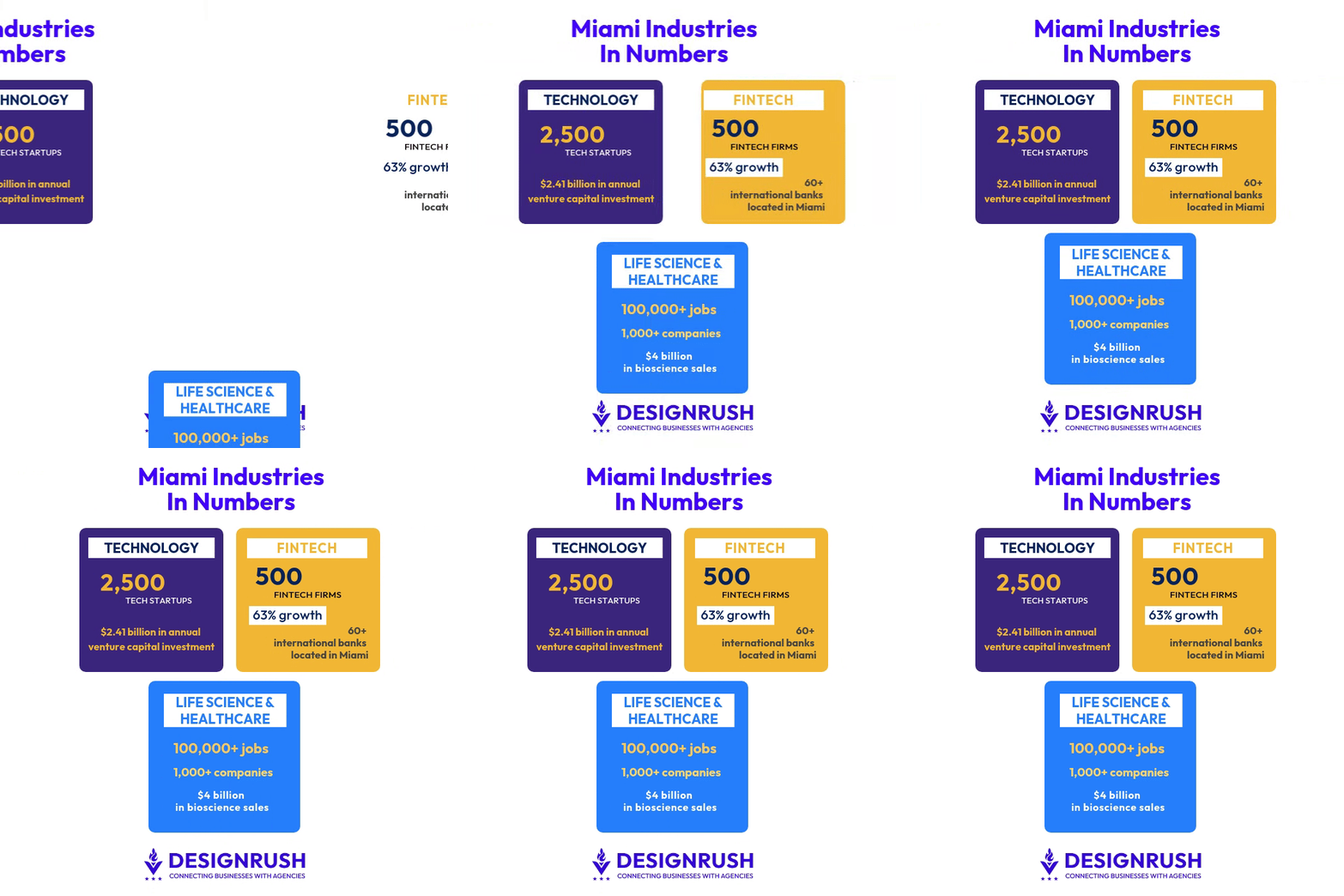
Miami's vibrant tech scene is home to more than 2,500 startups, six unicorns, and boasts an impressive $2.41 billion in annual venture capital investment.
The city ranks as the fourth highest in the nation for job growth in the tech sector.
Miami's fintech scene is recognized as one of the world's leading startup hubs, boasting over 500 fintech firms. An impressive 63% growth has been achieved in just the last two years, according to the Miami Dade Beacon Council.
With more than 60 international banks located in Miami, the city is the largest concentration of international banking in the United States.
Software companies in Miami, Florida, commonly build solutions such as fintech platforms, digital payments, banking tools, and financial data systems.
Miami is emerging as a significant global center for PropTech, reflecting the latest trends in technology and investment.
PropTech startups in Miami are harnessing technologies such as AI, IoT, and blockchain to transform the real estate sector.
Their innovations range from smarter building operations to enhanced transaction processes, improved investment data, and new property management models.
A local software company often builds property platforms, rental management systems, and AI-enabled PropTech solutions.
Miami’s life sciences and healthcare industry includes 100,000+ jobs, 1,000+ companies, and nearly $4 billion in bioscience sales.
The growth of this ecosystem has driven strong demand for innovative solutions, such as telehealth systems, medical platforms, device-connected apps, patient management tools, and health analytics.
In turn, the growing number of jobs and companies highlights the rising need for advanced healthcare technologies that enhance patient care and streamline operations within the sector.
What red flags should I watch for when hiring these agencies?
Watch out for the following red flags when you start interviewing potential software development services providers:
- Lack of direct code access
You are denied access to the Git Repository during development. This prevents you from verifying how much work is being done, keeping you tied to the current developer, and potentially creates a serious problem in case you decide to switch software development firms. - Black box project management
Updates are provided only via email or PDF reports rather than through live project management tools (Jira, Trello, Linear). Transparency is key, and you should be able to see real-time task progress. - Vague IP ownership
The contract includes clauses about proprietary frameworks or doesn't explicitly state you own the source code. Such instances can lead to vendor lock-in, where you are legally or technically unable to move your project to another developer. - Missing dedicated quality assurance (QA)
The firm claims that developers test their own code instead of employing dedicated Quality Assurance (QA) engineers. This almost always results in higher bug counts and a poor user experience at launch. - No post-launch support plan
They focus only on the build and have no structured Service Level Agreement (SLA) for maintenance. Software requires ongoing security patches and OS updates to remain functional. - Insecure AI practices
A Miami software development company claims to use AI for speed but lacks a policy on data privacy. If it’s inputting your proprietary business logic into public AI models, your intellectual property could be compromised. - Fixed-price quotes for vague scopes
Offering a flat fee before a deep Discovery Phase is a major risk. This often leads to cutting corners later in the project when the agency realizes the work is more complex than they guessed. - Communication lag
If an agency takes more than 48 hours to respond during the sales process, expect communication to be significantly worse once the project begins.
What questions should I ask software companies in Miami before hiring one?
Before you sign the contract with the best software development company in Miami, make sure to ask each candidate the following questions:
Relevant Background
- What Miami-based clients or industries have you worked with, and can you share local case studies or references?
- How long has your company operated in Miami, and how large is your current development team?
- What percentage of your projects are repeat clients or long-term engagements?
- Who owns the IP and source code at project completion?
Services and Processes
- Which development services do you provide in-house vs. outsourced (web development services, UX, backend development, QA, DevOps)?
- What development methodology do you use (Agile, Scrum, Kanban), and how often are deliverables released?
- How do you handle quality assurance, software testing, and security throughout the project?
- What is your communication cadence, and who is my day-to-day point of contact?
Relevant to Your Project
- Have you built similar tailored software solutions (industry, scale, integrations), and what were the results?
- What is a realistic timeline and total cost range for a project like mine—and what assumptions drive it?
- How do you manage scope changes, new features, or shifting priorities?
- What does post-launch support look like (maintenance, updates, SLAs, pricing)?
Sources
DesignRush sustains a directory of over 40,000 agencies categorized by service category, location, expertise, and reviews. We build our database in two ways:
- Our dedicated team of agency experts actively searches the web for top-performing companies. We then pull information from their websites, online presence, and client testimonials to verify their status and qualifications prior to listing.
- The agencies listed get notified of their profiles on the website and they can choose to claim it or not, which suggests their availability for more collaborations.
Agencies can also reach out to DesignRush and must go through the verification process prior to being listed.
Latest Trends Related to Software Development

Software Development
Onshore vs. Offshore Software Development Company: Which One Is a Better Choice?
2,703