Are you looking to recruit a credible RPA company to build, deploy, and manage software robots to automate human-performed tasks? In our rankings list, you can find the top robotic process automation companies for your unique project, sorted by portfolio quality, cost of services, satisfied clients, industry reputation, and more.
Best Robotic Process Automation Companies
221 Companies - Rankings updated: April 04, 2026
Every agency featured on DesignRush is vetted for expertise and client satisfaction to support your decision-making. Some listings may be sponsored.
United States ×
Top Web and Mole App Development Company
Webmob Technologies is global leader in custom web & app development, offering consulting & development services to businesses of all sizes -from startups to mid-sized organizations to enterprises. Our custom web & app-development expertise have earned us top reviews & prominent position in industry [... view WebMob Technologies profile ]- Location
- San Jose, California
- Number of Employees
- 100 - 249
- Portfolios Count
- 9 Projects Listed
Mastering AI Complexity to Deliver Business Certainty
Inisoft is a US-based data lifecycle and artificial intelligence lab with operations in Argentina that partners with our enterprise clients seeking to disrupt, innovate, and ignite change that can refine industries through data innovation. [... view Inisoft Global Inc profile ]- Location
- New York City, New York
- Number of Employees
- Under 49
- Average Hourly Rate
- $50/hr
- Minimal Budget
- $1,000 - $10,000
technology for innovators
Dycoders team creates solutions for tech industry from startups to businesses, and have a proven track record of providing development services to over 50 companies. Dycoders is not just a developers hub but has digital designers who can make top quality softwares including mobile apps. [... view DyCoders profile ]- Location
- Boston, Massachusetts
- Number of Employees
- 100 - 249
- Average Hourly Rate
- $30/hr
- Minimal Budget
- $10,000 - $25,000
- Portfolios Count
- 6 Projects Listed
Make the Right Choice.
Top ranking Microsoft Dynamics Partner providing consultation for Dynamics 365 CRM, NetSuite, Dynamics 365 Business Central, Salesforce, SharePoint, BI, Custom Software Development, Web app development, Azure with other Microsoft Solutions. AlphaBOLD based in San Diego, USA. Contact Us Now! [... view AlphaBOLD profile ]- Location
- Carlsbad, California
- Number of Employees
- 100 - 249
- Average Hourly Rate
- $50/hr
- Minimal Budget
- $1,000 - $10,000
- Portfolios Count
- 1 Project Listed
Designing and Development Made Easy
We believe enhanced product designs integrated with advanced technology can significantly propel business growth and market expansion. We're committed to addressing our client's needs, providing unparalleled customer service, and delivering exceptional product quality through cutting-edge technology [... view EZ Digital profile ]- Location
- Los Angeles, California
- Number of Employees
- Under 49
- Average Hourly Rate
- $50/hr
- Minimal Budget
- $10,000 - $25,000
Your Business, Automated.
We help businesses scale by combining AI, automation, and CRM expertise into done-for-you solutions. From lead capture and client nurturing to AI-powered voice agents and custom workflow design, Yotomations builds systems that give you back time, reduce costs, and drive measurable growth. Your business [... view Yotomations LLC profile ]- Location
- Lutz, Florida
- Number of Employees
- Under 49
- Average Hourly Rate
- $150/hr
- Minimal Budget
- $1,000 - $10,000
Mobile App Development Company in Chicago
BuildBetterApp.com is a leading Mobile App Development Company in Chicago, delivering innovative, user-centric solutions tailored to transform your ideas into high-performing mobile applications. [... view Build Better App profile ]- Location
- Chicago, Illinois
- Number of Employees
- 100 - 249
- Average Hourly Rate
- $50/hr
- Minimal Budget
- $10,000 - $25,000
- Portfolios Count
- 4 Projects Listed
Middleman IT Provider
New Wave Devs is a middleman IT provider for startups and mid-sized companies. [... view New Wave Devs profile ]- Location
- Sheridan, Wyoming
- Number of Employees
- Under 49
- Average Hourly Rate
- $35/hr
- Minimal Budget
- $25,000 - $50,000
- Portfolios Count
- 5 Projects Listed
Make IT Simple
Founded in 2006, Kryptos was conceived with the goal of emerging as a prominent IT services firm in both the United States and India. [... see all Kryptos Technologies reviews ]- Location
- Arlington, Texas
- Number of Employees
- 100 - 249
- Average Hourly Rate
- $50/hr
- Minimal Budget
- $10,000 - $25,000
- Portfolios Count
- 3 Projects Listed
- Metadesign Solutions is a leading software development company offering IT services in the form of web development, app development, IoT, AI, DevOps and more to build a digital brand that succeeds. [... see all MetaDesign Solutions reviews ]
- Location
- Phoenixville, Pennsylvania
- Number of Employees
- 250 - 499
- Average Hourly Rate
- $20/hr
- Minimal Budget
- $10,000 - $25,000
- Portfolios Count
- 1 Project Listed
Innovative Technology Solutions for Businesses.
Enterprise64 is a technology solutions provider helping mid-sized businesses innovate and grow through technology. We provide consultancy and develop digital products. [... view Enterprise64 profile ]- Location
- Vienna, Virginia
- Number of Employees
- 50 - 99
- Average Hourly Rate
- $50/hr
- Minimal Budget
- $1,000 - $10,000
Engineering Intelligent & Scalable Solutions.
VentureDive is an award-winning custom software development company dedicated to spearheading digital transformations for Fortune 500 companies across BFSI, CPG/retail, healthcare, transportation, logistics, and QSR industries through its expertise in the realms of Fintech, Data & AI, HealthTech, PropTech [... view VentureDive profile ]- Location
- Mountain View, California
- Number of Employees
- 250 - 499
- Average Hourly Rate
- $50/hr
- Minimal Budget
- $25,000 - $50,000
Accounting + ERP Integration & Fintech Software Development Company
Satva Solutions is a leading Accounting Integration company and FinTech Product Development Agency all over the globe. We are premier in Accounting Integrations service for CPAs, SaaS companies, and Small & Medium Businesses and have a team of experts with a wealth of experience in this area. We at Satva [... view Satva Solutions profile ]- Location
- Castaic, California
- Number of Employees
- 50 - 99
- Average Hourly Rate
- $25/hr
- Minimal Budget
- $1,000 - $10,000
Bridging the gap between Ideas and Reality
Top mobile app development company that offers cost-effective Android, iOS applications design and development services in USA and India. [... see all Appventurez Mobitech reviews ]- Location
- San Jose, California
- Number of Employees
- 100 - 249
- Average Hourly Rate
- $25/hr
- Minimal Budget
- $10,000 - $25,000
- Portfolios Count
- 3 Projects Listed
Driving technological excellence
We craft digital success stories with advanced software solutions, empowering businesses for tomorrow. [... view Big Entities profile ]- Location
- Delaware City, Delaware
- Number of Employees
- Under 49
- Average Hourly Rate
- $40/hr
- Minimal Budget
- $50,000 & Up
Accelerate Your Digital Transformation.
Coderio helps companies of all sizes, from Fortune 500 to SMBs, across the Americas accelerate their digital transformation. Their services are tailored to accomplish objectives through expert knowledge, problem-solving, and streamlining deliverables. [... view Coderio profile ]- Location
- Miami, Florida
- Number of Employees
- 250 - 499
- Average Hourly Rate
- $50/hr
- Minimal Budget
- $50,000 & Up
Global IT & Software Solution Company
We have extensive global resources, deep industry, business process, and technological expertise, as well as a track record of producing uplifting success tales for businesses all over the world. [... view Taction Software profile ]- Location
- Chicago, Illinois
- Number of Employees
- 100 - 249
- Average Hourly Rate
- $40/hr
- Minimal Budget
- $25,000 - $50,000
A Trusted Digital Transformation Partner.
Futurism Technologies is a CMMI Level 3, ISO 9001:2015, and ISO 27001 certified organization, recognized as a leading provider of digital information technology, consulting, cybersecurity, digital transformation, and UI/UX design services. Headquartered in Piscataway, New Jersey (U.S.). [... view Futurism Technologies, Inc. profile ]- Location
- Bellevue, Washington
- Number of Employees
- 500 - 999
- Average Hourly Rate
- $25/hr
Empowering Digital Transformation through IT and IoT Services.
At Optimized Technologies Inc., leverage our 15 years of IoT expertise to access tailored end-to-end products, systems, and solutions designed to meet your unique business requirements. Experience the advantage of our specialized approach in delivering IoT solutions customized to optimize your operations. [... view Optimized Technologies Inc. profile ]- Location
- Austin, Texas
- Number of Employees
- 50 - 99
- Average Hourly Rate
- $30/hr
- Minimal Budget
- $1,000 - $10,000
- Portfolios Count
- 3 Projects Listed
Innovative Software, Smarter Solutions.
SphereGen is an innovative software development and consulting company. We provide high-quality and cost-effective business-critical solutions. Our client-centric approach helps us identify crucial business objectives to create quality solutions, providing added value to our clients day-to-day operations. [... view SphereGen Technologies profile ]- Location
- New Haven, Connecticut
- Number of Employees
- 100 - 249
Think Deeper
Vision Elements specializes in computational sciences. Any scientific or technical challenge that involves modeling, simulation, or optimization for information extraction, reconstruction of source events, prediction, or deep knowledge of conditions might benefit from collaborating with our zealous leaders. [... view Vision Elements profile ]- Location
- Boston, Massachusetts
- Number of Employees
- Under 49
- Average Hourly Rate
- $100/hr
For The Future
We are advisors, engineers, and designers solving business challenges with innovative technology solutions. [... view SoftServe, Inc. profile ]- Location
- Austin, Texas
- Number of Employees
- 1000 & Up
AI Driven Software Development Company
Bacancy stands as a top Reactjs Development Company, offering secure, scalable, and sustainable React solutions. Specializing in diverse frameworks and applications, we provide up to 40% savings on costs and a dedicated team for tailored solutions, ensuring your business is primed for growth. [... view Bacancy profile ]- Location
- Florida, Massachusetts
- Number of Employees
- 1000 & Up
- Average Hourly Rate
- $20/hr
- Minimal Budget
- $10,000 - $25,000
- Portfolios Count
- 5 Projects Listed
Dream Big. Deliver Excellence.
Genzeon is a leading provider of intelligent automation, security, compliance, cloud, and managed services for the healthcare and retail industries. [... view Genzeon profile ]- Location
- Exton, Pennsylvania
- Number of Employees
- 500 - 999
- Average Hourly Rate
- $100/hr
Infinite Possibilities with Technology
Kellton is a publicly listed, CMMI Level 5, and ISO 9001:2015 certified global company, providing cutting-edge AI and digital transformation solutions and services in strategy, consulting, digital, and technology. [... view Kellton profile ]- Location
- Reston, Virginia
- Number of Employees
- 1000 & Up
- Average Hourly Rate
- $50/hr
- Minimal Budget
- $50,000 & Up
- Portfolios Count
- 8 Projects Listed
Innovating Automation.
At Planet Hive we provide practical AI-driven Solutions tailored to meet the specific needs of businesses in various industries, including Fintech, eCommerce, EdTech, and Healthcare. Our expertise developing RAG chatbots that integrate seamlessly with your systems, delivering efficient customer support. We [... view Planet Hive profile ]- Location
- Newark, Delaware
- Number of Employees
- Under 49
- Average Hourly Rate
- $25/hr
- Minimal Budget
- $1,000 - $10,000
Life’s a Pitch.
Your company's story deserves to be heard, nationally. Ready to make headlines? Step into the spotlight. Get the publicity you deserve. [... view Ruby Media Group profile ]- Location
- White Plains, New York
- Number of Employees
- Under 49
- Average Hourly Rate
- $350/hr
Dot To Destination
DeltaDots provides AI app development, custom software, mobile/web, blockchain, game development, and UI/UX design. Deltadots delivers expert IT services that let you focus on what matters most. [... view Deltadots profile ]- Location
- Austin, Texas
- Number of Employees
- 50 - 99
- Average Hourly Rate
- $25/hr
- Minimal Budget
- $10,000 - $25,000
- Portfolios Count
- 3 Projects Listed
Solutions that takes you ahead of the curve!
Transforming businesses with powerful & adaptable software solutions that deliver results. We provide services like custom software development, Staff Augmentation, cybersecurity, professional Salsesforce services, Blockchain solutions and Data science and AI. [... view Whizzbridge profile ]- Location
- Dover, Delaware
- Number of Employees
- 100 - 249
- Portfolios Count
- 1 Project Listed
Build and deliver custom, scalable and extensible software
Deyel is a no-code/LOW-CODE application platform that allows you to craft mobile and web apps effortlessly while streamlining the development process. Enjoy faster, safer, and more cost-effective processes, accelerating development by 3x. This versatile platform simplifies application development with a [... view Deyel Low-Code Platform profile ]- Location
- New York City, New York
- Number of Employees
- 50 - 99
- Average Hourly Rate
- $45/hr
- Minimal Budget
- $1,000 - $10,000
Empowering Organizations to Thrive with AI and Cutting-Edge Technological Solutions
Dawn IT Services powers B2B growth with smart, cost-efficient solutions that drive measurable results. We specialize in sales outsourcing, sales automation, lead generation, and staff augmentation, helping businesses scale with ease. Our expertise spans robotic process automation, digital transformation, data [... view Dawn IT Services profile ]- Location
- New York City, New York
- Number of Employees
- 100 - 249
- Minimal Budget
- Under $1,000
A data-driven future awaits
Contata Solutions is an esteemed frontrunner in the realm of technology and digital innovation. Our expertise encompasses a wide range of areas, including data engineering, data analytics, machine learning, marketing automation and app development. We provide solutions that effectively tackle complex problems [... view Contata Solutions profile ]- Location
- St. Paul, Minnesota
- Number of Employees
- 500 - 999
- Average Hourly Rate
- $49/hr
- Minimal Budget
- $50,000 & Up
Build Better Software.
Tech.us is a leading provider of specialized technology services, including custom software development, artificial intelligence and machine learning solutions, mobile app development, web and cloud application development, and cybersecurity. [... view Tech.us, Inc profile ]- Location
- San Jose, California
- Number of Employees
- 100 - 249
- Minimal Budget
- $10,000 - $25,000
Unlock digital success with Syndell to Innovate your business with cutting-edge software.
Explore a realm of limitless opportunities as Syndell unveils the intricacies of mobile and web app development. Entrust your business to our guidance, initiating an enthralling digital expedition fueled by our unparalleled proficiency and forward-thinking strategies. [... view Syndell profile ]- Location
- Middletown, Delaware
- Number of Employees
- 50 - 99
- Average Hourly Rate
- $100/hr
- Minimal Budget
- $10,000 - $25,000
If Your Business Matters, Your Process Matters
At BP3, we transform your complex challenges into streamlined success stories through AI and Automation. [... view BP3 Global profile ]- Location
- Austin, Texas
- Number of Employees
- 100 - 249
AI Power Agency and Development Shop.
Easiio build AI tools called ChatAI. We help our customers with these tools and implemented Large Language Model base AI technologies for their website or business software. Helping our customers do more with less and improve their efficiency. Our rate is very competitive with the help of AI and quality of [... view Easiio profile ]- Location
- Santa Clara, California
- Number of Employees
- 50 - 99
- Average Hourly Rate
- $30/hr
- Minimal Budget
- $1,000 - $10,000
Fastest Mobile App Development Company in the US.
Dive into Apptonic.io! We specialize in crafting tailored solutions for Android, iOS, Wearables, Cross-Platform projects, and even Game Development. Whether you're dreaming up the next big app or need a sleek solution for your business, Apptonic.io is here to turn your ideas into reality. [... view Apptonic.io profile ]- Location
- Carolina Beach, North Carolina
- Number of Employees
- 100 - 249
- Average Hourly Rate
- $50/hr
- Minimal Budget
- Under $1,000
Engineering Digital Excellence
We provide end-to-end solutions in App Development, Web Development, Cloud Services, Business Intelligence & Data Analytics, and Artificial Intelligence. Our services are designed to help businesses streamline operations, make data-driven decisions, and stay competitive through modern, scalable, and [... view App Vertices profile ]- Location
- Richmond, Texas
- Number of Employees
- Under 49
- Average Hourly Rate
- $55/hr
- Minimal Budget
- $1,000 - $10,000
Delivering Unparalleled Results
Sheridan Technologies is a renowned company specializing in software, hardware and product development services. Sheridan Technologies is committed to delivering unparalleled results that surpass your expectations. [... view Sheridan Technologies profile ]- Location
- Vancouver, Washington
- Number of Employees
- Under 49
- Average Hourly Rate
- $150/hr
Your Digital Transformation Partner.
AB Ark is a dynamic and innovative company specializing in Software Services and IT Consultancy tailored to meet the evolving needs of businesses. Our mission is to go beyond traditional IT services, aiming to build long-term partnerships and become the trusted digital transformation partner for businesses. [... view AB {Ark} Solutions profile ]- Location
- Lewes, Delaware
- Number of Employees
- 50 - 99
- Average Hourly Rate
- $20/hr
- Minimal Budget
- $1,000 - $10,000
More Than Code We Build Trust Through Craft & Commitment
Engineered with integrity. Backed by mentorship. Delivered with care. BTS transforms ideas into scalable, secure, and impactful digital products that deliver long-term value. [... view Blue Trail Software profile ]- Location
- San Francisco, California
- Number of Employees
- 100 - 249
- Average Hourly Rate
- $55/hr
- Minimal Budget
- $50,000 & Up
Tailored Information Technology Solutions
Keller Schroeder is an employee-owned, information technology consulting services firm, and a value-added reseller and systems integrator of hardware and software products. [... view Keller Schroeder profile ]- Location
- Evansville, Indiana
- Number of Employees
- 100 - 249
GO-TO Digital Transformation Partner
AQe Digital specializes in enterprise software engineering and digital transformation. With 25+ years of experience, we deliver custom development, cloud-native ERP, AI/ML, RPA, IoT, UX/UI, and integrations that modernize systems and streamline operations. [... see all AQe Digital reviews ]- Location
- Los Angeles, California
- Number of Employees
- 500 - 999
- Average Hourly Rate
- $30/hr
- Minimal Budget
- $1,000 - $10,000
- Portfolios Count
- 1 Project Listed
Inspired Technology.
At Kreitech, we specialize in helping US companies turn their visions into reality by providing tailored software solutions and top-tier talent augmentation. Our mission is simple yet profound: to deliver high-quality software and staffing solutions that empower our clients to innovate, scale, and thrive in a [... view Kreitech profile ]- Location
- Austin, Texas
- Number of Employees
- 50 - 99
- Average Hourly Rate
- $50/hr
High-quality, cost-effective, full lifecycle solutions to complex software development projects.
Offering IT, Software, and Chatbot Solutions. Macrosoft's professional development teams address the complete development lifecycle - from business process engineering and architecture design to system hosting and maintenance. Macrosoft maintains a leading edge in software technology allowing them to design [... view Macrosoft profile ]- Location
- Parsippany-Troy Hills, New Jersey
- Number of Employees
- 500 - 999
Global tech talent, LATAM powered, U.S. aligned
Zallpy stands as one of the fastest growing Software Outsourcing and Staff Augmentation nearshore companies, strategically positioned nearshore to provide cutting-edge, scalable IT squads to Startups and Fortune 500 corporations across North America and Europe. [... view Zallpy Digital profile ]- Location
- Frisco, Texas
- Number of Employees
- 500 - 999
- Average Hourly Rate
- $35/hr
- Minimal Budget
- $10,000 - $25,000
We Build Solutions that Help You Solve Challenges and Meet Goals
Cybersoft is uniquely skilled to offer ubiquitous software solutions that are relevant and in demand for todays rapidly changing business dynamics. We bring the best of quality and cost effective software development using latest SCRUM based agile development that works in sync with the customer expectations [... view Cybersoft North America profile ]- Location
- Houston, Texas
- Number of Employees
- 50 - 99
- Average Hourly Rate
- $30/hr
Engineering Partner for Grateful Outcome
Comptivia Technologies is a global IT Services and Consulting company headquarters in New Jersey USA. We work with leading companies to deliver services and technologies at scale, accelerate digital operations, develop innovative applications, and drive efficiencies throughout their organization. [... view Comptivia Technologies profile ]- Location
- Montville, New Jersey
- Number of Employees
- 50 - 99
- Average Hourly Rate
- $70/hr
Meticulous Innovative Development
At Meticul Solutions, we know how to help you define where you are going, and give you the tools to get there. We do this with a simple philosophy: We just don't design & develop applications for your requirements but rather make sure to understand your business to give you an end to end digital [... view Meticul Solutions profile ]- Location
- Houston, Texas
- Number of Employees
- 50 - 99
- Average Hourly Rate
- $36/hr
- Minimal Budget
- $10,000 - $25,000
Build Automated, AI Powered Processes for Scale
ConsultEvo helps service businesses and fast moving teams streamline operations with ClickUp systems, CRM automation, AI implementation, and custom workflows. [... view ConsultEvo profile ]- Location
- Casper, Wyoming
- Number of Employees
- Under 49
- Average Hourly Rate
- $75/hr
- Minimal Budget
- $1,000 - $10,000

















Why People Trust DesignRush
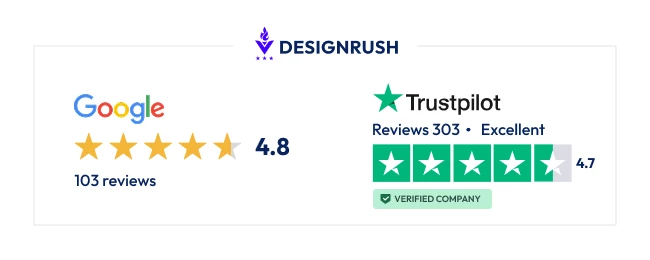
Rated 4.8 on Google and 4.7 on Trustpilot, DesignRush Agency Directory is a reliable resource for finding RPA companies. We owe this to our executive selection team, which follows a strict screening process when featuring agencies on the platform, assessing key performance indicators, like portfolio, client reviews, and industry reputation.
Learn more about DesignRush Agency Ranking Methodology.
Sources
DesignRush sustains a directory of over 30,000 agencies categorized by service category, location, expertise and reviews. We build our database in two ways:
- Our dedicated team of agency experts actively search the web for top performing companies. We then pull information from their websites, online presence and client testimonials to verify their status and qualifications prior to listing.
- The agencies listed get notified of their profiles on the website and they can choose to claim it or not, which suggests their availability for more collaborations.
Agencies can also reach out to DesignRush and must go through the verification process prior to being listed.
RPA Company Hiring Guide
What is a robotic process automation company?
A robotic process automation company is a company that specializes in developing software robots that automate repetitive tasks such as moving files to a certain location, sending templated messages, updating the database after an event, etc. The so-called RPA bots replace the human workforce when it comes to time-consuming manual tasks, allowing for significant efficiency improvement and cost savings.
Not only is RPA still in demand, but it is also the fastest-growing software segment today. The global RPA market is predicted to reach $31 billion by 2030. A survey by Deloitte revealed that 78% of surveyed companies have or are implementing RPA, and 16% are planning to do it soon.
Companies from industries like banking, insurance, and healthcare are challenged with processing many forms, records, and other documents, a long and repetitive process often prone to errors. RPA enables the automation of such processes, reducing the number of human-made errors, enabling 24/7 operation, and reducing the time needed to complete the tasks.
An example of how companies can boost productivity with RPA is Trigent Software, which is developing an advanced RPA solution for a real estate investment trust (REIT). By automating report extraction and analytics, Trigent Software increased its client's productivity by over 70%, enabling it to resolve more than 15 records daily.
What do robotic process automation companies do?
Robotic process automation companies build robotic software that automates repetitive tasks typically done by a human worker. RPA bots can scrape data, move files, parse emails, and perform tasks that would otherwise require a lot of time. RPA companies provide solutions that automate, improve, and speed up various company processes.
RPA companies typically provide these services:
- RPA assessment and process analysis: A process audit to determine what processes can be automated and how
- Various bot automation projects: Development of software bots to replace manually performed tasks
- Developing machine learning models for process automation: AI-based models that simulate human actions
- Updating and upgrading outdated RPA models: Adding new features or replacing legacy code
- RPA software testing: Automated and manual testing of RPA software
- Customer training and support: Educating customers on how to implement RPA bots and troubleshooting common issues
One example of a typical RPA project is a case by ImpactQA, an RPA company that helped its client KPMG automate its audit processes, which were changing almost daily and required constant script updates. KPMG now has over 800 automated workflows, achieving high accuracy and reducing test automation efforts by 45%.
How much do RPA services cost?
Typically, RPA services cost between $5,000 and $15,000 per single bot. The cost of RPA services depends on the complexity of the project, the number of bots and software components, licensing fees, infrastructure setup, and other factors.
The top 50 RPA companies on DesignRush charge an average of $50/hour. Roughly 7.4% of the eCommerce marketing companies on DesignRush accept projects with a minimum budget of less than $1,000, while 7.4% have a $50,000+ minimum budget.
Why should I hire an RPA company?
You should hire an RPA company to streamline processes, increase efficiency, and achieve cost savings while benefiting from improved accuracy, scalability, and productivity.
Here are some reasons to hire an RPA company:
- Knowledge about different industries like finance, healthcare, or HR that helps overcome industry-specific challenges when automating processes with RPA
- Experience in relevant software technologies and platforms and being up to date with the latest AI-based technologies
- Well-documented processes that allow for future changes and upgrades as your company evolves
- Increased efficiency due to significantly faster process completion
- Cost savings that come from needing fewer working hours to complete automated tasks and allocating these to other projects
- Accuracy and reduced errors achieved by eliminating human errors
- Scalability enabled by implementing RPA projects on platforms that are easy to upgrade in time
- Improved compliance adherence by minimizing errors
- Enhanced employee productivity thanks to not burdening them with repetitive, tedious tasks
- Faster processing times compared to human-performed tasks
- Better customer satisfaction thanks to simplified and quick processes
An example of a successful RPA project is the Flobotics case. The company helped its client, T-Bank, automate loan application processes and reduce the average completion time from 10-15 minutes to six seconds. Through automation, the client saved over 200 hours of human labor and an estimated $5 million.
How do I choose the best RPA company for my business?
You can choose the best RPA company for your business by focusing on the quality of its work, relevant robotic process automation experience, proficiency in software development and AI technologies, and development approach.
These are the steps you should follow to determine which RPA company is best for your business:
- Define project goals: You need to understand which tasks you want to automate and why and have a clear idea of what benefits you want to achieve with this project (save time, improve productivity, save costs, etc.).
- Find the right expertise: Depending on your industry, project specifics can make an RPA solution more complex. Look for robotic process automation companies that have experience developing a similar solution to what you need.
- Set a budget: Determine the amount you can invest in your RPA project, including post-project support and updates.
- Review agency experience: Ask for a portfolio of relevant RPA work, case studies, reviews, or clients you can contact for feedback.
- Ask about the strategy: Find out how the company plans to find the right solution for you and what the project steps are.
- Inquire about reporting: Ensure the company will provide regular updates on project status and organize demonstrations and meetings with the stakeholders to ensure the project is on the right track.
- Interview: Set up interviews with prospective RPA companies to discuss the project in detail and check if they are a good fit for your team.
- Ask for proposals: Send a request for a proposal (RFP) to the shortlisted RPA companies.
- Decide: After reviewing the RFPs, choose the best-suited agency and establish all project development processes.
If you need a custom-made list of RPA companies, contact us. Our team will match you with the most suitable agencies based on your list of requirements. You can browse our Marketplace for more details.
How do I find the best RPA company on DesignRush that fits my budget?
You can find the best RPA company on DesignRush that fits your budget by using the filtering feature and sorting companies by the lowest to highest average hourly rate or lowest to highest minimum budget.
Agencies like USM Business Systems, Multiverse Software, Indexo MX, Innosoft Group, and Spiral Bridge Solutions require minimal budgets under $1,000.
If you are looking for affordable hourly rates, Expertinasia charges $12/hour, while KR. Laboratories, Qualhon Informatics, Extended Web AppTech, and Infolitz Software Private Limited charge $15/hour.
What are the key success metrics in robotic process automation?
The key success metrics in robotic process automation are used to determine how successful an RPA project is in terms of automation costs versus value gained.
Some of the main RPA success metrics are:
- Return on investment (ROI): The amount of money earned by implementing RPA
- Value of time gains (VTG): The cost of a process performed by a human employee versus an RPA bot
- Expected business value: The sum of all cost savings multiplied by the average full-time equivalent (FTE) costs over a selected period
- Gained productivity: The number of hours of manual work saved per month by automating a process with an RPA
- Cost per error: Sum of value lost during downtime caused by an automation error and cost of working hours that were required to fix it
- License utilization: The extent of using your RPA provided license in percentages (i.e., 80%)
What questions should I ask before hiring an RPA company?
You should ask RPA companies questions about their relevant experience with robotic process automation projects, the technology stack they use, the development methodology, and the approach they will take to delivering your RPA project.
These include the following:
Its Relevant Background
- How many years of experience do you have in RPA?
- Do you have a portfolio of relevant RPA projects?
- What software and technologies are you proficient in?
- Do you have any relevant software development certifications?
- What industries have you developed RPA bots for? Do you have experience with my industry?
Company Services and Processes
- Do you use Waterfall, Agile, or another software development methodology?
- How do you ensure that the machine learning (ML) model you build for us will stay relevant?
- What platform would you recommend for this project?
- Is the RPA solution you are offering upgradeable in the future?
- Will you assign a project manager for this RPA project?
- How will you train our employees to implement the new changes?
- What kind of software testing do you perform during the project?
- What is your quality assurance (QA) process?
The Project
- How do you define project milestones? What happens if they haven’t met?
- Who are the key team members who will be working on my project?
- What metrics will you use to define the success of my RPA project?
- How often will you provide us with status reports and relevant metrics?
- What is the expected deadline for successfully delivering the project? What happens if the project is late?
- What is the cost of your service? Are there any additional costs we can expect?
- What kind of support can you provide after completing the project?
What are the best RPA companies in the US?
According to DesignRush and Google reviews, the top 5 RPA companies in the US are:
- DevsData Tech Talent
- 5.0 stars on DesignRush (37 reviews)
- 4.9 stars on Google (90 reviews)
- Top clients: Novartis AG, Cubus AS, Idealab Inc, Epinote
- Scopic
- 4.9 stars on DesignRush (45 reviews)
- 4.5 stars on Google (29 reviews)
- Top clients: Till, Petrachor, Duba, Byte
- Diffco
- 4.9 stars on DesignRush (29 reviews)
- 5.0 stars on Google (22 reviews)
- Top clients: Shift, ORB, Parodist, Food Rocket
- ELEKS
- 4.9 stars on DesignRush (27 reviews)
- Top clients: Aramex, Acino, Eagle, Havas
- Plego Technologies
- 4.9 stars on DesignRush (24 reviews)
- 5.0 stars on Google (18 reviews)
- Top clients: Apple, Google, Samsung, Intel
About The Author and Expert Reviewer

Selina Garcia has authored 500+ articles and edited 50+ published books in economics, law, and history. Her unique blend of experiences allows her to approach content creation from a well-rounded perspective. Currently, Selina applies her expertise to producing insightful articles on IT, software, and applications for DesignRush.

Sergio is a technology leader with over six years of experience managing global teams and delivering projects across fintech, sportstech, and B2B platforms. At DesignRush, he drove product growth and development execution, building tools that speed up processes by 95% and cut costs by 35% while maintaining full uptime.
Latest Trends Related to Robotics Process Automation
-preview.jpg)
Software Development
In-House vs. Outsourcing Software Development: What to Choose for Your Company
2,017