
Choosing a developer is easy. Choosing the right one is not. Our directory features a vetted list of software developers in Utah that deliver scalable, functional, and secure digital solutions.
Synoptek, Your Global AWS Consultants
Synoptek is a leading global systems integrator, AWS consultant firm, and managed IT services provider with over two decades of experience. We partner with clients of all sizes, from mid-market to Fortune 100, offering comprehensive IT outsourcing, management, and consulting services. Our goal is to provide [... view Synoptek profile ]Top Services:
- Software Development
- IT Services
- AWS
- Location
- Ogden, Utah
- Number of Employees
- 500 - 999

Related Services in Utah
Software Development Specializations in Utah
Software Development Companies in Utah
How to Hire Software Development Companies in Utah
What should you prepare before contacting software development companies in Utah?

Before contacting software development companies in Utah, prepare a succinct description of your build, a realistic budget ceiling, a hard deadline, integration requirements, a project lead, and a definition of success.
According to a Boston Consulting Group survey,70% of large-scale tech projects are not delivered on time, on budget, and within scope. The same survey found that successful projects shared the following characteristics:
- Clarity on business objective and scope (92%)
- Effective vendor management, including risk sharing (89%)
- Clarity on IT target architecture (89%)
- Established value case (87%)
- Clarity on target process standardization and harmonization (87%)
Preparation directly addresses the factors that separate successful projects from the 70% that fail to deliver. Here is what to prepare before engaging with Utah software companies, and why each item matters:
| Item | Why it is important |
| One-sentence description of what you are building | Reduces misinterpretation and prevents open-ended scoping, which is a common cost driver when briefs are vague. |
| Realistic budget ceiling | Acts as a comparison point, helping determine if an agency's quotation is competitive or inflated. |
| Hard deadline and commercial consequence | Encourages tech companies to scope more honestly and staff more deliberately because delivery is tied to real consequences. |
| Details on your integration requirements | Avoid cost overruns, as software companies accurately estimate based on your actual business systems rather than guessing the software that your new solutions need to connect to. |
| Internal decision-making chain | Prevents extra costs from stalled projects because your stakeholders are not aligned. |
| Success definition | Provides a standard for what is done, what is good, and the project's business value by clarifying how success is defined and measured. |
How do software developers in Utah differ from firms located elsewhere?

Software development developers in Utah benefit from one of the highest concentrations of tech workers in the United States, a pipeline of enterprise-trained engineers, and a startup culture that has produced multiple billion-dollar companies.
- Deep talent density
Utah has one of the highest concentrations of tech employees in the United States at 7.1%, only 0.6% lower than California. It also has the highest projected growth rate for information technology occupations, at 33%, from 2024 to 2034. - Strong enterprise background
Big tech players, including Adobe, Microsoft, and Oracle, have headquarters in Silicon Slope and employ thousands of local software engineers. As a result, agencies here are accustomed to the security, compliance, and integration demands of enterprise clients. - Growth mindset
Utah is home to thousands of tech startups, where companies like BambooHR and Entrata have reached unicorn status. As such, many Utah tech companies are accustomed to building for scale, not just for launch. - Sector-specific technical expertise
Utah's diverse economy means local software engineering companies have hands-on experience with industry-specific requirements and compliance demands. According to the Utah Market Trends Report, venture capital activity has driven growing specialization in biotech, edtech, and restaurant tech, making it easier for organizations in these sectors to find a Utah software engineer with relevant practical experience.
What red flags should you avoid during the proposal and shortlisting stage?
Utah software developers who make unsubstantiated claims, provide founder-only references, refuse team meetings, avoid fixed-scope discussions, and compress timelines signal gaps in accountability, transparency, and practical expertise.
Here are the top 5 red flags that you should avoid:
- Unsubstantiated name-dropping. Invoking proximity to tech giants like Qualtrics, Adobe, and Pluralsight is not an automatic proof of competence. A credible agency would specify its relationship with the company and provide case studies and client references as evidence.
- The founder only references. An agency that only presents founders as client references and cannot provide references for technical leads may indicate a problem with the project’s technical execution.
- Resisting a meeting with team members. A Utah company is likely outsourcing offshore teams when it only presents the local account manager, but not the people directly working on your project. By not disclosing this detail, the company shows that it can be deceptive.
- Refusal to discuss fixed-scope engagements. It is reasonable to recommend time-and-materials for complex and evolving projects, provided there is a clear rationale. An agency that refuses to discuss scope definition is avoiding disciplined planning.
- Timeline compression. If the agency's timeline is comparatively shorter than other proposals, it might bill you extra for parallel workflows and rush fees. To avoid this, ask the agency to walk you through their weekly resourcing process.
What non-negotiable terms should you request in your software development contract?
Your contract with a custom software development company in Utah should include named developers, scope of work, IP ownership rights, change order protocol, continuous repository access, payment milestones, warranty period, and a termination clause.
Excluding these terms from your contract can expose you to cost overruns, loss of code ownership, and no legal recourse.
When reviewing the contract, ensure it has the following details:
| Contract term | What it should include |
| Named resources clause | Named engineers and team members of your project, and that you must approve any changes to the team. |
| Scope of work | Specific features, functionality, technical requirements, deliverables, out-of-scope coverage, and acceptance criteria. |
| Intellectual property assignment | The ownership of all the code, documentation, designs, and derivative works will be transferred to you upon final payment. |
| Continuous repository access | Access to your code repository at all times. It will protect you in case the agency becomes financially distressed, is acquired, or simply stops responding. |
| Change order protocol | Defines what constitutes a change, the request and estimation process, pricing, and timeline impact. It should also indicate that every scope, timeline, or budget change must be documented and signed before work starts. |
| Payment milestones | Payment milestones that are tied to deliverables, so you can verify that the software the agency delivers is functional and meets your requirements. |
| Infrastructure under your own accounts | All cloud environments, domains, and third-party services should be provisioned under accounts you control and own. |
| Warranty and support | Warranty period of 30-90 days after project delivery with detailed coverage and response times. Example: 5-10 days resolution for minor bugs. |
| Termination clause | Allowable exit period of 30-60 days of notice without penalty beyond work completed. |
At what point should you cut your losses with a Utah software developer who is underperforming?
Signs that you should cut your losses with a software development company in Utah include failing to meet deadlines and fulfill promises, refusing access to the codebase, having a high staff turnover, and potentially experiencing agency dissolution.
Below are warning signs to leave or stay in your engagement with a Utah software development company:
| Minor, but fixable warning signs | Signs to immediately leave the engagement |
| Inconsistent communication that improves when you formalize a check-in structure | The agency cannot or will not give you access to your own code repository |
| Scope creep the agency has acknowledged and is actively documenting | Key promises from the proposal (e.g., specific engineers, tech stack, methodology) were never actually implemented |
| One engineer rotation where the replacement was approved and properly onboarded | A "new account lead" is introduced more than once in a six-month period |
| A missed milestone with a credible, written recovery plan | Deliverables are consistently 30%+ behind schedule with no root cause provided |
You should also leave the custom software development company in Utah when it has been acquired or is rumored to be in financial difficulty.
Before terminating your engagement, ensure you have:
- The full export of your code repository and commit history
- All credentials to every third-party service, cloud computing environment, and domain
- Complete architecture and technical debt documentation
- Written statement from the agency acknowledging your IP ownership
- Begun conversations with replacement agencies
Why Companies Trust DesignRush
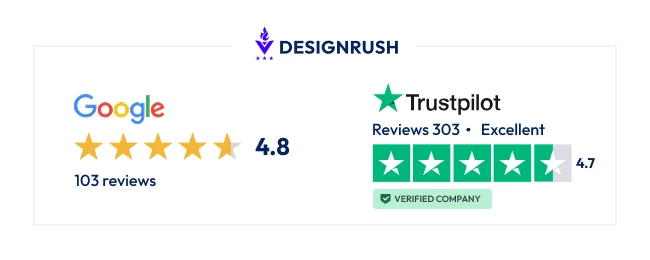
Rated 4.8 on Google and 4.7 on Trustpilot, DesignRush Agency Directory is a reliable resource for finding the best software development companies in Utah. We owe this to our executive selection team, which follows a strict screening process when featuring agencies on the platform, assessing key performance indicators, like portfolio, client reviews, and industry reputation.
Learn more about DesignRush Agency Ranking Methodology.
Sources
DesignRush sustains a directory of over 40,000 agencies categorized by service category, location, expertise, and reviews. We build our database in two ways:
- Our dedicated team of agency experts actively searches the web for top-performing companies. We then pull information from their websites, online presence, and client testimonials to verify their status and qualifications prior to listing.
- The agencies listed get notified of their profiles on the website and they can choose to claim it or not, which suggests their availability for more collaborations.
Agencies can also reach out to DesignRush and must go through the verification process prior to being listed.
5 Frequently Asked Questions About Utah Software Developers
What are the common "hidden fees" in Utah software development contracts?
Common hidden fees in Utah software development contracts include bug fixing, cloud computing markups, knowledge transfer fees, software licensing, scope change fees, and data migration overruns.
To minimize surprise costs and hidden fees, ask for a detailed cost breakdown from the development companies in Utah.
| Cost item | What to watch for | Solution |
| Bug fixing | Contracts that classify post-launch bugs as a new scope with separate charges. | Ensure that your contract specifies a 60- or 90-day warranty period when defects are fixed at no additional charge. |
| Hosting and infrastructure markup | Typically, developers add a 20%-40% markups for cloud hosting and management. | Insist on direct billing to your own cloud account. |
| Knowledge transfer fees | Agencies that charge hourly for documentation and handoff. | Emphasize that these services should be part of the base contract. |
| API licensing and tooling | Third-party tools, APIs, and frameworks added mid-project and invoiced without prior approval. | Require that additional tooling, especially those exceeding $500, should have a written sign off. |
| Scope change assessment fees | Some agencies bill hours spent on evaluating if the request requires a scope change. | Define the scope change conditions in your contract. Also, include a reasonable threshold (e.g., 4 hours) for the evaluation without the added charge. |
| Data migration overruns | Proposed estimate before auditing the entire system for data migration. | Request a separate, itemized estimate for the data migration work before signing. |
How do you evaluate software development companies in Utah, even if you do not have deep technical expertise?
You do not need to read code to evaluate software development companies in Utah. You need to evaluate their accountability, process, and communication. All these components make a good partnership.
- Ask about their process. Have them walk you through how they handle scope changes, missed deadlines, and production issues. Credible Utah companies have documented processes or proven frameworks for these situations.
- Request a sample of client documents. Ask to see a project update, a sprint summary, or a client progress report. These documents reveal how the company communicates technical decisions to non-technical stakeholders.
- Assess their public footprint. Search for client reviews on third-party platforms, employee presence on LinkedIn, and contributions on GitHub. If the company’s engineers are not visible publicly, its team might be composed of junior or offshore developers.
- Talk to client references. A polished proposal is a sales document. A 20-minute conversation with a past client provides a realistic insight into what it is like to work with the Utah developer.
- Bring a trusted technical advisor for a call. Ask a fractional CTO or a trusted engineer to join your call with your top two software development companies in Utah. They can help surface potential technical issues that you may miss.
How do you assess the portfolio of software development companies in Utah?
The most reliable way to evaluate a Utah software development company is to read its case studies as due diligence documents. A credible one describes what the agency specifically built, what went wrong, and how it responded.
Look for the following:
- Client context: Client name (if possible), industry, and company size.
- Business problem: The commercial challenges that the client needs to solve, not just the technical issue.
- Specific scope: The exact role and scope of the agency in the project, distinguishing its work from the client's internal team and other vendors.
- Business outcomes: Measurable results that showcase the impact of the agency's solution on the business. Example: Reduced load time by 60%, contributing to a 22% increase in checkout completion.
- Evidence of completed work: Link to the live solution or long-term client relationships are signals that the software has moved beyond the pilot phase and is still in use and continues to grow.
- Named members: The engineers, designers, or project leads who work on the actual project, signaling that real people were accountable for the outcome.
- Realistic scenarios: Mentions of what was challenging or what changed mid-project highlight the agency's adaptability and transparency.
What questions should you ask a custom software development company in Utah to verify its legitimacy?
Ask about who will do the work, how it handles failure, and what you will own when the project ends. These questions separate a legitimate Utah company from those that sell well but deliver poorly.
Here are 10 questions to ask:
- How does your proximity to the Lehi/Salt Lake City tech corridor benefit my development process beyond time zone alignment?
- Who are the engineers, designers, QA testers, and other team members working on my software? What are their specific experiences with my tech stack?
- Can you walk me through a project where the software directly solved a bottom-line business problem like mine?
- Describe a project that failed or went significantly over budget. What happened, and what did you change?
- How can I see the code being committed in real time to ensure that the project stays on track?
- What specific steps do you take to ensure that the software is reliable, scalable, and user-friendly?
- How do you identify and address the code shortcuts used to meet the initial launch date?
- What specifically is included in your post-launch warranty service?
- Do I own the entire software environment or just the codebase?
- Have you ever been through an acquisition or major ownership change? How did that affect active client projects?
What should you expect within the first 30 days of your engagement with a custom software development agency in Utah?
Typically, you should receive a project roadmap, user research, and direct communication with the developers within the first 30 days of your engagement. The actual deliverables will ultimately depend on your contract terms, technical requirements, and software complexity.
For instance, a minimum viable product (MVP) can be delivered within 4-12 weeks, while an enterprise-level mobile app will need longer timelines.
The first 30 days of your engagement with a custom software development agency in Utah are the most reliable predictors of how the next six months will perform.
Use this period to gauge whether the agency communicates proactively, keeps commitments, and provides you with direct visibility into the work, because the behaviors you see in week two are the behaviors you will manage through the entire project.
| Week | What to expect | Warning signs |
| Week 1 |
|
|
| Week 2 |
|
|
| Weeks 3-4 |
|
|
| Day 30 |
|
|
About The Author and Expert Reviewer

Selina Garcia has authored 500+ articles and edited 50+ published books in economics, law, and history. Her unique blend of experiences allows her to approach content creation from a well-rounded perspective. Currently, Selina applies her expertise to producing insightful articles on IT, software, and applications for DesignRush.

Sergio is a technology leader with over six years of experience managing global teams and delivering projects across fintech, sportstech, and B2B platforms. At DesignRush, he drove product growth and development execution, building tools that speed up processes by 95% and cut costs by 35% while maintaining full uptime.
Latest Trends Related to Software Development
Software Development
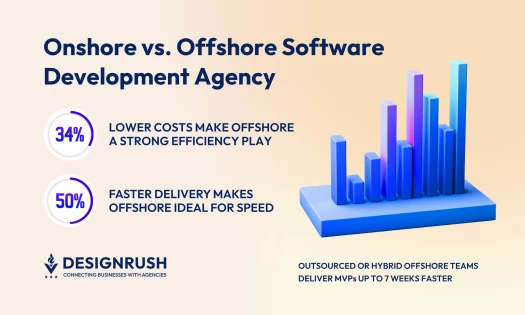
Onshore vs. Offshore Software Development Company: Which One Is a Better Choice?
2,379
-preview-webp.webp)
Software Development
In-House vs. Outsourcing Software Development: What to Choose for Your Company
2,497