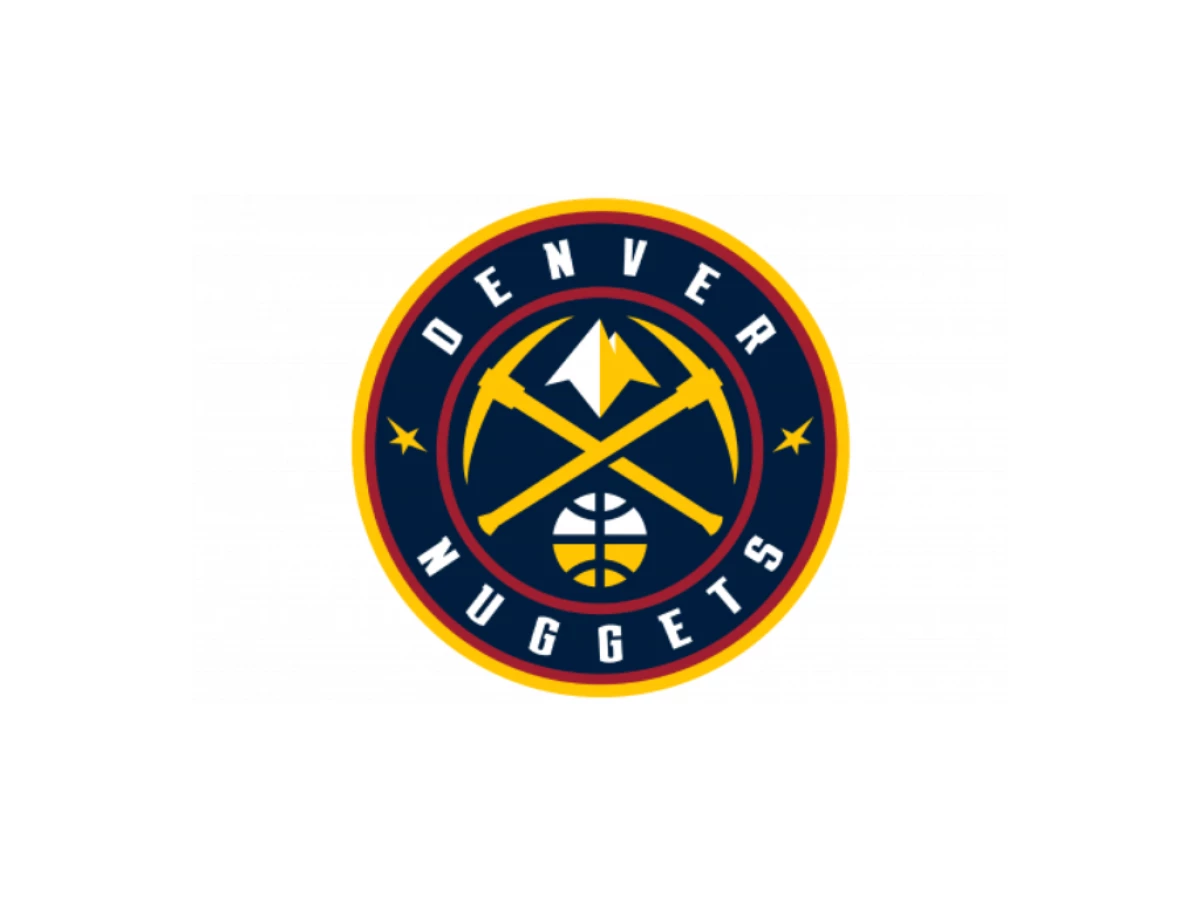

The championship banner hanging in Ball Arena sits under a crossed-pickaxe crest younger than most of the roster's careers. The Denver Nuggets won the first NBA title in franchise history in 2023, and they did it under a logo introduced only five years earlier, one revealed not at a press event but on the night of another team's Finals game.
In a league where franchises rebrand at the first losing streak, a mark that arrived that recently and already anchors a title is worth examining. The same instinct runs through good logo design in every category: each element has to earn its place, and the best identities tend to be the ones a team stops fighting.
The story starts in 1967.
The Denver Nuggets Logo History
1967 to 1971: The Ringsby Rockets
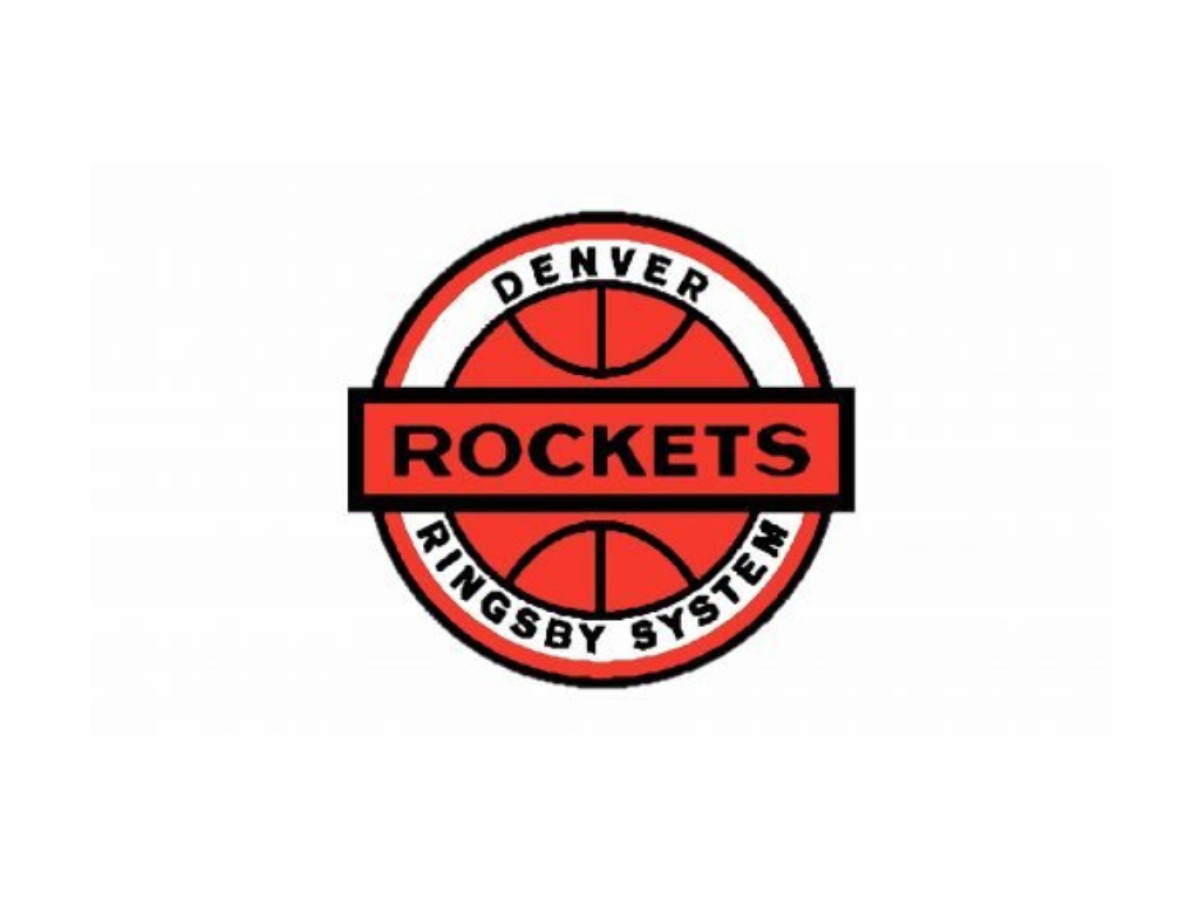
The franchise's first logo was a clean, functional badge: a red basketball on a white circle inside a double black-and-red outline, with a horizontal red banner carrying the bold sans-serif word "ROCKETS." The inscription "Denver Ringsby System" ran around the perimeter.
That wording pointed to owner Bill Ringsby's trucking company, blending corporate identity with team branding in a way modern franchises rarely allow. The mark had no mascot and no personality, only the industrial practicality of the late 1960s, and it dated quickly as sports branding grew more expressive.
1971 to 1974: The Flying Rocket
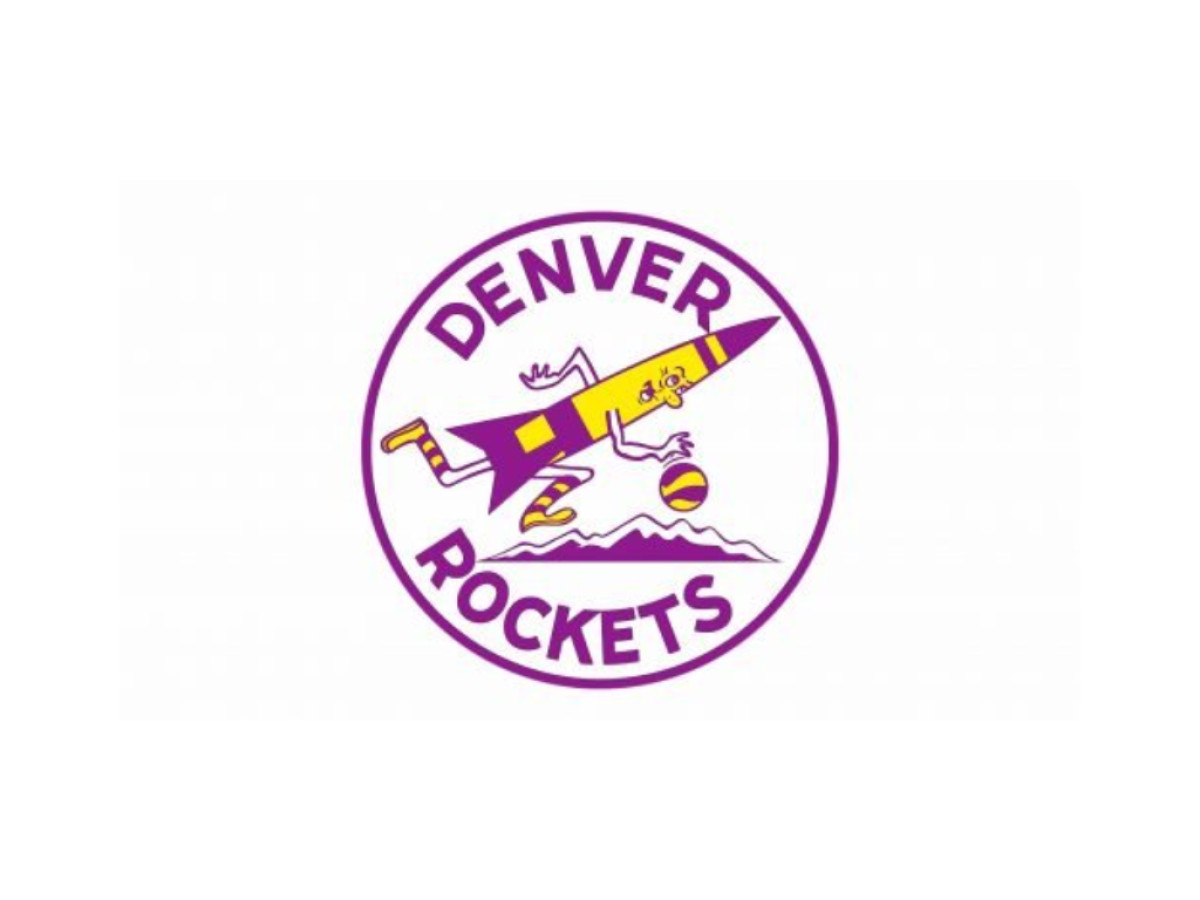
The 1971 redesign threw out the restraint. The palette switched to purple and yellow, and the composition became a cartoon: a colorful rocket character running with a basketball across a backdrop of mountain peaks, the wordmark wrapped around the circle in purple capitals.
It was loud, illustrative, and unmistakably of the ABA, a league that sold flash as hard as it sold basketball. The mark traded polish for energy, and it pointed the brand toward the friendly, character-driven identity that came next.
1974 to 1976: Maxie the Miner Arrives
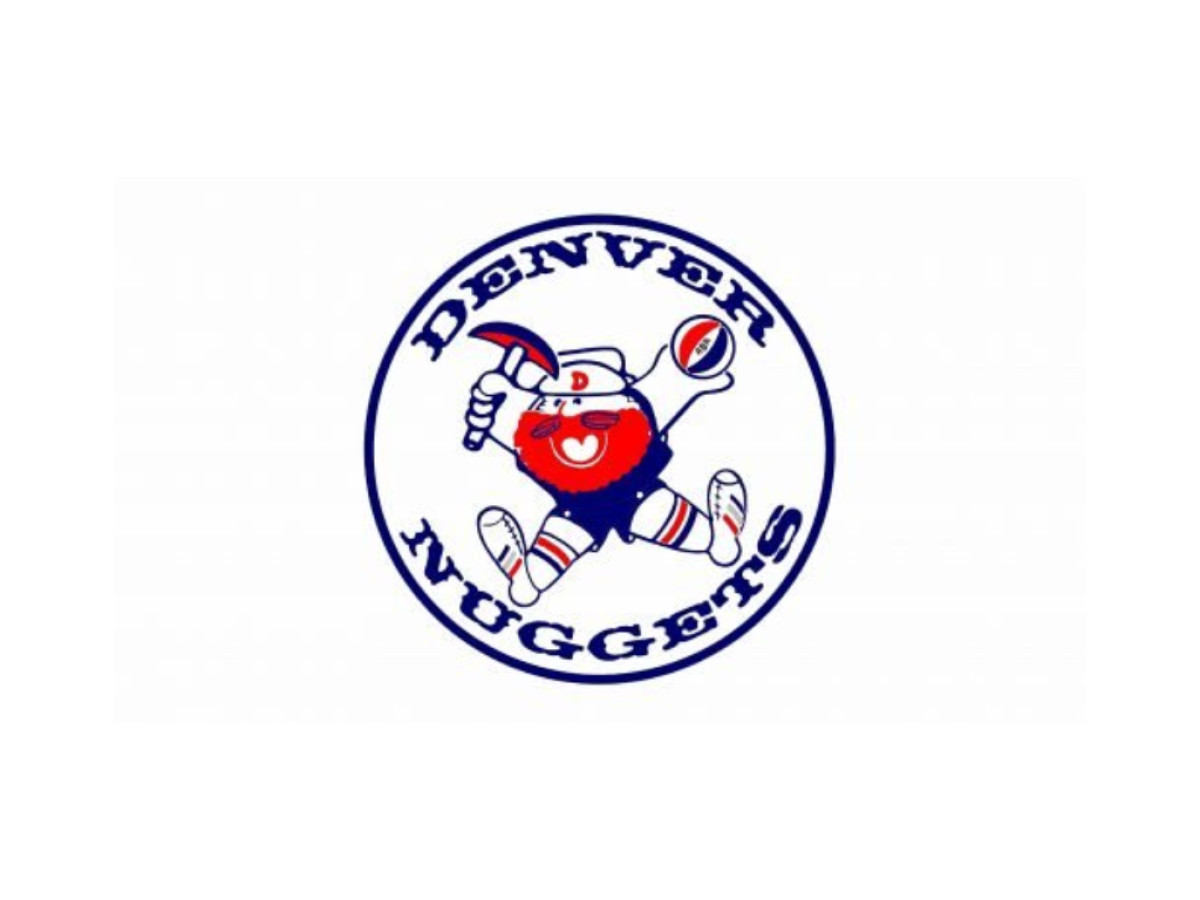
The name change came from league math, not marketing. With a merger between the American Basketball Association and the National Basketball Association approaching, the Denver Rockets needed a new name because the NBA already had a team called the Rockets in Houston. On August 7, 1974, the franchise became the Denver Nuggets, and it joined the NBA in 1976.
The new logo introduced a bearded prospector, later nicknamed Maxie the Miner, a giddy Yukon Cornelius-style character holding the ABA's red-white-blue basketball aloft inside a circular badge. His coloring tied the design to both Americana and the league's showmanship, and the round layout set a template the brand returned to for decades.
1976 to 1981: Maxie, Refined
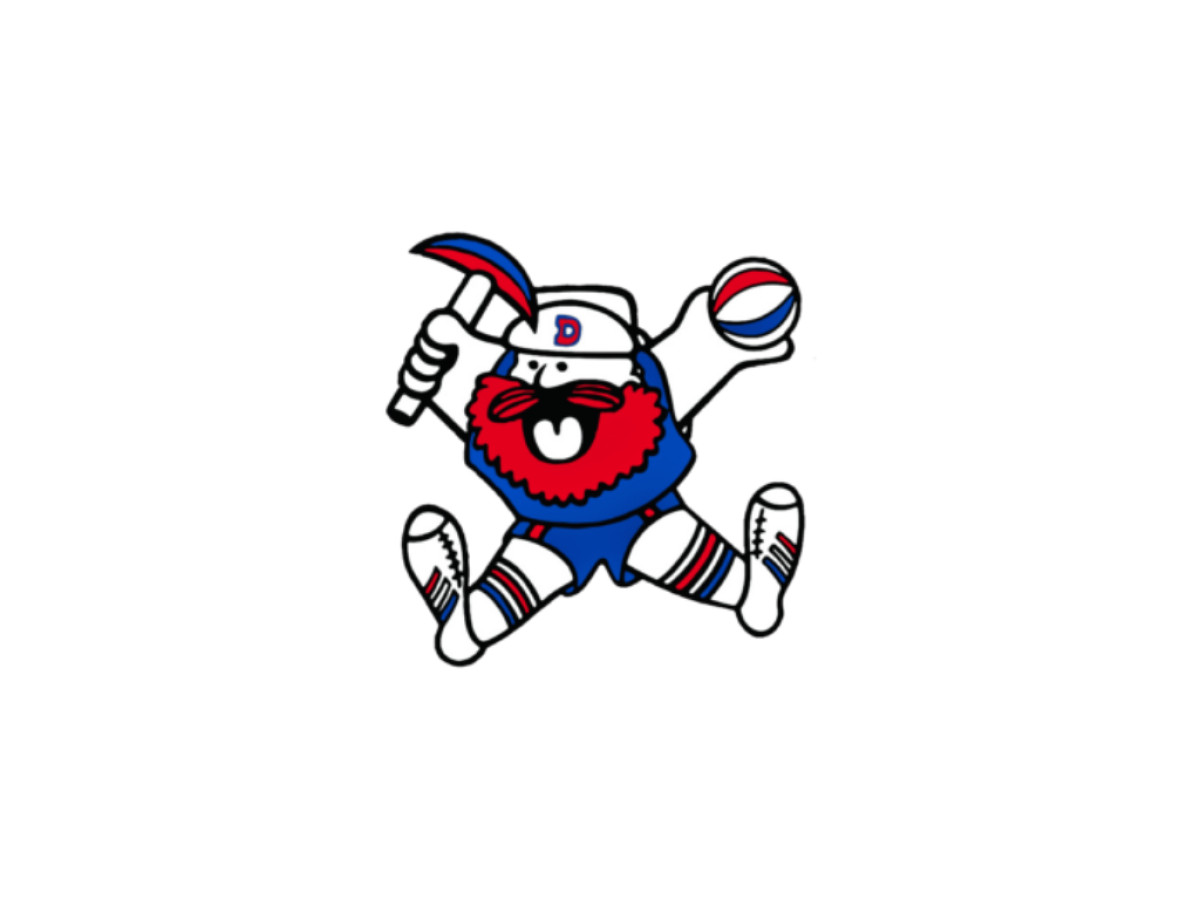
The late-1970s version kept Maxie but dropped the circular border, leaving the leaping miner to stand on his own with a pickaxe raised in one hand and a basketball in the other.
The drawing style held, but the contours grew bolder and the red on his shirt and beard ran darker, which gave the mark a stronger, cleaner read. It was easier to reproduce on uniforms and merchandise, a small concession to the consistency that broadcast and retail were beginning to demand across sports and leisure logos.
1981 to 1993: The Rainbow Skyline
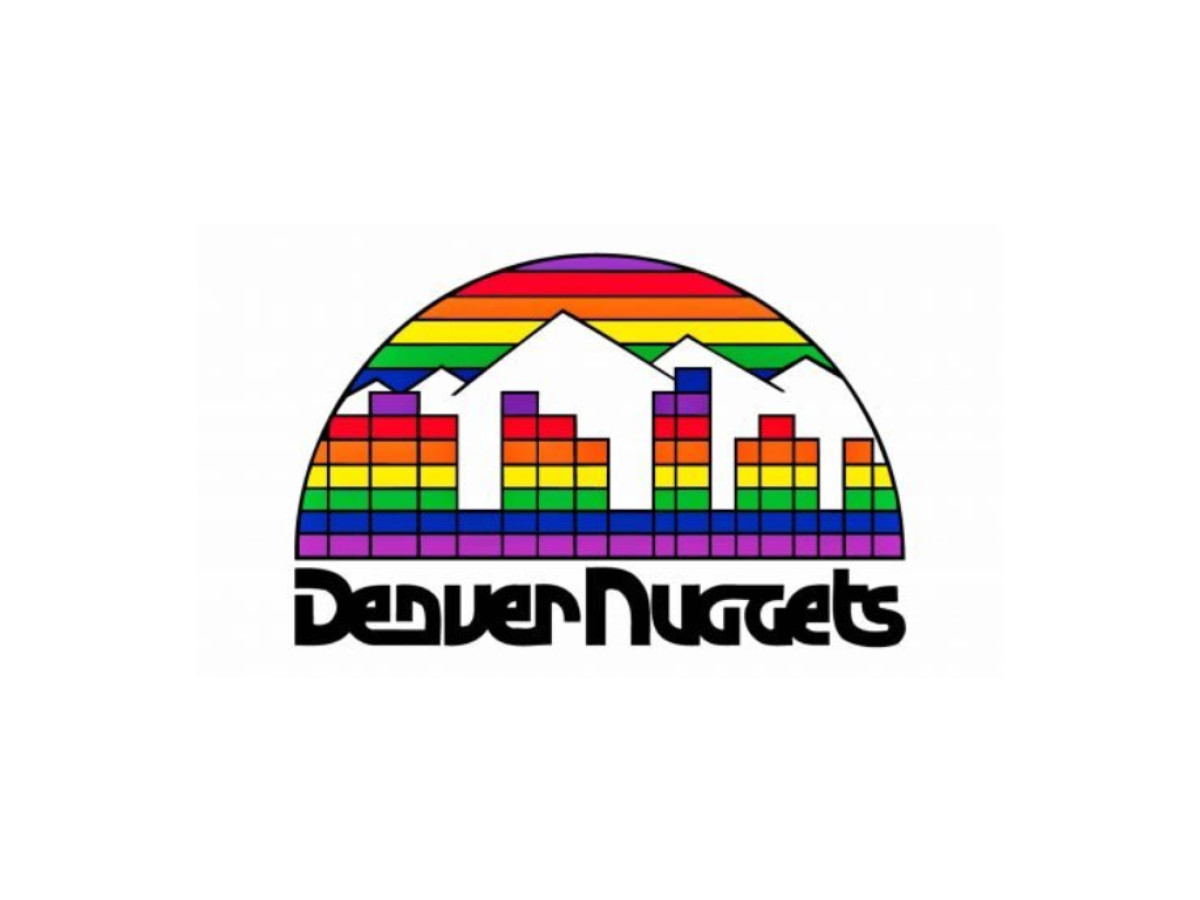
The 1981 redesign produced the most beloved logo in franchise history: a half-circle skyline rendered in rainbow blocks, white mountain peaks rising at the top, the words "Denver Nuggets" set in slab type below.
The design came out of a fan contest organized by then-general manager Carl Scheer, who invited the public to submit ideas, with the winning concept chosen by team staff. Its grassroots origin gave it staying power. From 1982 to 1990, while the team wore the Rainbow Skyline uniforms, the Nuggets reached the playoffs nine straight times, and the mark still drives throwback merchandise decades later. Research backs the instinct: a 2022 study in the Journal of Applied Sport Management found that nostalgic proneness positively predicts a preference for retro merchandise, with younger fans among the most likely to buy it (Scola, Gordon and Dwyer).
1993 to 2003: The Mountain Crest
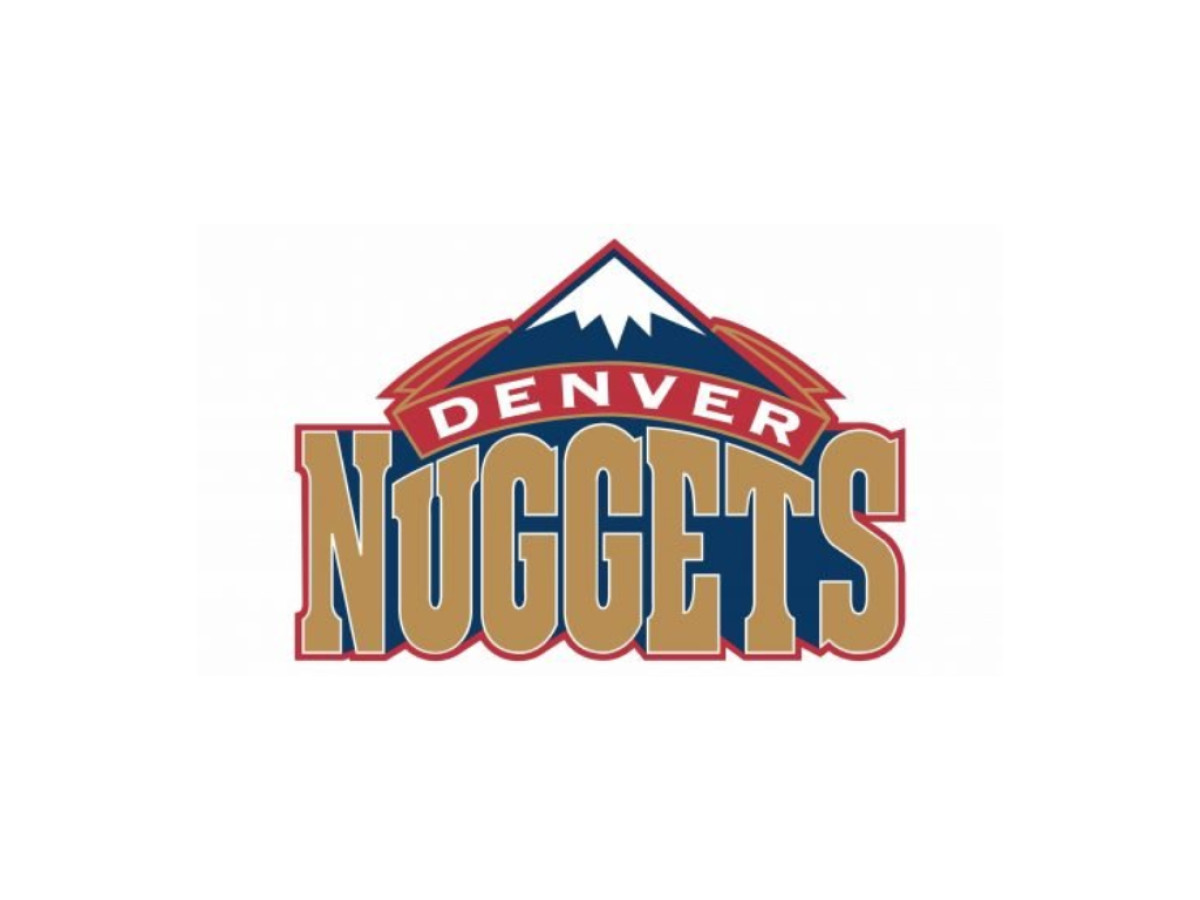
In 1993 the Nuggets dropped the rainbow for something grounded: a royal blue and white mountain, a red arched banner carrying "DENVER" in white, and an enlarged gold "NUGGETS" in a bold serif below the peaks.
The shield-like structure signaled a more serious, competitive posture as the franchise worked to rebuild. It was the first time the brand leaned fully on geography rather than character, and the mountain has stayed in the logo ever since.
2003 to 2008: A Brighter Palette
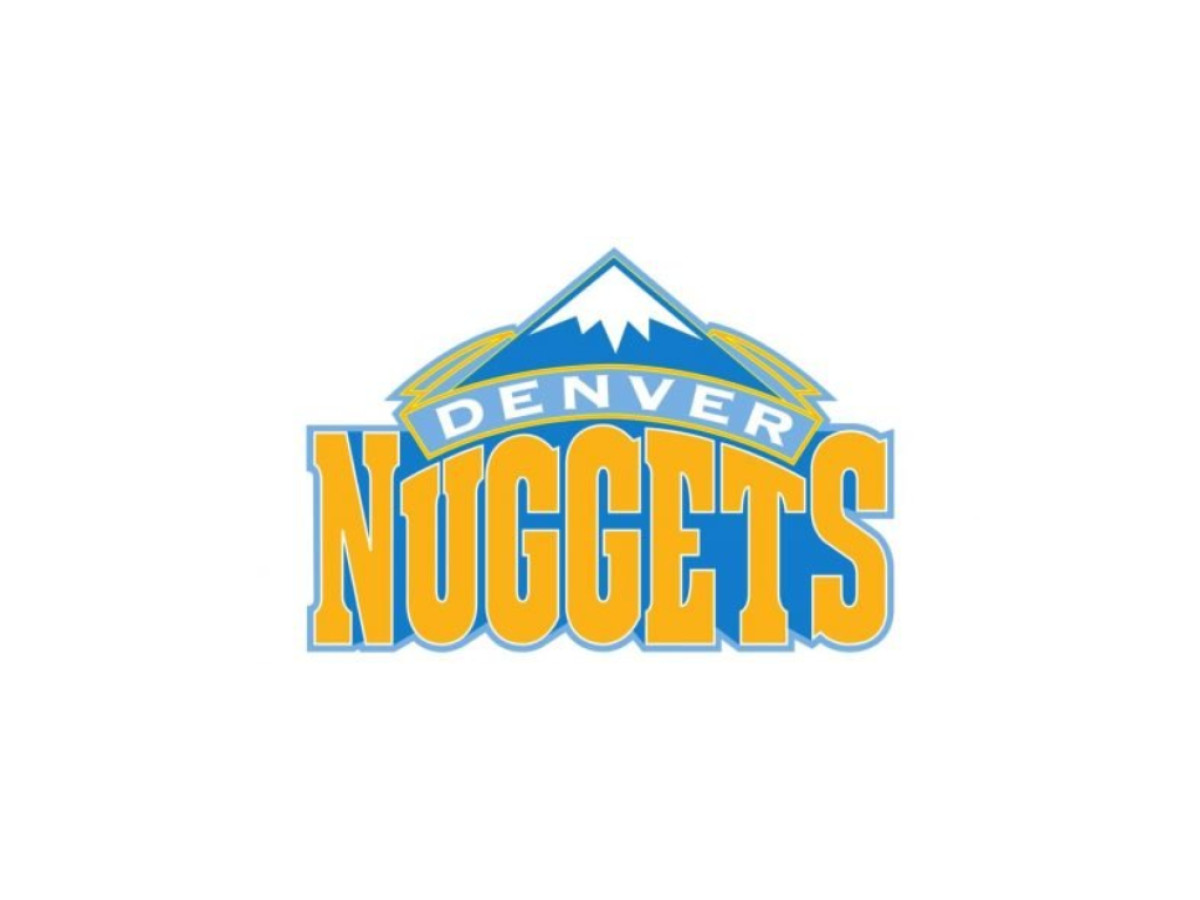
The 2003 update kept the mountain crest but freshened the color. Sky-blue peaks and gold-accented lettering replaced the heavier navy, projecting youth and speed as the Carmelo Anthony era opened.
The structure did not move. Only the tone did, softening the mark into something more optimistic without abandoning the architecture set in 1993.
2008 to 2018: Deeper and Colder
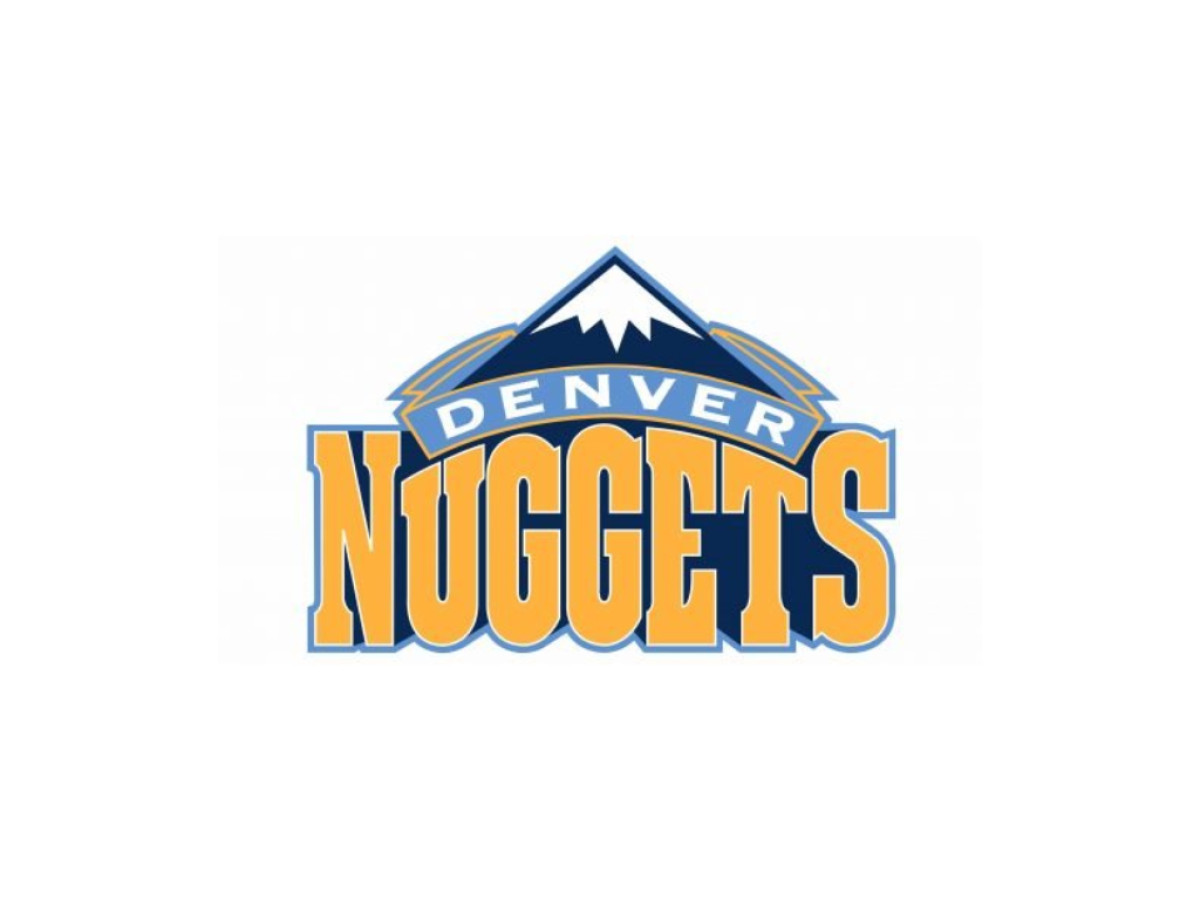
By 2008 the mood shifted back toward weight. The blues deepened, the yellows intensified, and the arched banner took on a lighter blue that read like Colorado cold and snow.
The recalibration added contrast and legibility across broadcast, digital, and apparel. It was the last version of the mountain crest, and in hindsight it functioned as a holding pattern before the franchise rethought the identity entirely.
2018 to Present: The Pickaxe Crest
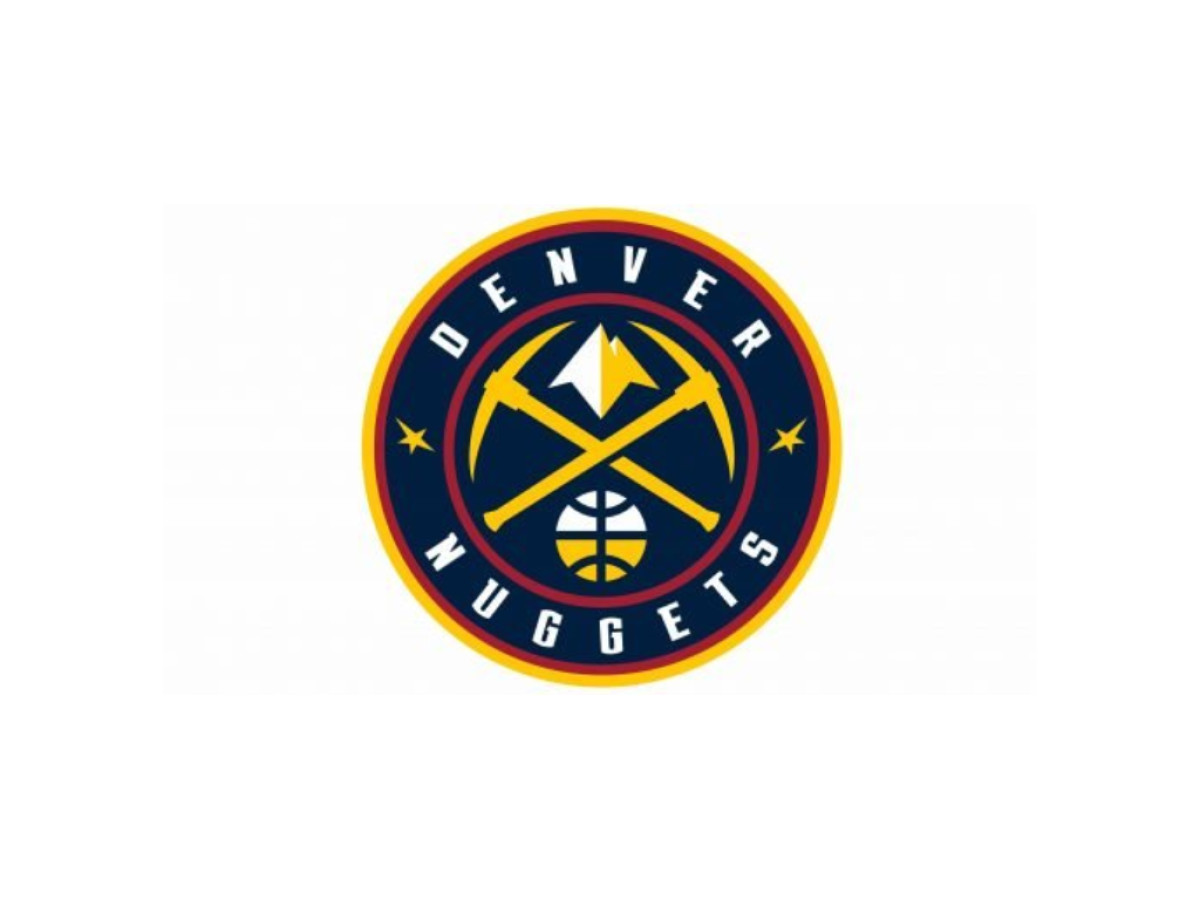
The 2018 overhaul was led by Kelley Kocher, who headed the internal creative team at Kroenke Sports & Entertainment, the company that owns the team. Kocher's group worked closely with NBA and Nike representatives, and the franchise brought in Steve Stoute's agency, Translation, to pressure-test concepts. The work began years earlier with market research and conversations with fans, players, and partners.
The reveal had a stage few logo launches get. On the night of Game 3 of the 2018 NBA Finals, with Cleveland and Golden State midway through their series, Nuggets players, executives, and coaches gathered in downtown Denver to unveil the identity. The package was substantial: six new logos, three updated uniforms, and a four-color system. Vice chairman Josh Kroenke framed it around one word, "Evolve," positioning the refresh as a way to hand the Nikola Jokic era an identity of its own.
Then the team won. Denver's first championship in 2023 did more for the brand than any redesign could. Brand Finance reported the Nuggets climbed three spots in its NBA ranking after the title, then named Denver the fastest-growing brand in the league a year later, citing a 122% jump in brand value. Forbes valued the franchise at $3.9 billion in 2024, and the team has held a spot among the league's top 10 in merchandise sales, an outsized result for a smaller market.
What's in the Current Denver Nuggets Logo
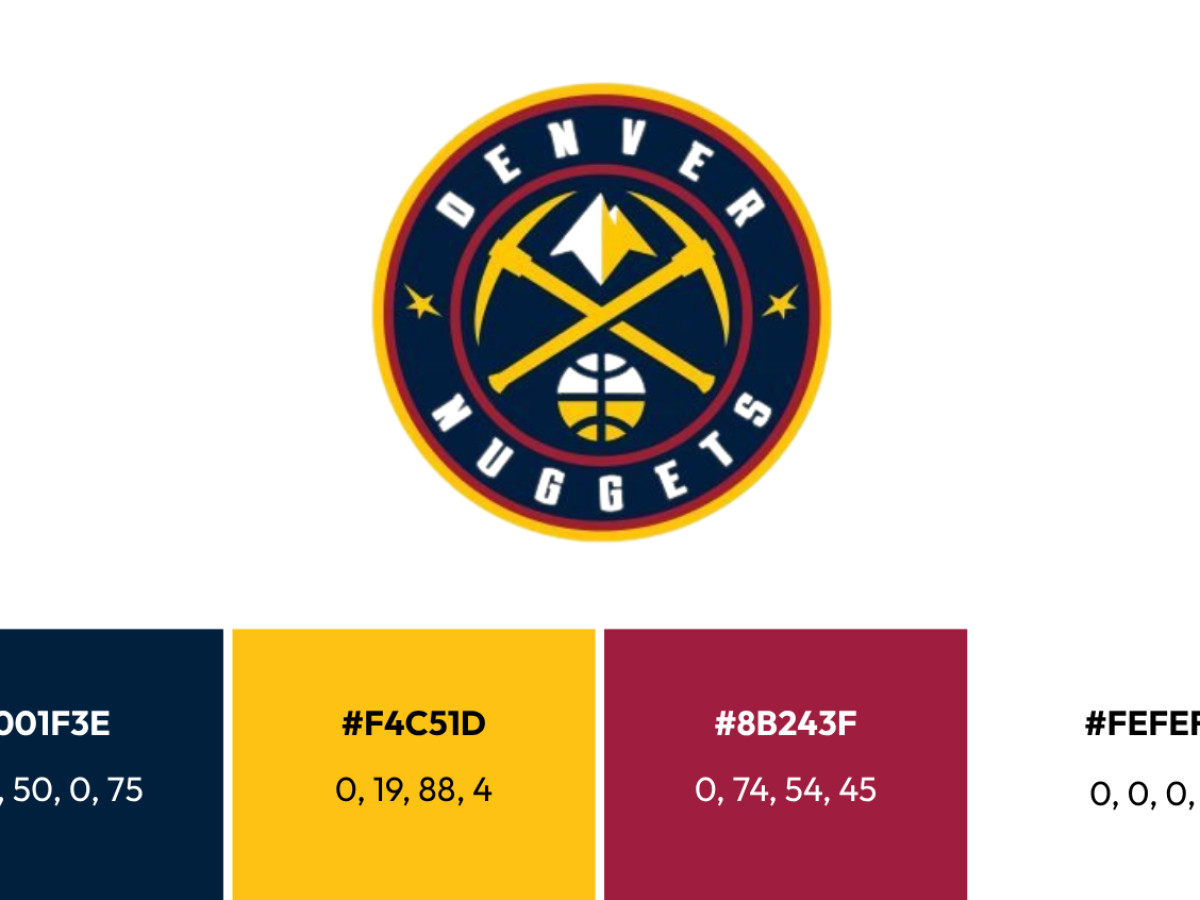
Good logo design makes every element justify its existence. The 2018 mark passes that test, in part because the franchise spent five decades cycling through mascots, rainbows, and palette tweaks before committing to a single idea.
Look at what made the cut:
Crossed pickaxes: the through-line of the whole brand, a direct nod to Colorado's mining past and the prospector who carried the logo through the 1970s. Reduced here to two clean golden tools, no cartoon required.
Mountain peaks: the Rocky Mountain geography that has anchored the identity since 1993, now stripped to a white summit above the pickaxes.
Basketball: rendered in yellow and white below the tools, the one piece of equipment that has survived in some form since the original Rockets badge.
Navy roundel and stars: a dark blue circle framed by a yellow-and-red outline, with two yellow stars separating the two halves of the wordmark. The lockup holds a 1:1 ratio inside that circle, which lets the mark scale cleanly from a phone screen to center court.
Four-color system: Midnight Blue (#0E2240) for the state's mountain shadows, Sunshine Yellow (#FEC524) for gold nuggets and Colorado sun, Flatirons Red (#8B2131) for Boulder's rock formations and competitive passion, and Skyline Blue (#1D428A) for the clear mountain skies. The full values are documented in the official palette. Color does real work here: a peer-reviewed study on sport fandom found that team color enhances a team's halo effect and extends the emotional bond between supporters and the brand.
Aachen Bold wordmark: the slab serif drawn by Colin Brignall in 1969, used across the lettering, player names, and numbers, square and sturdy enough to hold up at any size.
What this logo really is, looked at closely, is a franchise finally trusting its own history. The mining motif had been there since Maxie in 1974. The mountains had been there since 1993. The 2018 redesign did not invent a story so much as it resolved one, locking the brand into geometry sharp enough to survive broadcast compression and merchandise printing. That restraint was the smart play: a 2022 study in the International Journal of Sports Marketing and Sponsorship found that revolutionary and color-only logo changes draw the most negative reaction from fans (Williams and Son), which makes an evolutionary redesign that keeps the heritage cues the safer bet. Five years later a championship gave that decision its payoff.
The banner in Ball Arena and the crest beneath it now read as one piece. Most logos built to chase a moment get replaced when the moment passes. This one was built to last, and so far it has.
Looking to apply the same approach to your growing market? We can connect you with the right creative partners.
Browse our Agency Directory to find the most capable agency that can help elevate your brand:
And if you’re curious for more inspiration, don’t miss our other features on standout logo designs in sports.