
Walmart Logo: Key Points
Let's be honest: no one wakes up thinking about the Walmart logo.
But as someone who tracks branding systems the way most people track their step count, I couldn't ignore what happened in early 2025. After 17 years of leaving its identity mostly untouched, Walmart rolled out a refreshed look that, on the surface, looks familiar.
That was the point. And it is also why the internet spent a week roasting it.
Here is how a brand built on rollback signs and discount shelves ended up with one of the most digitally resilient identities in global retail, who actually designed it, and why the near-invisible changes were smarter than the memes gave them credit for.
- Walmart’s Origins: Built on Price, Shaped by Pragmatism
- Walmart Logo Evolution: A Timeline with Business Context
- The 2025 Refresh: Who Actually Designed It
- Why Walmart Went Omnichannel: The Real Reason Behind the Refresh
- The Symbolism Behind Walmart's Spark
- Walmart New Logo Vs Old: A Designer's Breakdown of Colors and Type
- The Public Reaction: The Internet Thought It Looked the Same
- Walmart Vs Target Vs Amazon: How the Restraint Compares
- From "Always Low Prices" to "Live Better": The Slogan Story
- Why A Near-invisible Refresh Was the Right Call
- Walmart Logo: FAQs
Walmart’s Origins: Built on Price, Shaped by Pragmatism
The Walmart brand started in 1962 with a simple premise: cut costs, pass on the savings.
Sam Walton's first store in Rogers, Arkansas, didn't need a brand book. It needed a sign that read "discount" without saying a word. That practical mindset shaped the early branding, which used plain, no-nonsense visuals to match the retail strategy.
As the business scaled through the 1970s and 1980s, the identity expanded with it. The chain incorporated in 1969 and went public in 1970, and the logo had to keep pace with a company moving from a handful of Arkansas stores toward national reach. The Walmart logo history tracks these milestones closely, shifting to meet new expectations while holding onto the original cost-first values.
Walmart Logo Evolution: A Timeline with Business Context
Want to understand the Walmart logo evolution from the ground up? Each milestone below ties a visual change to what the business was actually doing at the time. That context is what separates a real history from a changelog, and it explains why this remains one of the best e-commerce and retail logo designs in the industry.
1962–1964: The First Wordmark
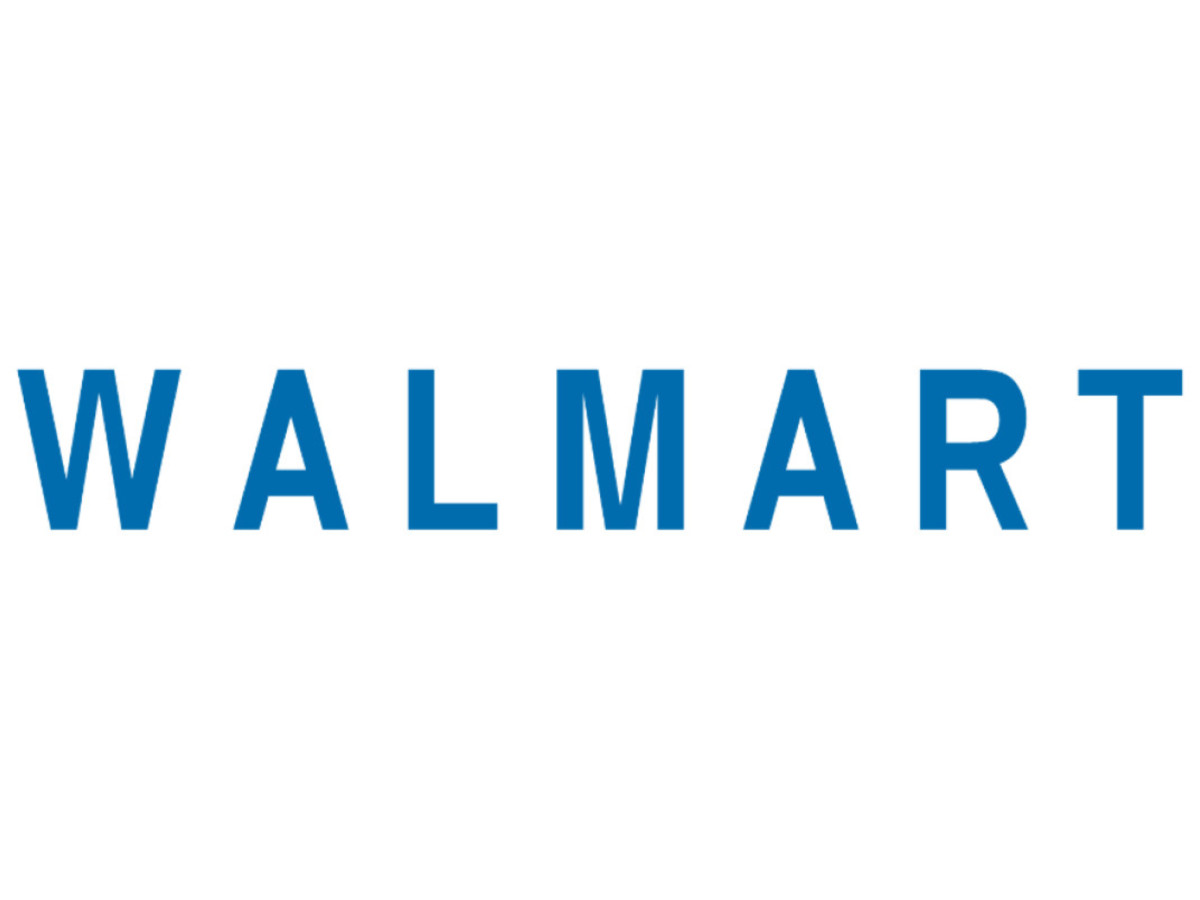
A plain sans-serif wordmark. No emblem, no flair, just the name on a storefront. With one store to its name, the company spent on inventory and price, not identity.
1964–1967: The Hyphen and “Discount City”
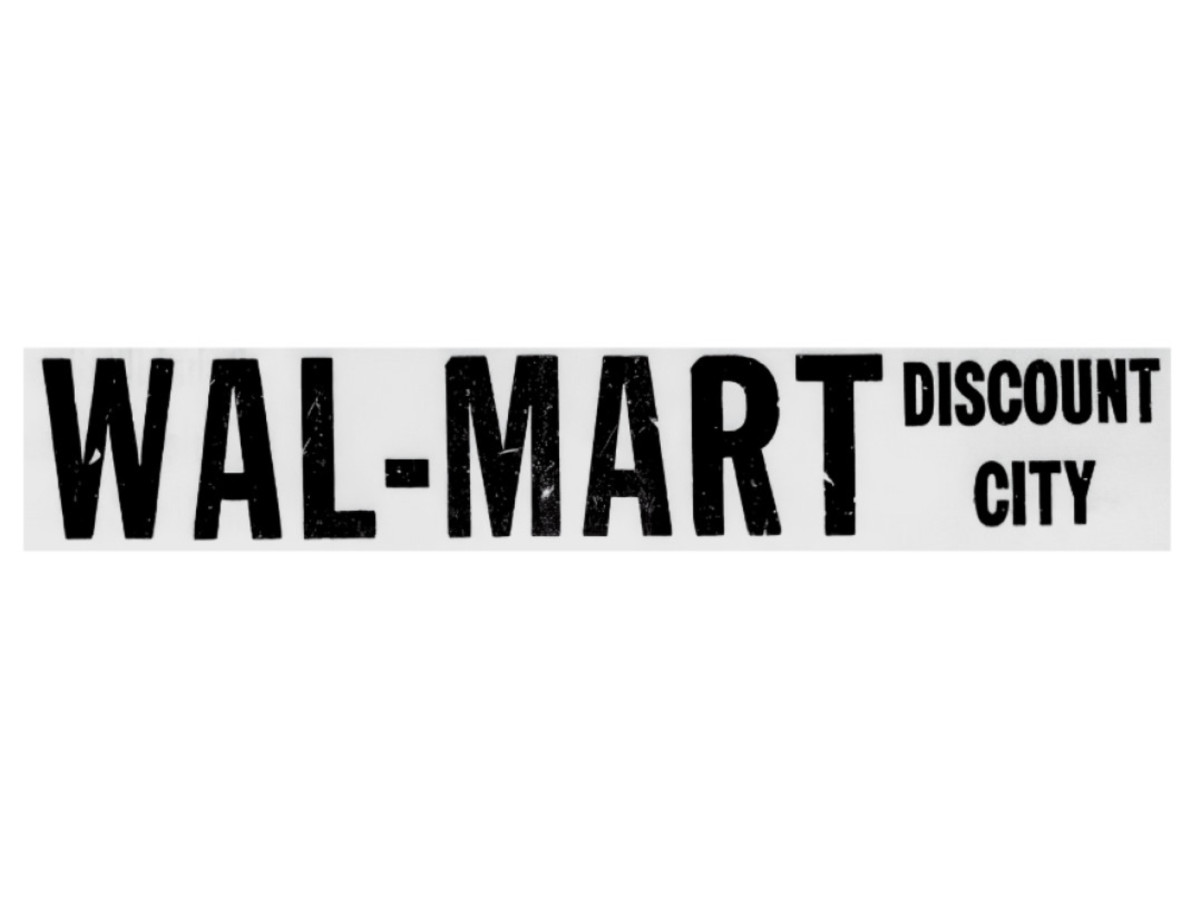
The hyphen arrives, linking "Wal" and "Mart," with "Discount City" added underneath. As Walton opened more locations, the signage had to telegraph the store format to drivers who had never seen the name before. Several versions floated around, some boxed, some circular, none especially polished.
1967–1970: The Boxed-letter Era
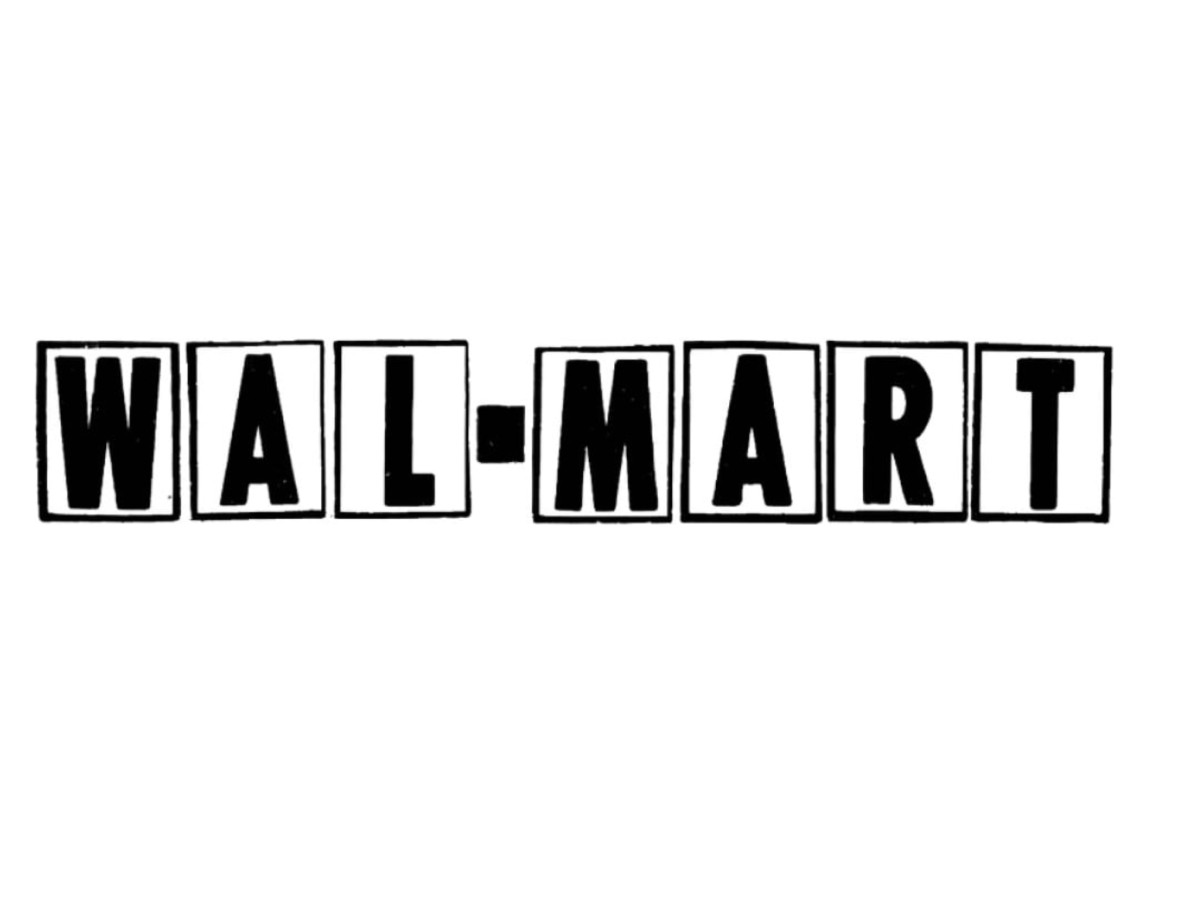
Each letter sat in its own rectangle, then the boxes shrank and lined up more evenly. These were legibility experiments for signs read from a parking lot or a passing car. Functional, if not memorable.
1970–1975: Reversed Color Scheme
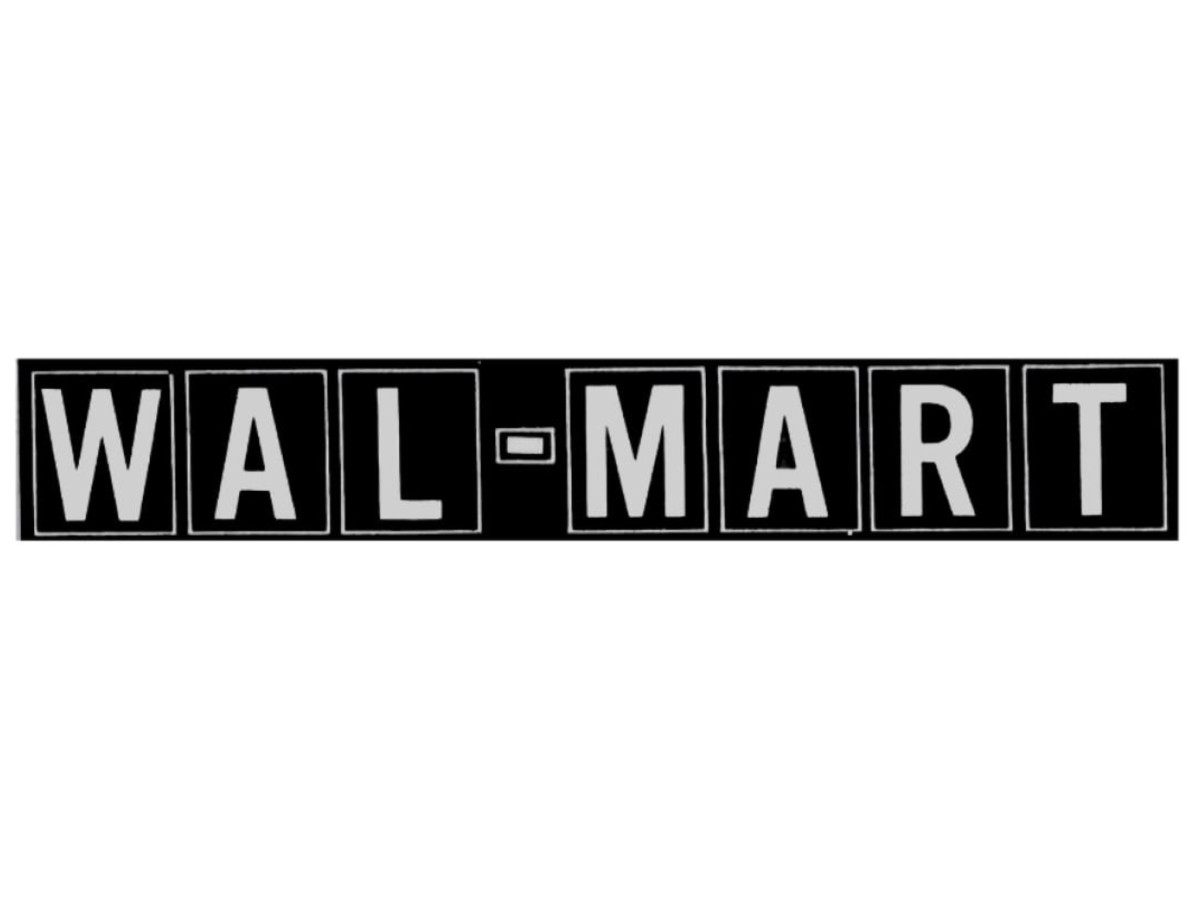
The boxes stayed, but the colors flipped to white boxes with black letters, and the spacing improved. This coincided with the public listing in 1970, when the company first had outside shareholders to present a tidier face to.
1975–1977: The Frontier Typeface
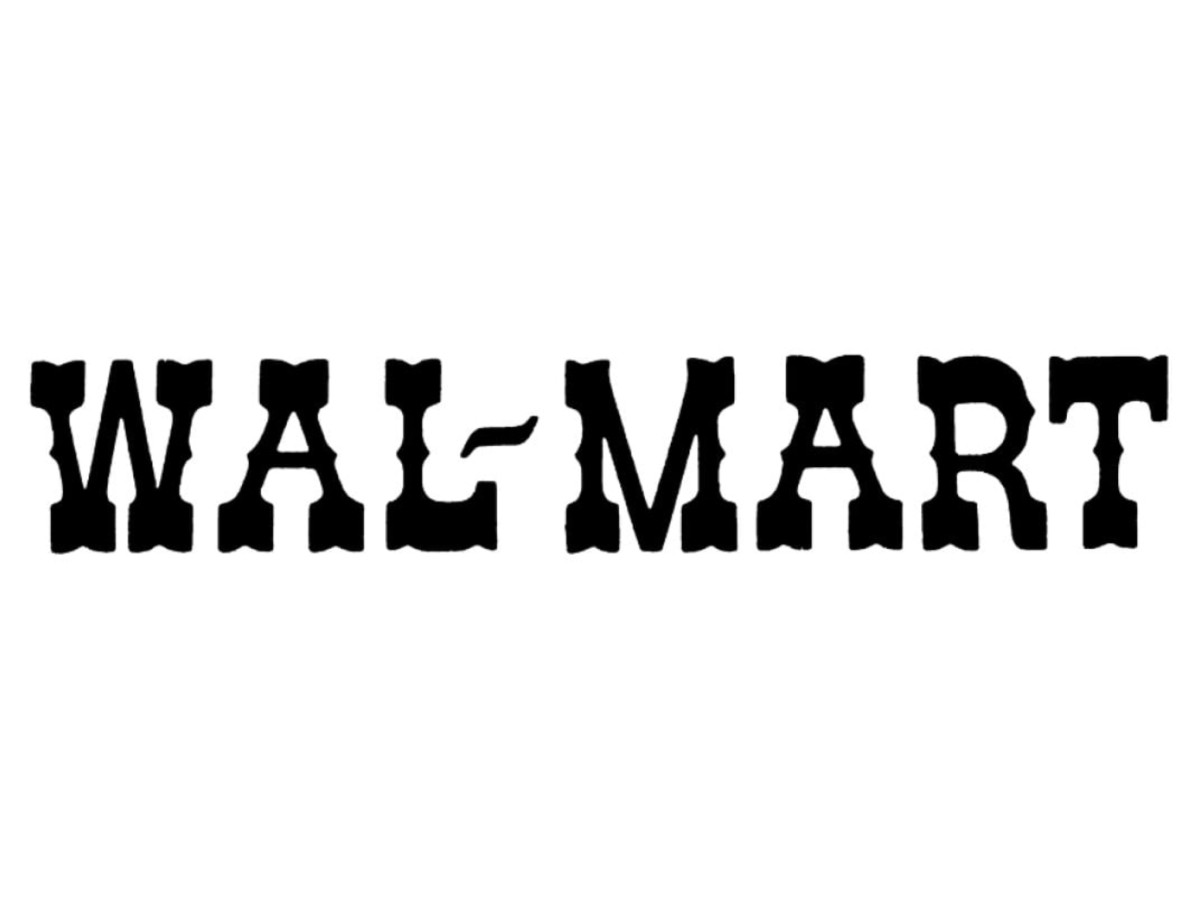
Out went the boxes. In came a Western-style serif with a handmade feel. The timing was not random: Walmart was expanding aggressively across the rural South, and the frontier lettering leaned into a small-town, heartland identity for customers in towns getting their first Walmart.
1977–1981: Blue Enters the System
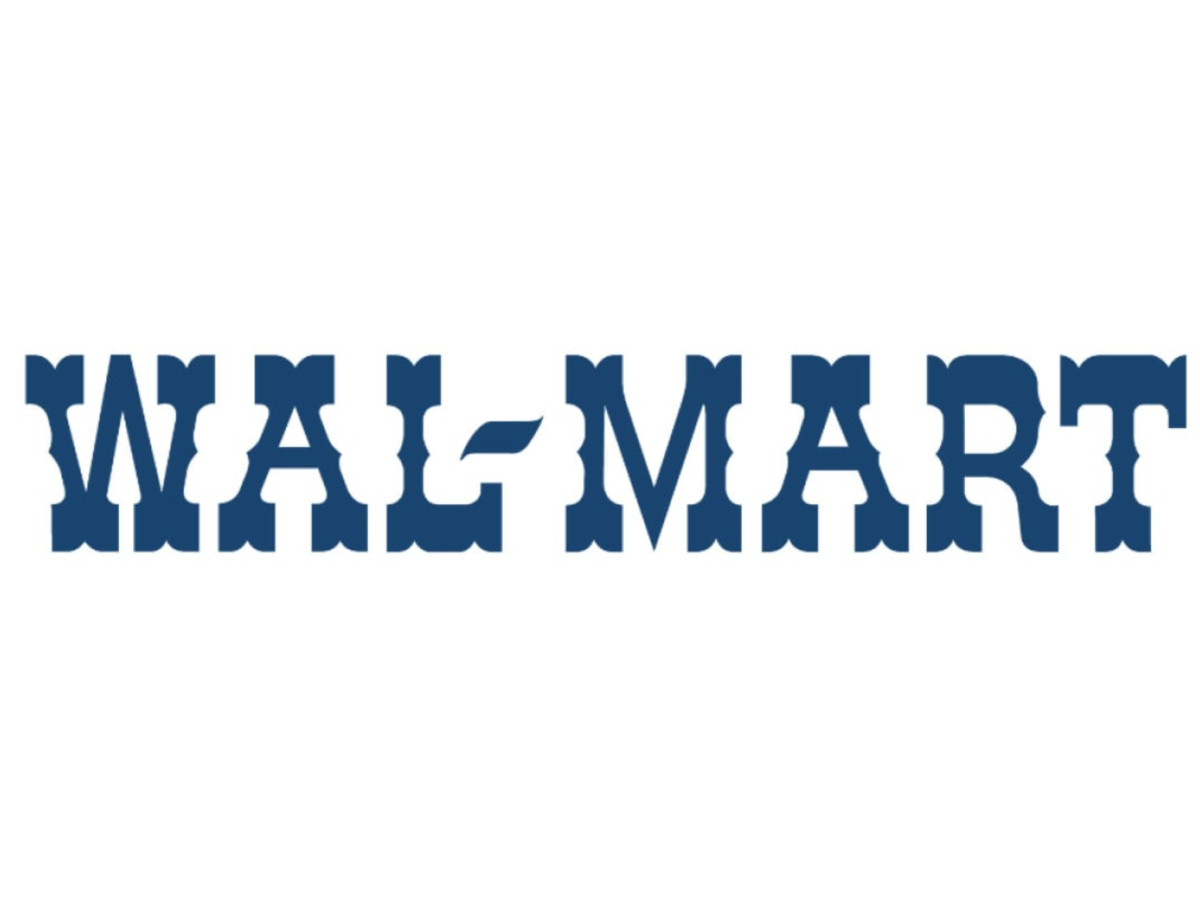
The frontier letterforms held, now rendered in dark blue. A small change that locked in blue as the color customers would come to associate with the brand for the next half-century.
1981–1992: Boxed, Bold, and Confident
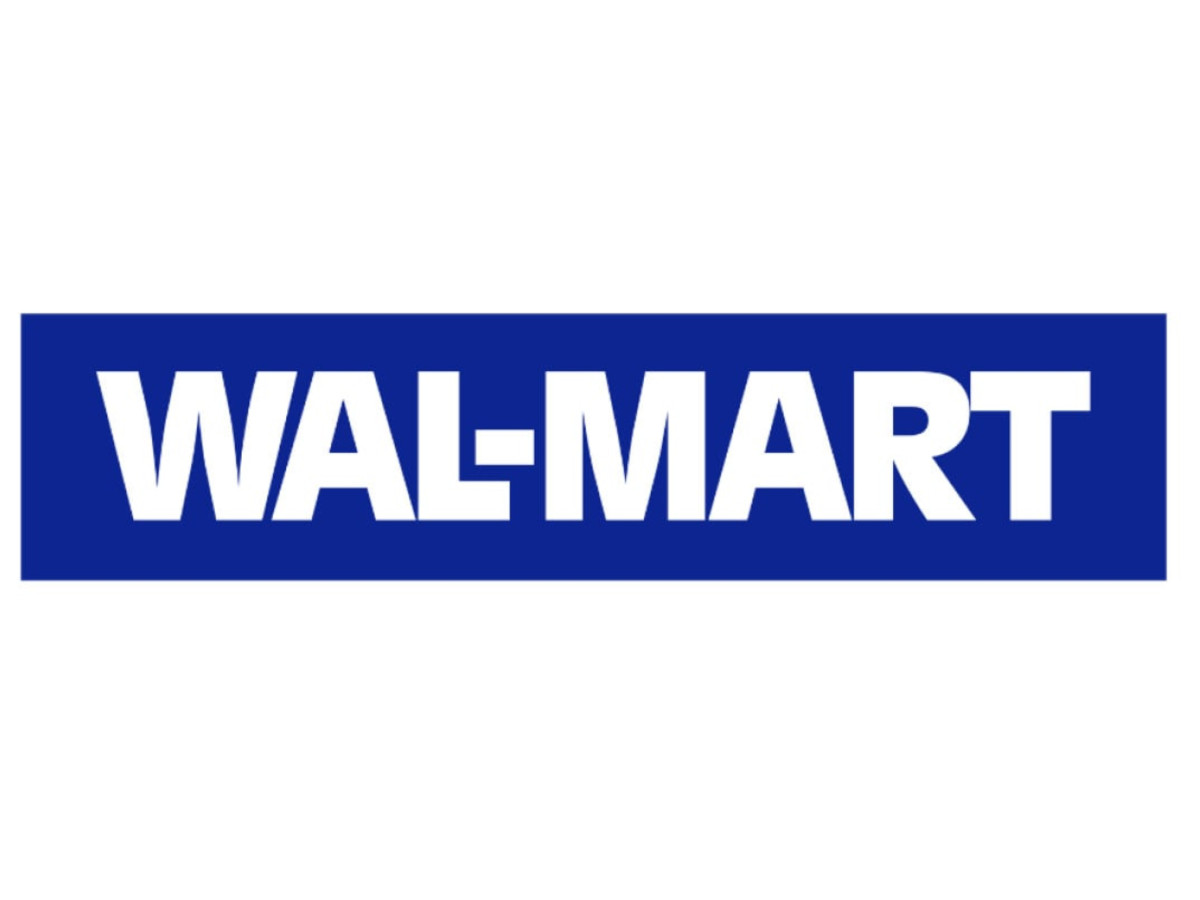
Antique Olive Black took over: heavy, boxed, and loud. By the early 1980s Walmart had grown from a regional discounter into a national contender squaring up against Kmart, and the typeface matched that ambition. The company would pass Kmart and Sears to become the largest U.S. retailer by revenue around 1990. This is the heavyweight era the 2025 refresh deliberately reaches back to.
1992–2008: The Star Period
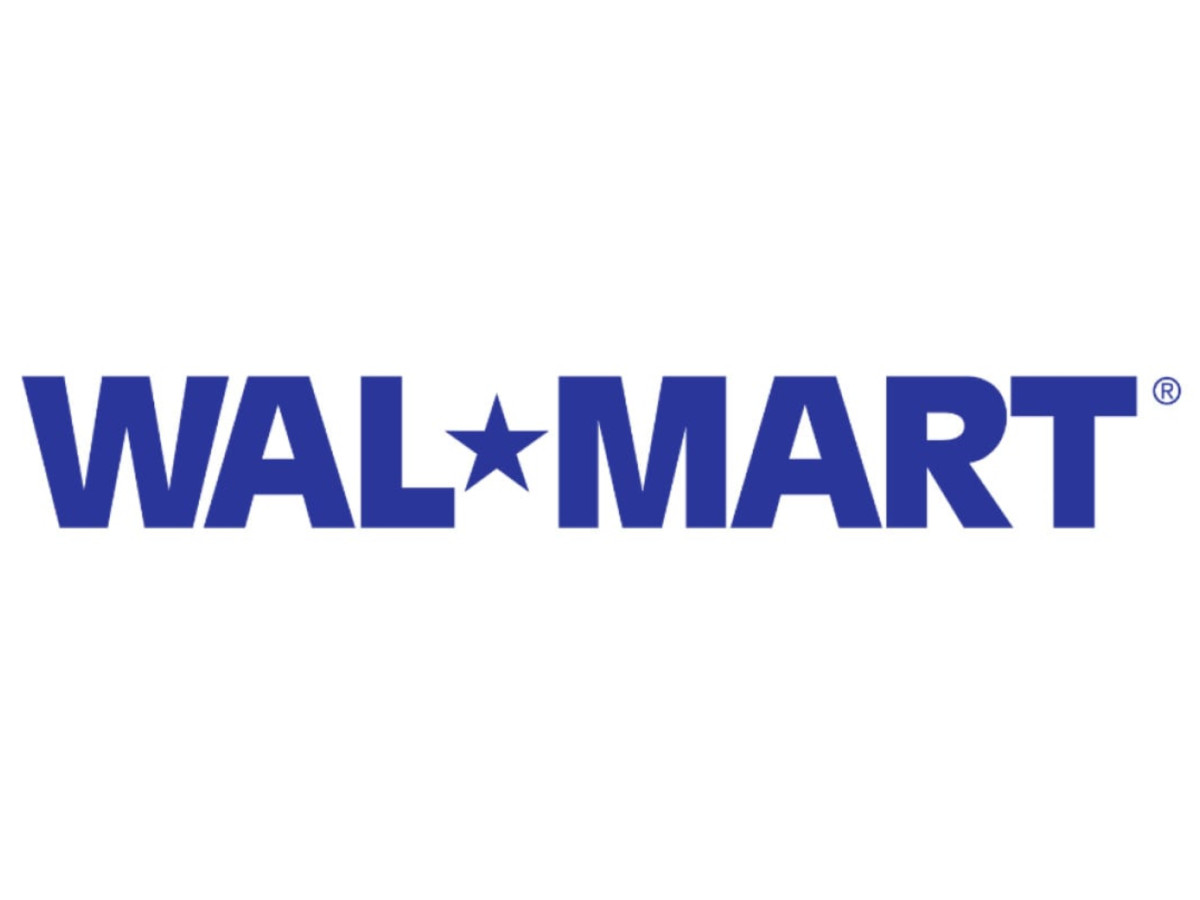
"Wal*Mart" dropped the box and added a star between the words, the year founder Sam Walton died. The softer mark suited a company expanding internationally and trying to look less like a price warehouse.
2008–2025: The Spark Arrives
Walmart dropped the hyphen, switched to a softer mixed-case font, and introduced the yellow six-pointed spark, a system developed with branding firm Lippincott. Coming out of the Great Recession, the friendlier mark paired with the new "Save Money. Live Better." positioning and showed up everywhere, from trucks to app icons.
The 2025 Refresh: Who Actually Designed It
Walmart's 2025 update looked minor at a glance. As someone who dissects brand systems for a living, I can tell you it was built for scale.
Jones Knowles Ritchie (JKR) led the work, in collaboration with Walmart's in-house Creative Studio. JKR is one of the most respected branding firms in the world, known for recent rebrands of Burger King, Yahoo and Mozilla.
The credit had previously gone almost entirely to Walmart's internal team. Landor handled in-store execution, and Publicis Groupe runs core marketing.
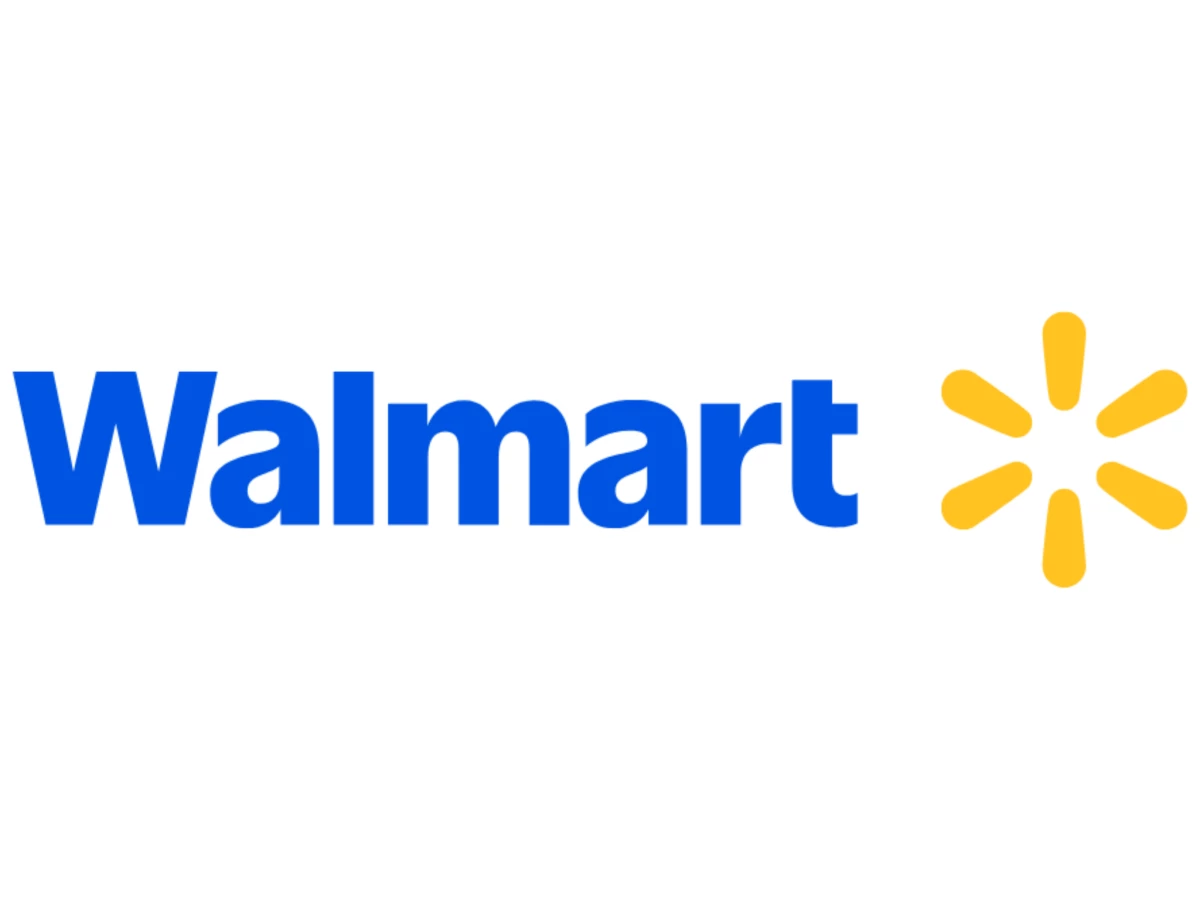
The new wordmark uses a custom typeface that Walmart calls Everyday Sans. It is based on Antique Olive, the same family Walmart leaned on in its advertising from the late 1970s through 1992, and it was tuned to echo the hand-drawn lettering on Sam Walton's trucker hat, the one he wore on the cover of his book "Made in America."
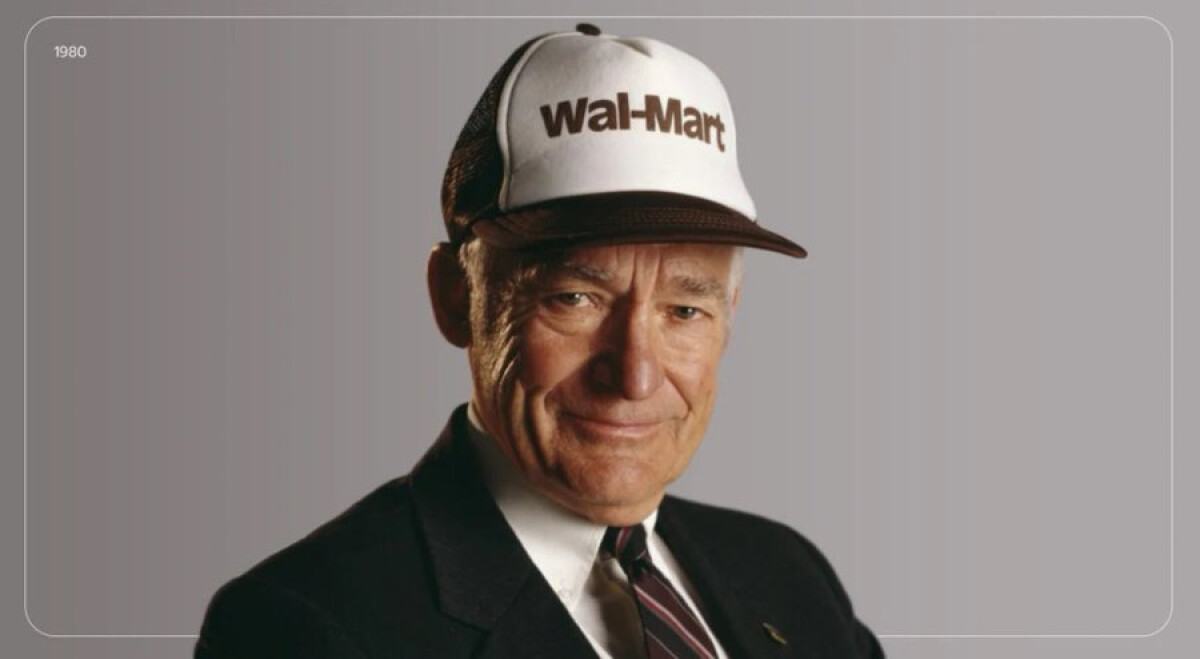
This is heritage put to work, not nostalgia for its own sake. The reference is specific, and it gives a corporate typeface an origin story most brands would envy. Everyday Sans replaces Bogle, the custom HvD Fonts face Walmart adopted in 2017. Both remain proprietary and are not licensed for public use.
Why Walmart Went Omnichannel: The Real Reason Behind the Refresh
Most coverage framed this as a visual story. Walmart framed it as a business one.
The company positioned the refresh around the growing role that digital and cross-channel shopping now play in retail. "It's more about aligning the visual expression with how the brand has evolved since 2008," said David Hartman, Walmart's VP of creative.
In practical terms, he described it as establishing Walmart "as truly an omnichannel retailer versus just a brick-and-mortar retailer."
That tracks with where the money has gone. Walmart's push into digital accelerated after the 2020 launch of its Walmart+ membership, a direct answer to Amazon, and U.S. e-commerce sales grew 22% in the third quarter of fiscal 2025.
The identity had to hold up in the places that growth lives: the app, Walmart.com, retail media placements, and a favicon, not only the side of a store.
So the brief was consistency across channels. Hartman calls the underlying framework a "brand operating system," built so that a product on the app reads the same as a banner in a circular or a sign in an aisle.
Seen that way, the redesign is less about a prettier logo and more about a mark that survives being shrunk, stacked, and animated across a thousand surfaces.
You can read the full rationale in Walmart's official press release and browse the live guidelines in its brand center.
The Symbolism Behind Walmart's Spark
Let’s talk about the Walmart symbol.
When it debuted in 2008, the spark was clean geometry: six rays spaced at 60-degree intervals. It
When the spark debuted in 2008, it was clean geometry: six rays spaced at 60-degree intervals. Balanced, but a little cold.
Over time people read more into it. Some see Walmart's core values in each sparklet. Others see the original idea that sparked Walton's vision. I see a flexible asset that rewards interpretation without demanding it.
In 2025 the spark got real polish. The angles soften, the spacing opens up, and the icon sits farther from the wordmark so each can stand alone. Here is how the current form holds up:
- Structure: rotational balance with smoother edges and tighter internal spacing
- Function: scales cleanly from packaging and signage down to a mobile app icon and favicon
- Symbolism: now treated as a standalone piece of iconography, not a badge welded to the name
That separation is the quiet headline of the whole refresh. The spark is being groomed to work on its own, the way Target's bullseye already does.
Walmart New Logo Vs Old: A Designer's Breakdown of Colors and Type
For a design publication, "more vibrant blue" is not an answer. Here are the actual values, and what changed.
The pre-2025 wordmark ran on a blue around #0071CE. The refreshed palette moves to True Blue (#0053E2), a deeper, more saturated, more electric blue that gains contrast against white and reads better at small sizes.
Spark Yellow stays at #FFC220. For typography, Walmart introduced Bentonville Blue (#001E60), a near-navy that handles dense or detailed copy where True Blue would vibrate.
Two lighter accents, an Everyday Blue and Sky Blue around #4DBDF5 and #A9DDF7, exist mainly to build hierarchy in charts and presentations.
My read as a designer: the contrast upgrade is the right move, and the deeper True Blue is a measurably better web color than the old one. The limitation is range. The system rests on two hero colors and a narrow blue family, which keeps recognition high but leaves the palette short on expressive flexibility for a brand that says it wants to be digital-first. There is room to grow a wider secondary set without touching the logo itself.
On type, Everyday Sans widens the apertures and rounds the terminals of Antique Olive, and the rounding rhymes with the spark's softened points. Wider characters help legibility across both a billboard and a phone. It doesn't shout. It shows up consistently, which is the harder thing to pull off.
This is a redesign that earns its keep through restraint. It refines what customers already trust rather than chasing a trend.
The Public Reaction: The Internet Thought It Looked the Same
Here is where strategy met the comment section.
Within hours of the January 13 reveal, social media filled with side-by-side posts of the Walmart new logo vs old, and the verdict was loud.
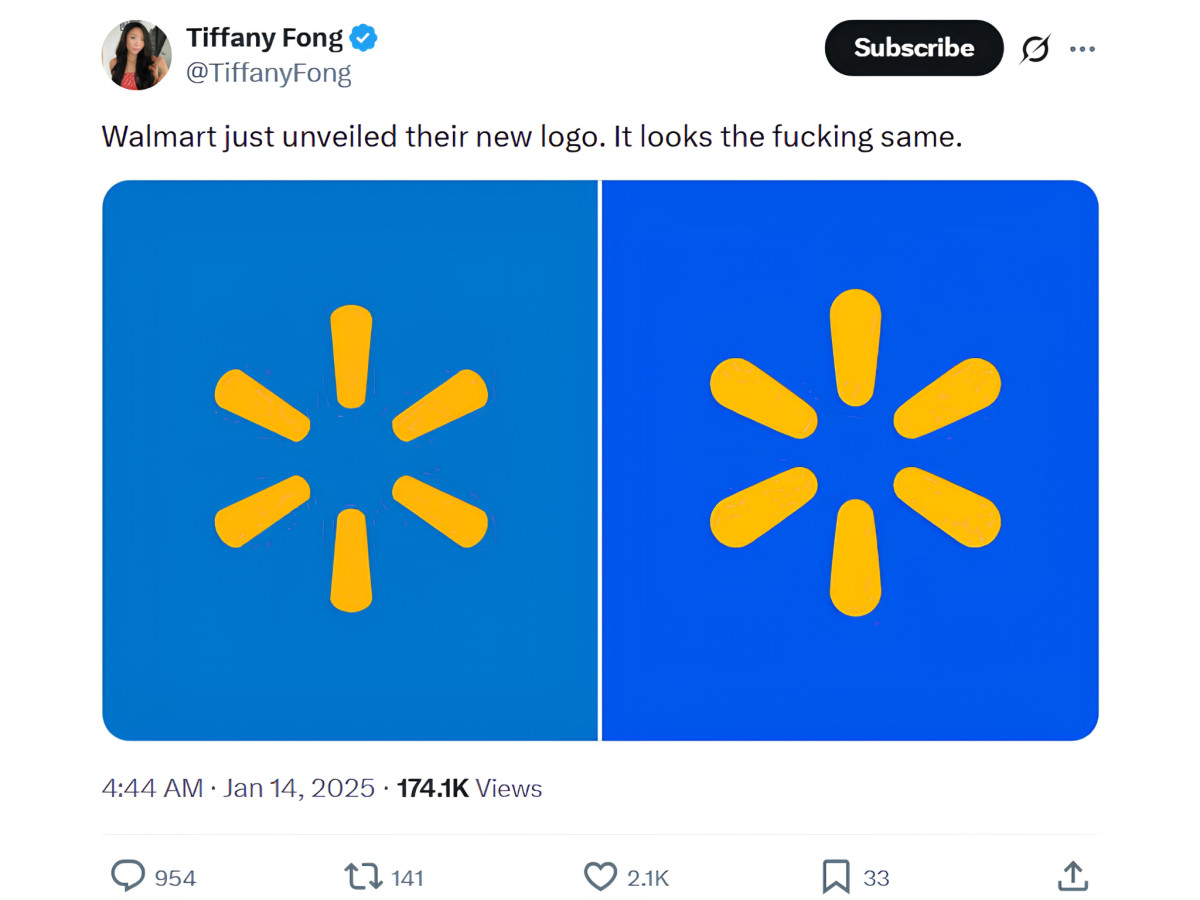
Newsweek catalogued users joking that it "looks the same." Others reached for "The Office" ("they're the same picture") and "Succession" ("you are not serious people"). A rumored rebrand budget in the low millions became its own punchline, the kind of figure people cite to argue the work was overpriced.
It is worth sitting with why this happens, because it happens to almost every big-brand refresh. Two forces drive it. The first is attachment: people know the old Walmart logo, and any change to something that familiar reads as wrong before it reads as anything else.
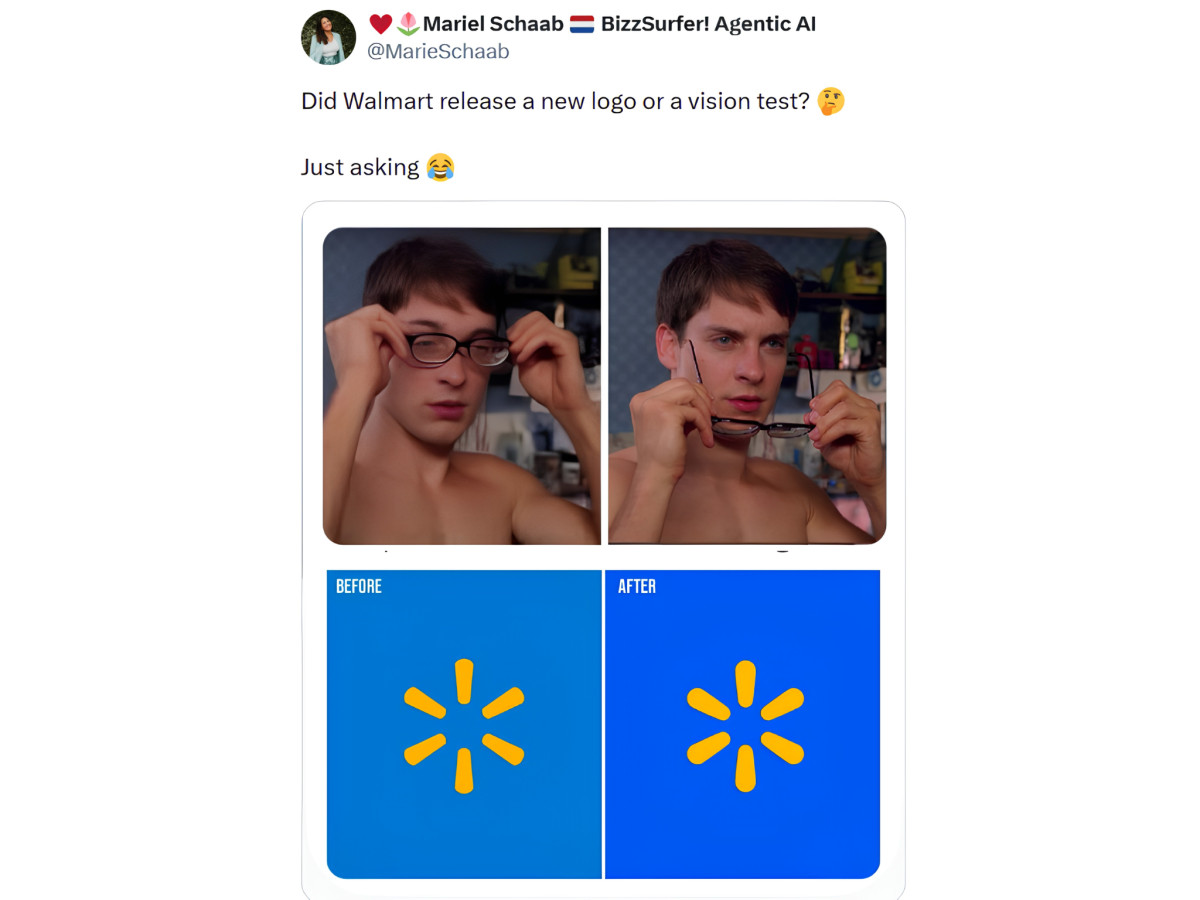
The second is overconfidence, the assumption that a subtle wordmark tweak is easy because the result looks simple. Forbes framed the backlash as a mix of fear of change and a belief that the work must have been trivial.
Both reactions miss the same point. A company with awareness this high has more to lose from a dramatic overhaul than from a quiet one. The "invisible" redesign that gets mocked is often the disciplined choice, not the lazy one.
Walmart Vs Target Vs Amazon: How the Restraint Compares
The mockery looks different next to how Walmart's peers handle their marks.
Target has spent two decades doing almost nothing to its bullseye, and that consistency is exactly why the icon now works with no wordmark at all. You can see the discipline in our breakdown of the Target logo.
Kroger has gone the opposite way at the edges, softening into rounder forms and warmer color. Amazon sits at the aggressive end, extending its wordmark and smile into sub-brand systems and frequent product lockups.
Walmart's 2025 move lands closest to Target: protect the equity, sharpen the asset, let the symbol carry more weight on its own. The difference is that Walmart did it all at once and in public, which is what handed the internet a before-and-after to dunk on.
Strategically, "Walmart vs Target logo" is the right comparison, and on that axis the refresh is consistent with the most durable identity in mass retail rather than a departure from it.
From "Always Low Prices" to "Live Better": The Slogan Story
Walmart's current slogan, "Save Money. Live Better.", was adopted in 2007 and still runs in stores and advertising. Earlier slogans focused only on price. This one adds a human benefit, connecting the act of saving with the quality of daily life.
The idea traces to a 1992 speech by Sam Walton, who argued that lowering prices for families was the best way to make a positive difference. That tone, approachable and service-oriented, carries straight through to the logo.
Why A Near-invisible Refresh Was the Right Call
Walmart's latest logo update does not ask for applause. It fits. It reads correctly on screens, in stores, and on packaging, and most customers will never consciously notice the refinements. That is the goal, not a failure of nerve.
If you are thinking about brand systems built to scale, the Walmart logo history is worth a long look. The 2025 work is a long game: protect recognition, modernize the mechanics, and let the symbol do more. The memes will fade. The system was built to last longer than the joke.
Planning a logo refresh that holds up across channels?
Our Agency Directory ranks branding and logo design firms that specialize in large-scale identity systems, and you can browse more examples in our Best Logo Designs section.
Walmart Logo: FAQs
1. Who designed the 2025 Walmart logo?
The refresh was led by branding agency Jones Knowles Ritchie (JKR) in collaboration with Walmart's in-house Creative Studio. Landor handled in-store execution and Publicis Groupe manages core marketing. JKR is also known for recent rebrands of Burger King, Yahoo, and Mozilla.
2. What font does the new Walmart logo use?
The wordmark uses a custom typeface called Everyday Sans, based on the Antique Olive family Walmart used in its advertising from the late 1970s through 1992. It was tuned to echo the lettering on Sam Walton's trucker hat and replaced Bogle, the brand's previous custom font from 2017. Neither is licensed for public use.
3. Is the 2025 update a redesign or a refresh?
A refresh. Walmart kept the core elements and focused on refinement: a custom wordmark, a redrawn spark with smoother curves, and a deeper, more digital-friendly blue. If you have followed the Walmart logo evolution, it reads as a natural next step rather than a break.
4. Why does the Walmart new logo look so similar to the old one?
Because that was the plan. Walmart's brand awareness is high enough that a dramatic overhaul would risk more than it gained, so the team protected what customers already recognize and upgraded the parts that matter for digital use. The online comparisons of the Walmart new logo vs old missed that the restraint was deliberate.
5. What are the Walmart brand colors?
The 2025 palette centers on True Blue (#0053E2) and Spark Yellow (#FFC220), with Bentonville Blue (#001E60) reserved for typography and lighter blue accents used for hierarchy. The new True Blue is deeper and more saturated than the pre-2025 blue of roughly #0071CE.