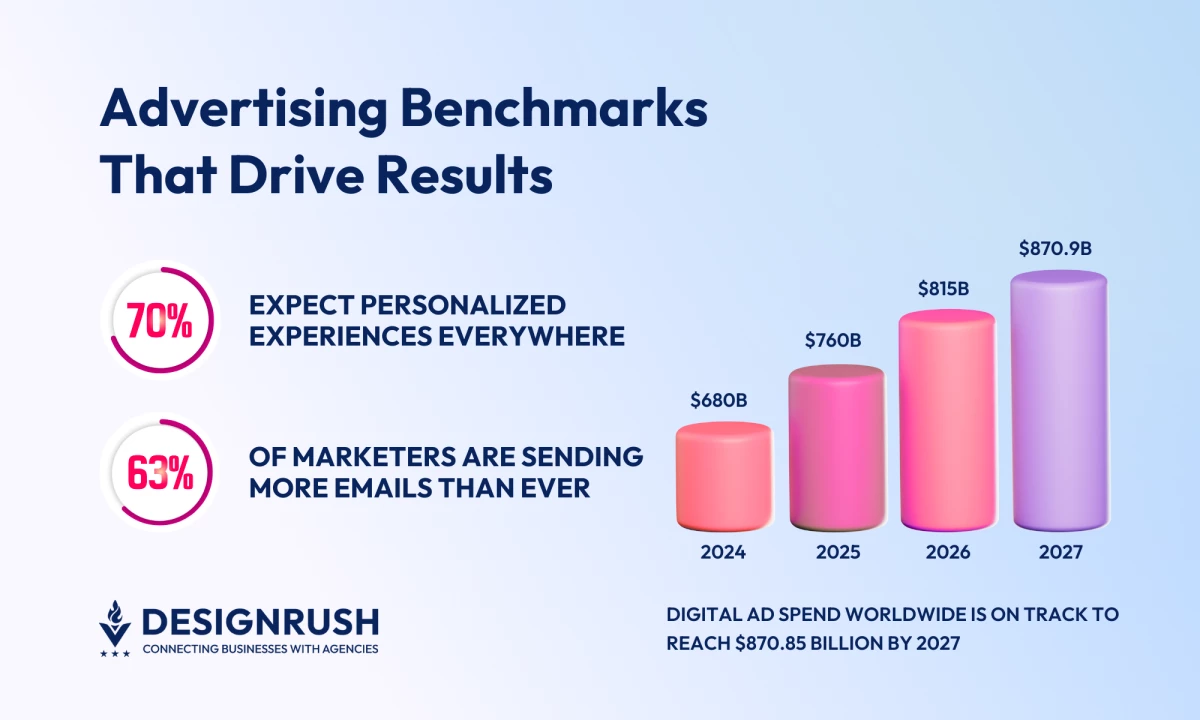

Too much ad spend still goes to channels that stopped delivering years ago, while newer formats are outperforming the old standbys without much warning. These advertising statistics show where audiences are actually paying attention, where the money is flowing now, and what your brand needs to do to stay ahead in 2026.
Advertising Statistics: Key Findings
- Digital now takes up over 63% of global ad budgets, which proves that brands are betting big on channels that actually deliver.
- Social media ad spend has jumped 140% in five years as brands follow where people spend their time.
- Personalization matters as 21% of consumers expect more personalized experiences as a loyalty incentive.
Digital Advertising Statistics
Media budgets aren’t just shifting — they’ve already shifted. Brands are putting their money where performance lives, and that means digital channels now dominate the plan. From automated buying to AI-driven targeting, digital advertising in 2026 isn’t just growing. It’s redefining how marketing works.
These are the movements reshaping where budgets go and how strategies get built:
- Digital channels are taking the lead across global budgets
- Programmatic has become the default, not the exception
- Personalization is now the baseline, not a bonus
1. Digital Channels Are Taking the Lead Across Global Budgets
Digital has become the centerpiece in the advertising world. In fact, Nielsen claims that more than 63% of global media spend is now going to digital platforms. Just a year ago, that split was closer to 50:50. The biggest gains are in social, search, online video, and display, with traditional formats like subliminal advertising rapidly losing share.
Here’s how to make that shift work in your favor:
- Put digital advertising strategies at the front of your media planning, not in the margins.
- Double down on platforms that deliver real-time performance feedback.
- Blend brand and demand tactics within each digital channel.
- Focus spend where your buyers actually are — especially since 80% of website visits are AI-driven.
- Audit legacy buys and shift dollars toward scalable, testable formats.
More data that shows just how fast digital is expanding:
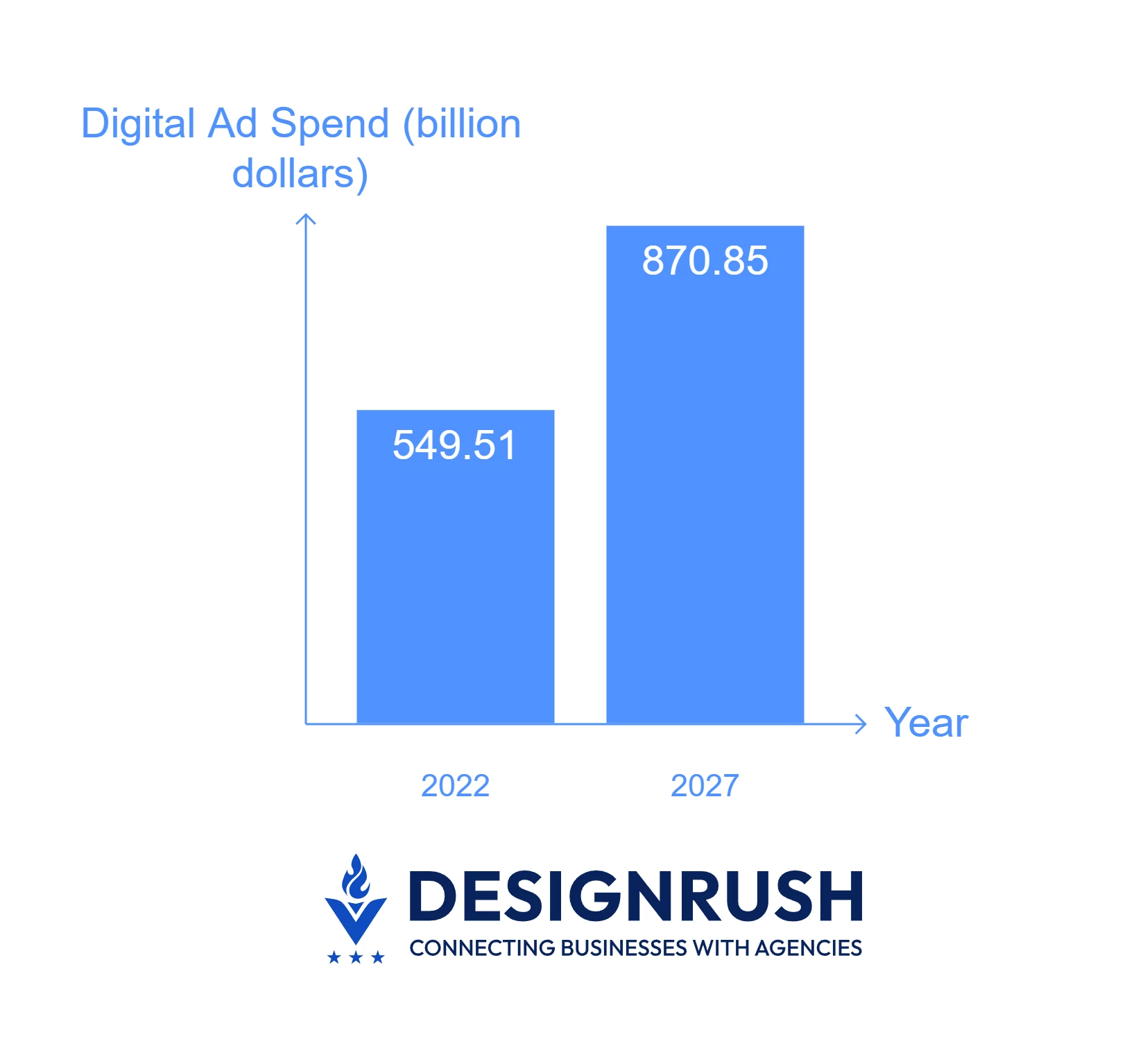
- Statista’s Digital Advertising Spending report tells us that digital ad spend worldwide hit $549.51 billion in 2022 and is on track to reach $870.85 billion by 2027.
- By 2029, 80% of all global ad spend will come from digital sources, according to Statista’s Advertising report.
- Global B2B digital ad spending is forecasted to hit $48.15 billion by 2026.
- The same Advertising report by Statista also tells us that total ad spending worldwide was projected to reach $1.16 trillion in 2025.


2. Programmatic Has Become the Default, Not the Exception
Digital buying is now automated by default. According to eMarketer, by 2026, nearly 90% of all digital display ad spending will happen through programmatic platforms. Marketers aren’t just testing automation but are also building entire media plans around it. This shift is transforming how campaigns are built, optimized, and scaled.
What that means for your team:
- Build fluency in programmatic advertising platforms across your media and analytics teams.
- Use automation to power testing, not just delivery.
- Pair first-party data with DSP tools to unlock sharper audience targeting.
- Optimize on the fly instead of relying on pre-set campaign schedules.
- Keep human oversight in the loop to spot underperformers and reinvest fast.
Here’s how deep this transformation goes:
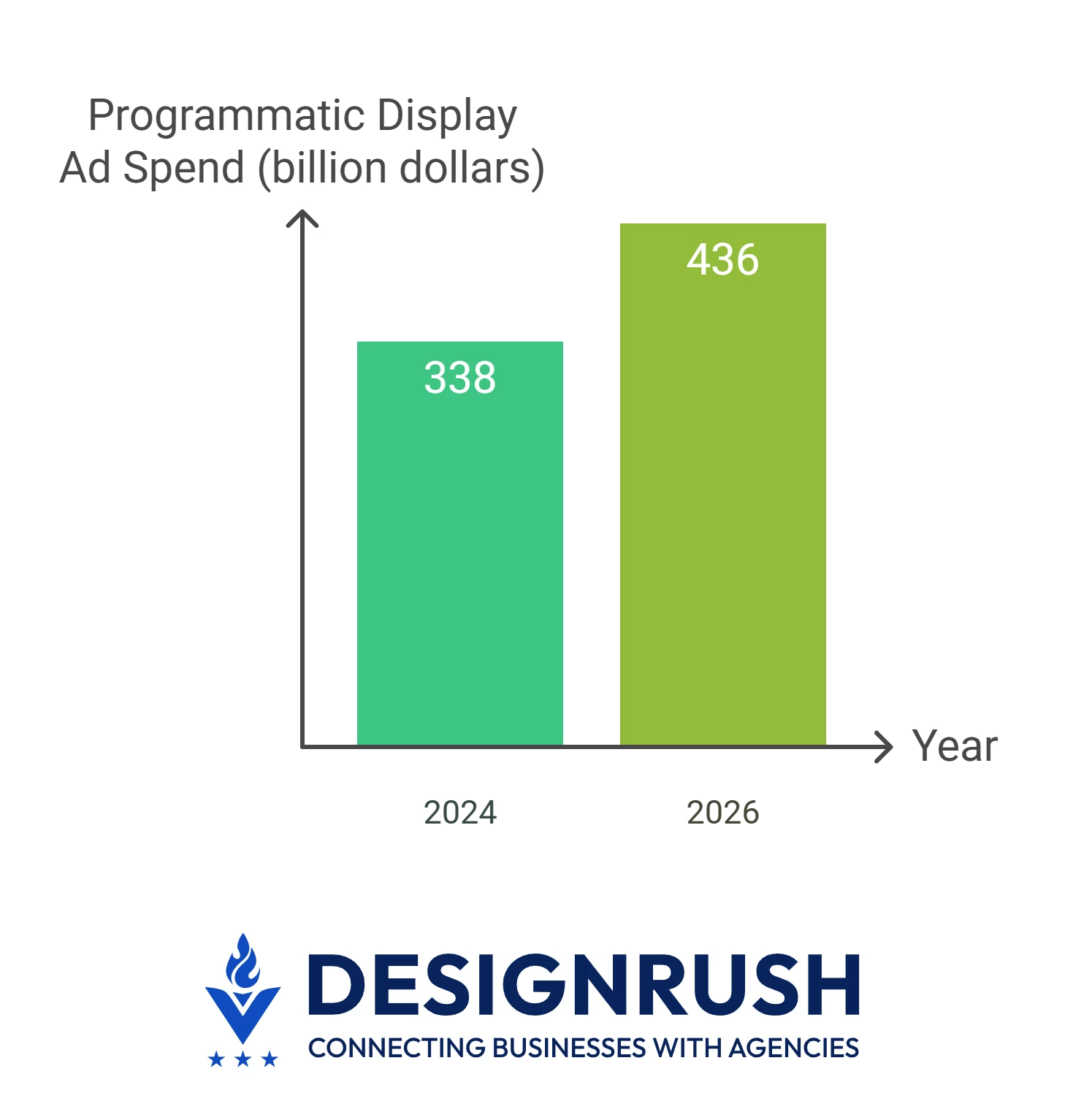
- US programmatic display ad spend hit $338 billion in 2024 and is expected to reach $436 billion by 2026.
- Global programmatic spend reached $595 billion in 2024 and is heading toward $800 billion by 2028.
- The programmatic ad market is growing at 22.8% annually through 2030.
3. Personalization Is Now the Baseline, Not a Bonus
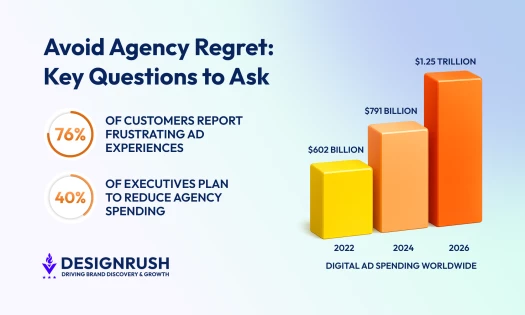
Expectations have changed — and they’re not going back. More than 70% of consumers now expect personalized experiences across every touchpoint, McKinsey reports. When brands miss the mark, 76% say it’s frustrating. Personalization isn’t just a way to stand out anymore. It’s the minimum standard.
To meet that standard and outperform competitors:
- Personalize based on real behavior, not just segments.
- Tailor creative dynamically across mobile, desktop, and in-app experiences.
- Use customer signals to automate re-engagement campaigns.
- Connect data across channels to maintain a consistent user journey.
- Scale personalization without sacrificing privacy or transparency.
The upside is clear:
- 21% of consumers expect more personalized experiences as a loyalty incentive.
- 83% of buyers will happily share their data for more relevant experiences.
- 49% of Gen Z say they’re less likely to buy from a brand if they provide an impersonal experience; 27% even say they’ll stop shopping with the brand or share the negative experience with peers.
Social Media Advertising Statistics
Social platforms are no longer just part of the plan — they are the plan. With billions of users and a growing share of global ad spend, social media is driving both reach and revenue in ways no other channel can match. Whether you’re investing in paid campaigns or shaping brand presence, these trends reveal where attention and money are headed next.
Here’s how social advertising continues to build momentum:
- Ad budgets are flowing into social at record pace
- User growth is reshaping platform strategy
- Cultural fluency now defines creative success
1. Ad Budgets Are Flowing Into Social at Record Pace
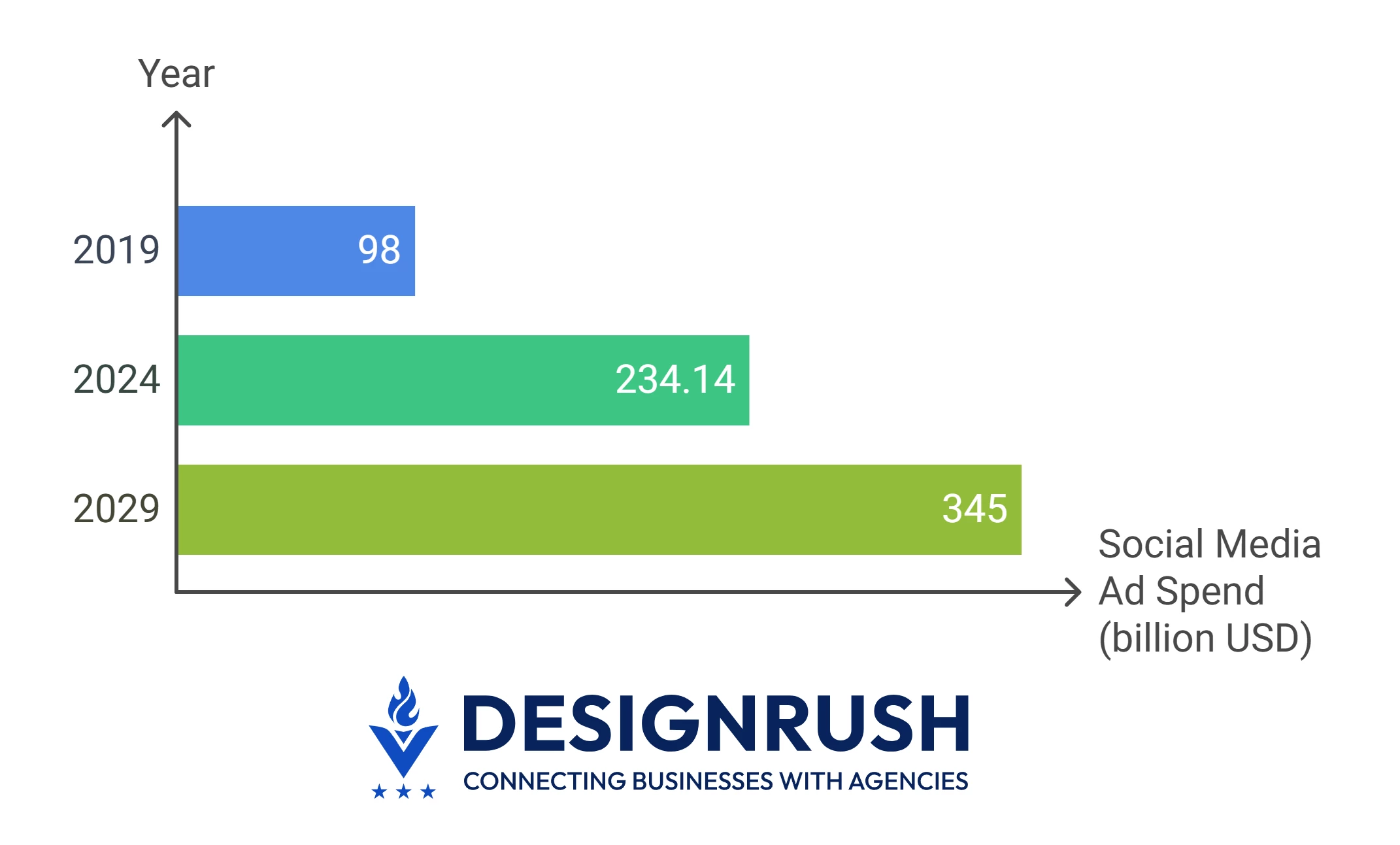
Social media ad spend has more than doubled in just five years, rising from under $98 billion in 2019 to $234.14 billion in 2024. According to Statista’s Global Social Media Advertising Spending report, that figure is projected to pass $345 billion by 2029, marking a 140% increase since 2019 and nearly 50% growth still to come.
To maximize ROI as budgets scale:
- Prioritize formats like video and carousels that hold attention longer.
- Invest in always-on campaigns to capture both brand lift and lead flow.
- Align creative with platform-native behavior, not traditional media habits.
- Focus on attribution models that connect social ads to sales outcomes.
- Expand testing across mid-tier platforms as growth shifts from saturated channels.
Other key figures underline the financial weight of social:
- According to the Global Social Media Advertising Spending report by Statista, the US leads global social ad spending at $72.3 billion, just ahead of China at $71.4 billion.
- The global social ad market is expected to grow from $136.65 billion in 2025 to $237.01 billion by 2030, a growth rate of 11.75% per year.
- 83% of marketers cite increased exposure as the top benefit of social media, followed by traffic (73%) and lead generation (65%).
2. User Growth Is Reshaping Platform Strategy
In 2025, global social media users are expected to reach 5.42 billion, with each person using nearly seven platforms monthly. Marketers no longer have a single destination to optimize for — they’re building multichannel strategies to meet users wherever they scroll.
You should do the following to adapt platform strategy to shifting behavior:
- Distribute budget across a mix of social environments to prevent over-reliance on one platform.
- Use performance data to guide content customization for each channel.
- Monitor emerging platforms that are gaining active user share, not just reach.
- Create integrated customer journeys across platforms for brand continuity.
- Evaluate which demographics dominate each network before allocating spend.
The scale of social is expanding fast:
- Social platforms added 241 million users in the last year alone, growing by 7.6 users per second.
- China leads with over 1 billion users, followed by India (860 million), the USA (308 million), and Europe (680 million).
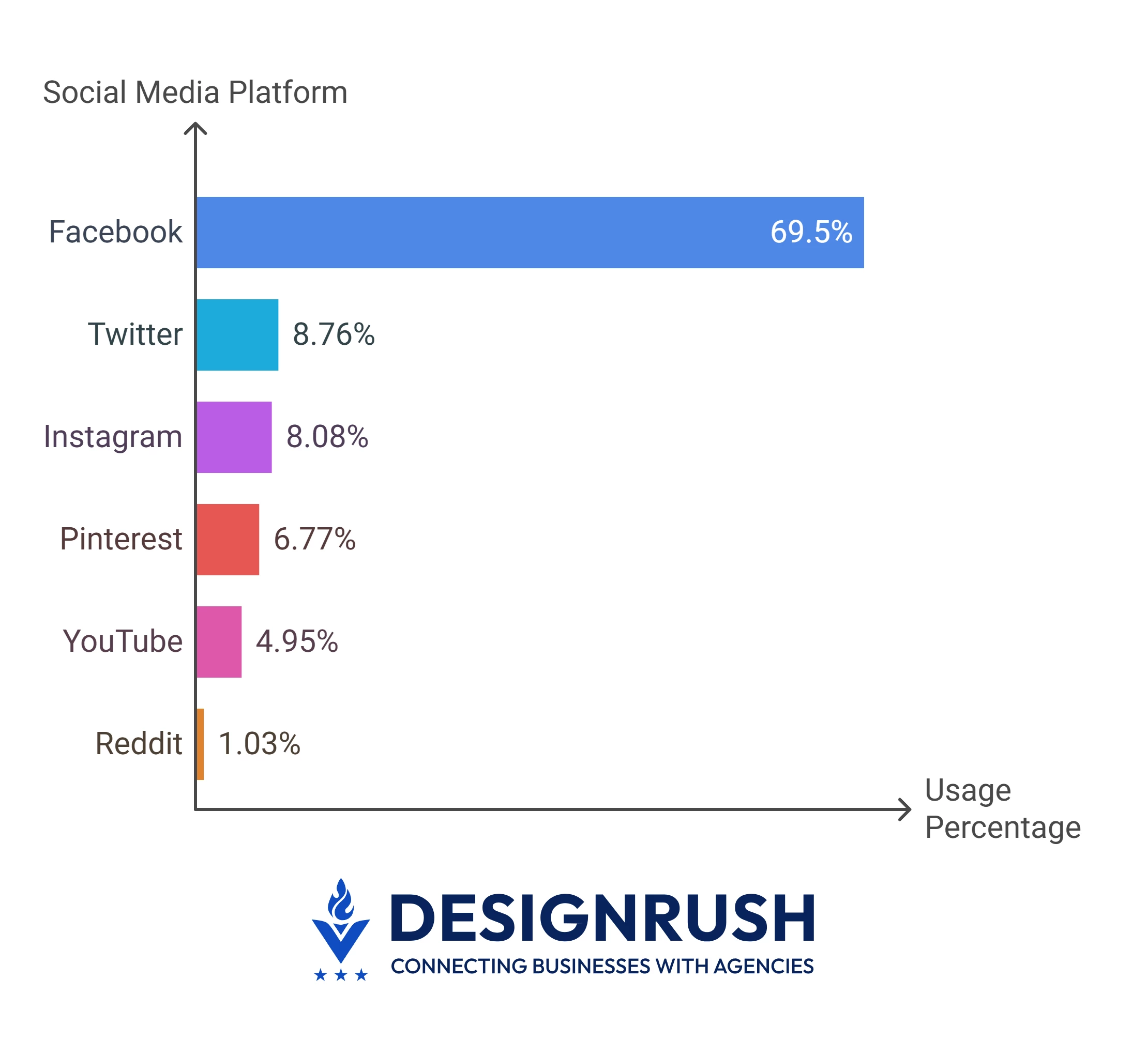
- In 2025, global usage by platform: Facebook 69.5%, X 8.76%, Instagram 8.08%, Pinterest 6.77%, YouTube 4.95%, Reddit 1.03%
- Pew Research found YouTube and Facebook are the top-used platforms among US adults, with half also using Instagram regularly.
3. Cultural Fluency Now Defines Creative Success
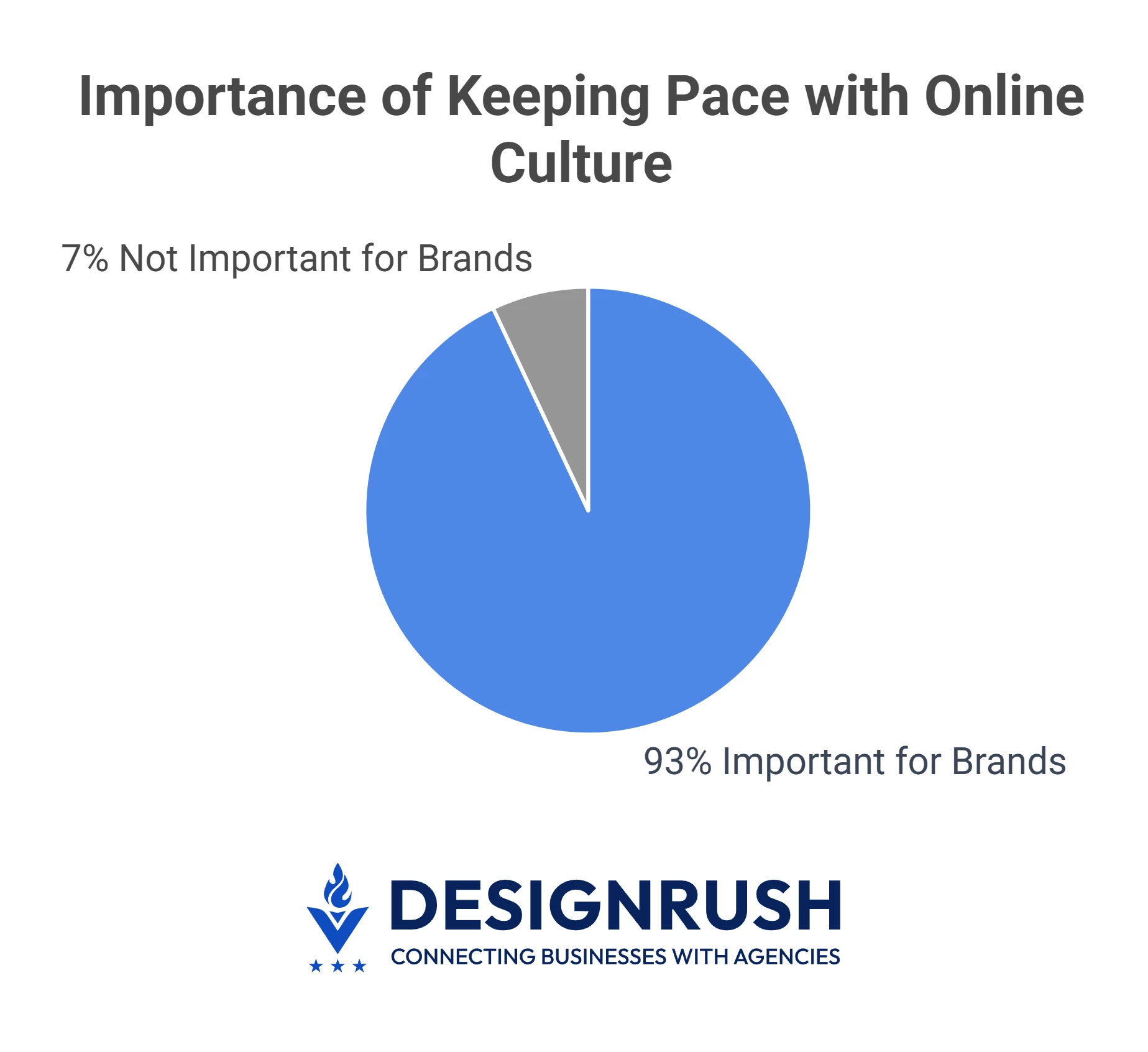
93% of consumers say it’s important for brands to keep pace with online culture. Social media isn’t just about visibility anymore — it’s where identity, values, and relevance are judged in real time.
Here’s what you can do to build creative that resonates:
- Respond to trends with speed and intent, not just presence.
- Feature content formats native to each platform, from carousels to quick polls.
- Tap into cultural moments to create relevance, not just brand visibility.
- Use data to find your audience’s subcultures, not just age or region.
- Balance performance goals with brand authenticity to build long-term trust.
Below are some important advertising trends shaping what works now:
- Threads is the fastest-growing platform, that more than doubled its user base from 2024 to 2025, from 130 million to 320 million users.
- In the US, BeReal, Twitch, and LinkedIn saw the biggest user base jumps in 2024.
- On Instagram, carousels outperformed Reels in engagement for many industries, showing that static formats still carry weight.
Email Marketing Advertising Statistics
Email isn’t going anywhere, but it’s actually gaining strength. From improved ROI to behavioral triggers that drive real conversions, brands are doubling down on email to deliver results that other channels can’t match. These numbers make the case for why email deserves a leading role in your strategy.
Here’s how email continues to outperform expectations:
- Email remains foundational to marketing success
- Behavioral triggers drive better performance than scheduled sends
- Benchmarks reveal when and how users actually engage
1. Email Remains Foundational to Marketing Success
According to Mailgun, 75.4% of people choose email as a preferred channel for promotional messages. On top of that, 63% of marketers say they’re sending more emails than ever, a sign that this channel is far from slowing down.
To maintain effectiveness while increasing volume:
- Prioritize clarity and relevance in subject lines to boost open rates.
- Use segmentation to avoid fatigue and keep messaging aligned.
- Integrate email into cross-channel workflows, not just one-off blasts.
- Automate campaign sequences without sacrificing personalization.
- Measure success with real performance indicators — not just vanity metrics.
The supporting data below reinforces email’s expanding footprint:
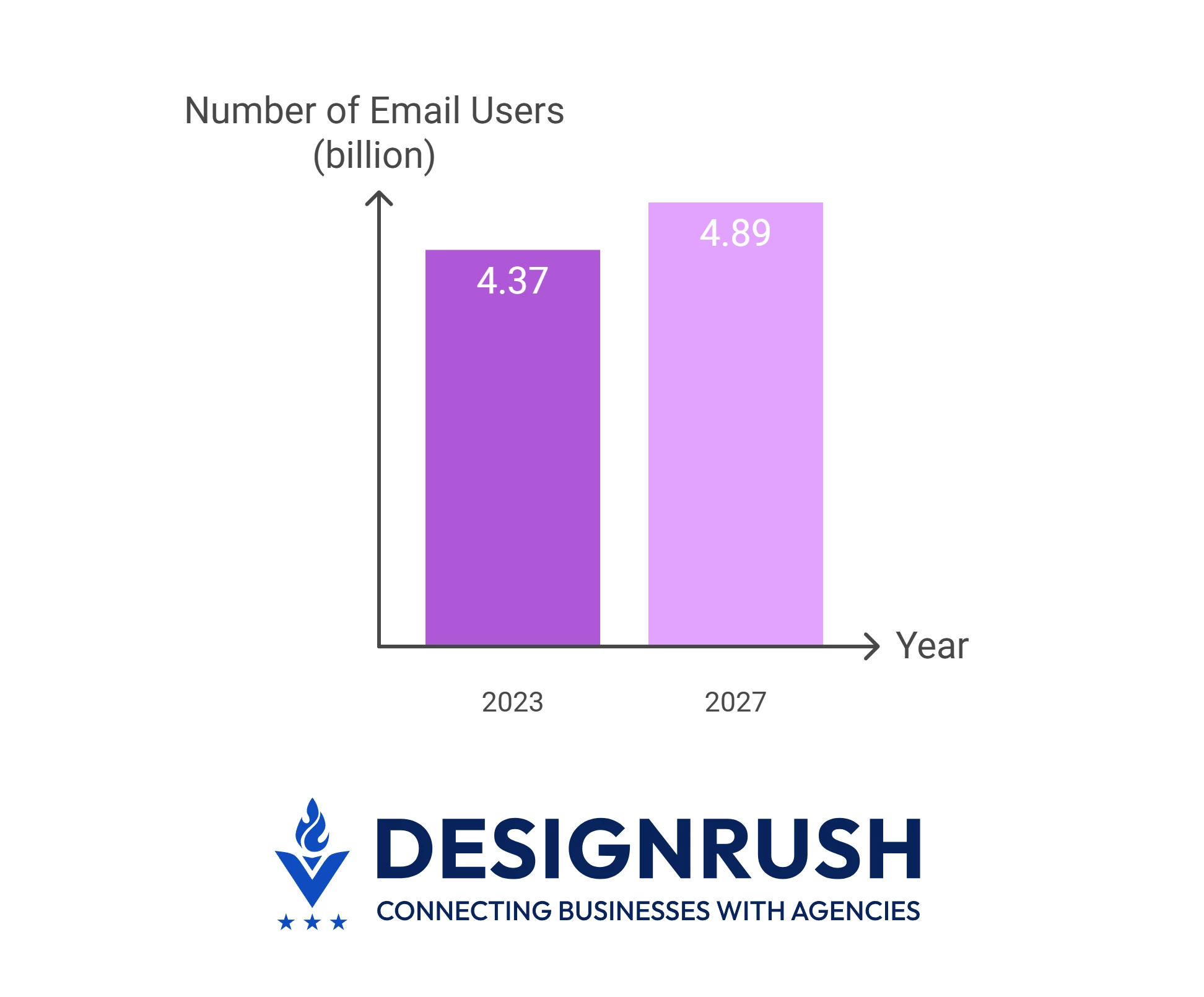
- Global email users are expected to grow from 4.37 billion in 2023 to 4.89 billion by 2027.
- The US sends nearly 10 billion emails daily, more than any other country, according to Statista’s Global Daily Number of Emails Sent report.
- That same report claims that over 241 million emails are sent every minute around the world.
- ROI from email is improving: 52% of marketers saw returns double in 2023, with another 5.7% reporting a 4X increase over 2022.
- 58% of marketers use automation for email marketing.
2. Behavioral Triggers Drive Better Performance Than Scheduled Sends
Triggered emails beat scheduled campaigns across the board, with 3-5%+ conversion rates on average.
To take full advantage of behavior-based email:
- Use cart activity, page views, and product interactions to fuel automation.
- Send follow-ups based on timing, not fixed schedules.
- Pair behavioral insights with AI advertising tools for higher accuracy and speed.
- Personalize the entire journey — from welcome to re-engagement.
- Continuously A/B test triggers to maximize open and click rates.
Here are more statistics in advertising that prove personalization pays off:
- Crafts retail chain Michaels increased email personalization from 20% to 95%, lifting click-through rates by 25%.
- Relevance matters: 54% of US adults say it’s the number one reason they open a marketing email.
- 52% of consumers bought directly from an email within the past 12 months.
3. Benchmarks Reveal When and How Users Actually Engage
Across all industries, the average open and click-through rate for email in December 2024 was 37.27%. Engagement happens fast — more than 21% of opens occur within the first hour after delivery, showing that timing is as important as content.
Here’s how to improve results using real-world behavior:
- Send at peak engagement times and avoid weekends
- Optimize mobile layouts for readability and load speed
- Make CTAs clear, prominent, and contextual
- Keep copy short and action-focused to drive clicks
- Test frequency thresholds to avoid list fatigue
Below are some additional email marketing statistics in advertising to consider:
- Nearly 50% of global smartphone users prefer email for business communications.
- Product awareness and promotions are the top objectives for email marketers, followed by retention and newsletters.
- 55% of marketers use marketing emails to encourage sales.
Advertising Statistics: Final Words
Ad budgets keep growing, but growth alone doesn’t guarantee results. Brands that are making real progress are spending more and being smart about it by matching strategy to what actually moves people to act.
Whether you're refining your media mix or boosting email campaign performance, success begins with knowing your audience and engaging them in meaningful ways.
Need help turning insight into action? Partner with an experienced advertising agency to craft strategies that deliver measurable results.

Our team ranks agencies worldwide to help you find a qualified partner. Visit our Agency Directory for the best ad agencies, as well as:
- Top Digital Marketing Agencies
- Top Branding Agencies
- Top Creative Agencies
- Top Full-Service Digital Agencies
- Top Video Production Companies
Our experts also recognize the most innovative projects across the globe. Given the recent uptick in video podcasting, you'll want to visit our Awards section for the best & latest in video production.
Advertising Stats FAQs
1. What are advertising statistics used for?
Advertising statistics are used for evaluating campaign performance, tracking industry benchmarks, and guiding media planning decisions. Marketers rely on this data to justify spend, optimize strategy, and stay competitive.
2. What trends are shaping advertising in 2026?
Key advertising trends in 2026 include the rise of AI-driven personalization, increased investment in programmatic advertising, and continued use of email as a communications medium. Brands are also expanding into emerging platforms to diversify their media mix.
3. How do advertising statis influence marketing strategy?
Advertising stats influence marketing strategies by helping marketers allocate budgets more effectively by showing which channels deliver the highest engagement and conversions. Data-backed insights drive smarter decisions across creative, targeting, and campaign timing.