
Advertising for eCommerce refers to the strategic use of paid promotional channels — such as search engines, social media platforms, and display networks — to attract and convert online shoppers.
While organic marketing efforts like SEO and social media engagement build trust and long-term relationships, paid advertising offers the immediacy and precision needed to capture ready-to-buy consumers. Together, these approaches create a powerful synergy. But beyond investment, successful advertising for eCommerce requires careful planning, strategic execution, and ongoing optimization.
We’ll explore actionable eCommerce advertising tactics that drive sales, from data-driven targeting to diverse ad formats. We’ll also address common challenges and provide practical solutions.
5 Strategies for Effective eCommerce Advertising
The eCommerce industry is thriving, with the U.S. market alone valued at a staggering $1.22 trillion in 2024. This immense growth underscores the increasingly crowded digital space businesses need to compete in. Marketers must adopt strategic eCommerce advertising strategies to stand out and thrive.
Effective eCommerce advertising helps keep your business top-of-mind for consumers while driving lead generation by capturing potential buyers through targeted campaigns. Beyond increasing eCommerce sales, it supports customer retention by engaging existing buyers and fostering loyalty.
5 strategies for eCommerce advertising with proven effectiveness include:
1. Knowing Your Audience
Understanding your target audience is the first step in any successful advertising campaign, regardless of the kind of eCommerce business you’re marketing. You can use audience insights, customer surveys, and analytics platforms to identify your ideal customer’s demographics, interests, and online behaviors.
More precise audience profiling makes it easier to craft personalized ads that resonate and drive action. Businesses that excel at personalization generate 40% more revenue from customized strategies designed to align marketing efforts with the preferences, behaviors, and needs of individuals, according to research from McKinsey & Company.
Here’s a step-by-step process you can follow:
- Define your goals: Identify clear objectives for your campaign, such as increasing sales or driving traffic.
- Leverage analytics tools: Use tools like Google Analytics and Facebook Insights to gather demographic and behavioral data (e.g., age, location, interests).
- Conduct surveys: Use tools like SurveyMonkey to get feedback from existing customers on their preferences and buying habits.
- Segment your audience: Break your audience into specific segments, such as:
a. Demographics: Age, gender, income.
b. Behavioral: Cart abandoners, repeat buyers.
c. Geographic: Region-specific audiences.
For example:
- Young adults (18-24) interested in seasonal trends.
- Professional women (30-45) looking for workwear.
- Budget-conscious shoppers waiting for sales. - Personalize your ads: Tailor ads to each segment by showcasing relevant products or offering promotions specific to their needs.
2. Optimizing For Mobile
Since smartphones accounted for over three-quarters of retail site visits and generated roughly two-thirds of online shopping orders in the U.S. during the third quarter of 2024, you should ensure that your ads and landing pages are mobile-friendly.
- Test Responsiveness: Use tools like Google’s Mobile-Friendly Test or BrowserStack to identify issues and optimize your site's mobile usability.
- Responsive Design Best Practices:
- Compress images to reduce load times.
- Simplify navigation with clear, tappable menus.
- Use legible, mobile-friendly fonts to improve readability.
- Track Key Metrics: Monitor mobile conversion rates, bounce rates, and average session duration with tools like Google Analytics to measure effectiveness.
For example, a responsive design for a beauty eCommerce store could include a streamlined product catalog, fast-loading product images, and a simple checkout process designed for one-thumb navigation. Pair this with vertical video ads on Instagram, and track bounce rates to identify opportunities for improvement. These steps ensure a seamless mobile experience that drives conversions.
3. Using Retargeting
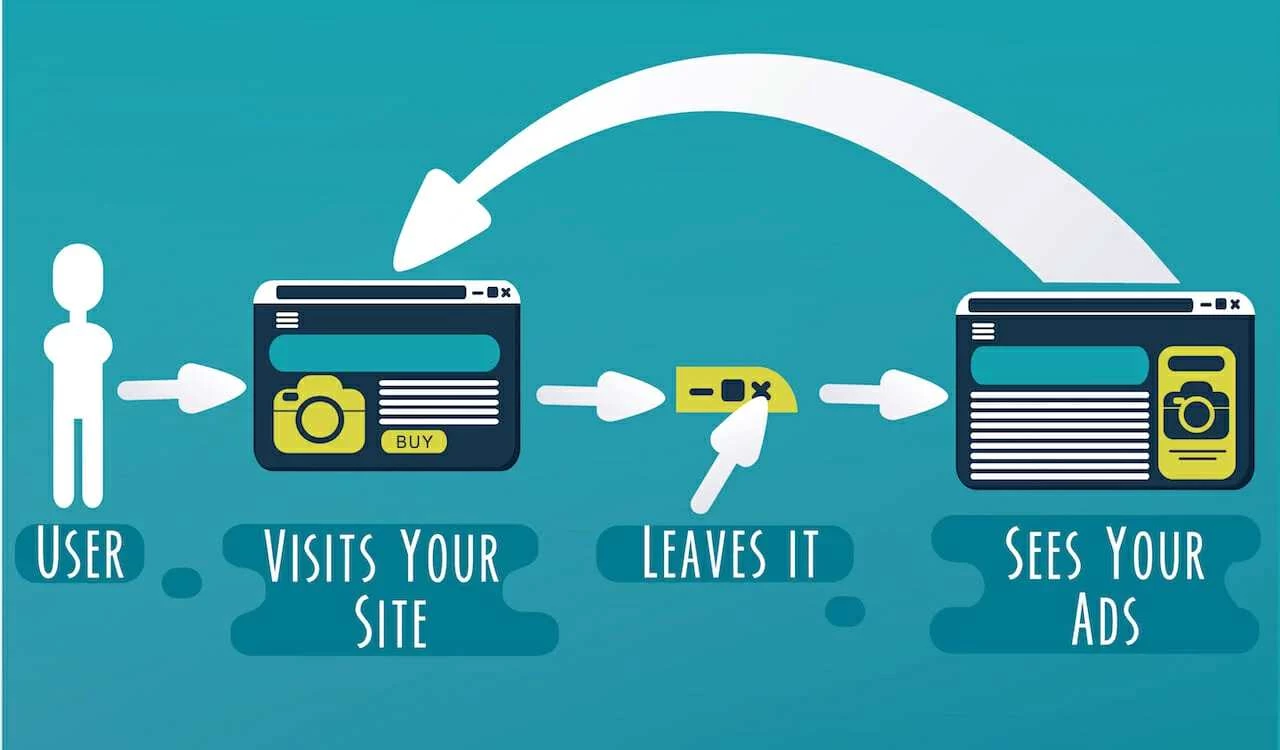
Retargeting campaigns focus on re-engaging past customers, whether they completed a purchase or not, as well as potential customers who interacted with your brand but didn’t convert.
To set up a high-performing retargeting campaign:
- Choose the right tools: Use platforms like Google Ads, Facebook Ads, AdRoll, or Criteo for dynamic retargeting and audience segmentation.
- Implement tracking: Add tools like Facebook Pixel or Google Ads tags to collect data on user behaviors such as product views and cart abandonment.
- Segment your audience: Target users based on behavior, such as abandoned carts, viewed products, or past purchases.
- Create dynamic ads: Use platforms like Google or Facebook to show personalized ads featuring exact products users interacted with or complementary items.
- Use incentives: Encourage conversions with discounts, free shipping, or limited-time offers.
- Manage frequency: Avoid ad fatigue by capping impressions to 3–5 per week.
- Track key metrics: Monitor click-through rates, conversion rates, and return on ad spend (ROAS) to assess performance.
Retargeting is particularly effective when combined with dynamic ads that showcase the products (and related products) that a customer previously viewed, added to their cart, or purchased.
For example, if a customer browsed a pair of sneakers but didn’t complete the purchase, dynamic ads could display the sneakers alongside matching accessories, like socks or a gym bag, creating a personalized shopping experience that drives conversion.
“Retargeting can evolve by focusing on personalized upselling and cross-selling strategies for repeat buyers,” says Christopher Snelling, owner of TopOut Group. He continues: “For example, use purchase history to showcase complementary products or exclusive loyalty rewards through dynamic ads. Additionally, segment high-value customers and target them with early access to sales, VIP promotions, or curated product bundles to deepen engagement and drive repeat purchases.”
4. Employing A/B Testing
A/B testing entails comparing different versions of an ad to determine which elements resonate best with your audience.
To get started, focus on key variables, such as:
- Headlines: Test short vs. descriptive headlines to see which grabs attention more effectively.
- Visuals: Compare different images, videos, or layouts to understand what catches the eye.
- CTAs: Experiment with action phrases like "Buy Now" versus "Get Started" to determine what drives engagement.
To test content efficiently, use tools like Google Optimize, Meta Ads Manager, or Optimizely and follow these steps:
- Test one variable at a time to isolate its impact.
- Set a statistically significant sample size using an A/B testing calculator.
- Monitor key metrics like click-through rates (CTR) and conversion rates.
- Implement the winning variation in your campaigns.
- Repeat and refine regularly to improve performance and ROI.
5. Leveraging Data
As data-driven online advertising, eCommerce advertising relies heavily on analytics to track performance metrics, identify trends, and make informed decisions about budget allocation.
To effectively leverage data, use Google Analytics. For example, by setting up conversion tracking in Google Analytics, you can identify which ad campaigns or channels drive the most sales. If one campaign has a higher return on ad spend (ROAS) — a metric that calculates revenue generated for every dollar spent — you can allocate more budget to it while refining or pausing underperforming ads.
Monitoring metrics like click-through rate (CTR) also helps assess ad engagement, while bounce rates indicate whether your landing pages align with user expectations. High bounce rates could signal the need for better ad-to-page relevance or faster page load times.
Using tools like Google Analytics, you can also segment your audience to identify top-performing demographics or behaviors. For instance, you might notice that users from a specific age group have higher conversion rates, allowing you to tailor future campaigns to that audience for maximum impact.
With actionable insights from data, you can optimize campaigns in real-time, ensuring you adapt to trends and outperform the competition.
Measuring Your Success
To gauge the success of these efforts, you’ll need to track key performance indicators (KPIs) and metrics. Here are some important ones to focus on:
- Click-through rate (CTR): The percentage of users who click on your ad after seeing it. The average CTR for eCommerce search ads is 2.69%, and for display ads, it's 0.51%.
- Conversion rate: The percentage of users who complete the desired action (e.g., purchase) after clicking your ad. A good conversion rate for eCommerce businesses is typically between 2% and 5%.
- Customer acquisition cost (CAC): The cost of acquiring one new customer through advertising. A good CAC for eCommerce businesses is typically about $70.
- Return on ad spend (ROAS): The revenue generated for every dollar spent on ads. A 4:1 ratio is a common ROAS benchmark — $4 revenue to $1 ad spend.
Meanwhile, engagement metrics will help you assess the overall impact of your advertising strategy on long-term business goals. You can fine-tune your approach by focusing on these indicators:
- Time spent on site: The average duration a user spends on your website after clicking an ad. This metric indicates how engaging and relevant your content is.
- Bounce rate: The percentage of users who leave your site after viewing only one page without interacting further. A high bounce rate may indicate that your landing page or ad targeting needs optimization.
- Repeat purchase rate: The percentage of customers who make more than one purchase from your site. This metric is a strong indicator of customer loyalty and the effectiveness of retention strategies.
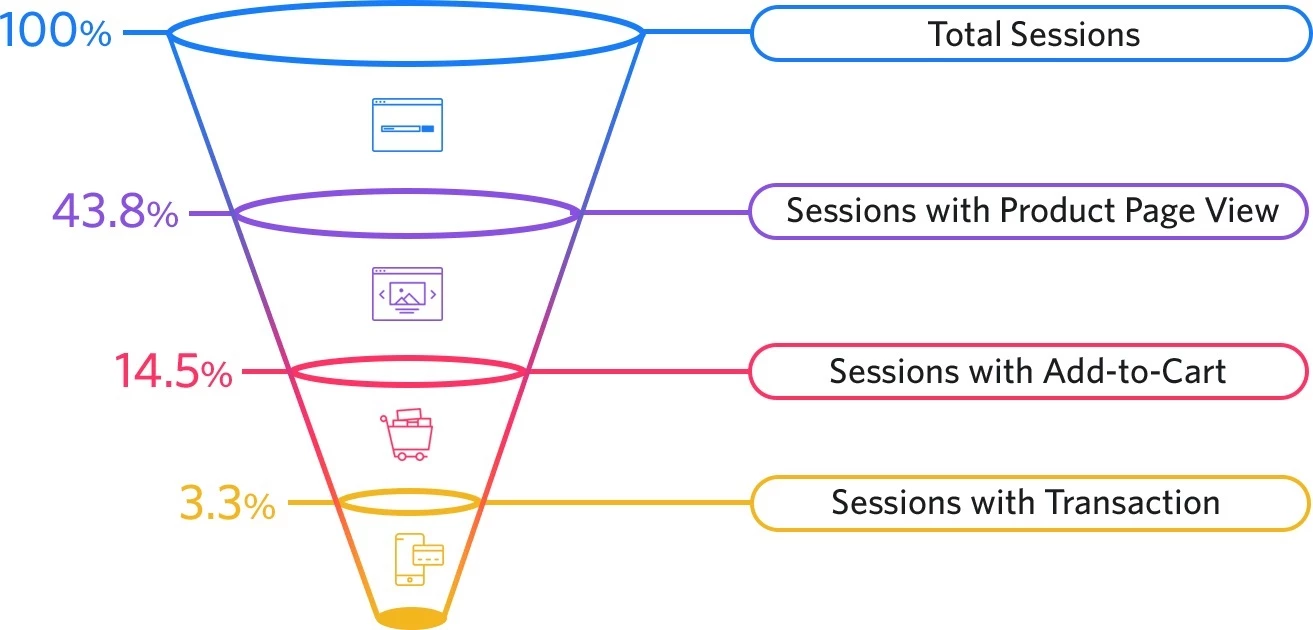
Take note that the universal average conversion rate in eCommerce (sessions with a transaction) tends to be around 3.3% of total sessions, as reported by Smart Insights.
Types of eCommerce Advertising
A well-rounded strategy requires a firm understanding of the types of eCommerce advertising and how they can work together to achieve your goals. Since each serves a unique purpose, you can target customers at different stages of the buyer’s journey. Here’s what they include:
- Search engine marketing (SEM): SEM uses paid ads to appear on search engine results pages (SERPs), targeting high-intent customers through platforms like Google Ads with text ads, shopping ads, and product listings.
- Social media advertising: Social media platforms like Facebook, Instagram, and TikTok offer precise targeting with visual ads such as carousels, videos, and influencer collaborations.
- Display advertising: Display ads, including banners and videos, appear on third-party websites to boost your brand's visibility. These are especially effective for retargeting and maintaining user engagement.
- Email advertising: Email campaigns deliver promotional messages, personalized recommendations, and offers directly to customers, driving repeat purchases and boosting engagement cost-effectively.
- Affiliate marketing: Affiliate marketing involves partnering with creators or organizations who promote your products for a commission, driving traffic and conversions through blogs, websites, or social media.
- Programmatic advertising: Programmatic advertising automates ad purchases in real-time by using data to efficiently target specific audiences and optimize ad spend across platforms.
- Native advertising: Native ads blend into a platform’s content to appear more organic and provide a seamless, non-disruptive user experience. These can include sponsored articles or in-feed ads.
eCommerce Advertising Challenges and Solutions
While eCommerce advertising has immense potential, it’s not without its challenges. Rising costs, evolving consumer behaviors, and regulatory changes all add complexity to running effective campaigns. Taking the time to learn about these challenges and their solutions will help you maintain your competitive edge.
Rising Ad Costs
The cost of digital advertising continues to rise as competition intensifies. Customer acquisition costs (CAC) have been increasing by 40-50% annually, according to research from Netcore, making it increasingly difficult for smaller businesses to compete with larger brands. Of the eCommerce marketers surveyed, 80% forecast that rising CAC will hinder growth.
You can mitigate rising ad costs by focusing on maximizing efficiency. Use audience segmentation to target high-value customers more precisely and allocate budget toward campaigns with proven ROI. Investing in organic strategies like SEO and content marketing as part of your broader marketing strategy can also help reduce your dependence on paid ads while still driving traffic and sales.
To compete, Snelling advises smaller eCommerce businesses to try “leveraging niche targeting and focusing on high-intent, underserved audiences,” as well as “prioritizing long-tail keywords in search ads, creating hyper-personalized ad creatives, and building authentic engagement on platforms like TikTok or Pinterest.”
Ad Fatigue
Ad fatigue results from the audience becoming overexposed to the same or too many similar ads, leading to reduced engagement and lower conversion rates. This can harm your brand’s image and waste valuable advertising dollars.
You can combat ad fatigue by being bold with your creatives, regularly refreshing them (experimenting with new messaging or visuals), and rotating ad formats. Remember to use A/B testing to identify which variations perform best. Dynamic ads that update based on user behavior can also help you maintain relevance and improve engagement.
Privacy Concerns
Growing privacy regulations and changes, like Apple’s App Tracking Transparency (ATT) framework and the phasing out of third-party cookies, have made it more challenging to collect and use customer data for advertising. These shifts limit targeting capabilities and ultimately hinder campaign performance.
To adapt to privacy concerns, you must prioritize first-party data collection through email sign-ups, loyalty programs, and surveys. Be transparent about using customer data and ensure compliance with privacy laws. You can also use contextual advertising, which doesn’t rely on personal data but instead targets users based on the content they are engaging with.
eCommerce Advertising Key Takeaways
As eCommerce grows, mastering advertising strategies is essential for businesses aiming to thrive in a competitive marketplace. By understanding the types of eCommerce advertising, addressing common challenges, and leveraging data-driven approaches, businesses can create impactful campaigns that drive results.
However, navigating the complexities of eCommerce advertising requires expertise and strategic insight. To maximize your advertising efforts and ensure success, partner with dedicated professionals specializing in eCommerce SEO and marketing.
eCommerce Advertising FAQs
1. What is the difference between eCommerce marketing and eCommerce advertising?
eCommerce advertising strategies focus on paid campaigns to generate immediate traffic and sales. This can include PPC (pay-per-click) ads, social media ads, retargeting campaigns, and Google Shopping ads. It targets specific audiences and aims for quick results, making advertising a more tactical and budget-driven eCommerce strategy.
eCommerce marketing is a broader approach that includes paid and organic strategies to build brand awareness, foster customer loyalty, and drive sustainable growth. Marketing encompasses SEO, email marketing, content creation, influencer partnerships, and social media engagement.
While advertising is a key marketing component, the latter emphasizes long-term goals, focusing on nurturing customer relationships and creating lasting value for the brand.
2. What platforms can I use for eCommerce advertising?
Popular platforms you can use for eCommerce advertising include:
- Google Ads: From search ads to display ads and shopping ads, you can use Google ads to place ads on websites based on keywords and your budget.
- Facebook: You can target lookalike audiences to reach new audiences similar to your existing customers.
- LinkedIn: You can use LinkedIn to display targeted ads based on predetermined demographics, interests, and behaviors.
3. How much should I budget for eCommerce advertising?
The budget for eCommerce advertising depends on several factors, such as:
- The size of your business
- Your revenue goals
- Your target audience
- The platforms you choose to advertise on
A common rule of thumb is to allocate 10% of your total revenue toward marketing, with a portion dedicated to advertising. For some industries or newer eCommerce businesses, that might increase to 20% or higher.