Everything You Need to Know Before Hiring a Call Center in NYC Table of Contents
Why should I hire a New York City call center instead of an out-of-state provider? Hiring a call center in NYC, or any United States onshore provider, usually delivers better customer satisfaction, stronger communication, legal compliance, and fewer hidden costs than out-of-state/offshore options.
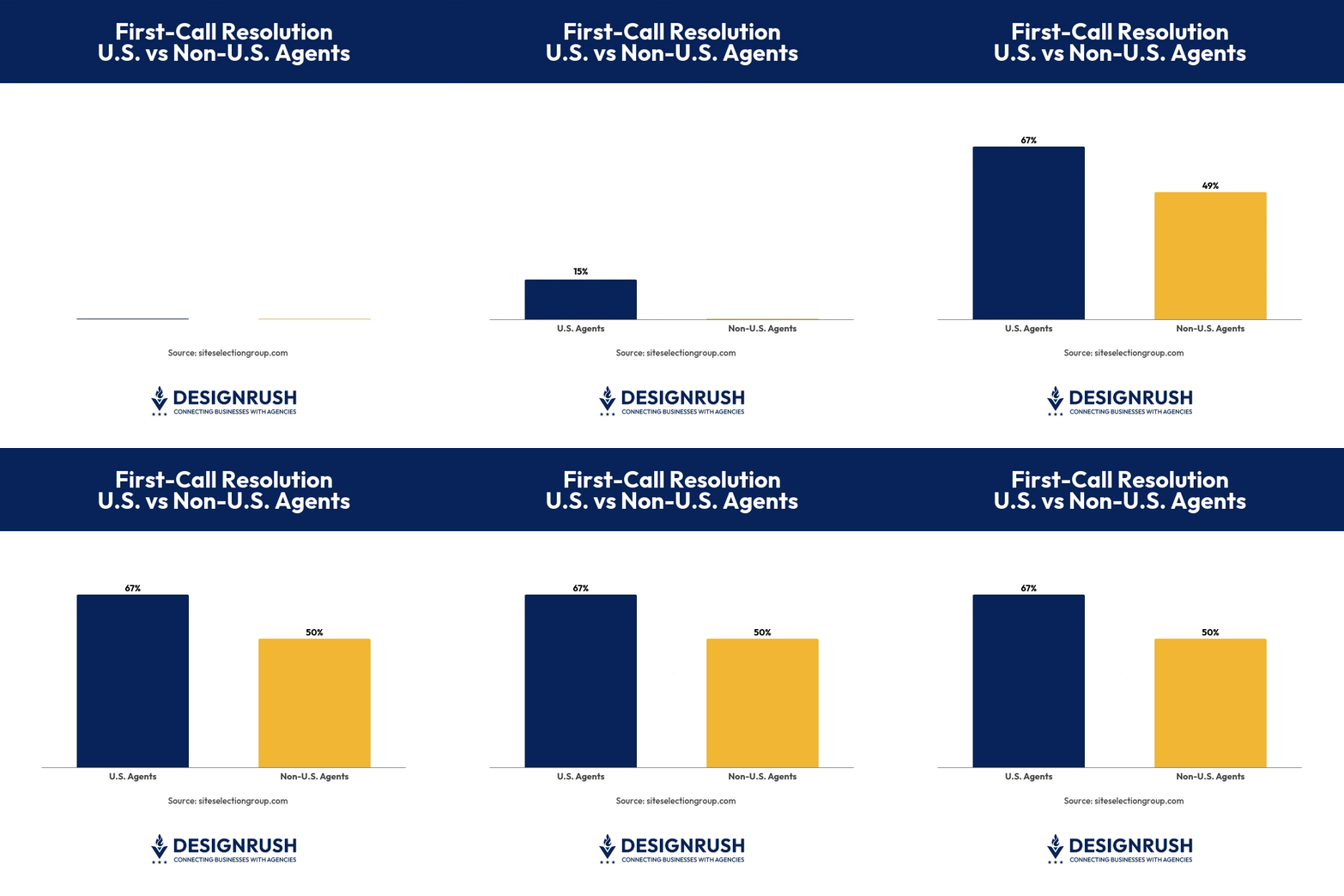
U.S. agents have a 67% first-call resolution rate, 50%, indicating fewer callbacks, faster issue resolution, and better customer satisfaction overall.
New York City centers understand local regulatory nuances, such as NYC transit rules, healthcare payment norms, financial law context, and customer expectations, which is beneficial for highly regulated and service-heavy industries.
The average customer service representative salary in New York City is about $24.98 /hr, which is about 31% above the United States national average, reflecting higher local demand for skilled service talent.
Higher pay in NYC translates into better recruitment and retention of experienced customer service agents. Furthermore, it entails fewer errors, shorter training cycles, and more consistent customer satisfaction.
Approximately 25% of New Yorkers 50% speak a language other than English. Cultural fluency and local market understanding improve customer experience, reduce repeat calls, and elevate retention.
U.S.-based call centers, like those in NYC, typically deliver 79% customer satisfaction, compared to about 58% for offshore centers, largely due to clearer communication and cultural alignment.
With New York City call center providers in the same time zone as your business and clients, you avoid delays in script updates, training, callback coordination, and project management decisions.
Which NYC boroughs have the strongest call center presence? Manhattan is NYC’s core business district, and almost 80% of all NYC office space is in Manhattan south of 59th Street, where large contact operations such as customer support, technical support, and financial services tend to cluster.
According to Indeed, the most advertised call center representative, customer service associate, and call agent jobs are located in Manhattan ZIP codes such as Financial District (10007), Midtown (10036, 10022), and NoMad (10001). These include roles at healthcare organizations, financial institutions, and corporate customer support centers.
Manhattan continues to command the highest hourly rates for call center jobs in the city, often exceeding $55.00/hour for specialized financial services support.
Brooklyn and Queens are growing hubs for operational centers and mid-sized service providers.
Downtown Brooklyn features a high density of 311 Call Center operations, which historically maintain high satisfaction ratings of 4.0/5 stars due to their central, accessible location for a diverse workforce, according to Indeed.
Queens supports large-scale operations along transportation corridors and lower-cost commercial footprints than Manhattan.
Queens’ large residential population and linguistic diversity make it a practical location for multilingual support teams and local inbound centers.
The NYC Health + Hospitals call center network recently reached over 500,000 calls, demonstrating the massive scale of the Queens-based public service hubs.
Some New York City call centers maintain satellite staffing in nearby areas like New Jersey to balance costs while keeping NYC management teams.
How does an NYC call center handle multilingual New York populations? It uses a combination of staffing, technology, process design, and routing systems.
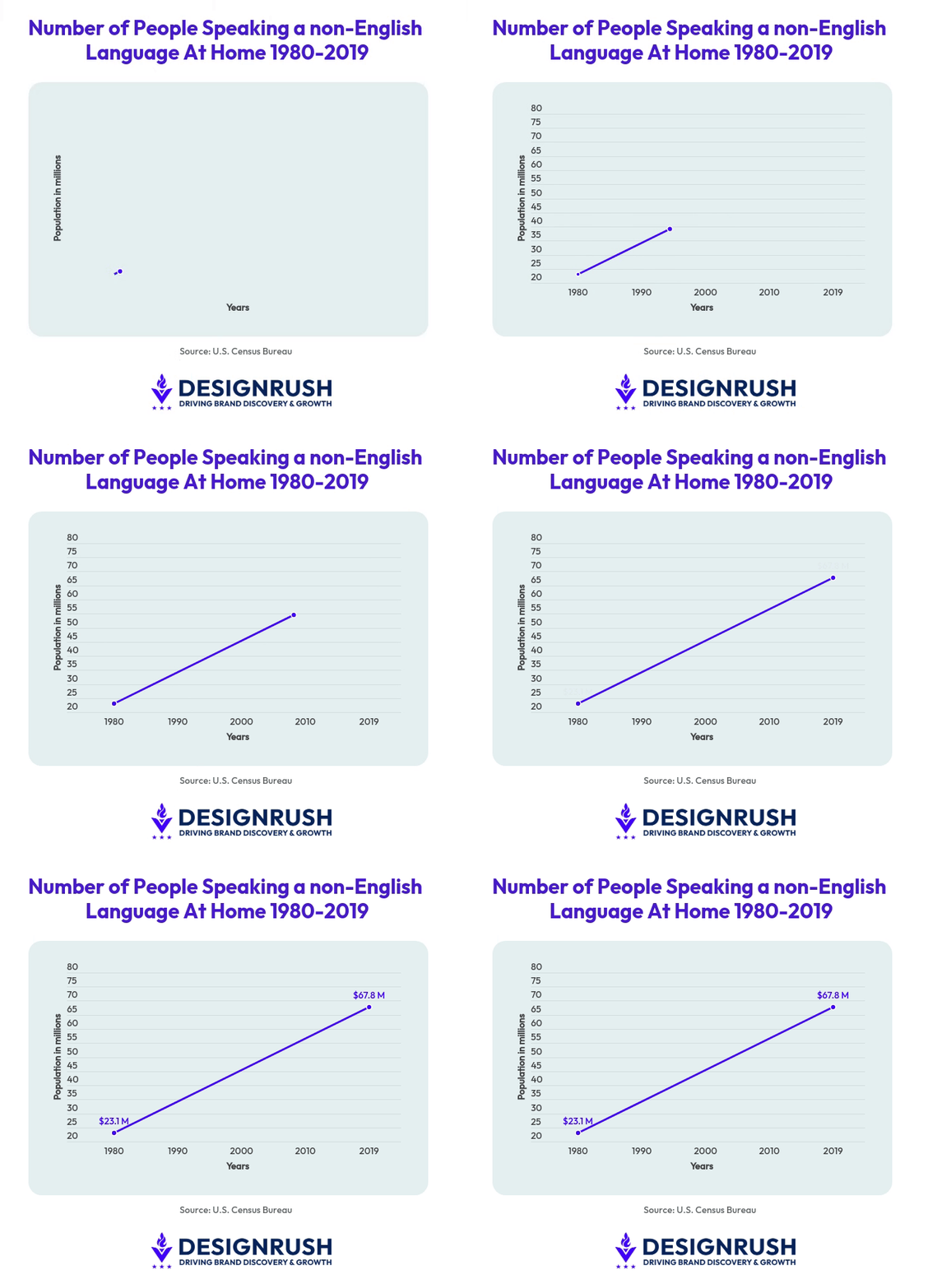
According to the U.S. Census Bureau report, the number of people speaking a language other than English at home has grown by 194% since 1980. It rose from 23.1 million in 1980 to 67.8 million in 2019.
Spanish is the most spoken non-English language, followed by Chinese, French, Arabic, Korean, Tagalog, and Vietnamese.
Among those who speak a non-English language at home, 62% reported speaking English very well, while 8% of the total U.S. population speaks English less than very well.
NYC call centers recruit bilingual or multilingual customer service representatives who speak high-demand languages such as Spanish, Mandarin, French, and Russian to match the city’s diverse customer base.
These agents are more than translators. They are trained customer support specialists who can answer complex customer inquiries, navigate cultural nuances, and enhance customer interactions in the caller’s preferred language.
Intelligent call routing and language selection Many call centers in NYC use Interactive Voice Response (IVR) menus that let callers select their language before they reach a live agent. This reduces wait times and ensures the caller goes directly to an appropriate customer service associate.
Call centers also implement language routing based on caller data (e.g., CRM records showing a customer’s preferred language), improving efficiency and response accuracy.
Process and compliance alignment Especially for public services like NYC311, language access is part of a broader city language access plan, meaning interpretation services are integrated into government call workflows where necessary. These plans monitor demand and ensure call centers can support New Yorkers with limited English proficiency.
Multichannel multilingual support Modern support is not limited to voice calls. A call center in NYC often provides multilingual support via email, text chat, SMS, social messaging, and even app support so that customers can communicate in their native language across all channels.
How do NYC call centers support healthcare, psychotherapy, and behavioral health providers? Call centers in NYC that support healthcare, psychotherapy, and behavioral health providers operate differently from general customer support teams. They combine compliance, clinical sensitivity, and high-touch patient interaction.
HIPAA-compliant patient support infrastructure New York providers must comply with HIPAA and state privacy rules. Professional healthcare-focused call centers operate:
Encrypted call recording and storage Secure CRM and EHR integrations Role-based access controls Documented audit trails HIPAA violations can cost $100 to $50,000 per violation, with annual caps up to $1.5 million, making compliance non-negotiable for medical and behavioral health center specialist operations (HHS data).
Appointment scheduling and intake management Healthcare-focused outbound and inbound call teams manage:
Appointment scheduling Insurance verification Benefits checks Pre-visit reminders Missed appointment follow-ups No-show rates in behavioral health and psychotherapy settings can range from 15% to 30%, depending on population and service model. Structured reminder calls and SMS follow-ups can reduce no-shows by 20-30%.
Crisis-aware call handling New York psychotherapy call centers supporting behavioral health must train agents to:
Recognize crisis language Escalate suicidal ideation immediately Route to licensed clinicians or crisis teams Follow mandated reporting protocols This often includes structured workflows aligned with the 988 crisis framework and state mental health guidance.
What questions should I ask call centers in NYC before hiring one? Before hiring a call center in NYC, ask potential providers the following questions:
Relevant Background What industries do you primarily serve in New York City? What is your NYC workforce profile (agent count, tenure, turnover rate)? Are you compliant with HIPAA, PCI-DSS, TCPA, or other applicable regulations? Where are your operations physically located (borough + remote mix)? Services and Processes What are your current performance benchmarks (FCR, CSAT, ASA, abandonment rate)? How do you handle multilingual customer inquiries? What channels do you support? What is your quality assurance process? Related to Your Project How will you onboard and train agents for our specific service? What reporting will I receive and how often? What is your pricing model, and what costs are variable? What contingency and escalation processes do you have in place? Sources DesignRush sustains a directory of over 40,000 agencies categorized by service category, location, expertise, and reviews. We build our database in two ways:
Our dedicated team of agency experts actively searches the web for top-performing companies. We then pull information from their websites, online presence, and client testimonials to verify their status and qualifications prior to listing. The agencies listed get notified of their profiles on the website and they can choose to claim it or not, which suggests their availability for more collaborations. Agencies can also reach out to DesignRush and must go through the verification process prior to being listed.


 Proposals