The leading digital strategy agencies strengthen brand impact with data, technology, and business acumen. Partner with top digital strategy firms for content and integrated campaigns tailored to your target audiences.
Design Creates Value
Fullspeed is a China-based digital technology and marketing company that provides integrated solutions across digital strategy, marketing, design, and software development. Founded in 2005, the company helps businesses accelerate growth through data-driven digital experiences and scalable technology services... View Fullspeed profile
Top Services:
- Digital Marketing
- Digital Strategy
- Social Media Marketing
- UI/UX Design
- Web Design
- Show more
- Location
- Hangzhou, China
- Number of Employees
- 100 - 249
- Average Hourly Rate
- $25/hr
- Minimal Budget
- $1,000 - $10,000
Accurate | Reliable | Affordable
iARATech Solutions is a premier ITES provider, offering top-quality BPO and KPO services globally. Our expert team excels in administrative tasks, B2B lead generation, digital marketing, and virtual assistant services, helping businesses streamline operations, reduce costs, and focus on core competencies. Let... View IARAtech Solutions's portfolio | View all reviews
Top Services:
- Social Media Marketing
- Digital Marketing
- Email Marketing
- BPO
- Customer Support
- Show more
- Location
- Surat, India
- Number of Employees
- Under 49
- Average Hourly Rate
- $6/hr
- Minimal Budget
- $1,000 - $10,000
- Portfolios Count
- 2 Projects Listed
Grow Your Business with Elite Code Wizards.
Virtual Coders is a rising digital transformation firm from India, offering advanced AI-driven solutions to clients globally, driving increased revenue. Boasting a skilled team of over 40 professionals, we excel in comprehensive technology development and support. Our primary services encompass complex... View Virtual Coders's portfolio | View all reviews
Top Services:
- Software Development
- Mobile App Development
- eCommerce Development
- AI Development
- IoT
- Show more
- Location
- Ahmedabad, India
- Number of Employees
- Under 49
- Average Hourly Rate
- $25/hr
- Portfolios Count
- 2 Projects Listed
We Build Brands.
Adaired Digital Media is a well-known digital marketing company in India that extends its services worldwide and offers cost-effective solutions to businesses and organizations... View all reviews
Top Services:
- Digital Services
- Design Services
- Reputation Management
- Digital Strategy
- WordPress Website Design
- Show more
- Location
- Mohali, India
- Number of Employees
- 50 - 99
- Average Hourly Rate
- $25/hr
- Minimal Budget
- $1,000 - $10,000
We Believe In The Philosophy Of Doing More With Less. We Keep Things Simple Yet Exciting To Capture The True Essence Of Every Brand We’ve Partnered. We Aim To Break The Clutter And Make Noise That’s Heard By The Right Audience.We Are A Marketing Agency Focused On Building Brand Strategy By Developing... View all reviews
Top Services:
- Branding
- Digital Marketing
- Digital Strategy
- Location
- Karachi, Pakistan
- Number of Employees
- 50 - 99
- Minimal Budget
- Under $1,000
Eat Out Your Competition
Cannibals is the fastest growing & leading digital marketing company in Pune & New Delhi. Our team of creatives, developers and analysts have worked with brands around the world solving tough problems and driving powerful outcomes... View all reviews
Top Services:
- SEO
- Web Design
- Digital Strategy
- Location
- Pune, India
- Number of Employees
- Under 49
- Average Hourly Rate
- $30/hr
- Minimal Budget
- Under $1,000
Excellent Publicity offers innovative branding solutions backed by well planned strategy integrating a plethora of branding channels to boost up your brand. Seamless integration of variety of branding platforms is a yielding experience with Excellent publicity... View all reviews
Top Services:
- Advertising
- Media Buying
- Digital Strategy
- Location
- Ahmedabad, India
- Number of Employees
- 100 - 249
Don't Just Build. Get It Crafted With Care.
Shilp IT meets all of your IT requirements. Our company's founder, Ankit Parmar, and his staff have provided unmatched service for the last nine years. While Ankit Parmar has provided his services for over nine years. Our canvas is expansive when it comes to giving solutions to several sectors, but... View all reviews
Top Services:
- Digital Services
- Web Design
- Digital Strategy
- Location
- Ahmedabad, India
- Number of Employees
- 50 - 99
- Average Hourly Rate
- $25/hr
- Minimal Budget
- $1,000 - $10,000
Your Marketing Partner
At Marketing Lad, we were established in 2020 to offer Link Building services and solutions through outreaching. We support businesses with sustainable solutions and increase their rankings significantly... View all reviews
Top Services:
- SEO
- Web Design
- Digital Strategy
- Location
- Srinagar, India
- Number of Employees
- Under 49
- Average Hourly Rate
- $99/hr
- Minimal Budget
- $1,000 - $10,000
Achieving Results through SaaS Digital Marketing
At Digital Gratified, we provide assistance to small, medium, and enterprise-level SaaS businesses in achieving higher organic search visibility through SEO and Content Marketing... View Digital Gratified profile
Top Services:
- Content Marketing
- SEO
- Digital Strategy
- Location
- Jaipur, India
- Number of Employees
- Under 49
- Minimal Budget
- $1,000 - $10,000
Empower your brand with Nyros
Nyros, an India-based software development firm, provides outstanding voice, web and mobile app development services to brands and companies worldwide... View all reviews
Top Services:
- HR Outsourcing
- Digital Services
- Digital Strategy
- Location
- Kakinada, India
- Number of Employees
- Under 49
- Average Hourly Rate
- $49/hr
- Minimal Budget
- $25,000 - $50,000
Designing your digital future.
Sundew is a digital design and development company that simplifies complex concepts to create seamless, engaging, and unified consumer experiences across the web for global brands since 2007... View all reviews
Top Services:
- Digital Marketing
- Mobile App Development
- Digital Strategy
- Location
- Kolkata, India
- Number of Employees
- 100 - 249
- Average Hourly Rate
- $99/hr
- Minimal Budget
- $25,000 - $50,000
Know what premium feels like with Primotech.
Primotech is an IT Global Solutions company. We’ve been delivering software development and IT projects from several big enterprises to small and medium-sized businesses. We blend agile methodologies with technical expertise to take your business to the next level.We leverage our business domain knowledge... View PRIMOTECH's portfolio | View all reviews
Top Services:
- Digital Marketing
- eCommerce Development
- Web Development
- UI/UX Design
- Web Design
- Show more
- Location
- Mohali, India
- Number of Employees
- 100 - 249
- Portfolios Count
- 2 Projects Listed
World Of AI Driven Design
We are a boutique design studio specializing in one of the most underleveraged frontiers in AI the human side of it. At Wolke, we design and build the interfaces, workflows, and product experiences that make AI systems usable, trustworthy, and genuinely valuable. Agentic AI, copilots, intelligent automation... View Wolke Design Studio LLP's portfolio
Top Services:
- Product Design
- Design Services
- UI/UX Design
- Web Design
- AI Development
- Show more
- Location
- Thiruvananthapuram, India
- Number of Employees
- Under 49
- Average Hourly Rate
- $50/hr
- Portfolios Count
- 2 Projects Listed
We Are Dedicated To Serve You All Time
White Globe Web provides all digital marketing and web development services under one roof. Their marketing strategy is very cost-effective respective to others... View all reviews
Top Services:
- Digital Services
- Digital Strategy
- Branding
- Logo Design
- Creative Services
- Show more
- Location
- Jabalpur, India
- Number of Employees
- Under 49
Scaling travel businesses to new heights.
Allura Travel Marketing helps travel businesses improve brand visibility, inquiries and bookings with specialized digital marketing and branding solutions... View Allura Travel Marketing profile
Top Services:
- Digital Marketing
- Digital Strategy
- Branding
- Creative Services
- SEO
- Show more
- Location
- Vadodara, India
- Number of Employees
- Under 49
- Average Hourly Rate
- $25/hr
- Minimal Budget
- $1,000 - $10,000
Simplifying social media, making sure it works for YOU in the way you WANT.
Business Coach for Social Media ManagersI help SMMs with A-Z knowledge, establish their business & get clients on repeat in 90 days | Social Media Management services for small businesses... View Itisaditijain profile
Top Services:
- Social Media Marketing
- Digital Strategy
- Content Marketing
- Business Consulting
- Digital Marketing
- Show more
- Location
- Mumbai, India
- Number of Employees
- Under 49
- Average Hourly Rate
- $30/hr
- Minimal Budget
- $1,000 - $10,000
Experience digital 360 - the ultimate destination.
dBox Solutions Pvt Ltd is a fully integrated media and communications company offering services in digital advertising & marketing (interactive), We understand brands, markets, and the media making us your 'Ideal Medium For Brands'... View all reviews
Top Services:
- Digital Marketing
- Digital Strategy
- Software Development
- Media Buying
- Social Media Marketing
- Show more
- Location
- Karachi, Pakistan
- Number of Employees
- Under 49
Effortlessly Digital.
Tier2 Digital is dedicated to empowering ambitious businesses on their digital growth journey. Our passion for social media led us to convert our enthusiasm into a thriving profession. At Tier2, we're a blend of tech-savvy minds and creative designers, committed to delivering contentment both in life and... View Tier2 Digital profile
Top Services:
- Digital Services
- Digital Strategy
- Social Media Marketing
- Video Marketing
- Web Design
- Show more
- Location
- Bengaluru, India
- Number of Employees
- Under 49
- Minimal Budget
- $1,000 - $10,000
Igniting Businesses
Web Ignito has a decade of seasoned expertise, our digital marketing agency serves clients globally across a spectrum of industries. Our extensive portfolio showcases successful partnerships with businesses spanning home decor, smart wearables, interior design, architecture, coaching, real estate, jewelry... View all reviews
Top Services:
- Digital Services
- Digital Strategy
- Web Design
- WordPress Website Design
- Digital Marketing
- Show more
- Location
- Navi Mumbai, India
- Number of Employees
- Under 49
- Average Hourly Rate
- $20/hr
- Minimal Budget
- Under $1,000
Make Your Digital Entity
We are a full-service Digital Marketing Agency. We see ourselves as the digital innovators & technical solutions providers for small and micro businesses. We believe every small business has potential to flourish if they are led strategically... View all reviews
Top Services:
- Logo Design
- Digital Strategy
- Reputation Management
- Web Design
- Web Development
- Show more
- Location
- Ghaziabad, India
- Number of Employees
- Under 49
- Average Hourly Rate
- $10/hr
Top Web Design and Development Company India.
At Scientific Webs, we utilize cutting-edge frameworks and languages for CMS, ERP, software, and website development, with expertise in Flutter for iOS and Android app development. Having successfully completed over 248 projects on Freelancer.com with a 4.9 out of 5-star rating, we offer infinite iterations... View all reviews
Top Services:
- Graphic Design
- Digital Strategy
- Web Design
- eCommerce Development
- Web Development
- Show more
- Location
- Jaipur, India
- Number of Employees
- 50 - 99
- Average Hourly Rate
- $30/hr
Passion! Excellence!! Meritocracy!
As seasoned digital marketing professionals, we pride ourselves on offering a comprehensive 360-degree service for our customers. With a commitment to agility, we seamlessly transition from conceptualization to action, consistently delivering solutions tailored to our customer's needs and requirements. We... View Thulirsoft profile
Top Services:
- Reputation Management
- Digital Strategy
- eCommerce Development
- Digital Marketing
- SEO
- Show more
- Location
- Chennai, India
- Number of Employees
- Under 49
- Average Hourly Rate
- $10/hr
- Minimal Budget
- $1,000 - $10,000
Best Digital Marketing Agency In Borivali.
For businesses in Borivali seeking top-notch digital marketing services, adsmagnify.com is a standout choice. With expertise in SEO, PPC, social media, content, and web design, they deliver results. Transparent, strategic, and client-focused, adsmagnify.com is committed to your success in the digital... View all reviews
Top Services:
- Digital Services
- Digital Strategy
- PPC
- Social Media Marketing
- Content Marketing
- Show more
- Location
- Mumbai, India
- Number of Employees
- Under 49
- Average Hourly Rate
- $45/hr
- Minimal Budget
- Under $1,000
We Build To Make You Proud
Expand your brand reach and maximize your ROI with Brainmine, an expert Pune-based web Design Company and digital marketing agency, providing custom web design, software, and marketing solutions in India and across the globe... View all reviews
Top Services:
- Digital Services
- Digital Strategy
- Branding
- Web Development
- Web Design
- Show more
- Location
- Pune, India
- Number of Employees
- 50 - 99
- Average Hourly Rate
- $35/hr
- Minimal Budget
- Under $1,000
Best digital marketing company to plan right mix of online activities for your business.
A 5-in-1 solution provider, for your advertising, marketing, business development, sales, and customer relationship management needs. We at i-engage have expertise in developing strategies for content marketing to make you achieve your business goals. We work on craft efficient MarTech strategies that boosts... View all reviews
Top Services:
- Digital Services
- Digital Strategy
- Web Development
- WordPress Website Design
- Digital Marketing
- Show more
- Location
- Indore, India
- Number of Employees
- Under 49
- Minimal Budget
- $1,000 - $10,000
We create story driven digital campaigns that make your brand stand out.
Emporiom Digital is a global Firm specializing at integrated services. We excel at Design, Digital Marketing & Tech Solutions with a clear focus on limited clientele, high quality. Our Integrated approach and proprietary processes help clients drive more ROI, find more clients & build a great brand for their... View all reviews
Top Services:
- Digital Services
- Digital Strategy
- Web Design
- Web Development
- Social Media Marketing
- Show more
- Location
- Noida, India
- Number of Employees
- Under 49
- Average Hourly Rate
- $150/hr
- Minimal Budget
- $1,000 - $10,000
Amplify your online presence!
Essentiate offers digital transformation services to businesses, serving as a trusted and experienced partner in their journey towards accelerated growth. With a focus on leveraging technology and innovation, we empower companies to thrive in today's dynamic market landscape... View Essentiate profile
Top Services:
- Digital Services
- Digital Strategy
- UI/UX Design
- WordPress Website Design
- Web Development
- Show more
- Location
- Chennai, India
- Number of Employees
- Under 49
- Average Hourly Rate
- $150/hr
- Minimal Budget
- $1,000 - $10,000
Your Complete Solution
Leads & Brands is one of the top and best digital marketing company in Bhopal! Whether you require the expertise of a trusted SEO company or a comprehensive digital marketing strategy, we've got you covered. Our dedicated team specializes in a range of services including Search Engine Optimization (SEO)... View all reviews
Top Services:
- Digital Marketing
- Digital Strategy
- SEO
- PPC
- Social Media Marketing
- Show more
- Location
- Bhopal, India
- Number of Employees
- Under 49
- Average Hourly Rate
- $1/hr
- Minimal Budget
- Under $1,000
Your Digital Diary.
Define Socially is a premier organic marketing agency based in North India. We specialize in creating effective and sustainable marketing strategies. Our expertise drives growth and enhances your brand's online presence... View all reviews
Top Services:
- Digital Services
- Digital Strategy
- Web Design
- UI/UX Design
- WordPress Website Design
- Show more
- Location
- Hisar, India
- Number of Employees
- Under 49
- Average Hourly Rate
- $8/hr
Defines everything
Revuteck is a dynamic internet marketing service provider AKA digital marketing agency. We are an IT services company that combines innovation, creativity, and technical expertise to provide a comprehensive suite of solutions for businesses of all sizes... View all reviews
Top Services:
- Graphic Design
- Digital Strategy
- Logo Design
- Web Design
- Web Development
- Show more
- Location
- Hyderabad, India
- Number of Employees
- Under 49
- Average Hourly Rate
- $50/hr
We specialize in helping international brands penetrate the Chinese market.
A bounique marketing agency that specializes in helping international brands penetrate the Chinese market... View HnE Marketing Consultancy profile
Top Services:
- Digital Services
- Digital Strategy
- Branding
- Digital Marketing
- Social Media Marketing
- Show more
- Location
- Guangzhou, China
- Number of Employees
- Under 49
- Average Hourly Rate
- $50/hr
- Minimal Budget
- $1,000 - $10,000
Your Digital Partner.
Transform your digital presence with our comprehensive marketing services. We offer expert SEO optimization, engaging social media management, compelling content creation, and professional website development and maintenance all designed to elevate your brand and connect you with your audience... View all reviews
Top Services:
- Digital Services
- Digital Strategy
- Web Design
- Web Development
- eCommerce Development
- Show more
- Location
- Vadodara, India
- Number of Employees
- Under 49
- Average Hourly Rate
- $30/hr
- Minimal Budget
- Under $1,000
Generating New Business Growth Ideas
BestoSEO Solutions Private Limited is a digital marketing agency in Mumbai that serves customers all around the globe. We drive business growth with digital ideas, creativity, and ever-shifting trends toward technologies, channels, and platforms. Achieve over 200% growth through Facebook, Instagram, and... View all reviews
Top Services:
- Digital Services
- Digital Strategy
- Reputation Management
- Web Design
- SEO
- Show more
- Location
- Thane, India
- Number of Employees
- Under 49
- Average Hourly Rate
- $15/hr
- Minimal Budget
- $1,000 - $10,000
Your Growth Partner In The Digital World
Editvo is a top digital marketing agency in India having 9+ Years of expertise offering expert services in SEO, SMM, video marketing, content marketing, and web development. With a client-focused approach and a team of creative professionals !... View Editvo Complete Advertising Solution profile
Top Services:
- Branding
- Digital Strategy
- Web Design
- Web Development
- Digital Marketing
- Show more
- Location
- Noida, India
- Number of Employees
- Under 49
Award-winning Strategic Marketing and Digital Brand Management.
Fifth Estate is a global brand management agency that connects creative ideas to real outcomes. They leverage digital platforms to craft communication that makes a real impact on our clients businesses. With experience across FMCG, Technology, Finance, Education, and Engineering, Fifth Estate's focus remains... View all reviews
Top Services:
- Branding
- Digital Strategy
- Graphic Design
- Digital Services
- WordPress Website Design
- Show more
- Location
- Pune, India
- Number of Employees
- 50 - 99
- Average Hourly Rate
- $50/hr
- Minimal Budget
- $1,000 - $10,000
Dedicated To Deliver Unique Experience To People
techEnvision is able to provide quality deliverables to customers globally through its efficient processes and effective project management techniques we recognizes the fact that the best companies provide not just quality products to its consumers, but also impeccable services to go with it... View all reviews
Top Services:
- Digital Services
- Digital Strategy
- WordPress Website Design
- eCommerce Development
- Digital Marketing
- Show more
- Location
- Kolhapur, India
- Number of Employees
- Under 49
- Average Hourly Rate
- $25/hr
- Minimal Budget
- $1,000 - $10,000
#1 Rated Digital Marketing Services
HikeMyTraffic® is a tech enabled, AI powered digital marketing agency delivering measurable business growth through data driven strategies. We specialize in AI driven SEO, performance advertising, social media automation, and lead generation focused on real outcomes like qualified leads, conversions, and... View all reviews
Top Services:
- Digital Services
- Digital Strategy
- Web Development
- WordPress Website Design
- SEO
- Show more
- Location
- Noida, India
- Number of Employees
- 100 - 249
- Average Hourly Rate
- $150/hr
Experience-Led Everything
Zensar Technologies is a leading IT services, technology consulting, and digital transformation company helping enterprises modernize, innovate, and grow. We deliver AI-led solutions across cloud, data and AI, digital engineering, application modernization, enterprise platforms, cybersecurity, and managed... View Zensar Technologies Ltd profile
Top Services:
- Digital Services
- Digital Strategy
- UI/UX Design
- Digital Marketing
- AI Development
- Show more
- Location
- Pune, India
- Number of Employees
- 1000 & Up
Roots of Optimal Generative Growth
The Roogg Design is a multidisciplinary studio specializing in branding, strategy, and digital design, serving diverse industries with a focus on fostering optimal, generative brand growth. By distilling clarity from complexity, the studio elevates businesses into entities that resonate deeply, leveraging... View The Roogg Design's portfolio
Top Services:
- Package Design
- Branding
- Product Design
- Digital Strategy
- Logo Design
- Show more
- Location
- Ahmedabad, India
- Number of Employees
- Under 49
- Portfolios Count
- 1 Project Listed
Watch Us Sort It Out
Sorted Branding is a creative agency focused on building bold brands, businesses, and measurable growth for consumer-first companies, particularly in the FMCG and D2C space. With a strong belief that clarity drives branding, strategy fuels scalability, and design creates lasting impact, the agency helps... View Sorted Branding's portfolio | View all reviews
Top Services:
- Graphic Design
- Creative Services
- Package Design
- Digital Strategy
- Logo Design
- Show more
- Location
- Mumbai, India
- Number of Employees
- Under 49
- Average Hourly Rate
- $200/hr
- Minimal Budget
- $1,000 - $10,000
- Portfolios Count
- 1 Project Listed
Achieve Exponential Growth.
OptMum Digital is a Gurgaon-based ROI-focused digital marketing agency specializing in driving sales, lead generation, and branding activities for our clients. Our primary emphasis revolves around maximizing sales and cultivating leads while concurrently executing impactful branding initiatives... View all reviews
Top Services:
- Digital Services
- Logo Design
- Package Design
- Graphic Design
- Digital Strategy
- Show more
- Location
- Gurgaon, India
- Number of Employees
- Under 49
- Minimal Budget
- Under $1,000
Building Brands, Powering Growth
Webplinth is a full-service digital marketing and web solutions agency helping businesses grow online with creative strategies, impactful design, and result-driven marketing. We specialize in SEO, social media, branding, web development, and performance marketing to build strong digital identities and boost... View Webplinth Software Solutions's portfolio | View all reviews
Top Services:
- Web Design
- Digital Services
- Logo Design
- Digital Strategy
- Design Services
- Show more
- Location
- Thiruvananthapuram, India
- Number of Employees
- Under 49
- Minimal Budget
- Under $1,000
- Portfolios Count
- 1 Project Listed
One Platform. EveryChannel.
Adnova is an all-in-one advertising platform designed to help agencies launch, manage, and scale campaigns with ease. Built for speed and simplicity, it brings everything you need into one place so your team can focus less on logistics and more on results... View Adnova profile
Top Services:
- Digital Marketing
- AI Development
- Digital Strategy
- Market Research
- Show more
- Location
- Tiruchirappalli, India
- Number of Employees
- Under 49
- Average Hourly Rate
- $79/hr
- Minimal Budget
- Under $1,000
Where Creativity Meets Digital Brilliance
Cloud Dreams is a creative digital agency based in Coimbatore, offering web design, branding, graphic design, and SEO solutions that help businesses build a powerful online presence. With 13+ years of experience, we combine innovation and strategy to deliver digital experiences that inspire growth... View Cloud Dreams's portfolio | View all reviews
Top Services:
- Digital Services
- Graphic Design
- Branding
- Logo Design
- Digital Strategy
- Show more
- Location
- Coimbatore, India
- Number of Employees
- 50 - 99
- Average Hourly Rate
- $500/hr
- Minimal Budget
- $1,000 - $10,000
- Portfolios Count
- 1 Project Listed
Your Trusted Partner in Web Design, Development & Digital Growth.
At AM Digitalz, we help businesses build a strong digital presence with modern website design, seamless development, and results-driven digital marketing strategies. We create websites that are not just visually stunning but also built to convert visitors into p... View AM Digitalz's portfolio | View all reviews
Top Services:
- Branding
- Graphic Design
- Design Services
- Logo Design
- Digital Services
- Show more
- Location
- Multan, Pakistan
- Number of Employees
- Under 49
- Average Hourly Rate
- $30/hr
- Minimal Budget
- Under $1,000
- Portfolios Count
- 1 Project Listed
Your Trusted Partner for AI-Powered
The Obsidians is a digital technology agency that helps businesses accelerate growth through AI-powered software development, web solutions, and digital marketing services. The company specializes in building scalable web and mobile applications, intelligent automation systems, and conversion-focused digital... View The Obsidians's portfolio | View all reviews
Top Services:
- Graphic Design
- Branding
- Logo Design
- Design Services
- Product Design
- Show more
- Location
- Mohali, India
- Number of Employees
- Under 49
- Average Hourly Rate
- $15/hr
- Minimal Budget
- Under $1,000
- Portfolios Count
- 1 Project Listed
We Create Value
The roots of Livebrain Digital Marketing Agency are grounded in a strong belief: that even the smallest business has the potential to grow and thrive. Our story isnt just about building an agencyits about empowering businesses to succeed through smart, meaningful marketing... View Livebrain Digital Marketing Agency profile
Top Services:
- Graphic Design
- Logo Design
- Digital Strategy
- Digital Services
- Creative Services
- Show more
- Location
- Vadodara, India
- Number of Employees
- Under 49
- Average Hourly Rate
- $500/hr
- Minimal Budget
- Under $1,000
Logic Before Code
Parikh Advisory provides Fractional CPO leadership and product architecture blueprints for growth-stage B2B SaaS and Fintech companies. Backed by 13+ years of enterprise execution for brands like MAS, Singtel, and Shell, we align stakeholders, map compliance risk, and deliver actionable engineering roadmaps... View Parikh Advisory profile
Top Services:
- Product Design
- Business Consulting
- Digital Strategy
- UI/UX Design
- Market Research
- Show more
- Location
- Pune, India
- Number of Employees
- Under 49
- Average Hourly Rate
- $50/hr
- Minimal Budget
- $1,000 - $10,000
Seamless service, lasting impact.
We specialize in delivering comprehensive digital marketing solutions, including expert SEO services, innovative web design and development, and captivating graphic design. Our team is dedicated to enhancing your online presence and driving business growth through tailored strategies and creative designs... View all reviews
Top Services:
- Digital Marketing
- Web Development
- Graphic Design
- IT Services
- SEO
- Show more
- Location
- Bhaktapur, Nepal
- Number of Employees
- Under 49
- Average Hourly Rate
- $25/hr






































Popular Services
How to Hire a Digital Strategy Company
Do I have a defined business outcome, or just the project?
Ask yourself: Can I finish this sentence, "We need to [specific outcome] by [timeframe] because [consequence of not doing it]", without describing an activity like "build a strategy" or "improve our digital presence"?
If you can't answer that question, no digital strategy agency can help you yet.
Agencies are skilled at filling vague briefs with visible work.
If you walk in asking for "a digital strategy," you'll get a document, not a result.
The most common root cause of failed agency engagements isn't a capability gap on the agency's side.
It's a client who didn't define a measurable expectation before signing.
The agency becomes a cost center the moment the brief stays vague.
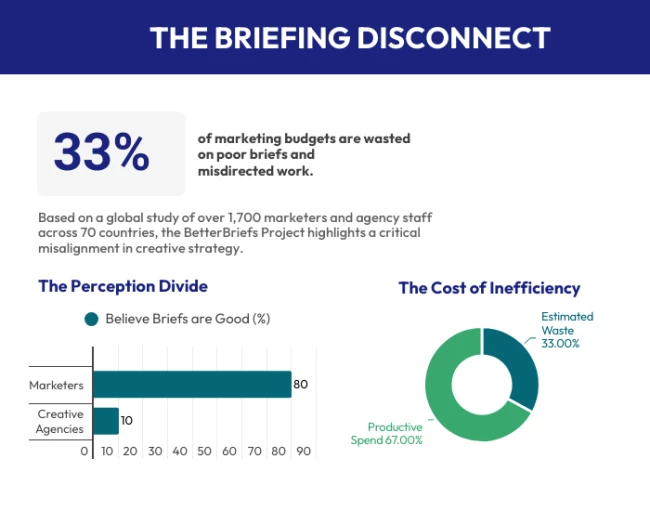
The BetterBriefs Project global study, published by the IPA and based on responses from over 1,700 marketers and agency staff across 70 countries, found that 80% of marketers believe they write good briefs, while only 10% of creative agencies agree.
The same study found that respondents estimated 33% of marketing budgets are wasted on poor briefs and misdirected work.
Meanwhile, the ANA's "Enhancing Client/Agency Relations" survey found that just 27% of agencies believe clients provide clear assignment briefs, and not a single agency respondent strongly agreed.
Write your one-sentence outcome and pressure-test it with your CFO or a board member before briefing digital strategy agencies.
If neither of them can connect it to a line on a P&L, rewrite it.
Does the agency's experience match my specific problem or just my industry?
Shortlisting by industry vertical is one of the most common and most costly mistakes in hiring digital strategy companies.
An agency that has produced results for three eCommerce brands has not necessarily solved a B2B lead generation problem.
An agency that grew a DTC brand's organic traffic hasn't necessarily navigated the compliance constraints of a financial services company.
When reviewing agency profiles and case studies, filter for problem match, not sector match.
The question isn't "have they worked in my industry?" It's "have they solved the specific problem I have, in a comparable context, with measurable results?"
Despite this, 89% of companies say "experience in our industry" is a major factor when selecting an outsourcing provider, according to a 2024 survey of business leaders compiled by Passive Secrets, making industry match the most common shortlisting criterion, and problem match the most overlooked one.
How to shortlist effectively:
- Identify the two or three most comparable case studies on each digital strategy firm’s profile, comparable by problem type, not by industry logo.
- Look for case studies that name the specific metric that moved, the timeframe, and the agency's specific contribution (not the client's, not the market's).
- Narrow to three to five agencies before requesting proposals.
What to look for in case studies:
- A named starting problem, not a generic challenge.
- A specific intervention, not a comprehensive strategy.
- A measured result with a timeframe — not significant growth or improved performance.
- Evidence that the agency's work caused the result, not just preceded it.
Red flags at this stage:
- Case studies lead with client logos instead of outcomes.
- Results are described in relative terms ("increased by X%") without a baseline or timeframe.
- Every case study sounds like it could apply to any client in any sector.
What does success look like at 30, 60, and 90 days, and who defined it?
Digital strategy agencies should write down what a successful 90-day outcome looks like from their side.
Without a shared, written definition of early success, both sides spend the first quarter doing work they believe is valuable while the other side is quietly keeping score on different metrics.
By month four, the client is frustrated by the absence of visible results, and the agency is frustrated that the client doesn't appreciate the foundational work they've completed.
This pattern is common enough to have a name in the consulting industry: the expectation gap.
The financial consequences of getting this wrong are significant.
According to the ANA and 4As joint study, The Cost of the Pitch, based on 300+ interviews with U.S. brand marketers and agency executives, the average cost of an agency review when no incumbent is involved is $408,500. That’s the cost for the client alone, before accounting for the digital strategy company’s own pitch costs.
When expectations break down and a review becomes necessary, that is the price of a poorly aligned start.
The 30-day milestone should cover access, audit, and alignment.
The 90-day milestone should include at least one deliverable that tests the quality of the agency's strategic thinking before you're locked into a full year.
What to do: Send the agency your written version of the 90-day success before the kickoff call. Ask them to do the same. Where they diverge is where the relationship will break first.
Who will actually work on my account, and have I met them?
The person who presents to you and the person who runs your account on a daily basis are often not the same.
This gap between the seniority of the pitch team and the seniority of the delivery team is one of the most predictable sources of post-signature disappointment in agency relationships.
Before signing, identify who will be doing the actual work on your account. Ask to meet them.
Ask digital strategy firms what percentage of their time will be dedicated to your engagement. Then assess whether that person has the experience level the engagement actually requires.
Your relative budget matters here. An agency billing $6M annually will prioritize a $150K retainer differently from one billing $900K annually.
The smaller agency may be the higher-priority client, which means more senior attention, faster response, and more accountable work.
The table below shows how staffing typically plays out by agency size, and what it means for how you'll be treated.
| Agency size | Who pitches | Who delivers | Your likely priority |
| Boutique (under 15 people) | Founder or principal | Often the same person | High, but capacity is finite |
| Mid-size (15-75 people) | Senior partner | Account director + specialist | Moderate, senior input is scheduled |
| Large (75+ people) | Business development director | Rotating account team | Depends on your budget's rank in their portfolio |
What happens if the strategy isn't working?
Most buyers evaluate digital strategy agencies on what they'll do when things go well.
Fewer think through what will happen when things don't go well, which, in any honest engagement, they sometimes won't.
The way an agency handles underperformance tells you more about the health of the relationship than any pitch or proposal.
Top digital strategy agencies identify problems before the client does. They come with a diagnosis and propose a course correction.
An agency that waits for the client to notice and then explains why the results weren't their fault is an agency that will cost you more than the retainer.
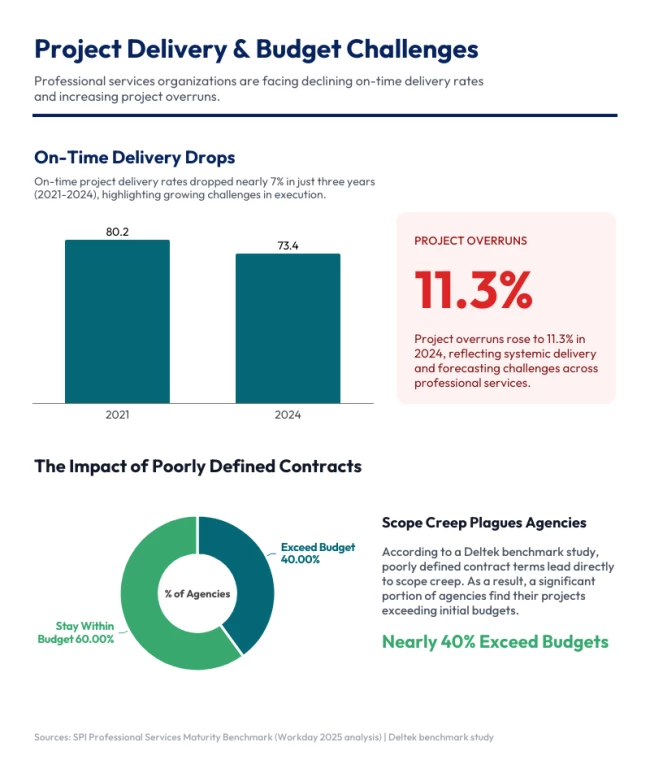
The data supports taking this seriously upfront. The SPI Professional Services Maturity Benchmark, a survey of thousands of professional services organizations, cited by Workday's 2025 industry analysis, found that on-time project delivery rates dropped to just 73.4% in 2024, down from 80.2% in 2021.
The same research found that project overruns rose to 11.3% over the same period.
In agency engagements specifically, a Deltek benchmark study found that nearly 40% of agenciesexceedprojectbudgets due to scope creep from poorly defined contract terms.
These aren't edge cases. They're the statistical norm, and they almost always go unaddressed until the client notices the invoice.
Before you sign, understand the digital strategy firm’s process for flagging underperformance: how often they review results against baseline, what triggers an internal review, and how they communicate bad news.
Why Companies Trust DesignRush
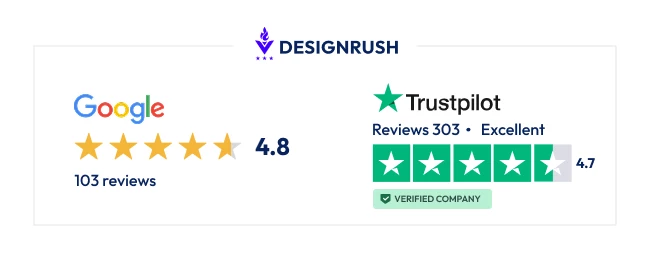
Rated 4.8 on Google and 4.7 on Trustpilot, DesignRush Agency Directory is a reliable resource for finding digital strategy agencies. We owe this to our executive selection team, which follows a strict screening process when featuring agencies on the platform, assessing key performance indicators, like portfolio, client reviews, and industry reputation.
Learn more about DesignRush Agency Ranking Methodology.
Sources
DesignRush sustains a directory of over 30,000 agencies categorized by service category, location, expertise, and reviews. We build our database in two ways:
- Our dedicated team of agency experts actively searches the web for top-performing companies. We then pull information from their websites, online presence, and client testimonials to verify their status and qualifications prior to listing.
- The agencies listed get notified of their profiles on the website and they can choose to claim it or not, which suggests their availability for more collaborations.
Agencies can also reach out to DesignRush and must go through the verification process prior to being listed.
7 Frequently Asked Questions About Digital Strategy Agencies
How do I know if the digital strategy company I'm evaluating will execute the strategy or just sell me one?
Ask in the first meeting who will be on your account after the contract is signed. The most consistent structural flaw in agency sales models is pitch-and-switch staffing: senior operators close the deal, junior operators execute the engagement. The senior judgment that persuaded you to sign is often not what you're buying for the next 12 months.
To protect against this, require that the Statement of Work name the specific individuals responsible for your account, along with their seniority level and the number of other accounts they carry simultaneously. Many digital strategy agencies overload account managers with 30 to 50 clients each. At that volume, no individual client gets meaningful strategic attention, and monthly "strategy calls" become status updates where someone reads your own analytics back to you.
What are the clearest red flags that an agency is not a serious digital strategy partner?
The clearest red flag is a digital strategy firm that arrives at the first meeting with a proposal already written.
A serious digital strategy partner asks about your margins, customer acquisition costs, competitive positioning, and internal constraints before it proposes anything. Additional red flags that signal execution-only thinking include:
- Generic proposals that could apply to any company in your sector.
- Reporting decks that track activity (impressions, posts published, hours logged) rather than business outcomes.
- Unwillingness to show the full timeline and revenue impact behind their case studies.
Agencies that cannot explain their week-by-week decision-making process either don't have one or don't want you examining it.
What costs typically appear after signing that weren't in the original proposal?
The three most common post-signature cost surprises in digital strategy engagements are: change orders for work outside the initial scope, consulting hours billed separately from retainer fees, and technology or platform costs that the digital strategy agency treats as pass-through charges.
A $10,000 project can easily grow to $13,000-$15,000, and a six-week timeline may stretch to twelve weeks. All that can lead to financial overruns, reduced quality, and team burnout. Before signing, request a complete list of every line item not covered by the retainer, including: additional revision rounds beyond those specified, stakeholder workshops, tool subscriptions, third-party data licenses, and any work triggered by internal changes on your side (a rebrand, a product launch, a new market entry).
A well-run agency will provide this list without hesitation. One that deflects is signaling a billing model that depends on scope expansion to improve its own margins.
How much should a digital strategy company services cost?
A credible digital strategy agency engagement in 2025 runs $3,000 to $25,000 per month on retainer, or $5,000 to $150,000+ for a defined project. According to a pricing study drawing on data from 1,200+ agencies, monthly retainer costs span $3,000 to $25,000, with median spending at $7,500 for mid-market companies.
Hourly consulting rates range from $100 to $350 per hour, with senior strategists commanding rates above $250.
On the global side, the 2025 Global Digital Marketing Report by DesignRush puts the worldwide average agency rate at $97 per hour, with U.S.-based agencies averaging $124 per hour.
Should I worry about a digital strategy agency that locks me into a long contract before showing any results?
Yes, a 12-month lock-in with no performance milestone clauses is a structural risk, not a standard industry practice. Long contracts without exit provisions protect the digital strategy firm’s revenue, not your outcomes. A confident agency with a proven process should be willing to build in milestone-based reviews, typically at 90 days and 6 months. There, both parties assess whether the engagement is generating the agreed-upon indicators of progress.
At a minimum, any long-term contract should specify: what deliverables are due at each quarter, what performance benchmarks trigger a strategy review, and what the exit mechanism is if those benchmarks are not met.
How do I know if an agency's strategy is custom to my business, or a repackaged template?
Ask the shortlisted digital strategy agencies to show you two proposals from different clients in different industries and explain the strategic differences between them. Agencies with a genuine strategy capability will have fundamentally different recommendations for a D2C consumer brand versus a B2B SaaS company. They’ll offer a different channel mix, different measurement frameworks, and different competitive positioning approaches
Agencies that apply templated thinking will show cosmetic differences: the same services with different company names on the header. A generic proposal signals generic execution. The right strategy depends on your stage, competitive landscape, and ideal customer profile. During evaluation, also listen for how quickly the digital strategy company moves to tactics. Legitimate strategists spend the first conversation asking questions; agencies selling repackaged work move quickly to talking about what they do.
At what point in the sales process should I walk away, even if the agency seems capable?
Walk away immediately if the agency makes performance guarantees, refuses to name your day-to-day account team, or cannot explain how it measures strategic success independent of vanity metrics.
These three signals do not indicate inexperience, but a business model designed to obscure accountability. Digital strategy firms that make guarantees like "first page rankings in 30 days" or "500% ROI for everyone" either don’t understand how digital marketing works or are overstating certainty to close the deal.
Separately, if an agency's reporting vocabulary consists exclusively of reach, impressions, and engagement rate with no connection to revenue, pipeline, or customer acquisition cost, the strategy layer is missing, regardless of how sophisticated the pitch sounded. If a digital strategy firm avoids sharing analytics dashboards, performance reports, or access to your own ad accounts, that's a serious warning sign. A successful digital strategy relies on data-driven decisions, and access to those numbers is how you verify you're on the right track.
About The Author and Expert Reviewer

Jelena Relić has hundreds of top-ranking articles and a lifestyle & culture magazine she calls The MAN. She gained valuable content and SEO experience working at Digital Circle and Neil Sahota, which she now uses to deliver top-quality B2B content at DesignRush, particularly in the creative industry.

Branko Dimitrijević is a multifaceted creative and a recipient of 33 design awards. Throughout his 12-year career, he has delivered over 165 web design projects, showcasing his expertise in website optimization, UI/UX design, logo design, and video animation. He is now dedicating his talent and skills to being one of the creative geniuses at DesignRush.
Latest Trends Related to Digital Strategy