


Successful rebranding examples always aim to solve a specific business problem rather than rebranding for the sake of it.
That could be rebuilding trust, signaling a pivot, escaping a limiting category, or making a legacy brand feel current again.
Successful Rebranding Examples: Key Findings
- Close the gap when your brand undersells your business. Automation IG rebuilt its website to match the caliber of its work, and Nokia rebuilt its identity to establish itself as a B2B tech company
- Reposition into the category you're growing toward. Poppi reframed its drink from a "vinegar tonic" to a "prebiotic soda", and Kia repositioned as an EV brand, passing 3 million annual sales in 2023.
- Back the new story with proof, not just a new message. CVS gave up ~$2B in tobacco revenue to make its health mission credible, and Domino's reformulated its pizza before advertising it.
Why Rebranding Matters: 71% of Consumers Treat Brand Trust as a "Buy or Avoid" Issue
Rebranding costs time and money, and done poorly, it's just a new logo on the same old problems. So why bother?
Because when the market’s perception of your brand has fallen behind what you’ve actually become, that gap can be far costlier. It can lead to:
- Lower conversions, as prospects don't understand what you offer
- Margin pressure, forcing you to compete on price instead of brand value
- Higher churn and higher effort, as trust erodes
Closing that perception gap pays off. Consistent branding across channels can lift revenue by up to 33% (Marq), while 71% of consumers treat brand trust as a "buy or avoid" issue (Edelman).
Companies that rebranded successfully start with a clear business reason, then align positioning, messaging, and the real customer experience.
Courtney Bozigian, Branding Director for Digital Silk, says that “business is dynamic and both strategies and executional plans must be built to shift and adapt with the market.”
She goes on to say that being too rigid with your brand can “limit innovation and close off the right opportunities”.
Five Types of Rebrand and When to Use Each
Most rebrands fall into one of five categories, though many successful examples combine more than one.
Rebrand type | What actually changes | Examples in this article |
Name change | The company or product name | Apple, Kia, CVS Health, Poppi |
Full visual identity overhaul | Logo, typography, color, and system | Gucci, Burger King, Nokia, Airbnb, Automation IG |
Campaign/ message-only | Positioning and messaging; visuals left untouched | Old Spice, Snickers |
Values/ representation-only | Who and what the brand represents | CVS Health |
Product/ operational change | The product itself or how the company operates | Domino's, CVS Health |
Now to the rebranding examples themselves, starting with the ones that show where branding is heading right now.
1. Kia: Rebrand for the Electric Era
An industry-wide technology shift is a reason to rebrand into a new identity to move from an old category into the one you're heading toward.
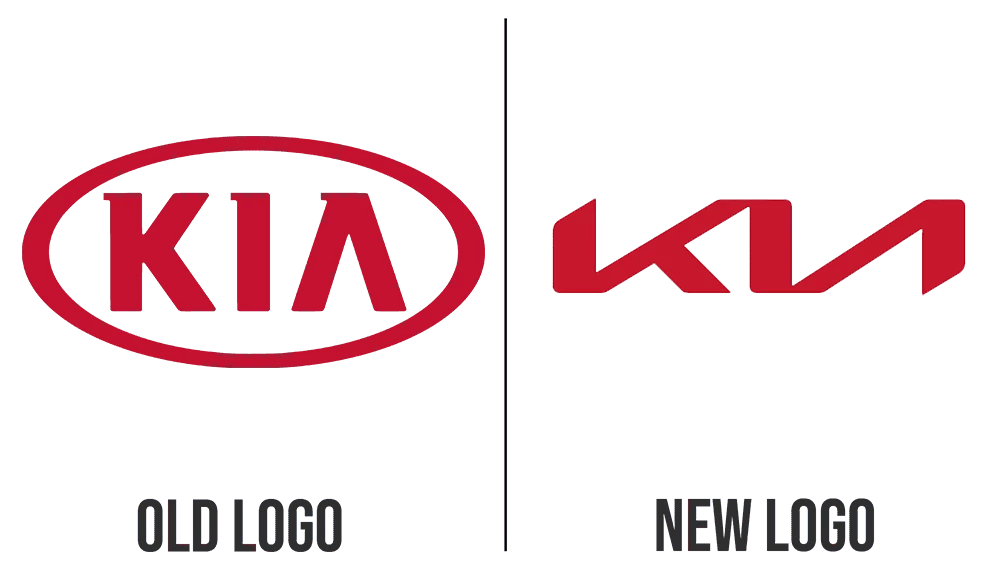
The automotive industry is in the middle of a rebranding wave tied to electric vehicles, with carmakers repositioning around a new technology story. Kia's 2021 rebrand is the cleanest example of doing it well.
In January 2021, the company renamed itself from Kia Motors Corporation to simply Kia Corporation and adopted the slogan "Movement that inspires.”
These are all tied to "Plan S," its strategy to shift from a value-brand carmaker into an EV and mobility company.
The rebrand was designed to justify higher prices and premium positioning for models like the EV6 and EV9, besides looking more modern.
However, the launch didn’t go as smoothly at first. The stylized logo confused some drivers, who read "KIA" as "KN" and generated tens of thousands of "KN car brand" searches.
Kia held its nerve, and the identity settled in as vehicles hit the road.
The results validated the bet. The strategy paid off. Kia achieved record global sales during its EV transition, surpassing 3 million annual vehicle sales for the first time in 2023.
2. Poppi: Reposition the Product Without Changing It
If your offer feels niche or hard to explain, rethink the branding before the product.
[Source: DIELINE]
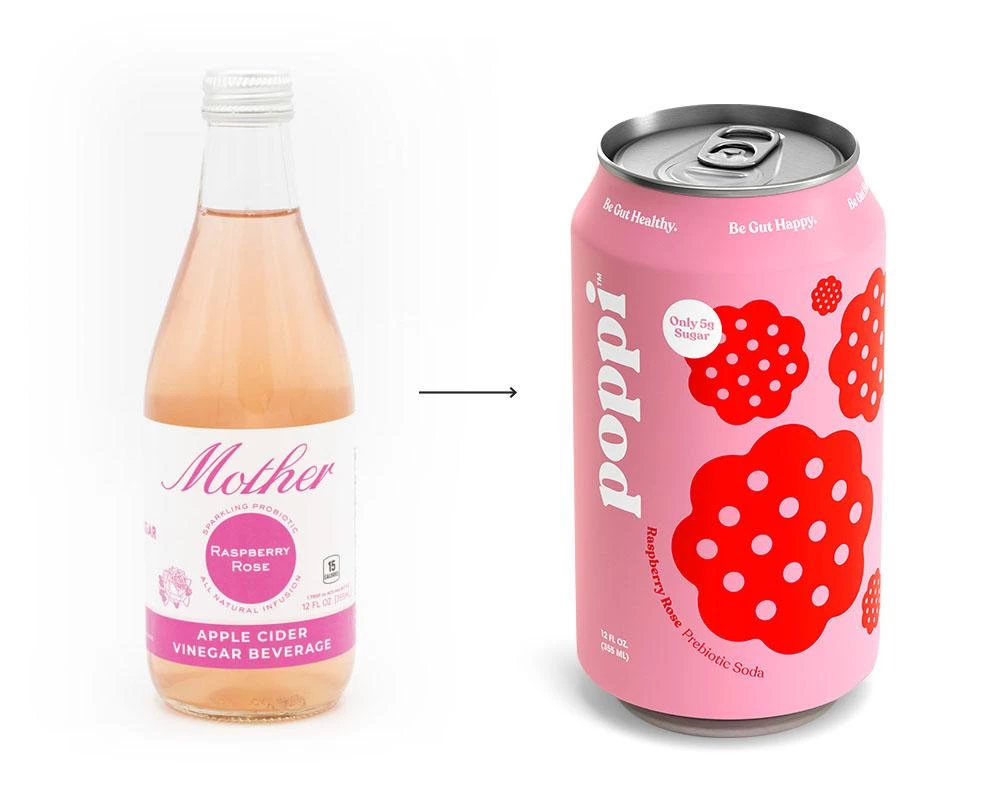
Poppi launched in 2018 as "Mother Beverage," an apple cider vinegar drink, which is not exactly an easy pitch to shoppers.
In 2020, the founders rebranded to Poppi and repositioned the same drink from a "vinegar tonic" into a "better-for-you soda," a category people would want to buy into.
Renamed and repackaged as a fun, brightly colored "prebiotic soda," it rode the fast-growing "healthier soda" wave rather than fighting it.
Tingnan ang post na ito sa Instagram
Poppi then leaned hard into a social-first, influencer-led playbook that made the brand feel culturally current, culminating in a 2024 Super Bowl ad.
Here's why it worked:
- The reposition rode a real, fast-growing demand instead of trying to invent one
- The name, color palette, and packaging signaled "a soda you'll crave"
- The product delivered on the new promise, so the reframe held up rather than reading as spin
The outcome is hard to argue with. Poppi's annual sales reportedly crossed $100 million by 2023, and in May 2025 PepsiCo completed its acquisition of the brand for $1.95 billion.
3. Nokia: Reintroduce the Brand With a New Identity
When the market's mental picture of you is years out of date, the rebrand's real job is to close that perception gap so people recognize what you actually do now.
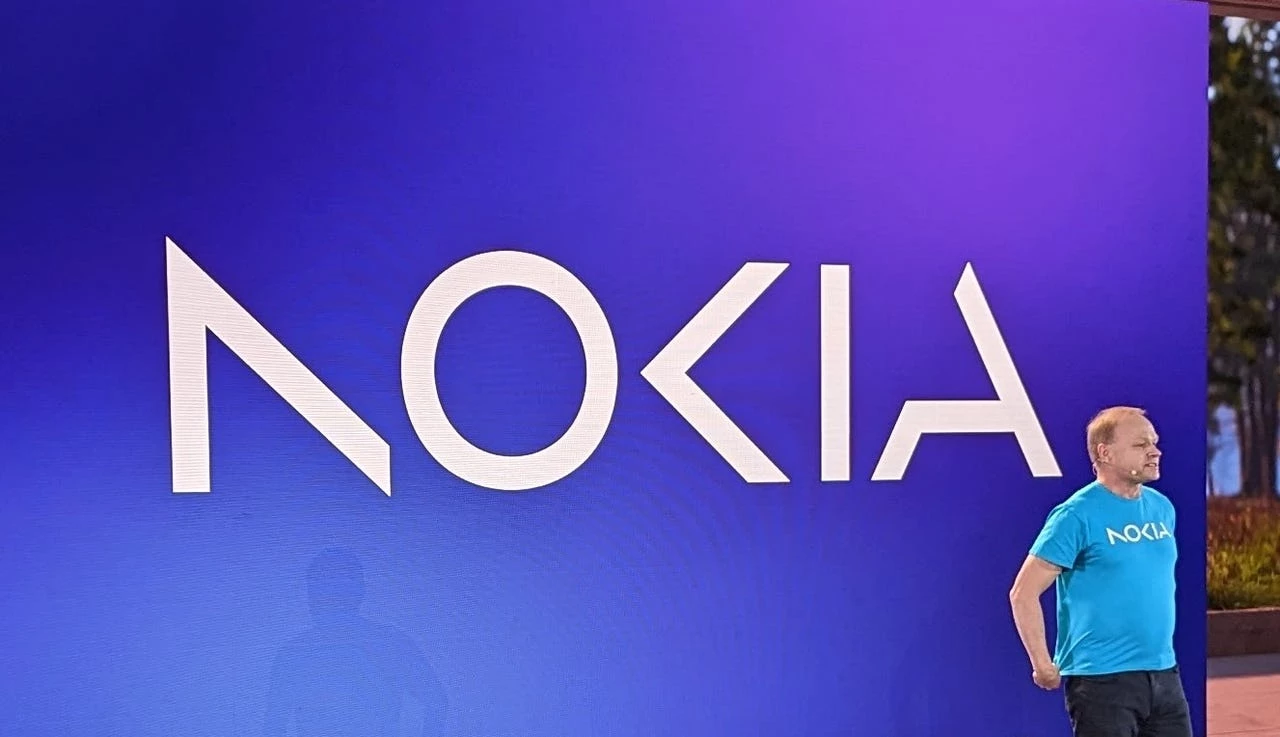
For many people, Nokia still meant classic mobile phones long after the company had evolved into a networks-and-enterprise technology business. That was a problem for the company as it sought to reinvent itself.
The rebrand helped close that perception gap. Rather than aesthetics, the update was mainly about repositioning clarity:
- The iconic wordmark was rebuilt into an angular, abstracted form for modern digital contexts
- A brand world flexible enough for different business lines and audiences
- Messaging that reinforces the long-term strategic transformation
Nokia timed the reveal to MWC 2023 and paired it with a refreshed company and technology strategy, so the new look arrived as evidence of a repositioning toward networks, enterprise, and cloud.
It drew immediate attention at the show and across industry coverage, which helped reset expectations for the brand as a modern B2B technology player rather than a legacy phone company.
4. Automation IG: Turn Technical Expertise Into a Stronger Brand
Identify your brand’s strength, modernize how you present it, and start with the touchpoint that costs you most.
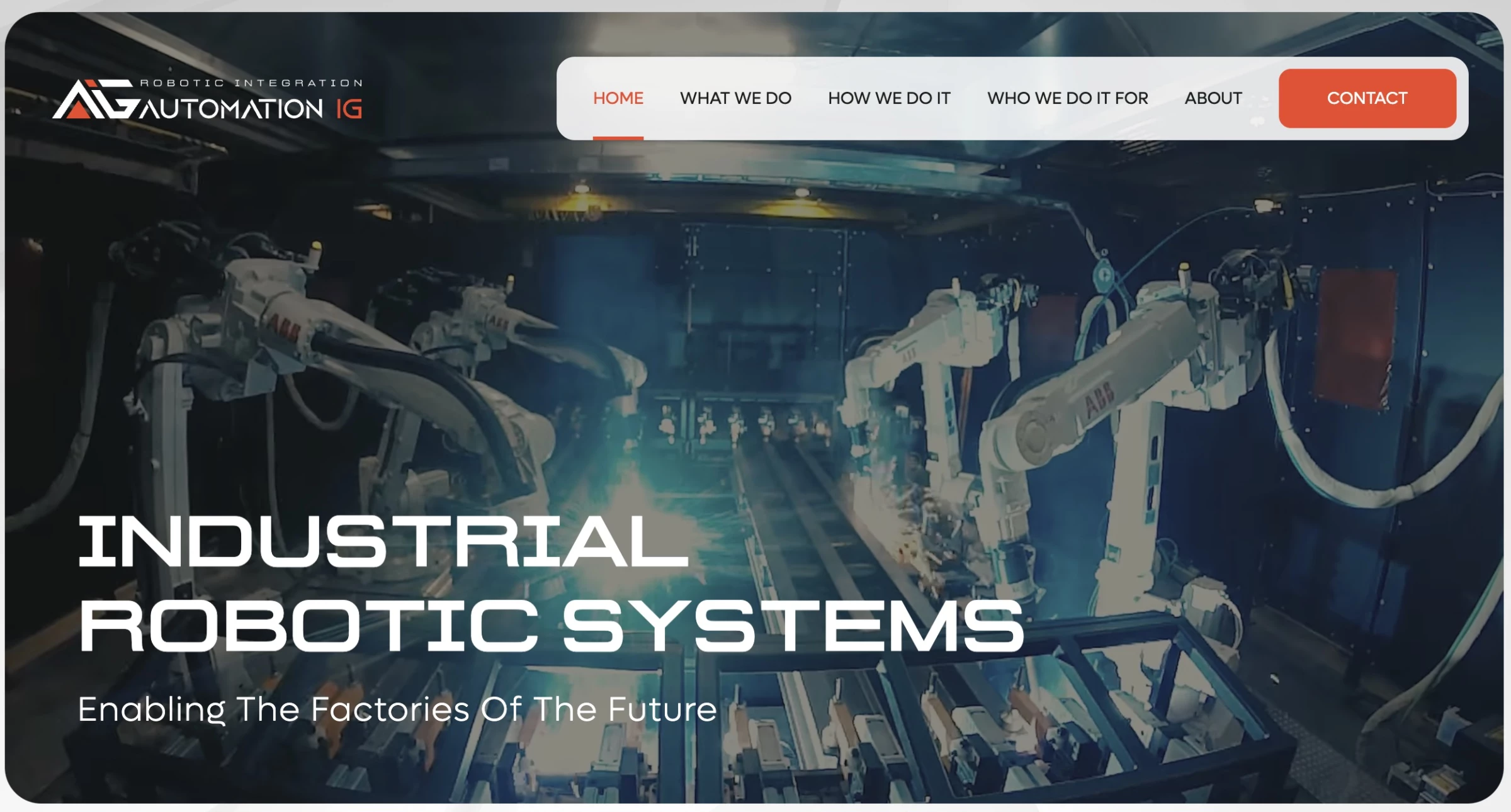
When the brand undersells the work, a perception gap forms that can cost deals and compress margins.
While the other examples feature global brands, Automation IG shows how closing that gap can be just as effective for midsize B2B companies.
Automation IG, a robotics systems integrator for factories, was "doing some very innovative work" but "overshadowed by competitors that simply had a more developed brand identity" — in the words of Giovanni Dafa, Art Designer at top web design firm, Zero Negative.
Working with Zero Negative, Automation IG rebuilt its brand and web experience end to end, spanning brand identity, UI/UX, and 3D website design and development.
Zero Negative started by diagnosing the perception gap, then modernized how the business presented itself, preserving what already worked.
"In the case of smaller brands like AIG, the messaging and the ethos of the brand is often already solid, but the presentation of the brand needs modernizing," Giovanni explains.
"With good messaging as our foundation to start with, we proceeded with redeveloping the visual identity, which could then be used to guide the website design and other brand assets."
Here's why Zero Negative’s strategy worked:
- The messaging and ethos stayed fixed, so the rebrand modernized the brand and didn't confuse the customers who already knew it.
- The visual identity was rebuilt first to establish credibility with technical buyers, then became the foundation for the website and broader brand system.
- The website, the most visible touchpoint, was rebuilt end to end, so prospects now read Automation IG as the high-end partner it is.
The rebuilt brand and web experience greatly increased visitor engagement, turning a site that undersold the business into one that reflects the caliber of the work.
5. Burger King: Modernize the Look Without Losing Heritage
Modernize for today's touchpoints while preserving your brand's heritage and trust.
Burger King’s glossy, gradient-heavy identity started to look dated once ordering shifted to apps, and packaging became the main brand touchpoint.
The rebrand went back to its roots to feel more food-forward and more readable everywhere.
Burger King originally approached agency Jones Knowles Ritchie for a campaign about its "no artificial ingredients" push. JKR argued the brand needed to change attitudes toward Burger King itself before customers would trust those claims.
And so, a campaign became a full rebrand, an 18-month collaboration between JKR's Lisa Smith and BK's in-house design team.
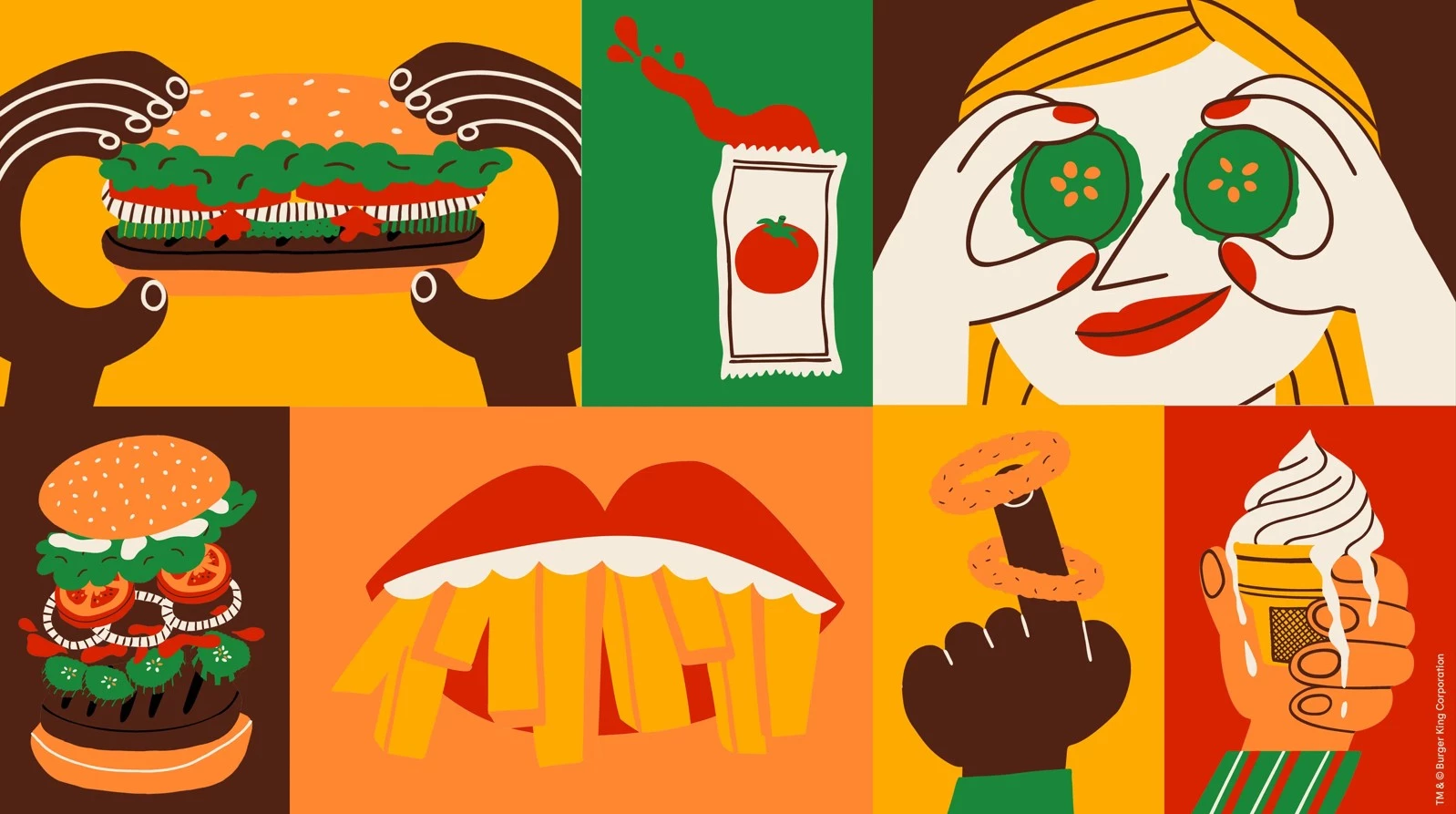
Rather than chasing a trendy redesign, the brand pulled from its own history, a heritage-inspired logo from the 1969-1994 era, and paired it with a warmer, more food-forward design system that looks better on screens, packaging, and delivery apps.
The rebrand is an adaptable system that scales across touchpoints (menus, wrappers, apps, and signage) while staying unmistakably Burger King.
The results: Investors like it, as evidenced by the fact BK shares climbed 7.8%, and the rebrand made consumers 66% more likely to pick Burger King over McDonald's, with visitation intent up 39% and 1.1 billion impressions in the first five days.
6. Snickers: Rebrand Through Message Alone
A powerful campaign and messaging can rebrand a company without changing its logo.
Some of the most effective examples of rebranding change only what the brand stands for in the customer's mind, leaving the logo and packaging alone. Snickers is the textbook case.
By the late 2000s, Snickers was a declining, undifferentiated 80-year-old bar losing younger buyers.
Rather than redesign anything, agency BBDO built the 2010 "You're not you when you're hungry" platform around a single insight from consumer research: hunger changes your personality.
That idea, launched with a Betty White Super Bowl spot, repositioned Snickers from "a candy bar" to "the fix for hunger," a role no competitor owned.
Here's why it worked:
- The platform was built on a universal truth, so it translated across dozens of markets without redesign
- It gave a generic product a distinct, defensible position (hunger) rival bars couldn't easily claim
- It kept every ounce of existing brand recognition intact; no equity was thrown away
The outcome: In its first full year, the campaign lifted global Snickers sales by 15.9% and grew market share in 56 of the 58 markets where it ran, adding an estimated $376 million in sales across 2010-2012 and cementing Snickers as the world's top-selling chocolate bar.
7. Old Spice: Regain Relevance With a Bold New Voice
Choose a bold, distinctive voice and use it consistently across every touchpoint.
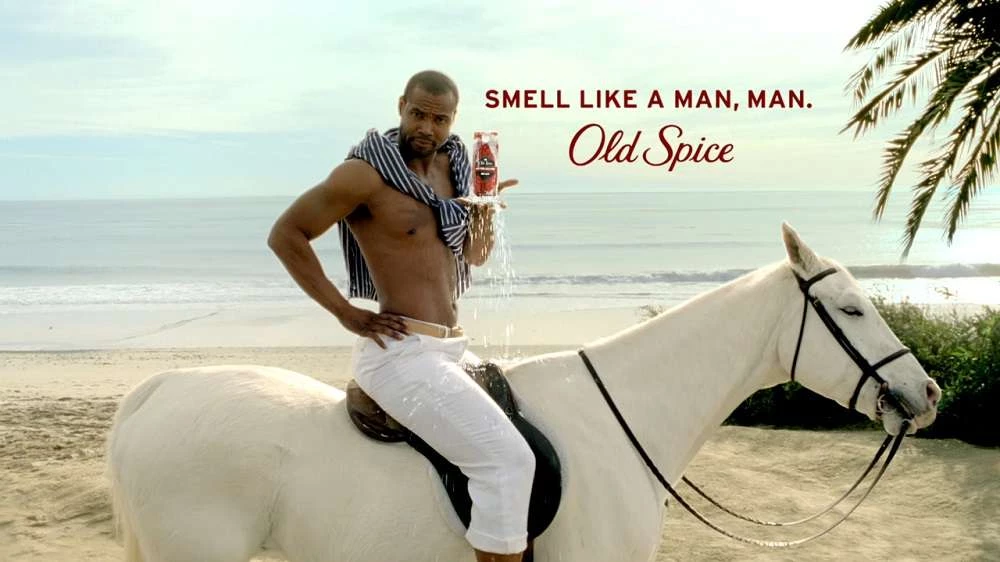
By the late 2000s, Old Spice was stuck in the “your dad’s brand” box while the body wash aisle was being won by newer, louder competitors.
The pivotal insight from agency Wieden+Kennedy was that a large share of men's body wash is actually bought by women.
So, the 2010 "The Man Your Man Could Smell Like" campaign, fronted by Isaiah Mustafa, was written to be watched by women. It was absurd, fast, and quotable rather than macho and earnest.
That reframing of the audience is what unlocked the tone. The breakthrough was treating the brand like entertainment and giving it a voice so iconic that people wanted to repeat it.
What made the rebrand work was how broad the shift was:
- A clear hero character (and a voice) people could instantly recognize
- Campaign work designed to travel across platforms, not just run as ads
- Rapid, internet-native content that kept the momentum going after the launch
The follow-through mattered as much as the launch. The team went back into the studio and filmed scores of short, personalized video replies to real comments and questions on social media in near real time.
They turned a TV spot into a participatory internet event and kept attention to the brand for weeks.
The payoff was way bigger than expected. Wieden+Kennedy reported the goal was to lift body wash sales by 15%, but by May 2010 sales were up 60% year-over-year and doubled by July.
8. Gucci: Refresh the Creative Direction for a New Generation
A new look isn't enough; reinvent the product, story, and symbolism too.
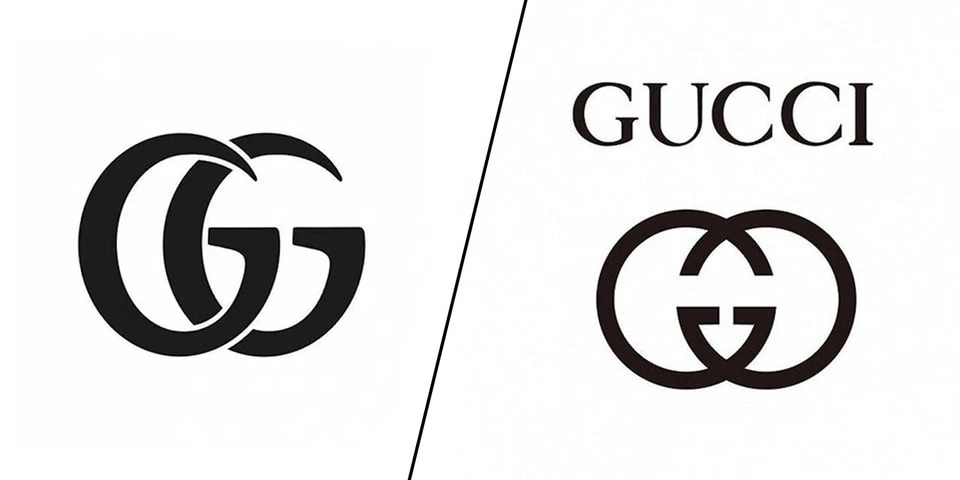
Before its mid-2010s resurgence, Gucci had lost its edge. The label was still huge and profitable, but its designs had grown conservative and repetitive.
It no longer generated the hype and excitement that drives a luxury brand. And in the fashion industry, desirability depends on being culturally relevant.
In 2015, Gucci appointed a new creative director, Alessandro Michele, who reinvented the brand's aesthetic: maximalist, eclectic, vintage-influenced, and deliberately gender-fluid.
The reinvention was aimed squarely at a younger demographic and proved highly effective. Gucci re-entered the cultural conversation and delivered a 17% jump in comparable third-quarter sales (at the time, its first double-digit quarterly sales growth since 2012).
This case shows that successful reinvention requires a cultural and creative reset (product, storytelling, and symbolism) not just a new look.
9. Domino’s: Own the Criticism and Prove the Product Change
When the product is the problem, let how you fix and improve it the story.
View this post on Instagram
Domino’s had a problem design alone couldn’t fix in that customers were openly skeptical about the pizza itself.
Rather than gloss over it, the brand leaned into the criticism and made the course correction the focus of the story with its 2009 Pizza Turnaround campaign.

To rebuild credibility, Domino’s bravely chose to acknowledge quality problems publicly, then prove the company had actually improved the product.
Domino's spent roughly 18 months reformulating the pizza – a new crust, rebuilt sauce, upgraded cheese – and, critically, waited until it beat competitors in taste tests before saying a word publicly.
Only then did agency Crispin Porter + Bogusky build a documentary-style campaign around the brand's own worst reviews: focus-group footage of customers calling the crust "cardboard," executives and then-president J. Patrick Doyle reading those criticisms on camera.
Here's why it worked:
- Instead of hiding criticism, the brand used it as the starting point
- The change wasn’t symbolic; it was operational (recipe and product improvements)
- Marketing became proof rather than spin
The result was immediate and public. Domino’s reported domestic same-store sales growth of 14.3% in Q1 2010, attributing the lift to traffic driven by its new and inspired pizza.
That’s a rare case where the business outcome clearly tracks back to the rebrand’s core promise.
10. Apple Inc.: Remove Limitations From the Name
A narrow name can limit your brand; a broader one creates space to grow.
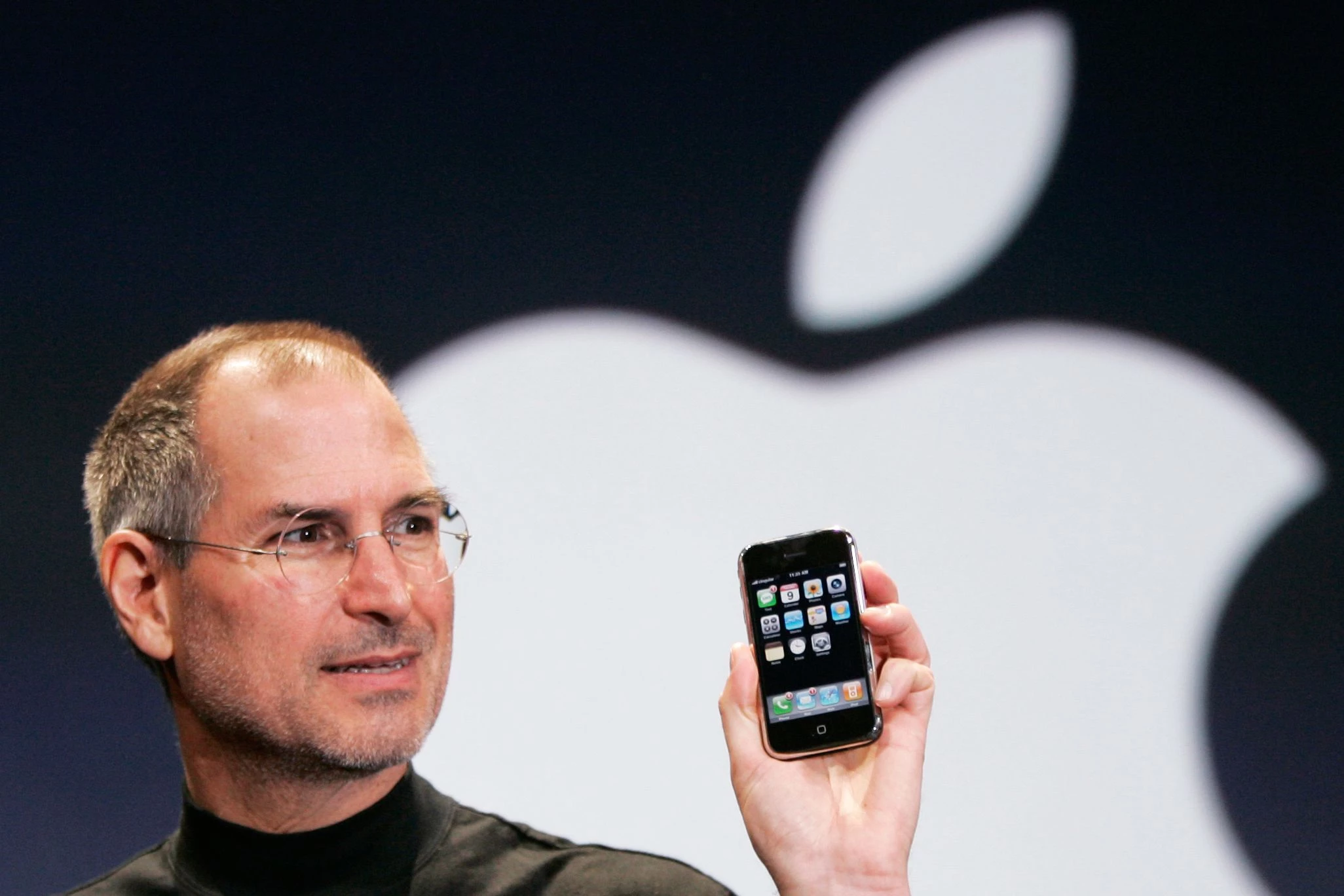
By 2007, Apple Computer, Inc. was no longer just a computer company, with its product direction clearly expanding beyond Macs.
Dropping “Computer” from the name removed a built-in constraint and signaled the broader future the brand was moving toward.
Steve Jobs announced it on stage at Macworld in January 2007, in the same keynote that introduced the iPhone. This rebrand was, in fact, a statement about its trajectory to become so much more.
That one change made it easier for the market to accept Apple’s expansion (at the time) into consumer electronics. It’s a classic example of how naming can remove friction from growth.
View this post on Instagram
This kind of rebrand is often the difference between a great product company and a category-defining brand, because the name itself stops boxing in the brand.
A narrow label like “Computer” leads customers and investors to think of you as a single-category business
11. Airbnb: Build a Trusted Identity for a Global Marketplace
Anchor the rebrand in a single, emotionally resonant concept that can scale consistently across markets, products, and experiences.
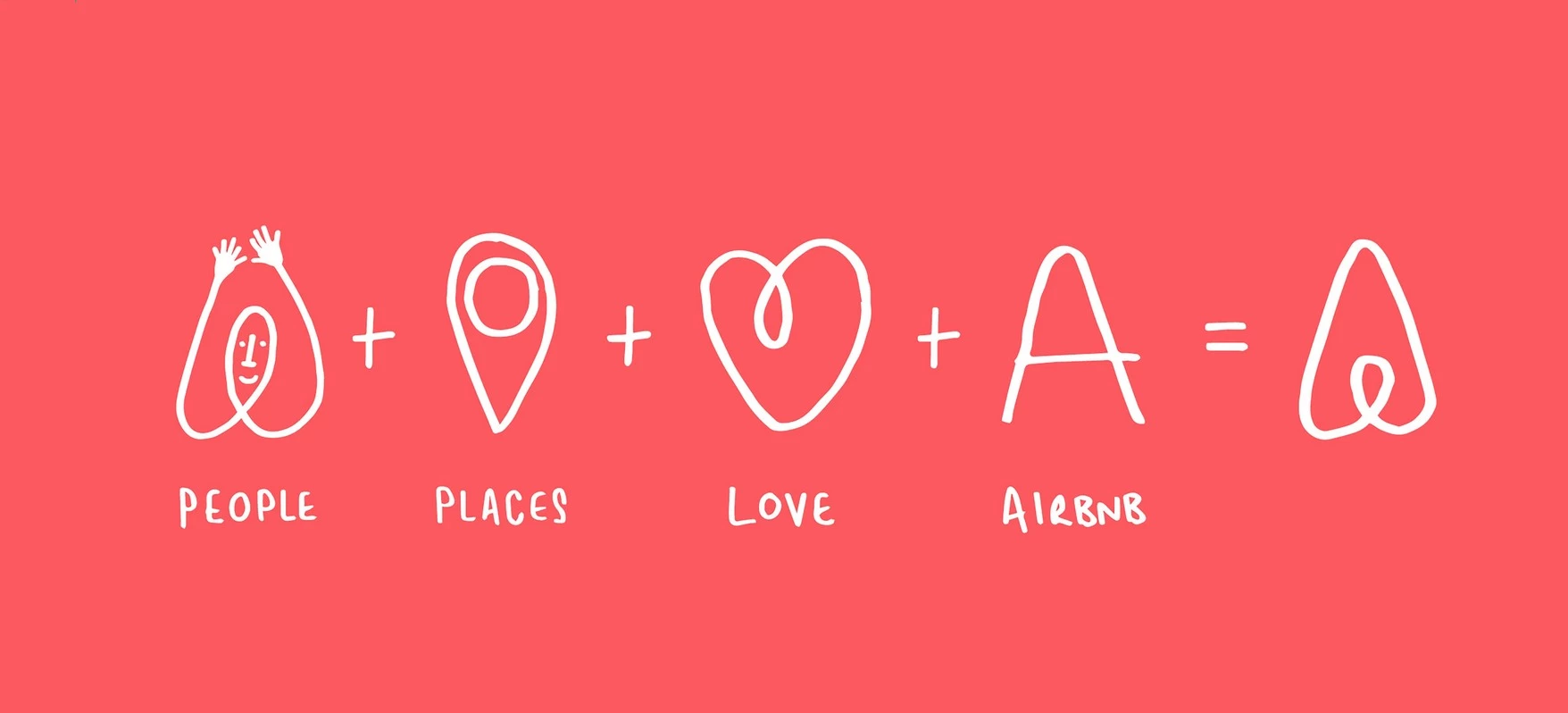
By 2014, Airbnb had outgrown its scrappy startup look. It was expanding beyond early adopters and into new markets. As such, the brand needed to feel consistent, mainstream, and resonate emotionally at global scale.
The company rolled out a broader redesign across its digital footprint to match a bigger promise: “Belong Anywhere.”
View this post on Instagram
Agency DesignStudio’s team traveled to Airbnb cities worldwide and stayed in listings as guests to understand what the platform meant to hosts and travelers.
The insight that came back reframed the whole business: Airbnb was about belonging. That became the brand mission ("Belong Anywhere"), replacing the earlier "Travel Like a Human" positioning.
A big part of what made this rebrand work is how simple and flexible the new identity system was, so it could show up everywhere without losing meaning:
- A new icon (“Bélo”) + wordmark designed to be recognizable, scalable, and community-forward
- A refreshed website and mobile experience that made the product feel more intuitive and brand-consistent
The result is one of the rare modern rebrands that became an instantly identifiable symbol.
It didn’t need to become something radically new but rather deliver a clear emotional center and a visual system strong enough to carry a global community brand for years to come.

12. CVS Health: Align the Brand With a Bigger Mission
Positioning only sticks when behavior reinforces it. Align name, identity, and operations around a credible strategic shift.
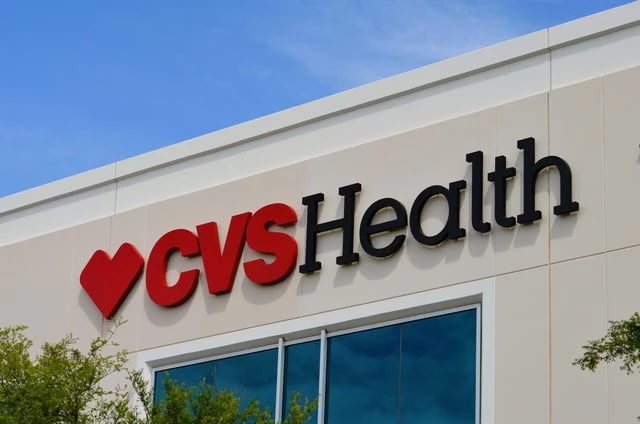
CVS Caremark Corporation had always been a pharmacy chain, but by 2014 it was becoming a broader healthcare company and the corporate identity needed to reflect that.
The move to CVS Health aimed to align with a visible repositioning for the company. The new name supported a broader mission, to “build a world of health” around their customers.
A rename alone would have been easy to dismiss. What made CVS Health credible was that it landed alongside the company's choice to stop selling tobacco in all of its roughly 7,700 stores CVS Health walked away from an estimated $2 billion in annual revenue because cigarettes couldn't coexist with a health mission.
The costly, visible action is what turned a corporate name change into proof.
CVS formally announced the name change as a reflection of its broader health care commitment. Because the rebrand was tied to real behavioral change, it read as strategy more than marketing.
Company Rebranding Examples: Final Words
A rebrand should be a decision to reduce a specific kind of friction, whether that’s a perception gap, a trust deficit, or a growth constraint.
The brands that got it right protected what was already recognizable, clarified what the business now stands for, and backed the message with tangible proof in product, experience, or behavior.
Start by naming the business problem in one sentence, identify the equity worth keeping, and then build a system that makes the new story impossible to miss.

Our team ranks agencies worldwide to help you find a qualified partner to make the most of your brand. Visit our Agency Directory for the Top Branding Agencies, as well as:
- Top Brand Strategy Agencies
- Top Brand Positioning Firms
- Top B2B Branding Agencies
- Top Corporate Branding Agencies
- Top Branding Agencies In Washington DC
And don’t miss our Awards section, where we showcase the top agencies recognized for exceptional creativity and impact.
Examples of Rebranding FAQs
1. How do you know whether you need a rebrand or just a refresh?
If the business strategy hasn’t changed and customers still recognize the brand, a refresh is usually enough (tighten the system, improve usability, update execution).
A full rebrand is more appropriate when there’s a persistent perception gap, like if people don’t understand what the company does now, trust is eroding, or the name/identity actively limits growth.
2. What’s the most common reason rebrands fail after launch?
The most common reason rebrands fail after launch is a credibility gap: the brand looks and sounds new, but the product, service, or customer experience doesn’t change, so audiences read it as cosmetic and disengage (or react negatively).
Try tying the rebrand to a specific business shift, launching with at least one tangible proof point, and prioritizing consistent execution across the highest-visibility touchpoints first.
3. How do you know if your brand is underselling your business?
The clearest signal is losing to competitors you know you outperform. If companies with weaker products are winning deals because they communicate better, your brand is the bottleneck.
This is especially common in midsize technical companies, where the work advances faster than the brand's presentation of it.
When that's happening, the fix is usually modernizing how the brand presents that strength.
4. What's the difference between a rebrand and a values-driven repositioning?
A traditional rebrand usually changes something tangible, like the name, logo, or visual identity.
A values-driven repositioning changes what the brand stands for and who it represents, often leaving the name, logo, and design system completely untouched.
The two aren't mutually exclusive, as many rebrands do both, but it's useful to know which one your problem actually calls for.
If customers recognize you fine and your identity looks current, but the brand no longer reflects what you stand for, a repositioning may do the job without a costly visual overhaul.
5. Can a rebrand create legal risk?
Yes. A new name or logo can infringe a trademark another company already holds, and disputes can surface even after launch.
When Twitter became X in 2023, Reuters reported that nearly 900 active U.S. trademark registrations already covered the letter "X," including marks owned by Microsoft and Meta.
Before committing to a new name or mark, run a trademark clearance search (ideally with an IP attorney) across the classes and regions you operate in, so you're not building equity into something you may be forced to change or defend later.

-preview-webp.webp)