-details-webp.webp)

Choosing the right framework for mobile app development is a critical decision that can impact the success of your project. Flutter and React Native, two popular cross-platform frameworks, are often at the center of this decision. Each comes with its own set of advantages, from performance and ease of use all the way to community support.
But which one aligns best with your app’s goals and technical requirements? Let’s dive into the details of Flutter vs. React Native to help you find the best match.
Flutter vs. React Native: Overview
Both Flutter and React Native are part of the hybrid app development ecosystem due to their ability to streamline cross-platform development. Let’s have a brief overview of each before we put them against each other.
Flutter
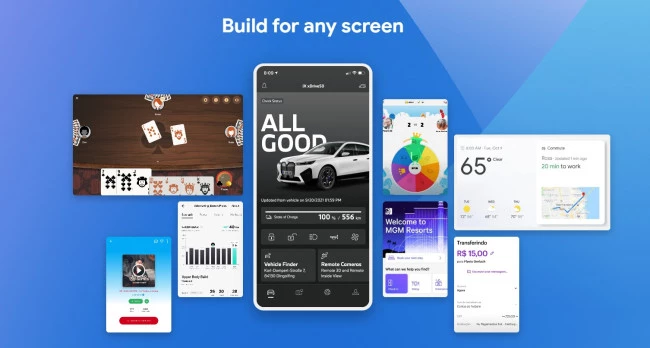
Flutter was officially launched by Google in 2017. Unlike many frameworks that require multiple tools, Flutter offers everything you need in one comprehensive package. It uses Dart, a relatively lesser-known programming language, also developed by Google. While Dart doesn’t have the widespread use of JavaScript, it’s optimized for smooth interfaces and fast performance, which means less frustration down the road.
React Native
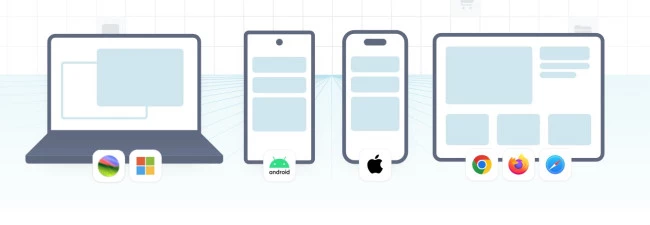
React Native hit the scene in 2015 as Facebook’s response to the growing demand for cross-platform mobile development. Built using JavaScript, one of the world’s most popular languages, React Native allows developers to reuse code across platforms with ease.
It’s popular, widely adopted, and has deep roots in the development community — so it’s like the social butterfly of the mobile development world.
React Native vs. Flutter: What Are Their Differences?
Flutter and React Native are among the most popular choices for businesses when it comes to mobile app development software, thanks to their ability to deliver high-performance apps on multiple platforms.
Now let’s see what the fuss is all about and compare the two.
1. Ease of Use
Let’s start by addressing the elephant in the room: learning the ropes.
Flutter
For businesses looking to quickly develop a sleek, high-quality app, Flutter offers an advantage with its widget-based architecture. This makes the user interface design more intuitive, enabling a faster development cycle and reducing the likelihood of design inconsistencies across platforms.
However, because Flutter uses Dart, you may need to invest in specialized talent. While Dart is efficient, its smaller talent pool can mean a higher cost for hiring or retaining developers, which might extend your initial timeline.
React Native
React Native's appeal lies in its use of JavaScript, meaning developers with the required skillset are easier to find. For businesses, this translates to faster hiring and potentially lower development costs. The extensive use of JavaScript also reduces the learning curve, allowing your team to get to work faster, minimizing delays in development, and keeping costs more predictable.
| Flutter | React Native |
|
|
2. Performance
Speed is a crucial factor in mobile app performance, directly impacting user experience and engagement.
Flutter
Flutter’s native compilation allows apps to run faster and more smoothly, providing a high-quality user experience, even for complex applications. For businesses looking to impress users with top-notch speed and fluid animations, Flutter’s native performance might give an edge in user retention and satisfaction.
React Native
React Native’s performance is typically strong for most standard apps but it operates with a JavaScript bridge, which can sometimes cause slight delays in communication between native components and code. For simple apps, this difference is negligible, but if you’re aiming for an app with heavy animations or advanced features, it could impact user experience.
If you’re developing highly interactive or performance-heavy apps, you might want to keep this in mind when making your choice.
| Flutter | React Native |
|
|
3. Cost
Let’s get down to brass tacks — what will these frameworks cost you?
Flutter
Flutter is open-source, free, and comes with a powerful set of tools. However, it may require hiring specialized developers, which could increase costs if your existing team isn’t familiar with it.
For companies considering Flutter, the average hourly rate among the top 50 Flutter development companies listed on DesignRush is $20 to $200. This makes it an attractive option for businesses that need high-quality development without overspending.
Startups and small businesses can benefit from the fact that 10.5% of Flutter developers offer project rates under $1,000, making it possible to build a functional app on a modest budget.
On the other hand, for larger organizations or those with complex needs of enterprise mobile app development, 3.9% of Flutter developers set a minimum project cost of $50,000, providing premium services and more intricate app features.
React Native
React Native is also open-source and free, but the cost of hiring developers is applied here as well. Similarly, React Native developers on DesignRush charge an average of $47 per hour, making it cost-competitive with Flutter.
For businesses working on simpler app projects, 8.9% of React Native developers offer project fees under $1,000, providing affordable options to develop basic mobile apps without sacrificing quality.
On the higher end, 4.8% of React Native developers require a minimum of $50,000 for more comprehensive, feature-rich projects, ensuring larger businesses can access the complex services they need.
| Flutter | React Native |
|
|
4. Features
Both frameworks are packed with features, but how do they stack up against each other?
Flutter
When it comes to delivering a feature-rich app quickly, Flutter offers several advantages. Its hot reload feature allows developers to implement changes and see them instantly, which speeds up testing and revisions — something that’s music to a business owner’s ears when trying to meet tight deadlines.
Additionally, Flutter’s widget-based system provides more control over the UI, meaning businesses can create highly customized apps that stand out in crowded markets.
React Native
React Native also offers hot reload for speedy testing, but its real strength lies in its access to native device features through numerous libraries. If your business needs to tap into features like the camera, GPS, or push notifications. React Native’s flexibility makes integration seamless.
This versatility could reduce the complexity of development and give you more creative freedom when planning app functionality.
| Flutter | React Native |
|
|
5. UI Development
User experience is everything, and here’s where the battle gets interesting. Let’s see which one of the frameworks can make a mobile app wireframe into a fully functional UI in no time.
Flutter
For businesses where user experience is paramount, Flutter’s ability to create visually consistent UIs across platforms is a significant benefit. It comes packed with customizable widgets, allowing for rich, unique user interfaces without compromising performance.
This is particularly advantageous if you want to ensure brand consistency and a polished look, whether the app is used on Android or iOS.
React Native
React Native’s UI development relies on native components, which means your app will have a native feel, blending with the platform it’s being used on. However, this can sometimes lead to minor inconsistencies between platforms.
If you’re looking to give your users an app that feels truly native to each device, React Native does a solid job, though you might have to invest extra time ensuring design harmony across Android and iOS.
| Flutter | React Native |
|
|
6. Community Support
When the going gets tough, you want a robust community to back you up.
Flutter
Flutter’s community is growing, but it’s still relatively young compared to React Native. However, the support is expanding quickly, backed by Google’s strong commitment to making the framework a long-term player in the market.
If you’re seeking innovation and future-proofing your tech stack, Flutter’s vibrant and fast-growing ecosystem could be seen as a major advantage in staying ahead of competitors.
React Native
With React Native, you can benefit from one of the largest and most active developer communities in the world. Its mature ecosystem means there are extensive resources, plugins, and tools available to help tackle any challenge.
For businesses that prioritize reliability and support, React Native’s expansive community can significantly reduce the risk of roadblocks during development.
| Flutter | React Native |
|
|
7. Documentation
Comprehensive and well-structured documentation is essential for efficient development, reducing troubleshooting time and ensuring smooth project progress.
Flutter
Google is known for doing documentation well and Flutter is no exception. Flutter’s documentation is extremely thorough, with plenty of examples and tutorials that make onboarding smoother.
This means less downtime spent troubleshooting, speeding up development, and keeping your project moving forward.
React Native
React Native’s documentation is good, but not quite as polished as Flutter’s. However, the vast number of external resources — thanks to its large community — means that you and the developers will rarely hit a dead end.
When issues arise, developers can quickly find answers from community forums, GitHub projects, and third-party guides, keeping your project on track.
| Flutter | React Native |
|
|
8. Use Cases
Both frameworks serve different needs depending on the type of app being developed. Which one fits your business better?
Flutter
For companies prioritizing a visually rich and highly customized UI, Flutter is a solid choice. Its widget-based structure allows developers to craft unique interfaces that stand out, making it a great option for businesses in industries like eCommerce, fintech, and media streaming.
Additionally, if your goal is to maintain design consistency across multiple platforms, Flutter ensures a uniform experience on iOS, Android, and even desktop applications. This can be beneficial for businesses that need a seamless brand identity across devices.
React Native
React Native is a strong contender for startups and enterprises looking to develop cross-platform apps that rely on native functionality. Apps that require complex integrations with device hardware can benefit from React Native’s vast ecosystem of third-party libraries and have direct access to native APIs.
As Kevin Kristen, consultant at Koderspedia, puts it: “When deciding between built-in and custom components in React Native for cross-platform compatibility, it’s all about finding the right balance. Built-in components are a great choice for standard UI elements since they save time and effort.”
| Flutter | React Native |
|
|
Flutter vs React: Summary of Comparison
With so many factors to consider, comparing Flutter and React Native can feel overwhelming. We’ve summarized this comparison by providing a quick-reference table below.
| Aspect | Flutter | React Native |
| Ease of use | Uses Dart, requiring specialized developers. Widget-based UI design is intuitive and consistent. | Uses JavaScript, making hiring easier. Faster development due to a lower learning curve. |
| Performance | Native compilation ensures smooth performance and animations. | JavaScript bridge can cause minor delays. Best for standard apps. |
| Time to market | Hot reload and pre-built widgets speed up development. | Hot reload and reusable code from React projects accelerate launches. |
| Maintenance | Strong Google-backed documentation, but fewer third-party libraries. | Large communities and vast libraries simplify updates and debugging. |
| Backend compatibility | Works best with Firebase and Google Cloud. | Compatible with multiple backends, including Node.js. |
| App size | Larger due to built-in widgets but highly customizable. | Smaller by default but size grows with dependencies. |
| UI development | Customizable widgets ensure a polished, uniform UI. | Native components create an authentic platform feel but may require extra design work. |
| Features | Best for visually rich, high-performance apps. | Strong hardware integration makes it ideal for feature-heavy apps. |
| Community support | Growing but smaller community. Strong Google backing. | Larger community with extensive third-party support. |
| Documentation | Well-structured, detailed, and easy to follow. | Good, but often supplemented by third-party resources. |
| Use cases | Ideal for fintech, eCommerce, and media apps needing cross-platform consistency. | Best for startups and enterprises integrating native device features or extending web apps. |
React vs. Flutter: Which One To Choose?
If you’re looking for stellar performance, a rich widget library, and a consistent look across platforms, Flutter is your knight in shining armor. However, if you prioritize faster development with existing JavaScript knowledge, more extensive community support, and access to a wealth of libraries, React Native is your go-to.
To make the decision easier, here’s a quick look at the pros and cons of each framework:
Flutter Pros and Cons:
| Pros | Cons |
| Excellent performance with native compilation | Requires Dart, which has a smaller talent pool |
| Highly customizable UI with a rich widget library | Larger app size compared to React Native |
| Consistent design across platforms |
React Native Pros and Cons:
| Pros | Cons |
| Uses JavaScript, making hiring easier | Performance can lag due to the JavaScript bridge |
| Strong community and extensive third-party libraries | UI consistency across platforms may require extra work |
| Faster development when reusing web-based React code |
And if you can’t decide, consider consulting a mobile app development agency. Their expertise will surely lead you to the right answer.

Our team ranks agencies worldwide to help you find a qualified partner. Visit our Agency Directory for the top app development companies, as well as:
- Top-Rated React Native Development Companies
- Top Flutter Development Companies
- Top Android App Development Companies
- Top AI App Development Companies
- Top App Developers In San Francisco
Our team also highlights award-winning work on the Design Awards page, so be sure to check it out for the best and latest in app design.
React Native or Flutter FAQs
1. Can I use either framework to develop apps for both iOS and Android?
Yes, both Flutter and React Native allow you to develop cross-platform apps for iOS and Android from a single codebase, saving time and reducing development costs.
2. React Native or Flutter for long-term scalability?
Both Flutter and React Native can be scaled for larger projects, but Flutter's native performance and rich design capabilities may give it an edge for businesses planning to develop more complex apps in the future. React Native remains a solid choice for businesses that want to leverage an existing JavaScript codebase and prefer a larger ecosystem for long-term support.
3. Can Flutter and React Native be used for web development?
Yes, Flutter and React Native can be used for web development. Flutter uses Flutter Web to render apps, while React Native achieves this through third-party libraries like React Native Web.