
Pay-per-click (PPC) advertising is among the top choices for marketers and brands trying to boost business visibility online and improve conversion rates and sales. The recipe for PPC is quite simple: You pay every time someone clicks on your ad. However, as simple as it may sound, a lot goes into maximizing the potential of every ad and every click.
To help you get the most out of your PPC strategy, we asked renowned industry experts about the ins and outs of setting up successful pay-per-click campaigns. Keep on reading to find out what they’ve had to say.
Why Bother With PPC?
While most experts will tell you that investing in SEO is a worthwhile endeavor to build a strong online presence organically, they will also agree that paid advertising and similar sponsored listings are an excellent way to get a head start on your online growth project. A fine-tuned PPC strategy will drive traffic and conversions without the months-long work you need to put into SEO.
Undoubtedly, the major drawback of paid advertising compared to search engine optimization is that once your budget is depleted, your results also plummet. However, PPC is still an excellent digital marketing strategy, mainly because of the following:
- Cost-effectiveness: You only pay when someone clicks on the ad. This means you won’t be wasting your budget on other impressions that won’t potentially lead to conversions. The approach can grant you a high ROI and result in a cost-effective strategy.
- Improved targeting and performance tracking:PPC campaigns allow you to target the people who are most likely to interact with your ads. With the help of different targeting options (on prominent search engines such as Google or Bing), you can target the ideal customer based on demographics, age, location, and more with targeted keywords to reach only qualified leads. Also, you will be able to track the performance of your ads and keywords, allowing you to make subtle yet impactful adjustments on the fly.
- Improved brand awareness and quick results: While every click counts, don’t forget that people who don’t interact with your ad will likely see it multiple times, building brand awareness and recognition. The boost in visibility can also help you improve your website traffic much faster than traditional SEO strategies.


Generating Traffic Instantly: The Ultimate PPC Checklist
Well-crafted and creative PPC campaigns have their place in every serious digital marketing strategy. However, as mentioned earlier, maximizing the effectiveness of your strategy requires careful and thoughtful planning, regular work, and possible tweaks during the campaign to ensure you get the most out of every click. So, how do you craft the ultimate paid campaign? Consider the following comprehensive PPC checklist.
- Set your objectives
- Perform keyword and competitive research
- Set up match types
- Reassess your targeting
- Set a budget and opt for a bidding strategy
- Create your landing pages and content
- Perform campaign maintenance and track performance
1. Set Your Objectives
The biggest mistake you can make with your campaign is to approach it without genuine planning or intention. Set clear, SMART goals, which can either be increasing site traffic, raising brand awareness, boosting sales, or generating leads. The goal is to clearly understand what you want to achieve and why. This clarity will help you define the key factors for success.
Let’s say your objective is to close more deals. This, in itself, is a vague goal, but if you determine that you’d like to achieve a 20% increase in PPC sales by this time next year, that gives you enough time and puts things into a different perspective.
It’s also paramount to be realistic with your goals, and not get discouraged if things aren’t working out right off the bat. Be ready to constantly monitor, tweak, and experiment with different aspects of your campaign.
Start with something achievable and gradually move upward from there.
2. Perform Keyword and Competitive Research
Once you’ve set your goals, it's time to determine the most relevant keywords your target audience is using in their searches. Keywords play a pivotal role in every search engine-related marketing strategy and there are several ways you can go about finding out prevalent phrases.
First off, you can always turn to tools such as Google Keyword Planner, Moz, or Ahrefs to see which are the most relevant terms for your ad campaign. Use plenty of long-tail keywords to reduce competition and lower the click-costs of your campaign.
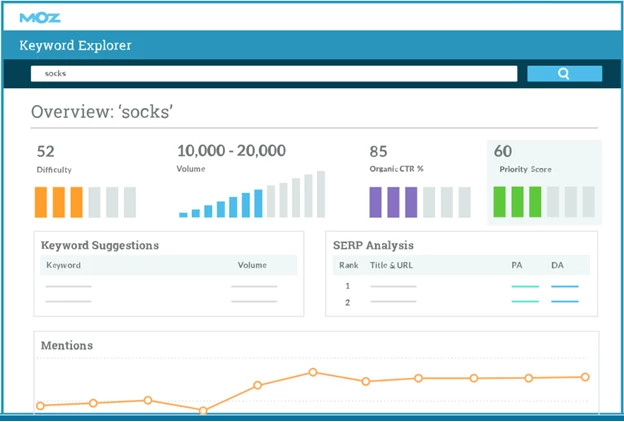
In addition to tools, you can also conduct hands-on research by analyzing competitor strategies and exploring forums and social media pages to better understand the language that resonates with your audience. Remember, phrases from real topics and frequently asked questions can serve as ideal target keywords.
Lastly, don’t forget about negative keywords. These are the terms you don’t want to rank for and setting up a list of them can prevent you from wasting money on clicks from people who aren’t part of your target audience and are unlikely to become interested.
Imagine you’re running a niche pet store dedicated entirely to dogs, offering everything from toys and food to grooming supplies. In this case, one of your negative keywords would be “cat food”.
3. Set Up Match Types
Search engines like Google use match types to align user search terms with the keywords in your campaigns. There are board, exact, and phrase match types, each influencing the range of searches that can trigger your ad and determine how many potential views your keywords can capture. While setting up match types is essential, know that there’s a catch with each one of them.
Exact matches may help you drive more qualified leads but can drastically limit your visibility. Broad and phrase matches can help you with that, but they will also create irrelevant matches. Even seasoned experts are selective about match types, so to get the most out of your campaigns, we highly advise partnering up with an agency.
Also, ensure that the keywords you choose align with your ad messaging and match types to ensure balanced relevance and reach in your campaign. Google Ads categorizes relevance as below average, average, or above average. This indicates how well your advertisements resonate with the people you target.
4. Reassess Your Targeting
You’re a business owner and you already know who you’re marketing to, but it’s never a bad idea to revisit your ideal customer persona and see how you can fine-tune Google Ads even further with the customer data you already have.
Google enables you to target people based on their age, gender, preferences, and location, but there are also other targeting options that you might have not considered, such as the type of device they use. For instance, if your ideal customers for dog grooming products and toys are millennials or Gen Zers, you might want to prioritize mobile devices in your campaigns.
5. Set a Budget and Opt for a Bidding Strategy
You likely set a budget during the planning phase, but it’s helpful to determine how much you're willing to spend daily or monthly to achieve your specific objectives and overall marketing goals. If this is your first campaign, setting a reasonable budget can help you get a taste of PPC and will ensure that you don’t overspend throughout the campaign.
Opting for a bidding strategy is also imperative. Whether you use manual, automated, or cost-per-click (CPC) models, ensure that you familiarize yourself with each one. For example, automated bidding can save you time and be optimized for conversions, but, in contrast to manual bidding, it offers less control over the costs of your keywords.
6. Create Your Landing Pages and Content
Once you have your keywords, targeting, budgeting, and bidding all set, you can finally get started with the creative part — creating ad copy and designing compelling and optimized landing pages.
On the note of ad copy, Bryan Phillips, Head of Marketing at In Motion Marketing, says that it must address specific pain points and grab the user’s attention.
“Creating content that stands out and clearly articulates or illustrates how you help your prospect is crucial,” he tells DesignRush. “This approach ensures that your ads capture attention and communicate the value you offer, making it more likely for prospects to engage.”
You may also experiment with ad extensions to encourage your audience to click on your ad. Using ad extensions can help you take up more space in the search results, which can potentially provide you with more traffic-boosting opportunities. Location details, phone numbers, and strong call-to-actions can be a great way to get more clicks, especially if you pair them with a strong headline.
Landing pages can also provide additional information for leads and potential customers and can help you make your brand more memorable, especially if you opt for custom-made landing pages and embrace SEO content best practices.
Chris Snelling, Founder of TopOut Group, recommends continuous testing to ensure that your ads always perform well. “Implement A/B testing for different elements of your campaigns, including ad copy, visuals, and landing pages. Analyze the results and continuously tweak your approach to find the optimal mix for performance,” Chris explains.
7. Perform Campaign Maintenance and Track Performance
What do we mean by maintenance and performance tracking? PPC tracking is essential to determine how well your campaigns are doing. Your main KPIs, like revenue and spending, should be monitored regularly to see how the money you make compares to the amount you’re spending. Other metrics, like click-through rate and quality score, should also be checked regularly to see whether you need to adjust your copy in your ads or landing pages.
As a part of maintenance and performance tracking, you also want to pause the key phrases that don’t generate any more conversions. Also, consider that search patterns will change over time, and you may need to research and implement new keywords to keep your ads relevant. It’s a good idea to check your budget and bids every week to see how your ads are doing, as you may be wasting money if an ad generates lots of clicks but gets no conversions.
Lastly, never underestimate your competition. Keep a close eye on what they do and assess whether they’re getting more traffic than you. If the answer is yes, see what exactly leads to it. Try to emulate their strategy but with your own unique twist.
Your landing pages also require maintenance. In addition to basic principles of SEO, you also need to ensure that your landing page is responsive, loads fast, and gets updated to the latest version, if necessary, so it won’t crash or freeze amidst a conversion. Chances are, you may also need to perform A/B testing to see whether slight changes or major overhauls would have a dramatic effect on conversions.
Advertising professionals agree that continuous monitoring and testing are the key factors in running successful campaigns. According to Snelling, eCommerce advertising requires regular adjustments to ensure that ads can adapt to evolving trends and customer behaviors.
“The challenge lies in optimizing campaigns for a diverse range of products and maintaining engagement across various platforms,” he adds.
PPC Checklist: Wrapping Up
Getting pay-per-click campaigns right is a fine balance between a thorough understanding of bidding strategies, copy optimization, budgeting, and even landing page design. While PPC isn’t rocket science, it’s a digital marketing strategy that requires significant effort if you want to maximize its full potential.

Our team ranks agencies worldwide to help you find a qualified partner. Visit our Agency Directory for the top PPC agencies, as well as:
- Top White Label PPC Agencies
- Top Small Business PPC Agencies
- Top Los Angeles PPC Agencies
- Top eCommerce PPC Agencies
- Best Google Ads Agencies
PPC Checklist FAQs
1. Do you need a huge budget for PPC?
No. You can achieve great results on a smaller budget with smart planning, targeting, and optimization.
2. How can you complement your PPC campaigns?
PPC can pair particularly well with a sound SEO strategy, which builds visibility and traffic gradually. Even though it takes longer for SEO to kick in, it can support your growth strategy for longer in a more cost-effective way if you constantly tweak and optimize your site and overall digital presence.
3. What’s the most important aspect of PPC?
Our checklist points out several crucial steps you need to address if you want to maximize your effort. However, understanding which keywords to target and who to reach with them is likely the cornerstone of any successful strategy.