
In my experience working with companies on their SEO content strategies, I often see the same pattern: they publish blog posts without a plan, chase random keywords, and hope traffic turns into revenue. It rarely does.
What you actually need is a structured, measurable SEO content strategy, one that aligns with revenue goals, wins authority in your space, and adapts as Google and audiences evolve.
SEO Content Strategy: Key Points
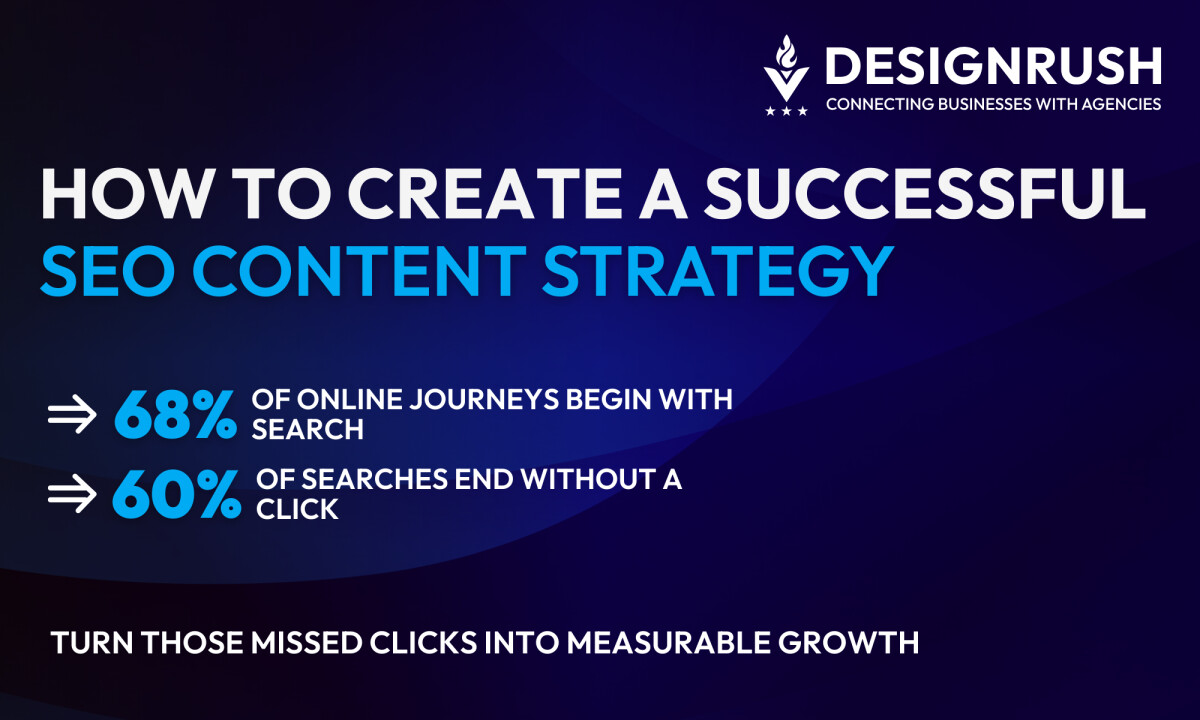
- 68% of online experiences start with search, yet nearly 60% of Google searches end without a click.
- Publishing 16+ blog posts monthly generates 4.5 times more leads than posting less often.
- 94% of B2B marketers use blogs, 84% videos, and 78% case studies to meet diverse search intents.
Understanding the Foundations of SEO Content Strategy
When I explain the foundations of SEO content strategy, I always emphasize that it’s not just about publishing blogs, but it’s about aligning content with search intent, technical SEO, and user experience.
In fact, research shows that 68% of online experiences begin with a search engine and nearly 60% of Google searches result in no clicks.
Those numbers drive home the point: if your content isn’t optimized for visibility and relevance, it may as well not exist.

1. Define SEO Goals Aligned With Business Outcomes
The first mistake I see is treating SEO as an “awareness play” with no tie to revenue. That’s a fast way to get your budget cut.
Instead, start by making SEO accountable to outcomes that matter:
- North-star KPIs: Qualified pipeline, demo requests, or ecommerce revenue.
- Mid-funnel KPIs: Assisted conversions, free trials, add-to-carts.
- Leading indicators: Rankings for non-brand queries, CTR, organic share of voice.
How to do it:
- If you’re an eCommerce brand: “Increase organic revenue by 20% for [category X] in Q2.”
- If you’re B2B SaaS: “Drive 200 demo requests from organic search in six months.”
- If you’re an agency: “Generate 100 qualified leads from informational guides in 90 days.”
Sarah Newnham, Founder of Moonah Marketing, puts it well: “Establish clear, measurable goals to track SEO and content strategy progress. Focus on relevance, expertise, and authority to produce top-notch content.”
When I set SEO goals, I make sure they’re not abstract, they’re numbers you can actually track.
If I can’t connect an initiative to pipeline, revenue, or conversions, it doesn’t belong in the strategy.
2. Identify Relevant Topics and Analyze Search Intent
Before you write, you need to know what your buyers actually care about. That means researching topics, not just keywords.
Here’s how I approach it:
- Customer insights first: Listen to sales calls, pull FAQs, and read support tickets. That’s where real search intent hides.
- Entity-based research: Instead of one-off keywords like “retinol serum,” map the broader entity: “retinol benefits,” “side effects,” “how to start,” “retinol vs bakuchiol.”
- Intent classification: Ask: are they just learning, comparing solutions, or ready to buy?
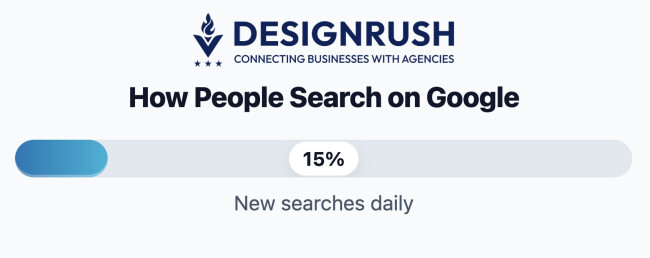
If you address the exact questions customers are asking, you align with how over half of the searches are phrased. It’s also why 15% of Google searches seen each day are completely new, user needs evolve, and people constantly find new ways to ask things.
James McCallough, Digital Marketing Consultant at Cadmus Copy, frames it this way:
“If SEO makes up the bones of your online presence, content is the beating heart and soul. Together, they tell your brand's story confidently and professionally, ensuring that your promises to customers are believed, appreciated, and – most importantly – heard.”
That’s why I present topic maps not as “keywords,” but as the exact questions customers are asking. Suddenly, SEO becomes a customer-intelligence engine instead of a guessing game.
3. Prioritize Low-Hanging Keywords and Strategic Opportunities
Not all opportunities are equal. Ranking at the top of Google is a traffic magnet — the first organic result captures 27.6% of all clicks, while the second drops to around 15.8%.
That’s a huge difference in payoff.
But if you only chase those high-volume, ultra-competitive terms, you’ll burn out fighting uphill battles.
I use a simple opportunity score to rank ideas:
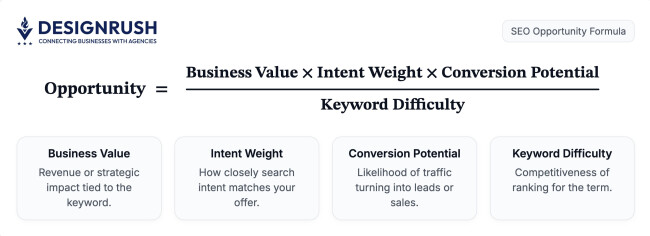
Here’s an example keyword scorecard:
Keyword | Intent | Volume | Keyword Difficulty | Priority | Target Page Type |
project intake form template | Transactional | 1,200 | 18 | High | Template page |
project prioritization framework | Informational | 900 | 22 | Medium | Blog guide |
project intake process | Informational | 2,400 | 45 | Long-term | Pillar guide |
This shows stakeholders why you’re picking certain terms, so it’s not just “because SEO said so.”
Low-difficulty, high-intent terms can generate quick ROI and buy trust internally, while the bigger, tougher terms build your long-term moat. I’ve found that when you balance both, you create momentum that keeps executives invested in the strategy.
4. Build a Content Roadmap and Calendar
Content strategy lives or dies on execution. In my experience, nothing kills SEO faster than inconsistency. A calendar is what keeps you consistent, and the payoff is real.
Businesses that publish 16 or more blog posts a month generate 4.5x as many leads compared to those that publish less frequently.
I’ll share with you an example 1-month calendar for a SaaS brand:
Week | Content Piece | Type | Status | Owner |
1 | Project Intake Process (pillar) | Blog guide | Draft | SEO |
1 | Intake Form Template (supporting) | Template | Briefed | Writer |
2 | RACI vs. DACI Framework (supporting) | Blog guide | Not started | Writer |
3 | Project Prioritization Framework (supporting) | Blog guide | Research | Writer |
4 | Demo Page: How [Tool] Simplifies Intake | Landing page | In QA | Dev |
That way, leadership sees what’s publishing, when, and why.
Best practices in building your content calendar:
- Organize by clusters: each pillar anchors a campaign.
- Publish with cadence: 1 pillar + 3–4 supporting articles per month.
- Balance evergreen plays (guides, checklists) with fresh trends (newsjacks, benchmarks).
5. Publish Long-Form, Helpful Content
Authority comes from depth and clarity, not word count.
Uzma Wani, CEO of Gignaut, underscores this: “A robust SEO content strategy begins with insightful keyword research, but the high-quality, mobile-friendly content, backlinks, and user-focused design truly set it apart.”
What works best:
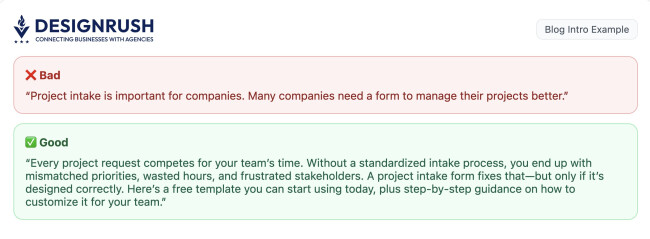
- Open with strong introductions that frame the reader’s problem.
- Structure articles with clear subheads and scannable sections.
- Add tables, checklists, and process visuals to simplify decisions.
- Include product demos or screenshots — subtle, but powerful trust builders.
Take a look at this intro example:
I push teams to think: Would a customer bookmark this? Would they forward it to a colleague? If the answer is no, we go back to the draft.
That bar has kept businesses from wasting time on content that doesn’t compound in value.
6. Diversify Content Formats
Different audiences (and SERPs) reward different formats. Google doesn’t just rank blogs anymore — it pulls from videos, FAQs, case studies, and tools.
In fact, 94% of B2B marketers create blog articles, 84% produce videos, and 78% publish case studies as part of their strategy.
Formats to mix in:
- Blogs and guides for organic traffic.
- Videos for YouTube + SERP embeds.
- Calculators, templates, and PDFs for lead capture.
- Case studies and comparison pages for bottom-of-funnel proof.
One idea = multiple formats = multiple entry points.
7. Build Authority and Earn Links
Google wants to rank experts, not content mills. Authority signals separate the winners from the rest.
How to build it:
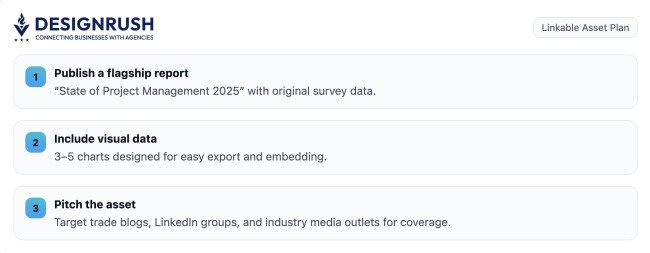
- Publish original research and data-driven reports.
- Secure backlinks via digital PR and guest contributions.
- Showcase SME quotes, credentials, and real author bios for E-E-A-T.
Mihai Iosif, Head of SEO at eCommerce Today, highlights the tactical side: “Implement descriptive anchor texts in internal links to enhance page authority and user navigation.”
8. Cover Different Intents Across the Funnel
Traffic is useless if it doesn’t convert. The key is building assets for every stage of the buyer journey.
- Awareness: “What is…” guides, explainer posts.
- Consideration: comparison pages, ROI explainers, buyer’s guides.
- Decision: case studies, pricing breakdowns, demo pages.
- Retention: how-to guides, implementation playbooks.
Here’s an even more tangible example:
- Awareness: What is a Project Intake Process? (definition guide)
- Consideration: RACI vs DACI: Choosing the Right Framework (comparison blog)
- Decision: Free Project Intake Form Template + Demo (lead-gen + CTA page)
- Retention: Best Practices for Scaling Your Intake Process (customer success blog)
I’ve worked with companies that poured resources into awareness content and then wondered why conversions didn’t follow.
My advice is always the same: map every intent.
9. Monitor, Refresh, and Adapt
View this post on Instagram
If there’s one thing I emphasize in every engagement, it’s this: SEO is never “done.”
I’ve watched once-dominant brands lose half their traffic simply because they stopped refreshing and adapting.
My habit is to treat content like living assets: review them quarterly, prune, refresh, and test relentlessly. That mindset keeps SEO budgets safe because I can always show progress, iteration, and wins.
Ongoing process:
- Track: Non-brand clicks, conversions, assisted revenue.
- Refresh: Update outdated stats, add FAQs, re-check internal links.
- Prune: Merge or redirect low-performing, cannibalized pages.
- Test: Headlines, CTAs, multimedia placement.
How To Create a Successful SEO Content Strategy: Final Thoughts
A successful SEO content strategy is equal parts discipline and creativity. It requires the precision of defining measurable KPIs and the art of publishing content people genuinely find useful.
When goals align with business outcomes, when content is structured around intent, and when authority is built deliberately, SEO stops being a line item and becomes a growth engine.
That’s how I approach every strategy I build, and it’s the mindset that consistently drives results.

Our team ranks agencies worldwide to help you find a qualified partner. Visit our Agency Directory for the top SEO companies, as well as:
- Top On-Page SEO Companies
- Top SEO Consultants
- Best SEO Agencies for Startups
- Top Small Business SEO Companies
- Top Enterprise SEO Companies
If you want to see how strategy translates into execution, check out our Awards section. It’s where the best website designs are celebrated, offering inspiration on how great design and strong SEO-driven content work hand in hand.