Our directory features trusted software development companies in California serving San Francisco, Silicon Valley, Los Angeles, and San Diego, with expertise across fintech, healthcare, eCommerce, and startups. Compare firms by pricing, size, and reviews to find the right local partner.
Organic rankings are determined by five factors: top services, reviews, portfolio, awards/press, and team expertise. Sponsored listings pay for a placement that appears above organic positions. Sponsorship does not affect star ratings or review content - read more on our methodology page.
Flyaps
VerifiedVerified by the DesignRush team for authenticity and credibility.Award WinnerRecipient of a Best Design Award for outstanding work.AI & Cloud Software Engineering
Flyaps builds AI, data, and cloud-native software, with clients including Airbyte, which scaled to unicorn status with its help. Its software development team covers MLOps, DevOps, and legacy modernization. Best fit for US tech companies needing cost-effective AI and data engineering expertise...
Top Services:
- Software Development
- AI Development
- IT Services
- DevOps Consulting
- Cloud Consulting
- Show more
- Location
- San Diego, California
- Number of Employees
- Under 49
- Average Hourly Rate
- $49/hr
- Minimal Budget
- $25,000 - $50,000
- Portfolios Count
- 9 Projects Listed
Data sourced from the agency's DesignRush profile, its website, and other relevant accountsFlyaps Services
Data sourced from the agency's DesignRush profileNetSpark IP & Telecom MyersBiz Net Yaana Airbyte Nextgen Clearing JOIN Relocate Shoelace Wireless
Flyaps Reviews & Testimonials

Python Django Review from Andrew Stetsenko
We partnered with Flyaps to build the GlossaryTech Chrome Extension from scratch, including the backend for tech terminology analysis. The goal was to help recruiters, sales professionals, and other non-technical specialists in IT quickly understand the technical terms they encounter every day.The first release shipped back in 2017, long before today's AI tools were available off the shelf. Flyaps built a custom tokenization layer on top of NLTK library to resolve the ambiguity problem - distinguishing "Go" the language from "go to the shop," or "Swift" the framework from the adjective, while also correctly recognizing multi-token terms like "Ruby on Rails" or "Amazon Web Services". It was a pragmatic, precise solution that made the extension genuinely usable from day one.The outcomes have validated that early bet. GlossaryTech now holds "Featured" status in the Chrome Web Store, has passed 25,000 downloads, and consistently serves 10,000+ weekly active users and 2,000+ daily active users. For a niche professional tool, that level of organic, sustained engagement is rare - and it traces directly back to the technical foundation Flyaps put in place.Beyond the engineering, what stood out was how Flyaps engaged with the product itself. They contributed to architecture decisions, flagged edge cases early, and treated scope conversations with honesty rather than upsell. Communication was straightforward throughout, deadlines were met, and the codebase has held up well as we've extended the product over time.I'd recommend Flyaps to anyone looking for a partner who combines solid engineering with genuine product thinking. They've been central to GlossaryTech's success and continue to be a team we trust.

Software Development Review from Dariia Ryzhova
Our collaboration with Flyaps has lasted for several major projects, of which I personally worked with them on two. I am very satisfied with the level of expertise (both technical and domain), the involvement and responsibility of the teams, and the quality of delivery. We successfully brought 2 major products to life together. Flyaps teams have diverse specializations, so I had the opportunity to attract consultants from different fields: software developers, including high-level architects, DevOps, QA, and business analysts.The teams have a modern technology stack and are experienced in Agile development. This allowed for smooth integration with internal teams and processes. It is also important to note that Flyaps provides technical consulting on demand, and this was very valuable service as well. Overall, I can recommend working with Flyaps as a reliable and high-quality partner.
ТОВ ХОТНАЙТС's Review Sourced from Google
Flyaps delivered outstanding results for our e-commerce store! They built a visually stunning and high-performing website that perfectly captures our brand. Since launching, our site speed has improved by over 60%, and we've seen a noticeable increase in our conversion rate. Their team's technical expertise is top-notch, and the new admin panel they created has made managing our operations so much easier. I am happy to recommend this team of professionals.
Reviews verified by DesignRush and sourced from the agency's profile View All ReviewsA Better Northern California Technology Partner
Northbank Technology Group is a Northern California Microsoft Dynamics 365 Business Central partner providing exceptional implementation, migration, integration, and support. We combine deep Microsoft technology and financial expertise with hands-on, personalized service. Clients work directly with...
Top Services:
- ERP Consulting
- Software Development
- Business Consulting
- Location
- Fair Oaks, California
- Number of Employees
- Under 49
- Minimal Budget
- $25,000 - $50,000
Data sourced from the agency's DesignRush profile, its website, and other relevant accountsNorthbank Technology Group Services
Data sourced from the agency's DesignRush profileCalHFA Kovar's Academy CTI Avon Risk Carson Landscape Industries Cornerstone

Software Development Companies in California by City
Related Services in California
Software Development Specializations in California
Popular Services
How to Hire a Software Development Company in California
What can California software developers do for businesses?
When businesses work with California agencies, they get access to a deeper innovation ecosystem, stronger specialized talent, and more experience building innovative solutions for high-growth markets.
California remains the undisputed global leader in software production and talent density.
The state is funding projects for software-defined submetering, managed EV charging, and vehicle-to-everything (V2X) platforms.
One 2025 grant approved $693,611 to fund managed charging analysis, and another state-backed project is developing a software-defined submetering solution for EV site hosts.
That points to real depth in energy software, grid tech, and mobility platforms.
For a business owner, hiring software development companies in California means tapping into the world's most stable and well-funded innovation hub.
As of early 2026, California's tech sector contributes approximately $541 billion to the state's economy annually.
This represents nearly 19% of California's total GDP, providing a level of infrastructure and talent density found nowhere else.
In 2026, California developers will become the first truly AI-native workforce.
San Francisco-based companies alone received 34% of all total U.S. AI funding in recent cycles, ensuring that agencies in this region have early access to the most advanced tools and talent.
For example, in 2025, Bay Area AI companies pulled in roughly 76% of the U.S. AI funding, according to industry reports.
About 93% of developers in the region now use AI coding assistants.
AI tools have reduced the time it takes for new engineers to get up to speed on complex codebases, ensuring that if your project needs to scale quickly, the software company can add talent without a significant productivity dip.
Gartner predicts that 40% of enterprise applications will be integrated with task-specific AI agents by the end of 2026.
Software developers in California build autonomous agents that don't just chat but also execute workflows, such as reconciling accounting books, managing supply chain logistics, or providing first-tier customer support without human intervention.

Early adopters of agentic workflows in California report a 25% reduction in operational overhead within the first year of deployment.
Because of the CCPA and SB 942 (AI Transparency), California agencies build innovative solutions with a Privacy by Design philosophy.
This prevents the compliance tax, i.e., the massive cost of re-coding an app later to meet mandatory state privacy standards.
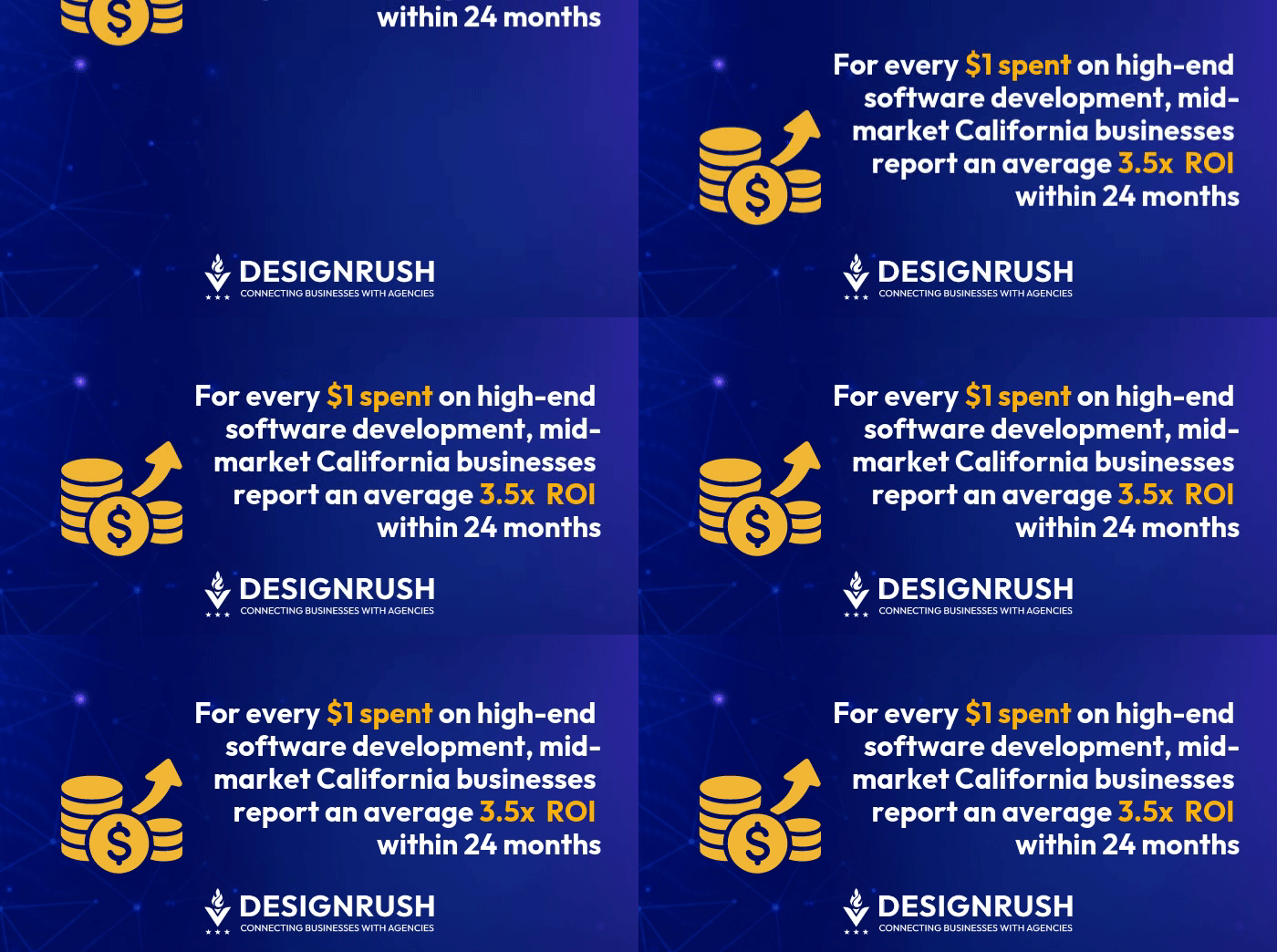
For every $1 spent on high-end California software development, mid-market California businesses report an average 3.5x return on investment (ROI) within 24 months through operational automation and new revenue streams, according to recent industry analysis.
Why should I hire a California-based agency vs. an out-of-state one?
While out-of-state or offshore agencies offer lower rates, a custom software development company in California can be a stronger choice for your business needs if you want a partner with proven expertise that is closer to the state's talent, capital, and regulatory environment.
California's life sciences sector alone included about 16,000 businesses, 70,000 biotech R&D employees, and $60 billion in private investment in 2023.
If your business operates in healthcare, medtech, biotech, or regulated industries, California firms are more likely to understand those workflows and compliance needs.
In 2025, California partnered with Google, Adobe, IBM, and Microsoft to expand access to AI training for over 2 million students across public schools, community colleges, and California State Universities.
For buyers, that means local agencies are hiring from a workforce pipeline being trained around modern AI tools and workflows.
California has the strictest data and AI laws in the U.S.
Hiring locally means your custom software solutions are built to the highest legal standard from day one.
The state employs over 628,400 software developers, which is more than twice as many as Texas, the next closest state.
In 2026, the state announced a $2.75 million CCPA settlement with Disney, the largest CCPA settlement in California history at the time.
If your product handles consumer data, a software developer in CA is more likely to build software having these rules in mind from day one.
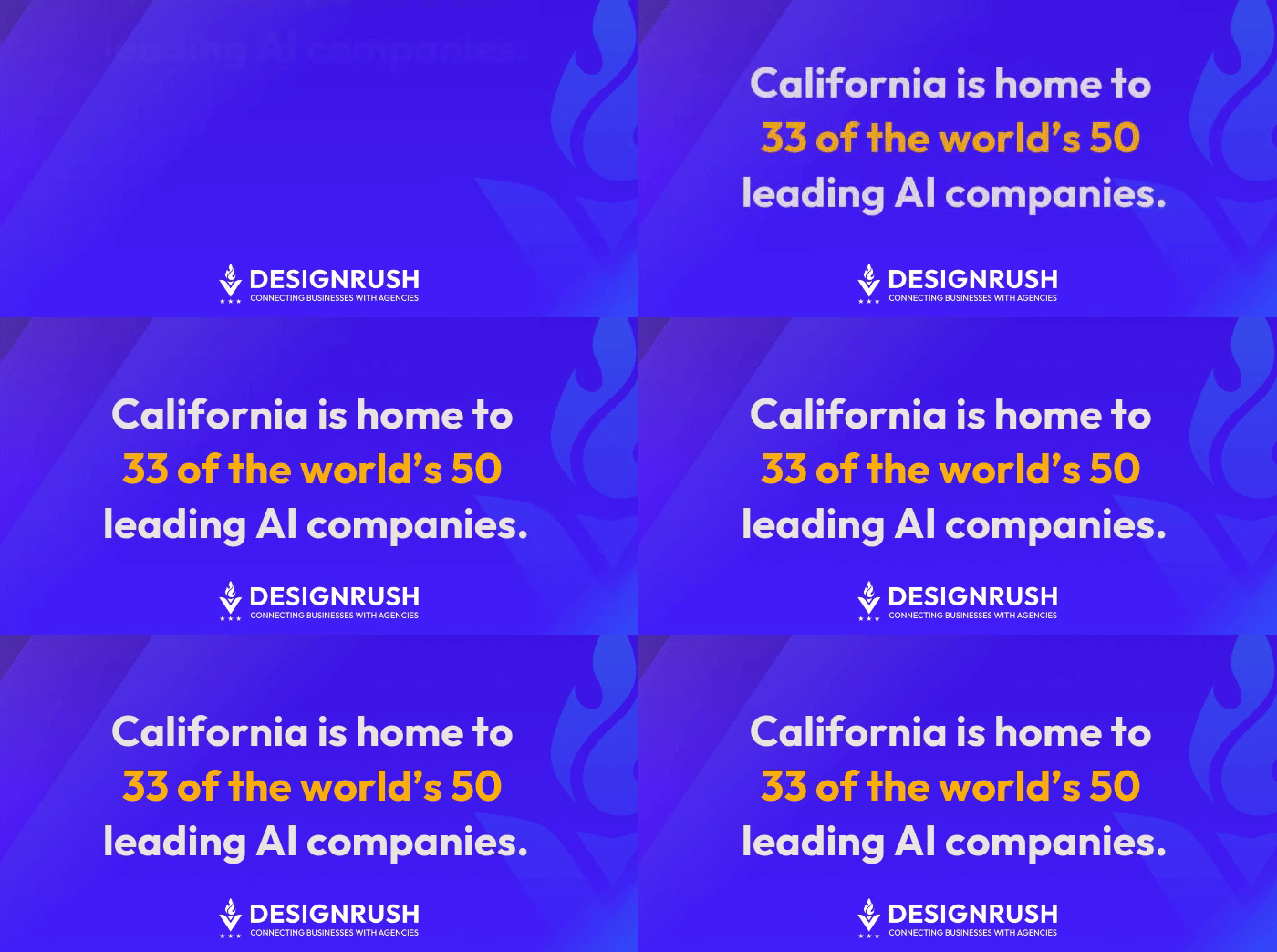
California is home to 33 of the world's 50 leading AI companies.
If your project touches AI development, automation, or data-heavy products, software development companies in California are more likely to work in that ecosystem every day.
In 2024, 15.7% of all U.S. AI job postings were in California, versus 8.8% in Texas and 5.8% in New York.
That makes California the deepest single-state market for AI hiring.
According to CalPrivacy, California's privacy regulator reported a $15.8 million budget in 2025, up from $12.8 million in 2024, and 54 positions in 2025, up from 40 in 2024.
That signals a growing compliance and enforcement environment, which is useful if you want a software engineering partner that takes privacy seriously.
California handles more than $675 billion in two-way trade and is the largest importer among the U.S. states.
Agencies in that environment are more likely to have experience with multilingual, cross-border, compliance-sensitive, and high-volume digital systems.
How do I choose the best software development firm in California?
Follow these steps to ensure you choose the best software development company in California for your business needs:
- Start with product fit
Choose a firm that has already built the kind of product you need: SaaS, internal tools, AI features, healthcare software, fintech, or eCommerce. Ask for 2-3 recent examples that match your exact use case, tech stack, and compliance needs. - Make privacy and compliance a selection filter
A strong software development firm in CA should be able to explain opt-outs of rules and regulations, consent flows, data minimization, and privacy-by-design in plain English before it writes a line of code. - Check whether the firm can scale with you
The best partner should support growth, maintenance, and hiring transitions. Ask how the agency staffs phases 1, 2, and 3 of growth. - Ask who owns the communication and delivery
Some custom software development companies in California sell senior strategy but push execution elsewhere. Require a named product lead, tech lead, and delivery owner in California or your time zone, plus a written cadence for demos, issue tracking, and risk reporting to ensure timely delivery and top technical expertise. - Use a scorecard before you sign
The safest way to choose is to score each firm on relevant case studies, technical depth, privacy/compliance readiness, team seniority, communication model, maintenance support, and commercial fit. A simple weighted scorecard will help you separate polished sales from real delivery capability.
How can I find the best developers on DesignRush that fit my budget?
We've handpicked a list of our top software development companies in California across price points, so you can identify a vendor within your budget.
| High budget: $50,000 |
|
| Low budget: $25,000-$50,000 |
|
Beyond the project budget, our agency directory lets you filter agency profiles by technical expertise, location, agency reviews, client types, and team size.
What questions should I ask a California software development company before hiring one?
Ask a software development company in CA the following questions before you sign the contract:
Relevant Background
- Can you share case studies of past projects similar to mine? What was the business impact?
- Can you provide references from clients operating in my industry?
- How do you stay current with the latest technological and industry trends?
- What distinguishes you from other California software development companies?
Services and Processes
- What development methodology do you use?
- What data privacy and security measures do you undertake?
- How do you ensure compliance with the California Privacy Rights Act (CPRA) and the California Consumer Privacy Act (CCPA)?
- How do you handle sudden issues or changes during the development process?
Related to Your Project
- Who will be on my team? What are their roles and credentials?
- What is your estimated timeline and cost for my project?
- How will you integrate the solution with my existing IT infrastructure?
- Who will own the rights to my tailored software?
Sources
DesignRush sustains a directory of over 40,000 agencies categorized by service category, location, expertise, and reviews. We build our database in two ways:
- Our dedicated team of agency experts actively searches the web for top-performing companies. We then pull information from their websites, online presence, and client testimonials to verify their status and qualifications prior to listing.
- The agencies listed get notified of their profiles on the website and they can choose to claim it or not, which suggests their availability for more collaborations.
Agencies can also reach out to DesignRush and must go through the verification process prior to being listed.

Why companies trust DesignRush
Every agency is independently vetted before it can be listed or ranked
 4.8
4.8 4.8
4.8Some agencies pay for sponsored placement, clearly labeled and held to the same vetting standards.
6 Frequently Asked Questions About Software Development Companies in California
What services does a software development company in California typically provide?
It offers the following custom software development services:
- Custom software development: Designing, building, and deploying software tailored to specific user needs or business requirements.
- Mobile app development: Building Android and iOS applications that leverage native device features such as Bluetooth, camera, and GPS for enhanced functionality.
- Web app development: Building software that lives on a remote server and is accessed through a web browser rather than being downloaded onto a device's hard drive.
- Website development: Designing and developing both the front-end and back-end of a website, with a focus on responsive layouts, intuitive interfaces, and practical features.
- Cloud development: Software developers in California craft bespoke programs that run on cloud environments and allow for secure and easy data retrieval and storage, while offering cloud consulting services too.
- Quality assurance: Conducting rigorous tests to identify and resolve potential issues and ensure the software solutions meet performance standards, user expectations, and regulatory requirements.
- Maintenance and support: Performing software updates to enhance security, functionality, and performance.
How much do these companies charge for software development services?
Software development pricing in California is among the highest in the United States, driven by talent demand in hubs like Silicon Valley, San Jose, and San Francisco. California sits at the top end globally, often 30-70%more expensive than offshore alternatives.
Costs vary widely by experience level, project scope, and specialization.
In top-tier markets, software developers in California charge $160-$275/hr.
Costs by project
- Small projects (MVPs, simple apps): $40,000-$80,000
- Mid-size platforms: $80,000-$150,000
- Complex systems (enterprise, AI, SaaS): $150,000-$300,000+
What is the Privacy by Design requirement in California?
Privacy by Design (PbD) in California is a core regulatory expectation embedded in the California Privacy Rights Act (CPRA) and the California Consumer Privacy Act framework.
Privacy by Design requires software development companies in California to build privacy into systems from the start, not add it later, integrate privacy into software architecture, business processes, and data flows, and consider user privacy at every stage of development and data processing.
This requirement applies to web and mobile applications, data pipelines and analytics systems, and AI and automated decision-making tools.
How long does it take to complete a software development project in California?
The average timeline for a custom software development company in California ranges from 3 to 12 months, depending on the complexity and scope of the project. While AI-augmented development tools have increased coding velocity by nearly 40%, stricter California regulations (like the CCPA and new AI transparency laws) have added mandatory compliance and testing phases that offset those gains.
| Project type | Timeline | Key focus area |
| Minimum Viable Product (MVP) | 3-4 months | Core features only; rapid market entry. |
| Medium complexity SaaS | 6-9 months | API integrations, multi-user roles, and scaling |
| Enterprise-grade systems | 9-18+ months | Legacy migration, high security, and deep compliance. |
| AI-native platforms | 12-24 months | Model training, ADMT audits, and data lineage. |
Can I hire a California agency that uses offshore developers?
Yes, you can. Many top software developers in California use offshore or hybrid teams. In this setup, the agency usually keeps its strategy, design, and project management in California, while teams in Eastern Europe, Latin America, or Southeast Asia handle heavy-duty coding.
While the model is effective, California’s strict laws mean that a software development company in California must be the shield for your business. Even if developers are offshore, they may have access to your users' personal data. Under the 2026 CCPA rules, you must ensure the agency has Data Transfer Agreements in place. The data must be handled as if it never left California.
What is the ADMT regulation?
ADMT stands for Automated Decision-Making Technology. In the context of California law (specifically the CCPA/CPRA), it refers to any technology that uses computation to replace or substantially replace human involvement in making decisions about people.
As of January 1, 2026, new regulations from the California Privacy Protection Agency (CPPA) have officially taken effect, placing strict guardrails on how businesses use these tools. If the software solution you need uses AI to make decisions, a top software development company in California must provide a way for users to opt out and receive an explanation of the logic.
The regulation targets any system, including artificial intelligence, machine learning, and simple algorithms that process personal data to make a significant decision concerning a consumer.
This includes decisions related to:
- Employment: Hiring, compensation, or work allocation.
- Financial Services: Lending, insurance, or credit.
- Essential Services: Housing, healthcare, or education enrollment.
- Criminal Justice: Legal outcomes or profiling.
Latest Trends Related to Software Development
Software Development
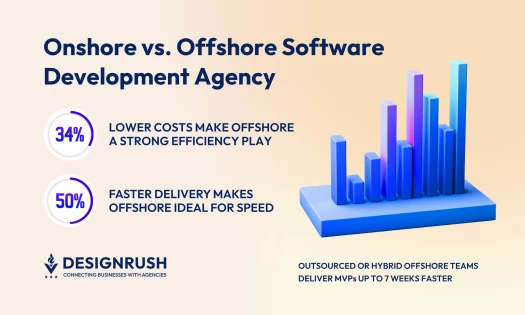
Onshore vs. Offshore Software Development Company: Which One Is a Better Choice?
2,652