Connect with vetted headless CMS developers to drive better UX, conversions, and ROI through consistent omnichannel experiences. Filter agencies by expertise, budget, and location to find the right partner.
Organic rankings are determined by five factors: top services, reviews, portfolio, awards/press, and team expertise. Sponsored listings pay for a placement that appears above organic positions. Sponsorship does not affect star ratings or review content - read more on our methodology page.
Websites Built To Bring In Customers
A Baku-based studio building corporate websites, e-commerce platforms and landing pages for small and mid-sized businesses. Fixed price and fixed deadline agreed in writing before any code. Two months of support after launch. 120+ projects since 2023, rated 5.0 across 79 Google reviews...
Top Services:
- Web Development
- Web Design
- eCommerce Development
- UI/UX Design
- SEO
- Show more
- Location
- Baku, Azerbaijan
- Number of Employees
- Under 49
- Average Hourly Rate
- $40/hr
- Minimal Budget
- Under $1,000
- Portfolios Count
- 2 Projects Listed
Data sourced from the agency's DesignRush profile, its website, and other relevant accountsSaytpro Services
Data sourced from the agency's DesignRush profileBioland NMR Shop ELPO Group Nafta Baku Turan Hospital Ocaq Travel Cleanlab Fragreya Direct Academy Jabbarov Production
Saytpro Reviews & Testimonials
ruslan qurbanov's Review Sourced from Google
An exceptional team of true professionals with a remarkable vision and meticulous attention to every detail of the project. Working with the SaytPro team was an outstanding and seamless experience — they delivered my project ahead of schedule and with flawless execution. Thank you, SaytPro!
Reviews verified by DesignRush and sourced from the agency's profile View All ReviewsBig Agency Quality. Zero Agency Overhead.
Shilling Digital is a boutique, owner-operated digital studio delivering high-performance web development, local SEO, content, and branding solutions. By leveraging modern tech, we build blazing-fast, custom websites tailored for growing businesses. Skip the agency overheadpartner directly with a dedicated...
Top Services:
- Web Design
- Web Development
- Digital Marketing
- SEO
- Social Media Marketing
- Show more
- Location
- Warsaw, Indiana
- Number of Employees
- Under 49
- Minimal Budget
- Under $1,000
- Portfolios Count
- 3 Projects Listed
Data sourced from the agency's DesignRush profile, its website, and other relevant accountsShilling Digital Services
Data sourced from the agency's DesignRush profileNorthwest Crawl Space Repair Klutz Well Drilling American Foundation Specialists Casper Contracting Steele Rail Band Eternal Restorations
Strategy. Design. Growth
Trademark is a digital marketing agency that helps local businesses grow through high-performance websites, SEO, Google Ads, social media marketing, and AI Search (GEO) optimization. We build fast, conversion-focused websites designed to generate more leads and help businesses stand out online...
Top Services:
- Digital Services
- Web Design
- UI/UX Design
- eCommerce Development
- Web Development
- Show more
- Location
- Austin, Texas
- Number of Employees
- Under 49
- Average Hourly Rate
- $100/hr
- Minimal Budget
- Under $1,000
- Portfolios Count
- 3 Projects Listed
Data sourced from the agency's DesignRush profile, its website, and other relevant accountsTrademark Services
Data sourced from the agency's DesignRush profileTrademark Rocky Mountain Collective Sanders Septic Tanks Cutbank Supply Co.
Independent Software Studio
ribby.dev is an independent software studio in the Twin Cities. We build websites, web apps, mobile apps, and AI automation for small and growing businesses the kind of work that usually means hiring an agency, done by senior engineers who talk to you directly. Recent work includes a tee-time app pulling live...
Top Services:
- Web Development
- Software Development
- Mobile App Development
- Web Design
- AI Development
- Show more
- Location
- Inver Grove Heights, Minnesota
- Number of Employees
- Under 49
- Average Hourly Rate
- $100/hr
- Minimal Budget
- Under $1,000
- Portfolios Count
- 3 Projects Listed
Data sourced from the agency's DesignRush profile, its website, and other relevant accountsribby.dev Services
Data sourced from the agency's DesignRush profileDinámica Games Recovery Awareness 24 RCS League Cool Blue Diamond Brothers Auto Hunt Fairway House Quiet Whisper Dive Guys Chalkboard Sports
Websites And Software For Brisbane Businesses
Hireadev is a Brisbane software consultancy building hand-coded websites and custom business software for Australian small and medium businesses. We replace spreadsheets, MS Access databases and legacy systems with modern web apps, connect tools like Xero and MYOB, and rescue stalled projects. Fixed quotes...
Top Services:
- Software Development
- Web Development
- Web Design
- Mobile App Development
- IT Services
- Show more
- Location
- Bellmere, Australia
- Number of Employees
- Under 49
- Average Hourly Rate
- $119/hr
- Minimal Budget
- Under $1,000
- Portfolios Count
- 2 Projects Listed
Data sourced from the agency's DesignRush profile, its website, and other relevant accountsHireadev Services
Data sourced from the agency's DesignRush profile2Pay Site Tech Consulting Launch Cargo & Logistics
Your website should be earning its keep.
Slow pages, crawl errors, and sites nobody owns end to end cost small businesses leads. Bree Sharp builds and repairs websites, web apps, and custom tools on Astro, WordPress, and Cloudflare, with technical SEO and GEO built in. Start with a $500 SEO Health Check, delivered in 48 hours...
Top Services:
- Web Development
- UI/UX Design
- SEO
- Digital Marketing
- AI Development
- Show more
- Location
- Olive Hill, Kentucky
- Number of Employees
- Under 49
- Minimal Budget
- Under $1,000
- Portfolios Count
- 8 Projects Listed
Data sourced from the agency's DesignRush profile, its website, and other relevant accountsBree Sharp Services
Data sourced from the agency's DesignRush profileMany Words One Voice Trifecta Prince Guidance Veloce Collision Alan E. Smith
Bree Sharp Reviews & Testimonials
W. Thomas Bunch II's Review Sourced from Google
Bree has been an excellent webmaster for our business. Prompt responses and she has the skills and experience to know what is right for a website. Thank you!
Alan Smith's Review Sourced from Google
Bree is awesome to work with. She has been responsive, thorough, and gets projects done in a timely fashion. She helps makes my task more efficient and easier to get done.
Carlos Casamassa's Review Sourced from Google
Bree Sharp has been extremely helpful from the very beginning, always doing her best to assist us and make sure everything was handled with care and professionalism. She consistently showed a strong commitment to customer satisfaction and made the entire experience much easier for us.We truly appreciate the service she provided and are very thankful for her support. We highly recommend Bree Sharp and her services.
Reviews verified by DesignRush and sourced from the agency's profile View All ReviewsWebsites That Quote When You Can't
Alp Web Studio builds fast, lead-generating websites for HVAC, plumbing, landscaping, and contracting companies across Nova Scotia. A built-in quote estimator hands homeowners an honest ballpark day or night, and every lead lands in one owner dashboard with instant follow-up texts. Custom-built websites with...
Top Services:
- Web Design
- Web Development
- UI/UX Design
- SEO
- Phone Answering Services
- Show more
- Location
- Halifax, Canada
- Number of Employees
- Under 49
- Minimal Budget
- Under $1,000
Data sourced from the agency's DesignRush profile, its website, and other relevant accountsAlp Web Studio Services
Data sourced from the agency's DesignRush profileDCATT ProFleet Graphics Clarke Gray Hockey
Digital Partner For Home Service Businesses
Small agency With a servant attitude that is serving home service businesses And helping them with website design and SEO...
Top Services:
- Web Design
- SEO
- AEO
- Location
- Overland Park, Kansas
- Number of Employees
- Under 49
- Average Hourly Rate
- $75/hr
- Minimal Budget
- Under $1,000
Data sourced from the agency's DesignRush profile, its website, and other relevant accountsBlessed Arc Media Services
Data sourced from the agency's DesignRush profileYoder's Roofing Services Buckeye Crane Service Midwest Electric and Plumbing PrimeLine Electric and plumbing Agema Insurance Solutions Camby Designs Over The Moon Bookkeeping Services Getz Hardwood Flooring Swartzentruber Law Evans Plumbing and Repair
Turning clicks to customers
Sandbanks Digital is the premium choice for website management and custom app development for the peninsula. We focus on your digital tools, so you can focus on your business...
Top Services:
- Web Design
- Web Development
- eCommerce Development
- SEO
- Software Development
- Show more
- Location
- Poole, United Kingdom
- Number of Employees
- Under 49
- Average Hourly Rate
- $30/hr
- Minimal Budget
- Under $1,000
- Portfolios Count
- 4 Projects Listed
Data sourced from the agency's DesignRush profile, its website, and other relevant accountsSandbanks Digital Services
Data sourced from the agency's DesignRush profilecarFlippy Daiffe Taylor Made Removals Isobels Bridal & Groom
Sandbanks Digital Reviews & Testimonials
Joseph W's Review Sourced from Google
These guys developed a bespoke lead generation tool for my business. Thanks to them my workload has doubled. Highly recommended!
Rhys Johnson's Review Sourced from Google
Absolutely outstanding from the team at Sandbanks Digital. Very knowledgeable and helped guide me through the whole process. Recommend 100%
Daniel Alleyne's Review Sourced from Google
Superb web design and excellent customer service from start to finish. Brilliant value for local businesses.
Reviews verified by DesignRush and sourced from the agency's profile View All ReviewsWe Make Websites That Get You Found
Sloans Websites is a web design and SEO company that builds websites and does SEO that gets home services businesses more customers through organic search and Chat GPT...
Top Services:
- Web Design
- AEO
- SEO
- Digital Marketing
- CRM Consulting
- Show more
- Location
- Louisville, Kentucky
- Number of Employees
- Under 49
- Average Hourly Rate
- $35/hr
- Minimal Budget
- Under $1,000
- Portfolios Count
- 1 Project Listed
Data sourced from the agency's DesignRush profile, its website, and other relevant accountsSloans Websites Services
Data sourced from the agency's DesignRush profileER Landscaping Beth Sloan Coaching Soluna Massage
Crafted with care, built to last.
Lorien Web is a one-person webd esign and development studio based in Central Ohio, building hand-coded sites and Shopify stores for small businesses, nonprofits, and community organizations. Every project is fixed-price, personally delivered, and built to stay fast and maintainable for years...
Top Services:
- Web Development
- Web Design
- SEO
- eCommerce Development
- WordPress Website Design
- Show more
- Location
- Galloway, New Jersey
- Number of Employees
- Under 49
- Average Hourly Rate
- $50/hr
- Minimal Budget
- Under $1,000
Data sourced from the agency's DesignRush profile, its website, and other relevant accountsLorien Web Services
Data sourced from the agency's DesignRush profileDragonfly Bookshop Hope Presbyterian Church For All Manakind
SEO & Web Design That Makes the Phone Ring
Techy Toes is an SEO, Google Maps and web design agency in St. Petersburg, FL, working with local businesses across the US. We measure success in calls and leads, not rankings: one client went from 4 calls a month from Google to 77, another from a quiet website to 2030 leads a month...
Top Services:
- Web Design
- eCommerce Development
- Web Development
- WordPress Website Design
- AEO
- Show more
- Location
- St. Petersburg, Florida
- Number of Employees
- Under 49
- Average Hourly Rate
- $15/hr
- Minimal Budget
- Under $1,000
- Portfolios Count
- 1 Project Listed
Data sourced from the agency's DesignRush profile, its website, and other relevant accountsTechy Toes Services
Data sourced from the agency's DesignRush profileAloha Pools FC Fence Mustache Gold and SIlver LE Construction
Techy Toes Reviews & Testimonials
Intragital Solutions's Review Sourced from Google
Very professional and honest, Isaac did our website. Never expected such good return, we started getting leads on our site with in the first couple months. Would recommend them to everyone.
ivy on Milopeco909's Review Sourced from Google
I highly recommend Isaac with Techy Toes! I’ve been blessed to have found Isaac and received his services to help promote our plumbing business in Arizona. Within the first 6 months of help Isaac not only had provided us with a fully functioning website but also had worked his magic in getting us to become visible on Google. We have held one of the top three spots in our city on Google Maps for the past 4 years now. The past three years we were awarded the best plumbing company in our city from 3 separate plumbing magazines. We would never have been able to accomplish what we have so far without Isaac. We highly recommend his SEO, Website, and other business related services. He is very honest, patient, and hard working. He will always receive our honor and gratitude for his dedicated hard work and patient understanding. Thank You Isaac and Techy Toes.
Ramsina Herrington's Review Sourced from Google
I am very satisfied with Techy Toes Services. Isaac with Techy Toes was able to help make my company, All Drains Emergency Plumbing in Glendale, Arizona one of the top plumbing companies in our city. He was not only able to get our Google Business profile approved for Google, but he was also able to make us visible on Google Maps ascertaining us one of the top three spots on Google Maps in our city which has directly related to our company’s success including giving us a chance to win multiple top plumbing company awards in our city. I will never replace him with another marketer. He is a key core to our company and its continued success. If you are a new company looking for SEO services or help with your website or Google Profile, or Apple profile, or voice search platforms, Isaac with Techy Toes can help tremendously and he is very fair with his pricing. Thank You for all your continued help Isaac! I highly recommend his services.
Reviews verified by DesignRush and sourced from the agency's profile View All ReviewsWebsites that bring in local customers. Built in Scotland, owned by you from day one.
One Blue Pixel supports small to medium scale local businesses with their website and online marketing. I build websites and tools, run ads and more to help you find more customers and run your business efficiently...
Top Services:
- Logo Design
- Web Design
- Web Development
- WordPress Website Design
- SEO
- Show more
- Location
- Falkirk, United Kingdom
- Number of Employees
- Under 49
- Minimal Budget
- Under $1,000
Data sourced from the agency's DesignRush profile, its website, and other relevant accountsOne Blue Pixel Services
Data sourced from the agency's DesignRush profileFour Seasons Stirling Ltd LJD Home Improvements Summerside Blinds Ardilla Landscapes HS Roofing JWC Construction E. Young Surfacing Bentley Admin Bookkeeping Central Scotland Clearances R.S. Decor
One Blue Pixel Reviews & Testimonials
John Reid's Review Sourced from Google
I was recommended from a friend of mines in the garden sector who told me die to this company his business has grew really good and I must say I've not been disappointed in josh from blue pixel within meeting with him two days later my website was made made unbelievable timescale and he's made a fantastic job of my landscaping website would recommend this guy and he's very reasonable priced a great guy and a fantastic service
JWC construction Scotland Ltd's Review Sourced from Google
Although it’s early days Joshua is very Easy to deal with and he answers and sorts all queries very quickly.He has delivered what was described and I am continuing to work with him to help build my business online visibility
Jason Young's Review Sourced from Google
Fantastic service and knowledge from One Blue Pixel. A pleasure to work with. The work we required was undertaken very quickly and professionally. Would recommend to anyone.
Reviews verified by DesignRush and sourced from the agency's profile View All ReviewsAI Built Around Your Business
Acrion.ai is a Knoxville, TN company that builds AI Employees for non-medical home care agencies across the US. An AI Employee handles a full role end to end: answering every inbound call with proper intake, texting new inquiries within 60 seconds to engage and qualify them, managing online reputation, and...
Top Services:
- Business Consulting
- Digital Services
- AI Development
- CRO
- Reputation Management
- Show more
- Location
- Knoxville, Tennessee
- Number of Employees
- Under 49
- Minimal Budget
- Under $1,000
Data sourced from the agency's DesignRush profile, its website, and other relevant accountsAcrion.ai Services
Data sourced from the agency's DesignRush profileVisiting Angels - Fredericksburg, VA Right at Home - Orlando, FL Right at Home - Eastern Hillsborough, FL Right at Home - Durham, NC
Designing Strategic Technology For Memorable Brands
Lynxify is a creative digital agency helping start-ups and businesses build memorable brands through strategic design, digital experiences, and visual storytelling. From investor pitch decks and brand identities to UI/UX design, websites, motion graphics, and video production, we combine creativity with...
Top Services:
- Graphic Design
- Branding
- Logo Design
- Product Design
- Web Design
- Show more
- Location
- Islamabad, Pakistan
- Number of Employees
- Under 49
- Average Hourly Rate
- $50/hr
- Minimal Budget
- Under $1,000
- Portfolios Count
- 1 Project Listed
Data sourced from the agency's DesignRush profile, its website, and other relevant accountsLynxify Services
Data sourced from the agency's DesignRush profilePalermo Financial Group Red Bull Cloud Wise
Lynxify Reviews & Testimonials
Fatima Khan's Review Sourced from Google
Its a great experience the ambiance and overall environment is very much friendly not a typical corporate environment very friendly environment and the tea coffee is amazing here 😍🤩
Subhan Jalbani's Review Sourced from Google
It is wonderful to work with the Lynxify team. My experience with them has been really great. The team is incredible, supportive, and very cooperative. I am very happy to work with such a helpful group of people. Thank you, Lynxify team. Lots of love to all of you!
Arij Niaz's Review Sourced from Google
Lynxify offers top-notch online services. Their attention to detail, creativity, and professionalism are exceptional. Highly recommend for anyone needing quality, tailored solutions!
Reviews verified by DesignRush and sourced from the agency's profile View All ReviewsFintech Solutions Built to Scale
Finova Fintech builds custom software solutions for the financial sector, helping organizations streamline operations, improve customer experiences, and accelerate digital transformation through innovative technology...
Top Services:
- Digital Services
- Digital Strategy
- Web Design
- eCommerce Development
- Web Development
- Show more
- Location
- Beirut, Lebanon
- Number of Employees
- 50 - 99
- Average Hourly Rate
- $25/hr
- Minimal Budget
- Under $1,000
Data sourced from the agency's DesignRush profile, its website, and other relevant accountsFinova Fintech Services
Data sourced from the agency's DesignRush profileBaladeyate Rentos Younique
Tucson web design for small and medium sized businesses.
We build websites for small and medium sizes businesses here in Tucson. Restaurants, home service companies, nonprofits, and folks running their own shop.Most people come to us because they paid for a site once and it just sits there. So we start with a conversation about your business and work out from...
Top Services:
- Web Design
- Web Development
- Graphic Design
- Digital Services
- WordPress Website Design
- Show more
- Location
- Tucson, Arizona
- Number of Employees
- Under 49
- Average Hourly Rate
- $90/hr
- Minimal Budget
- Under $1,000
Data sourced from the agency's DesignRush profile, its website, and other relevant accountsInternet Crafters Services
Data sourced from the agency's DesignRush profileJumpmaxx Rodeo Spas Sydney's Sweet Shoppe
Internet Crafters Reviews & Testimonials
Sydney Adams's Review Sourced from Google
I had an amazing experience working with Steve! I already had an existing website, but he completely elevated it by improving its functionality.He was extremely communicative throughout the entire process and always made sure I understood what was happening and had the opportunity to provide feedback. One thing I especially appreciated was that he was willing to meet with me in person to discuss my ideas, wishes, and vision for the website. As a small business owner, your time is everything, and I felt the level of personal attention and communication he gave the project made the experience feel very collaborative rather than overwhelming.From the very beginning, he took the time to truly understand my business needs and the way I wanted my customers to experience my brand throughout the website. Now, every stage of browsing and ordering feels cohesive and intentional, creating a much stronger and more polished brand experience from start to finish.The final design exceeded my expectations, and I couldn't be happier with how everything came together. I finally feel that my website reflects my business branding and the vision I had in mind. I highly recommend him to anyone looking for a talented, professional, communicative, and friendly web developer who genuinely takes the time to bring your ideas to life!
Rochelle Manns's Review Sourced from Google
The team at Internet Crafters became strategic partners for the web development for our company(rsmc.ai) and product website (ellafin.ai). They didn't just build. The provided design consulting, advice on best practices and latest guidance for driving users to our website.The operational process when engaging with them is simple and easy.Thank you Steve for creating a great client experience!
Rachael Bullis's Review Sourced from Google
Internet Crafters has been amazing to work with for Jumpmaxx! They have been professional, responsive, and easy to work with throughout the entire process. They took the time to understand our business and helped create a website that represents Jumpmaxx and our inflatable rental services beautifully.We really appreciate their attention to detail, communication, and willingness to help whenever we have questions or need updates. We highly recommend Internet Crafters to any business looking for a professional, reliable, and customer-focused web design company!Thank you, Internet Crafters, for helping Jumpmaxx grow!
Reviews verified by DesignRush and sourced from the agency's profile View All ReviewsBuilding AI Systems That Generate Revenue, Not Just Conversations
FusionSync AI designs and develops custom AI systems that automate sales, customer support, operations, and internal workflows. We build production-ready AI voice agents, chatbots, SaaS platforms, CRM automations, and business process automation tailored to each client's needs. From strategy and architecture...
Top Services:
- AI Development
- Software Development
- Mobile App Development
- IT Compliance Solution
- Web Development
- Show more
- Location
- Mohali, India
- Number of Employees
- Under 49
- Average Hourly Rate
- $20/hr
- Minimal Budget
- Under $1,000
Data sourced from the agency's DesignRush profile, its website, and other relevant accountsFusionsync.ai Services
Data sourced from the agency's DesignRush profileGulliver Kalamba Matty Daniel Nick Kumart Gaurav Alexia
Building High-Performance Digital Experiences That Drive Results
Dezxey is a full service digital agency helping startups, small businesses and growing brands accelerate their online presence through modern web design, web development, branding, AI automation and digital marketing. We combine creativity, technology and data driven strategies to build fast, scalable...
Top Services:
- Web Design
- Web Development
- WordPress Website Design
- eCommerce Development
- AI Development
- Show more
- Location
- Lahore, Pakistan
- Number of Employees
- Under 49
- Average Hourly Rate
- $25/hr
- Minimal Budget
- Under $1,000
- Portfolios Count
- 6 Projects Listed
Data sourced from the agency's DesignRush profile, its website, and other relevant accountsDezxey Services
Data sourced from the agency's DesignRush profileAmber Rehman Roy Olivia
Ask AI about us
We build fast, mobile-friendly websites and does the local SEO that helps St. Louis businesses get found on Google, in the map pack & with AI; converting traffic to revenue...
Top Services:
- Web Design
- SEO
- CRO
- AEO
- Digital Marketing
- Show more
- Location
- St. Louis, Missouri
- Number of Employees
- Under 49
- Average Hourly Rate
- $125/hr
- Minimal Budget
- Under $1,000
Data sourced from the agency's DesignRush profile, its website, and other relevant accountsJamison Software Solutions Services
Data sourced from the agency's DesignRush profileWillie Johnson Donzell Snipes Azariah King Marshida King
Jamison Software Solutions Reviews & Testimonials
Eden STL's Review Sourced from Google
They helped my business get more customers immediately! Matthew was very knowledgeable and helpful. I would recommend 100 times.
Easy Listening Section's Review Sourced from Google
Working with Matt to build my new website was seamless from start to finish. Matt listened carefully to help craft my vision, communicated clearly through every phase of development, and delivered the site well ahead of the launch deadline. Will definitely seek Matt’s assistance for any future website enhancements and needs.
N Saw's Review Sourced from Google
Fast, efficient, fair pricing and super easy to work with. I couldn’t recommend them more. You can trust them!
Reviews verified by DesignRush and sourced from the agency's profile View All ReviewsThe Tech Way of Life
We create customized websites and software for businesses, mentors, professionals, and agency...
Top Services:
- Web Design
- Web Development
- eCommerce Development
- UI/UX Design
- IT Services
- Show more
- Location
- Aurangabad, India
- Number of Employees
- Under 49
- Average Hourly Rate
- $20/hr
- Minimal Budget
- Under $1,000
- Portfolios Count
- 1 Project Listed
Data sourced from the agency's DesignRush profile, its website, and other relevant accountsWE33RAS IT PVT LTD Services
Data sourced from the agency's DesignRush profileAxcelant Networks Axcelant Printer Dharpawar Saint Monica School Rohitraj International
WE33RAS IT PVT LTD Reviews & Testimonials
Khushbu Dawar's Review Sourced from Google
It is a very good startup providing software development as well as digital marketing services. The place good and perfect.
Ranjith Kumar's Review Sourced from Google
It is easy to find & when compared to other sectors company. It's is best transport facilities occurred
Azam Shaikh's Review Sourced from Google
WERAS IT Pvt Ltd it's a Start-up Software development, digital marketing and IT services provider company in Pune
Reviews verified by DesignRush and sourced from the agency's profile View All ReviewsWe Don't Do Marketing. We Build Growth Systems.
Gold Core Marketing was created for one reason: to help businesses grow in a way that's clear, measurable, and sustainable.Too many companies invest in marketing without knowing what they're really getting back...
Top Services:
- Digital Services
- Digital Strategy
- Web Design
- Web Development
- WordPress Website Design
- Show more
- Location
- Dearborn, Michigan
- Number of Employees
- Under 49
- Average Hourly Rate
- $40/hr
- Minimal Budget
- Under $1,000
Data sourced from the agency's DesignRush profile, its website, and other relevant accountsGoldCore Marketing Services
Data sourced from the agency's DesignRush profileGet Pro Painting gpconcretecoatings.com/ ajrouchlaw.com allergyadmi.com cleanmdservices.com
GoldCore Marketing Reviews & Testimonials
Hassan Jaafar's Review Sourced from Google
They are the best in the business. Adam and his team will always respond, get back to us, and make the necessary edits that are needed. They did my website and I love it!
Shaq Baydoun's Review Sourced from Google
It’s very refreshing to see a company who pays attention to detail, delivers and executes a plan, and actually does what it promises. Adam and his team are bar none the best in the business. They helped me separate myself from almost everyone that does what I do. Just amazing.
Noor Mazeh's Review Sourced from Google
The absolute best marketing company out there! From the start, communication was extremely clear, professional, and consistent. They took the time to truly understand my goals and delivered results that exceeded my expectations. Their team is creative, responsive, and genuinely cares about your success—not just another client to them.Every step of the process felt organized and stress-free, and their strategies actually worked. I saw real growth and engagement in a short amount of time. If you’re looking for a marketing team that knows what they’re doing and goes above and beyond, this is the one. Highly recommend!
Reviews verified by DesignRush and sourced from the agency's profile View All ReviewsBuilt For Business Growth
Syntecho is a full-cycle software development company based in West Palm Beach, Florida, serving businesses across the United States. It specializes in custom software development, AI automation, web and mobile applications, SaaS, ERP solutions, system integrations, cloud solutions, and data analytics...
Top Services:
- Web Design
- eCommerce Development
- Web Development
- Mobile App Development
- AI Development
- Show more
- Location
- West Palm Beach, Florida
- Number of Employees
- Under 49
- Minimal Budget
- Under $1,000
Data sourced from the agency's DesignRush profile, its website, and other relevant accountsSyntecho Services
Data sourced from the agency's DesignRush profileOA Solutions Prime Line AV Holme Stage
Long-Term Growth. Zero Guesswork.
Growth Boss is a Toronto-based digital marketing agency that pairs creative execution with real engineering. We build high-performance websites, run paid and organic campaigns, and deploy custom CRM and AI automation systems that turn leads into booked revenue. One team handling strategy, build, and the tech...
Top Services:
- Digital Services
- Video Production
- Branding
- Creative Services
- eCommerce Development
- Show more
- Location
- Oakville, Canada
- Number of Employees
- Under 49
- Average Hourly Rate
- $50/hr
- Minimal Budget
- Under $1,000
Data sourced from the agency's DesignRush profile, its website, and other relevant accountsGrowth Boss Digital Marketing Services
Data sourced from the agency's DesignRush profileSid's Ponds& Garden Scapes Lost Aviator Coffee Solo Cru Inc. Build It Halif The Halifax Honey Co. Mammoth Machinery Young Guns | Toronto Conscape Canada Inc. Nah Joke Hot Peppersauce
Growth Boss Digital Marketing Reviews & Testimonials
yohannes petros's Review Sourced from Google
I have been working with Growth Boss since November 2025, and one of the things I have appreciated most is that they have taken the time to truly understand both me and my brand.As a business owner, it can be difficult to hand parts of your business over to someone else. Growth Boss has made that process much easier through consistent communication, professionalism, creativity, and a genuine willingness to listen. They do not simply impose ideas; they collaborate with me and work to ensure that what we put out still feels authentic to my voice and my business.They have helped bring greater structure and consistency to my marketing while continuing to offer fresh ideas and valuable guidance. I feel supported, heard, and confident that they care about the work they are doing for my brand.I am grateful for the relationship we have built and would confidently recommend Growth Boss to other entrepreneurs and business owners.Yohannes PetrosOwner - Hanes Hummus
Devan Jorgenson's Review Sourced from Google
Having worked inside the Growth Boss team, I've seen firsthand how they operate, and the level of care they put into their clients' growth is impressive. Most people only see the results, but being on the inside gave me a whole new level of confidence in what they do. If I ever needed support for my own business, they'd be my first call without hesitation.
Pawel Wawszczyk's Review Sourced from Google
Growth Boss are young people full of energy.Great team that helped me with making inportant decisions. They also created beautiful website for my restaurant and I know I am in good hands with them .
Reviews verified by DesignRush and sourced from the agency's profile View All ReviewsGrow Your Business. Build Trust. Make an Impact.
FireVibe is a web design firm based in Hagerstown, Maryland, dedicated to helping businesses succeed online by delivering high-quality, affordable website design and development services. We specialize in creating professional, visually appealing, user-friendly, and search-engine-optimized websites tailored...
Top Services:
- Web Design
- Web Development
- SEO
- Location
- Hagerstown, Maryland
- Number of Employees
- Under 49
- Average Hourly Rate
- $125/hr
- Minimal Budget
- Under $1,000
Data sourced from the agency's DesignRush profile, its website, and other relevant accountsFireVibe Web Design Services
Data sourced from the agency's DesignRush profileHagerstown Community College Incubator Magno Coin DN Martin Drywall Wayside Landscaping LLC Medina Media Productions Maryland Windows Doors Roofs 19th Hole at Black Rock Restaurant Abundant Life Tabernacle Living Well Youth Works
FireVibe Web Design Reviews & Testimonials
victor thompson's Review Sourced from Google
Working with Fire Vibe Web Design has been nothing short of exceptional! From the very beginning, Mr. Jackson’s communication was clear, timely, and professional. As we built my website, he took the time to understand my vision and brought it to life with creativity, precision, and a unique flair that truly sets his work apart.What impressed me most—aside from his talent—is his responsiveness. Any time I’ve needed updates or maintenance, Mr. Jackson has been quick to respond and even quicker to deliver. He’s reliable, collaborative, and genuinely invested in making sure everything is running smoothly.If you’re looking for someone who’s creative, attentive, and committed to excellence, I highly recommend Mr. Jackson and Fire Vibe Web Design. You won’t be disappointed!
CEO Billions's Review Sourced from Google
Working with Clifton and his web design company has been an absolute pleasure from start to finish. His professionalism, creativity, and attention to detail exceeded my expectations. He took the time to truly understand my vision and brought it to life with a site that is not only visually stunning but also functional and user-friendly.Clifton’s team communicated every step of the way, offered valuable insights, and delivered on time—something that’s rare in this industry. I’m incredibly grateful for the level of care and expertise they brought to the project. If you're looking for a web design partner who delivers top-notch results and truly cares about your brand, look no further than Clifton and his team. Thank you again for a job well done.
Zack Mesa's Review Sourced from Google
FireVibe Web Design did an incredible job on my website! From the very first conversation, they were professional, creative, and truly listened to what I needed. The final product looks amazing, runs smoothly, and perfectly captures the vibe of my brand. They made the whole process easy and stress-free. I highly recommend FireVibe to anyone looking for top-notch web design and excellent customer service. Thanks again!
Reviews verified by DesignRush and sourced from the agency's profile View All ReviewsBe Found. Be Trusted. Get Chosen
We build fast high converting websites that makes business looks credible, get found online and turn visitors into real inquiries...
Top Services:
- Web Design
- Web Development
- UI/UX Design
- Branding
- Social Media Marketing
- Show more
- Location
- Surat, India
- Number of Employees
- Under 49
- Average Hourly Rate
- $25/hr
- Minimal Budget
- Under $1,000
Data sourced from the agency's DesignRush profile, its website, and other relevant accountsMago Labs Services
Data sourced from the agency's DesignRush profileA and M Construction Ensight HVAC Super Plumbing JK Concreting Empire Glazing
Smart Solution Real time Results
Agencies365 is a Pakistan-based digital marketing and technology company specializing in TikTok, Facebook & Snapchat advertising agency accounts, performance marketing, AI solutions, and custom software developmenthelping businesses scale with smart digital solutions...
Top Services:
- Digital Services
- Creative Services
- Digital Marketing
- Social Media Marketing
- Advertising
- Show more
- Location
- Multan, Pakistan
- Number of Employees
- Under 49
- Average Hourly Rate
- $70/hr
- Minimal Budget
- Under $1,000
Data sourced from the agency's DesignRush profile, its website, and other relevant accountsAgencies365 Services
Data sourced from the agency's DesignRush profileinderiver Rivaj Mehal Skoon Oil Sapphire Clothing 786 Agency Bahawalpur woh wonders Pakistan Herbal cure
Smart Digital Marketing Solutions for Business Growth
Biztal Box is a digital marketing agency helping businesses build a stronger online presence and achieve sustainable digital growth. We provide SEO, website development, web design, graphic design, content marketing, and other digital solutions tailored to business goals. Our approach combines strategy...
Top Services:
- Branding
- Web Design
- SEO
- AEO
- Digital Marketing
- Show more
- Location
- Delhi, India
- Number of Employees
- Under 49
- Average Hourly Rate
- $80/hr
- Minimal Budget
- Under $1,000
Data sourced from the agency's DesignRush profile, its website, and other relevant accountsbiztalbox Services
Data sourced from the agency's DesignRush profileGrafdoer Heidelbergmaterials Yum Colston Concepts Amazon
Own Local. Reach Global.
502ads offers digital marketing solutions for small businesses in and around Louisville, Kentucky - particularly search engine optimization (SEO) and (AI) answer engine optimization (AEO). The agency also manages online advertising, including Google Ads management, and provides social media strategy, as well...
Top Services:
- AEO
- SEO
- PPC
- Digital Marketing
- Digital Strategy
- Show more
- Location
- Louisville, Kentucky
- Number of Employees
- Under 49
- Average Hourly Rate
- $75/hr
- Minimal Budget
- Under $1,000
Data sourced from the agency's DesignRush profile, its website, and other relevant accounts502ads Services
Data sourced from the agency's DesignRush profileAce Chimney, Fireplace & Outdoor Living GlobalAir.com Shultz Career Consulting Culbertson Real Estate Group Sierra Certified Home Inspections N5 Marketing Hendren Sells Homes Clarity Home Inspections Trail 'N Track Tours Louisville Fire & Safety
















































Explore Web Development Specializations
- Angular Development
- Backend Development
- Bubble
- CakePHP
- Casino
- Companies for Fintech
- Contentful
- Drupal
- Front End
- Jamstack Development
- Joomla Development
- Next.js
- No Code Development
- Pegasystems
- Podia
- Property Management
- React.JS
- Ruby on Rails
- Sitecore
- Small Businesses Website Development
- TYPO3
- Umbraco
- Webflow
- WordPress
- Zoho Creator
Popular Services
Everything You Need to Know Before Hiring a Headless CMS Agency
How do headless CMS companies help your business?
Headless CMS agencies help you design and implement a content platform and delivery stack that lets teams ship digital experiences faster, scale across channels, and integrate cleanly with your existing systems.
Faster iteration cycles and reduced downtime
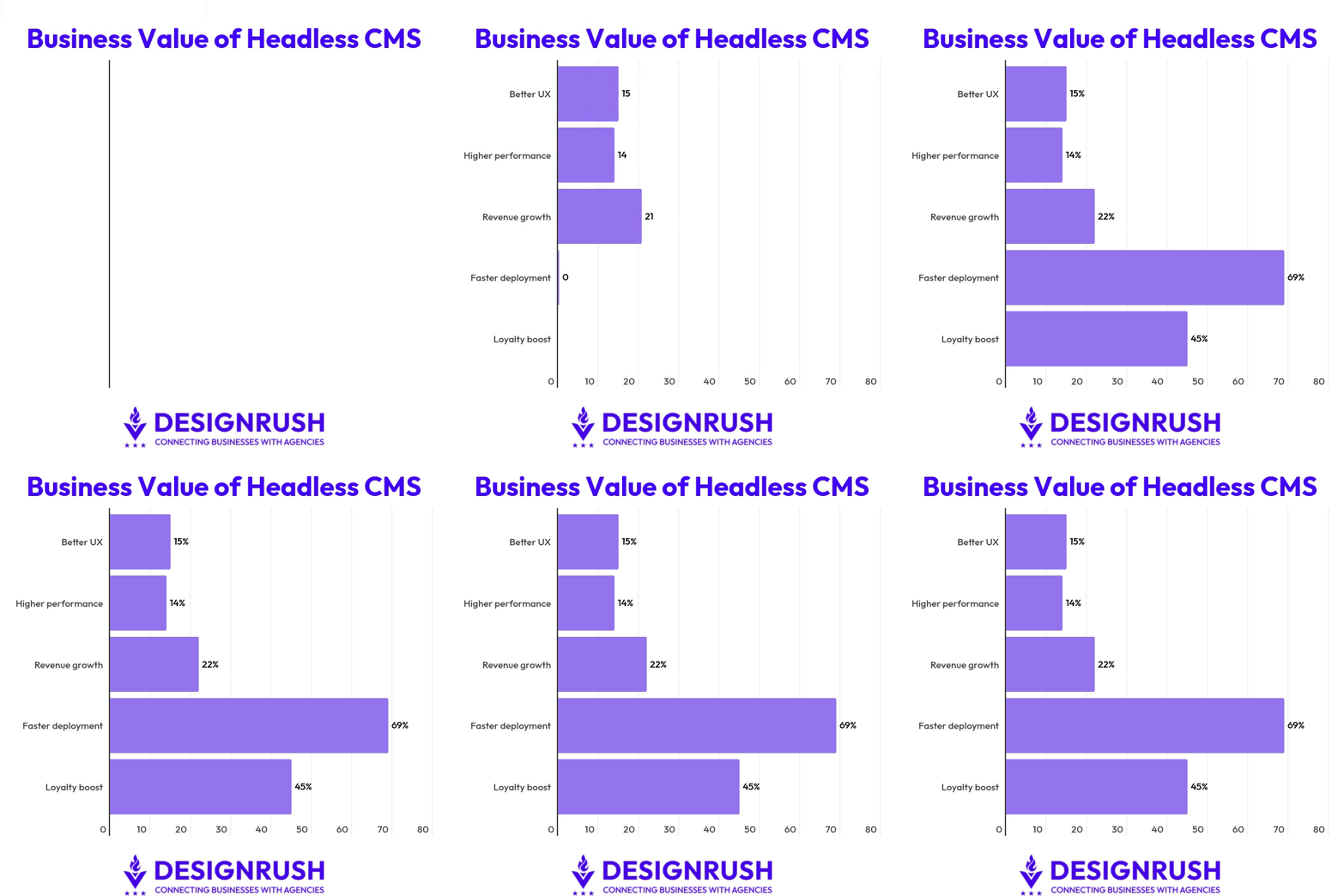
By decoupling the content platform from the front end, content teams can publish while developers ship front-end improvements on independent release cycles. In return, 69% of users report faster time-to-market and higher productivity.
Better user experiences
With 98% of mobile app users expecting consistent UX and a 123% bounce rate for slow-loading mobile sites, headless CMS companies can help you deliver unified yet personalized user experiences. They achieve this by reusing structured content across touchpoints while maintaining centralized governance.
In fact, businesses switching to headless CMS report having 15% better UX and 14% improved performance.
Stronger conversions and ROI
With more localized and personalized user experiences, businesses are reporting higher conversion rates and ROI with their headless CMS systems. According to Gitnux, headless commerce adopters experience:
- 22% year-one-year revenue growth vs. 12% for non-headless CMS stores
- 45% increase in customer retention after adopting a headless CMS
- 320% ROI in 18 months
Moreover, IDC research found that omnichannel buyers spend 15%-20% more than those purchasing on a single channel.
How much do their services cost?
The cost to build a digital solution with headless CMS architecture can range between $8,000 to over $500,000. The final billing will depend on scope, integrations, migration effort, number of channels, and build complexity.
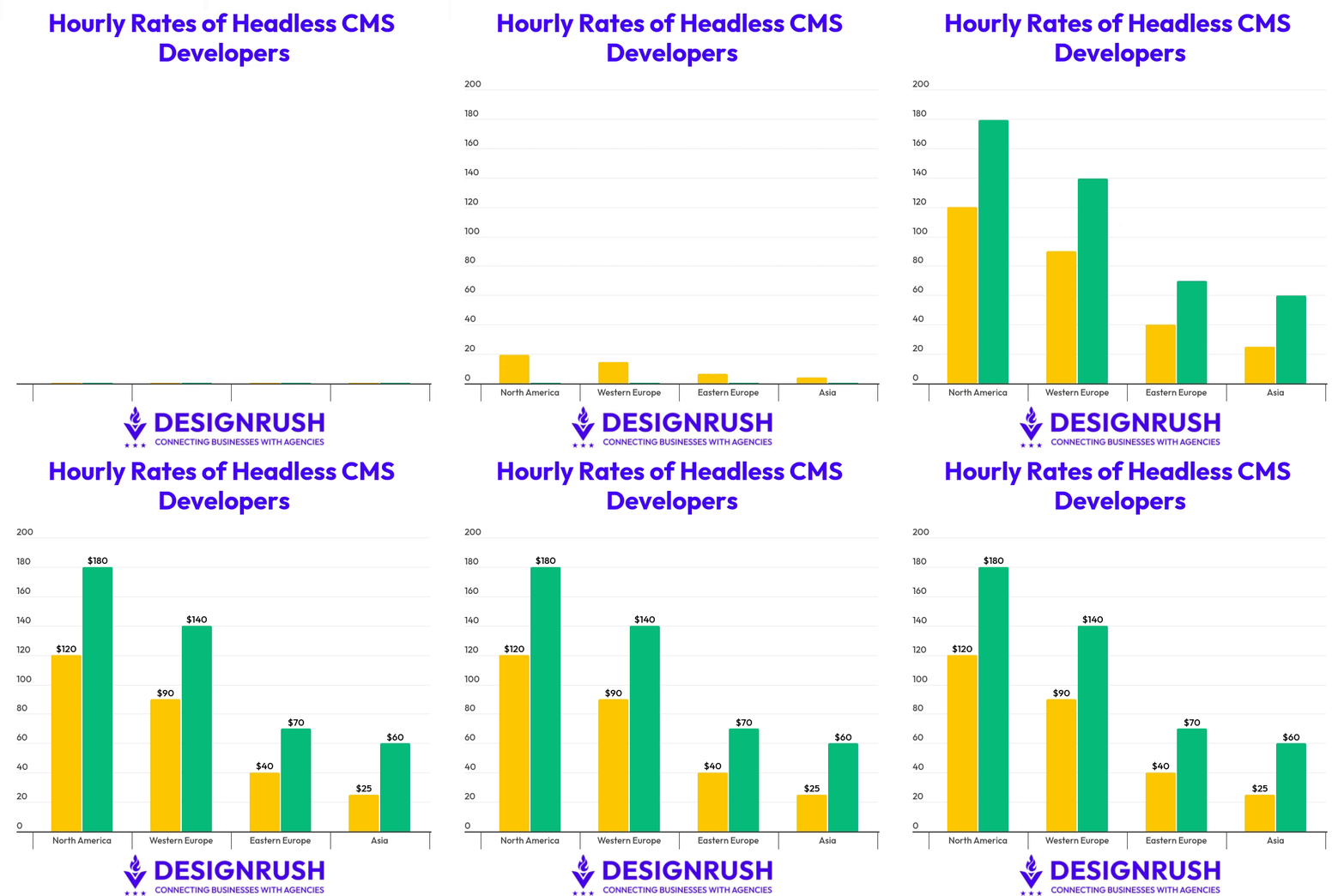
Here are the hourly rates of headless CMS developers per region:
- North America (United States and Canada): $120-$180 per hour
- Western Europe: $90-$140 per hour
- Eastern Europe: $40-$70 per hour
- Latin America: $35-$70 per hour
- Asia: $25-$60 per hour
Based on these hourly rates, here are the approximate costs of each headless CMS project:
- Content migration starts at $2,000-$10,000, depending on data volume and complexity.
- Small builds using a static site generator can start at $8,000-$25,000.
- Standard marketing and business sites that are dynamic, have basic analytics, and simple integration requirements can cost $20,000-$80,000.
- Mid-size platforms can cost $50,000-$150,000 for a scalable headless CMS, advanced integrations, and custom APIs.
- Web apps start at $40,000 for basic functions but go beyond $80,000-$150,000 for more complex requirements.
- Headless commerce stores start at $30,000-$60,000 for small businesses and startups, but can reach over $500,000 a global content delivery system.
- Enterprise builds often start at $100,000, depending on integration requirements, security and compliance controls, and data structures.
How long does it take to build a headless CMS project?
A headless CMS project can take 10-12 weeks for a small-scale project, like a multi-channel marketing website. However, more complex builds can take 12-20+ weeks, and enterprise replatforms can run 4-9 months.
The actual project timeline will depend on your project's complexity, core features and functions, integration and compliance requirements, and feedback loops. Here is an estimated timeline breakdown:
| Discovery and planning (2-4 weeks) | Stakeholder workshops to define business objectives, audiences, performance indicators, governance, and technical requirements. |
| Designing and prototyping (3-5 weeks) | Crafting the wireframes, architecture, design systems, and key components. |
| Content migration (2-10+ weeks, often in parallel with development) | Audit and migration plan, content cleanup, mapping, redirecting SEO, and validation. |
| Development and integration (4-8 weeks) | Content modeling, roles/permissions, environments, front-end build, and integrations (e.g., CRM and data analytics tools). |
| Testing and quality assurance (2-3 weeks) | Testing the website's performance, usability, accessibility, security, and reliability. |
| Launch (1-2 weeks) | Deploying the website to a live site and monitoring it for potential issues, so it can be resolved quickly. |
How do you choose the best headless CMS agency for your business?
Consider these steps when choosing a headless CMS company for your business:
- Define your project scope and goals, performance targets, key features, channels, and compliance and security requirements.
- Shortlist headless CMS companies with proven experience in your project type, technical stack, and industry by examining their case studies and looking for measurable business results.
- Analyze customer reviews and testimonies to assess communication, project management, on-time delivery, and how they handle changes and issues.
- Issue a request for proposal and compare them based on scope, assumptions, deliverables, team composition, and total cost of ownership.
- Interview the team working on your project to ask about process, quality assurance, compliance and security controls, ownership, and post-launch services.
- Choose a headless CMS agency that is strategic, transparent, responsive, and clearly understands your constraints, success metrics, and tech environment.
What questions should you ask before hiring?
Ask these questions before hiring a headless CMS agency to verify that it has the right skills and experience to execute your project:
Relevant Background
- What headless CMS platforms and architectures do you specialize in?
- Can you share past headless CMS projects similar to our scope, integration, and migration requirements? What were the results?
- What is your experience in our industry, and can you provide 3 client references we can contact?
Services and Processes
- Can you walk us through your end-to-end process, from discovery to launch and iteration?
- How do you ensure security, scalability, and accessibility in your design and development process?
- How do you handle quality across devices and channels?
- What are your post-launch services? Will you provide ongoing maintenance and iteration support?
Related to Your Project
- How will you design the content model, workflows, and permissions for our teams (marketing, legal, regional teams)?
- How will the headless CMS solution integrate with my existing technologies?
- Will you provide training to my employees so we can update and manage the platform independently?
- What do we own after launch (code repos, cloud accounts, documentation, CI/CD), and how do handoffs work?
Sources
DesignRush sustains a directory of over 40,000 agencies categorized by service category, location, expertise, and reviews. We build our database in two ways:
- Our dedicated team of agency experts actively searches the web for top-performing companies. We then pull information from their websites, online presence, and client testimonials to verify their status and qualifications prior to listing.
- The agencies listed get notified of their profiles on the website and they can choose to claim it or not, which suggests their availability for more collaborations.
Agencies can also reach out to DesignRush and must go through the verification process prior to being listed.

Why companies trust DesignRush
Every agency is independently vetted before it can be listed or ranked
 4.8
4.8 4.8
4.8Some agencies pay for sponsored placement, clearly labeled and held to the same vetting standards.
Frequently Asked Questions About Headless CMS Companies
What are the typical services provided by headless CMS developers?
Headless CMS companies plan, implement, and operate a headless content management system (CMS), so teams can efficiently publish content across websites, apps, and other digital channels. Typical headless CMS development services include:
- Headless CMS consulting and strategy: Advising businesses on the best headless CMS vendor and architecture or optimizing current platforms to meet their goals.
- Platform migration: Moving content and assets from legacy systems while preserving data integrity, security, and SEO with minimal downtime.
- Custom headless CMS development: Building the content models, automations, and user roles as well as the front and back end to ensure easy maintainability and reliable performance.
- API and plugin development: Integrating the headless CMS platform with third-party systems, such as payment gateways, CRMs, ERPs, and marketing automation tools.
- Ongoing maintenance and support: Continuously monitoring the platform's performance, resolving issues, installing security patches and updates, and managing infrastructure.
What is the difference between headless CMS and traditional CMS?
A headless CMS separates the content management backend from the frontend experiences. As such, content is delivered via APIs to any channel (websites, mobile apps, and IoT devices), so teams can reuse the same content across multiple experiences.
On the other hand, a traditional CMS has a unified back- and front-end (monolithic), meaning that there is a single interface that often comes in the form of a website. It can still power multiple channels, but doing so requires extensive tooling and customization.
Here are more details on their differences:
| Headless CMS platforms | Traditional CMS platforms | |
| Advantages |
|
|
| Disadvantages |
|
|
What are the most common headless CMS platforms?
Based on our research, here are some of the most common headless CMS platforms that developers use:
- WordPress: While it is a traditional CMS, it can be converted into a headless platform when paired with a modern JavaScript framework. Use this platform if you already have an existing WordPress-based site and want to migrate to a headless one.
- Strapi: An open-source, self-hosted headless CMS, enabling teams to have higher control over their data and infrastructure while being able to customize plugins, APIs, and workflows. Choose Strapi if you want to keep your data within your servers, and data sovereignty is non-negotiable.
- Contentful: A digital experience platform (DXP) with an API-first architecture and an extensive library of pre-built integrations. This platform is common for enterprises with complex needs and legacy tools.
- Sanity: Known for its collaboration features and flexible content management, Sanity is ideal for businesses that prioritize agility through controlled yet automated workflows.
While these are the most common platforms, reputable headless CMS companies will recommend a tech stack that best matches your goals, technical requirements, existing systems, operating models, team capabilities, and target audiences.
What companies benefit the most from headless CMS?
Many organizations benefit the most from a headless CMS when they need to publish content to multiple digital channels, scale across regions, or build custom experiences without being constrained by a single website template system. Common scenarios include:
- eCommerce and retail with multiple customer touchpoints (web, app, in-store screens) and heavy integrations (PIM, inventory, CRM, marketing automation), where teams want faster experimentation and performance.
- Brands running omnichannel campaigns (web + mobile + social + email + in-product) that need to reuse content consistently across channels.
- Product-led or platform businesses building multiple front ends (customer portals, apps, partner dashboards) that require developer flexibility and frequent releases.
- Global enterprises managing multiple markets, languages, and brands—where content governance, localization workflows, and reusable components are essential.
When should a company NOT use headless CMS frameworks?
A headless CMS may not be the best fit if:
- You need to launch quickly on a tight budget, and a template-based website will meet your goals.
- Your site is simple (e.g., a landing page or small brochure site), and you do not need multiple channels, complex integrations, or frequent changes.
- You do not have ongoing development capacity (in-house or via a retainer) to maintain the front end, integrations, and updates.
- Your team depends on visual page-building and WYSIWYG (what you see is what you get) editing and you are not prepared to invest in a headless setup that delivers an equivalent editorial experience.
Latest Trends Related to Headless CMS
-preview-webp.webp)