
Key Points
- The Texans unveiled their name, colors, and bull-head logo at a September 2000 rally, almost two years before the team played its first game in 2002.
- The 2024 refresh, led by Carmichael Lynch, kept the primary bull mark almost intact and added a blackletter "H" secondary logo, a custom type system, and four new uniforms.
- The palette keeps its Texas-flag roots in Deep Steel Blue (#021018) and Battle Red, which the 2024 refresh brightened to #EB0028, plus a new color, H-Town Blue.
- According to the agency's awards case study, cross-channel following rose 5.43% after the May 2024 launch, with Instagram up 8.17% and TikTok up 31% through the end of the year.
- Independent 2025 valuations place the franchise near $7 billion, up sharply from earlier estimates.
The Houston Texans logo went public two years before the team played a single down, and more than two decades later that same bull still fronts the brand. That patience is the whole story here. When Carmichael Lynch delivered the franchise's first-ever rebrand in 2024, it left the bull almost untouched and spent its energy on a new secondary mark, a custom type system, and four new uniforms. The bet paid off fast: social following jumped after launch, the team's quarterback led the league in jersey sales, and the franchise now carries a brand valued near $7 billion. The sections below break down what changed in the Houston Texans logo, what stayed, and why the refresh works.
Houston Texans Logo History
2000 To 2024: The Foundational Bull Logo
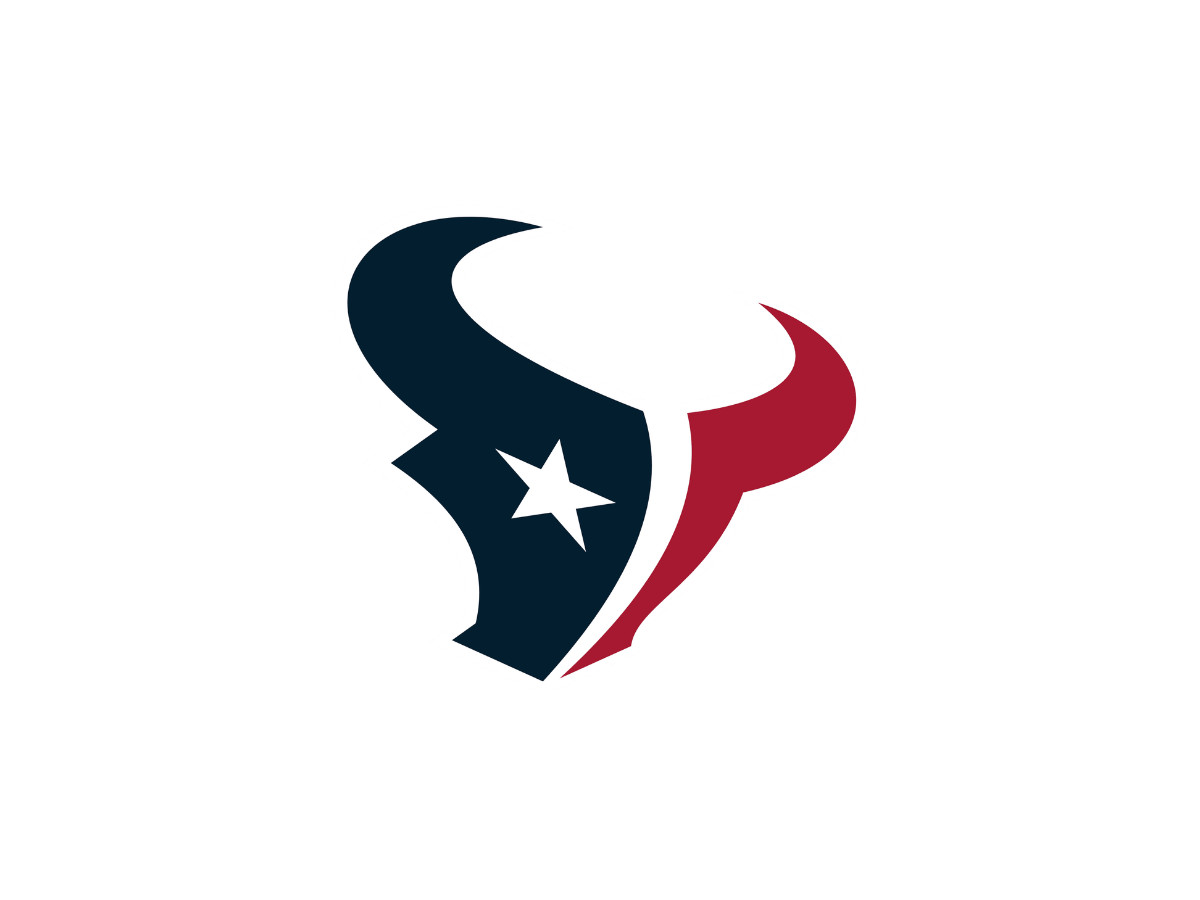
Before the team ever took the field, it settled on an identity. On September 6, 2000, owner Bob McNair unveiled the Texans name, colors, and bull-head logo at a downtown Houston rally alongside NFL commissioner Paul Tagliabue, a date recorded by the Pro Football Hall of Fame. The franchise had been awarded in October 1999, and the team did not play its first game until 2002. So while the logo is often called a 2002 mark, the identity was public two years earlier. That gap gave the design an unusually long runway before its on-field debut.
The mark itself is a bull's head split into Deep Steel Blue on the left and Battle Red on the right, with a white lone star for the eye. The five points of the star are assigned the values of pride, courage, strength, tradition, and independence. The colors come straight from the state flag, tying the team to Texas from the first impression.
Design insight: a stable core mark compounds in value over time. Color research from Labrecque and Milne in the Journal of the Academy of Marketing Science (Springer) shows that consistent color cues shape how familiar and likable a brand feels, which is part of why the Texans left the bull's palette largely untouched in 2024.
2000 To 2024: The Texas Map Alternate
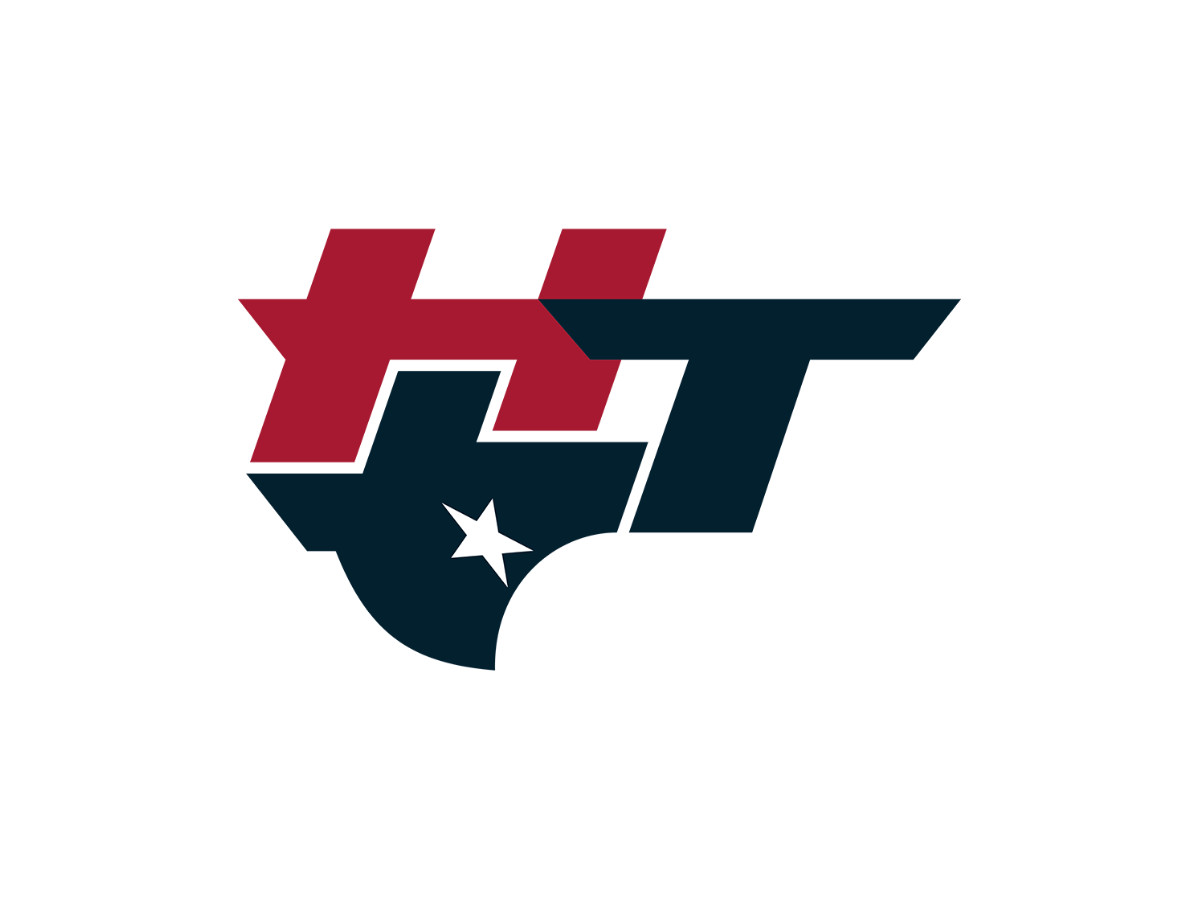
The original alternate logo placed the team's "HT" initials inside the outline of Texas. It used the same crimson and navy as the primary mark, with a white star to keep the link to the state. The alternate gave the Texans a flexible option for practice gear and secondary merchandise without touching the core bull. It also strengthened the regional read of the brand, a common tactic for teams that want a merchandise range wider than a single crest. For more on this idea, see our overview of brand recognition.
2024 To Present: The Blackletter "H" Mark
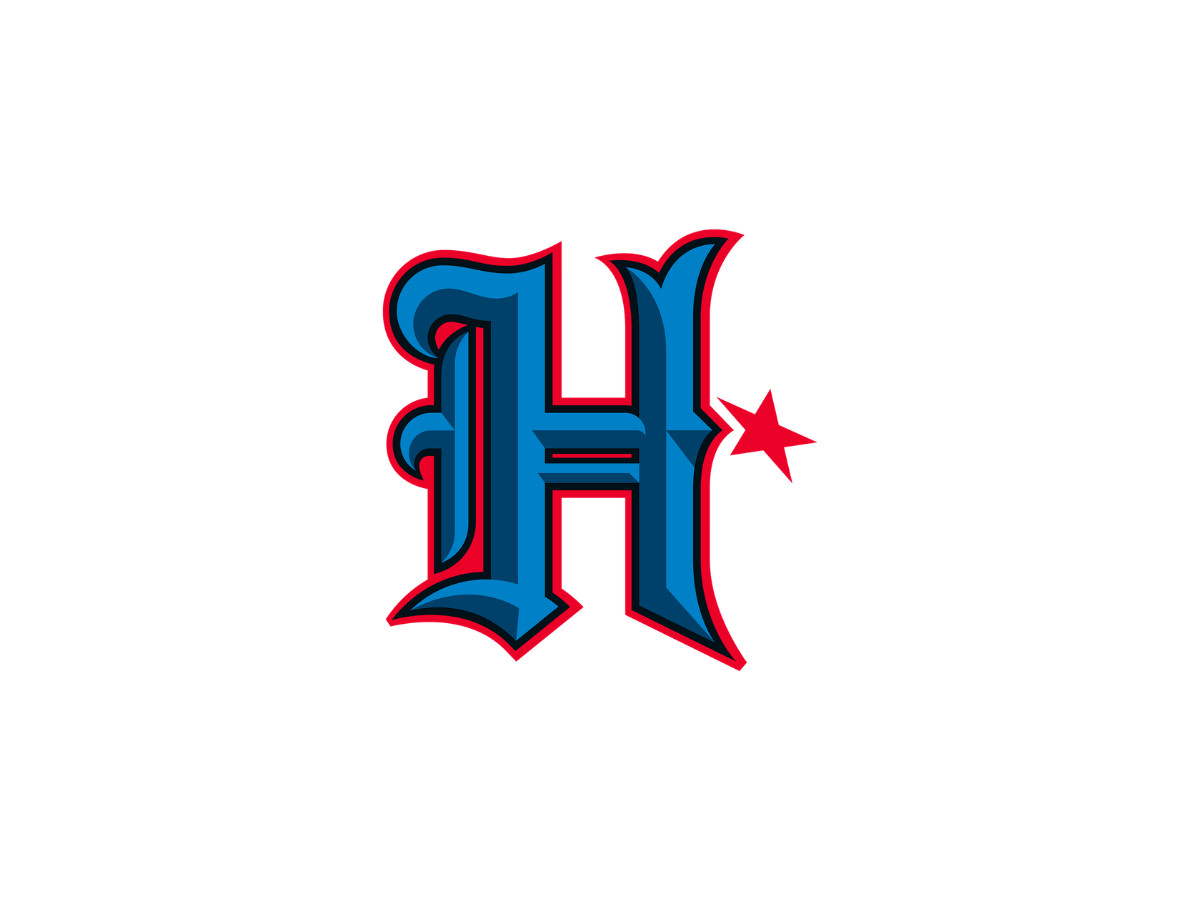
The 2024 program introduced the team's new secondary logo, an Olde English "H" rendered in H-Town Blue with dark blue and red trim and a red star to its right. The letterform traces back to the blackletter type of the Houston Informer, which gives it a historic weight that a plain block "H" would miss. As a secondary mark, it widens the team's merchandise and marketing options without competing with the bull. It also carries a civic message, reading as shorthand for Houston itself rather than for the franchise alone. That local specificity is the point: the mark belongs to the city first.
2024 To Present: The Rebrand, The Agency, And The Results
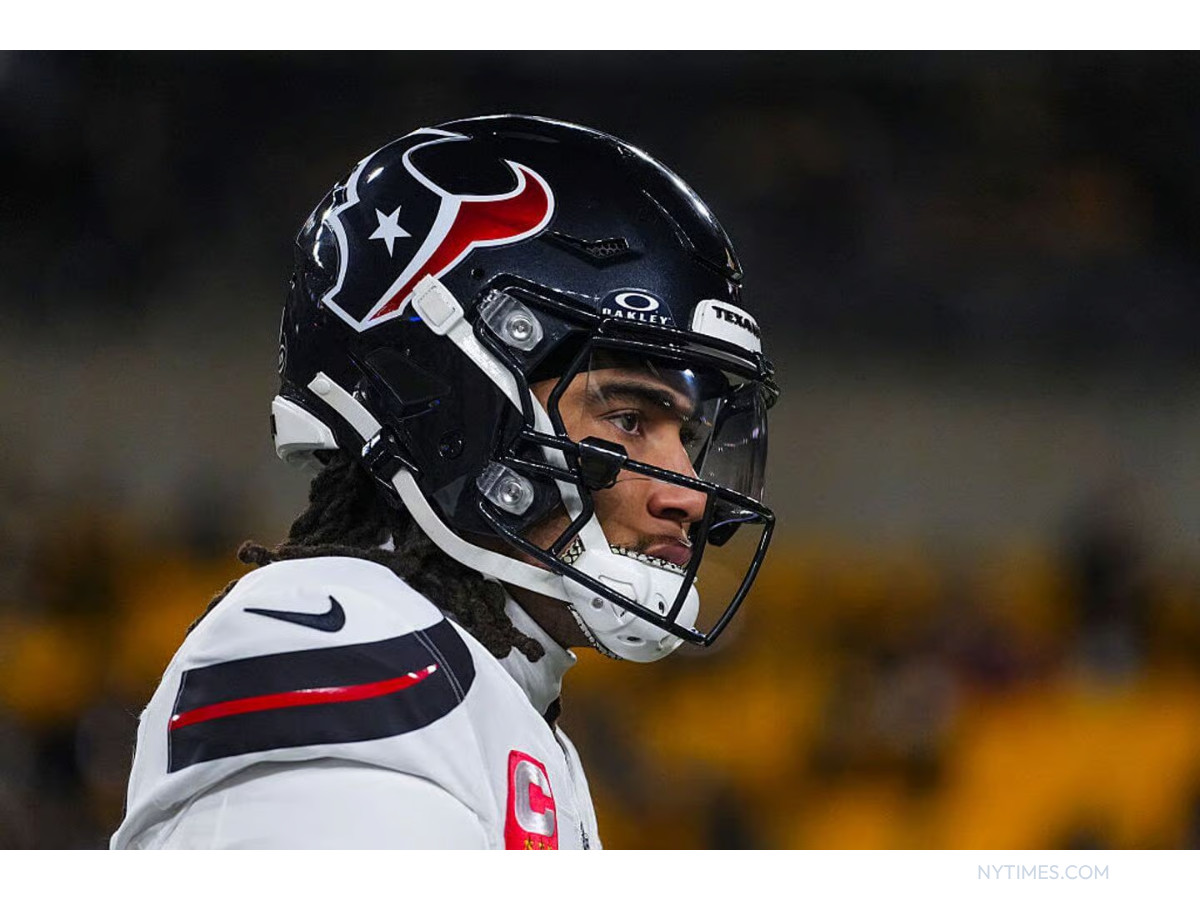
The refresh was Carmichael Lynch's first major work for the team. The agency's stated aim, documented in the project's Clio Awards entry, was to move the Texans away from cowboy-and-tumbleweed cliches and toward the real culture of Houston, drawing on the city's hip-hop history, car culture, street signage, ranch land, and even NASA. The system then ran through in-stadium films and new player photography so the brand felt consistent from broadcast to merchandise.
The work earned industry recognition, including a bronze at the 2025 Clio Awards and honors at The One Club for Creativity's ADC Annual Awards. It also produced measurable brand lift. According to the agency's awards case study, the team saw a 5.43% increase in cross-channel following after the May 2024 launch, led by an 8.17% rise on Instagram and a 31% jump on TikTok through the end of 2024. These are the team's own reported figures rather than independent audits, and the pattern fits: the most visual channels grew the most, which is what a uniform-and-identity reveal tends to drive.
The brand's commercial footing is strong as well. Independent 2025 valuations placed the franchise near $7 billion, with Sportico estimating $7.17 billion (Pro Football Network) and Forbes ranking it in a comparable range (Forbes). That is well above the roughly $6 billion figure that circulated a year earlier, and it tracks a league-wide rise in team values.
The Modern Houston Texans Logo: What The 2024 Refresh Actually Changed
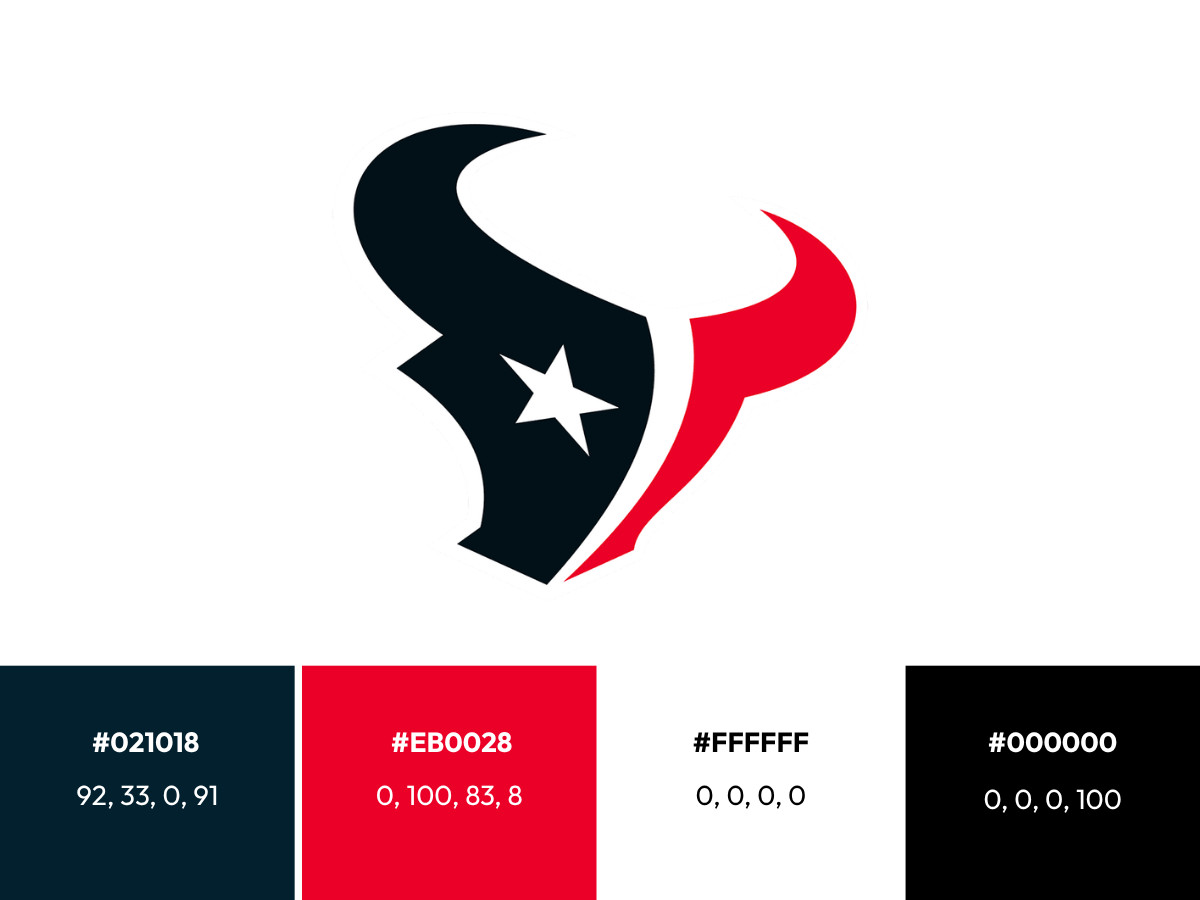
The headline change most fans noticed was not the bull. It was the arrival of a second primary mark and a new type system built around it. The bull-head silhouette that has represented the team since 2000 came through the refresh with its geometry, its five-pointed star eye, and its outward horn curve preserved. The only adjustment to the primary mark was a small color refinement: the shades of Deep Steel Blue and Battle Red were tuned rather than replaced, a point confirmed by design trackers such as Sports Logo History. Reporting that the bull turned black describes the Color Rush uniform, not the logo itself.
The substance of the rebrand sat elsewhere. Carmichael Lynch built a full identity system: a new blackletter "H" secondary mark, four custom type weights, and a mixed-type logotype, all deployed across social channels, in-stadium signage, and the uniforms. One of the agency's creative directors described the goal as "a visual language as diverse as the city itself," a brief documented in the project's Communication Arts entry.
If you want to understand what makes a good logo, the Texans project is a useful case: it shows a team expanding its identity system while leaving the recognizable core mark alone. Find a logo design company.
Color Specifications
The Texans palette comes from the Texas flag:
- Deep Steel Blue: HEX #021018, CMYK (92, 33, 0, 91)
- Battle Red: HEX #EB0028, CMYK (0, 100, 83, 8)
- Liberty White: HEX #FFFFFF, CMYK (0, 0, 0, 0)
- Black: HEX #000000, CMYK (0, 0, 0, 100)
The 2024 refresh added one color to the system for the first time in team history: H-Town Blue, a light blue that nods to the Houston Oilers era. It appears on the Color Rush uniform and the alternate "H" helmet rather than on the primary bull mark. Black (#000000) anchors the Color Rush jersey and helmet.
The palette choice reads clearly against academic color research. In their study for the Journal of the Academy of Marketing Science, Labrecque and Milne map red to excitement and blue to trust and competence, and they show that saturation and value can amplify those associations (Springer). A dark blue and a strong red give the Texans an aggressive, dependable pairing, which is close to what a football brand wants to signal.
Typography
The type system is where the redesign did its most original work. Carmichael Lynch pulled letterforms from around Houston: the blue-tile mosaic street-name signs set into local curbs, the lettering of the city's "Be Someone" bridge, the sleeve of Screwed Up Records, and a blackletter face revived from the historic Houston Informer newspaper. That blackletter reference informed the new "H," and the wider work produced four custom type weights plus the mixed-type logotype now used across the brand, as recorded in the project's One Club ADC entry.
The result is a wordmark language with sharp, blocky construction and consistent spacing, adaptable from a helmet bumper to a stadium video board. For teams weighing a similar move, the lesson is that custom type can carry a rebrand even when the primary logo barely moves. See our guide to building a brand visual identity for the underlying principles.
The Uniform Overhaul
The refresh reached the field through four new uniforms, developed with more than 10,000 fan surveys and 30 focus groups, and reported in detail by NFL.com:
- Home: an updated Deep Steel Blue set that matches the original 2000 tone, with the traditional bull at each sleeve cap and a Deep Steel Blue helmet in blue-on-blue metallic flake paint. The "H" mark sits on the back of the helmet.
- Away: a Liberty White set with a side stripe that reads as a bullhorn from the front, echoing the horns in the primary logo.
- Alternate: a Battle Red set paired with a candy-paint red helmet, a chrome facemask, and a bullhorn-inspired helmet application.
- Color Rush: the boldest look, which introduces H-Town Blue and a blue "H" outlined in red on a black helmet.
Two of these choices are firsts for the league. The Texans became the first NFL team to place a new logo on an alternate helmet and to run a two-logo system across all helmets. Owner Cal McNair framed the reveal as "inspired by and for our fans," a line captured in Click2Houston's coverage.
The uniforms matter to the numbers in the history section above. The reveal was a visual event tailor-made for Instagram and TikTok, and quarterback C.J. Stroud led the league in jersey sales that season, an outcome the NFL Players Association tied directly to the new uniforms.
How The Texans Approach Compares With Other Recent NFL Rebrands
The Texans project stands out for what it declined to do. Recent league rebrands have often reached further and drawn more heat. The Los Angeles Rams modernized their identity in 2020 with a new "LA" mark and a horn curve on the "A," and the reaction from fans was quick and rough, as documented by Sports History Group. Washington ran a multi-year overhaul, retiring its former name and logo in 2020, adopting the Commanders identity in 2022, and refreshing the uniforms again for 2026, per SportsLogos.Net. Atlanta and Tennessee joined the 2026 uniform cycle with their own updates.
Against that backdrop, the Texans took a lower-risk path: keep the recognizable bull, add a culturally specific secondary mark, and put most of the creative energy into typography and uniforms. The team got the visibility and merchandise range of a rebrand without asking fans to accept a new primary logo. For clubs and brands weighing the same trade-off, it is a clean example of expansion over replacement. Browse more sports and leisure logos, or compare with our histories of the Detroit Pistons and the Brazilian Football Confederation.
The Takeaway
The Texans logo has held its shape for more than two decades because the team treats the bull as fixed and builds around it. The 2024 refresh added a second mark, a custom type system, and four uniforms while leaving the core silhouette alone, and the measurable lift came from the parts that were new rather than from changing the parts fans already knew.
For teams and established brands, the practical read is that a rebrand does not have to mean a new logo. A disciplined identity system, a culturally grounded secondary mark, and a strong color specification can refresh a brand while protecting the equity in its core.

Looking to apply the same approach to your growing market? We can connect you with the right creative partners.
Browse our Agency Directory to find the most capable agency that can help elevate your brand:
And if you’re curious for more inspiration, don’t miss our other features on standout logo designs in sports.