
Few badges in world football are as recognizable as Liverpool's, and few carry as much confusion about what they actually depict. The bird at the center has been called an eagle and a cormorant across more than 800 years of use, and the club today runs two different crests at once: one for the playing kit and one for everything else.
Liverpool Football Club, founded in 1892, built its identity around that bird, the Liver Bird, taken from the coat of arms of the city the club represents. The badge has traveled from a near-copy of the civic coat of arms to a streamlined mark engineered for kits, screens, and global merchandise, and each change tells you something about how heritage brands adapt without losing themselves.
This is the full account of how the Liverpool crest evolved, what its elements mean, and why the club protects its history with one badge while reaching for modern flexibility with another. For wider context, DesignRush tracks the same tension across its best logo designs collection.
Which Liverpool Badge Is Official Today
Liverpool runs two crests at once, each with a defined role, and the split explains why the club appears to have more than one "current" logo.
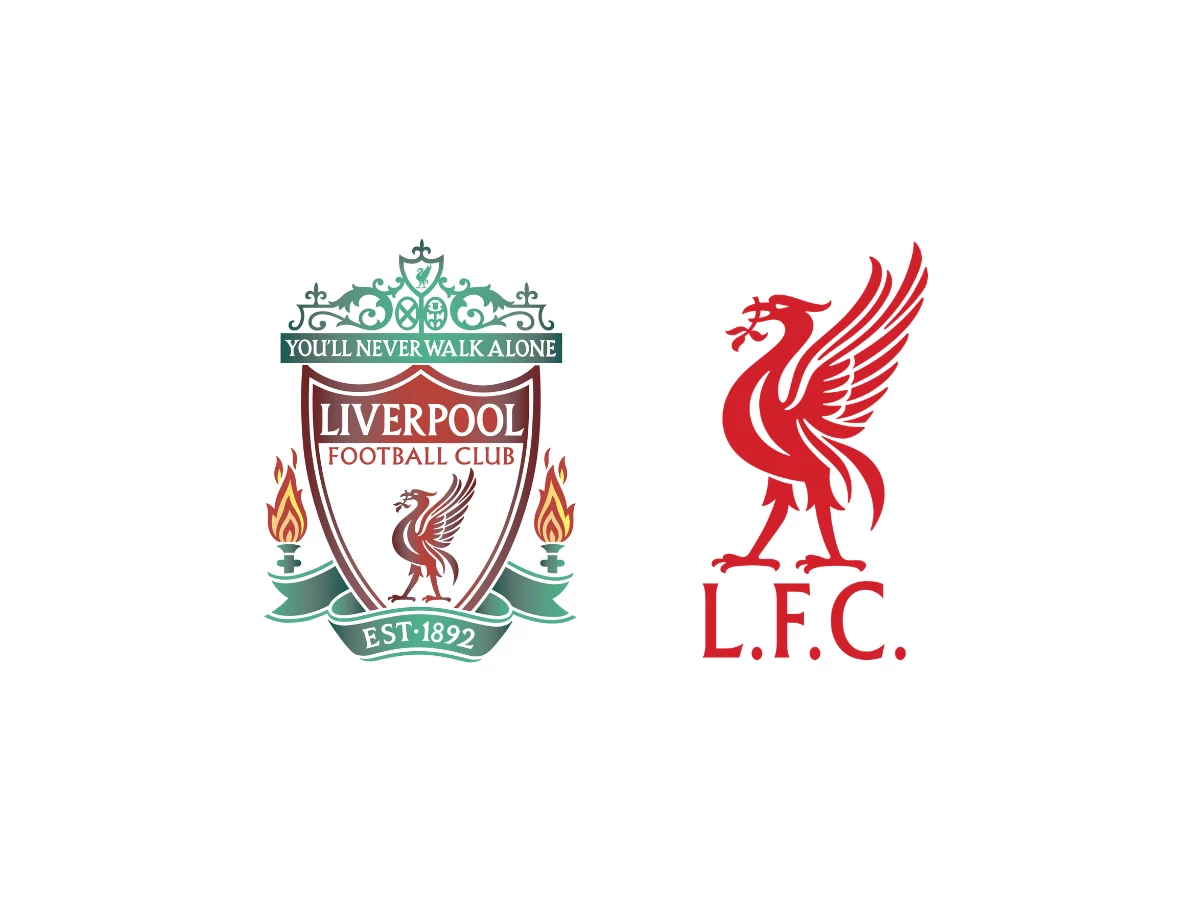
The full crest, with the Liver Bird, Shankly Gates, anthem, and eternal flames, is the primary club crest. It appears on official merchandise and across Anfield branding. The stripped-down mark, a single Liver Bird above "L.F.C.," is the kit crest. Liverpool moved this mark onto the playing shirts from the 2012-13 season, partly for trademark reasons, and it has stayed there since, including across the club's kit deals with New Balance, Nike, and Adidas. The club's own crest history confirms this division: one badge for the kit, one for everything else.
Liverpool Logo History
The Liverpool logo history features multiple redesigns, each tied to a specific era of the club. Below are the major iterations of the Liverpool crest in chronological order.
1892: The Original Liverpool Coat of Arms
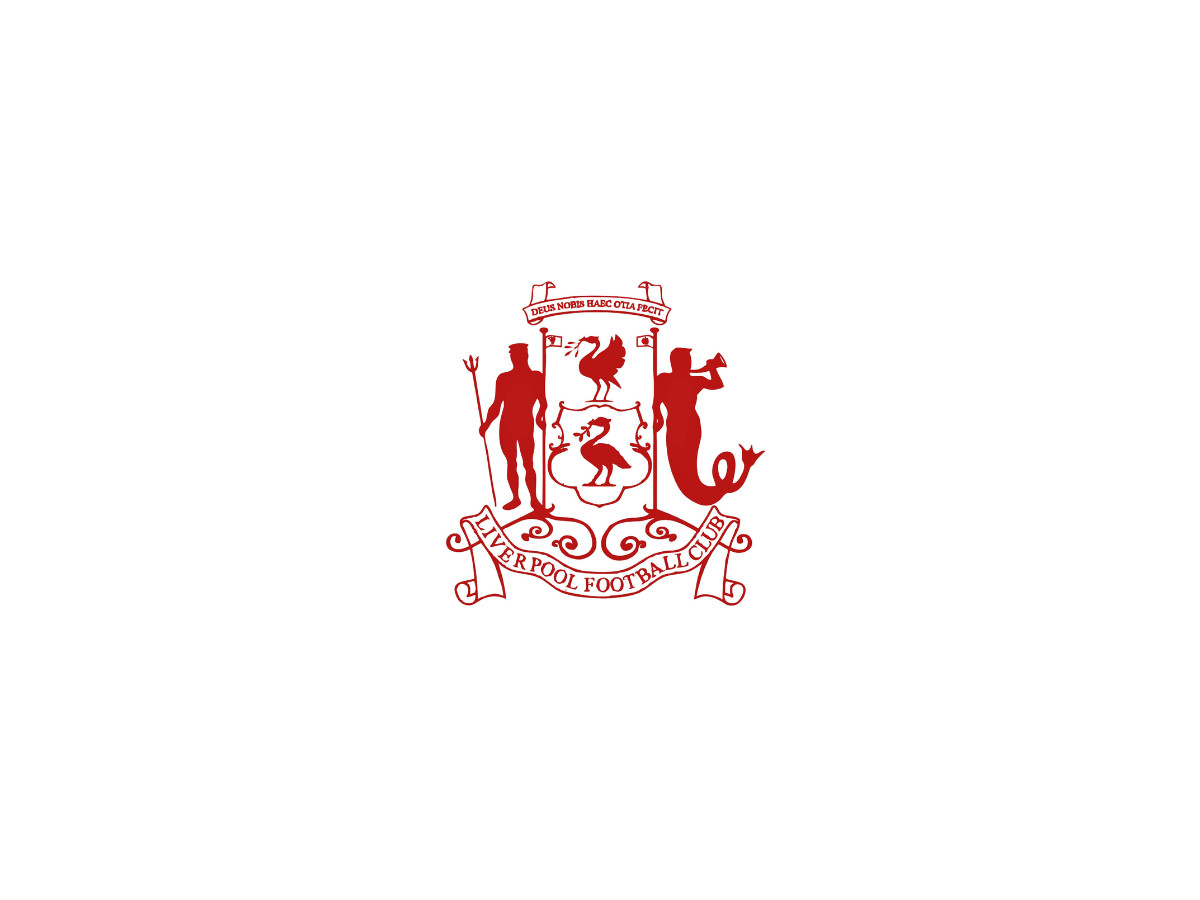
Liverpool FC's first logo took the Liverpool city coat of arms directly, a detailed heraldic design. It set the Liver Bird on a central shield, flanked by Neptune and a Triton blowing a conch, a reference to Liverpool's standing as a port. A ribbon at the base carried the club's name, and the top bore the Latin motto "Deus Nobis Haec Otia Fecit," commonly translated as "God hath granted us this ease."
The design tied the club firmly to the city. Its detail made it impractical for kits and merchandise, however, and the club's request to keep using the civic arms was declined, which forced later change.
Late 1940s: A More Simplified Badge
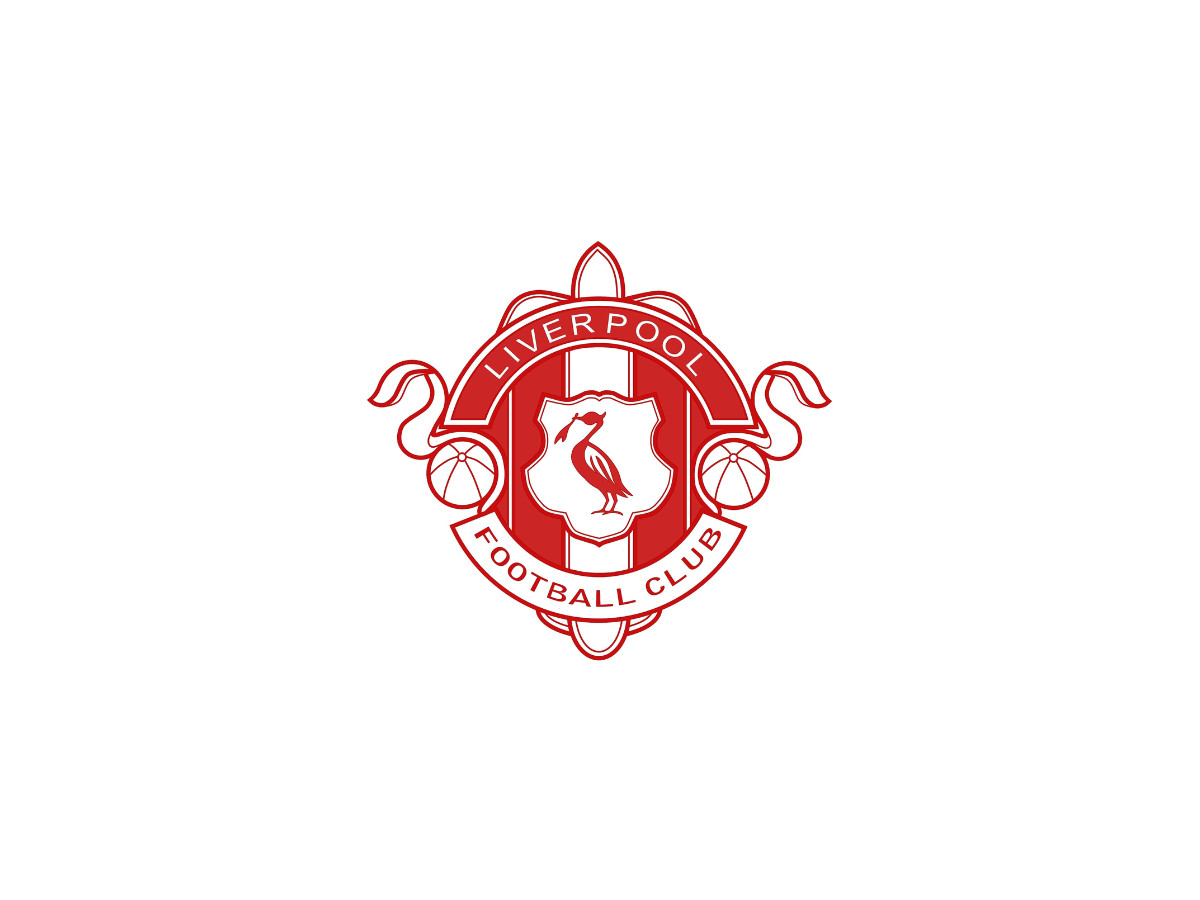
By the late 1940s, Liverpool refined the crest into something sharper. The club dropped the mythological figures and left the Liver Bird as the focal point inside a streamlined shield.
This version appeared on merchandise, matchday programs, and official documents. It read far better as a football mark than the ornate coat of arms it replaced.
1950: The First Liver Bird on a Kit
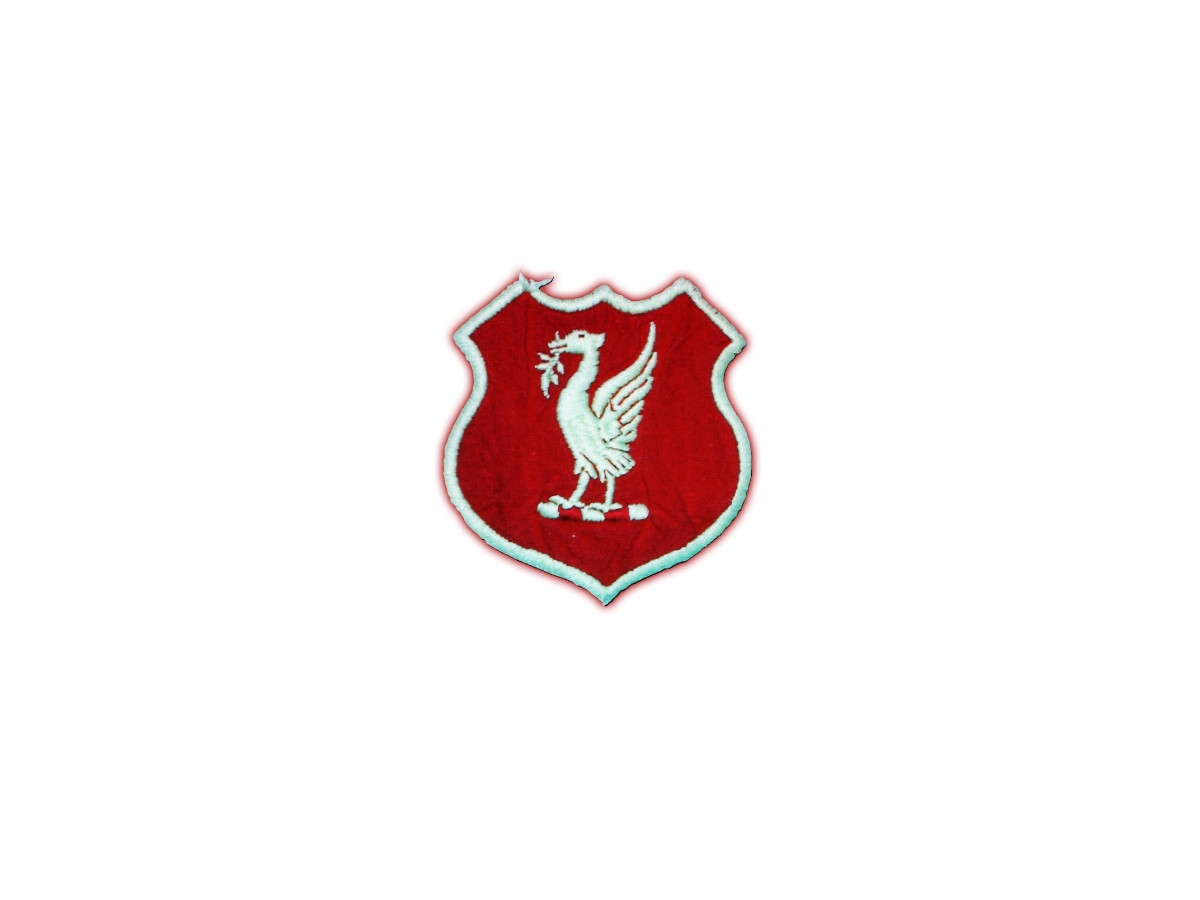
The 1950 crest was the first ever worn on a Liverpool matchday kit, a lone Liver Bird set inside a shield. It made its debut in the 1950 FA Cup final.
The bird stood atop a maritime scroll, a continued reference to the city's seafaring roots, with its wings raised in an angular, upward stance. The red-and-white scheme carried over from earlier versions to keep the identity consistent.
1955: Addition of Club Initials
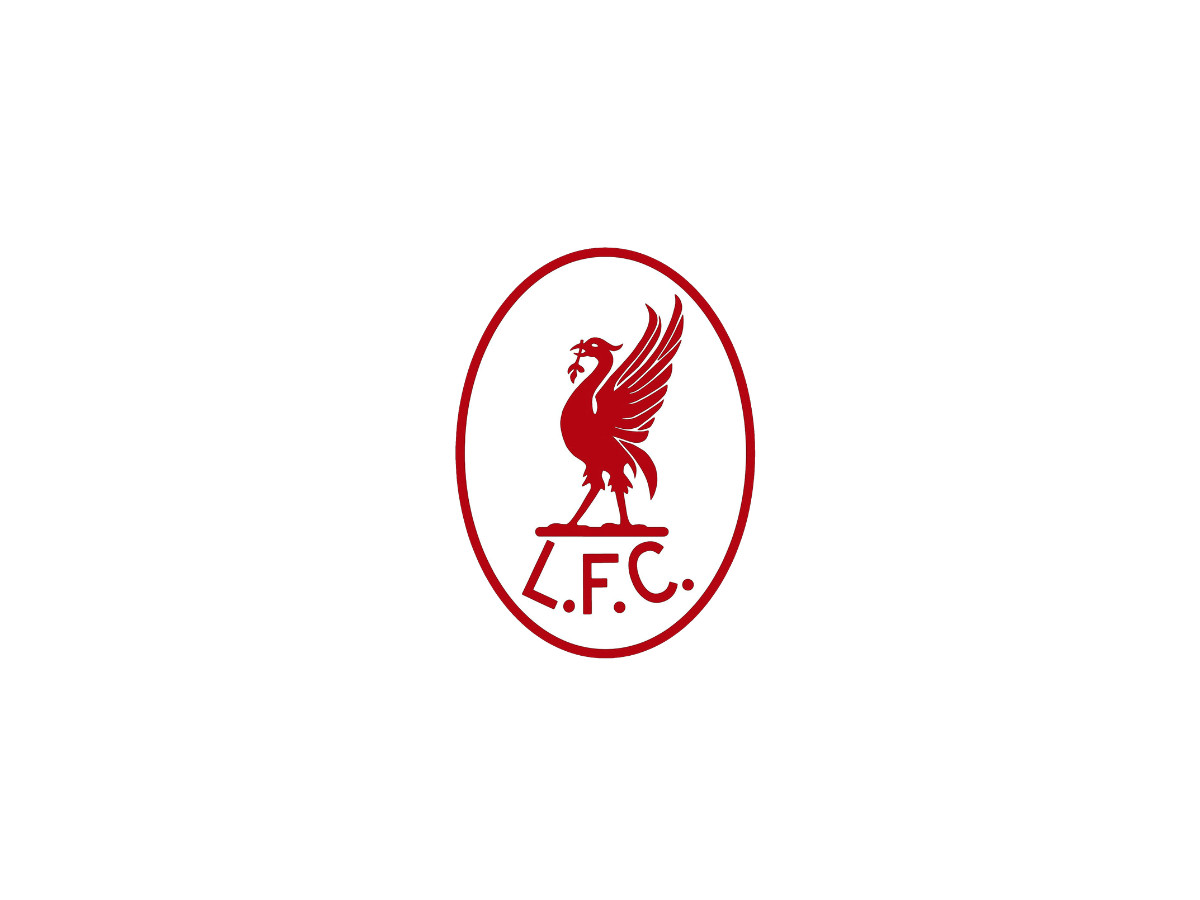
In 1955, the club added "L.F.C." beneath the Liver Bird, the first time the team's name appeared on a shirt badge, framed within a white oval bordered in red. The bird itself grew more stylized.
This version improved recognition while keeping the design minimal. It tied the badge to Liverpool FC rather than to the city alone.
1968–1987: Streamlined Design
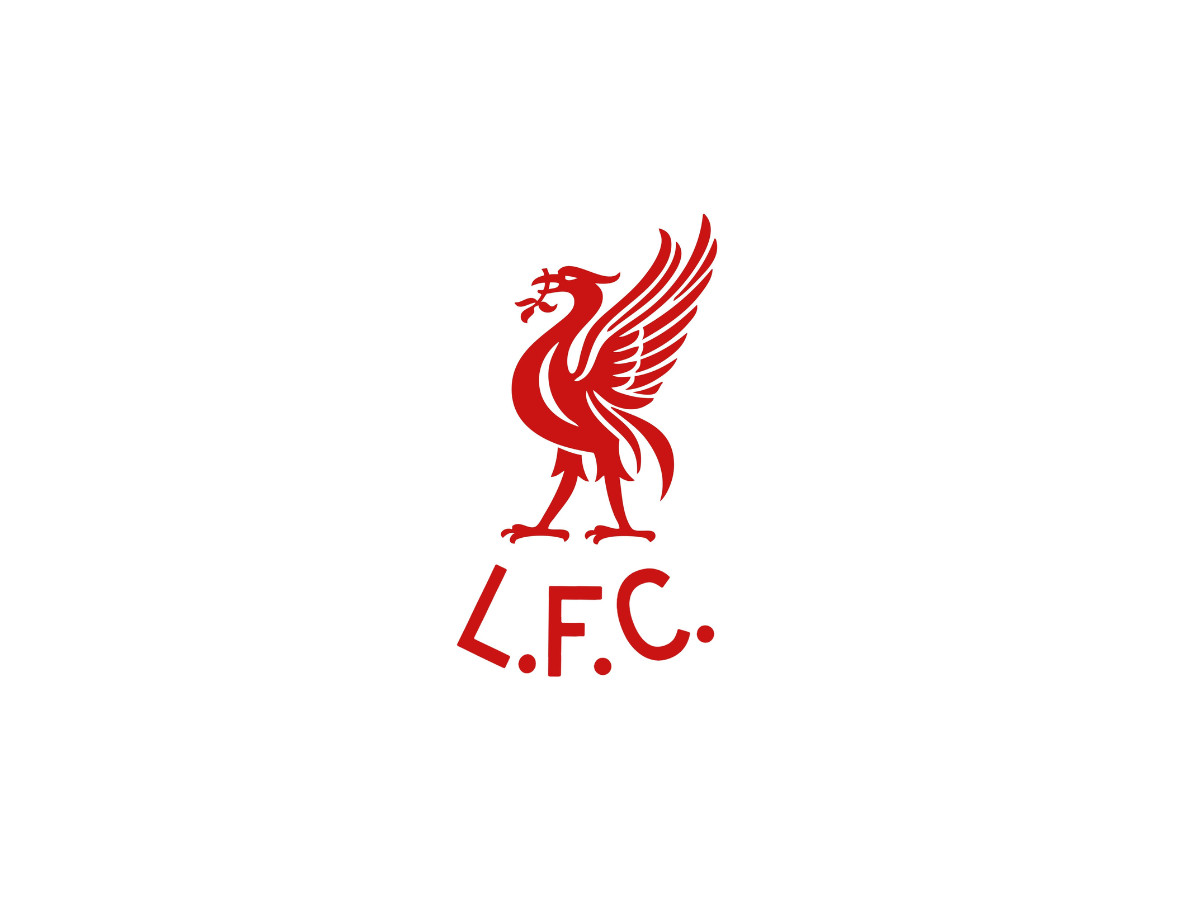
This logo introduced a sharper, more angular Liver Bird and dropped the oval frame in favor of the bird and "L.F.C." alone. The wings gained pronounced feather detail, the legs read as firmly planted, and the bird kept its seaweed.
Beneath it, the initials sat in a wide, slanted font that matched the club's growing stature. This badge became closely associated with Liverpool's most dominant period in English and European football, and it later served as the template for the kit crest the club uses now.
Explore 35 of the most iconic logos and their branding impact.
1987–1992: Reintroduction of the Shield
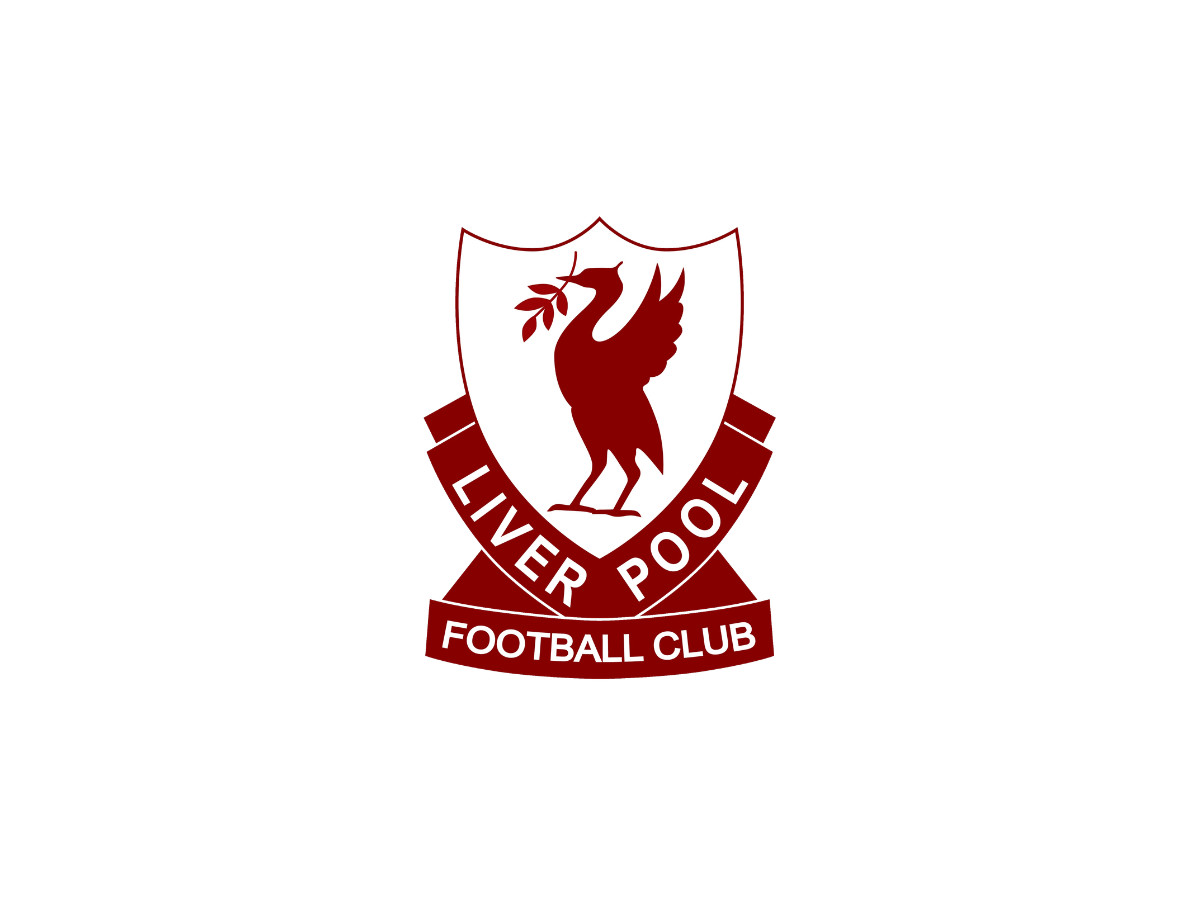
From the 1987-88 season, the crest returned to a shield shape, a form the club has kept ever since. The full name "Liverpool Football Club" appeared across a ribbon at the base, a shift away from the initials-only approach.
The typography was bold and capitalized. The shield gave the badge a heavier, more formal presence that matched the club's on-field success.
1992–1993: Centenary Crest with "You'll Never Walk Alone"
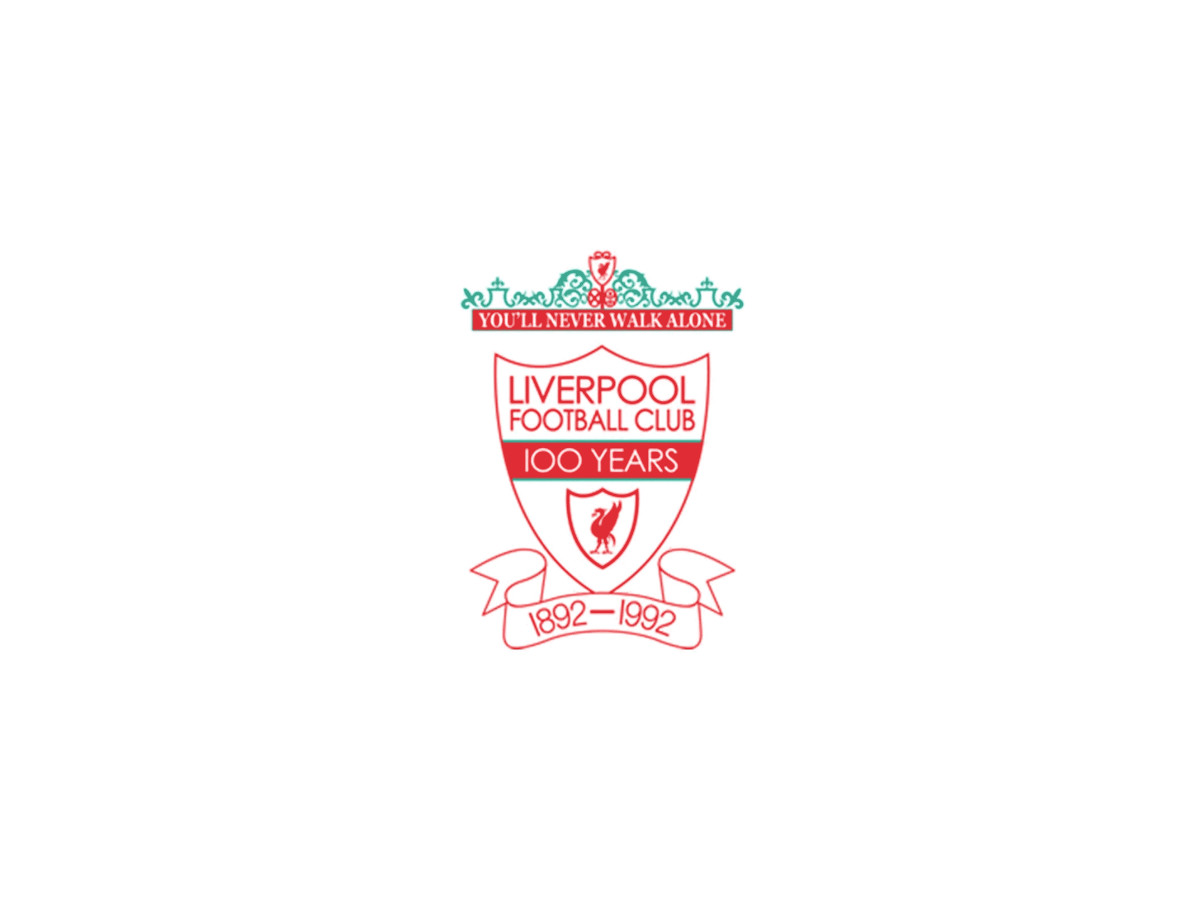
To mark its 100th anniversary, Liverpool released a commemorative crest for the 1992-93 season. It placed the Shankly Gates at the top, with the anthem "You'll Never Walk Alone" inscribed across the arch, the first time both appeared together on the badge.
Scroll banners marked the centenary years, and green entered the palette as an accent for the first time, in the Shankly Gates detailing. This pairing of gates and anthem has remained on the crest since.
Significance of the Shankly Gates
The Shankly Gates form a ceremonial entrance to Anfield and act as a memorial to Bill Shankly, the manager who rebuilt the club through the 1960s and early 1970s. The gates carry the anthem across their arch, which is how the phrase entered the crest.
1993–1999: Simplified Shield with Eternal Flames
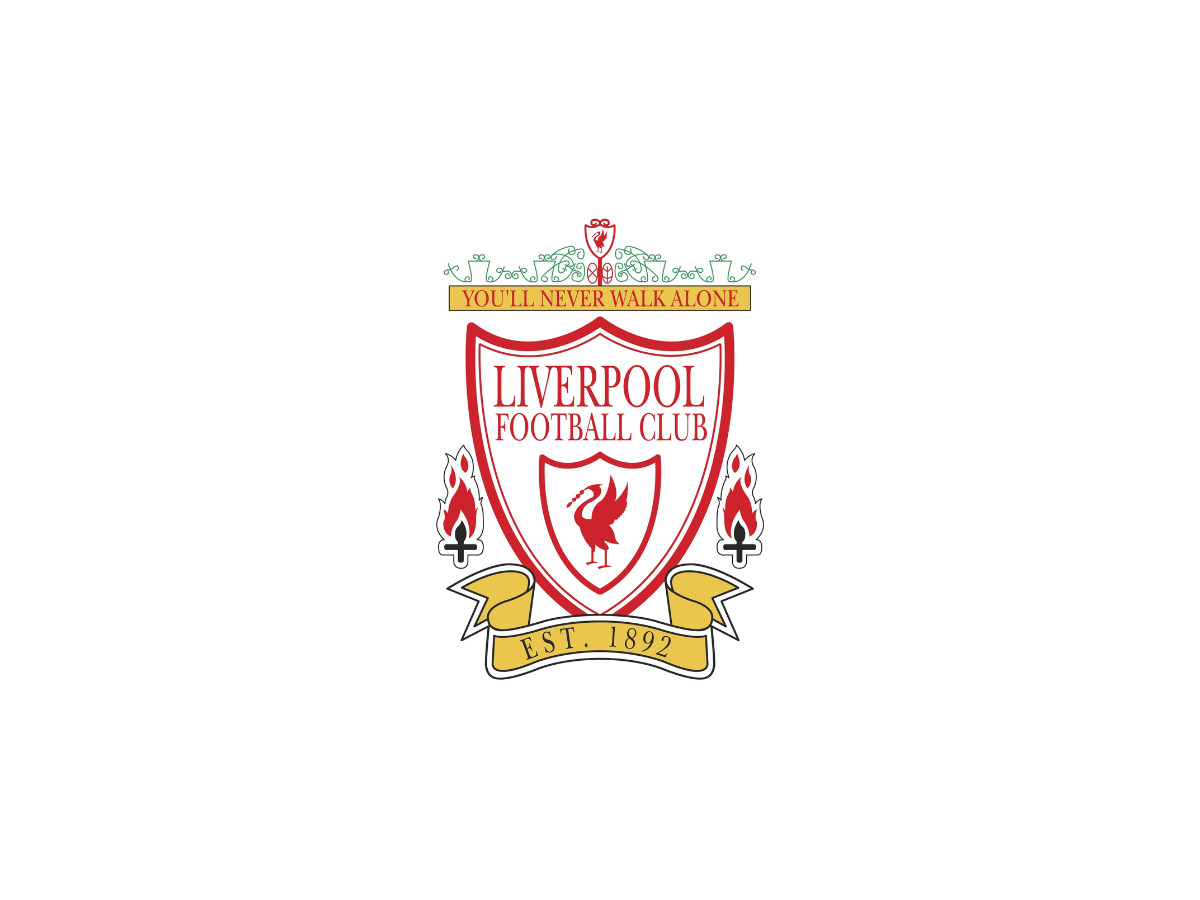
In 1993, the club made the commemorative design permanent and added the eternal flames outside the shield, a memorial to those who died at Hillsborough. Positioned on either side of the shield, the flames turned the badge into a standing tribute.
The Shankly Gates and anthem stayed at the top, and the green detailing carried over from 1992. A golden ribbon reading "EST. 1892" joined the base, marking the founding year.
Significance of the Eternal Flames
The eternal flames refer to the Hillsborough disaster, which took place on April 15, 1989, during an FA Cup semi-final between Liverpool and Nottingham Forest at Sheffield Wednesday's Hillsborough stadium. A crush on the overcrowded Leppings Lane terraces killed 96 people and injured hundreds more. A 2016 inquest ruled that the 96 had been unlawfully killed and found failings by South Yorkshire Police.
In July 2021, a coroner ruled that Andrew Devine, who lived for 32 years with injuries suffered in the crush, was the disaster's 97th victim. Liverpool has since updated its memorials to reflect the number, and the two flames on the crest continue to hold that memory at the center of the club's identity.
1999–Present: Modernized Full Crest
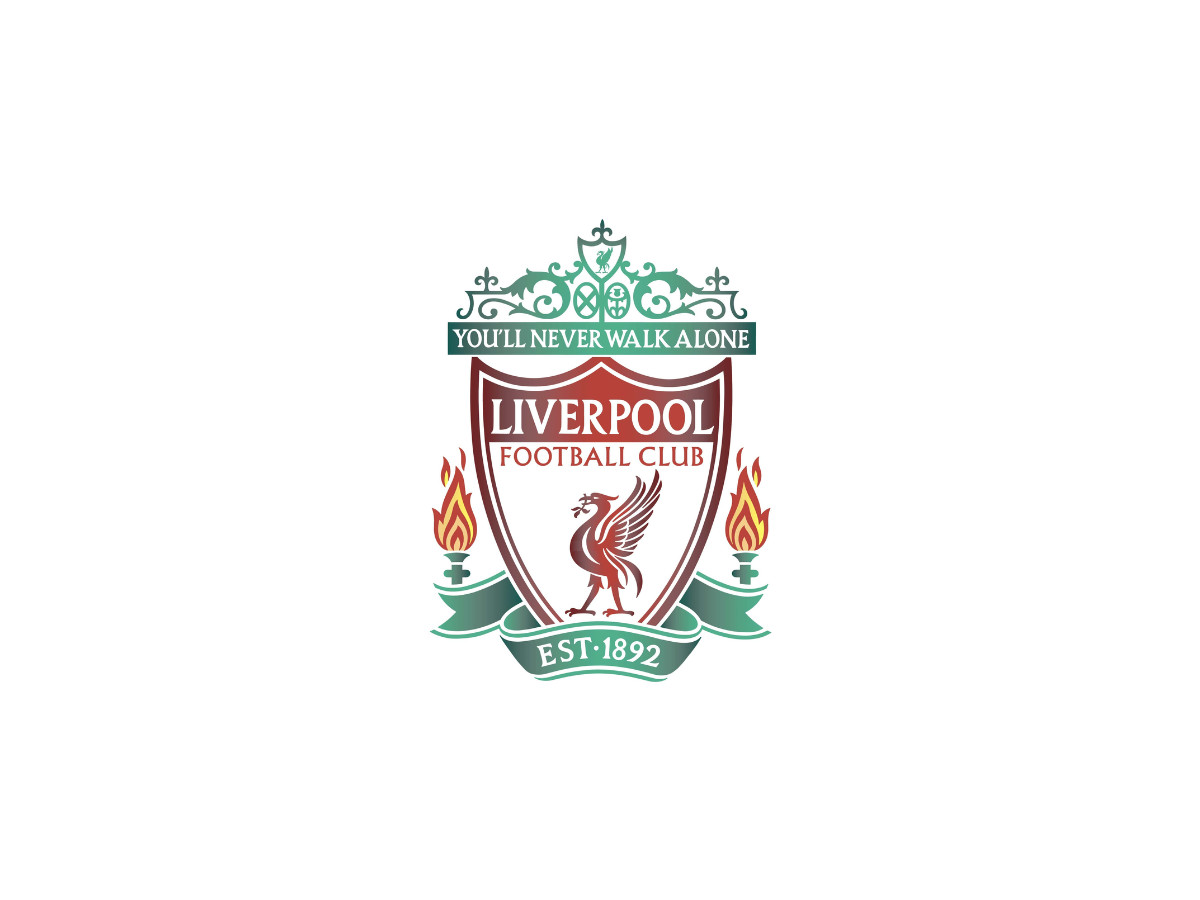
In 1999, Liverpool refined the crest into the sleeker emblem the club uses today for merchandise and stadium branding. The Liver Bird's lines were sharpened, the name kept its bold uppercase treatment, and the palette deepened, with richer reds, green accents, and touches of white and gold. This grade first appeared on kits in the 2002-03 season and stayed there through 2011-12.
The club streamlined the Shankly Gates, anthem, and eternal flames for legibility rather than removing them. The "EST. 1892" inscription sat within a cleaner green banner at the base.
2012–Present: The Minimalist Liver Bird Kit Badge
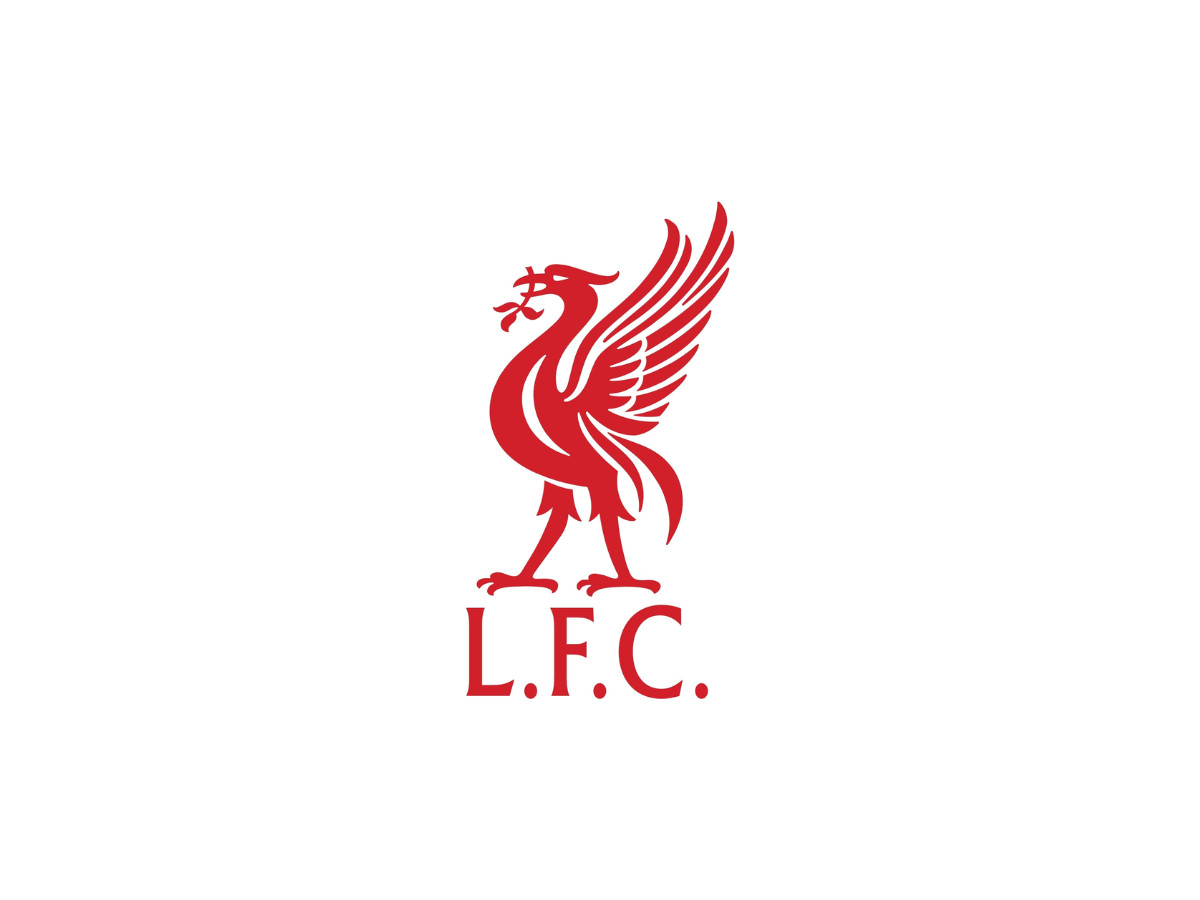
Modeled on the 1968–1987 badge, this mark returned to the shirt from the 2012-13 season and removed the shield, banners, and memorial elements. The result is a clean Liver Bird above "L.F.C." that reproduces well at kit scale and works across digital platforms.
The club introduced it to the kit partly for trademark reasons, and it has anchored the playing shirts ever since. It coexists with the full crest rather than replacing it.
2017: 125th Anniversary Retro Logo
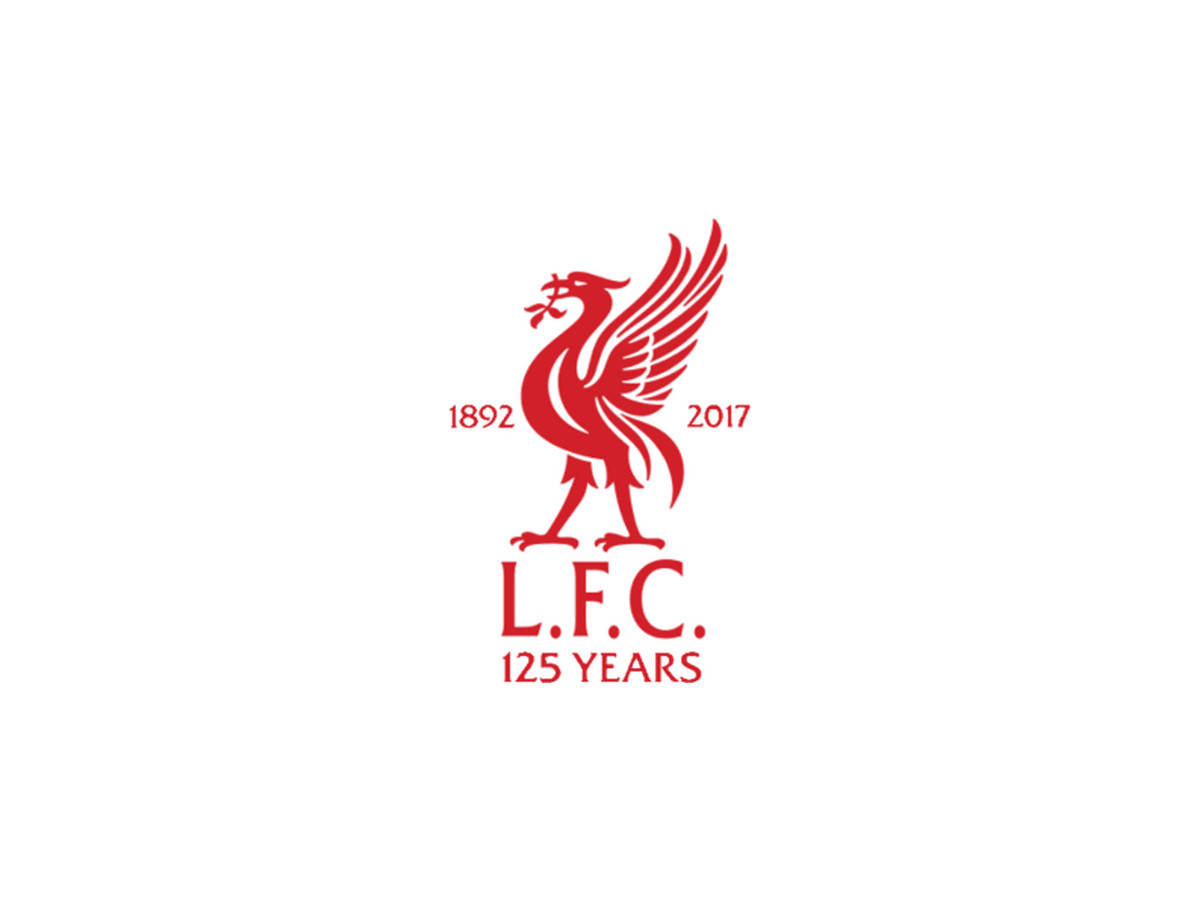
For its 125th anniversary, Liverpool released a special-edition crest that dropped modern detail in favor of a heritage look. It set the Liver Bird in a plain form, clutching its seaweed, with "1892" and "2017" on either side and "L.F.C." and "125 YEARS" beneath.
The design pointed back to the club's early badges, the 1968–1987 mark in particular, which used a similar shield-free Liver Bird. It read as a tribute rather than a permanent change.
2020–2026: Recent Developments
The badge itself has held steady through the club's recent kit and brand changes, which is worth stating plainly because the identity has otherwise moved a good deal. Nike used the minimalist Liver Bird kit crest on every shirt across its 2020–2025 deal, adding teal accents that reference the color of the Liver Bird on the Royal Liver Building.
Two shifts followed. The 2024-25 brand refresh introduced the LFC Sans and LFC Serif typefaces and put the Liver Bird mark at the front of the club's digital identity. Then Adidas took over as kit supplier for 2025-26, keeping the Liver Bird prominent while varying how it appears across the three strips, with the home kit crest unchanged, the away version placing the bird inside a shield, and the third kit reviving a treatment based on the early-1990s badge.
Liverpool Logo Design Details
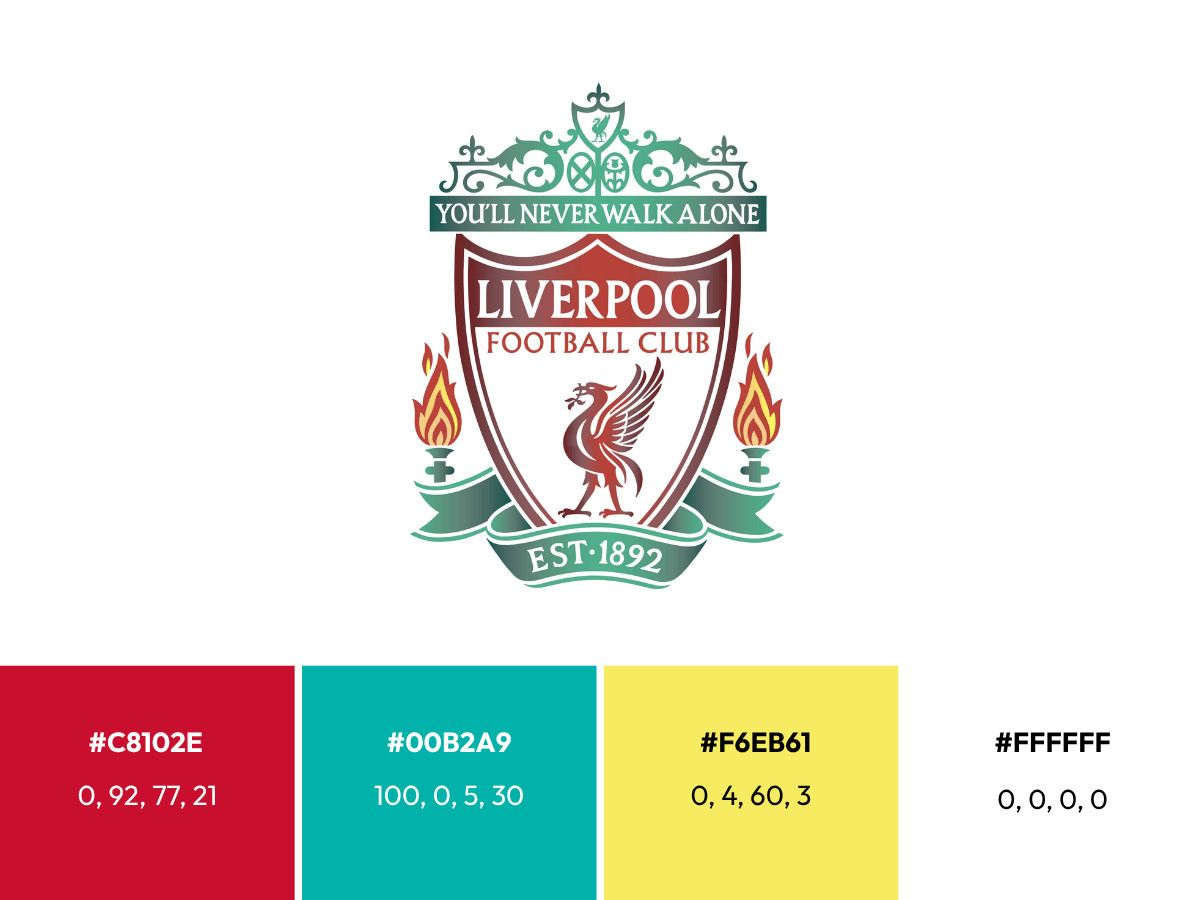
With the full timeline in view, the current design reads more clearly. Liverpool's primary crest is a combination mark built around the Liver Bird, which holds the center and ties the club to its city. Red carries the palette, and the clean "L.F.C." typography keeps the mark legible from a stadium facade down to an app icon.
The current full crest, formalized in 1999 and refined in the years since, unifies several symbols into one shield:
- Liver Bird: the central figure, holding a sprig of laver seaweed in its beak, drawn from the city's coat of arms.
- Shield: the enclosing shape reintroduced in the late 1980s, which frames the emblem and signals heritage.
- Shankly Gates arch: the curved element at the top, modeled on the Anfield gates that honor manager Bill Shankly.
- "You'll Never Walk Alone": the club anthem, inscribed across the arch.
- Eternal flames: two torches flanking the shield, a memorial to those who died in the Hillsborough disaster.
- "EST. 1892": the founding year, set on a banner at the base.
Color Specifications
Liverpool's palette centers on a single red that Bill Shankly pushed to the front when he introduced the all-red home kit in 1964.
- Liverpool Red: Pantone 186 C, Hex #C8102E, RGB (200, 16, 46).
- Green: Pantone 326 C, Hex #00B2A9, used in the Shankly Gates detailing and the "EST. 1892" banner.
- Gold: Pantone 100 C, Hex #F6EB61, used for the Liver Bird and lettering accents.
- White: #FFFFFF, used for outlines and contrast.
Typography
For most of its life, the crest carried its lettering in a classic serif that matched the badge's heraldic tone. The club's 2024-25 brand refresh tightened this, introducing two custom typefaces, LFC Sans and LFC Serif, both shaped after the Liver Bird's own form. The refresh also placed the Liver Bird mark at the head of the club's digital identity and simplified the palette to keep Liverpool Red in front.
Significance of the Liver Bird
The Liver Bird has represented Liverpool for centuries, and its species has been a matter of confusion for almost as long. The city's medieval seal, dating to the era after King John granted Liverpool its charter in 1207, showed an eagle holding a sprig of broom, an emblem of the Plantagenet dynasty and a nod to Saint John the Evangelist, the king's patron.
Over the following centuries, artists and civic records reinterpreted that eagle as a cormorant, a bird familiar along the River Mersey, and the broom became a branch of laver seaweed. The 1797 grant of arms settled the design as a cormorant with laver in its beak, a visual pun linking "laver" to "Liverpool."
The bird that Liverpool FC inherited is therefore best described as a cormorant by formal heraldry, with an eagle in its ancestry, which is why modern renderings can read as a blend of both. The same figure stands atop the Royal Liver Building, one of the city's landmarks.
How Liverpool's Crest Compares to Other Clubs
Liverpool's approach looks measured next to how some rivals handled their badges over the same period. Manchester City moved to a circular roundel in 2016, and Juventus replaced its shield with a bare "J" wordmark in 2017, a change that split opinion among supporters. Liverpool instead refined an existing crest and split its identity into two purpose-built marks, which kept the heritage intact while giving the club a clean, trademark-ready symbol for kits and digital use.
That puts Liverpool closer to clubs such as Manchester United, whose crest also grew out of a city coat of arms and modernized through refinement rather than a full redraw. The same instinct guides heritage brands outside sport, including Gucci, which has protected a core mark through decades of creative turnover. Among Premier League emblems, the Liverpool badge remains one of the more traditional, and the dual-crest system is how the club reconciles that tradition with the demands of a modern identity system. For more on the trade-offs, see DesignRush's look at oversimplified logos and its wider sports and leisure logo collection.
Liverpool Logo: A Timeless Football Emblem
The Liverpool logo has traveled a long way, from a civic coat of arms to a globally recognized football identity. Across every version, the Liver Bird has held its place, tying the club to the city of Liverpool.
What the evolution shows is a club that treats its crest as heritage to be protected rather than a graphic to be reinvented. By keeping a full ceremonial crest for its most meaningful contexts and a clean Liver Bird for the kit and screen, Liverpool has solved the problem that faces every historic brand: how to stay recognizable and modern at once without discarding the symbols that give the mark its meaning. That balance, more than any single redesign, is what keeps the badge relevant.

Looking to apply the same approach to your growing market? We can connect you with the right creative partners.
Browse our Agency Directory to find the most capable agency that can help elevate your brand:
And if you’re curious for more inspiration, don’t miss our other features on standout logo designs in sports.


-preview.jpg)