
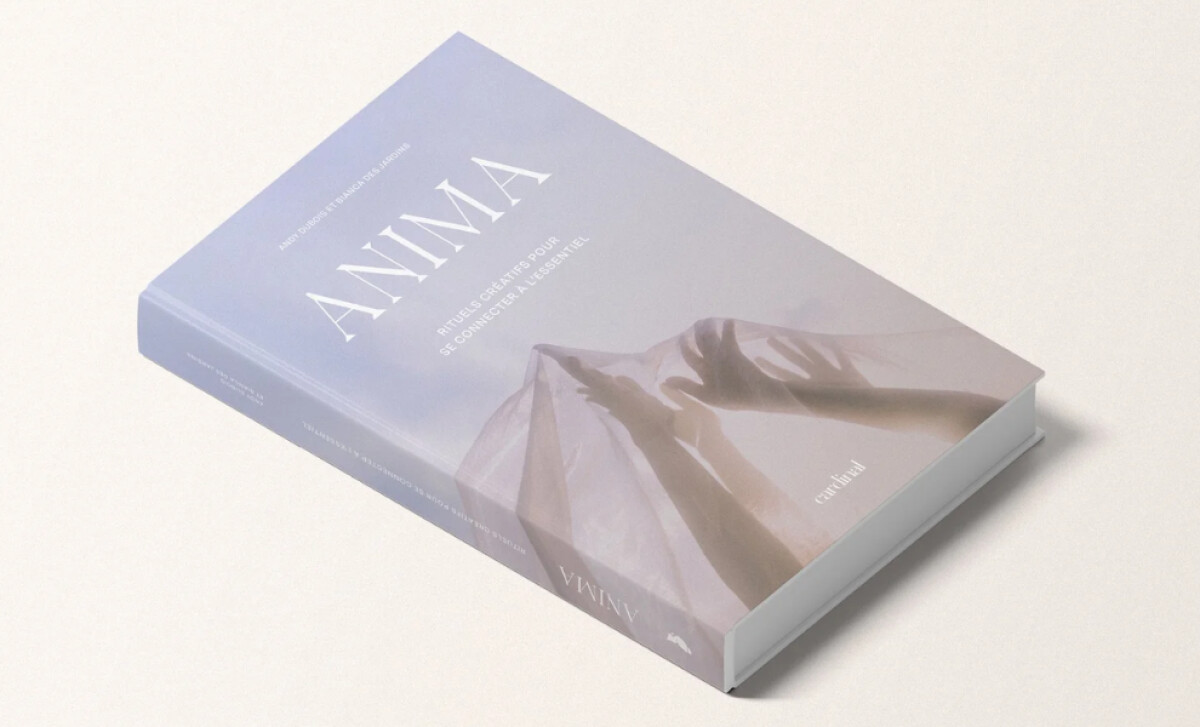

ANIMA is a collaborative wellness publication by authors Andy Dubois and Bianca Des Jardins. To reflect its contemplative nature, Mocci Studio developed a design language that treats reading as ritual.
Through careful curation of imagery, typography, and pacing, the book serves as both guide and companion for readers exploring creativity and inner balance.
Industry Insight: Research indicates that 75% of consumers make purchasing decisions based on cover design, underscoring how visual presentation directly influences perceived value. For wellness publishing, this demonstrates why design quality matters to reader connection.
Key Insights for Brands:
- Use nature-inspired imagery to anchor abstract wellness concepts in tangible experience.
- Apply refined typography with generous spacing to support contemplative reading.
- Structure content as a guided progression to transform passive reading into active practice.
The Book Features Atmospheric Photography with Textural Depth
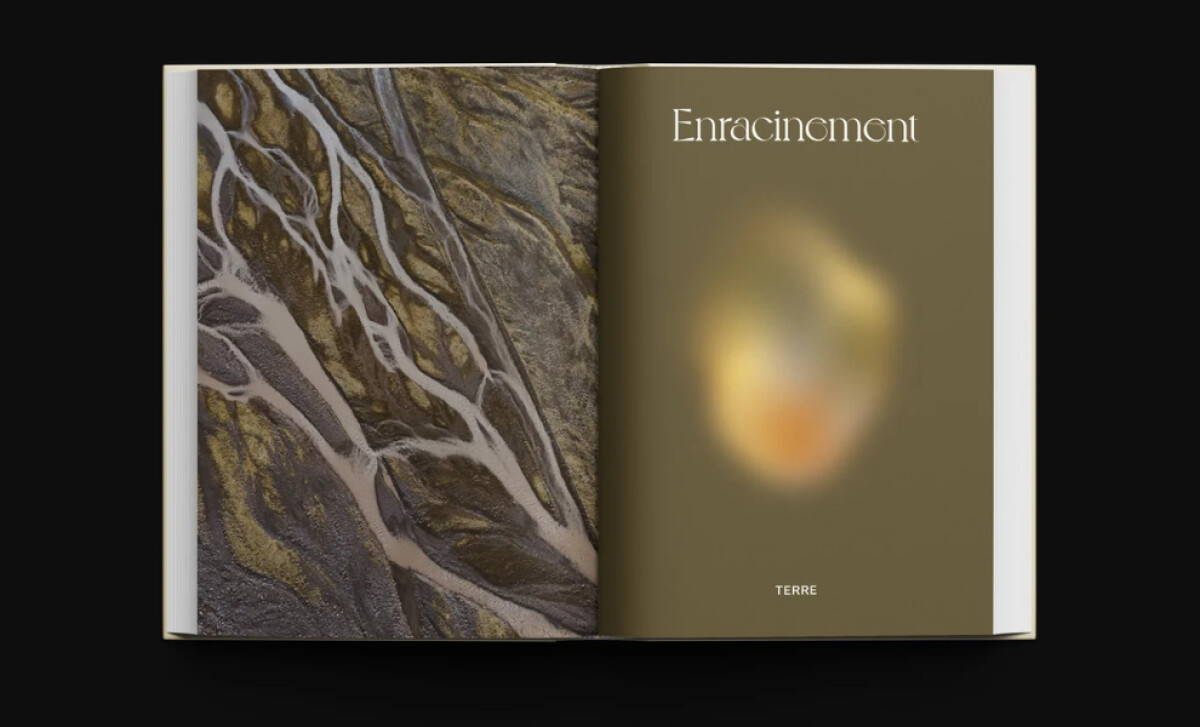
A collection of evocative photographs establishes ANIMA's visual foundation. Images of mountains shrouded in mist, river patterns viewed from above, and intimate human moments create layers of meaning throughout the book.
These visuals function as entry points for reflection, inviting readers to pause before engaging with text.
Designed by Mocci Studio, the imagery draws from natural elements to ground the book's wellness practices in something universal. The careful sequencing creates a visual rhythm that mirrors the breathing exercises and mindfulness techniques described in the content.
Data from Text2Infographic shows that people retain 65% of information when paired with relevant visuals, compared to just 10% retention for text alone.
ANIMA anchors each concept in purposeful imagery, making abstract ideas about balance and rootedness feel memorable and embodied.
Mocci Studio's Typography System Supports Contemplative Reading
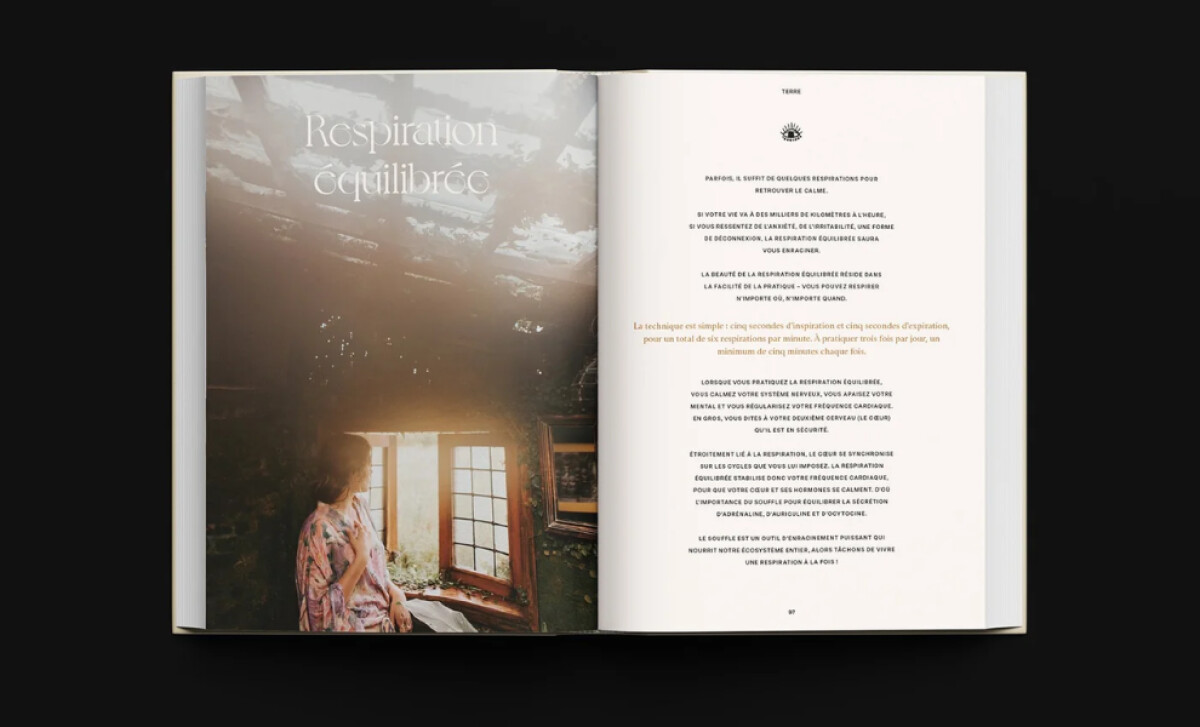
The book employs a carefully considered typographic approach typical of top print design agencies known for emotion-driven editorial design. Serif fonts anchor chapter titles and body text.
Meanwhile ample line spacing and strategic use of centered alignment create natural breathing room on each page. This functional design controls reading pace and supports the content's meditative intent.
Research published in "The Impact of Font Design Based on Cognitive Psychology on Reading Experience" explains that effective typography guides reader attention through visual hierarchy while integrating cultural and emotional expression.
"Visuals and typography combine to compel the user to investigate and engage."
- Andrea Owsinek-Brucker, Design Awards Juror
Mocci Studio applies this principle throughout ANIMA. Text has room to breathe, and typographic weight is used strategically to create natural pause points. This measured approach encourages readers to absorb ideas fully before continuing.
ANIMA Organizes Content Through Thematic Visual Chapters
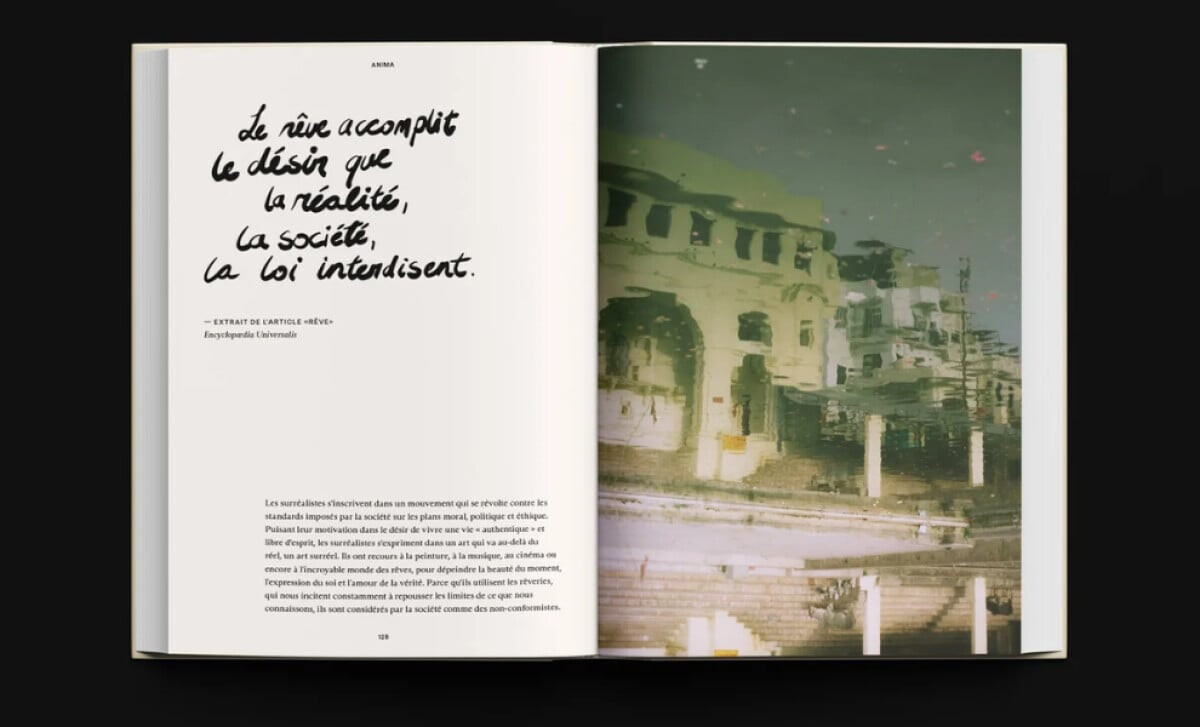
Each section introduces itself through distinct visual treatments.
Chapters like "Respiration Équilibrée" (Balanced Breathing) open with full-page atmospheric photographs that embody their core concepts before any instructional text appears. "Enracinement" (Rooting) uses aerial views of river deltas and root systems to establish its theme visually.
According to the Global Wellness Institute, readers of mindfulness content engage up to 45% longer with material when supported by meaningful visual organization.
The opening spreads in ANIMA function as visual bookmarks, making it easier for readers to return to specific practices while also establishing emotional tone for each section.
This is a tough challenge made to look easy. Nice work!
- Lee Selsick, Design Awards Jury
The integration of structure and poetry demonstrates how good design can enhance both beauty and function.
Visual Storytelling Grounds Abstract Concepts in Nature
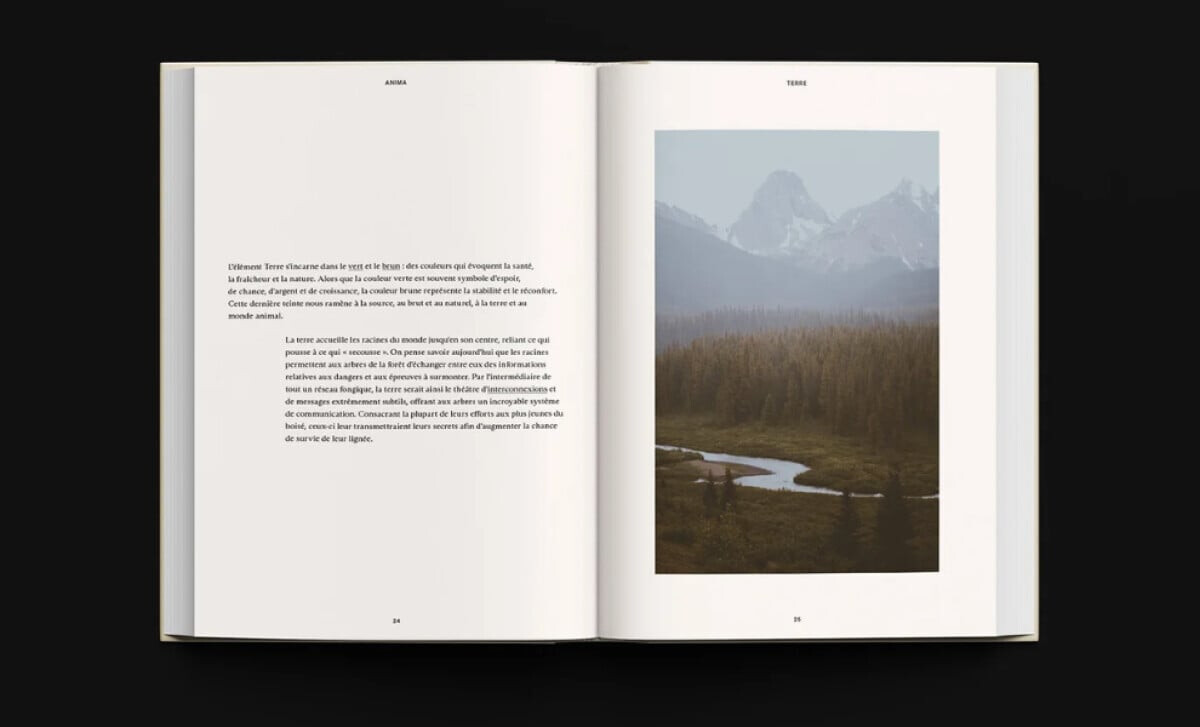
Throughout ANIMA, Mocci Studio uses large-format nature photography to give physical form to intangible ideas.
A spread about breath features clouds moving across mountain peaks. A section on grounding shows hands touching earth, roots spreading through soil, textures of tree bark captured in intimate detail.
These images create analogies that help readers understand wellness practices through natural phenomena. The rhythm of waves becomes a metaphor for breath.
The stability of mountains models inner strength. Tree roots spreading underground mirror the concept of establishing firm foundations in life.
Research from "Investigating the Role of Visual Storytelling in Enhancing Audience Engagement in Digital Journalism" found that emotionally evocative visuals can increase engagement by 70%. When visuals carry genuine meaning, they deepen reader investment in the content.
Discover the best book cover designs that masterfully use photography and layout to turn printed pages into powerful storytelling tools.
What Brands & Agencies Can Learn from ANIMA
Mocci Studio's work on ANIMA demonstrates how design strategy can transform educational content into experiential storytelling.
Here's what creative teams can take away:
1. Build Your Visual Language from Core Themes
Strong design systems grow directly from subject matter. For ANIMA, that meant grounding every visual decision in nature, breath, and physical grounding. This creates authenticity that readers recognize intuitively.
2. Structure for Revisiting, Not Just Reading
Wellness books serve as long-term companions. Designing clear visual chapters and memorable opening spreads makes the book more useful over time. Readers can find practices they need in the moment through visual memory. This utility extends the book's value far past initial purchase.
3. Use Typography to Control Pace and Presence
How text appears on the page directly affects how readers engage with it. Generous spacing, strategic centering, and refined font choices create the visual equivalent of deep breathing. They slow readers down, creating space for absorption and reflection while supporting the content's purpose.
About DesignRush Featured Designs
At DesignRush, we review hundreds of agency projects every month. The featured designs stand out for their creativity, execution, and ability to resonate with audiences.
The most compelling projects go on to be recognized as Monthly Design Awards winners, highlighting industry excellence.
Explore standout print design projects that push creativity forward:
- Best Print Designs
- Best Website Designs
- Best App Designs
- Best Logo Designs
- Best Packaging Designs
- Best Video Designs
For a full list of design agencies and related services, see our Agency Directory.


-preview.jpg)