
Advertising can feel intangible, but its benefits are absolutely worth quantifying.
Advertising Benefits: Key Findings
- Trust-building campaigns correlate strongly with business impact, with 93% of for-profit campaigns showing very large trust gains also delivering at least one very large business effect.
- Brand advertising can reduce price sensitivity and protect margin, as McCain cut price elasticity by 47% and increased base sales by 44%.
- Advertising can drive rapid demand lift, as McDonald’s saw a 78% jump in Big Mac searches and a 60% sales increase within three weeks.
What Makes Advertising Worthwhile?
Advertising gets a bad rap because we all remember the annoying ads. But good advertising helps people discover new options, learn what makes a brand different, and get nudged to make that purchase they’ve been considering.
The benefits of advertising are widespread and nuanced, but they tend to fall into a handful of repeatable outcomes. Here we break down 10 of the most important ones, with data and examples that show how it plays out.
1. Memorable Ads Keep You Top of Mind, Like With 56% Ad Recall
We all know how crowded modern ad environments are. Yet consumer openness to ads has improved as formats get less disruptive.
More than half of consumers (58%) told Kantar they are receptive to advertising in 2025, a steep increase from 24% in 2020, suggesting brands can win attention when creative and placement fit the context.
Awareness is the foundation that makes every lower-funnel tactic work harder, from search demand to click-through, and conversion efficiency.
How Royal Caribbean Used High-Impact OOH To Lift Brand Awareness

Royal Caribbean ran a 10-week out-of-home campaign in New York City in 2024 using a mix of digital transit, traditional static bulletins, and “spectacular” placements in midtown Manhattan. The aim was to improve brand health from awareness through intent.
To quantify impact, the results were measured using a control vs. exposed approach. The campaign delivered a 56% ad recall rate, and it increased brand awareness among those exposed (aided awareness up +13% and unaided awareness up +28%).



2. Short-Term Revenue Lift, Like McDonald’s 60% Big Mac Sales Boost
Advertising can create immediate demand when the offer, creative, and targeting are all perfectly aligned. This is especially true when brands use multiple formats and measure outcomes, not just impressions.
How McDonald’s Used Multi-Format YouTube Storytelling To Lift Demand
McDonalds used YouTube to lean into its strength across multiple formats, including longer narrative-led video plus short-form cutdowns, to reach different audience segments and moments in the journey.
McDonald’s reported a 78% increase in “Big Mac” searches, and Big Mac range sales rose 60% three weeks after launch, demonstrating a short-term revenue effect clearly tied to an ad-driven activation.
3. Smarter Reach With Less Waste That Grows Market Share
Targeting and platform tools can reduce wasted spend when campaigns are planned for a fragmented media landscape and measured end-to-end.
Nielsen’s outcomes data shows that over the past three years, social media delivered an average ROI that was 36% higher than the all-media average, but efficiency still depends on actually reaching the audience you intended.
That requires choosing formats that reliably reach the audience you want, then using measurement to prove it’s driving outcome.
Reid Carr, founder of Red Door Interactive, reminds us that marketers should “explore alternative channels where their brands’ content may be more relevant or perform better in case they're not satisfied with the results their existing campaigns are achieving."
Using Gamification to Reach Gen Z
To capture Gen Z attention in a crowded feed, Bia Saigon used gamified, interactive ad experiences that felt more like entertainment than promotion.
As a result, MMA reported reaching 25.49 million people, earning 2.04 million clicks, and a +0.9 point market share increase, showing how interactive formats can turn reach into measurable outcomes, not just impressions.
4. Trust That Translates to Sales, Such As Lay’s 14% Sales Beat
When buyers feel uncertain about quality or value they default to what feels safest. Advertising reduces that perceived risk by making a brand feel familiar, credible, and consistent before the moment of purchase.
IPA analysis of the IPA Effectiveness Databank found that 93% of for-profit campaigns reporting very large trust gains also reported at least one very large business effect (vs. 66% on average).
How Lay’s Turned a Risky Change Into a Trust-Building Moment
Lay’s faced a classic trust test in Spain: introduce Lay’s Maestro when the core recipe famously hadn’t changed in over 75 years, and consumers were emotionally invested in the brand’s tradition.
Instead of downplaying the risk, the campaign dramatized it by publicly declaring “Lay’s has changed”. This fueled debate with well-known personalities, which the brand backed up with influencer trials, sampling, and rapid-response social.
Brand favorability rose 24% and sales exceeded forecast by 14%, with Effie noting the campaign “reignited consumer excitement and trust”.
5. Differentiation That Protects Pricing Power, Like Dropping Price Elasticity By 47%
When your brand feels meaningfully different, price tends to matter less to consumers. That’s the pricing power benefit of advertising. Brand building efforts can make demand less sensitive to price changes, reduce reliance on promotions, and protect margins even when costs rise and cheaper alternatives show up.
How McCain Used Long-Term Brand Building to Protect Margin and Grow Base Sales
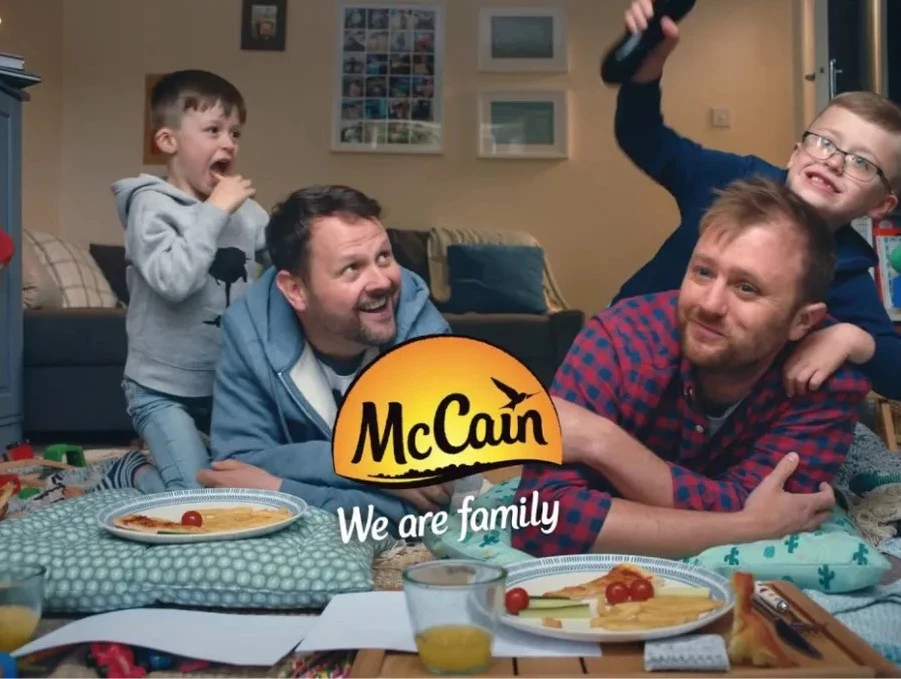
In the UK, McCain had a commoditisation problem, with shoppers trading down to own label and competitors using promotions to grab short-term volume.
Instead of fighting a price war, McCain and adam&eveDDB committed to sustained emotional brand advertising over multiple years. That approach reduced price elasticity by 47%, increased base sales by 44%, and delivered profit ROI of about £1.50 (≈$2.06) per £1 (≈$1.37) invested.
6. Faster Adoption Across the Funnel Such As Volvo’s 3.5x Search Lift
Launching something new or entering a new market is a trust-and-attention problem before it’s a conversion problem. Advertising helps by building demand upstream. It means more people search for you, take you seriously, and move into a buying mindset faster.
It works best when the launch story is built in layers: a hero film to grab attention, then shorter cutdowns to keep the message sticky as people research and compare.
How Volvo Used YouTube as Its Launch Canvas for the EX90
For the Volvo EX90 launch, Volvo treated YouTube as the primary storytelling platform starting with a four-minute hero film built around a human, safety-led narrative, then extending the story with 60- and 15-second spots that highlighted technology and safety features.
The team also repurposed hero assets into shorter cutdowns to keep messaging consistent while reaching people at different moments in the shopping journey.
Volvo reports the campaign delivered 3.5x search lift, nearly 2x brand consideration lift, and $80 million in earned media value.
7. Loyalty That Compounds, Like Majorica Growing Loyalty Fivefold
Advertising also keeps existing customers coming back by reinforcing familiarity, relevance, and the story that makes people stick, especially when competitors can copy features and undercut your price.
When brand advertising refreshes how people feel about a product, it can lift the behaviors that matter for lifetime value: repeat purchase, bigger baskets, and stronger preference over time.
How Majorica Repositioned Pearls and Made Loyalty Surge
Majorica, an iconic Spanish pearl brand, faced a declining image and sales because pearls were increasingly seen as outdated. The brand repositioned pearls as modern using fashion-forward creative and updated styling across channels to reach younger buyers while keeping its heritage credibility.
Majorica increased loyalty fivefold, along with +31% in-store sales, +49% online sales, and a +60% lift in average purchase value (plus +58% awareness among under-30s and brand recognition up 216%).
Benefits of Advertising: Final Words
Advertising creates measurable advantages that add up over time, from stronger recall and trust to healthier demand, better conversion efficiency, and longer-term loyalty.
When you track what’s actually working, you can invest more, optimize faster, and get the most from your advertising budget.
Our team ranks agencies worldwide to help you find a qualified partner. Visit our Agency Directory for the Top Adtech Companies as well as:
Benefits of Advertising: FAQs
1. What are the biggest benefits of advertising for most businesses?
A combination of stronger awareness and recall (which makes every other channel work harder), short-term demand lift, and long-term loyalty are the biggest benefits. Essentially, advertising helps people notice you, trust you, choose you, and keep choosing you.
2. How do you measure the benefits of advertising beyond clicks?
Use a mix of indicators tied to your goal. Look at brand lift and ad recall for awareness, search lift and consideration for demand creation, conversion and sales for performance, and repeat purchase or basket size for loyalty.
3. How long does it take for advertising to work?
Some campaigns produce results in weeks when the offer and creative align (like short-term sales lifts), while brand effects like trust, differentiation, and pricing power often build over months through consistency. The timeline depends on whether you’re aiming for immediate demand, longer-term preference, or both.
4. Does advertising still work when people ignore ads?
Yes. People are selective, but receptiveness can rise when formats feel less disruptive and creative actually fits the context. Well-placed campaigns generate measurable lift.
5. Which channels should you prioritize first?
Start where you can reach your audience reliably and measure outcomes. Many brands begin with a combination of a reach channel (video, social, OOH) to build demand plus a conversion channel (search, retargeting, retail media) to capture it. Adjust based on what’s delivering results.
6. What makes an advertisement memorable enough to drive results?
Memorable ads land one clear idea, use distinctive brand cues, and create an emotional or story-led hook that’s easy to remember. They also run consistently enough to stick. Ask if someone can describe the ad a day later, and if they can name the brand without being prompted.
7. How do you avoid wasting spend and reach the right people?
Choose formats that reliably reach your intended audience, and validate impact with end-to-end measurement. When the format matches how a specific audience behaves, you can turn efficient reach into clicks and measurable market impact.