
Key Findings
- Implement a real-time data strategy to continuously monitor market trends and competitor moves — this enhances your ability to capitalize on emerging opportunities before your competitors do.
- Focus on tools that integrate into your existing tech stack and offer automated insights to reduce research hours and improve campaign efficiency.
- Establish alert systems and dashboard-based reporting to keep teams informed and proactive — not reactive — when navigating disruptions or identifying gaps in customer demand.
Stay tuned as we share our curated list of high-end market intelligence solutions that will elevate your business strategy and help you select the perfect platform tailored to your brand's needs.
7. Contify
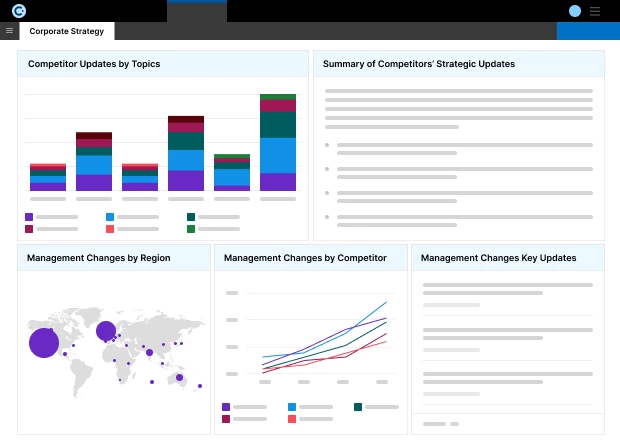
Contify is an enterprise-level intelligence platform that continuously scans a vast array of digital sources — from websites to social media and regulatory channels — to capture critical competitor information. This comprehensive monitoring ensures teams remain informed about market shifts, emerging trends, and competitive moves at all times.
Powered by machine learning, Contify transforms raw data into clear, actionable insights displayed on dynamic dashboards. The platform automates the distribution of competitive intelligence through tailored newsfeeds, emails, and API integrations, seamlessly fitting into existing workflows. This efficiency allows your team to focus on strategic planning and maintain a proactive stance in a competitive marketplace.
Key features:
- Broad source coverage
- Machine learning analytics.
- Automated insight distribution
Pricing:
- On request
6. Insightsfirst
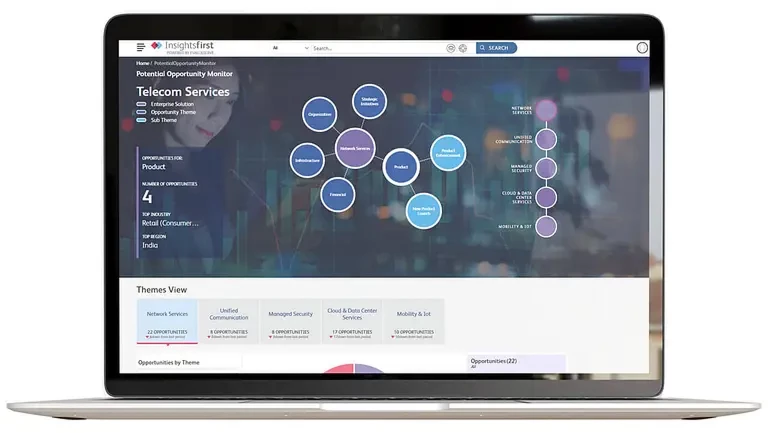
Insightsfirst uses artificial intelligence to convert vast amounts of market data into clear, actionable insights. By aggregating information from external and internal sources, this AI marketing tool filters and curates competitive intelligence to create a centralized hub of critical information. This enables teams to quickly access the insights needed to make strategic decisions.
The platform presents its findings through intuitive dashboards, custom alerts, and visually engaging reports. Whether tracking industry trends, competitor activities, or market forecasts, Insightsfirst simplifies complex data into digestible formats. This streamlined approach ensures that decision-makers remain agile, enabling proactive strategy adjustments and a sustained competitive edge.
Key features:
- AI-driven data curation
- Centralized insights hub
- Custom alerts and visualizations
Pricing:
- On request
5. D&B Hoovers
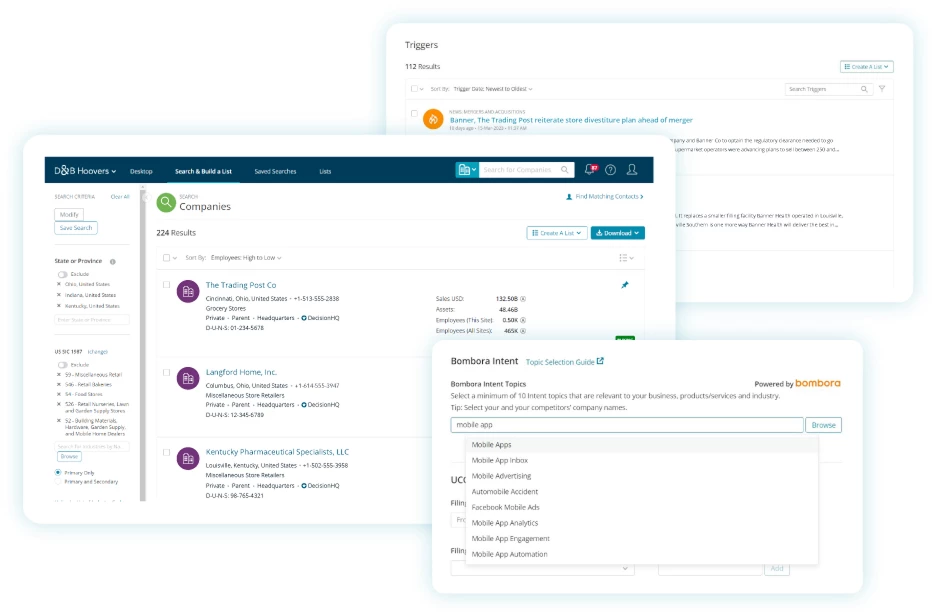
D&B Hoovers is a powerful market intelligence tool that harnesses the extensive Dun & Bradstreet Data Cloud to provide deep B2B insights. It offers detailed profiles of millions of companies and verified contact data, enabling sales, marketing, and revenue teams to build precise prospect lists and identify key decision-makers quickly.
Beyond data aggregation, D&B Hoovers excels in advanced targeting and visualization, empowering users to define and refine their ideal customer profiles. Real-time updates on company news and organizational shifts ensure that outreach efforts are timely and impactful.
Seamless integration with existing systems makes it an invaluable resource for accelerating business growth and streamlining prospecting efforts.
Key features:
- Extensive B2B data
- Robust filtering and visualization tools
- Seamless integration with existing systems
Pricing:
- Hoovers Now: Pay-as-you-need
- Hoovers Essentials: $49/month
4. PitchBook
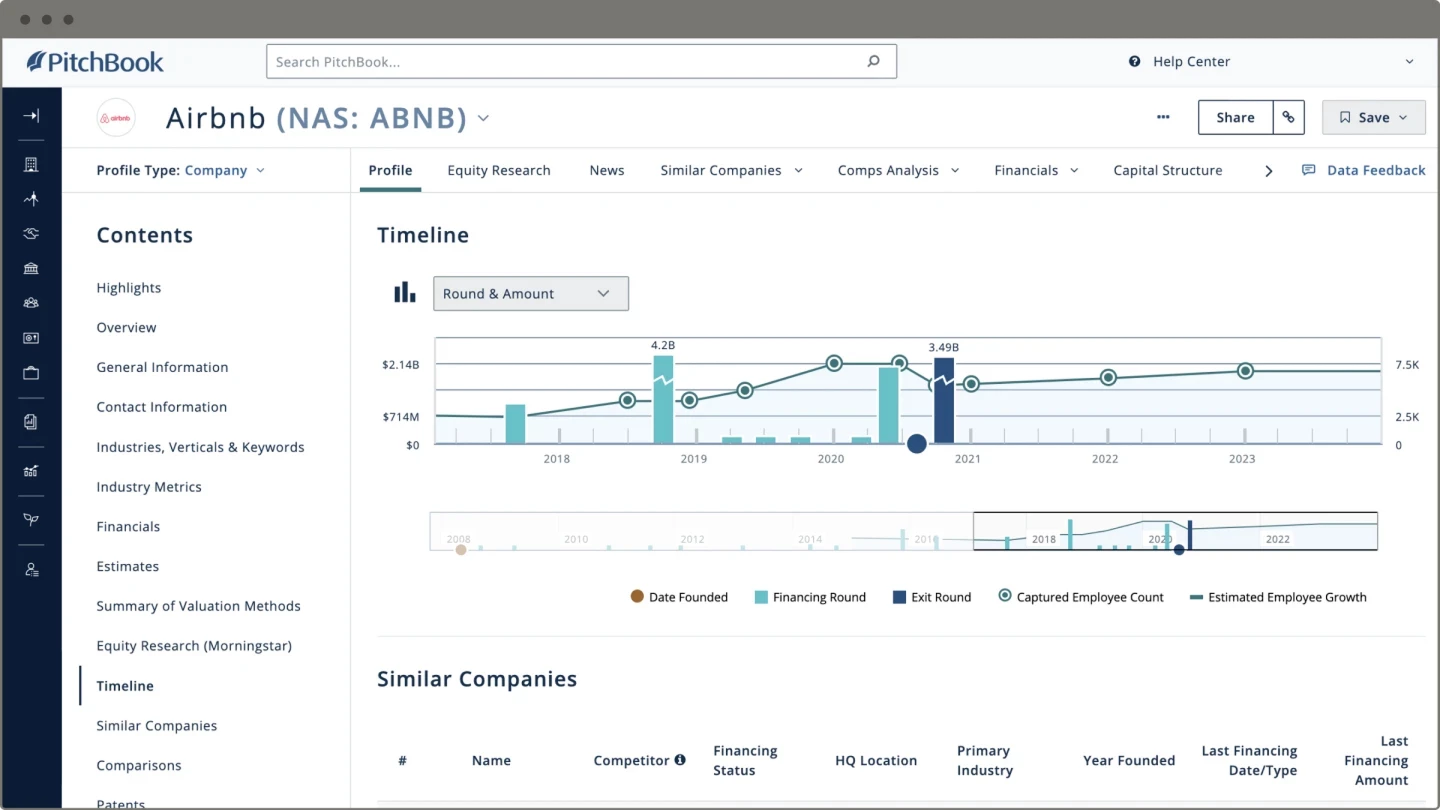
PitchBook is a robust business intelligence platform designed to illuminate global capital markets. It delivers detailed insights on private companies, investors, and financial transactions, making it an essential resource for venture capitalists, private equity firms, and investment banks.
With its extensive database, users can explore funding rounds, valuations, and startup trends to make well-informed investment decisions.
Equipped with advanced search and visualization tools, PitchBook streamlines the discovery of promising opportunities. Its in-depth analysis of mergers and acquisitions (M&A) activity and financial research enables users to stay ahead of market trends and craft data-driven strategies.
This platform empowers decision-makers to act swiftly, ensuring competitive advantages in a dynamic private market landscape.
Key features:
- In-depth private market data
- Detailed capital insights
- Comprehensive merger-acquisition monitoring
Pricing:
- On request
3. Crayon
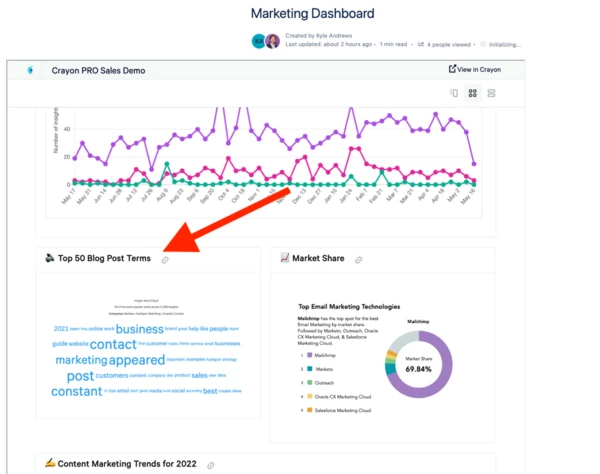
Crayon is an innovative market intelligence tool that automates the collection and analysis of market data. It scans millions of digital signals to detect changes in competitor strategies, product updates, and market positioning. By converting raw data into clear, digestible summaries, Crayon enables teams to stay ahead of industry developments without the need for extensive manual research.
Focused on enhancing sales performance, Crayon delivers timely insights directly to your workflow, reducing research time and increasing efficiency. Its user-friendly interface and robust reporting capabilities allow businesses to quickly identify opportunities and threats, ensuring that strategic decisions are based on the latest market intelligence.
Key features:
- Automatized extensive online data gathering
- Comprehensive competitors monitoring
- Concise insights useful to sales teams
Pricing:
- On request
2. Klue
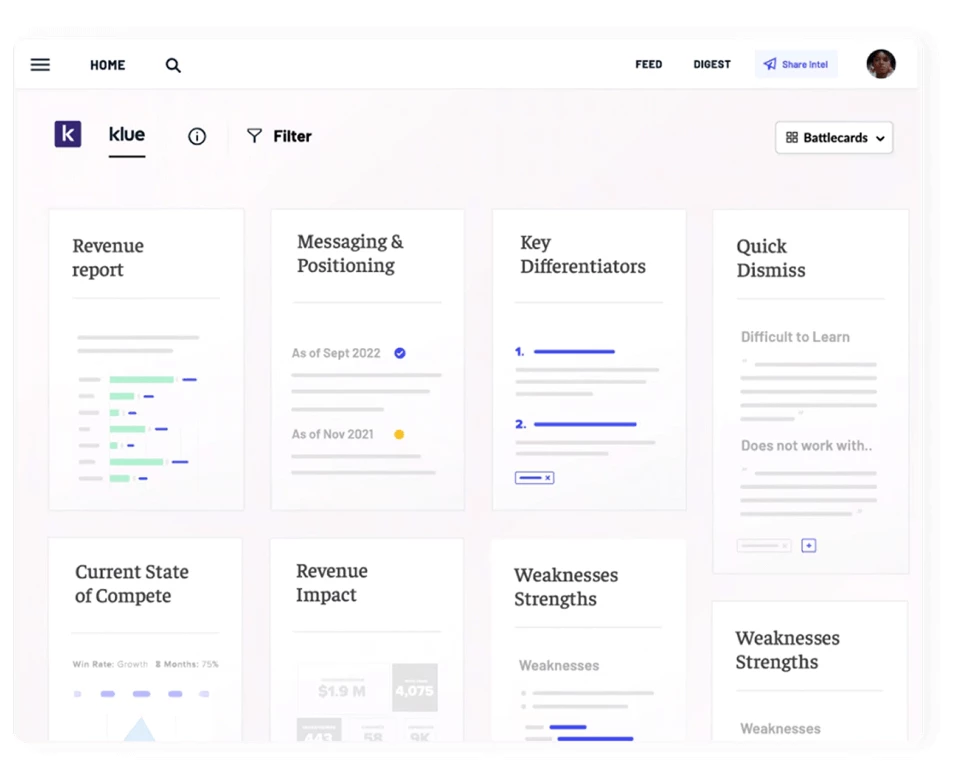
Klue streamlines market intelligence by using AI to gather, analyze, and deliver critical competitor insights. By aggregating data from a variety of sources — from press releases to social media chatter — it transforms complex information into concise, actionable reports. This enables teams to respond quickly to market shifts and adjust strategies effectively.
Designed to support sales and product marketing teams, Klue centralizes competitive content so that frontline staff always have the latest intelligence at their fingertips. The platform’s real-time updates and intuitive dashboards help businesses refine messaging, counter competitive threats, and seize emerging opportunities with confidence.
Key features:
- AI-driven data aggregation
- Centralized competitive content
- Real-time trend tracking
Pricing:
- On request
1. Similarweb
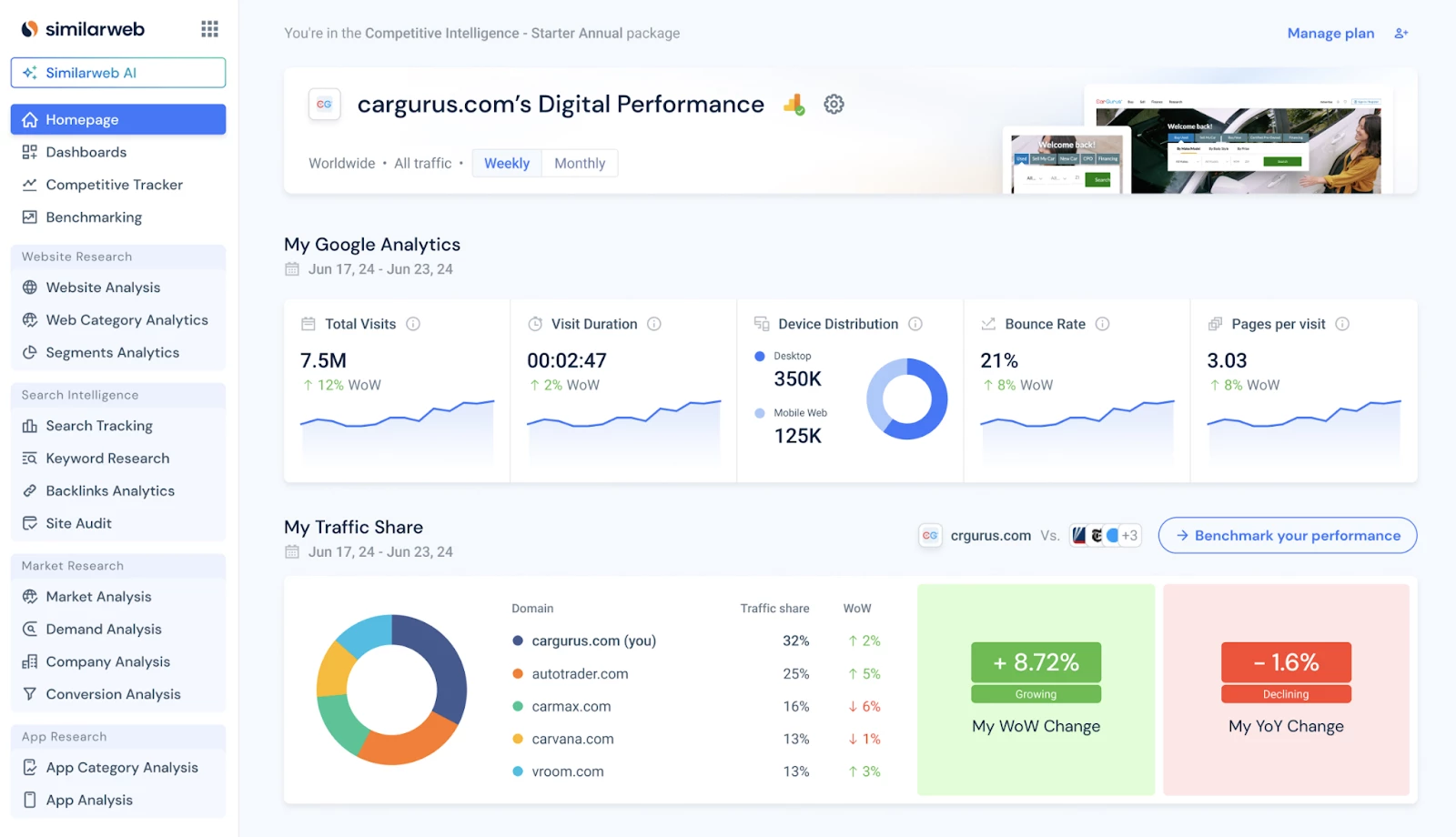
Similarweb is a powerful market intelligence solution that empowers businesses to understand the digital landscape. It collects and interprets vast amounts of data on consumer behavior and competitor performance across +190 countries, enabling brands to discover emerging trends and untapped opportunities.
The platform’s rich datasets and visual dashboards allow decision-makers to benchmark against industry leaders and fine-tune their strategies with precision.
Trusted by companies ranging from startups to global enterprises, Similarweb delivers actionable insights that drive effective marketing and growth. Its easy-to-use interface and extensive coverage provide the critical intelligence needed to allocate budgets wisely and outpace competitors, making it an essential tool for any forward-thinking organization.
Key features:
- Global digital insights
- Deep competitor benchmarking
- Actionable analytics
Pricing:
- Starter: $199/month
- Team: $14,000/year
- Business: $35,000/year
- Enterprise: Custom
Best Market Intelligence Tools Compared
To simplify the comparison of market intelligence tools, the table below highlights their key features, primary use cases, and pricing. This side-by-side breakdown makes it easier to identify the best solution for specific business needs, whether it's competitive analysis, sales intelligence, or market trend monitoring.
| Tool | Key Features | Use Cases | Pricing |
| Similarweb | Global digital insights, competitor benchmarking, actionable analytics | Digital marketing, competitive analysis, market trends | Starter: $199/month, Team: $14,000/year, Business: $35,000/year, Enterprise: Custom |
| Klue | AI-driven data aggregation, centralized competitor insights, real-time tracking | Sales enablement, competitive intelligence, strategy refinement | On request |
| Crayon | Automated market data collection, competitor monitoring, sales-focused insights | Sales intelligence, competitive analysis, market monitoring | On request |
| PitchBook | Private market data, capital insights, M&A tracking | Venture capital, private equity, financial analysis | On request |
| D&B Hoovers | Extensive B2B data, filtering & visualization, system integration | B2B sales, lead generation, market segmentation | Hoovers Essentials: $49/month, Hoovers Now: Pay-as-you-need |
| Insightsfirst | AI-driven data curation, centralized insights hub, custom alerts | Competitive intelligence, market forecasting, business strategy | On request |
| Contify | Broad source coverage, machine learning analytics, automated distribution | Competitive intelligence, market trends, business strategy | On request |
Benefits of Leveraging Market Intelligence Software Tools
Integrating market intelligence software into your strategic framework can redefine how you approach business challenges. Whether you are a startup or an established Fortune 500 company, leveraging these solutions is a crucial step in enhancing data collection, competitive analysis, and customer segmentation, ultimately providing a significant competitive edge.
Let's look at the benefits these tools provide:
- Enhanced decision-making
- Competitive advantage
- Risk mitigation
- Enhanced customer focus
- Efficiency and resource optimization
- Faster adaptation and informed strategy
Enhanced Decision-Making
Similar to business intelligence systems, market intelligence tools empower your organization to shift from gut-driven decisions to data-backed strategies. By transforming vast datasets into clear, actionable insights, these platforms enable your leadership to confidently navigate market uncertainties.
With access to real-time intelligence, you can adjust your tactics swiftly, ensuring that every decision aligns with your strategic goals.
Competitive Advantage
Gaining a comprehensive understanding of competitors and the broader market is crucial for staying ahead in a rapidly evolving industry. Advanced analytics tools offer deep insights into competitor strategies, market positioning, and emerging trends, helping businesses uncover opportunities that others might overlook.
According to Brandi Sims, Founder and Principal Publicist of Brandinc PR, businesses that leverage real-time data can make more agile and informed decisions. "Instead of relying on outdated reports, companies can now analyze live insights to adjust pricing strategies, refine marketing campaigns, and identify emerging trends before they gain traction. This allows them to pivot quickly, optimize resources, and maintain a competitive edge," she explains.
Armed with these insights, businesses can fine-tune product development, pricing, and marketing efforts to strengthen their market position and drive long-term success.
Risk Mitigation
Early detection of potential market threats is essential for maintaining resilience in a volatile business environment. Market intelligence software offers continuous monitoring of industry shifts and emerging risks, enabling you to act proactively. By anticipating challenges before they escalate, your team can implement timely strategies that safeguard your brand and minimize disruptions.
Enhanced Customer Focus
Understanding customer behavior and sentiment is at the heart of effective marketing. With sophisticated analytics and sentiment analysis features, these platforms can be used as effective marketing agency tools to reveal what your customers truly want, how they feel, and where their needs are unmet.
This deeper customer insight allows you to tailor your products and campaigns to better resonate with your audience, driving higher satisfaction and loyalty.
Efficiency and Resource Optimization
With a clear view of market opportunities and potential pitfalls, you can allocate your resources more strategically. Market intelligence tools streamline data collection and analysis, reducing the time spent on manual research and allowing you to focus on high-impact initiatives. This optimized approach ensures that every marketing dollar is invested where it can generate the highest returns.
Faster Adaptation and Informed Strategy
In a rapidly changing market, agility is essential. Real-time insights empower teams to swiftly adapt to shifting trends, evolving customer behaviors, and competitive moves. This responsiveness not only helps businesses stay ahead of market changes but also drives continuous strategic improvements, ensuring long-term innovation and adaptability.
Natalie McKinney, Manager of Content at Criterion.B, emphasizes the importance of leveraging real-time data for staying competitive. She explains that businesses can make "swift, informed decisions based on market shifts, competitor movements, and customer behavior."
McKinney notes that rather than relying on outdated reports, companies can analyze live insights to refine pricing strategies, enhance marketing campaigns, and spot emerging trends early. "This allows them to pivot quickly, optimize resources, and maintain a competitive edge in an industry that’s constantly evolving," she adds.
By integrating real-time insights into decision-making, businesses can enhance agility, improve efficiency, and sustain long-term growth in an ever-changing landscape.
How To Choose the Best Market Intelligence Software for Your Business
Selecting the right market intelligence tool is critical to harnessing the full power of data-driven insights. Consider going through these four steps to ensure your investment delivers maximum value:
- Understanding the intelligence gap
- Identifying the end users
- Evaluating the adoption process
- Reviewing integration options
1. Understanding the Intelligence Gap
Begin by identifying the specific gap in your market understanding. Are you seeking detailed competitive analysis, insights into customer behavior, or early trend detection? Pinpointing your primary need helps determine the critical features and functionalities your tool must offer — whether it’s focused on competitive, product, or customer intelligence.
This clarity ensures you choose a solution that directly addresses your most pressing business challenges.
2. Identifying the End Users
Consider who will be using the tool within your organization. Whether it’s your marketing team, sales force, or executive leadership, understanding the end users’ needs will guide you in selecting the appropriate license type, user capacity, and necessary training resources. Tailoring your choice to the specific workflows and skill sets of your team will streamline adoption and maximize the tool’s impact.
3. Evaluating the Adoption Process
Ease of integration is key to ensuring a smooth transition. Look for a solution that can seamlessly merge with your current workflows and marketing methodologies. A tool that is user-friendly and requires minimal trial and error in its adoption will save your team valuable time and prevent disruptions in your day-to-day operations.
4. Reviewing Integration Options
Finally, assess the tool’s compatibility with your existing systems, particularly your customer relationship management (CRM) system and other data management platforms. A solution that offers robust integration options can centralize your data and automate workflows, reducing manual efforts and data silos.
Before making a final decision, consider testing a trial version to ensure the platform delivers an effortless, efficient user experience from the start.
Market Intelligence Tools: Final Thoughts
Whether you’re fine-tuning your marketing strategy or anticipating industry shifts, the right intelligence can be the key to maximizing ROI and long-term success.

Our team ranks agencies worldwide to help you find a qualified partner. Visit our Agency Directory for the Top Digital Marketing Agencies as well as:
- Top Marketing Analytics Agencies
- Top Big Data Companies
- Top New York Marketing Analytics Companies
- Top California Marketing Analytics Companies
- Top Market Research Companies
And don’t miss our Awards section, where we celebrate the most innovative projects in design — from logo and app design to print and packaging.
Market Intelligence Tools FAQs
1. Can market intelligence tools help in understanding customer sentiment?
Yes, many market intelligence platforms incorporate sentiment analysis features that assess customer opinions across various channels. These tools analyze social media, reviews, and online discussions to gauge how customers feel about your brand and products. This insight allows you to fine-tune your marketing messages and product offerings to better meet customer expectations. As a result, you can enhance customer satisfaction and loyalty.
2. Are these tools suitable for small businesses and startups?
Absolutely. Market intelligence tools are scalable and can be customized to suit businesses of all sizes. Even small businesses and startups can leverage these platforms to gain insights that were once accessible only to larger enterprises. This enables them to make informed decisions, compete effectively, and identify niche opportunities. Many solutions are cost-effective and designed with ease-of-use in mind, ensuring that smaller teams can quickly adapt.
3. What integration options should I consider when choosing a market intelligence tool?
It’s essential to ensure the tool seamlessly integrates with your existing CRM and marketing platforms. Good integration options allow for centralized data management and smooth workflow automation, saving you valuable time. Look for solutions that offer robust APIs or pre-built connectors to facilitate data sharing. Testing integration capabilities during a trial period can help you determine if the tool meets your operational needs.
4. How quickly can I expect to see results from using these tools?
Many market intelligence tools provide real-time insights, so you can often start noticing benefits almost immediately. However, the full impact may depend on how quickly you integrate these insights into your strategic decisions. Some businesses see immediate improvements in campaign performance, while others may experience more gradual enhancements over time. Consistent use and proper integration are key to unlocking the tool’s full potential.
5. Do market intelligence tools require a steep learning curve?
While some advanced features might take time to master, many modern market intelligence tools are designed with user-friendly interfaces. Vendors typically offer comprehensive onboarding, training sessions, and customer support to ease the transition. This ensures that even teams without extensive technical expertise can quickly become proficient. Over time, as your team becomes more familiar with the tool, the learning curve tends to flatten significantly.
We’ll find qualified digital marketing agencies for your project, for free. GET STARTED

-preview-webp.webp)