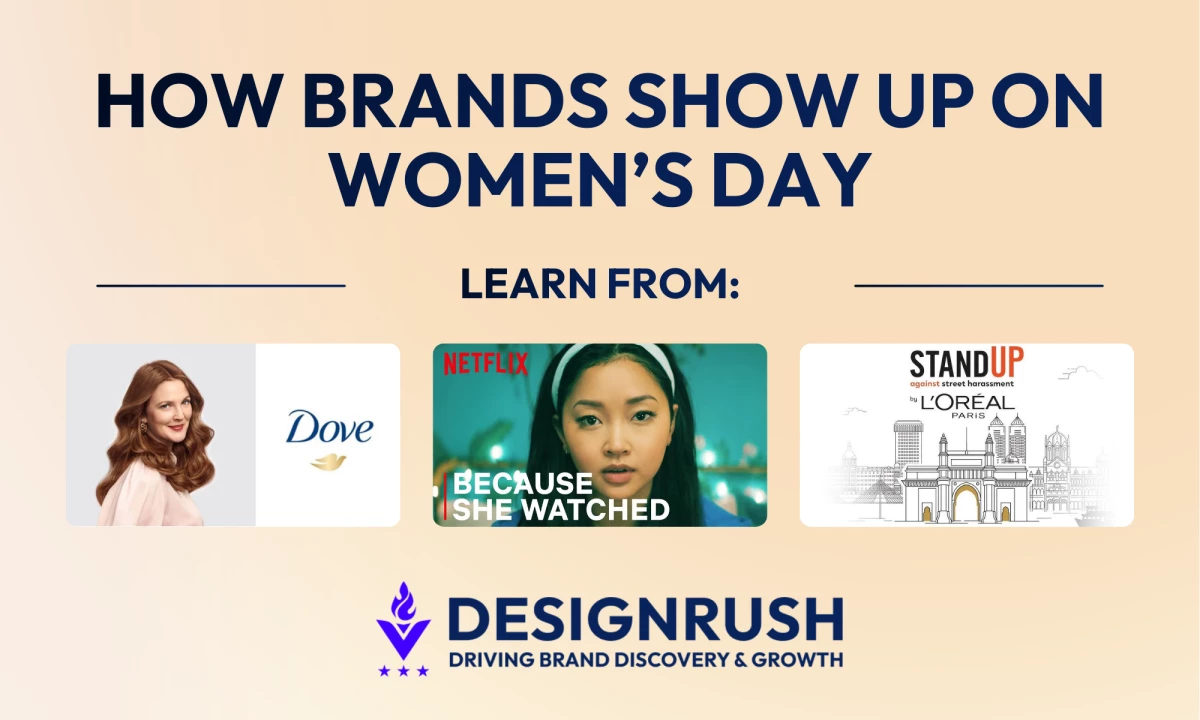

International Women’s Day has become a key moment for businesses to demonstrate how their values translate into action. The 2026 theme, Accelerate Action, encourages companies to move beyond awareness and contribute to real progress toward gender equality.
In this guide, we highlight standout campaigns, common missteps, and practical insights you can apply when planning your next Women’s Day initiative.
Women's Day Marketing Campaigns: Key Findings
- State Street Global Advisors’ Fearless Girl became a global symbol of leadership equality and contributed to 150+ companies adding women to their boards.
- Nike’s Dream Crazier strengthened brand momentum and supported roughly 31% growth in online sales during campaign impact.
- L’Oréal Paris’ Stand Up program trained 2M+ people across 40+ countries, showing the value of sustained commitment beyond March 8.
Women’s Day Is Where Brand Values Meet Marketing Execution
International Women’s Day has grown into a moment that shapes how people view brands and how brands choose to show up publicly.
Many consumers mark the occasion by celebrating the women in their lives, with more than 80% planning to buy gifts or meaningful tokens of appreciation.
As a result, the day brings increased attention across retail, beauty, hospitality, and lifestyle industries, while also encouraging brands to participate in a way that feels respectful and relevant rather than purely promotional.
10 Best Women’s Day Marketing Campaigns
Campaigns launched around March 8 often shape long-term perception because they signal what a company prioritizes, supports, and chooses to amplify.
This connection carries practical importance, as 81% of women worldwide say diversity and inclusion matter to them personally, while 77% report that these values influence the brands they choose.
Women’s Day campaigns therefore function as opportunities for companies to demonstrate awareness, relevance, and consistency through the stories they tell and the initiatives they support.
The campaigns below stand out for translating those expectations into thoughtful execution:
- State Street Global Advisors: Fearless Girl
- Microsoft and National Geographic: #MakeWhatsNext
- Nike: Dream Crazier
- Ariel: #ShareTheLoad
- Barbie: Sheroes Campaign
- Hershey’s: Celebrate SHE
- Netflix: Because She Watched
- P&G: #WeSeeEqual
- Dove and Drew Barrymore: Face of 10
- L’Oréal Paris: Stand Up
1. State Street Global Advisors: Fearless Girl
On Women’s Day 2017, State Street Global Advisors installed a small bronze statue of a girl staring down Wall Street’s Charging Bull just before International Women’s Day. Overnight, it became one of the most photographed pieces of public art in the world.
The campaign transformed a financial services brand into a cultural voice on gender equality in leadership.
As Traylor Woodall, Founder and CEO of Fivestone Studios, explains,
“Much of what brands create is often a one-way conversation, one that customers quickly turn off and ignore. Properly designed interactive installations allow for stickier engagement by providing agency in what they want to learn and discover.”
- Became a global symbol of women in leadership
- #FearlessGirl reached 250,000 people in under 24 hours
- Over 150 companies added women to boards following engagement efforts



2. Microsoft and National Geographic: #MakeWhatsNext
Rather than producing another empowerment commercial, Microsoft focused on the structural problem of girls leaving STEM fields early.
Partnering with National Geographic, the brand highlighted real female explorers, scientists, and innovators, turning International Women’s Day into an invitation for future participation instead of celebration alone.
- Reached millions globally across digital platforms
- Positioned Microsoft as a champion of future female innovators
- Generated large social engagement during International Women’s Day activations
3. Nike: Dream Crazier
Narrated by Serena Williams, Nike’s Dream Crazier in 2020 reframed criticism female athletes often face as proof of ambition. Instead of asking audiences to admire women, Nike asked them to rethink how society labels ambition itself.
The campaign continued Nike’s strategy of turning social tension into brand momentum.
- Contributed to significant increases in brand value, media exposure, and online sales
- Nike recorded roughly 31% online sales growth following campaign momentum
4. Ariel: #ShareTheLoad
Ariel’s #ShareTheLoad challenged household gender roles by asking men to take equal responsibility for domestic work. Instead of producing a single ad, the brand built a long-running social movement starting in 2015.
Over time, the campaign shifted conversation from detergent features to social equality without losing product relevance.
- 1.5 million+ men pledged to share household work
- Belief that chores are women’s work dropped from 79% to 52% among surveyed men
- Campaign won multiple Cannes Lions awards and ran globally for years
5. Barbie: Sheroes Campaign
Barbie spent years responding to criticism about unrealistic beauty standards. The Sheroes campaign marked a turning point in 2015.
Instead of defending the brand, Barbie celebrated real women like athletes, activists, and entrepreneurs, by turning them into Barbie dolls.
The campaign reframed Barbie from fantasy icon to representation platform.
- Major social engagement and earned media globally
- Helped reposition Barbie from beauty icon to aspiration and representation brand
6. Hershey’s: Celebrate SHE
Hershey demonstrated how a small creative decision can spark large cultural attention.
For International Women’s Day, the brand altered its chocolate bar packaging by emphasizing SHE within the Hershey logo, spotlighting women making community impact.
Simple execution turned packaging into media.
- 63 million impressions
- 7.3 million reach
- 183,000 engagement
7. Netflix: Because She Watched
Netflix approached Women’s Day 2020 from a platform perspective rather than a brand one.
The campaign showcased how women’s viewing choices influence which stories get funded and produced, positioning audiences themselves as cultural decision-makers.
It subtly reinforced Netflix’s data advantage without feeling corporate.
Results:
- Strong engagement around female-driven storytelling
- Reinforced perception of Netflix as an inclusive content platform
8. P&G: #WeSeeEqual
While many brands run standalone Women’s Day campaigns, P&G built an entire corporate platform in 2020.
#WeSeeEqual united multiple brands under one equality message while knowing credibility depends on internal action as much as advertising.
The campaign expanded beyond marketing into hiring practices, representation goals, and long-term brand storytelling.
Results:
- Activated across dozens of global brands
- Positioned P&G as a corporate leader in equality initiatives
9. Dove and Drew Barrymore: Face of 10
In 2024 Dove extended its long-running Real Beauty platform by addressing beauty pressure and self-confidence through celebrity storytelling.
Partnering with Drew Barrymore, the campaign challenged unrealistic beauty standards and encouraged women to embrace authenticity.
- Continued strong engagement supporting Dove’s Real Beauty positioning
- Reinforced a campaign platform credited with helping Dove grow into a multi-billion-dollar global brand
10. L’Oréal Paris: Stand Up
In 2019, L’Oréal expanded Women’s Day marketing beyond messaging by launching global training programs teaching people how to intervene safely against street harassment.
The initiative reflects the company’s broader commitment to supporting women through practical action, building on a series of programs focused on safety, confidence, and empowerment.
- Program trained over 2 million people worldwide
- Implemented in 40+ countries through partnerships with NGOs
Women’s Day Marketing Campaign Trends Brands Are Following
Women’s Day campaigns are getting more proof-of-impact instead of a mere celebration post.
The clearest shift brands are making is towards building March 8 programs that look like strategy because audiences are quicker to reward credibility and even quicker to punish anything that feels performative.
Let’s look at the trends brands are following to create winning marketing campaigns.
- Purpose-driven marketing with less brand poetry and more utility
- Employee storytelling: Real people vs. polished brand voice
- Co-creating credibility with NGOs, educators, and local orgs
- Cause-based commerce: Sales promos… but with receipts
- Long-term commitments and moving beyond March 8
Purpose-Driven Marketing With Less Brand Poetry and More Utility
Brands are moving away from vague empowerment language and toward purpose that feels personally relevant, like safety, stability, opportunity, access.
Edelman’s 2025 brand trust research shows 80% of people trust the brands they use, and it frames a key expectation shift in which consumers want brands to deliver economic hope and personal stability, and not just values statements.
What’s changing in campaigns:
- More here’s what we’re doing
- Less here’s what we believe without action
Employee Storytelling: Real People vs. Polished Brand Voice
Women’s Day content is increasingly led by employees with first-person stories, day-in-the-life reels, career journeys, and mentorship wins because internal voices feel harder to fake than brand copy.
Edelman’s 2025 Trust Barometer release highlights trust remains local, with my employer trusted by 75% among employees, even amid a decline.
And Edelman’s 2024 release similarly notes my employer at 79% trust among employees and my CEO at 69%.
What’s changing in campaigns:
- More employee-led spotlights, not just exec quotes
- More behind-the-scenes how we work proof
Co-Creating Credibility With NGOs, Educators, and Local Orgs
Instead of running solo campaigns, brands are partnering with credible third parties, like nonprofits, educators, shelters, women-in-STEM orgs, and community networks to avoid purpose-washing and to make impact measurable.
YouGov’s global research found over seven in ten consumers across 17 markets say they would boycott a brand if a company or its leaders act in ways they object to, which raises the stakes for getting Women’s Day right.
What’s changing in campaigns:
- More co-branded initiatives, like training, funding, scholarships, safety programs
- More shared reporting such as impact dashboards, program milestones, independent validation
Cause-Based Commerce: Sales Promos… but With Receipts
Brands are increasingly tying Women’s Day offers to clear give-back mechanics like percentage of revenue, fixed donation per order, matched contributions, or limited-edition products funding a program.
The commerce angle works when it’s transparent and measurable.
This approach reflects a wider shift toward what Scott Goodson, Co-Founder of StrawberryFrog, describes as movement marketing:
“We’re talking about forging connections so strong, your customers would tattoo your logo on their arm. That’s differentiation you can’t buy with a Super Bowl ad. When you nail Movement Marketing, you don’t just have buyers; you have believers.”
Women’s Day campaigns that clearly connect purchasing with shared values often move beyond transactions and build a sense of collective participation, turning customers into advocates who actively support and amplify the brand’s mission.
What’s changing in campaigns:
- More buy = fund X with explicit numbers, not proceeds benefit…
- More post-campaign reporting in total raised and how funds were used
Long-Term Commitments and Moving Beyond March 8
The fastest way to get labeled performative is to appear once a year. Brands are shifting toward multi-year platforms with annual scholarships, ongoing training programs, recurring mentorship, hiring targets, supplier diversity initiatives, with updates each year.
Edelman’s 2025 brand research underscores the “what now?” pressure on brands: trust is high for brands people use, but expectations are increasingly tied to real-life outcomes and stability.
And YouGov’s boycott data reinforces the risk: the cost of inconsistency is higher when a majority say they’ll punish missteps.
What’s changing in campaigns:
- More year-round programs instead of one-off stunts
- More follow-ups: annual reporting, milestones, renewed funding, expanded partnerships
5 Woman’s Day Marketing Campaign Fails
While many brands aim to show support and awareness, misjudged messaging, unclear intent, or tone-deaf execution can quickly shift attention to criticism.
The examples below highlight campaigns that sparked backlash and the lessons businesses can take from them.
- Burger King: Women Belong in the Kitchen
- BrewDog: Pink IPA
- McDonald’s: Upside-Down Golden Arches
- Audi China: Wedding Inspection Commercial
- Bic: Look Like a Girl, Act Like a Lady
1. Burger King: Women Belong in the Kitchen
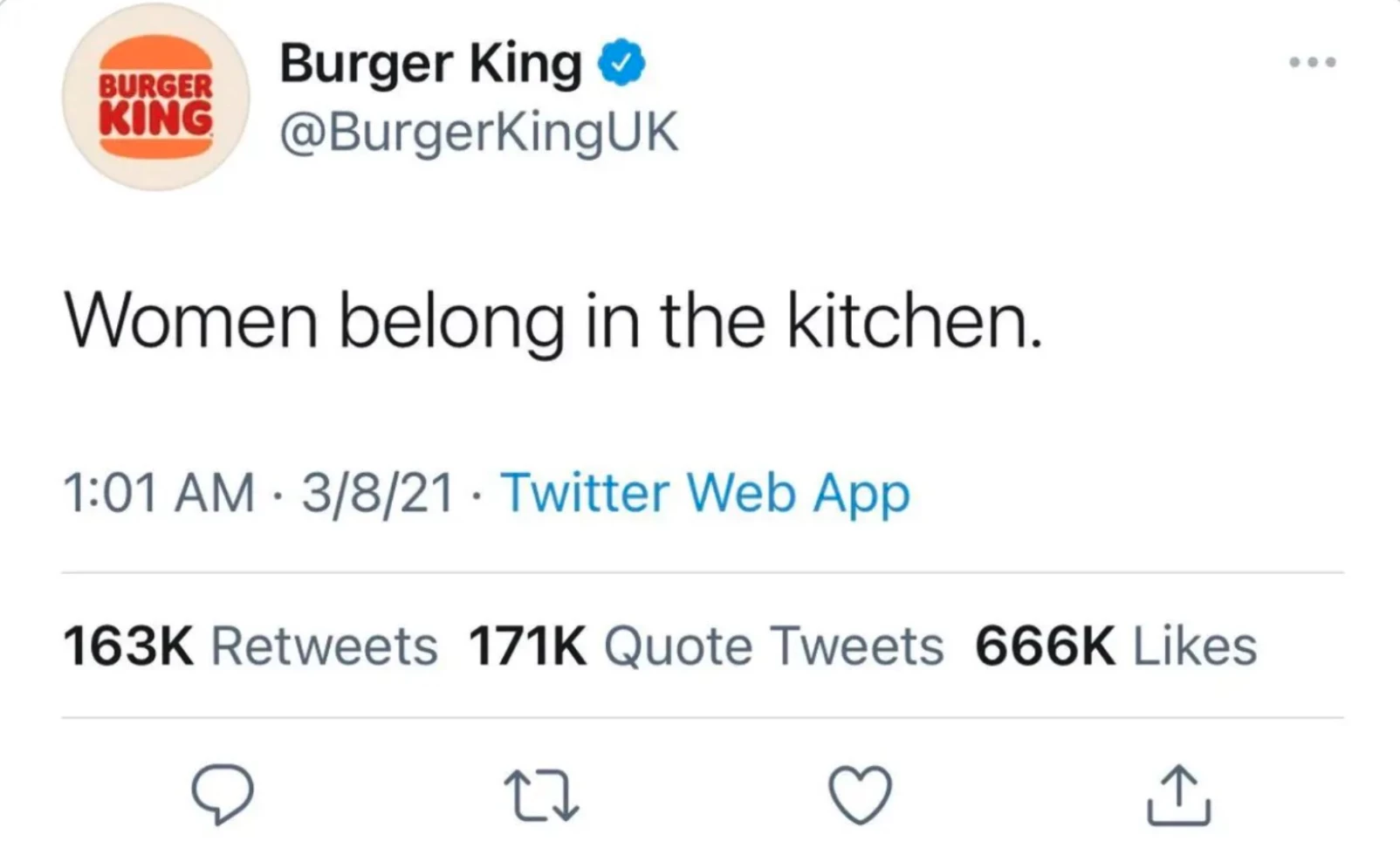
Burger King’s Women’s Day campaign is now taught as a modern social media crisis case study.
In 2021, the UK account tweeted:
Women belong in the kitchen.
The post was meant to introduce the H.E.R. culinary scholarship program supporting female chefs highlighting that only 20% of chefs are women. But the context arrived after the headline, and most audiences never saw it.
The opening tweet spread faster than the explanation.
- Tweet triggered mass global backlash within hours
- Generated hundreds of thousands of reactions and quote-tweets, vastly outperforming the scholarship announcement itself
- Brand experts cited the incident as an example of shock marketing backfiring
2. BrewDog: Pink IPA
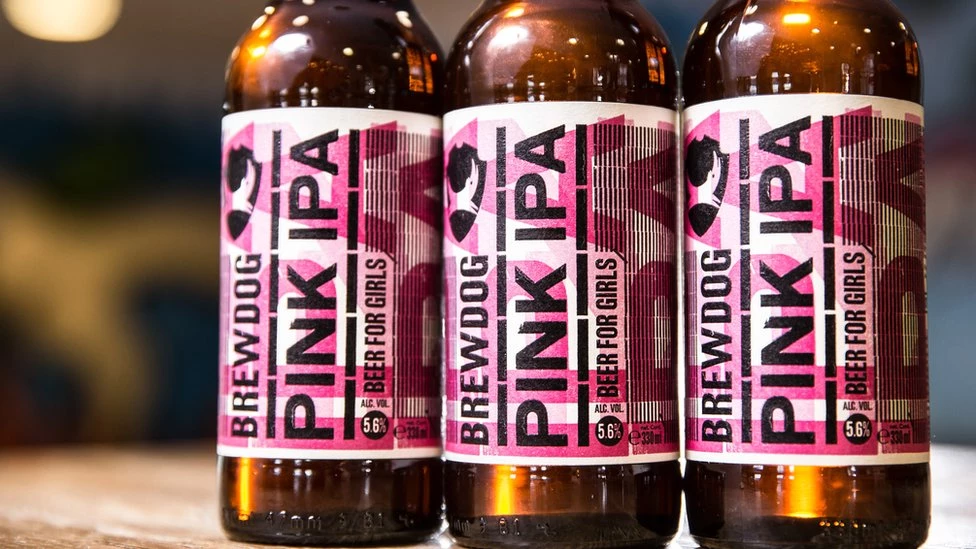
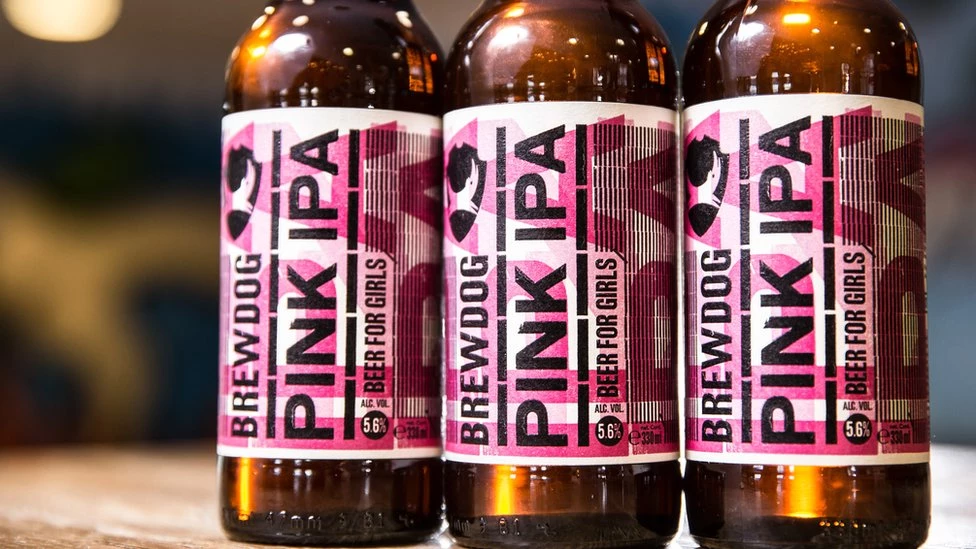 In 2018, BrewDog attempted satire by launching a pink-label beer called Pink IPA to criticize sexist marketing and highlight the gender pay gap.
The problem with this campaign was that audiences couldn’t tell whether the brand was mocking sexism or repeating it.
And this won’t be the last time BrewDog stirs up a bit of backlash over its campaigns.
- Immediate consumer backlash accusing the campaign of pinkwashing feminism
- Regulatory complaint officially upheld against the campaign packaging
- BrewDog leadership later acknowledged the campaign as a mistake
3. McDonald’s: Upside-Down Golden Arches
In 2018, McDonald’s flipped its famous M logo into a W to celebrate women.
The visual stunt gained enormous visibility but quickly sparked criticism that symbolic gestures were replacing meaningful workplace action.
- Massive social media attention mixed with negative sentiment
- Public debate shifted from celebration to accusations of performative branding
- Media coverage focused more on criticism than celebration
4. Audi China: Wedding Inspection Commercial
In 2017, Audi released an ad showing a groom’s mother inspecting a bride, comparing her value to checking a used car before purchase.
The brand intended social commentary but instead appeared to reinforce objectification.
- Immediate backlash across Chinese social media platforms
- Audi pulled the advertisement and issued an apology
- Campaign damaged launch momentum in a key global market
5. Bic: Look Like a Girl, Act Like a Lady
In 2015 stationery brand Bic released messaging encouraging women to:
Look like a girl, act like a lady, think like a man.
Instead of empowerment, the slogan reinforced stereotypes International Women’s Day campaigns are meant to challenge.
- Global social media backlash labeling the campaign sexist
- International media criticism forced brand distancing from messaging
- Became a frequently cited example of failed empowerment advertising
Why Do Some Women’s Day Campaigns Backfire?
International Women’s Day has become one of the most visible cultural moments on the marketing calendar, which is exactly why mistakes travel so fast.
Brands don’t wake up thinking, Let’s offend half the internet today. They usually think they’re being bold, clever, or supportive.
Looking at high-profile missteps, a few consistent patterns explain why some campaigns collapse instead of connect.
- Treating Women’s Day as a moment instead of a commitment
- Even bad publicity is good publicity mentality
- Misjudging tone and cultural sensitivity
- When symbolism replaces substance
- When the brand story doesn’t match the brand reality
Treating Women’s Day as a Moment Instead of a Commitment
One of the biggest triggers for backlash is when a brand suddenly appears passionate about gender equality once a year.
If there’s no visible year-round effort, no hiring initiatives, no partnerships, no internal stories, no previous engagement, the campaign feels like it was pulled from a content calendar template.
That’s partly why symbolic gestures, like logo changes or single-day activations, sometimes receive skepticism instead of praise.
It’s true that audiences don’t expect brands to solve inequality overnight, but they do expect consistency.
Even Bad Publicity Is Good Publicity Mentality
There are one too many examples out there that prove provocation alone does not guarantee effective marketing.
Burger King’s tweet controversy illustrates this perfectly. The brand intended to spark conversation around an important issue, but audiences encountered the shock before the explanation.
Once audiences react without context, the narrative shifts away from the brand and at that point, attention stops working as an asset and starts working against it.
Misjudging Tone and Cultural Sensitivity
International Women’s Day intersects with real discussions about workplace inequality, representation, and lived experience. As it should.
So, when a campaign treats the day lightly or turns it into a clever branding exercise, it can feel disconnected from reality.
Campaigns like Audi’s widely criticized commercial or BrewDog’s attempt at satire show how easily tone can be misread.
Humor, irony, or shock tactics that might work in traditional advertising often struggle here because audiences expect awareness, not experimentation.
When Symbolism Replaces Substance
Audiences have become extremely good at spotting surface-level support.
If a campaign says we support women but doesn’t show:
- Funding
- Programs
- Policy updates
- Partnerships
- Internal commitments
people notice.
And once they notice, the conversation shifts from celebration to scrutiny.
When The Brand Story Doesn’t Match the Brand Reality
If a company’s marketing voice suddenly adopts strong social positioning without a clear history or supporting action, audiences notice the disconnect.
This tension often explains why campaigns meant to support women instead invite scrutiny of company culture, leadership decisions, or past behavior.
In other words, the campaign becomes a mirror reflecting the brand itself.
The Most Important Tip for Women's Day Marketing Campaigns in 2026
If you’re planning a Women’s Day campaign this year, pause before you open the content calendar.
Instead, begin by asking what role your brand genuinely plays in your audience’s lives and how that role can be strengthened in a meaningful way.
So, instead of beginning with:
What should we post on March 8?
Try this:
What would genuinely matter to the women who choose our brand?
That might mean spotlighting real employees. It might mean investing in something practical. It might mean saying less, but backing it with action people can see.
This approach aligns with a broader shift toward more human-centered brand communication. As Goodson notes,
“Next time you’re wondering how to make your brand matter, remember: Sometimes the most revolutionary thing you can do is remind people they’re human.”
Approach it with empathy first, marketing second, and you’ll avoid most of the pitfalls brands run into every March.
If you’re looking to turn thoughtful campaign ideas like these into engaging brand storytelling, partnering with experienced marketing teams can help bring those ideas to life.
Our team ranks agencies worldwide to help you find a qualified partner. Visit our Agency Directory for the top digital marketing agencies, as well as:
- Best Video Production Companies
- Top Branding Companies
- Top Creative Agencies
- Top Digital Strategy Agencies
- Top Social Media Marketing Agencies
Women’s Day Marketing Campaigns FAQs
1. What makes a Women’s Day marketing campaign successful?
A strong Women’s Day campaign connects to real action, not just messaging. Campaigns resonate most when they reflect the brand’s values year-round and offer something meaningful — whether that’s support, visibility, or opportunity.
2. Should every brand participate in International Women’s Day?
Not every brand needs to participate. If the connection feels forced or unrelated to what the company does, audiences will notice. Participation works best when it aligns naturally with the brand’s purpose and audience.
3. How can brands avoid backlash during Women’s Day campaigns?
Backlash often happens when messaging feels unclear or disconnected from reality. Brands reduce risk by communicating intentions clearly, staying culturally aware, and ensuring their campaign reflects real internal practices.
4. What types of Women’s Day campaigns perform best today?
Campaigns centered on real stories, measurable impact, and ongoing commitments tend to perform better than one-day promotional posts. Audiences respond to relevance and sincerity over spectacle.
5. When should brands start planning their Women’s Day campaigns?
Planning should begin months in advance, especially if partnerships or initiatives are involved. Early preparation allows brands to align messaging with action and avoid rushed, surface-level ideas.