
Behavior-based email triggers respond to what customers are actually doing: browsing, comparing, abandoning, buying, or drifting away.
And when paired with AI, those signals become predictive, not just reactive. The result: more relevance, better timing, and significantly higher revenue from the same audience.
Behavioral Email Triggers: Key Findings
- Start with cart abandonment and pricing-page triggers. These capture customers already close to conversion.
- Replace fixed timing with behavior-based timing to lift conversions. Use engagement patterns based on individual behavior, especially for re-engagement and post-purchase flows.
- Build sequences, not single emails. Most conversions happen after the first send and capture interrupted buyers, not just hesitant ones.
How Behavioral Email Triggers and AI Drive Revenue
Omnisend's eCommerce benchmark data is clear: automated emails generate an average of $2.87 in revenue per send, compared to $0.18 for scheduled campaigns.
That $2.69 gap comes down to messages sent at moments of intent compared to those sent on a fixed schedule.
At scale, the cost compounds quickly:
| Missed trigger sends | Revenue at $0.18 (scheduled) | Revenue at $2.87 (automated) | Missed revenue potential |
| 10,000 | $1,800 | $28,700 | $26,900 |
| 50,000 | $9,000 | $143,500 | $134,500 |
| 100,000 | $18,000 | $287,000 | $269,000 |
We’ve explored email automation ROI benchmarks in-depth here.
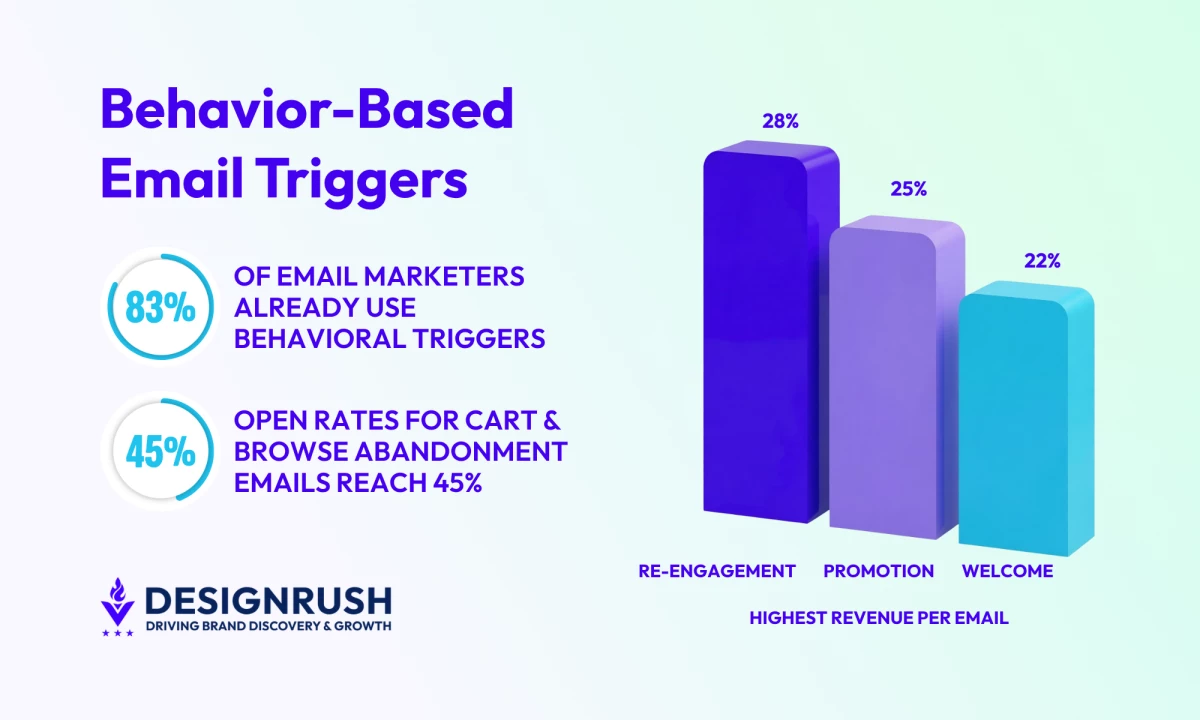
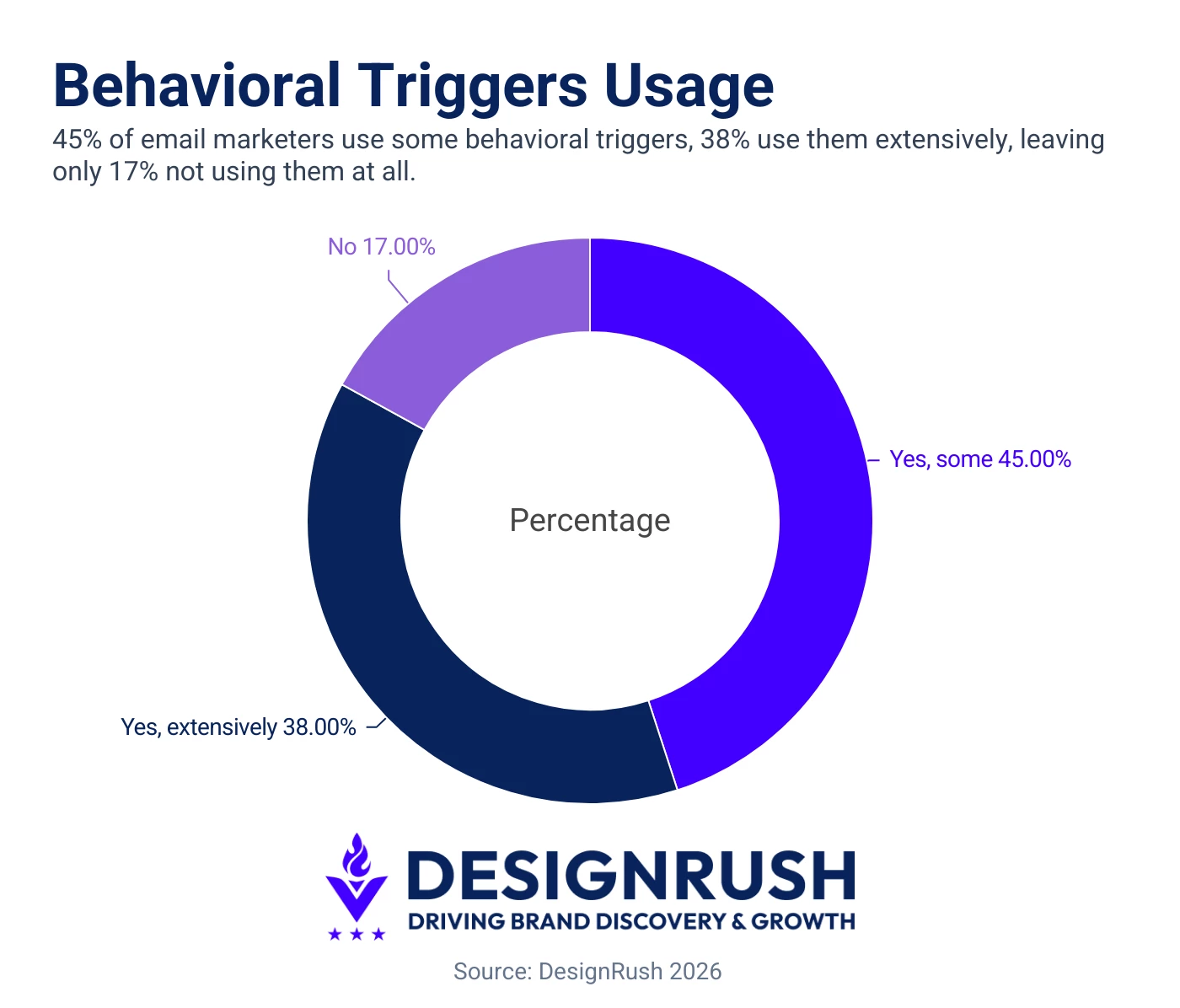
According to DesignRush's 2026 Benchmark Survey, 83% of email marketers are already using behavioral triggers (such as cart abandonment, browsing activity, and lifecycle events) to some extent.
Instead of “Tuesday at 10 AM,” triggers respond to real actions (browsing, abandoning, purchasing, or disengaging) when customers are most likely to act.
AI strengthens this by identifying patterns early:
- Predicting churn before inactivity thresholds
- Detecting high-intent behavior within browsing patterns
- Adjusting timing and messaging at the individual level
The result is a system that responds faster, targets more precisely, and converts more consistently.
The behavior-based email triggers below are where that impact translates directly into revenue.


Re-Engagement Triggers Drive the Most Revenue for 28% of Email Marketers
Re-engagement triggered email marketing fires after a defined period of subscriber inactivity, typically 60 to 90 days without an open, click, or purchase, depending on your category's natural purchase cycle.
It identifies contacts who have gone quiet and initiates a deliberate sequence to either recover the relationship or cleanly remove the contact from active sends.
Where AI changes the equation
Most teams set re-engagement triggers on a fixed inactivity threshold: 60 days for everyone, regardless of that subscriber's historical behavior. AI removes that bluntness.
By analyzing individual engagement patterns, purchase cadence, and browse frequency, AI can identify when a specific subscriber is drifting before the 60-day mark and initiate re-engagement earlier, when recovery is more likely.
It also predicts which disengaged contacts are worth the effort and which are structurally inactive, so your sequence reaches the right segment with the right message rather than blanketing a cold list uniformly.
The revenue case
DesignRush's 2026 survey found that 28% of email marketing professionals identify re-engagement as the funnel stage generating the highest revenue per send, ahead of promotional emails (25%), nurture sequences (24%), and welcome flows (22%).
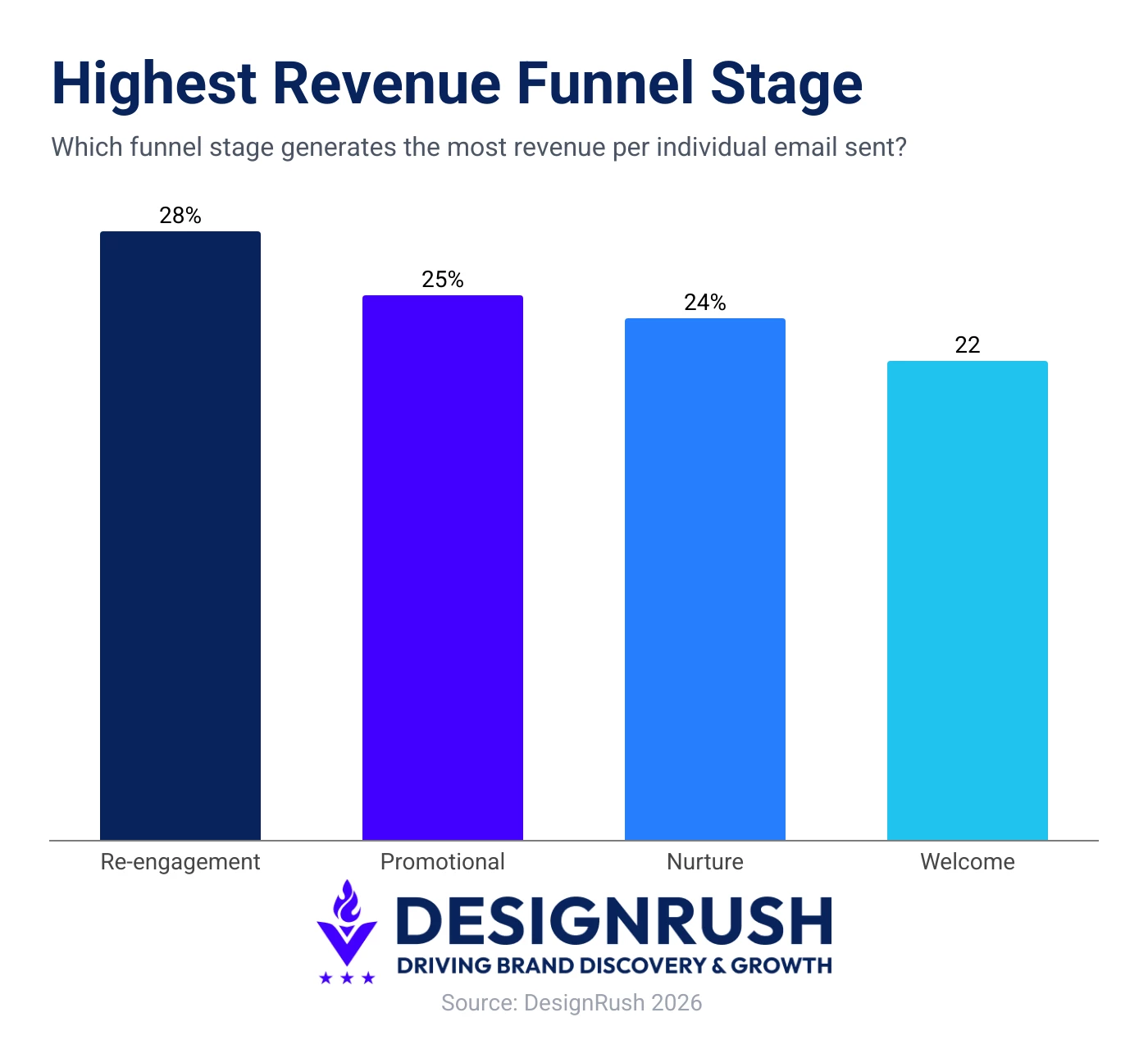
This ranking inverts the priority of most automated email programs, which typically treat re-engagement as a list-hygiene task rather than a primary revenue lever.
At this stage, the goal is to give a disengaged subscriber a reason to reidentify with your brand. Loss aversion drives opens ("what you're missing"), but identity-framing drives conversions ("for people who care about X").
How to build it
- Day 60: Send a soft re-introduction with a value reminder, with no offer yet. Lead with what the subscriber originally signed up for.
- Day 75: Escalate with a stronger proof point or offer. This is where social proof, new product highlights, or a time-limited incentive earns its place.
- Day 90: Send a list-hygiene decision email framed as a last-contact message. Either the subscriber re-engages or is removed from active sends.
The Day 90 email typically outperforms the first two in conversion because finality triggers action.
An explicit "this is our last message" framing creates urgency that discount codes rarely achieve on their own.
None of this works if the re-engagement send itself doesn't land. See the deliverability fixes for engagement decay, which is the #3 problem in our deliverability research.
Abandoned Cart Triggers Drive Up to $260 Billion in Recoverable Revenue
An abandoned cart trigger fires when a known subscriber adds one or more items to their cart and exits without completing a transaction.
It identifies a high-intent moment — the subscriber has already made a selection decision — and initiates a recovery sequence to bring them back to a purchase that was interrupted, not abandoned.
Where AI changes the equation
A rules-based cart flow treats all abandonment the same: one trigger condition, one sequence, one set of timing intervals.
Meanwhile, AI segments the intent behind the abandonment. It distinguishes between a price-sensitive buyer who paused at checkout, a distracted buyer who left mid-session, and a comparison shopper who is likely evaluating alternatives, and routes each to a different message.
AI also dynamically adjusts send timing based on when that specific subscriber is most likely to re-engage, rather than applying a fixed one-hour delay to every contact.
The revenue case
The global cart abandonment rate sits at approximately 70%, representing an estimated $260 billion in recoverable revenue annually, according to Baymard Institute.
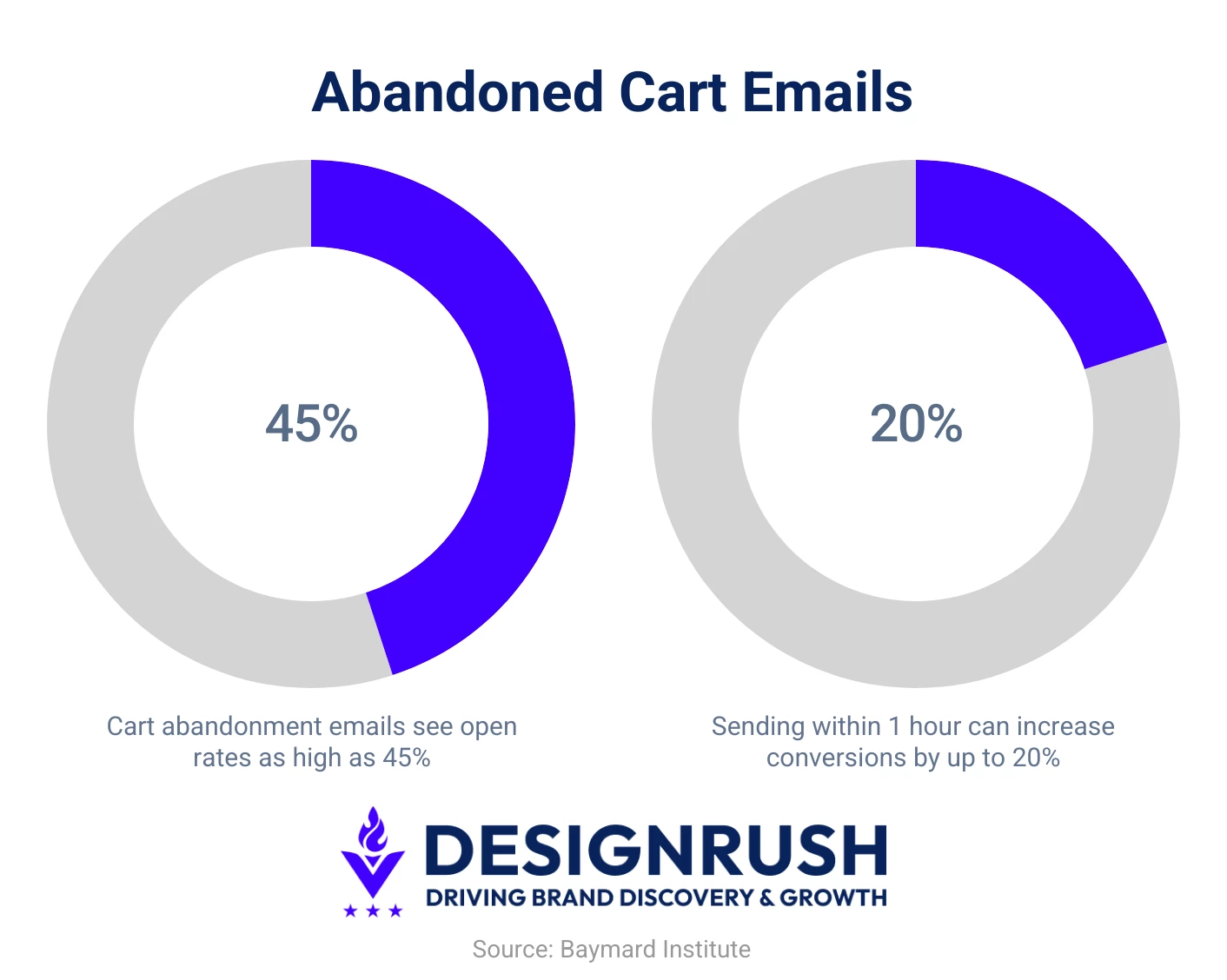
Cart abandonment emails achieve an average open rate of up to 45% because recipients have immediate, relevant context for why the email arrived.
Timing matters more here than in any other trigger type. Sending within one hour of abandonment boosts conversions by 20% compared to delayed sends.
How to build it
A flat cart abandonment email sent identically to all abandoners is a floor-level build. High-performing cart flows segment by three variables:
- Cart value: High average order value (AOV) carts get a different message and, at sufficient thresholds, a direct outreach touchpoint.
- Abandonment reason: Price sensitivity signals benefit from an offer; technical errors require a different resolution path entirely.
- Prior purchase history: A repeat buyer who abandons should be treated as a retention situation. A first-time visitor requires a trust-building approach.
Structure the sequence as three emails: a neutral reminder within one hour, a social-proof or urgency message at 24 hours, and a final offer or closing message at 72 hours.
Brands using interactive email design inside the second send, in-email carousels, dynamic pricing, have published cart-recovery uplifts of up to 82%.
Only introduce a discount at step three. Leading with one trains your audience to abandon in order to receive one.
Browse Abandonment Triggers Drive 42% Open Rates From High-Intent Shoppers
A browse abandonment trigger fires when a known subscriber views one or more product or category pages and exits without adding anything to their cart.
It identifies interest that has not yet converted to selection — the subscriber is in active consideration but hasn't committed. Then, it initiates a sequence designed to extend, not force, that consideration.

Where AI changes the equation
Basic browse abandonment flows fire on a single condition: the subscriber viewed a product page.
AI adds depth to that signal. It analyzes browse patterns (how many pages were viewed, how much time was spent, whether the same category was revisited across multiple sessions) to distinguish casual exploration from high-intent evaluation.
A subscriber who has viewed the same product three times in 48 hours is categorically different from a subscriber who browsed once. AI routes each differently, so your sequence meets the subscriber at their actual intent level rather than applying the same message to both.
The revenue case
Browse abandonment emails achieve a 42.16% open rate and a 10.68% click-to-conversion rate (Omnisend). Conversion rates are lower than cart abandonment, but the volume of qualifying events is substantially higher.
Most brands generate far more browsing sessions than cart additions, making browse abandonment one of the largest addressable trigger opportunities in a standard email program.
How to build it
A two-step sequence with a 24-hour gap between sends:
- Email 1: Reintroduce the specific products viewed. Lead with social proof like reviews, ratings, and low-stock signals where applicable. Keep the tone informational, not transactional.
- Email 2 (sent only if no purchase occurs): Introduce a related or complementary category to widen the consideration set. This expands the path to conversion rather than repeating the same ask.
Resist the impulse to introduce a discount at step two. Browse abandonment audiences that receive an unprompted discount are being conditioned to wait for one before buying.
Post-Purchase Triggers Increase Lifetime Value With AI-Driven Timing Optimization
A post-purchase trigger fires on a confirmed transaction and subsequently at predictable relationship milestones that follow from it: product delivery, the end of the typical usage window, cross-sell timing, and the review-ready moment.
It treats the purchase not as the end of a conversion journey but as the beginning of a retention one.
Where AI changes the equation
Standard post-purchase flows run on fixed timing: a delivery confirmation at day one, a review request at day seven.
AI replaces fixed timing with behavioral timing. It identifies the following:
- When a specific customer's usage pattern suggests they are ready for a cross-sell recommendation
- When repurchase intent for that category typically peaks based on cohort data
- Which product combinations have the highest affinity based on purchase history across similar customers.
The result is a post-purchase sequence that adapts to the customer's actual lifecycle rather than a generic schedule applied to everyone.
The revenue case
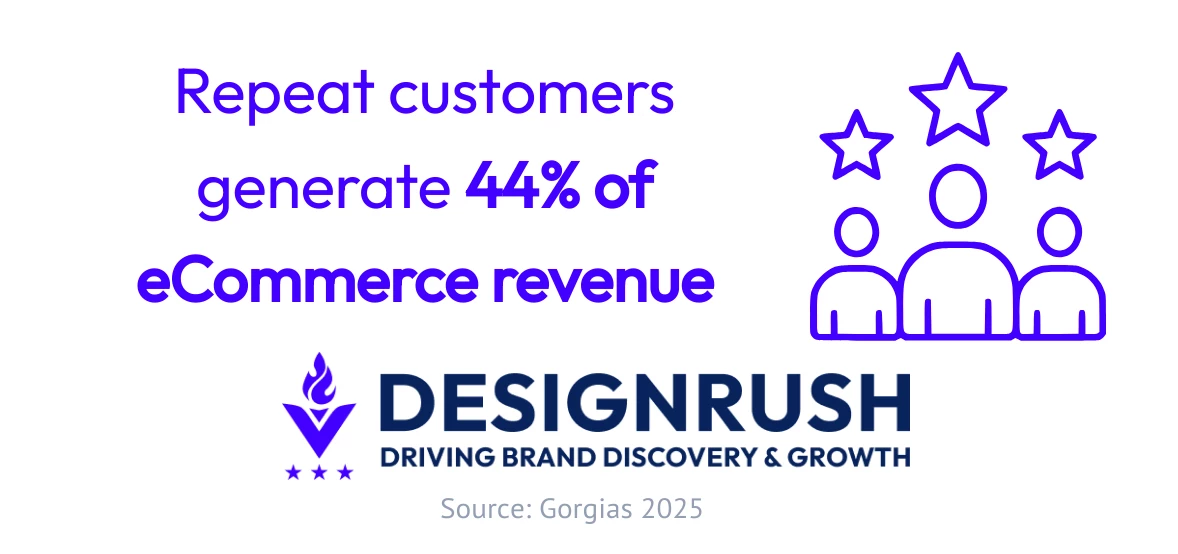
Repeat customers drive 44% of eCommerce revenue despite making up just 21% of the customer base.
 The post-purchase window (roughly 24 to 72 hours after delivery) is when customer sentiment is at its peak. It’s when buyers are most open to reassurance, guidance, and reinforcement. This isn’t the moment to push another sale but to validate the one they just made.
How to build it
A four-stage sequence, each with a distinct conversion objective:
- Delivery confirmation + product education (within 48 hours): Validate the purchase decision. Provide setup guidance, usage tips, or content that helps the customer get value quickly. Keep it useful, not promotional.
- Check-in or review request (end of typical usage window): Time this to when the customer has had enough experience to form an opinion. A review request sent too early gets ignored; one sent at the right moment generates the social proof that fuels future conversion.
- Cross-sell or complementary recommendation (at category repurchase peak): Use category norms to estimate when repurchase intent is highest. This is the first appropriate moment to introduce another product.
- Loyalty or retention offer (after second purchase): Once a customer has bought twice, treat them as a retention priority. A loyalty invitation or VIP-tier signal at this point compounds lifetime value significantly.
Treating these as a connected sequence prevents the message overlap and missed timing gaps that happen when individual emails are built in isolation.
Pricing and Comparison Triggers Capture the Highest-Intent Buyers
A pricing and comparison trigger fires after signals that distinguish purchase evaluation from general browsing. This is when a customer visits one of these pages:
- Pricing
- Plan selection
- Feature comparison
- High-intent landing page
Someone who spent time on a pricing page has demonstrated a categorically different intent level than one who browsed a product image gallery, and the trigger sequence should reflect that distinction.
Where AI changes the equation
Rules-based systems can identify that a pricing page was visited. AI identifies what the visit pattern means.
It detects:
- Whether the subscriber is on their first visit or returning after a gap
- How long they spent on specific pricing tiers
- Whether they navigated from the pricing page to a feature comparison or testimonial page
- Whether similar behavior in other customers preceded a conversion or a churn
That context shapes a fundamentally different outreach message that's calibrated to where this specific subscriber is in their evaluation, not just that they visited a page.
The revenue case
Pricing page visitors are the highest-intent segment in most email programs, yet many teams either have no trigger for this behavior or fold it into a generic browse abandonment flow.
For businesses without the in-house expertise to coordinate email, landing pages, retargeting, and sales follow-up, experienced digital marketing agencies can help build a more connected response around these high-intent signals.
The cost of treating a pricing visitor like a product browser is a sequence that underserves the moment: too inspirational, too slow, and too generic to close an evaluation already in progress.
How to build it
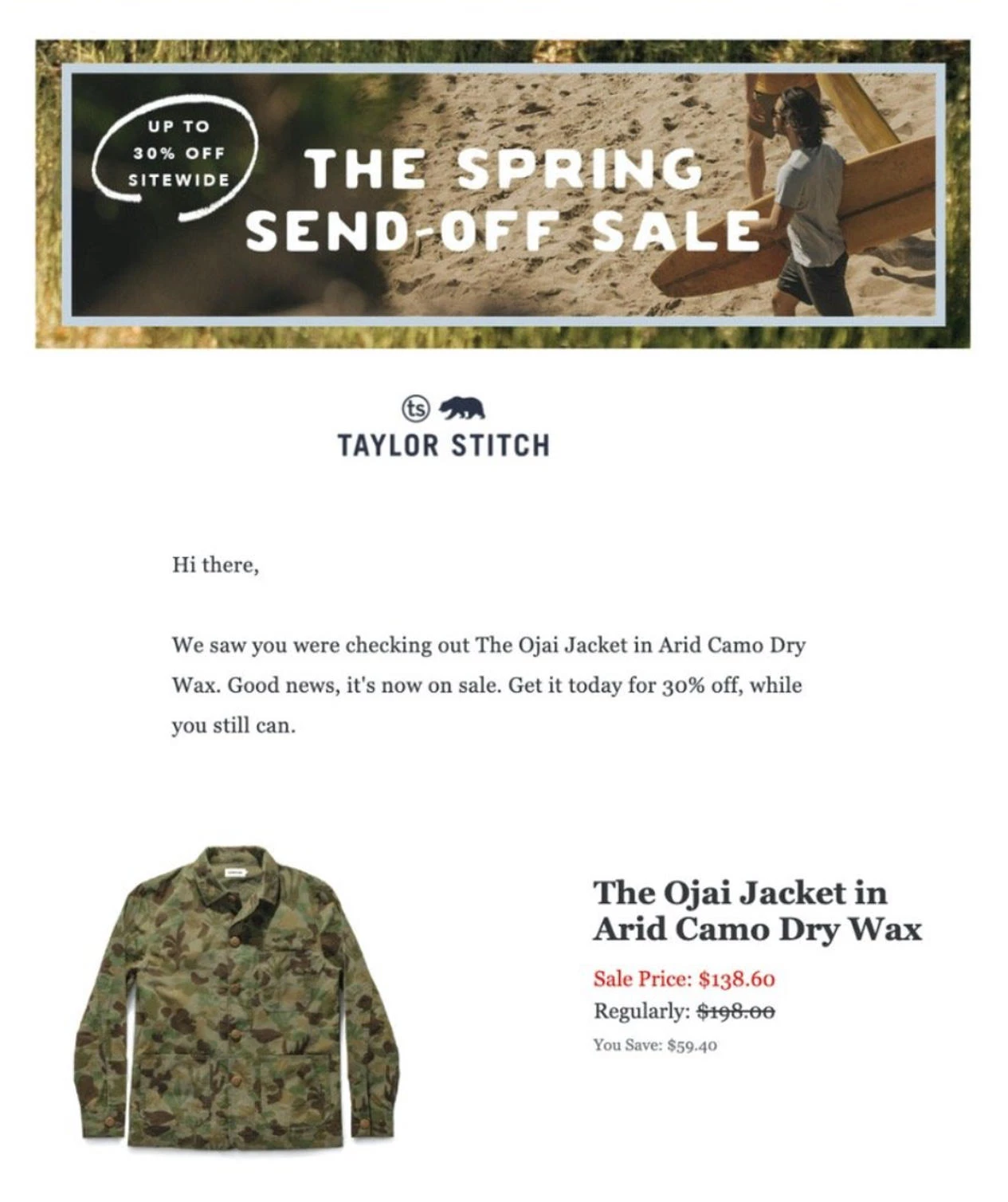
A single, fast email should be sent within two hours of the pricing page visit. The priorities for this type of triggered email marketing are specificity, speed, and objection-handling, not design or storytelling:
- Address the most common decision barrier for your category, whether that’s a price comparison, implementation concern, or proof of outcomes for similar customers.
- Include a clear, low-friction next step, such as a trial extension, a direct line to a sales contact, or a limited-time offer tied to the specific tier or product reviewed.
- Keep the email short, as this audience does not need inspiration. They need confirmation that their evaluation is leading somewhere worth completing.
For SaaS brands, a direct offer from a named team member outperforms a designed promotional email at this stage. For eCommerce, a category-specific offer with a defined expiry functions similarly.
Milestone and Lifecycle Triggers Drive Up to 4x Higher Order Value
Milestone and lifecycle triggers fire on dates and thresholds tied to the individual customer's relationship with the brand:
- Purchase anniversaries
- Subscription renewal windows
- Loyalty tier upgrades
- Product replenishment cycles
- Birthdays (where collected)
Unlike preceding email behavioral triggers that respond to behavioral intent signals, milestone triggers respond to relational signals: the passage of time, the crossing of a threshold, the approach of a meaningful date.
Where AI changes the equation
Most milestone programs fire on a single known date (a birthday, an anniversary) and stop there. AI extends that logic into behavioral prediction.
It identifies the replenishment cycle for individual customers based on their specific purchase history rather than a category average. It detects loyalty tier proximity and triggers a sequence when a customer is one purchase away from an upgrade, rather than waiting for the upgrade to occur.
For subscription businesses, AI models churn risk at the renewal window and adjusts the pre-renewal sequence to match the subscriber's specific risk profile. The program stops being calendar-based and starts being customer-specific.
The revenue case
Milestone emails consistently outperform standard campaigns even when they carry no offer. The customer is not responding to a deal; they are responding to being seen.
Birthday campaigns, for example, have been shown to generate average order values more than 4x higher than typical purchases (Omnisend). The performance gap is driven by psychological context, not discount depth.
How to build it
Most teams implement a birthday discount and, if the program is developed, a purchase anniversary email. That is the floor.
The ceiling — and where the compounding revenue sits — is in three under-deployed trigger types:
- Replenishment triggers: Timed to when a consumable product typically runs out based on purchase date and category norms. The data to set this is already in your order history.
- Loyalty tier proximity: Triggered when a customer is one purchase away from reaching the next tier.
- Subscription renewal pre-emption: A three-email sequence sent at 30, 14, and 3 days before renewal. This reduces involuntary churn and gives subscribers a reason to recommit.
How Behavioral Email Triggers Compound
The most important insight is not what each trigger does in isolation, but what happens when customers encounter several of them across the lifecycle.
This is where behavioral email becomes part of a broader set of growth marketing strategies, supporting conversion, retention, repeat purchases, and lifetime value at different stages of the journey.
A subscriber can be engaged at multiple intent moments by different types of relevance:
- Receive a well-timed browse abandonment email
- Convert
- Enter a post-purchase sequence
- Hit a loyalty milestone
Automated emails generate up to 320% more revenue than non-automated sends — a gap that compounds as each additional trigger flow reaches more contacts at a moment of genuine intent.
Each trigger flow you build increases the average revenue value of every other contact in your list, because more of those contacts are reached at a moment of genuine intent at some point in their lifecycle.
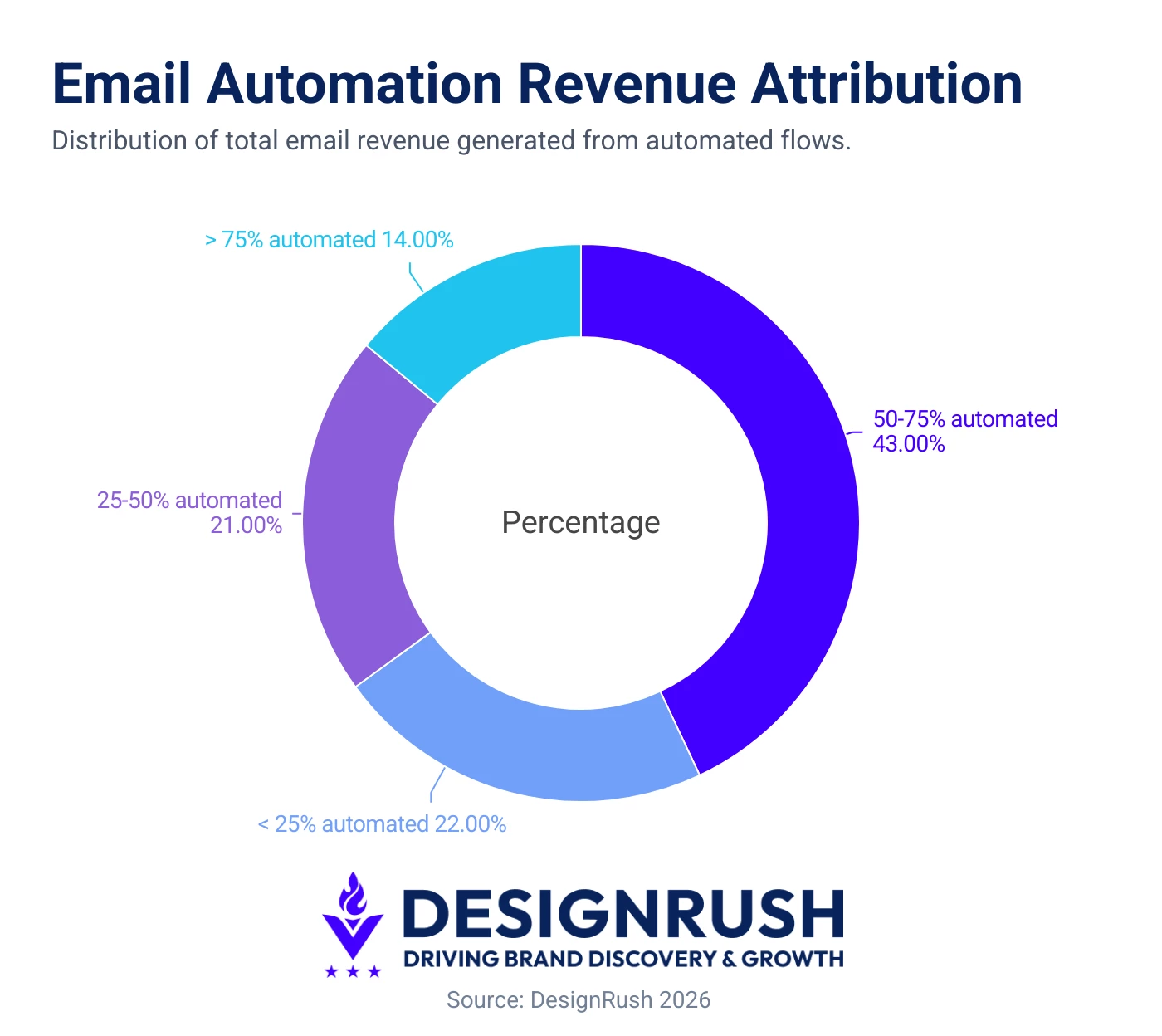
DesignRush's research also found that 43% of email marketing organizations attribute 50% to 75% of their total email revenue to automated flows rather than broadcast campaigns.
This means most of the revenue in a mature triggered email marketing program is already coming from sequences that respond to behavior, not ones that go out on a schedule.
To see how that revenue contribution fits into the bigger picture, learn how to calculate and improve digital marketing ROI using complete cost, attribution, and revenue data.
Behavioral Email Triggers: Final Thoughts
Behavioral triggers are the foundation of modern email marketing.
The shift is simple but critical: stop sending emails based on your schedule and start sending them based on customer intent.
Because in email, timing is the difference between being ignored and getting the conversion.
| DesignRush Email Marketing Benchmark Survey, conducted Apr 2026. Respondents include agency professionals (53%), small business owners (18%), enterprise marketers (11%), and in-house teams (10%). Annual email send volumes range from under 10,000 to over 1 million. |

Our team ranks agencies worldwide to help you find the right fit. Visit our Agency Directory for the top email marketing agencies, as well as:
- Top AI Email Marketing Agencies
- Top B2B Email Marketing Agencies
- Top eCommerce Email Marketing Agencies
- Top UI/UX Design Agencies
- Top Email Marketing Companies In Houston
Behavioral Email Triggers FAQs
1. What is a behavioral trigger in email marketing?
A behavioral trigger is an automated email sent in response to a specific user action, such as browsing, abandoning, purchasing, or disengaging. It replaces fixed schedules with real-time timing, ensuring messages arrive when intent is highest, and decisions are still active.
2. What are the most effective behavioral triggers in email marketing?
The most effective triggers align with key intent moments: cart abandonment, browse activity, re-engagement, post-purchase, pricing-page visits, and lifecycle milestones. Each targets a distinct decision stage, allowing you to guide users from consideration through conversion and retention.
3. How many emails should be in a behavioral trigger sequence?
Most high-performing trigger sequences include two to four emails. This allows you to capture different buyer states, such as distraction, hesitation, or delayed decision-making, without overwhelming the subscriber or reducing message relevance.
4. How can you start using behavioral triggers without advanced AI or a full tech stack?
Start with the data you already have. Most email platforms track key behaviors like opens, clicks, browsing, and purchases. Use these signals to trigger simple, rule-based sequences tied to clear actions, such as abandonment or inactivity, without overcomplicating setup.
5. What’s the best way to scale behavioral triggers over time?
Focus on a few high-intent behaviors first, then expand gradually. Add new triggers, refine timing based on engagement, and introduce deeper personalization as performance improves. Only invest in new tools when your current setup limits tracking or segmentation.
6. Which metrics should you track to measure behavioral trigger performance?
Focus on revenue per email, conversion rate, and time to purchase. These metrics reflect actual business impact, unlike open rates alone, and help you compare triggered flows directly against scheduled campaigns.
7. Can behavioral triggers work for B2B or SaaS email marketing?
Yes. Behavioral triggers are highly effective in B2B and SaaS, where actions like feature exploration, pricing visits, or trial inactivity signal buying intent. These triggers help guide prospects through longer, more complex decision cycles with relevant follow-ups.