Explore leading Magento developers specializing in custom Magento stores, theme development, integrations, performance optimization, and ongoing support. Our expert-led team has curated a list of vetted Magento development companies that help businesses build scalable, high-performing eCommerce platforms.
Organic rankings are determined by five factors: top services, reviews, portfolio, awards/press, and team expertise. Sponsored listings pay for a placement that appears above organic positions. Sponsorship does not affect star ratings or review content - read more on our methodology page.
AppJetty - Magento Extensions, WordPress & Sugar/SuiteCRM Plugins, Odoo & Mobile Apps
Get result-oriented magento extension, sugarcrm & suitecrm plugins, dynamics crm & wordpress widgets, odoo apps & themes and mobile application to boost business revenue...
Top Services:
- eCommerce Development
- Mobile App Development
- Location
- Ahmedabad, India
- Number of Employees
- 250 - 499
- Average Hourly Rate
- $100/hr
- Minimal Budget
- $25,000 - $50,000
Data sourced from the agency's DesignRush profile, its website, and other relevant accountsAppJetty Services
Data sourced from the agency's DesignRush profileBSM Cliff Make up Studio
AppJetty Reviews & Testimonials
Nikita Patel's Review Sourced from Google
I have 3 Appjetty apps for Dynamic - Dynamic 365 calendar, smart alerts and Mappyfield. The support has been outstanding. Planning to invest in more of their apps.
Abdulaziz samama (شريف من ارض الحجاز)'s Review Sourced from Google
In order to understand the meaning of dealing with transparency and fair dealing, you write on your site that the customer who wishes to buy the module should write down the name of the domain and that the license for one domain and then you meet your endless requirements that the required one copy regardless of your basic request is the name of the domain and is the main address for the use of your moduleSo that's why I asked for a meeting in voice so that I could deliver the message that lasted 4 hours of endless trading and repeated evasion, with builds only failure and mistrust.I got the module that will meet my services and the total number of my stores without blackmail and fraud that does not respect your site in a place that respects its requirements and conditions.
Reviews verified by DesignRush and sourced from the agency's profile View All Reviews



Explore eCommerce Development Specializations
Popular Services
Everything You Need To Know Before Hiring Magento Development Companies
What can Magento developers do for your business?
Hiring Magento developers helps businesses run complex ecommerce stores that require strong performance, security, and custom functionality.
Here are five key benefits Magento developers bring to your business:
1. Higher Conversions and ROI
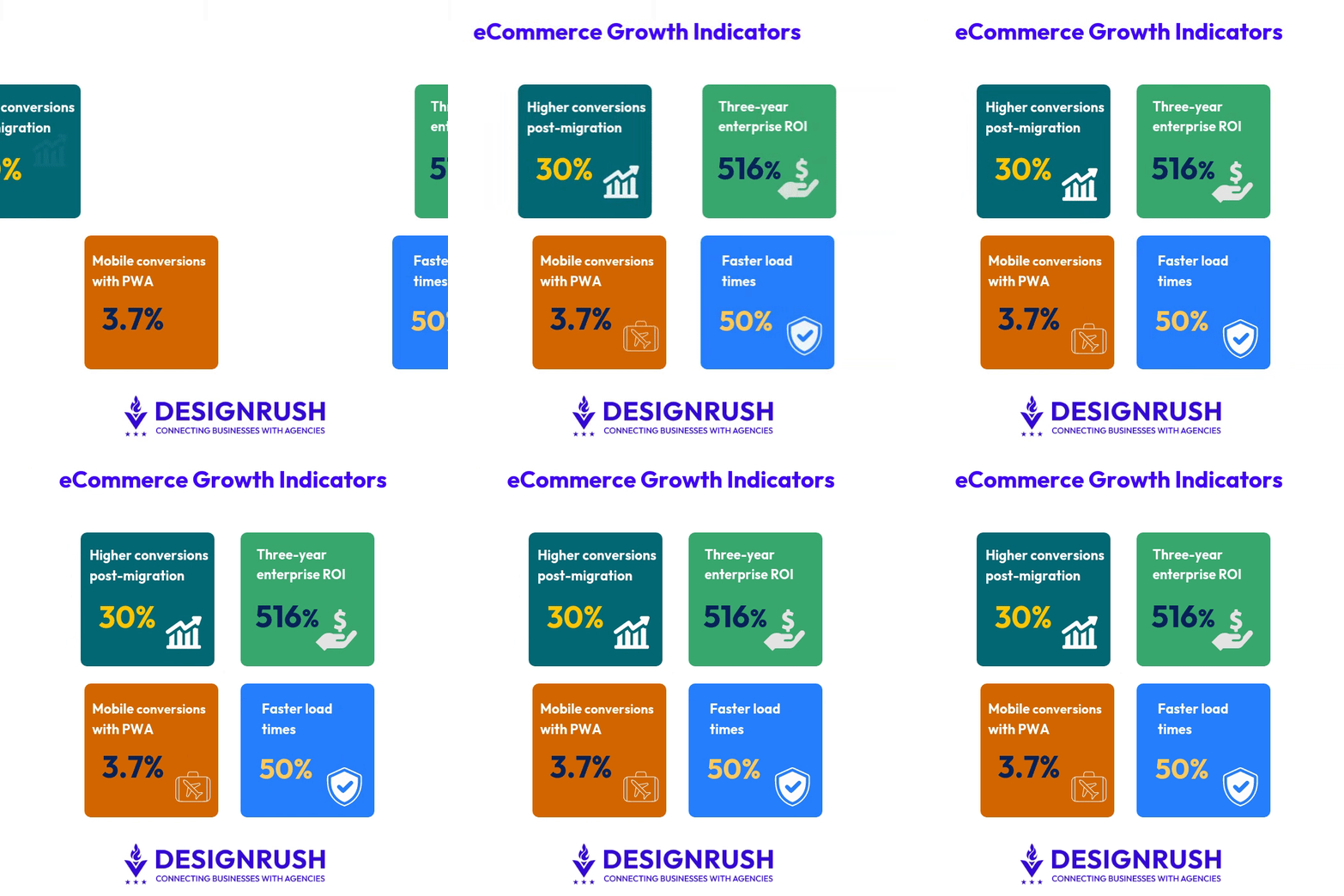
Developers improve store performance and architecture using tools such as Hyvä or PWA Studio. Enterprise Magento projects can generate 516% ROI over three years.
Migrating to Magento 2 often results in 30% higher conversion rates and 50% faster load times compared to outdated or poorly optimized stores.
2. Strong B2B Capabilities and Higher AOV
Magento supports advanced B2B workflows such as Request for Quote (RFQ) and shared catalogs, but these features require developer setup.
Magento B2B stores often achieve an Average Order Value (AOV) 2.5 times higher than B2C stores and report a 50% higher repeat purchase rate.
3. Better Security and Risk Reduction
Magento requires proper maintenance to remain secure. Currently, 87% of Magento stores are at serious risk of cyberattacks without regular updates and monitoring.
Magento developers implement security measures such as two-factor authentication and patch management, which can reduce breach costs by up to $4.88 million per incident.
4. Faster Performance and More Mobile Sales
Mobile traffic now accounts for over 70% of ecommerce visits.
Magento development companies improve mobile performance using Progressive Web Apps (PWAs). That can increase engagement by 50% and raise mobile conversion rates to about 3.7%, above the 2.9% industry average.
Speed optimization alone can increase revenue by up to 30% for large stores.
5. Automation and System Integrations
Magento developers integrate tools such as Adobe Sensei to deliver personalized product recommendations, often increasing revenue per visitor by 6% to 10%.
Custom integrations with ERP and CRM systems can improve operational efficiency by 40% to 60%, reducing manual work and improving data accuracy.
Is Magento suitable for small businesses or only large eCommerce stores?
Magento can support both small and large eCommerce businesses, but it is most commonly used by companies with complex online stores or plans to scale quickly.
The platform offers advanced features such as custom pricing, multi-store management, and large product catalog support, which are often required by growing eCommerce operations.
Small businesses can still use Magento, especially if they expect rapid growth or need specialized functionality. However, the platform requires more development resources and technical management than simpler ecommerce solutions.
Many startups begin with lighter platforms and move to Magento when their store grows in size, product complexity, or operational needs.
What industries commonly use Magento eCommerce platforms?
Magento is commonly used in industries that run complex ecommerce operations.
The platform supports large product catalogs, advanced pricing rules, multi-store setups, and integrations with ERP, CRM, and logistics systems.
Businesses that sell many product variations, operate in multiple markets, or manage both B2B and B2C sales often choose Magento because it allows deep customization and scalability.
Below are industries where Magento is widely adopted:
Retail and Large Online Stores
Retail companies often manage thousands of products, variants, and categories. Magento’s catalog management tools allow businesses to organize large inventories, manage product attributes, and support multiple storefronts from one system.
Retail brands also benefit from Magento’s ability to run promotions, loyalty programs, and personalized shopping experiences. Companies selling apparel, footwear, home goods, or lifestyle products commonly use Magento for this reason.
Electronics and Technology
Electronics stores often sell products with multiple configurations, accessories, and technical specifications. A single product may include several versions, compatibility options, and bundles.
Magento handles complex product structures well. Businesses can manage large SKU inventories, product comparisons, configurable products, and accessory recommendations. Technology brands also rely on Magento for security and integration with external systems.
B2B and Wholesale Companies
Magento is widely used by manufacturers, distributors, and wholesale businesses that sell to other companies. These businesses require advanced purchasing workflows and flexible pricing models.
Magento supports B2B features such as:
- Custom pricing for specific customers
- Bulk ordering through SKU lists or CSV uploads
- Company accounts with role permissions
- Quote requests and approval workflows
- Credit payments and negotiated pricing
These capabilities make Magento suitable for procurement-heavy industries.
Health, Beauty, and Pharmaceutical
Companies in the health, beauty, and pharmaceutical sectors often manage regulated products and detailed product data. Magento allows businesses to display product ingredients, compliance information, certifications, and usage instructions.
The platform also supports subscription purchases, recurring orders, and cross-border ecommerce. Global health brands often use Magento to manage multiple markets, languages, and regulatory requirements.
Automotive and Industrial Equipment
Automotive parts and industrial products involve large catalogs and compatibility requirements. Customers must search products based on vehicle model, part number, or technical specifications.
Magento enables advanced filtering, attribute-based search, and product relationships. Businesses selling spare parts, machinery components, or technical equipment benefit from these features.
Global Ecommerce and Multi-Brand Businesses
Magento is often chosen by companies operating multiple brands, stores, or international markets. The platform supports multi-store management from a single admin panel.
Businesses can run separate storefronts with different languages, currencies, pricing rules, and tax configurations. Global brands use Magento to maintain consistent operations across regions while adapting to local markets.
How to choose the right Magento development agency?
Choosing the right Magento development agency determines how stable, scalable, and profitable your ecommerce store becomes. Magento is a complex platform that requires strong technical expertise, structured processes, and long-term support.
Evaluating Magento agencies carefully reduces project risk and helps ensure the store performs well after launch.
- Proven Magento experience
Look for agencies that specialize in Magento and have delivered multiple Magento projects. Experienced teams understand platform architecture, extensions, performance optimization, and common development challenges. - Relevant eCommerce portfolio
Review previous projects, especially stores similar to yours in size or industry. Case studies reveal how the Magento development agency handles product catalogs, integrations, and custom functionality. - Magento certifications and technical skills
Adobe Commerce agencies demonstrate verified platform knowledge. Certifications indicate the team understands Magento development standards and best practices. - Clear development process
Reliable Magento development companies explain how projects move from planning to launch. Look for structured workflows that include discovery, design, development, testing, and deployment. - Integration and customization capabilities
Many Magento stores require integrations with payment gateways, ERP systems, CRMs, shipping providers, or marketing tools. The agency should have experience building custom integrations and extensions. - Performance and scalability expertise
Magento stores must handle traffic spikes, large catalogs, and complex operations. Agencies should know how to optimize speed, hosting infrastructure, caching, and database performance. - Post-launch support and maintenance
Magento requires ongoing updates, security patches, and performance monitoring. Strong Magento companies provide maintenance services to keep the store stable and secure. - Transparent communication and project management
Successful Magento projects rely on consistent communication. Look for agencies that provide regular updates, clear timelines, and defined points of contact throughout the project.
What questions to ask Magento developers before signing a contract?
Before signing a contract, evaluate a Magento development agency’s experience, workflow, and ability to handle your specific eCommerce requirements.
The right questions reveal how the team works, how they manage projects, and whether they can support your store long term.
Relevant Background
- What Magento projects have you completed that are similar to our store?
- Do you have certified Magento or Adobe Commerce developers on your team?
- Can you provide case studies or references from ecommerce clients?
- How long has your agency been working with Magento?
Services and Processes
- What services do you provide beyond development, such as UX design, performance optimization, or maintenance?
- How do you manage Magento projects and communicate progress with clients?
- What is your process for testing, quality assurance, and launch?
- Do you provide ongoing support, updates, and security maintenance after launch?
Related to Your Project
- How would you approach building or improving our Magento store?
- What integrations or custom features do you expect our project will require?
- What is the estimated timeline for completing our Magento project?
- How do you handle scope changes, new features, or additional requirements during development?
Sources
DesignRush sustains a directory of over 40,000 agencies categorized by service category, location, expertise, and reviews. We build our database in two ways:
- Our dedicated team of agency experts actively searches the web for top-performing companies. We then pull information from their websites, online presence, and client testimonials to verify their status and qualifications prior to listing.
- The agencies listed get notified of their profiles on the website and they can choose to claim it or not, which suggests their availability for more collaborations.
Agencies can also reach out to DesignRush and must go through the verification process prior to being listed.

Why companies trust DesignRush
Every agency is independently vetted before it can be listed or ranked
 4.8
4.8 4.8
4.8Some agencies pay for sponsored placement, clearly labeled and held to the same vetting standards.
Frequently Asked Questions About Magento Developers
What does a Magento development agency do?
A Magento developer builds, customizes, and maintains ecommerce websites using the Magento platform. Their work includes setting up online stores, developing custom features, integrating payment gateways, configuring shipping systems, and connecting the store with tools such as ERPs, CRMs, or marketing platforms.
They also handle technical tasks that keep the store running smoothly. Magento developers improve site speed, fix bugs, apply security updates, manage upgrades, and add new functionality as the business grows. Their goal is to create a stable, scalable ecommerce site that supports sales, operations, and long-term growth.
How much does it cost to hire a Magento developer?
Hiring a Magento development agency usually costs between $50 and $250 per hour, depending on the agency’s location, experience, and the complexity of the project.
- Agencies in North America typically charge $105 to $250 per hour
- European Magento development agencies charge $85 to $120 per hour
- Asia or South America often charge $50 to $105 per hour
Total project costs vary based on what the store requires. A basic Magento store or small customization project may cost $10,000 to $40,000, while a complex ecommerce platform with integrations, custom features, and enterprise infrastructure can exceed $100,000.
Pricing increases with advanced functionality, integrations, performance optimization, and long-term maintenance.
How long does it take to build a Magento store?
Building a Magento store usually takes 6 weeks to several months, depending on the size and complexity of the project.
A basic store with a standard theme and limited customization can launch in about 6 to 8 weeks, while a larger ecommerce platform with custom design, integrations, and advanced features may take 3 to 6 months or longer.
The timeline typically includes three main stages:
- Planning: Define store structure, features, integrations, and product catalog. This stage can take several days to a few weeks.
- Design: Create wireframes and visual layouts for pages such as the homepage, product pages, and checkout. Design usually takes 1 to 4 weeks.
- Development: Build the store, implement functionality, add products and content, and complete testing before launch. Development often takes several weeks to a few months, depending on complexity.
What is Magento 2, and why is it important?
Magento 2 is the current version of the Magento eCommerce platform for building and managing online stores. It replaced Magento 1, which officially reached its end in June 2020. After that date, Magento 1 stopped receiving security updates, bug fixes, and official support.
Magento 2 introduced a more modern architecture, faster performance, improved checkout, stronger security, and better support for integrations and extensions.
For eCommerce businesses, using Magento 2 is important because it keeps the store secure, scalable, and compatible with new technologies and third-party tools.
What is the difference between WordPress and Magento?
The difference is that WordPress is a general website platform, while Magento is a specialized eCommerce platform for developing complex online stores.
- WordPress is commonly used for content websites, blogs, and small eCommerce stores through plugins like WooCommerce.
- Magento is designed for larger eCommerce operations that require advanced product catalogs, complex pricing rules, custom integrations, and high scalability. Businesses with large inventories, multiple storefronts, or complex eCommerce workflows typically choose Magento.
Latest Trends Related to Magento Development