
Behind every successful event is a network of systems and communication loops that ensure creative vision survives the realities of time, venue, and budget.
Event production is where live storytelling meets operational precision, and where flawless execution is no accident.
Event Production Process: Key Findings
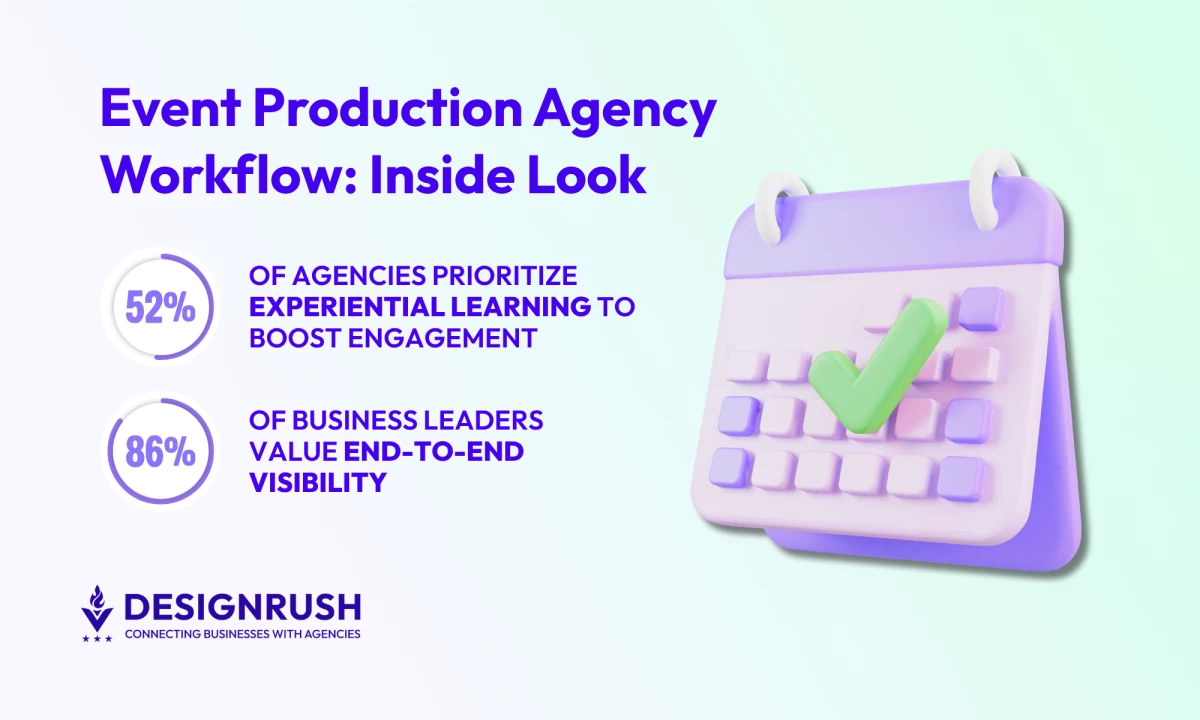
- End-to-end process transparency matters: 86% of business leaders value visibility as a key driver of performance.
- Agencies map attendee experiences to KPIs, with 51.8% of organizers prioritizing experiential learning for higher engagement and retention.
- Pre-production begins 6–12 months in advance to secure vendors, finalize logistics, and establish communication protocols, preventing delays and conflicts.
How Event Production Works
1. Event Planner Cost Breakdown
2. Event Marketing Strategies
3. Types of Event Management
4. Corporate Event Planning Mistakes
Unlike general event management, event production teams focus on staging, lighting, sound, video, and special effects.
In practice, agencies break the work into tracks (creative content vs. technical/logistics) to ensure concepts withstand real-world constraints.
Stage | Core Focus | Deliverable |
Concept development | Brand alignment, storytelling, creative brief | Strategy deck & concept boards |
Pre-production | Vendor management, budgeting, and timelines | Finalized production plan |
Production | Technical setup, rehearsals, A/V, staging | On-site readiness |
Show day | Live coordination, contingency handling | Seamless event delivery |
Post-event | Debrief, analytics, content wrap-up | Reporting & performance insights |



Concept to Kickoff: Where Strategy Meets Creativity
The workflow begins by turning business goals into a unified event concept.
- Define the event’s business objective
- Map the attendee experience arc
- Develop creative assets
- Lock down non-negotiables
- Approve concept and prepare for pre-production
1. Define the Event’s Business Objective
Agencies work closely with stakeholders to define why the event exists (e.g., “$3M pipeline in 90 days” or “upgrade customer sentiment by 20%”).
As Lauren Reeves, Chief Operating Officer at Meeting Tomorrow, explains:
“The most important step is to define very early in the process what success looks like.
This is often challenging because the executives putting on the event know they want to get everyone together, but have a harder time articulating the more concrete outcomes they need.
Defining success early ensures that everyone working on the event is rowing in the same direction.”
2. Map the Attendee Experience Arc
Planners outline the attendee journey from arrival through main sessions to event closing. They should each segment to a specific KPI (engagement, lead capture, sentiment).
Agencies identify high-impact moments where brand messaging or business outcomes can be reinforced.
For example, 51.8% of organizers prioritize experiential learning to boost engagement and retention, making interactive workshops, simulations, and hands-on sessions a key focus.
3. Develop Creative Assets
Agencies create detailed briefs that capture objectives, tone, and design parameters. Produce early storyboards, 3D mockups, or VR prototypes to visualize the event experience.
Test the feasibility of concepts against venue, technical, and operational constraints.
4. Lock Down Non-Negotiables
At this phase, agencies identify elements that cannot change, such as legal requirements, brand logos, sponsorship obligations, or mandatory messaging.
They should also price concepts in modules so that budget tradeoffs are transparent.
This is critical given that over 50% of spend generally goes to essentials like F&B, AV, and entertainment.
5. Approve Concept and Prepare for Pre-Production
Finally, they finalize the approved concept with stakeholders. The experience arc, creative brief, and initial visualizations should be well-documented to serve as the blueprint for pre-production.
Pre-Production: The Engine Room of Execution
Once the concept is approved, the heavy lifting begins. Pre-production is a multi-month phase (often starting 6–12 months out) where every detail is planned.
- Finalize scope and schedule
- Select and contract vendors
- Establish logistics and communication channels
- Populate risk register and contingency plans
- Maintain executive oversight
6. Finalize Scope and Schedule
The production team defines the full scope of the event, including all creative, technical, and logistical requirements.
A baseline schedule and live budget tracking should be established to visualize critical milestones and monitor spend in real time.
7. Select and Contract Vendors
Vendors are then evaluated against strict criteria like technical capability, safety record, local permits, and reliability.
At this phase, contracts, holds, or preliminary agreements are issued to secure essential resources early.
8. Establish Logistics and Communication Channels
The agency then defines communication protocols like separate talkback lines for stage, audio, lighting, and AV.
Technical diagrams like floor plans, lighting plots, wiring layouts, and scenic schematics, and the master run-of-show are created. These dictate the timing, responsibilities, and cue sequences.
Rehearsals are scheduled for both technical and creative teams.
9. Populate Risk Register and Contingency Plans
The production team identifies potential risks across all production areas and develops mitigation strategies for each high-risk item.
For multi-venue events, city-specific playbooks outline logistics, permits, and local requirements.
10. Maintain Executive Oversight
The agency should deliver weekly summaries of budget burns, top risks, and critical decisions to executives.
Alignment across teams ensures operational discipline and prevents last-minute surprises.
Production in Motion: Building the Stage for Success
As show day approaches, planning becomes action.
11. On-Site Load-In and Setup
At this phase, crews arrive on-site for staged load-in, following a precise sequence: staging, set-build, AV rigging, lighting truss installation, video walls, and scenic elements.
12. Enforce Quality Gates
The production manager should enforce quality gates at each step to ensure safety, reliability, and adherence to design specifications.
They should also manage a dependency board, resolving conflicts and optimizing workflow.
13. Conduct Technical Rehearsals
Rehearsals begin approximately 72 hours before show day. All cues, including lights, video, music, and microphones, should be run multiple times.
At this stage, the event is fully dressed and tested under real-world conditions.
Show Day Coordination: The Moment Everything Converges
By show time, the audience sees the payoff of that backstage effort. All hands are on deck.
14. Final Operations Briefing
The production lead opens with a final operations briefing: safety protocols, schedule, last changes, and who has decision authority for any on-the-fly fixes
From load-in managers to audio engineers to stagehands, everyone is ready at their position.
15. Execute Run-of-Show With Precision
Stage managers and show callers coordinate all transitions between keynotes, breakout sessions, and panels. Technical teams monitor audio, lighting, video, and streaming systems in real time.
Everything on stage operates like clockwork. Any disruptions are resolved within seconds, invisible to the audience.
The audience experiences a seamless event while hundreds of complex processes operate in the background.
After the Applause: Post-Event Optimization
Once the final applause dies down, work shifts to analysis and optimization.
- Immediate data collection (0–72 hours post-event)
- Map outcomes and deliver detailed reports
- Extend event impact through content
- Conduct debrief and close the loop
16. Immediate Data Collection (0–72 Hours Post-Event)
In the first 24–72 hours, producers pull together all event data. For instance:
- Registration vs. check‑in numbers
- Session attendance and dwell times
- Badge scans or meeting counts
- Lead quality indicators (e.g., demo completions, SQLs)
- Survey scores
- Streaming stats (view counts, uptime)
They also collect qualitative feedback from stakeholders.
17. Map Outcomes and Deliver Detailed Reports
This hard data is then mapped back to the original goals and KPIs set at concept.
All of this is turned into a concise report for executives: a one‑page executive summary with objectives vs. results, plus an appendix of metrics and highlights.
18. Extend Event Impact Through Content
Event agencies often produce additional deliverables like highlight reels and video clips to extend the event’s life.
They distribute these to internal teams, clients, and external audiences.
19. Conduct Debrief and Close the Loop
Finally, they hold a debrief meeting with the client and internal team to discuss what worked and what to improve.
Then, the agency translates post-event insights into actionable recommendations for future events.
Top 5 Event Production Agencies
Agency | Services | Scope |
Comprehensive strategy, planning, creative, and production | Global | |
2. Freeman | Enterprise-scale events with advanced infrastructure | Global |
Experiential brand storytelling for Fortune 500 | Global | |
4. Cramer | Strategy-led creative production for hybrid events | U.S. |
5. Agency EA | Corporate brand events emphasizing creative engagement | U.S. |
1. Meeting Tomorrow
Meeting Tomorrow is a nationwide event production agency known for unforgettable experiences, from Fortune 500 conferences to multi-city roadshows.
With over 20 years in the industry, the agency manages every detail from concept to execution with creativity and precision.
Their work on RPM Living’s annual RPM One leadership conference shows how Meeting Tomorrow brings ideas to life.
The team helped expand the event’s scale and energy, handling everything from stage design and production to creative direction and logistics.
They turned the main stage into a dynamic space for both general sessions and an elegant awards gala, managed a 62-booth trade show, and built interactive moments that kept attendees connected.
- Location: Chicago, United States
- Team size: 50-99
- Minimum budget: Inquire
- Best for: Large-scale corporate events, trade shows, and multi-location exhibits
- Services: Comprehensive event production integrating tech, logistics, and creative direction
- Notable Clients: AT&T, Pfizer, Amazon, Microsoft, & CVENT
Check out Meeting Tomorrow’s DesignRush profile.
2. Freeman
Freeman is a global events company that transforms conferences, trade shows, and brand activations into immersive, audience-focused experiences.
In their work with LAV at The Inspired Home Show in Chicago.
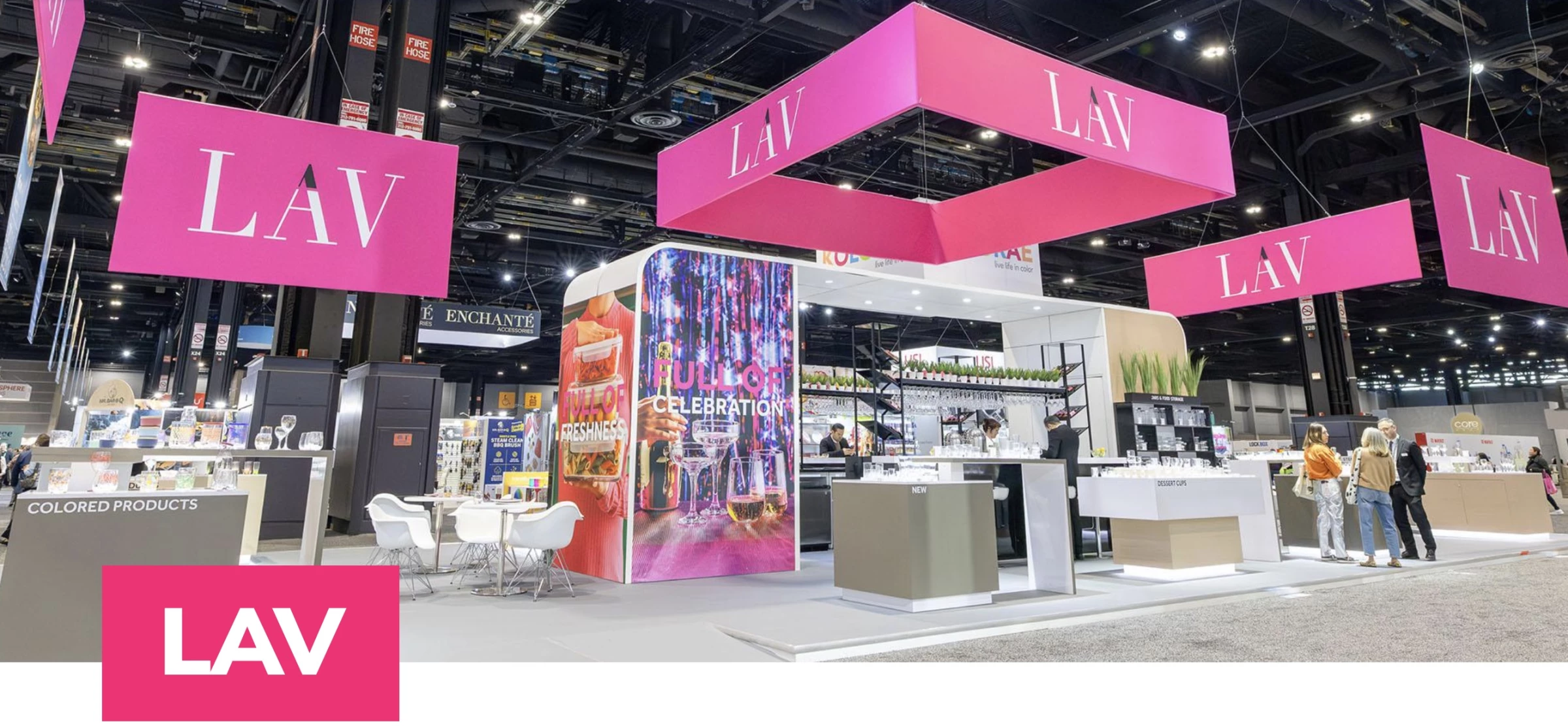
Freeman adapted the international display for U.S. audiences, creating an interactive booth with a bar for product demos, meeting spaces, and engaging product displays.
Flexible designs, bundled rentals, and smart logistics kept the project cost-efficient while delivering a polished experience that connected the brand with buyers.
- Location: Texas, United States
- Team size: 1,000 & up
- Minimum budget: Inquire
- Best for: Large-scale corporate events, trade shows, and experiential exhibits
- Services: Enterprise-scale events with advanced infrastructure
- Notable Clients: FreightWaves, International Baking Industry Exposition (IBIE), & Link-Belt Excavators
Check out Freeman’s DesignRush profile.
3. George P. Johnson
GPJ (George P. Johnson) is a world-leading experience marketing agency that brings brands to life through immersive, high-impact events.
With over a century of expertise and offices across the globe, GPJ thrives on big ideas, flawless execution, and pushing the boundaries of what an event can achieve.
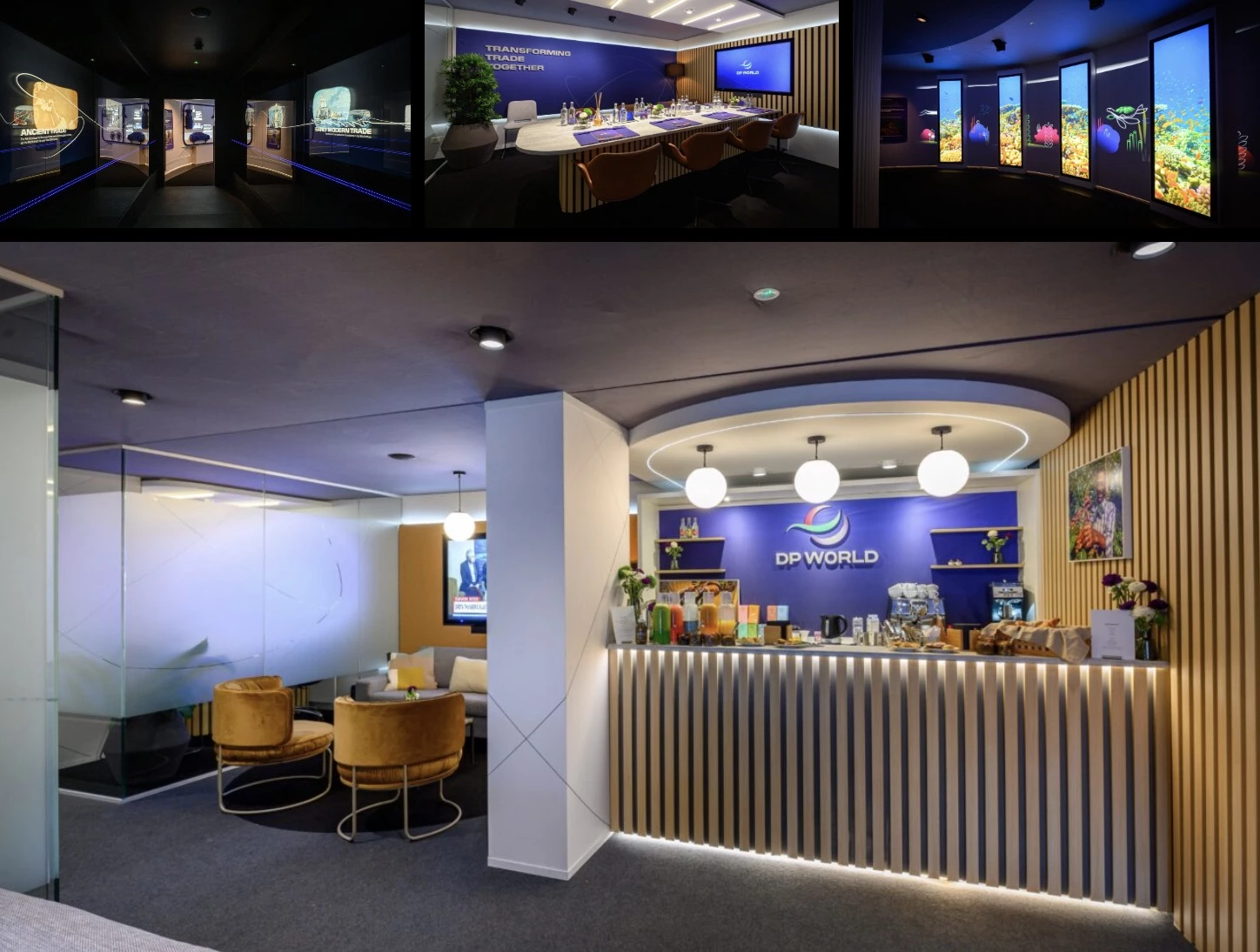
For example, at the World Economic Forum Annual Meeting, GPJ designed a two-level pavilion for DP World under the theme Transforming Trade Together.
The space featured interactive exhibits, a narrated theater, immersive time tunnels, and a trade-in-the-metaverse demo.
GPJ created a memorable experience that reflected DP World’s innovative vision, with sustainability integrated throughout.
- Location: California, United States
- Team size: Under 49
- Minimum budget: Inquire
- Best for: Experiential marketing, large-scale brand activations, immersive corporate events
- Services: Experiential brand storytelling for Fortune 500
- Notable Clients: Volkswagen, IBM, Call of Duty, Google Health, & DP World
Check out George P. Johnson’s DesignRush profile.
4. Cramer
Cramer is a Boston-based brand experience and content marketing agency that delivers immersive, tech-forward events.
At Vimeo REFRAME, Vimeo’s first user conference, Cramer created an up-close, behind-the-scenes experience in New York City.
The team designed a fully immersive event that showcased Vimeo’s technology and production capabilities, integrating interactive demos, live webcasting, and dynamic AV experiences.
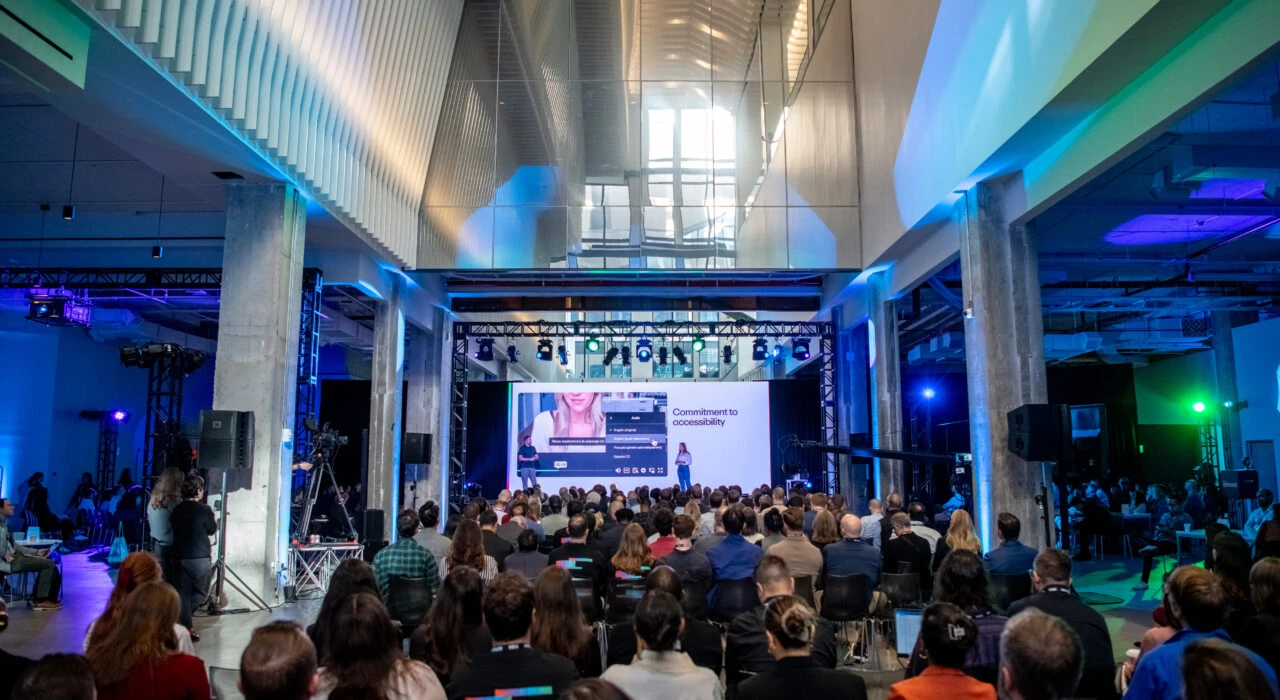
Cramer managed every element, from set design and stage management to attendee flow and content activation, ensuring the conference was aligned with Vimeo’s vision for innovation.
The result was a bold, memorable event that connected audiences, sparked conversation, and left a lasting impression.
- Location: Massachusetts, United States
- Team size: 100-249
- Minimum budget: Inquire
- Best for: High-impact, tech-forward brand experiences
- Services: Strategy-led creative production for hybrid events
- Notable Clients: Google, Hasbro, & Sanofi
Check out Cramer’s DesignRush profile.
5. Agency EA
Agency EA is a full-service experiential marketing agency that brings bold ideas to life through live, hybrid, and digital experiences.
Founded in 1999, the Boston-based agency delivers strategy, creatives, and production under one roof.
Agency EA partnered with AOL to produce two large-scale digital media events, transforming raw industrial spaces into high-tech, video-immersive environments.
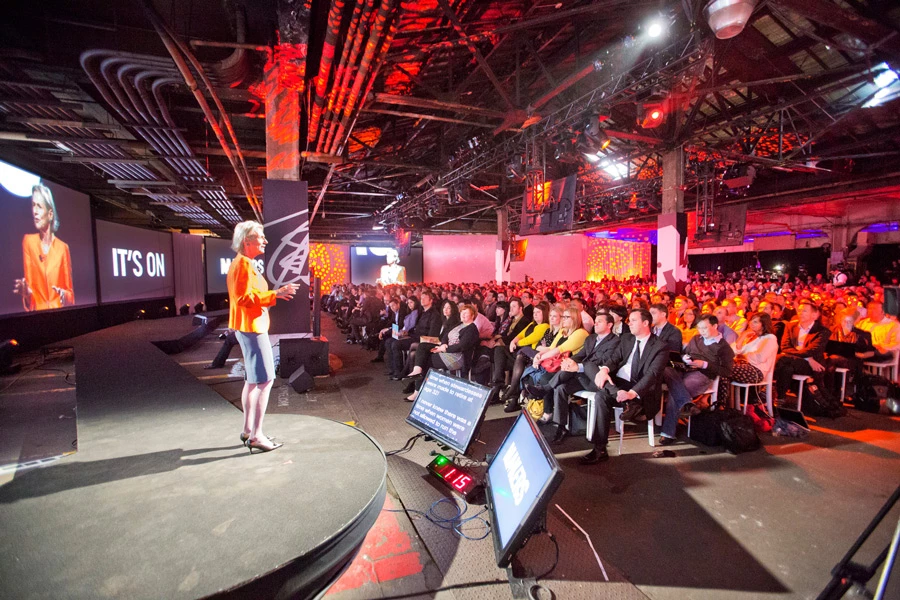
Guests navigated interactive “distribution tunnels,” 360-degree video presentations, and VIP reception areas, all designed to showcase AOL’s digital reach across multiple platforms.
With a team-driven, collaborative approach and a focus on technology, Agency EA ensures every detail, from webcasting to experiential design, is executed flawlessly.
- Location: Chicago, United States
- Best for: High-impact, audience-centered events
- Services: Corporate brand events emphasizing creative engagement
- Notable Clients: Boeing, DoorDash, Google, Square, McDonald’s, & Samsung
Why Process Transparency Matters to Executives
Visibility into production processes lets executives focus on strategy instead of micromanaging details.
86% of business leaders value end-to-end visibility as a major performance driver.
Standardized checklists and reporting keep production quality consistent, even under pressure. It ensures predictable outcomes, prevents overruns, and eliminates last-minute surprises.
“A critical key to success that is often overlooked is the team you have working on the event having total clarity and alignment on what you’re trying to accomplish.” - Lauren Reeves, Meeting Tomorrow
When executives see that every moving part is under control, they’re more willing to invest, knowing the agency operates with discipline.

Our team ranks agencies worldwide to help you find a qualified partner to implement the latest AI solutions. Visit our Agency Directory for the Top Event Management Companies as well as:
- Top Live Events Production Companies
- Top Event Marketing Agencies
- Top Video Production Companies
- Top AI Event Marketing Agencies
Event Logistics and Execution FAQs
1. How does end-to-end event management differ from standard event planning?
End-to-end event management covers every step of the event lifecycle, from initial concept to post-event reporting.
Unlike basic planning, it integrates creative strategy, technical production, logistics, and executive oversight, ensuring all aspects are addressed comprehensively.
2. What role do event logistics and execution play in successful events?
Event logistics and execution involve coordinating all operational elements, including staging, AV, lighting, floor plans, vendor delivery, and staff responsibilities.
Efficient logistics and precise execution prevent disruptions during live events and ensure that the creative vision is delivered flawlessly to the audience.
3. How far in advance should corporate event planning stages begin?
Planning typically starts 6–12 months before the event, especially for large-scale or multi-location productions.
Early preparation allows sufficient time for concept approval, vendor selection, risk management, technical rehearsals, and stakeholder alignment.