Selecting a graphic design company in New York is high-stakes when brand perception directly affects revenue. Here, you'll find vetted agencies with portfolios and client reviews to compare, so you can make a confident, informed decision.
Organic rankings are determined by five factors: top services, reviews, portfolio, awards/press, and team expertise. Sponsored listings pay for a placement that appears above organic positions. Sponsorship does not affect star ratings or review content - read more on our methodology page.
AGENCY LISTING COMING SOON.
Graphic Design Companies in New York by City
Related Services in New York
Graphic Design Specializations in New York
Popular Services
Everything you need to know before hiring a graphic design company in New York
If I'm not based in New York, does hiring a graphic design agency in New York give my brand any credibility or advantage?
The tangible advantage is the commercial rigor that New York graphic designers bring. Notably, industries such as luxury, beauty, fashion, and consumer goods have their aesthetic standards largely set by New York's design culture.
If your brand competes in any of those spaces, or aspires to, work produced by a graphic design agency in New York will be calibrated to those standards.
Where the credibility argument becomes weaker is in industries that are geographically rooted or community-driven: regional retail, local hospitality, municipal services, or businesses where the audience actively values local identity.
In those situations, a New York graphic design firm may actually produce work that feels tonally misaligned, optimized for a commercial sophistication that your audience does not respond to and may even find off-putting.
The consumer segment is also worth considering in this context. If your brand operates in a B2B sphere where you are being evaluated by sophisticated buyers (investors, enterprise procurement teams), the quality standard that a New York agency typically delivers can function as a credibility signal in its own right.
The work itself communicates that your organization invests in its brand at a serious level, which carries weight in high-stakes evaluation environments regardless of where you are based.
What does a realistic graphic design project timeline look like?
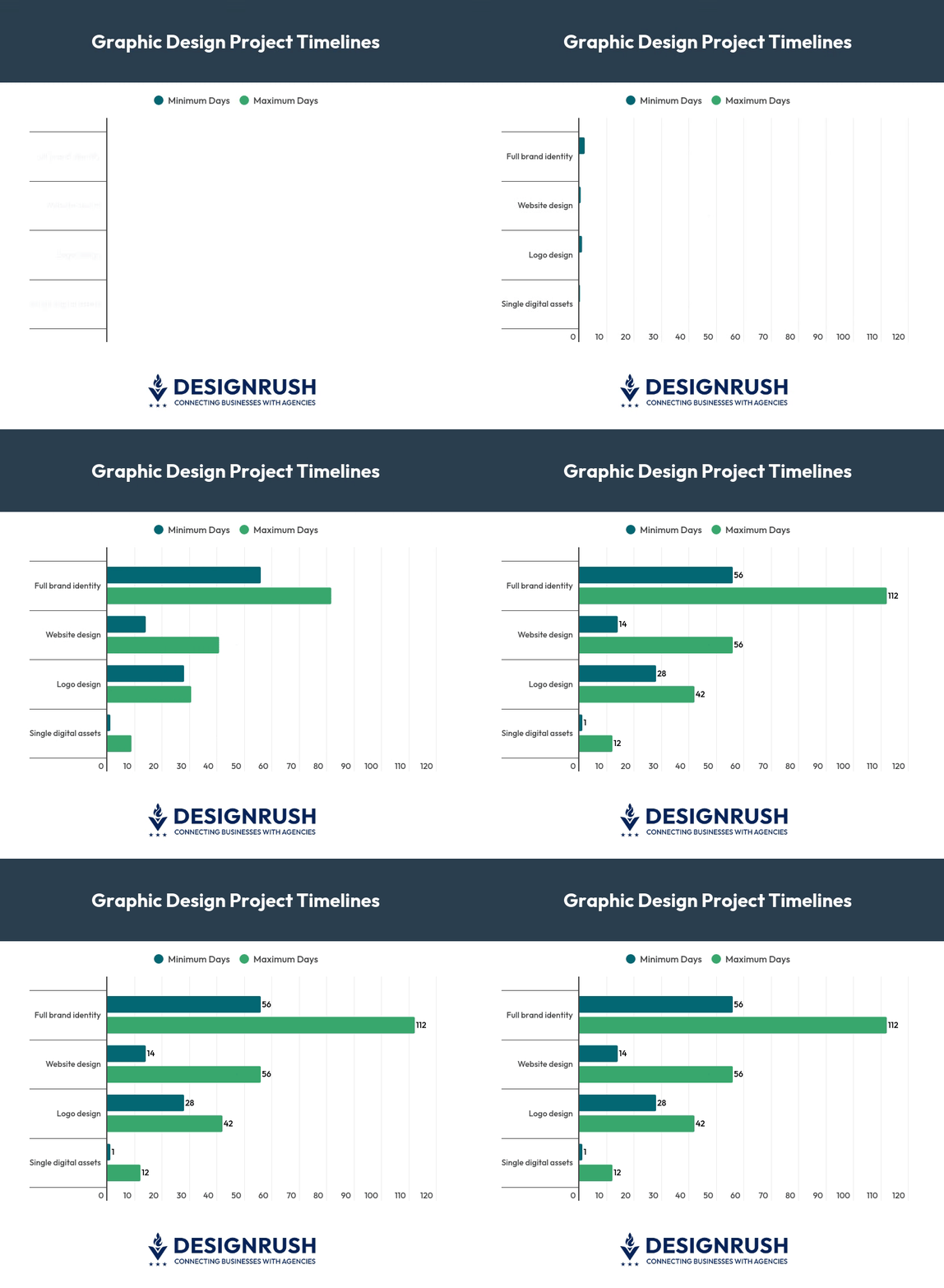
Here is what a realistic graphic design project timeline looks like, broken down by service type:
- Logo design: 4 to 6 weeks
Standard logo projects typically take 4 to 6 weeks, extending further if applied across collateral such as websites, business cards, or packaging. - Full brand identity/rebrand: 8 to 16 weeks
Discovery and audit occupy weeks 1 to 2, brand strategy weeks 2 to 5, visual identity weeks 5 to 10, guidelines and collateral weeks 10 to 14, and launch weeks 14 to 16. - Website design: 2 to 8 weeks
Simple one-to-five-page sites require 2 to 4 weeks; complex builds, such as eCommerce or membership platforms, require 6 to 8 weeks or more. - Single digital assets: 1 to 12 days
Single digital assets take 1 to 6 days; print collateral typically takes 5 to 12 days.
How many revisions and approval rounds do New York graphic designers typically include in their contracts?
Most graphic design companies in New York structure contracts around two to three formal revision rounds per project phase, which is relatively standard across the industry.
However, the definition of what constitutes a "revision round" is where clients frequently encounter friction.
A single revision round typically means one consolidated set of feedback submitted by the client, responded to in full by the agency.
It does not mean an ongoing back-and-forth dialogue, and agencies in the New York market are generally strict about this distinction, given the premium value they place on senior staff time.
Where it becomes more nuanced is in how phases are defined within the contract.
A branding project may be broken into distinct phases: strategy, concept development, refinement, and finalization, each carrying its own separate revision allowance, meaning the total number of feedback opportunities across the full engagement can be higher than the per-phase number suggests.
Understanding this structure upfront is important because clients who provide fragmented or unconsolidated feedback across multiple touchpoints can exhaust their revision rounds before the work reaches a satisfactory conclusion.
What red flags should I watch for before signing with a graphic design company in New York?
A graphic design contract protects both parties, but several common clauses are structured in ways that disproportionately favor the agency and are easy to overlook before signing. Here’s what to look out for:
- Vague revision language
If the contract says "reasonable revisions" without defining what constitutes a round or how additional rounds are billed, you have no basis to dispute unexpected charges later. - No source file transfer clause
If ownership of native working files is not explicitly addressed, the agency retains them by default, leaving you dependent on them for any future modifications. - Broad intellectual property retention
Some contracts stipulate that the agency retains rights to the creative work until final payment is received in full, meaning unpaid invoices, even disputed ones, can legally prevent you from using the deliverables. - Unilateral scope change authority
Watch for language that allows the agency to determine unilaterally whether a client request constitutes a scope change, with no defined approval process before additional costs are incurred. - Auto-renewal retainer clauses
Retainer agreements that renew automatically without a minimum notice period can lock you into continued billing even after the active work has concluded. - Liability caps tied to project fees
Many contracts cap the agency's liability for errors or missed deliverables at the value of the project fee, which can be significantly inadequate if a launch delay or brand error carries downstream business consequences. - No “kill fee” structure for the client
Contracts that define kill fees only in the agency's favor (charging you for terminating the engagement) without equivalent protections if the agency underdelivers or misses milestones represent a meaningful imbalance worth negotiating before signing.
What questions should I ask a graphic design company in New York before hiring one?
Most agencies control the pitch conversation by design. To evaluate a graphic designer in New York on your terms rather than theirs, you should ask some of the following questions:
Relevant Background
- What industries have you worked in the most? How does that shape the way you approach brand positioning?
- What percentage of your clients hire you beyond the initial project?
- Can you share an example of a long-term client relationship?
- Can you walk me through a project where the brief changed significantly mid-engagement? How did you manage the scope and cost implications?
Services and Processes
- How do you define a revision round?
- What is your process when a client requests changes that fall outside the agreed scope?
- Does your standard contract include source file transfer, and if not, how much does the handover cost?
- Are third-party assets included in your quote or billed separately?
- What does your feedback and approval process look like?
Related to Your Project
- Based on what we have shared, what do you see as the primary strategic challenge in this brief?
- What is a realistic timeline for this specific project, and what are the most likely causes of delay on both sides?
- What is expected from our side at each stage to keep the project on schedule?
- If our brief evolves during the engagement, how would you do the repricing? At what point would you flag that a scope conversation is needed?
- Who will be working on our account day-to-day? Can we review their individual portfolio before we begin?
How do I compare agencies that seem equally strong, but use very different pricing models?
The pricing model itself is diagnostic as it tells you how an agency thinks about risk and scope before you have reviewed a single deliverable.
A project-based agency has done this work enough times to price it with confidence, but has a financial incentive to scope narrowly and bill for anything outside that boundary.
A time-and-materials agency absorbs scope ambiguity more flexibly, but transfers financial risk to you, which might make final costs harder to forecast without close oversight.
The more useful question is not which model is better, but which aligns with your project: well-defined briefs favor fixed-project pricing, while engagements involving discovery or frequent stakeholder input often work better on a time-and-materials or retainer basis.
To compare two agencies using different models directly, ask each to estimate total project hours and derive their blended hourly rate across the team assigned to your account.
That single number tells you more about relative value than the pricing structure ever will.
Sources
DesignRush sustains a directory of over 40,000 agencies categorized by service category, location, expertise, and reviews. We build our database in two ways:
- Our dedicated team of agency experts actively searches the web for top-performing companies. We then pull information from their websites, online presence, and client testimonials to verify their status and qualifications prior to listing.
- The agencies listed get notified of their profiles on the website and they can choose to claim it or not, which suggests their availability for more collaborations.
Agencies can also reach out to DesignRush and must go through the verification process prior to being listed.
Latest Trends Related to Graphic Design